
Air Team Vehicle Emissions Testing Station in Joliet: Complete Guide to Testing, Renewal, and Passing Your Inspection
Air team vehicle emissions testing station Joliet guide: 🏆 hours, what to bring, how testing works, and how DMV written test prep fits your renewal.
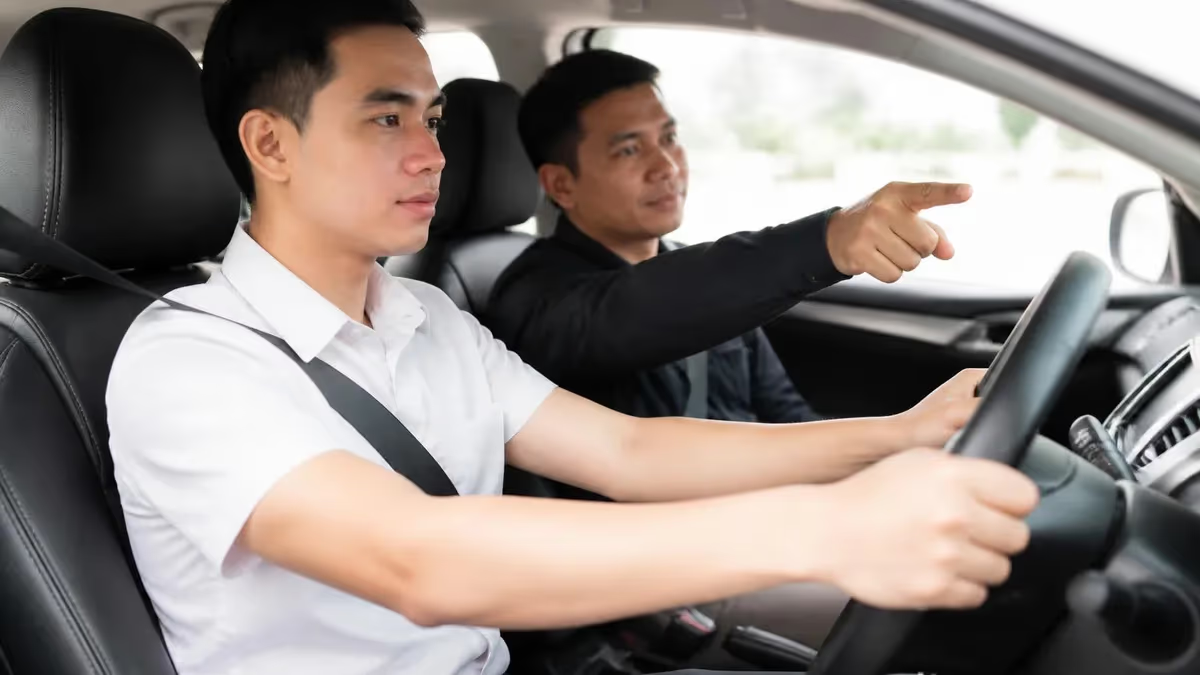
If you own a vehicle in Will County, Illinois, the air team vehicle emissions testing station Joliet drivers rely on is one of the most important stops in your registration renewal cycle. Illinois requires periodic emissions inspections in designated counties to keep air quality within federal Clean Air Act limits, and a passing result is tied directly to your ability to renew your license plates. Understanding how the Joliet station operates, what it checks, and how it connects to your broader driving responsibilities saves you time and frustration.
This guide walks through everything a Joliet-area motorist needs: how the test works, what documents to bring, why some vehicles are exempt, and what to do if your car fails. While emissions testing is a vehicle matter rather than a personal driving skill, it lives in the same ecosystem as your overall responsibilities behind the wheel. Many drivers researching emissions testing are also preparing for a dmv written test, renewing a license, or helping a teen study the rules of the road, so we tie those threads together.
Illinois operates its Vehicle Emissions Testing Program through the Illinois Environmental Protection Agency, with stations spread across the Chicago and Metro-East regions. Joliet falls inside the inspection zone, meaning most gasoline-powered passenger vehicles registered to local addresses must test on a recurring schedule. The state mails a notice when your vehicle is due, and that notice is your trigger to plan a visit before your registration expires. Missing the window can lead to a registration hold and late penalties.
The good news is that emissions testing in Illinois is fast, free, and designed to be convenient. Modern stations use an electronic On-Board Diagnostics (OBD) scan for newer vehicles, which often takes only a few minutes once you reach the front of the line. Older vehicles may undergo a tailpipe-style or alternate procedure depending on model year. Either way, the goal is the same: confirm your emissions control systems are functioning and not releasing excess pollutants into the air.
For drivers who are newer to the licensing process, emissions testing can feel like one more bureaucratic hurdle. It helps to remember that vehicle registration and driver licensing are separate but related systems. Your license proves you are qualified to drive; your registration and emissions compliance prove the specific vehicle is legal to operate. If you are still working toward a license, sharpening your knowledge with a driving knowledge test practice run keeps the licensing side moving while the vehicle side stays on schedule.
Throughout this article we will reference how emissions compliance intersects with everyday driving habits, road signs and markings, and the traffic laws that govern Illinois roadways. We will also point you to free practice resources so that whether you are renewing a vehicle, studying for a permit, or refreshing your knowledge after years of driving, you leave with a clear action plan. Let's start with the numbers that define the Joliet emissions testing experience.
By the end, you should know exactly when to test, where to go, what it costs, how to prepare your vehicle for the best chance of passing, and how the test ties into your full set of obligations as a licensed Illinois driver. Treat this as your single reference for the entire process so you can renew on time and avoid the common mistakes that send drivers back for a second visit.
Joliet Vehicle Emissions Testing by the Numbers
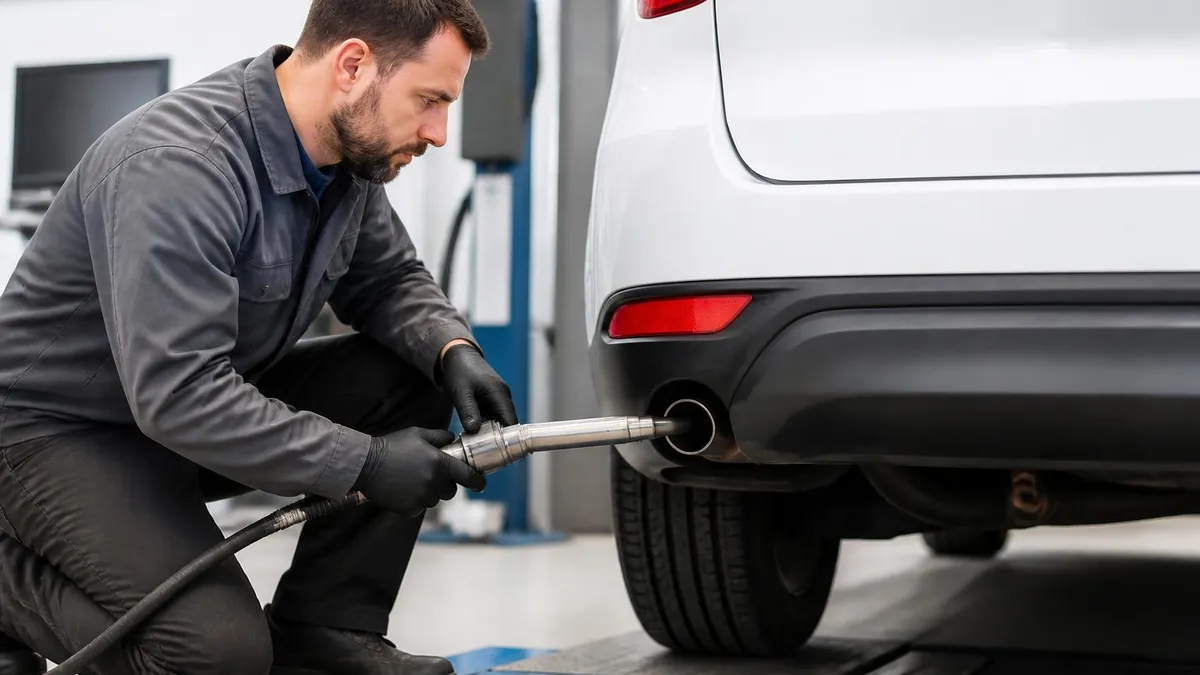
How Joliet Emissions Testing Works
The Illinois Secretary of State and EPA mail a test notice before your registration expires. This card tells you your vehicle is due and lists the deadline you must meet to renew plates.
Drive to the Joliet-area testing facility during posted hours. No appointment is needed; you simply join the lane. Staff guide you forward and connect equipment for a quick electronic diagnostic scan.
For 1996 and newer vehicles, a technician plugs into your On-Board Diagnostics port. The system reads readiness monitors and stored fault codes to confirm emissions controls are working properly.
You receive a printed Vehicle Inspection Report on the spot showing pass or fail. A pass clears the emissions hold so you can renew registration online, by mail, or in person.
With a passing report on file, the state lifts the testing requirement for that cycle. Complete your plate renewal and keep your report as proof of compliance for your records.
Knowing what to bring to the air team vehicle emissions testing station Joliet residents use makes the visit smooth. The single most important item is your renewal notice or registration card, which contains the vehicle identification details the station needs to match your record. While the OBD scan reads the car directly, having paperwork on hand resolves any mismatch quickly. Bring your driver license too, since staff may verify identity, and it is simply good practice to carry it whenever you drive.
Not every vehicle has to test. Illinois exempts the newest model years, typically the first four years after manufacture, because new emissions systems rarely fail. Vehicles older than the program's lower cutoff, such as certain pre-1968 or specific antique classifications, may also be exempt. Diesel vehicles, motorcycles, and some heavy trucks follow different rules. If you are unsure whether your car qualifies, the renewal notice itself is the clearest signal: if the state mailed you a test requirement, you must comply before renewing.
Electric vehicles are exempt from tailpipe-style emissions because they produce no exhaust, though plug-in hybrids may still be subject to OBD checks depending on configuration. The program targets gasoline-powered light-duty passenger cars and trucks, which make up the bulk of the regional fleet and the largest share of mobile-source pollution. As the vehicle mix shifts toward electrification, the testing population gradually changes, but for now most Joliet drivers with a conventional car should plan on a biennial visit.
Timing matters. The state allows you to test within a window before your registration expiration, so you do not need to wait until the last day. Testing early gives you a cushion to address any failure, get repairs, and retest without missing your renewal deadline. Stations can be busier at the end of the month and during lunch hours, so a mid-morning weekday visit early in your window is the smart play. Confirm current hours before driving over, as schedules can change around holidays.
If you recently moved into Will County from a non-testing area, your vehicle may not show in the system yet. In that case you might receive your first notice at your next renewal. Conversely, if you moved out of the testing region, you may no longer be required to test, but you should verify rather than assume. Address changes should be reported promptly to keep your records accurate, which also matters for ticket and license correspondence under Illinois traffic laws.
While you are organizing vehicle paperwork, it is a natural moment to confirm your driver credentials are current too. An expired license, unpaid tickets, or an unaddressed suspension can complicate registration and create headaches at traffic stops. If your license needs renewal or you are helping a family member earn theirs, finding your nearest office through a guide to the vehicle emissions test locations and BMV services keeps both the vehicle and the driver side compliant in one trip's worth of planning.
Finally, plan for the possibility, however small, that your vehicle fails. Bringing your maintenance records or a recent repair invoice can help if you need to document work performed. Most drivers pass without issue, especially if their check-engine light is off and the car has been driven normally in the days before testing. We will cover the pass standards and failure recovery process in detail shortly, but preparation is the theme: arrive ready, and the visit is painless.
Testing Methods and Pass Standards Behind the Driver License Test
For 1996 and newer vehicles, Illinois uses the On-Board Diagnostics method. A technician connects a scan tool to your vehicle's OBD-II port, located under the dashboard near the steering column. The system checks whether emissions readiness monitors have completed their self-tests and whether any diagnostic trouble codes are stored in the engine computer.
A vehicle passes when its monitors are ready and no emissions-related fault codes are active. The check-engine light must be off and functioning. If your battery was recently disconnected, monitors may not be set, so drive normally for several days before testing to let the system complete its internal checks and avoid a not-ready rejection.
Testing Early in Your Window vs. Waiting Until the Deadline
- +You get a buffer to handle repairs if the vehicle fails the first time
- +Shorter lines when you avoid end-of-month rushes
- +Peace of mind that your registration renewal will not be blocked
- +Time to let OBD readiness monitors complete after any battery work
- +Flexibility to choose a low-traffic weekday morning visit
- +No risk of late registration penalties or a lapse in valid plates
- −Requires planning ahead rather than reacting to the deadline
- −You may forget the test was already done if it is very early
- −A second trip is still needed if repairs are required after a fail
- −Station hours may not align with your schedule on chosen days
- −Early testing does not extend your next test due date
- −You must still track your registration expiration separately
Pros and Cons at a Glance
| Pros | Cons |
|---|---|
| You get a buffer to handle repairs if the vehicle fails the first time | Requires planning ahead rather than reacting to the deadline |
| Shorter lines when you avoid end-of-month rushes | You may forget the test was already done if it is very early |
| Peace of mind that your registration renewal will not be blocked | A second trip is still needed if repairs are required after a fail |
| Time to let OBD readiness monitors complete after any battery work | Station hours may not align with your schedule on chosen days |
| Flexibility to choose a low-traffic weekday morning visit | Early testing does not extend your next test due date |
| No risk of late registration penalties or a lapse in valid plates | You must still track your registration expiration separately |
Pre-Test Vehicle Checklist for Your Driving Knowledge Test Day
- ✓Confirm your check-engine light is off before leaving home
- ✓Tighten or replace the gas cap to seal the fuel system
- ✓Drive the vehicle normally for several days to set OBD monitors
- ✓Bring your registration renewal notice or registration card
- ✓Carry your valid driver license for identity verification
- ✓Verify the station's current hours of operation that day
- ✓Choose a mid-morning weekday early in your testing window
- ✓Check tire pressure and basic fluid levels for engine health
- ✓Bring any recent repair invoices in case documentation is needed
- ✓Keep your printed Vehicle Inspection Report for renewal records
A check-engine light is an automatic emissions test failure in Illinois.
If your malfunction indicator lamp is on, the vehicle will fail before the scan even finishes. Have the code diagnosed and repaired first, then drive normally for a few days so readiness monitors reset. This one habit prevents the most common reason Joliet drivers make a wasted return visit.
If your vehicle fails the emissions test, do not panic. A failure is common, fixable, and built into the program's design. You will receive a Vehicle Inspection Report listing the specific reason, such as an illuminated check-engine light, incomplete readiness monitors, or stored trouble codes. This report is essentially a roadmap for repairs. Take it to a qualified mechanic, who can read the same codes and tell you exactly what component needs attention before you return for a free retest.
Illinois recognizes that some repairs are costly, so the program includes a waiver provision for qualifying motorists. If you spend a defined minimum amount on emissions-related repairs at a recognized facility and the vehicle still cannot pass, you may apply for a waiver that allows registration despite the failure. Keep every repair receipt, because documentation is the key to qualifying. The waiver is not automatic and has conditions, so review the current requirements carefully and ask station staff for guidance.
The most common failures are also the cheapest to fix. A loose or cracked gas cap triggers an evaporative-system code that can be solved for a few dollars. A failing oxygen sensor, a worn catalytic converter, or a vacuum leak are more involved but still routine repairs for any competent shop. Because the codes point directly at the problem, you avoid paying for guesswork. Ask your mechanic to clear the code only after the repair, never before, so the fix is verified.
After repairs, you must drive the vehicle through several normal trips to allow the OBD system to complete its readiness monitors. Returning immediately after clearing codes often results in a not-ready rejection because the computer has not finished its self-checks. A mix of city and highway driving over a few days usually completes the drive cycle. Then return to the station for your free retest, bringing your original report and repair receipts in case you need them for a waiver.
It is worth understanding why the program exists at all. Vehicle exhaust contributes to ground-level ozone and particulate pollution, which affect public health and trigger federal air-quality penalties for regions that fall out of compliance. By catching malfunctioning emissions systems, the testing program keeps thousands of pollutant tons out of the air each year. Your individual test is small, but collectively the program makes a measurable difference in regional air quality across the Chicago metro area.
Failing a test has no effect on your driver license, your driving record, or your insurance. It is strictly a vehicle compliance matter. You will not get points, and it will not appear on the record that governs your license status. This is an important distinction: emissions compliance and driving behavior are governed by entirely separate systems, even though both are administered through state agencies and both must be in order for you to legally operate the vehicle on public roads.
Finally, plan your retest within your registration window. Most drivers who fail resolve the issue within a week or two and pass easily on the second attempt. The combination of a clear diagnostic report, an honest mechanic, and a proper drive cycle makes the recovery process predictable. Treat the first failure as information rather than a setback, and you will clear your emissions requirement with minimal stress and renew your plates on time.

An unaddressed emissions requirement places a hold on your vehicle registration, which can prevent renewal and lead to late fees. Test early in your window so a possible failure leaves time for repairs. Driving with expired plates is a separate traffic violation that can result in a ticket.
Emissions testing is just one piece of being a responsible Illinois motorist, and it connects directly to the licensing knowledge measured by the dmv written test. When you study for a license or permit, you learn the traffic laws, road signs and markings, and safe driving practices that keep everyone on the road safer. The same diligence that helps you pass a knowledge exam serves you when managing vehicle compliance: read the requirements, prepare in advance, and follow through before deadlines instead of scrambling at the last minute.
Many people researching emissions stations are at a transition point, perhaps buying a first car, helping a teen driver, or returning to driving after time away. If that is you, taking a dmv knowledge test practice run reconnects you with the rules that may have changed since you last studied. Illinois updates its rules of the road periodically, and refreshing your understanding of right-of-way, speed limits, and signaling is valuable whether or not you are due for a formal exam. Free online practice makes this easy and low-pressure.
The convenience of a dmv test online format mirrors the convenience of modern emissions testing. Both systems have moved toward speed and accessibility: an OBD scan takes minutes, and an online dmv permit test lets you study from your couch on any device. This shift reflects a broader move by state agencies to reduce wait times and paperwork. Embracing these tools means you spend less time in lines and more time confident that both you and your vehicle meet every legal requirement.
For new drivers specifically, the path runs in a logical order. First you study and pass the knowledge exam, often using an online dmv permit test simulator to build confidence. Then you complete supervised practice and a road skills test to earn your license. Only after you own and register a vehicle does emissions testing enter the picture. Understanding this sequence helps families plan, because each step has its own paperwork, fees, and timelines that should not be left to the last day.
Safe driving practices reduce wear on your vehicle's emissions systems too. Smooth acceleration, timely maintenance, and avoiding the habit of ignoring dashboard warning lights all extend the life of your catalytic converter and sensors. A well-maintained car not only passes emissions tests easily but also pollutes less and costs less to run. In this sense, the discipline you learn studying traffic laws for a driver license test pays dividends in lower repair bills and fewer compliance surprises down the road.
If you are coordinating multiple errands, it helps to group your license and vehicle tasks. You might renew your license, update your address, and handle registration in the same week you complete emissions testing. Checking the requirements ahead of time, taking a quick driving knowledge test refresher if your exam is coming up, and gathering all documents in advance turns what feels like a scattered set of chores into a single, manageable afternoon of administrative work.
Ultimately, the goal is to keep both halves of your driving life in order: you as a qualified, knowledgeable driver, and your vehicle as a registered, emissions-compliant machine. Neither one works without the other on public roads. By treating emissions testing with the same preparation you bring to a driving knowledge test, you avoid penalties, protect air quality, and keep your registration valid year after year without stress or unexpected costs.
With the process explained, here are the practical tips that consistently help Joliet drivers pass on the first try and keep their renewal on track. Start by treating your test notice as a calendar event the moment it arrives. Write the deadline somewhere visible and aim to test at least two weeks before registration expires. That margin is your insurance policy: if anything goes wrong, you have time to repair and retest without ever risking a lapse in valid plates or a late penalty.
Second, never test with a check-engine light on. It guarantees failure and wastes a trip. If the light is on, get it diagnosed first. The cost of a quick diagnostic is far less than the time and frustration of multiple visits. If you recently disconnected the battery or had electrical work done, drive the car through normal city and highway trips for several days so the OBD readiness monitors complete before you head to the station.
Third, keep your documents together in one folder: the renewal notice, your registration card, your driver license, and any recent repair invoices. Organized paperwork prevents delays and gives you everything you need if a waiver question comes up. Storing your most recent passing Vehicle Inspection Report in the same place means you always have proof of compliance handy if a question ever arises during renewal or a traffic stop.
Fourth, choose your timing strategically. Visit mid-morning on a weekday early in the month, avoiding lunch hours and end-of-month surges when working drivers crowd the lanes. A few minutes of planning around peak times can shave significant waiting from your visit. Confirm the station's current operating hours before you leave, since holiday schedules and occasional closures can change the hours posted online or in your notice.
Fifth, maintain your vehicle proactively all year, not just before a test. Regular oil changes, addressing small issues promptly, and never ignoring warning lights keep your emissions systems healthy. A car that is well cared for passes emissions tests almost automatically. This is the same principle behind studying safe driving practices for a license exam: consistent attention to fundamentals prevents the big, expensive problems that catch unprepared people off guard.
Sixth, coordinate your vehicle and license obligations so nothing slips. If your license renewal, address update, or a family member's permit exam is coming up, handle them in the same planning window as your emissions test. A short driving knowledge test refresher keeps your road knowledge sharp, and grouping errands means fewer separate trips. The drivers who never face penalties are simply the ones who plan a week ahead instead of reacting to deadlines.
Finally, remember that emissions testing is free, fast, and routine. The vast majority of properly maintained vehicles pass in minutes. Approach it with the same calm preparation you would bring to any knowledge exam: know the requirements, prepare your vehicle, bring your documents, and arrive within your window. Do that, and the air team vehicle emissions testing station visit becomes a quick, predictable stop rather than a stressful obstacle in your year.
Sample BMV Practice Questions
Try these questions from our free BMV practice tests. The correct answer and an explanation follow each question.
You have to _________ until the other vehicle has safely passed you when it is passing you.
- A. Maintain your speed
- B. Brake suddenly
- C. Increase your speed
- D. Change lanes
Answer: A. Maintain your speed
When another vehicle is in the process of passing you, it is crucial to maintain your current speed. Increasing your speed would prolong the passing maneuver and create a dangerous situation, while braking suddenly could cause a rear-end collision. Maintaining a steady speed allows the passing driver to complete the maneuver safely and efficiently.
What does it mean when your vehicle's ABS (Anti-lock Braking System) activates?
- A. The system is preventing wheel lockup during hard braking — maintain firm pedal pressure
- B. The brakes have failed completely
- C. You should release the brake pedal immediately
- D. The vehicle is accelerating uncontrollably
Answer: A. The system is preventing wheel lockup during hard braking — maintain firm pedal pressure
ABS activation (felt as pedal pulsation) means the system is rapidly modulating brake pressure to prevent wheel lockup, maintaining steering control. Keep firm, steady pressure on the brake pedal.
What is the proper action when an emergency vehicle approaches with lights and siren on?
- A. Pull over to the right and stop
- B. Speed up to clear the road
- C. Stop immediately in your lane
- D. Move to the left lane
Answer: A. Pull over to the right and stop
You must pull to the right edge of the road and stop until the emergency vehicle passes.
At a four-way stop, two vehicles arrive at the same time. Who has the right-of-way?
- A. The vehicle on the left
- B. The vehicle on the right
- C. The larger vehicle
- D. The faster vehicle
Answer: B. The vehicle on the right
When two vehicles reach a four-way stop simultaneously, the driver on the right proceeds first.
BMV Questions and Answers
Driver Test Car Rental in Gastonia, NC: Complete BMV Road Test Vehicle Guide
Gahanna BMV: Complete Guide to Ohio BMV Office Locations, Services, and Appointments
Ohio BMV Locations: Types, Services, and How to Find One Near You
Failed DMV Test for Cheating: What Really Happens, Consequences, and How to Recover
Florida Permit Test Online Practice: Your Complete 2026 Study Guide to Pass on the First Try
About the Author
Licensed Driving Instructor & DMV Test Specialist
Penn State UniversityRobert J. Williams graduated from Penn State University with a degree in Transportation Management and has spent 20 years as a certified driving instructor and DMV examiner consultant. He has personally coached thousands of applicants through written knowledge tests, skills assessments, and commercial driver licensing programs across more than 30 states.