
Geriatric Nursing Assistant: Elderly Care CNA Roles, Pay & Certification
📚 Get ready for your Geriatric Nursing Assistant: Elderly certification. Practice questions with step-by-step answer explanations and instant scoring.
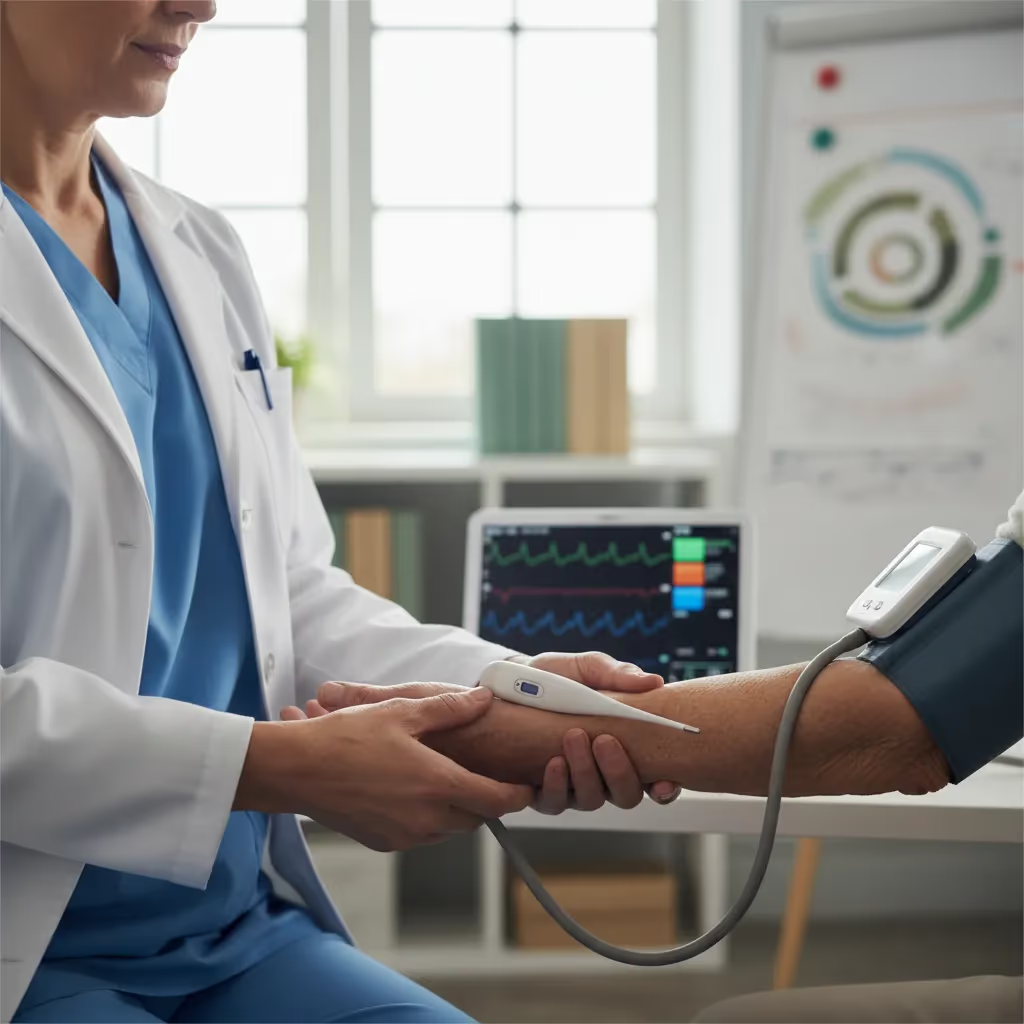
A geriatric nursing assistant specializes in hands-on care for older adults — typically those 65 and up who need help with mobility, hygiene, meals, and medication reminders. It's not just wiping counters and checking vitals. You're the person a resident sees first thing in the morning and last before bed. That relationship matters more than most people outside healthcare realize.
So what exactly separates a certified geriatric nursing assistant from a regular CNA? Training hours. A standard CNA certification covers general patient care across all age groups — pediatric, adult, elderly. The geriatric specialization adds focused coursework on dementia care, fall prevention, age-related chronic conditions like arthritis and osteoporosis, and end-of-life comfort measures. Some states bundle this into the base CNA curriculum. Others treat it as a separate credential you earn after your initial certification.
The geriatric nursing assistant vs CNA debate comes up constantly in nursing forums, and the honest answer is this: every geriatric nursing assistant is a CNA, but not every CNA has geriatric-specific training. If you're planning to work in long-term care facilities, memory care units, or assisted living — and roughly 60% of CNAs do — the geriatric focus isn't optional. It's where the jobs are.
This guide breaks down what you'll actually earn, what the certification process looks like state by state, and whether the extra training translates into higher pay. Short answer: it usually does, but the gap depends heavily on where you work and which setting you choose.
Fair warning: the numbers here come from BLS data and state-level salary surveys, not recruiter ads that inflate ranges to attract applicants.

The geriatric nursing assistant vs CNA comparison boils down to specialization depth. Both roles handle ADLs — activities of daily living — but geriatric-focused aides receive additional instruction on conditions that overwhelmingly affect older populations. Think Alzheimer's, Parkinson's, chronic heart failure, diabetic wound management. You don't just learn what these conditions are. You learn how to reposition a patient with advanced osteoporosis without causing a fracture, or how to redirect a resident with sundown syndrome at 4 PM when agitation peaks.
Now, the geriatric nursing assistant salary question. National median sits around $36,220 per year according to BLS — that's $17.41 an hour. But medians hide a lot. CNAs in skilled nursing facilities pull closer to $38,000. Hospital-based geriatric aides? $40,000-$44,000 in metro areas. Travel CNA contracts for geriatric specialists can push $1,200-$1,500 per week, though those come with instability and no benefits. The cna salary page has full state-by-state breakdowns if you want specifics.
Location swings the number dramatically. California's geriatric CNAs average $42,000. Mississippi's average $27,500. Same credential, same job title — $14,500 difference based purely on geography and cost of living adjustments. That gap widens when you factor in union vs. non-union facilities.
Here's what recruiters won't tell you: the geriatric nursing assistant salary premium over standard CNAs is real but modest — typically $1 to $3 more per hour. The bigger financial lever is your work setting, not the specialization itself. We'll break that down next.
The geriatric nursing assistant salary varies significantly by facility type — and that's the variable most new CNAs underestimate. Hospitals consistently pay the highest hourly rates, but they also hire fewer geriatric specialists because their patient populations skew younger and more acute. Nursing homes employ the most geriatric CNAs by volume, but their pay lags 8-12% behind hospital rates. Assisted living splits the difference.
Home health is the wildcard. Private-duty geriatric care can pay $18-$25/hour — well above the national median — but you're typically an independent contractor responsible for your own taxes, insurance, and transportation. No employer match on retirement. No paid sick days. The hourly rate looks great until you subtract 15.3% in self-employment tax and $400/month in health insurance premiums.
Memory care units represent a growing niche within the geriatric nursing assistant salary landscape. Facilities specializing in Alzheimer's and dementia patients often pay a $2-$4/hour premium because turnover is brutal and training requirements are higher. If you can handle the emotional weight — and not everyone can — memory care is one of the better-paying CNA specializations right now.
Weekend and night differentials add another $1-$3/hour in most facilities. Stack a night shift differential with memory care pay in a high-cost-of-living state, and you're looking at $22-$26/hour. Not bad for a credential that takes 4-12 weeks to earn. Compare that against hospice cna jobs near me for another high-demand specialty path.
Certification Path by Experience Level
Start with a state-approved CNA training program — 75 to 120 hours depending on your state. Programs run through community colleges, vocational schools, and some healthcare facilities that train in-house. After completing classroom and clinical hours, you'll sit for your state's competency exam (written + skills demonstration). Once certified, pursue geriatric-specific continuing education through organizations like the National Association of Geriatric Nursing Assistants. Total timeline: 8-16 weeks from enrollment to certification.
Let's talk about what the geriatric nursing assistant salary looks like across different career stages. Entry-level — meaning your first year — expect $14-$16/hour in most markets. That's not a lot, and anyone who tells you otherwise is selling something. But CNA pay scales upward faster than people expect. By year three, you're typically at $17-$19/hour. Five years in, with geriatric specialization and possibly a charge aide role, $20-$23/hour is realistic in urban areas.
The fastest salary jumps come from two moves: switching to a higher-paying facility type (nursing home → hospital) or picking up a second specialization (geriatric + wound care, geriatric + IV certification in states that allow it). Both require additional training, but neither requires going back to school full-time. Most are 20-40 hour certificate programs you can complete on weekends.
One path that's often overlooked — restorative cna work. Restorative CNAs focus on helping elderly patients regain independence after illness or surgery. It's a natural extension of geriatric care, pays $1-$3/hour more than standard floor CNA work, and positions you for rehabilitation aide roles if you decide to climb further.
Agency and travel work deserves a mention here too. Staffing agencies place geriatric CNAs in short-term contracts — usually 4-13 weeks — at facilities facing staff shortages. Pay rates run 30-50% above direct-hire positions. The trade-off: no stability, no benefits, constant relocation. Some people love it. Most burn out within two years.
The geriatric nursing assistant salary ceiling depends partly on where you physically work each day — and the daily grind varies wildly between settings. In a 100-bed nursing home, you might be assigned 8-12 residents per shift. That's tight. You're cycling through ADLs, vitals, repositioning immobile patients every two hours, answering call lights, and documenting everything. Twelve-hour shifts are standard in many facilities. Your feet will hurt. That's not a metaphor.
Hospital geriatric units move faster but with fewer patients — typically 5-8 per CNA. The acuity is higher, meaning your patients are sicker, more medically complex, and more likely to have IV lines, catheters, and wound dressings you'll need to work around. Hospitals also expect CNAs to assist with admissions and discharges, which adds paperwork.
Home health geriatric care is the opposite tempo. One patient, one-on-one, often for 4-8 hour shifts. You'll handle everything from bathing to light housekeeping to medication reminders. The intimacy of the relationship is different — you become part of someone's household. Some aides find this deeply rewarding. Others find the isolation and lack of team support difficult.
Assisted living sits in between. Residents are more independent than nursing home patients but still need daily assistance. Ratios run 10-15 residents per CNA. The pace is less intense, the medical complexity lower, and the geriatric nursing assistant salary in assisted living typically reflects that — about 5-8% below nursing home rates. Trade-off: less physical strain, more predictable schedules.
Pros and Cons of Geriatric CNA Work
- +High job demand — aging population means consistent openings nationwide
- +Short training time — certified in 4-12 weeks, earning immediately after
- +Meaningful daily impact on vulnerable patients' quality of life
- +Multiple work settings — hospitals, nursing homes, home health, agencies
- +Clear advancement path to LPN, RN, or specialized aide roles
- +Night and weekend differentials boost base pay by $1-$3/hour
- −Physically demanding — lifting, repositioning, and 12-hour shifts on your feet
- −Emotional toll from patient decline, death, and family grief
- −Below-average starting pay compared to other healthcare entry roles
- −High patient-to-CNA ratios in understaffed facilities create burnout
- −Limited scope of practice — can't administer medications in most states
- −Exposure to infectious diseases, aggressive patients, and workplace injuries
Let's address the geriatric nursing assistant salary by state — because geography is the single biggest predictor of your paycheck. Alaska, California, New York, Massachusetts, and Hawaii consistently top the charts. Alaska pays the highest average at $44,420/year, but factor in Anchorage's cost of living and your purchasing power isn't dramatically better than a CNA earning $35,000 in Texas.
The South and parts of the Midwest pay the least. Louisiana, Mississippi, Alabama, and Arkansas all fall below $30,000/year for median CNA wages. These states also tend to have lower training hour requirements — sometimes just 75 hours — and weaker union representation. The correlation between unionization and CNA pay isn't subtle: unionized facilities pay 12-18% more on average.
Here's a pattern worth knowing. States with certificate-of-need laws — which limit how many nursing home beds can exist in a given area — tend to have higher CNA wages. Fewer facilities means less competition for patients, higher reimbursement rates, and better staff pay. It's not intuitive, but scarcity of beds actually helps workers in this sector.
Overtime policies matter too. Federal law requires time-and-a-half after 40 hours per week, but some states — like California — mandate overtime after 8 hours in a single day. A California geriatric CNA working three 12-hour shifts earns 12 hours of overtime per week automatically. That adds $200-$300 per paycheck compared to the same schedule in a state with only weekly overtime rules.
Geriatric CNA Certification Checklist
- ✓Research your state's CNA training hour requirements (75-120 hours)
- ✓Enroll in a state-approved CNA program — community college, vocational school, or facility-based
- ✓Complete required classroom hours covering anatomy, infection control, and patient rights
- ✓Finish supervised clinical hours (16-40 hours) in an actual care facility
- ✓Pass your state competency exam — written test and skills demonstration
- ✓Apply for placement on your state's nurse aide registry
- ✓Complete background check and drug screening (required by most employers)
- ✓Pursue geriatric-specific CE courses — dementia care, fall prevention, palliative basics
- ✓Obtain CPR/BLS certification (American Heart Association or Red Cross)
- ✓Apply to facilities serving geriatric populations — nursing homes, assisted living, memory care units
The geriatric nursing assistant salary picture changes when you factor in benefits — or the lack of them. Full-time CNAs at hospitals and large nursing home chains typically get health insurance, paid time off, retirement contributions (usually 3% match), and tuition reimbursement. Small private facilities and home health agencies? You might get health insurance after 90 days. Maybe. PTO accrual is usually stingy — 5-10 days your first year.
Tuition reimbursement deserves special attention. Several major nursing home chains — Brookdale, Kindred, Genesis Healthcare — offer LPN and RN bridge programs that pay for your nursing school while you continue working as a CNA. This is the fastest path from geriatric aide to licensed nurse, and it costs you nothing out of pocket. The catch: you typically commit to working at that facility for 2-3 years after graduation. Break the contract early and you owe back the tuition. Worth it for most people.
Union membership is another lever. SEIU, AFSCME, and 1199SEIU represent CNAs in about 30% of long-term care facilities. Union CNAs earn 12-18% more, get better staffing ratios (which means less burnout), and have grievance protections against unfair scheduling. Dues run $40-$80/month. If you're in a state with strong union presence — New York, California, Illinois, Massachusetts — joining is almost always financially smart.
Don't overlook shift differentials when calculating your real geriatric nursing assistant salary. Evening shifts (3-11 PM) typically add $1-$2/hour. Nights (11 PM-7 AM) add $2-$3. Weekends stack on top of that. A geriatric CNA working Friday-Sunday nights in a unionized California memory care unit could realistically earn $28-$32/hour — that's $58,000-$66,000 annualized. Not what you'd expect from a low-paying healthcare job.
Career advancement from geriatric CNA is more structured than people assume. The geriatric nursing assistant salary ceiling as a floor aide tops out around $22-$25/hour in most markets. To break past that, you need either a supervisory role or a clinical upgrade. Charge aide positions — where you oversee a team of 3-5 CNAs on a unit — add $1-$2/hour and build management experience. From there, the natural next step is LPN licensure.
LPN programs take 12-18 months and roughly double your earning potential. The jump from CNA ($36K median) to LPN ($54K median) is the biggest single salary increase in the nursing ladder. RN programs take another 2-3 years on top of that but push earnings to $81K median. Every rung is accessible without a four-year degree — that matters for people who can't afford to stop working for years at a time.
Specialized certifications offer lateral growth without going back to school. Certified Medication Aide (CMA) lets you administer medications in most states — adds $2-$4/hour. Wound care certification is another premium skill. Phlebotomy certification takes just 4-8 weeks and opens hospital lab positions. Each of these stacks onto your geriatric nursing assistant salary and makes you harder to replace.
The smartest move? Combine geriatric specialization with one clinical upgrade and one supervisory credential. A charge aide with CMA certification and geriatric training earns $23-$28/hour in competitive markets. That's $48,000-$58,000 without an associate degree. Not glamorous — but financially solid and genuinely needed work. Check out cna jobs for current openings across facility types.
Most states require CNAs to complete 12-48 hours of continuing education every 1-2 years and maintain active employment as a nurse aide (typically 8 hours of paid work within the renewal period). Letting your certification lapse means retaking the competency exam from scratch — including the skills demonstration. Set calendar reminders 90 days before your renewal deadline. Your state nursing board website has exact deadlines and CE requirements.
The geriatric nursing assistant salary conversation wouldn't be complete without addressing the elephant in the room: is this career sustainable long-term? Physically, CNA work takes a real toll. Back injuries are the most common workplace complaint, followed by shoulder strains and knee problems. The Bureau of Labor Statistics ranks nursing assistants among the top 10 occupations for musculoskeletal injuries. That's not a scare tactic — it's just data.
Burnout rates run high. A 2024 survey by the American Health Care Association found that 43% of CNAs leave the profession within their first two years. Staffing shortages mean you're often covering for absent coworkers, which means heavier patient loads and less time per resident. The emotional weight of geriatric care — watching patients you've bonded with decline and die — compounds the physical exhaustion.
But the people who stay? They tend to stay for decades. CNAs who make it past the two-year mark report higher job satisfaction than many other healthcare workers. The relationships you build with residents and their families create a sense of purpose that's hard to replicate in other entry-level jobs. And the practical benefits — flexible scheduling, job security regardless of economic conditions, tuition reimbursement paths to nursing school — keep people anchored.
If you're considering this path, go in with realistic expectations about the geriatric nursing assistant salary floor ($28K-$32K your first year in most states) and a concrete plan for moving up within 3-5 years. The credential is a launchpad, not a destination. Use it that way and the math works in your favor.
CNA Practice Test Questions
Prepare for the CNA - Certified Nursing Assistant exam with our free practice test modules. Each quiz covers key topics to help you pass on your first try.
CNA Activities of Daily Living
CNA Exam Questions covering Activities of Daily Living. Master CNA Test concepts for certification prep.
CNA Aging Process
Free CNA Practice Test featuring Aging Process. Improve your CNA Exam score with mock test prep.
CNA Anatomy and Physiology Basics
CNA Mock Exam on Anatomy and Physiology Basics. CNA Study Guide questions to pass on your first try.
CNA Assisting with Daily Living
CNA Test Prep for Assisting with Daily Living. Practice CNA Quiz questions and boost your score.
CNA Assisting with Range of Motion Exercises
CNA Questions and Answers on Assisting with Range of Motion Exercises. Free CNA practice for exam readiness.
CNA Basic Human Anatomy and Age-Related Ch...
CNA Mock Test covering Basic Human Anatomy and Age-Related Changes. Online CNA Test practice with instant feedback.
CNA Basic Nursing Skills
Free CNA Quiz on Basic Nursing Skills. CNA Exam prep questions with detailed explanations.
CNA Basic Nursing Skills 10
CNA Practice Questions for Basic Nursing Skills 10. Build confidence for your CNA certification exam.
CNA Basic Nursing Skills 11
CNA Test Online for Basic Nursing Skills 11. Free practice with instant results and feedback.
CNA Basic Nursing Skills 1
CNA Study Material on Basic Nursing Skills 1. Prepare effectively with real exam-style questions.
CNA Basic Nursing Skills 12
Free CNA Test covering Basic Nursing Skills 12. Practice and track your CNA exam readiness.
CNA Basic Nursing Skills 13
CNA Exam Questions covering Basic Nursing Skills 13. Master CNA Test concepts for certification prep.
CNA Basic Nursing Skills 14
Free CNA Practice Test featuring Basic Nursing Skills 14. Improve your CNA Exam score with mock test prep.
CNA Basic Nursing Skills 15
CNA Mock Exam on Basic Nursing Skills 15. CNA Study Guide questions to pass on your first try.
CNA Basic Nursing Skills 16
CNA Test Prep for Basic Nursing Skills 16. Practice CNA Quiz questions and boost your score.
CNA Basic Nursing Skills 17
CNA Questions and Answers on Basic Nursing Skills 17. Free CNA practice for exam readiness.
CNA Basic Nursing Skills 18
CNA Mock Test covering Basic Nursing Skills 18. Online CNA Test practice with instant feedback.
CNA Basic Nursing Skills 19
Free CNA Quiz on Basic Nursing Skills 19. CNA Exam prep questions with detailed explanations.
CNA Basic Nursing Skills 20
CNA Practice Questions for Basic Nursing Skills 20. Build confidence for your CNA certification exam.
CNA Basic Nursing Skills 21
CNA Test Online for Basic Nursing Skills 21. Free practice with instant results and feedback.
CNA Basic Nursing Skills 2
CNA Study Material on Basic Nursing Skills 2. Prepare effectively with real exam-style questions.
CNA Basic Nursing Skills 3
Free CNA Test covering Basic Nursing Skills 3. Practice and track your CNA exam readiness.
CNA Basic Nursing Skills 4
CNA Exam Questions covering Basic Nursing Skills 4. Master CNA Test concepts for certification prep.
CNA Basic Nursing Skills 5
Free CNA Practice Test featuring Basic Nursing Skills 5. Improve your CNA Exam score with mock test prep.
CNA Basic Nursing Skills 6
CNA Mock Exam on Basic Nursing Skills 6. CNA Study Guide questions to pass on your first try.
CNA Basic Nursing Skills 7
CNA Test Prep for Basic Nursing Skills 7. Practice CNA Quiz questions and boost your score.
CNA Basic Nursing Skills 8
CNA Questions and Answers on Basic Nursing Skills 8. Free CNA practice for exam readiness.
CNA Basic Nursing Skills 9
CNA Mock Test covering Basic Nursing Skills 9. Online CNA Test practice with instant feedback.
CNA Basic Restorative Services
Free CNA Quiz on Basic Restorative Services. CNA Exam prep questions with detailed explanations.
CNA Basic Restorative Services 1
CNA Practice Questions for Basic Restorative Services 1. Build confidence for your CNA certification exam.
CNA Bathing and Dressing
CNA Test Online for Bathing and Dressing. Free practice with instant results and feedback.
CNA Body Mechanics
CNA Study Material on Body Mechanics. Prepare effectively with real exam-style questions.
CNA Career Advancement and Opportunities
Free CNA Test covering Career Advancement and Opportunities. Practice and track your CNA exam readiness.
CNA Career Opportunities and Benefits
CNA Exam Questions covering Career Opportunities and Benefits. Master CNA Test concepts for certification prep.
CNA Care for Residents with Cognitive Impa...
Free CNA Practice Test featuring Care for Residents with Cognitive Impairment. Improve your CNA Exam score with mock test prep.
CNA Care of Cognitively Impaired Residents
CNA Mock Exam on Care of Cognitively Impaired Residents. CNA Study Guide questions to pass on your first try.
CNA Care of Cognitively Impaired Residents 1
CNA Test Prep for Care of Cognitively Impaired Residents 1. Practice CNA Quiz questions and boost your score.
CNA Care Of Cognitively Impaired Residents 4
CNA Questions and Answers on Care Of Cognitively Impaired Residents 4. Free CNA practice for exam readiness.
CNA Common Medical Terms and Abbreviations
CNA Mock Test covering Common Medical Terms and Abbreviations. Online CNA Test practice with instant feedback.
CNA Communication and Interpersonal Skills
Free CNA Quiz on Communication and Interpersonal Skills. CNA Exam prep questions with detailed explanations.
CNA Communication and Interpersonal Skills 1
CNA Practice Questions for Communication and Interpersonal Skills 1. Build confidence for your CNA certification exam.
CNA Communication And Interpersonal Skills 4
CNA Test Online for Communication And Interpersonal Skills 4. Free practice with instant results and feedback.
CNA Eligibility and Qualifications
CNA Study Material on Eligibility and Qualifications. Prepare effectively with real exam-style questions.
CNA Emergency Procedure
Free CNA Test covering Emergency Procedure. Practice and track your CNA exam readiness.
CNA Ethics and Professionalism
CNA Exam Questions covering Ethics and Professionalism. Master CNA Test concepts for certification prep.
CNA Exam Structure and Content
Free CNA Practice Test featuring Exam Structure and Content. Improve your CNA Exam score with mock test prep.
CNA Feeding and Hydration
CNA Mock Exam on Feeding and Hydration. CNA Study Guide questions to pass on your first try.
CNA Infection Control
CNA Test Prep for Infection Control. Practice CNA Quiz questions and boost your score.
CNA Infection Control and Safety
CNA Questions and Answers on Infection Control and Safety. Free CNA practice for exam readiness.
CNA Isolation Precautions
CNA Mock Test covering Isolation Precautions. Online CNA Test practice with instant feedback.
CNA Legal & Ethical Behaviours
Free CNA Quiz on Legal & Ethical Behaviours. CNA Exam prep questions with detailed explanations.
CNA Legal & Ethical Behaviours 1
CNA Practice Questions for Legal & Ethical Behaviours 1. Build confidence for your CNA certification exam.
CNA Legal & Ethical Behaviours 4
CNA Test Online for Legal & Ethical Behaviours 4. Free practice with instant results and feedback.
CNA Mental Health and Social Services Needs
CNA Study Material on Mental Health and Social Services Needs. Prepare effectively with real exam-style questions.
CNA Mental Health and Social Services Needs 1
Free CNA Test covering Mental Health and Social Services Needs 1. Practice and track your CNA exam readiness.
CNA Mental Health And Social Services Needs 4
CNA Exam Questions covering Mental Health And Social Services Needs 4. Master CNA Test concepts for certification prep.
CNA Nutrition and Hydration Management
Free CNA Practice Test featuring Nutrition and Hydration Management. Improve your CNA Exam score with mock test prep.
CNA Patient Care Procedure
CNA Mock Exam on Patient Care Procedure. CNA Study Guide questions to pass on your first try.
CNA Personal Care Skills
CNA Test Prep for Personal Care Skills. Practice CNA Quiz questions and boost your score.
CNA Personal Care Skills 1
CNA Questions and Answers on Personal Care Skills 1. Free CNA practice for exam readiness.
CNA Personal Care Skills 4
CNA Mock Test covering Personal Care Skills 4. Online CNA Test practice with instant feedback.
CNA Personal Care Skills 5
Free CNA Quiz on Personal Care Skills 5. CNA Exam prep questions with detailed explanations.
CNA Personal Hygiene and Grooming
CNA Practice Questions for Personal Hygiene and Grooming. Build confidence for your CNA certification exam.
CNA Practice Test - Basic Nursing Skills #2
CNA Test Online for Practice Test - Basic Nursing Skills #2. Free practice with instant results and feedback.
CNA Practice Test - Basic Nursing Skills #2 1
CNA Study Material on Practice Test - Basic Nursing Skills #2 1. Prepare effectively with real exam-style questions.
CNA Preventing Patient Falls and Injuries
Free CNA Test covering Preventing Patient Falls and Injuries. Practice and track your CNA exam readiness.
CNA Promoting Resident Independence and Ch...
CNA Exam Questions covering Promoting Resident Independence and Choice. Master CNA Test concepts for certification prep.
CNA Proper Hand Hygiene and PPE Usage
Free CNA Practice Test featuring Proper Hand Hygiene and PPE Usage. Improve your CNA Exam score with mock test prep.
CNA Resident Rights and Communication
CNA Mock Exam on Resident Rights and Communication. CNA Study Guide questions to pass on your first try.
CNA Resident’s Rights
CNA Test Prep for Resident’s Rights. Practice CNA Quiz questions and boost your score.
CNA Resident's Rights 1
CNA Questions and Answers on Resident's Rights 1. Free CNA practice for exam readiness.
CNA Resident's Rights 4
CNA Mock Test covering Resident's Rights 4. Online CNA Test practice with instant feedback.
CNA Roles and Responsibilities
Free CNA Quiz on Roles and Responsibilities. CNA Exam prep questions with detailed explanations.
CNA Safety and Emergency Procedures
CNA Practice Questions for Safety and Emergency Procedures. Build confidence for your CNA certification exam.
CNA Safety and Emergency Procedures 1
CNA Test Online for Safety and Emergency Procedures 1. Free practice with instant results and feedback.
CNA Safety And Emergency Procedures 4
CNA Study Material on Safety And Emergency Procedures 4. Prepare effectively with real exam-style questions.
CNA Safety and Infection Control
Free CNA Test covering Safety and Infection Control. Practice and track your CNA exam readiness.
CNA Scope of Practice
CNA Exam Questions covering Scope of Practice. Master CNA Test concepts for certification prep.
CNA Skills and Competencies
Free CNA Practice Test featuring Skills and Competencies. Improve your CNA Exam score with mock test prep.
CNA Supporting Rehabilitation Activities
CNA Mock Exam on Supporting Rehabilitation Activities. CNA Study Guide questions to pass on your first try.
CNA The Nurse Aide's Role and Responsibili...
CNA Test Prep for The Nurse Aide's Role and Responsibilities. Practice CNA Quiz questions and boost your score.
CNA Time Management and Prioritization
CNA Questions and Answers on Time Management and Prioritization. Free CNA practice for exam readiness.
CNA Toileting and Elimination
CNA Mock Test covering Toileting and Elimination. Online CNA Test practice with instant feedback.
CNA Using Adaptive Devices
CNA Practice Questions for Using Adaptive Devices. Build confidence for your CNA certification exam.
Work-life balance as a geriatric nursing assistant depends almost entirely on your employer and shift pattern. Three 12-hour shifts per week is the most common schedule in nursing homes and hospitals — that gives you four days off, which sounds great until you realize those 12 hours are physically grueling and your days off are partly spent recovering. Eight-hour shifts across five days feel more balanced but limit your free time for school or second jobs.
Mandatory overtime is the scheduling issue nobody warns you about. When a facility is short-staffed — and geriatric care facilities are almost always short-staffed — your shift can be extended by 4-8 hours with minimal notice. Some states have laws limiting mandatory overtime for healthcare workers. Others don't. Ask about this in every job interview. The answer tells you more about working conditions than any Glassdoor review.
The geriatric nursing assistant salary looks different when you calculate effective hourly rate — meaning your actual take-home divided by all hours worked, including mandatory overtime you didn't plan for. A $17/hour job that regularly requires 48-hour weeks works out to an effective rate closer to $15 when you account for the tax bracket bump on overtime earnings. Track your hours manually. Payroll errors in healthcare facilities are shockingly common.
Weekend-only schedules — often called "Baylor shifts" — deserve mention. Some facilities offer premium weekend pay ($2-$5/hour above base) for CNAs who commit to working every Saturday and Sunday. That's 24-26 hours per week at elevated rates, leaving weekdays free for school. If you're pursuing LPN or RN while working, Baylor shifts at a geriatric facility might be the most financially efficient arrangement available.
CNA Questions and Answers
About the Author

Registered Nurse & Healthcare Educator
Johns Hopkins University School of NursingDr. Sarah Mitchell is a board-certified registered nurse with over 15 years of clinical and academic experience. She completed her PhD in Nursing Science at Johns Hopkins University and has taught NCLEX preparation and clinical skills courses for nursing students across the United States. Her research focuses on evidence-based exam preparation strategies for healthcare certification candidates.
Join the Discussion
Connect with other students preparing for this exam. Share tips, ask questions, and get advice from people who have been there.
View discussion (8 replies)