
General Contractor License South Carolina: Full Guide 2026 September
Free General Contractor License South practice test with questions and answer explanations. 🧠 Prepare for the 2026 September exam with instant scoring.

South Carolina General Contractor Licensing Overview
Getting a general contractor license in South Carolina isn't optional if you want to legally contract construction work in the state. South Carolina has one of the more structured licensing systems in the Southeast — the state licenses contractors directly rather than leaving it entirely to municipalities, and the process involves both a technical exam and financial review.
The South Carolina Contractor's Licensing Board (CLB) oversees all contractor licensing. They issue several license types, and the one you need depends on the type of work you do and the dollar value of projects you want to contract. Understanding which license fits your situation before you start the application saves a lot of time and hassle.
Types of General Contractor Licenses in South Carolina
South Carolina categorizes contractor licenses by work type and financial tier:
- General Building Contractor: For commercial and residential building construction, renovations, and additions. This is the most common license for general contractors.
- Residential Builder: Specifically for residential construction — new homes, additions, alterations. Required for any residential project over $5,000.
- Specialty Contractor: For specific trade work — mechanical, electrical, plumbing, HVAC. These require separate specialty licenses.
Within general building contractor licensing, there are financial size classifications — Class I (unlimited), Class II (up to $5 million), Class III (up to $1.5 million), and Class IV (up to $300,000). Higher classes require stronger financial documentation and higher exam scores. Most contractors starting out aim for Class II or III.
Exam Requirements for South Carolina GC License
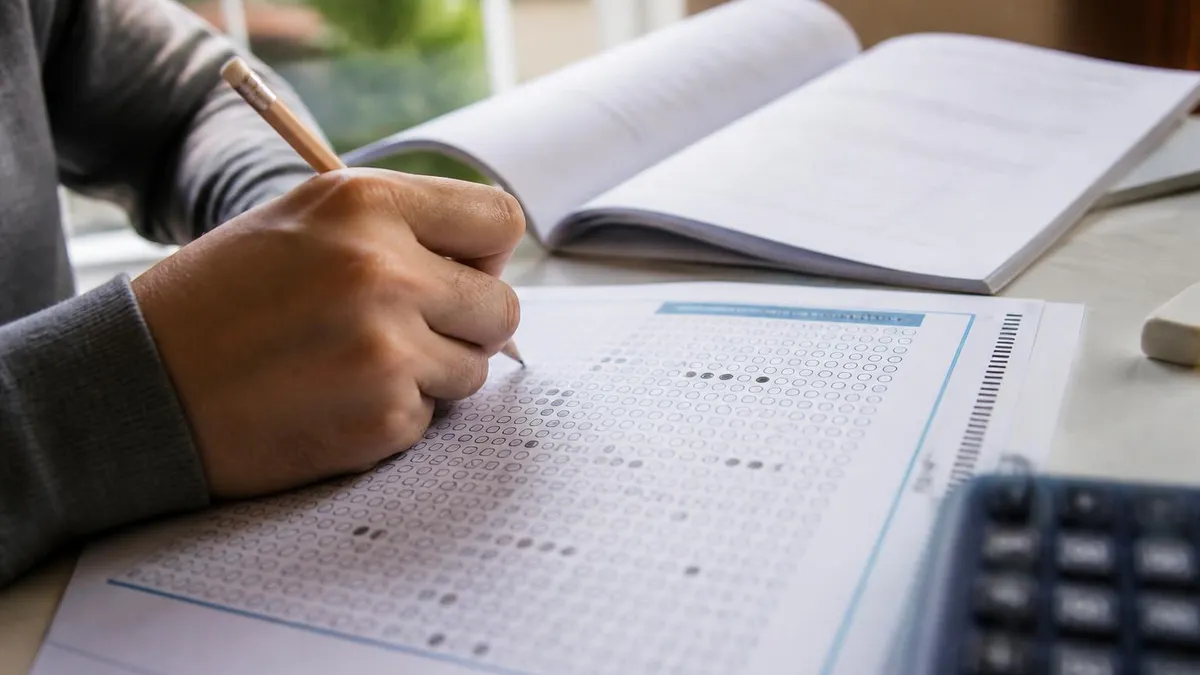
South Carolina uses the PSI testing platform for contractor licensing exams. Most applicants take the General Building Contractor exam — a 120-question test covering construction law, project management, business practices, and trade knowledge. Passing score is typically 70%.
You'll need to demonstrate knowledge of South Carolina-specific laws and regulations, not just general construction principles. The South Carolina Contractor's Licensing Board provides an exam content outline — use it as your study framework.
The general contractor path in South Carolina also requires passing a business and law exam component. Some applicants take this as a separate exam; others take combined versions. Check the CLB website for current exam structure.
Did You Know? Passing the General Contractor License exam on your first attempt saves both time and money. Start with diagnostic practice tests to identify weak areas.
Application Requirements and Process
The application process in South Carolina involves several moving parts. Here's what you'll typically need:
- Completed application form with a license fee ($75–$200 depending on license type and classification)
- Proof of experience — typically 4+ years in the trade or construction management
- Financial statements (balance sheet and income statement for the prior year)
- Certificate of insurance (general liability, minimum $300,000; workers' compensation if you have employees)
- Exam score reports from PSI
- Background check consent
South Carolina doesn't issue licenses to corporations directly — the license is issued to a qualifying party (QP), an individual who passes the exam and meets the experience requirements. That QP is responsible for the licensed entity's work. If your QP leaves the company, you need to designate a new one within a set period or your license lapses.
Financial Requirements by Class
The financial documentation requirements scale with license class. For Class III (projects up to $1.5M), you need to demonstrate net worth of at least $10,000. For Class II (up to $5M), the minimum net worth climbs to $25,000. Class I (unlimited) requires $75,000 net worth minimum. These aren't suggestions — the Board reviews financial statements and can deny or downgrade your classification if you don't meet the threshold.
How to Study for the South Carolina Contractor Exam
The exam covers a mix of technical construction knowledge and South Carolina-specific regulatory content. For the technical side, focus on: project planning and scheduling, construction methods, building codes (particularly International Building Code as adopted in SC), estimating, and contract administration.
For the law and business sections, review South Carolina contractor statutes, lien law, contract types, insurance requirements, and OSHA regulations as they apply in the state. The CLB provides a reference list of source materials — get the specific editions they reference, not just any edition of the code books.
Practice tests are valuable for building familiarity with the question style before exam day. The general contractor license process in other states uses many of the same content areas — so cross-state practice helps too, though South Carolina law specifics require state-specific prep.
Reciprocity and Out-of-State Licenses
South Carolina has reciprocity agreements with several states — meaning if you hold an active contractor license in a reciprocal state, you may be able to get a South Carolina license without retaking the full exam. Current reciprocal states include Georgia, North Carolina, Virginia, and a few others.
Reciprocity isn't automatic. You still need to apply, pay fees, provide financial documentation, and typically pass the South Carolina law and business exam. But it can eliminate the need to retake the technical exam from scratch. Check current reciprocity status with the CLB before assuming eligibility — agreements can change.
License Renewal and Continuing Education
South Carolina general contractor licenses renew biennially (every two years). Renewal requires continuing education — typically 8 hours of approved CE per renewal cycle. CE topics include code updates, business practices, and safety. The CLB maintains a list of approved CE providers.
Renewal fees vary by license type. Keep your contact information current with the CLB — renewal notices go to the address on file, and missing a renewal can result in late fees or license lapse. A lapsed license means you can't legally contract work until it's reinstated.

General Contractor License: Pros and Cons
- +general contractor license — general Contractor License credential is recognized by employers and industry professionals
- +Higher earning potential compared to non-credentialed peers
- +Expanded career opportunities and professional advancement
- +Structured learning path builds comprehensive knowledge
- +Professional development that stays current with industry standards
- −Preparation requires significant time and study commitment
- −Associated costs for exams, materials, and renewal fees
- −Continuing education needed to maintain credentials
- −Competition for advanced positions can be challenging
- −Requirements and standards may vary by state or region

Prepare for the South Carolina Contractor Exam
The PSI exam for South Carolina general contractor licensing covers a lot of ground. Building codes, contract law, project management, insurance, and South Carolina-specific statutes all appear. The candidates who struggle most are those who only study general construction knowledge and skip the regulatory and business law content.
Our general contractor practice tests cover the technical content you'll see on the exam — building codes, MEP systems, safety, and project management. Work through these regularly in the weeks leading up to your exam date. They'll help identify which topic areas need more attention and build the exam familiarity that reduces test-day anxiety.
The general contractor license process varies by state, but the underlying knowledge base is consistent. Build that knowledge solidly, understand South Carolina's specific requirements, and you'll be well prepared.
About the Author

Educational Psychologist & Academic Test Preparation Expert
Columbia University Teachers CollegeDr. Lisa Patel holds a Doctorate in Education from Columbia University Teachers College and has spent 17 years researching standardized test design and academic assessment. She has developed preparation programs for SAT, ACT, GRE, LSAT, UCAT, and numerous professional licensing exams, helping students of all backgrounds achieve their target scores.
Join the Discussion
Connect with other students preparing for this exam. Share tips, ask questions, and get advice from people who have been there.
View discussion (7 replies)