
Religious Studies GCSE AQA Specification: Papers, Topics and Revision Plan 2026
📚 The religious studies gcse aqa specification (8062) has two 1h45 papers, two religions and four themes. See the format, topics and a revision plan.
The religious studies gcse aqa specification (Religious Studies A, code 8062) is assessed by two written exams, each 1 hour 45 minutes and worth 96 marks and 50% of the grade. Students study two religions in Paper 1 and four themes in Paper 2, with every exam sitting at the end of the course.
Religious Studies Gcse Aqa Specification: Key Facts (Updated October 2026)
| Fact | Details | Source |
|---|---|---|
| Qualification | AQA GCSE Religious Studies A, specification code 8062 | AQA |
| Exam papers | Two written papers, each 1 hour 45 minutes, 96 marks, 50% of the grade | AQA |
| Content | Two religions (Paper 1) and four themes (Paper 2) | AQA |
| Grading | Graded 9 to 1 in England; grade 4 is the standard pass | GOV.UK |
| Delivery | Two-year course; all written exams sat in one series at the end, at your school or college exam centre | GOV.UK |
| Summer 2026 results | 67.3% of UK GCSE results were graded 4/C or above, compared with 67.4% in 2025 | JCQ |
| Late entry (summer 2027) | AQA late fee from 22 February 2027 (100% of the entry fee on top); very late fee after 21 April 2027 (150%) | AQA |
| Retakes | In England, the only GCSE resits outside the summer series are English Language and Maths every November, so religious studies is retaken the following summer | GOV.UK |
Because many readers searching from the United States are unfamiliar with the term, here is the definition of GCSE: the General Certificate of Secondary Education is the main qualification English students take at about age 16 after a two-year course. To define GCSE in practical terms, each subject is graded 9 to 1 on exams sat in a single summer series. Our gcse hub lists every subject and links to the wider revision resources.
Religious studies is not the same as religious instruction in a faith school. The GCSE does not ask you to believe anything. It asks you to explain what believers teach, apply those teachings to modern issues, and evaluate arguments from different perspectives. That is why the religious education gcse aqa course rewards clear explanation and balanced judgment far more than memorized facts, and why students from any background, including no religion at all, can score a top grade.
The specification is published by AQA, one of the main exam boards in England, and it sets out exactly what can be examined. Every question on the paper must come from the listed content, which makes the document the most reliable revision map available. If a topic is not in the specification, it will not be asked, and if it is listed, it can appear in any series. Treat the specification as a checklist, not background reading.
Every year, students search for leaked gcse papers hoping for a shortcut, but that route is a dead end. Exam boards write new papers each series, keep them secure until the exam, and treat leaks seriously. The legitimate alternative is better anyway: released past papers, mark schemes and examiner reports show exactly how marks are awarded, and they are free. Use those, not rumors, to build confidence before the real exam, ideally under timed conditions.
Format matters as much as content. Each paper uses short-answer questions worth 1, 2, 4 and 5 marks, followed by a 12-mark evaluation question that asks you to weigh competing views and reach a justified conclusion. Candidates who spread their time evenly, roughly a minute per mark across the 105 minutes, finish comfortably, while those who over-write the early questions often run short on the 12-marker, which carries the most marks on the page.
This guide walks through the full structure: what each component covers, how the marks work, which themes pair well with which religions, and how to turn the specification into a revision plan and exam technique. It also answers the questions students ask most often, from how to quote scripture accurately to where past papers live. Read it once for the overview, then return to the checklist and tips sections when you start revising seriously.
Religious Studies GCSE AQA by the Numbers
What Does the AQA Religious Studies GCSE Cover?
One written paper of 1 hour 45 minutes worth 96 marks and 50% of the grade. You answer on two religions, covering beliefs, teachings and practices. Questions rise from short recall to a 12-mark evaluation, so you need secure knowledge and the ability to argue a justified conclusion.
A second paper of the same length and weight, covering four themes chosen from six. You apply Christianity, a second religion and non-religious views to issues such as abortion, war, crime and the existence of God, so prepare to compare viewpoints in every answer.
Schools choose two from Christianity, Catholic Christianity, Islam, Judaism, Buddhism, Hinduism and Sikhism, with at least one being Christianity or Catholic Christianity. Confirm your pairing early so revision time is not wasted on traditions that are not on your paper.
Relationships and families; Religion and life; The existence of God and revelation; Religion, peace and conflict; Religion, crime and punishment; and Religion, human rights and social justice. Your school teaches four of these, and Paper 2 tests only those four.
AO1 rewards knowledge and understanding of beliefs, teachings and practices. AO2 rewards analysis and evaluation of them. Each carries half of the marks, so memorizing alone caps your grade, while explained, balanced arguments unlock the top levels on long answers.
What Is in the GCSE AQA Religious Studies Specification?
The GCSE AQA religious studies specification splits into two components. Component 1, Study of religions, covers the beliefs, teachings and practices of two religions. Component 2, Thematic studies, covers four themes that apply religious and non-religious views to ethical and philosophical issues. Each component is one written paper of 1 hour 45 minutes, worth 96 marks and 50% of the qualification, so neither paper can be neglected without costing a full grade. Schools usually teach them in parallel.
For Component 1 your school chooses two religions from Christianity, Catholic Christianity, Islam, Judaism, Buddhism, Hinduism and Sikhism, and at least one must be Christianity or Catholic Christianity. Check which two you are actually taught. For each religion the paper tests beliefs and teachings, such as the nature of God or life after death, and practices, such as worship, festivals and pilgrimage, with questions that build from recall to evaluation.
Component 2 requires four themes from six: Relationships and families; Religion and life; The existence of God and revelation; Religion, peace and conflict; Religion, crime and punishment; and Religion, human rights and social justice. The religion and life GCSE theme, for example, covers the origins of the universe, abortion, euthanasia and animal rights. Here the main religious viewpoints are Christianity and one other religion, alongside non-religious views such as humanism. Schools normally select the four themes for the whole class.
Marks are split evenly between two assessment objectives. AO1 rewards knowledge and understanding of beliefs, teachings and practices, while AO2 rewards analysis and evaluation of those same ideas. This 50-50 split is why memorizing alone caps your grade. Our aqa gcse checklist for Biology shows how the same board turns a specification into a skills list, and you can build an equivalent list for religious studies yourself.
Anyone searching for leaked gcse papers 2020 is chasing a ghost: England cancelled the summer 2020 exams during the pandemic, so those papers were never sat and grades were awarded differently. That is history, not a revision tool. For current rules on entries, dates and formats, read the GCSE exam guide, and rely on the specification and official past papers rather than any old rumor about an exam that was never sat.
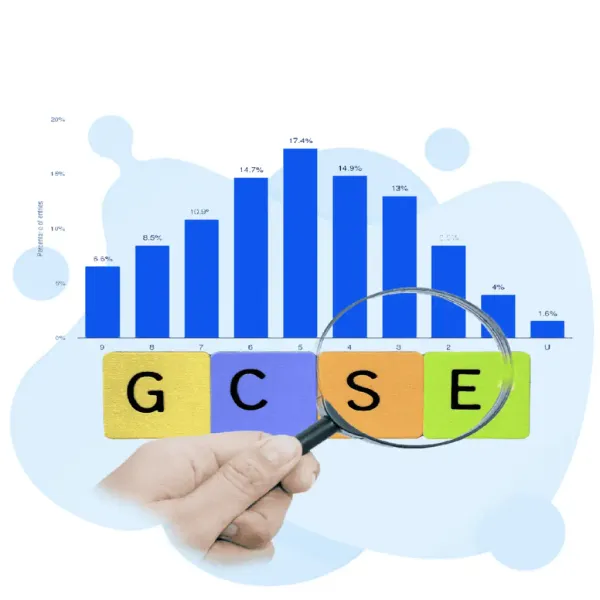
Grades run from 9 (highest) to 1, and a grade 4 is the standard pass. In summer 2026, 67.3% of UK GCSE results were grade 4 or above, according to JCQ, almost identical to 67.4% in 2025. Religious studies is a full GCSE, so it counts the same as any other full course when colleges review applications. Aim for a secure 5 or higher if you want your sixth form and college options kept wide.
Entries are made through your school or college exam centre, so you rarely deal with AQA directly. For the summer 2027 series, AQA applies a late entry fee from 22 February 2027, adding 100% of the normal fee, and a very late entry fee of 150% after 21 April 2027. Ask your exams officer for the internal deadline, which is usually earlier than the board's, and confirm in writing that you are entered.
How Should You Use GCSE Mocks for Religious Studies GCSE?
A mock GCSE for Component 1 should cover both of your chosen religions in a single 1 hour 45 minute sitting. Time yourself strictly, giving roughly 50 minutes to each religion and keeping a few minutes spare for checking. Answer the 1, 2, 4 and 5-mark questions first on each religion, then give the 12-mark evaluation the remaining time so you never abandon the highest-value question. This pacing mirrors the real paper.
Use questions from released past papers wherever possible, because they copy the exact command words and mark allocations. Afterward, list every belief or teaching you could not recall, such as the Trinity, the Five Pillars or the Eightfold Path, and turn each gap into a flashcard. Repeat the same paper two weeks later to test genuine retention instead of simple recognition of answers you have already seen.
Is Religious Studies GCSE Worth Taking?
- +Builds essay-writing and evaluation skills that transfer to history, English and law
- +Content is stable, with clear published topics and no hidden coursework
- +Students of any belief or none can achieve top grades
- +Ethical topics such as war, crime and medical ethics stay relevant to current events
- +Past papers and mark schemes from AQA are free to download
- +Strong preparation for philosophy, theology, politics and sociology at A-level
- −Two 1 hour 45 minute exams put all the weight on the final series
- −Long answers demand fast, structured writing under time pressure
- −Heavy content load across two religions and four themes
- −Accurate scripture and teaching quotations take real memorization
- −Sensitive topics require careful, balanced wording to earn marks
- −Some students underestimate the subject and leave revision too late
What Should You Do to Revise Religious Education GCSE AQA?
- ✓Download the current AQA specification and highlight every topic you are taught.
- ✓Confirm which two religions and four themes your school entered you for.
- ✓Write a one-page summary for each topic with key terms and two quotations.
- ✓Learn the 12-mark structure: argument, counter-argument, justified conclusion.
- ✓Make flashcards for sources of authority such as scripture and creeds.
- ✓Sit one timed paper every fortnight in the final eight weeks.
- ✓Mark each answer against the published levels of response.
- ✓Practice stating at least one non-religious view for every theme.
- ✓Ask a teacher to review one 12-mark answer per week.
- ✓Reread the specification the night before each paper to spot gaps.
Always finish the 12-mark answer with a judgment
Most lost marks on long answers come from description without a verdict. State your conclusion, name the strongest argument that supports it, and explain why a rival view is weaker. That single habit can move an answer up a full level.
Why Is the Trinity Important to Christianity GCSE?
The Trinity is important to Christianity because it defines who God is: one God in three persons, the Father, the Son (Jesus) and the Holy Spirit. Christians believe this explains how God can be creator, redeemer and ever-present guide at once. In the AQA specification, the Trinity sits inside beliefs and teachings, so expect it in short-answer questions as well as in 12-mark evaluations about the nature of God and how believers experience him.
Key sources help you write precisely. Matthew 28:19 tells the disciples to baptize in the name of the Father, the Son and the Holy Spirit, and the Nicene Creed states belief in one God in three persons. At Jesus' baptism in Mark 1, the Father's voice, the Son and the Spirit as a dove appear together. Quoting one or two such passages accurately earns more credit than a vague reference to the Bible.
Questions sometimes ask for arguments against the Trinity. The standard points are that the word never appears in the Bible, that three persons in one God can seem illogical, and that other faiths reject it. Islam teaches tawhid, the absolute oneness of Allah, and Judaism affirms the Shema: the Lord our God, the Lord is one. Unitarian Christians also reject the doctrine, so criticism is not only from outside the faith.
Short, accurate quotations lift answers across Christianity. Useful ones include Genesis 1:27 on humans made in God's image, John 3:16 on God's love, John 14:6 where Jesus calls himself the way, the truth and the life, and Matthew 22:39 on loving your neighbor as yourself. Learn the idea behind each quotation and where it fits, because examiners reward relevance, not volume. A quote followed by one sentence of explanation beats three unexplained references.
Islam appears in the course through the six beliefs of Sunni Islam or the five roots of Shi'a Islam, depending on tradition, plus practices such as the Five Pillars: shahadah, salah, zakat, sawm and hajj. Students must explain how Muslims practise these and why. For example, zakat is 2.5% of qualifying savings, a figure that is easy to recall and often rewarded. Remember that views within Islam differ, so write many Muslims believe where it applies.
Jewish beliefs about life after death vary by tradition. Orthodox Jews generally affirm the resurrection of the dead and Olam Ha-Ba, the world to come, while Reform Jews often focus on the immortality of the soul or on living ethically in this life. Maimonides' thirteen principles of faith include resurrection. Showing that Judaism contains a range of views is a classic route to the higher levels on 12-mark questions about the afterlife.
The same exam logic runs through every british gcse subject that asks for evaluation: say what people believe, show why views differ, then judge which argument is strongest. In religious studies, that means never presenting a whole religion as speaking with one voice. Name the tradition, name the source, and acknowledge disagreement. Candidates who do this consistently demonstrate exactly the balanced judgment the AO2 marks are designed to reward.
Exam papers are secure until the sitting, and anything posted online claiming to be a leak is either fake or a past paper in disguise. Use official AQA past papers and mark schemes, and check your exam centre's entry deadlines early: AQA's summer 2027 late fee starts on 22 February 2027.
What Do Religion and Life GCSE Topics Involve?
Religion and life is among the most popular themes because it feels immediate. It covers the origins of the universe, the sanctity of life, abortion, euthanasia, the afterlife and animal rights. For each issue, you must give a Christian view, a view from your second religion, and a non-religious view. Many Christians oppose abortion because life is sacred from conception, yet others accept it in cases such as serious risk to the mother, so avoid sweeping generalizations.
Two key terms recur: sanctity of life, the belief that life is holy and given by God, and quality of life, the idea that suffering can outweigh the value of continuing. Examiners love candidates who apply these terms to cases like euthanasia, where many Christians cite the commandment not to murder while others stress compassion. Defining a term in one clause and then using it analytically is the pattern for top marks.
Questions on relationships and families can touch on sexuality and marriage, including searches such as islam quotes on homosexuality for GCSE. Treat these topics respectfully and accurately. Many traditional Muslims and Christians teach that marriage is between a man and a woman, citing the story of Lot in the Quran and Genesis 19, while other believers argue that love and equality are central and read the texts differently. Your task is to represent each position fairly, not to endorse one.
Religion, peace and conflict introduces just war theory, usually credited to Augustine and developed by Aquinas, with criteria such as just cause, legitimate authority, right intention, last resort and proportionality. Pacifism, holy war and terrorism are also covered. A strong answer pairs the criteria with a real example, then judges whether the war met them, instead of listing the criteria without application. Always add what a non-religious perspective would say.
Some students still type gcse 2020 papers leaked into search engines out of habit, but there is nothing to find: those exams never ran. What matters now is whether you meet the requirements for your own school, region or study route, which our requirements guide explains. For revision, always trust your exam board's published materials over social media threads under #gcse, where answers are often wrong or from older course versions.
Whatever theme you revise, finish by testing yourself. Sit a mock gcse paper once a fortnight, write at least one 12-mark answer in full, and mark it against the published levels of response. Recording your weakest theme each time shows where the next revision hour should go and prevents the common trap of rereading comfortable topics while the difficult ones stay untouched until the final week.
Philosophy and ethics GCSE content appears mainly in the existence of God theme: the design, cosmological and first-cause arguments, the problem of evil and suffering, miracles and revelation. Learn one strong argument and one strong challenge for each, such as Paley's watch analogy countered by evolution. That pairing gives you instant material for any 12-mark question asking whether God exists, and it keeps your reasoning balanced, which is what the top level demands.
How Do You Revise Religious Education GCSE Past Papers?
Start with the official source. AQA publishes past papers, mark schemes and examiner reports for religious studies GCSE on its website, free to download. Print two or three recent papers, and keep a clean copy of each for a second attempt. Searching for religious education GCSE past papers on random sites risks outdated material, because earlier course versions have different content and a different mark structure from the current specification.
The mark scheme matters more than the paper. For 12-mark questions it describes levels of response: lower levels give basic points, middle levels give developed reasoning, and the top level shows detailed analysis with a clear judgment. Read examples of each level before writing your own answer, then label your paragraphs to match. You will quickly see why a long answer with no conclusion cannot climb to the top level.
Use a fixed structure for evaluation answers. Open with a clear view, give two developed arguments for it, one or two against, and finish with a justified conclusion that refers back to the question. Many students lose marks by describing beliefs without reaching a verdict. A simple frame like point, evidence, explanation, link keeps each paragraph tight and helps you stay inside the time limit when the paper is long.
A good religious studies GCSE revision guide should follow your specification exactly. Combine it with a one-page summary for each topic, listing key terms, two quotations and one example. Condense those pages into flashcards, and test yourself weekly using spaced repetition. If you are taking the exam as an international candidate, including from the United States, ask your centre which religions and themes it entered you for before buying any resources.
Plan backwards from the exam date. With about twelve weeks, spend three weeks on each religion for Paper 1 and one week per theme for Paper 2, then use the final two weeks only for timed papers. Short sessions of 30 to 40 minutes, five days a week, work better than one long weekend cram, because recall improves when you revisit material across several days instead of in a single block.
On exam day, read every question twice and underline the command word: state, explain, analyze, evaluate. Check whether the question asks about a specific religion or a specific theme view, since answering the wrong tradition earns nothing. Leave five minutes at the end to reread the 12-mark answer for clarity, because spelling, punctuation and grammar are credited on some questions and small slips can cost a mark.
Finally, ask for help early. Teachers can mark a 12-mark answer in minutes and tell you which level it reached, and study partners can debate topics out loud, which is excellent preparation for evaluation questions. Use the free practice quizzes below to keep general exam habits sharp, and return to the specification whenever you doubt what to learn next. Steady, structured practice beats last-minute panic every time.
GCSE Questions and Answers
GCSE 2026

AQA GCSE Biology Checklist: The Complete Skills & Revision List for 2026

GCSE Subjects 2026: Compulsory, Optional & How to Choose

Periodic Table GCSE: Groups, Trends, Electrons and Revision Guide

Past Papers Arabic GCSE: Where to Find Real Edexcel Papers, Mark Schemes and Mocks

GCSE Exam Guide 2026: Dates, Format, Rules & What to Expect

GCSE Practice Test PDF (Free Printable 2026)

England, UK and USA GCSE Requirements Explained for 2026

What Is GCSE? The General Certificate of Secondary Education Explained
How this page was made: written with AI tools and published by Nathan Beja, founder of Practice Test Geeks, who is responsible for its content. Exam facts are checked against the official sources listed below. Not reviewed by a subject-matter expert. Editorial policy
Sources & references
Exam facts on this page (fees, format, dates, passing scores) are checked against these official sources; the date is our last check. Editorial policy
- gov.uk — Test delivery, retake policy, passing score · verified Oct 2026
- aqa.org.uk — Exam format, fees, late registration, retake fee · verified Oct 2026
- jcq.org.uk — Exam information · verified Oct 2026