
OCR English Lit GCSE: Exam Structure, Texts, Past Papers and Revision Guide 2026
📚 Ocr English Lit Gcse is OCR's J352 course: written exams graded 9 to 1. Get key facts, past paper tips, mock advice and a revision plan.
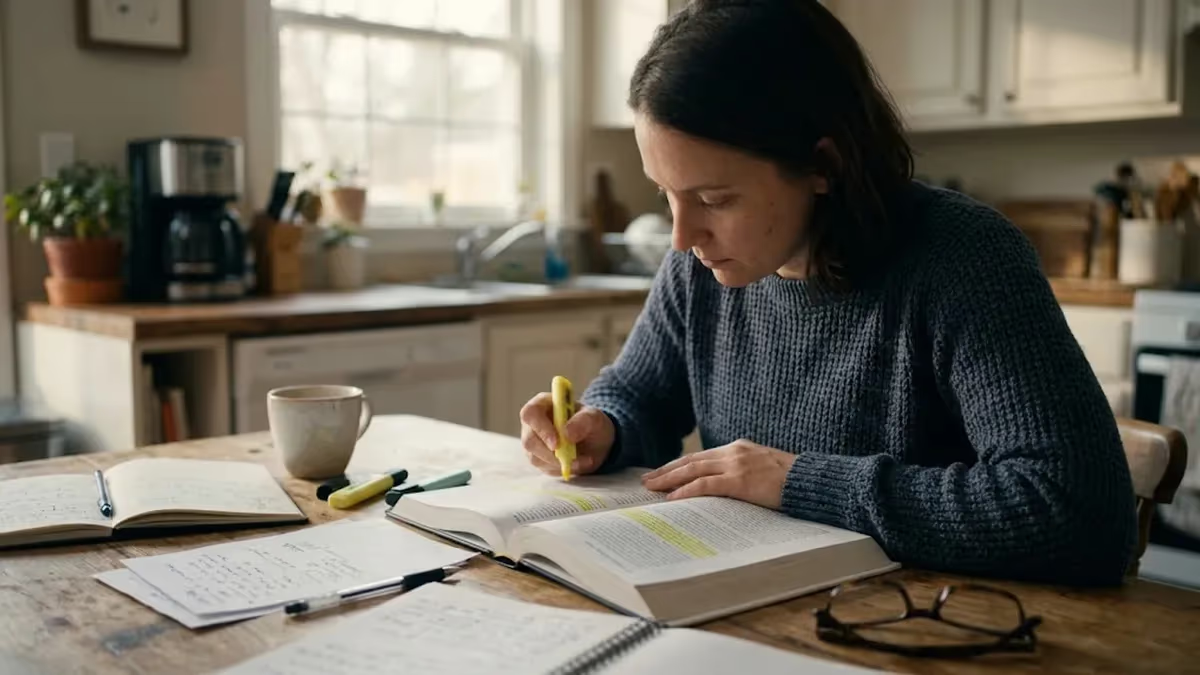
Ocr English Lit Gcse is the two-year English Literature qualification from the OCR exam board (specification J352). It is graded 9 to 1 and assessed by written exams taken at the end of Year 11. Students study modern writing, a nineteenth-century novel, a Shakespeare play and poetry, then write analytical essays under timed conditions.
Ocr English Lit Gcse: Key Facts (Updated October 2026)
| Fact | Details | Source |
|---|---|---|
| Exam board | OCR (Oxford, Cambridge and RSA) writes and marks the J352 English Literature course | OCR |
| Delivery | GCSEs are two-year courses. Students sit all their written exams in one series at the end of the course, at their school or college exam centre | UK Department for Education (GOV.UK) |
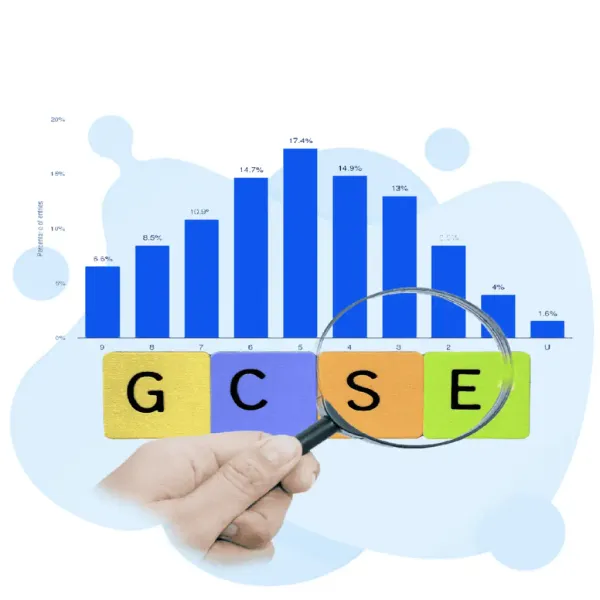
| Grading scale | GCSEs in England are graded 9 to 1. Grade 4 is the standard pass | UK Department for Education (GOV.UK) |
| Summer 2026 results | 67.3% of UK GCSE results were grade 4/C or above, compared with 67.4% in 2025 | Joint Council for Qualifications (JCQ) |
| Resits | In England, the only GCSE resits held outside the summer series are English Language and Maths, every November. Literature resits wait for the next summer | UK Department for Education (GOV.UK) |
| Post-16 requirement | Students aged 16 to 19 who do not get at least a grade 4 in GCSE English or Maths must keep studying that subject | UK Department for Education (GOV.UK) |
If you are reading from the United States, a quick translation helps. The definition of GCSE is General Certificate of Secondary Education, the main qualification taken by 15 and 16 year olds in England, Wales and Northern Ireland. The meaning of GCSE in practical terms is a set of subject exams, roughly comparable to finishing grade 10 in an American high school. Most students take eight to ten, and English Literature sits beside English Language as a core pairing.
The wider gcse system is explained on our hub, but the OCR piece matters because exam boards compete. Schools choose between OCR, AQA, Pearson Edexcel, Eduqas and WJEC for each subject, and that choice decides which set texts students study. OCR English Literature tends to attract schools that like a wide choice of modern and classic texts, and it rewards personal, well-argued responses rather than memorised paragraphs. Students cannot switch boards freely mid-course, so check which one your school entered you for.
A word on shortcuts. Searches for leaked gcse papers appear constantly around exam season, and they lead to scams, malware and, at worst, disqualification. Real exam papers are held securely until the sitting, and boards investigate any breach. Sitting a paper you have seen early can void your results across several subjects. The honest alternative is just as effective: published past papers, mark schemes and examiner reports, all released legally once a series is over, give you almost identical practice.
English Literature matters more than many families realise. Sixth forms and colleges often ask for a grade 5 or 6 in both English subjects before accepting students onto A-level courses in history, law, politics or psychology. Employers treat the qualification as evidence of analytical writing. Because the course is assessed entirely by exam, there is no coursework safety net: your grade depends on how well you perform in written sittings, which is why structured, repeated practice beats last-minute cramming every time.
This guide walks through the exam structure, the texts, the assessment objectives, how mocks fit in, and a revision plan you can start today. It also answers the questions Bing searchers ask most, from where to find OCR past papers to how grade boundaries work. Every fact in the table above comes from an official source, and where specifics vary by year, such as set text lists, we point you to the OCR specification so you always check the current version.
One caution on dates. The exam series you are preparing for decides which timetable, fees and boundaries apply, and OCR can update its set text lists between cohorts. Treat any blog, including this one, as a map rather than the rulebook. Download the current J352 specification from the OCR website, keep it open while you revise, and tick off each assessment objective as you practise. That single habit prevents the most common mistake: studying the wrong text or the wrong question type.
OCR English Lit GCSE by the Numbers
What Is in the OCR GCSE English Literature Exam?
Students study one modern or contemporary text from a choice list, such as a novel or play from the twentieth or twenty-first century. Essay questions test character, theme and the writer's methods, and usually offer a choice of tasks.
A classic novel from the 1800s tests whether you can handle older language and understand its social setting. Expect an extract question followed by a broader essay about the whole book, with context counting toward your marks.
One Shakespeare play is studied in depth. Questions give you an extract and ask how Shakespeare presents an idea, then link it to the rest of the play. Knowing the plot well and a handful of key quotations is essential.
Poetry work compares poems from a printed anthology and builds skills for responding to poems you have not seen before. Students practise comparing tone, imagery and form, and learn how to organise a clear comparison.
Where Can I Find OCR English Literature GCSE Past Papers?
OCR publishes past papers, mark schemes and examiner reports on its website for every series that has finished. For OCR English Literature, you will find them under the J352 qualification page, usually after a short delay once the exam period closes. Teachers can access extra secure materials through OCR's school portal, but students can use the public archive. Printing a paper, timing yourself and marking against the scheme is the best use of an afternoon in spring of Year 11.
Searches for leaked gcse papers 2020 are a reminder that 2020 was unusual. The summer exams were cancelled because of the pandemic, so no genuine paper was ever sat that year, and grades were awarded through teacher assessment. Any website claiming to hold the real 2020 papers is not telling the truth, and you should avoid it. Use the 2017 to 2019 papers and the series from 2022 onward instead.
Mark schemes teach you more than the papers themselves. They show the levels of response examiners apply, the indicative content they expect, and the phrases that move an answer from a middle level to a top level. Read three or four mark schemes before attempting a timed essay and you will see a pattern: examiners reward a clear argument, precise quotations and comments on the writer's methods and context far more than plot summary or long lists of techniques.
Examiner reports are the most underused resource. Each one summarises how candidates performed question by question, quoting typical mistakes and strong approaches. For example, reports often note that students lose marks by writing about the text in general terms instead of the extract printed on the paper, or by running out of time on the final essay. Spending twenty minutes on a report before you revise a text can save hours of repeated errors.
Your school's mock exams, which many American readers would call practice finals, usually reuse real past papers. Searches such as mock gcse and gcse mocks peak in November and January because most schools run them then. Treat mocks as a diagnostic, not a verdict. A grade 5 in December that comes with a clear list of weaknesses is more valuable than a lucky grade 7 you cannot explain, because the list tells you what to fix before May.
Many revision habits transfer between boards. If you want a skills-based view of how another board structures its checklists, our aqa gcse guide shows the format, even though it covers Biology rather than Literature. The lesson that carries over is simple: break a specification into small, tickable statements, and rate yourself red, amber or green on each one. Do that for every OCR set text and assessment objective, and your revision stops being vague.
Keep an organised folder. Save each paper with its mark scheme, label it by year and series, and record your timing, score and top two lessons in a simple spreadsheet. After six or seven papers you will see which question types cost you marks. Students who track results like this usually improve faster than those who simply do more papers, because every attempt feeds a specific fix rather than being a random repetition of the same habits.
What Is the Definition of GCSE and the Meaning of GCSE's Grades?
To define GCSE: it stands for General Certificate of Secondary Education, a subject-based qualification first examined in 1988 and typically taken at the end of Year 11, when students are 15 or 16. The meaning of GCSE for an American reader is closest to a set of end-of-high-school-sophomore credentials, though it is more specialised, because each subject has its own externally marked exams. Students choose from dozens of subjects, with English, maths and science at the core.
Individual GCSE's, as families often write the plural, are awarded by independent exam boards that the government regulates through Ofqual in England. OCR is one of those boards and is part of Cambridge University Press and Assessment. Each board writes its own specification, but all must meet the same national content rules, so a grade 6 from OCR carries the same weight as a grade 6 from AQA or Pearson Edexcel when colleges and employers read your certificate.
Is OCR English Literature a Good Choice for GCSE?
- +Wide choice of set texts lets schools pick books students enjoy
- +Rewards personal, well-argued responses rather than memorised answers
- +Past papers, mark schemes and examiner reports are free on the OCR website
- +Builds essay-writing skills that help in history, law and psychology A-levels
- +Poetry and Shakespeare skills transfer directly to A-level English courses
- +Nationally recognised grade 9 to 1 scale that colleges and employers understand
- −Entirely exam assessed, so there is no coursework to cushion a bad day
- −Long essay papers demand strong time management and handwriting stamina
- −Closed-book style revision means learning many quotations accurately
- −Set text lists can change, so older revision notes may be out of date
- −Literature has no November resit, so a poor result waits until next summer
- −Examiners expect context and analysis together, which takes practice to balance
What Should I Do to Prepare for GCSE Mocks?
- ✓Download the current J352 specification from the OCR website.
- ✓Confirm with your teacher which set texts your school entered.
- ✓Learn eight to ten short quotations for each text.
- ✓Complete one timed past paper question every week.
- ✓Mark each answer against the official mark scheme.
- ✓Read the matching examiner report before redrafting.
- ✓Write a five-minute essay plan for every practice question.
- ✓Practise one unseen poem each week and annotate it.
- ✓Log your marks and top two lessons in a simple tracker.
- ✓Sleep properly and pack pens, water and a watch the night before.
Real past papers are free and legal
Every genuine OCR paper is published with its mark scheme once the series ends, so you never need a leaked copy. Possessing or sharing confidential exam material can lead to lost marks or disqualification, while official past papers give identical practice at no risk.
How Is OCR English Literature GCSE Marked?
OCR marks English Literature against four assessment objectives. AO1 rewards a personal, informed response supported by well-chosen quotations. AO2 covers how writers use language, form and structure to create meaning. AO3 asks you to link the text to its context, such as the period it was written in or the society it describes. AO4 awards a small share of marks for accurate spelling, punctuation and vocabulary. Knowing these codes lets you read any question and instantly know what is wanted.
Weight matters. AO1 and AO2 together carry most of the marks, so a paragraph that offers a precise quotation and a sharp comment on a single word usually earns more than a paragraph of broad historical background. Context should be woven in briefly where it genuinely explains a choice, not bolted on as a separate fact. For instance, a comment on Victorian attitudes to poverty is useful only if it clarifies a character's behaviour in your extract.
A reliable essay structure runs in five steps. First, write a one-sentence thesis that answers the question directly. Second, build three body paragraphs, each with one idea, one short quotation and one analytical comment. Third, add a brief reference to context or to a different part of the text. Fourth, check your argument stays focused. Finally, write a two-sentence conclusion that returns to the question. Practise until you can plan in five minutes flat.
Learn quotations strategically. Rather than memorising forty lines per text, choose eight to ten short, flexible quotations that cover each major character, theme and turning point. Short quotations of three to six words are easier to recall and let you spend your time analysing individual words, such as a verb or an image. If your papers are closed book, as most literature exams are, examiners prefer a precise phrase interpreted well to a long block copied inaccurately.
Poetry needs its own routine. Poetry questions ask you to compare poems, and the course also builds skills for responding to poems you have not studied, so check exactly where this appears in your papers. For an unfamiliar poem, read it three times: once for meaning, once for feelings, and once for form and structure. Annotate the title, the first and last lines, and any shift in tone. Practise with one new poem each week.
Shakespeare tends to worry students most, yet the method is the same. Read the extract printed on the paper first, then zoom out to the whole play. Comment on the extract's language, then show how it connects to a theme elsewhere, such as ambition, jealousy or power. Watch a filmed performance of your play before the exam, because seeing the staging helps with AO2 comments about structure, dramatic irony and how audiences would have reacted.
Time management decides many grades, and students across the gcse uk system lose marks to it. Suppose an essay is worth 40 marks and you have 50 minutes: give five minutes to planning, forty to writing and five to checking. Do not spend thirty-five minutes perfecting the first paragraph and rush the rest. Use twelve-minute paragraph drills to build speed. By spring of Year 11, finish a full essay in exam time at least once a fortnight.
Set text lists, paper timings and question wording can change between cohorts. Always confirm details in the latest J352 specification on the OCR website and with your teacher before you finalise your revision plan.
What Is the Truth About Leaked GCSE Papers From 2019 and 2020?
Rumours about gcse 2020 papers leaked online resurface every year, but the facts are simple. There were no written GCSE exams in summer 2020 because they were cancelled during the pandemic, so there was nothing to leak. Pages promising those papers are usually designed to collect your email address, push you toward a paid download or install unwanted software. If a site promises secret papers for the coming summer, treat that as a warning sign, not an opportunity.
Malpractice rules are taken seriously. The Joint Council for Qualifications, which sets shared regulations for the main UK exam boards, allows penalties that can include losing marks, being disqualified from a unit or qualification, and in serious cases being barred from sitting exams with that board. Even looking at confidential material and failing to report it can cause trouble for a student. No grade is worth risking your results across all your subjects for a rumour.
The legitimate route is generous. OCR releases papers, mark schemes and examiner reports after each series, and the government explains the wider system on GOV.UK. Combine those with your teacher's feedback and you have everything an examiner would use to mark you. The 2017, 2018 and 2019 series remain popular because they match the current course structure, while papers from 2022 onward show how the grading approach settled after the pandemic years.
For structured practice, our gcse test collection brings together question banks and past paper guidance across subjects. Use it to rotate between Literature, Language and your other subjects so no single revision session becomes stale. Short, varied sessions of 40 minutes with a five-minute break are more effective than three-hour marathons, especially in the weeks before mocks when you need energy for several subjects at once.
Exam-day rules are strict and worth learning in advance. Mobile phones must not be in your possession in the exam room, and smartwatches are treated the same way. You must bring only permitted equipment, normally pens, and you cannot take notes into a closed-book paper. Arrive at least fifteen minutes early, listen to the invigilator's instructions, and write your candidate details clearly on the answer booklet. These small habits remove avoidable stress.
Access arrangements are available for students who need them. Examples include extra time, a reader, a scribe or a separate room, and the school normally applies for them with evidence well before the exams. If you think you qualify, speak to your teacher or the school's special educational needs coordinator early in Year 10 or the autumn of Year 11, because approval takes time. Practise your mocks under the same arrangements so they feel normal on the day.
Illness or a family emergency can still be handled properly. If something serious happens close to an exam, tell your school immediately. Schools can request special consideration from the exam board in eligible cases, which may adjust a result slightly, and a missed paper can sometimes be rescheduled within the series. Do not hide the problem and hope for the best. Document what happened, keep any medical evidence, and let staff handle the paperwork while you focus on the next paper.
How Do I Prepare for OCR English Literature GCSE in the Final Weeks?
Start with a sixteen-week countdown. Spend the first four weeks on content: reread each set text, summarise each chapter or act in five lines, and list the main themes. Use the next eight weeks for skills, writing one timed essay per text every fortnight. Keep the last four weeks for full past papers under exam conditions. This sequence stops you from practising essays on texts you barely remember, which wastes both time and confidence.
Build a theme grid for each text. Draw a table with characters down the side and themes across the top, such as power, family, justice or ambition. In each box, write one short quotation and a single word describing the writer's method. A one-page grid for a whole novel or play is quick to revise the night before, and it forces you to connect ideas, which is exactly what high-level responses need when questions ask about development across a text.
Use retrieval practice instead of rereading. Close your book and write down everything you remember about a chapter or scene, including quotations. Then check against the text and fill the gaps in a different colour. Research on learning consistently shows this beats passive highlighting. Repeat the same material after one day, one week and one month. Spacing your revision like this is how you keep eight to ten quotations per text fresh across several months.
Practise writing by hand, because the exam will be handwritten. Many students type notes all year and then discover that their hand aches after forty minutes. Write at least one full essay by hand each week from January onward, using the same type of pen you will use in the exam. Check that your handwriting is legible, because an examiner who cannot read a sentence cannot award marks for it.
Ask for feedback on a specific skill. Instead of asking a teacher whether an essay is good, ask whether your quotations are short enough, whether your thesis answers the question, or whether your context links are relevant. Specific questions get specific advice. Then rewrite one paragraph using that advice and compare the two versions. This redrafting habit is slower than writing new essays, yet it produces the largest gains because it forces you to apply feedback.
Protect your sleep, food and breaks. Students who cut sleep to fit in extra revision usually lose more in concentration than they gain in hours. Aim for eight hours, eat a proper breakfast before each exam, and schedule one evening each week with no revision at all. A tired brain forgets quotations and misreads questions. Exams are partly a performance event, so treat your body like an athlete does before a match.
On the day, read the question twice and underline the key words before you do anything else. Spend five minutes planning, and do not abandon your plan halfway through. If you blank on a quotation, paraphrase the moment and comment on the writer's overall method instead; you can still earn AO2 marks. Leave a few minutes to read through for spelling and punctuation. Then put the paper behind you and focus entirely on the next one.
GCSE Questions and Answers
GCSE 2026

AQA GCSE Biology Checklist: The Complete Skills & Revision List for 2026

GCSE Subjects 2026: Compulsory, Optional & How to Choose

GCSE Practice Tests: Past Papers & Question Banks

Periodic Table GCSE: Groups, Trends, Electrons and Revision Guide

GCSE Exam Guide 2026: Dates, Format, Rules & What to Expect
GCSE Spanish: Exam Format, Past Papers, Mocks and Revision Guide
About the Author

Educational Psychologist & Academic Test Preparation Expert
Columbia University Teachers CollegeDr. Lisa Patel holds a Doctorate in Education from Columbia University Teachers College and has spent 17 years researching standardized test design and academic assessment. She has developed preparation programs for SAT, ACT, GRE, LSAT, UCAT, and numerous professional licensing exams, helping students of all backgrounds achieve their target scores.