
Loren Accident Forklift: What Forklift Accident News Teaches About Safety, Training, and Prevention
🎯 Searching loren accident forklift news? Learn what verified reports show, common causes, OSHA rules, and how training prevents forklift injuries.

Readers who search for loren accident forklift are usually trying to learn what happened after a workplace incident they heard about from a coworker, a relative, or a local news alert. That curiosity is understandable, and it is also a reminder of how serious powered industrial truck incidents are. This guide explains how to read incident reports responsibly, what the national numbers say, why these events happen, and which habits keep operators and pedestrians safe.
A caution first: details about any individual incident change quickly, and early reports are often incomplete or simply wrong. Names, causes, and injury descriptions should come from official sources such as the employer, local police or fire departments, medical examiners, and OSHA inspection records. We do not speculate about any specific person or company here. Instead, we focus on verified patterns that repeat across thousands of documented cases, because those patterns are what training can actually change.
For context, OSHA estimates that roughly 85 workers die in forklift-related incidents each year in the United States, and about 34,900 more suffer serious injuries. Those figures cover warehouses, factories, construction sites, farms, and retail loading docks. Forklifts are indispensable, yet a typical counterbalance truck weighs several thousand pounds before any load is added, so a mistake that looks small at walking speed can cause a crushing injury within a second or two.
Most news coverage follows the same few scenarios: a truck tips over while turning, an operator is pinned between the vehicle and a dock or rack, a pedestrian is struck in a blind spot, or a load falls from height. Each of these has a known engineering control and a known behavior that prevents it. When you read about an incident, ask which control was missing, because that question turns distressing news into a lesson you can use.
If you work around forklifts, this article gives you practical steps instead of fear. You will find a breakdown of the most common causes, the OSHA requirements that come up in nearly every forklift accident news follow-up story, a daily inspection checklist, and guidance on renting, buying, and operating different truck types, from an electric forklift to a stand up forklift. Free practice questions are included so you can test your knowledge as you read.
Supervisors and small business owners benefit as well. A single serious incident can bring an OSHA inspection, workers' compensation claims, equipment downtime, and lasting damage to team morale. Investing in forklift training, maintenance, and traffic planning costs far less than responding to a tragedy. Whether your site relies on a fleet you own or on forklift rental from a local dealer, the same safety fundamentals apply to every truck on every shift.
Finally, remember that behind every headline is a real family and a real crew who must keep working afterward. Treat incident coverage with respect, avoid sharing unverified rumors, and use what you learn to speak up about hazards at your own site. If a hazard exists today, such as a damaged rack, a missing seat belt, or a blocked aisle, reporting it is the single most effective response any of us can make.
Forklift Accidents by the Numbers
Common Causes Behind Forklift Accident Stories
Turning too fast, driving with forks raised, or traveling across a slope shifts the center of gravity outside the stability triangle. The truck can fall in seconds, and operators who jump out are often crushed by the overhead guard.
Workers on foot are hit in blind spots, at aisle intersections, and near dock doors. Tall loads, reversing without looking, and distracted walking all contribute. Separated walkways, horns, and blue warning lights reduce these events sharply.
Unstable stacking, damaged pallets, and excessive travel height let cargo slide or drop. Loads should be tilted back slightly, kept low while moving, and never exceed the rated capacity shown on the data plate.
Standing on pallets or bare forks to reach high shelves is a leading cause of falls. Only approved platforms secured to the truck, or purpose-built order pickers with fall protection, should lift people.
Trailers that creep away from the dock, missing wheel chocks, and dock plates that shift can send a truck off the edge. Chocks, vehicle restraints, and a visual check of the trailer floor prevent these falls.
What Verified Reports and OSHA Data Show About Forklifts
Reliable information about forklift incidents comes from a short list of sources. OSHA publishes inspection and citation data online, the Bureau of Labor Statistics tracks fatal workplace injuries through its Census of Fatal Occupational Injuries, and NIOSH investigates selected deaths through its Fatality Assessment and Control Evaluation program. Local news adds the human story but rarely includes engineering detail. Combining these sources gives a far clearer picture than any single social media post.
Across these datasets, tip-overs are consistently the leading killer, accounting for roughly one in five forklift deaths. The physics are unforgiving: a counterbalance truck rides on a three-point suspension, and a sharp turn with a raised load moves the combined center of gravity outside the stability triangle. Operators who try to jump clear are often crushed by the overhead guard, which is why the standard advice is to stay belted and lean away from the fall.
The next most common category involves pedestrians. Workers on foot are struck, pinned against racks, or run over in aisles where trucks and people share space without barriers. Blind spots created by tall loads, reversing without looking, and wearing headphones all play a role. Many sites now use blue spotlights, horns at intersections, and painted walkways to separate traffic, and those measures cost very little compared with a single serious injury.
Falls from forks and falling loads also appear frequently. Using a pallet as a work platform, raising a coworker on bare forks, or stacking unstable loads all violate OSHA guidance. If a person must work at height, the correct tool is an approved platform attached to the truck or a purpose-built order picker, sometimes called a cherry picker forklift, with fall protection. Improvised lifts are a recurring theme in investigation summaries and are almost always preventable.
Investigators also look at what the employer had in place. OSHA's powered industrial truck standard, 29 CFR 1910.178, requires formal instruction, practical training, and an evaluation of performance before an employee operates a truck alone. It also requires examinations before each shift, removal of defective trucks from service, and refresher training after an incident or near miss. Missing documentation is among the most common citations after an event, even when the operator was experienced.
Seasonality and staffing matter too. Peak shipping periods bring temporary workers, longer shifts, and pressure to move product quickly, all of which raise risk. A new hire who has never driven a stand up forklift may be handed a rider truck with a different steering feel and a very different stopping distance. Supervisors should confirm that every person on the schedule has been trained on the exact truck type they will drive that day.
When you read a news story, look for the practical gaps rather than blame. Was the aisle wide enough? Was the truck inspected that morning? Did the operator hold current certification of forklift operation for that class of truck? Were pedestrians separated from traffic? These questions mirror what investigators ask, and they give you a checklist to apply at your own workplace long before anything goes wrong. Asking them regularly is a habit worth building.
You can continue preparing with the forklift forks, which includes answer explanations for every question.
You can continue preparing with the parts of a forklift, which includes answer explanations for every question.
You can continue preparing with the toyota forklift parts, which includes answer explanations for every question.
Forklift Operator Training Across Electric, Stand Up, and Cherry Picker Forklift Types
An electric forklift runs on a battery, produces no exhaust, and is popular in warehouses, food facilities, and anywhere air quality matters. Because the battery sits low in the chassis as a counterweight, these trucks are stable, but they are also quiet. Pedestrians may not hear one approaching, so horns, lights, and defined walkways matter even more than they do around a loud engine.
Battery handling is its own hazard. Charging produces hydrogen gas, and acid splashes can burn skin and eyes. Operators who change or charge batteries need eyewash access, face shields, and training in proper lifting equipment. Never smoke near the charging area, never lay tools across terminals, and keep the room ventilated according to the manufacturer's instructions and your site's written procedures.
Forklift Rental vs. Buying a Forklift for Sale: Safety Tradeoffs
- +Rental fleets are usually serviced on a schedule by the dealer
- +Newer rental trucks often include modern safety features such as seat sensors
- +You can match the truck type to the job instead of settling for one model
- +Short rentals avoid the cost of storing and maintaining idle equipment
- +Rental companies can supply a damaged unit's replacement quickly
- +Buying gives your team one consistent model to train on and learn deeply
- −Operators still need training on the specific rented model before driving
- −Unfamiliar controls on a new rental raise risk during the first shifts
- −Rental inspections do not replace your own pre-shift examination
- −A used forklift for sale may have hidden wear or missing safety devices
- −Owning means you carry all maintenance, records, and repair responsibility
- −Poorly tracked rental returns can leave known defects unreported
Daily Forklift Operator Safety Checklist
- ✓Confirm you are trained and authorized for this exact truck type.
- ✓Inspect tires, forks, mast chains, and hydraulic hoses for damage.
- ✓Test the horn, lights, backup alarm, and brakes before moving.
- ✓Check fluid, fuel, or battery charge levels and report problems.
- ✓Verify the data plate capacity and never exceed the rated load.
- ✓Fasten the seat belt or operator restraint on every trip.
- ✓Travel with forks low and the mast tilted slightly back.
- ✓Slow down and sound the horn at intersections and blind corners.
- ✓Keep pedestrians out of your travel path and make eye contact.
- ✓Tag and report any defective truck, and remove it from service.
Stay in the seat and stay belted
When a counterbalance truck begins to tip, the instinct to jump is strong, yet operators who leap are frequently crushed by the overhead guard. The safer response is to brace, grip the wheel, lean away from the direction of the fall, and keep the seat belt fastened. Practice this response mentally so it becomes automatic.
Forklift Training and Certification of Forklift Operators: What OSHA Requires
OSHA does not issue a forklift license. Instead, the employer certifies that each operator has been trained and evaluated under 29 CFR 1910.178. That is why people often discuss certification of forklift operators rather than a government card. The employer signs off after three steps: classroom or online instruction, hands-on practice with the real truck, and an observed evaluation in the actual workplace where the operator will drive.
Formal instruction covers topics such as truck controls, load capacity, stability, steering and braking, visibility, fueling or charging, and the specific hazards of the site. Practical training then lets the trainee drive under direct supervision. Many accidents trace back to skipping this middle step. Watching a video is not enough, because balance, spatial awareness, and judgment about speed only develop by operating a truck with an experienced trainer nearby.
The evaluation must be documented. Records should include the operator's name, the training date, the evaluation date, and the name of the person who performed the training. Keep these files organized, because inspectors ask for them first after a reportable incident. An operator evaluation is repeated at least once every three years, and sooner if the worker is observed driving unsafely or is involved in an accident or near miss.
Refresher training is also triggered by changes. If the site adds a new truck type, alters aisle layouts, introduces a different attachment, or changes the kind of loads being moved, operators need additional instruction on the new conditions. A person certified on a sit-down counterbalance truck is not automatically qualified for a reach truck, a pallet jack, or a rough-terrain machine, because each class has distinct handling characteristics and hazards.
Good forklift training goes beyond the minimum. Strong programs teach operators to read a data plate, calculate the effect of an attachment on capacity, and judge ramp grades. They include practice with pedestrians present, role-play on emergency shutdowns, and discussion of real case histories. Employees who understand why a rule exists follow it more consistently, particularly when production pressure tempts them to take shortcuts during a busy shift.
Eligibility rules also apply. Federal law prohibits workers under 18 from operating forklifts in most nonagricultural jobs, and employers must not assign anyone who has not been authorized. Vision, hearing, and physical fitness should be considered when assigning duties, and reasonable accommodations should be explored. Supervisors who hand keys to a friend or a rushed temp worker are creating liability for themselves and risk for everyone in the building.
Online courses can handle the classroom portion at a modest cost, often between fifty and a hundred and fifty dollars per person, but they never complete the process alone. The employer still has to deliver the hands-on training and evaluation. If a provider promises an instant national card with no practical component, treat that claim with suspicion. A card from a third party does not replace your own site-specific evaluation under OSHA's rules.
A forklift certificate from a previous employer does not authorize you to drive at a new site. Your new employer must evaluate you on their equipment and workplace conditions. Operating without that evaluation exposes both you and the company to serious injury risk and OSHA citations.
Forklift Rental, Forklift for Sale, and Maintenance: Reducing Risk Before Work Starts
Many safety decisions are made before an operator ever turns a key. When you search for forklift rental or a forklift rental near me, you are choosing the machine your crew will rely on, so confirm capacity, mast height, tire type, and attachments match the job. A truck that is slightly too small for the heaviest pallet tempts operators to push limits, and overloading is a direct path to tip-overs and mast failures.
Ask the rental company for the most recent inspection record and the operator's manual, and confirm that the data plate is legible. A rental truck should arrive with working lights, horn, brakes, seat belt, and overhead guard. Walk around it with your operators before the first shift and let them practice in an open area. Never assume that a newly delivered truck has been inspected to your site's standards.
Remember that renting does not move responsibility. Your company remains the employer, which means every person driving the rental truck must have been trained and evaluated under OSHA rules. Some dealers offer short operator courses at delivery, which can be useful, but you still need to document that your own workers were evaluated. Treat the rental agreement and the training records as a single package of paperwork.
If you are shopping for a forklift for sale, particularly used, budget for a professional inspection. Check the frame for cracks and weld repairs, the mast rails and chains for wear, the forks for bending, and the hydraulic system for leaks. Verify that guards, seat belts, and warning devices are original and functional. A low price quickly disappears if the truck needs extensive repairs or cannot safely carry its stated rated capacity.
Maintenance is the other half of equipment safety. Follow the manufacturer's service intervals, whether that means every 200 hours of operation or every few months, and keep a written log. Operators should report problems the same day, and supervisors must pull a defective truck from service until it is repaired. Brakes that pull to one side, steering that feels loose, or a mast that creeps down are warning signs, not quirks.
Tires deserve special attention. Cushion tires on a smooth warehouse floor behave differently from pneumatic tires outdoors, and worn or chunked tires reduce traction and stability. An electric forklift with a worn drive tire can slide on a wet dock plate, while a gas-powered truck with underinflated pneumatics can lean sharply in a turn. Include tire condition in every pre-shift inspection and replace tires before they reach the wear line.
Facility design completes the picture. Wide, clearly marked aisles, convex mirrors at blind corners, speed limits posted at intersections, and designated pedestrian crossings reduce conflicts. Floor surfaces should be repaired when cracked or uneven, and spills cleaned immediately. A safe building lets even a new operator succeed, while a cluttered one tests the best driver. Walk your site monthly with a critical eye, and fix what you find.
Practical Tips for Safer Shifts and Your Operator Evaluation
Start every shift with a real inspection, not a quick glance. Use the written checklist for your truck type, touch the parts you are checking, and look underneath for leaks. If something fails, tag the truck and tell your supervisor immediately. This five-minute habit catches worn chains, low tire pressure, and failing brakes before they cause harm, and it demonstrates exactly the kind of diligence evaluators and inspectors want to see.
Control your speed in every situation. A good rule is to travel at walking pace in congested areas and to slow further when turning, crossing thresholds, or carrying tall loads. Remember that a loaded truck takes much longer to stop than an empty one. Look in the direction of travel, and if your view is blocked by the load, drive in reverse with a spotter or use mirrors rather than guessing.
Treat pedestrians as unpredictable. Make eye contact before crossing paths, sound the horn at intersections, and stop completely if someone enters your lane. Never allow riders on the forks or the truck body. Supervisors should hold short toolbox talks on traffic rules and encourage ground workers to wear high-visibility clothing. Safety improves quickly when drivers and walkers both understand the expectations and feel comfortable pointing out lapses.
Load handling deserves deliberate attention. Center the load on the forks, set the forks as wide as the pallet permits, and lift only until the pallet clears the floor before tilting back. Do not travel with the load elevated. Check stack height and stability before moving, and never handle a load that is leaning or wrapped poorly. If the weight is unknown, stop and confirm it rather than hoping the truck can handle it.
If you are preparing for an evaluation, practice the skills you will be asked to demonstrate. Expect to perform an inspection, maneuver through a course, pick up and place pallets at height, stack and unstack, park properly, and shut down the truck. Evaluators watch how you check surroundings and communicate, not just whether you complete tasks quickly. Calm, deliberate movement impresses far more than speed.
Use practice questions to lock in the theory. Short quizzes on load capacity, stability, and emergency procedures reveal gaps before an evaluator does. Review any question you miss until you can explain the correct answer in your own words. Study in short sessions over several days instead of cramming, and pair each topic with a hands-on observation of the same concept on your own truck.
Finally, build a culture where reporting is welcome. Near misses are free lessons, and the best sites investigate them as seriously as injuries. If you notice a hazard, such as a blind corner, a damaged rack, or a coworker taking shortcuts, speak up politely and early. Respect for each other's safety is what ultimately keeps the next story from appearing in the news, regardless of which company or crew it involves.
Forklift Questions and Answers
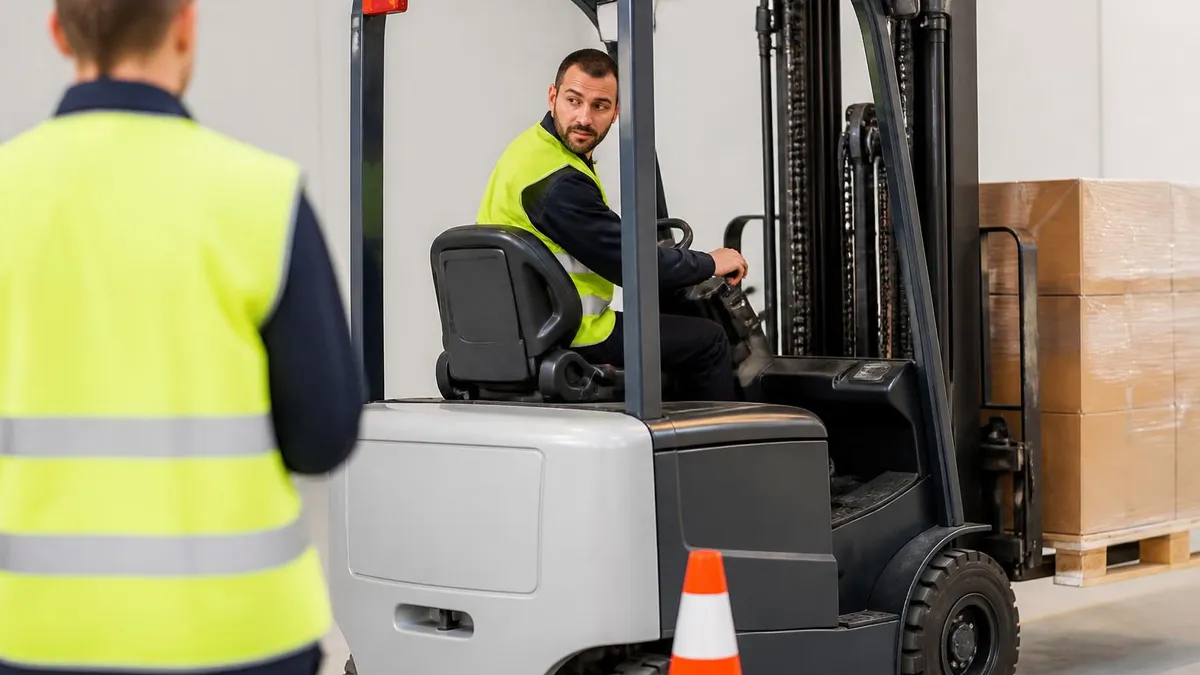
Forklift License vs Certification: OSHA Requirements, Cost, and Training
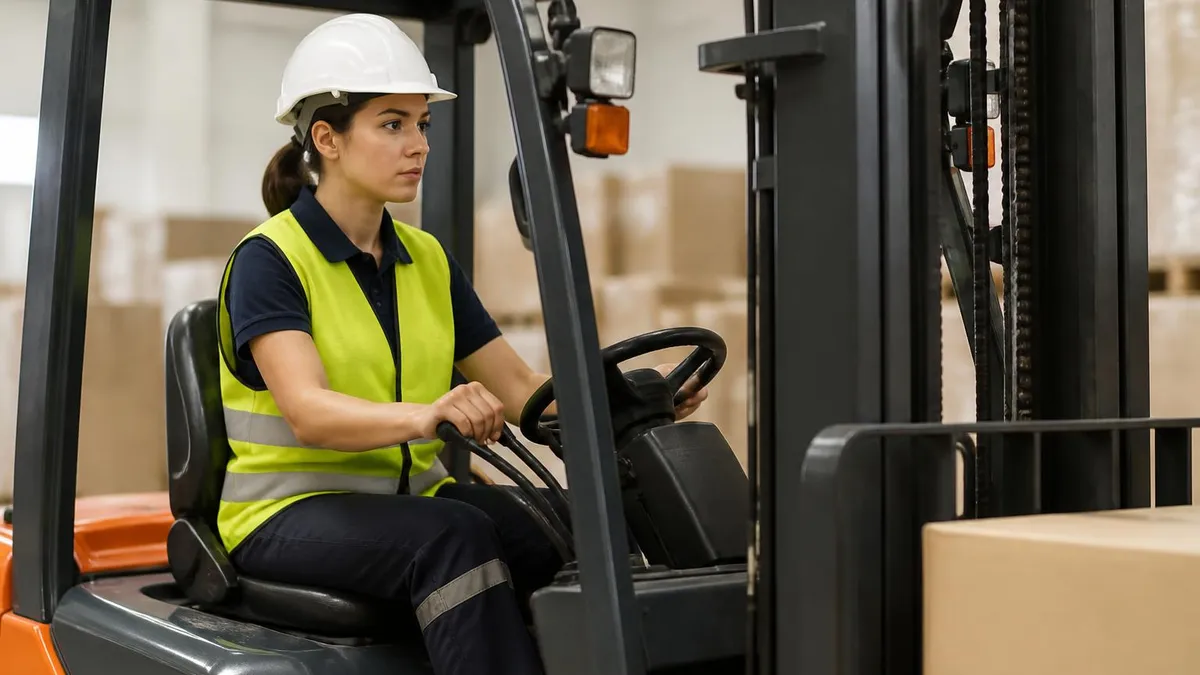
Forklift Price Guide 2026: New, Used, Rental, and Total Cost of Ownership Breakdown

Blue Forklift Light Guide: How Warning Lights and Other Forklift Safety Equipment Protect Pedestrians

Forklift Salary 2026: Complete Guide to Operator Pay, Certifications, and Career Growth

Forklift Maintenance Services: Complete Guide to Costs, Schedules, and Choosing the Right Provider for 2026
How this page was made: written with AI tools and published by Nathan Beja, founder of Practice Test Geeks, who is responsible for its content. Exam facts are checked against the official sources listed below. Not reviewed by a subject-matter expert. Editorial policy
Sources & references
Exam facts on this page (fees, format, dates, passing scores) are checked against these official sources; the date is our last check. Editorial policy
- osha.gov — Test delivery, eligibility, renewal · verified Oct 2026