
SDS First Aid Section: Complete Guide to First Aid Beauty, Kits, Mental Health, and Emergency Preparedness
Master the SDS first aid section — first aid beauty recalls, ultra repair cream, mental health first aid training, kits & more. ✅ Full US guide.

The SDS first aid section covers far more ground than most people expect. Whether you are studying safety data sheets for workplace compliance, exploring first aid beauty products and their ingredients, or preparing for a real emergency, understanding this section is essential for anyone serious about personal safety and health.
The term "SDS first aid section" refers to Section 4 of a Safety Data Sheet, which outlines emergency response procedures if a hazardous substance is inhaled, ingested, or comes into contact with skin or eyes — but the phrase has also become associated with the broader universe of first aid readiness.
In 2024, the Consumer Product Safety Commission and the FDA both issued guidance related to cosmetic product safety, which directly affects how brands like first aid beauty communicate hazard information to consumers. If you have been following the first aid beauty face moisturizer recall, you know how critical it is to read SDS documentation carefully before applying any product containing active pharmaceutical or cosmetic ingredients. These recalls remind us that first aid knowledge is not just for emergency responders — it is for everyday consumers too.
Mental health first aid is another rapidly growing area that intersects with traditional emergency preparedness. While physical first aid focuses on treating wounds, burns, and cardiac events, mental health first aid equips individuals to recognize and respond to psychological crises, including panic attacks, suicidal ideation, and substance use emergencies. The Mental Health First Aid USA program has trained over 3 million Americans since its launch, and demand continues to surge following post-pandemic awareness campaigns.
First aid kits remain the cornerstone of any preparedness plan, whether you are outfitting your home, vehicle, or hiking backpack. The American Red Cross recommends a minimum kit that includes adhesive bandages in multiple sizes, sterile gauze pads, antiseptic wipes, medical tape, scissors, tweezers, an emergency blanket, and a CPR face shield. However, most experts now recommend going well beyond these minimums, especially for wilderness settings or households with young children or elderly members.
Wilderness first aid is a specialized discipline that extends standard first aid training to remote environments where advanced medical care may be hours or even days away. Practitioners learn how to improvise splints from tree branches, treat hypothermia with limited gear, manage anaphylaxis with an epinephrine auto-injector, and perform patient evacuations across difficult terrain. Courses typically run three to five days and are offered by organizations like NOLS, Wilderness Medical Associates, and SOLO Wilderness Medicine.
Youth mental health first aid training has emerged as one of the most important public health investments communities can make. Adolescents face unprecedented mental health challenges — the CDC reports that 42% of high school students experienced persistent sadness or hopelessness in 2023. Teaching young people and the adults who work with them to recognize warning signs and respond with compassion rather than fear can literally save lives. Many school districts now require Youth Mental Health First Aid certification for counselors, coaches, and administrators.
This guide will walk you through every major dimension of the first aid universe — from reading an SDS document correctly, to choosing the right car first aid kit, to understanding the ingredients in first aid beauty facial radiance pads. Use the table of contents below to jump directly to the section most relevant to your needs, and take advantage of our free practice quizzes to test your knowledge before certification day.
First Aid in the US by the Numbers

Understanding the SDS First Aid Section (Section 4)
Section 4 details exactly what to do if a hazardous substance is inhaled — typically: move the person to fresh air immediately, loosen restrictive clothing, monitor breathing, and call 911 if symptoms persist. Some substances require supplemental oxygen.
For skin exposure, most SDS documents direct responders to remove contaminated clothing and flush the affected area with large amounts of water for 15 to 20 minutes. Chemical burns may require additional neutralizing agents specified in the SDS.
Eye contamination protocols are among the most time-sensitive instructions in Section 4. Responders must flush eyes with water for at least 15 minutes while holding eyelids open, then seek immediate ophthalmological evaluation regardless of apparent symptom severity.
When a hazardous substance is swallowed, Section 4 specifies whether to induce vomiting or not — many chemicals cause more damage coming back up. Always contact Poison Control (1-800-222-1222) immediately and bring the SDS to the emergency room.
Professional SDS documents often include a physician notes subsection identifying the most likely toxic mechanisms, recommended antidotes, and any specific contraindications for standard treatments. This information is critical for ER staff unfamiliar with the substance.
First aid beauty is one of the most recognized skincare brands in the United States, known for products formulated for sensitive skin and tested by dermatologists. The brand's signature line includes the ultra repair cream, facial radiance pads, and various SPF moisturizers. However, the brand has faced scrutiny in recent years due to product recalls, and understanding those recalls requires consumers to engage with first aid knowledge in a very direct way — specifically, knowing what to do if a recalled product has already been used on skin, eyes, or lips.
The first aid beauty ultra repair cream has been one of the brand's bestselling products for over a decade, praised for its ability to soothe eczema, psoriasis, and severely dry skin. The formula contains colloidal oatmeal — the only FDA-approved over-the-counter ingredient for skin protectant use — along with shea butter, allantoin, and ceramides. Because it is formulated as an OTC drug product (not just a cosmetic), its SDS documentation is more rigorous than typical skincare items, and it falls under stricter FDA labeling requirements.
In 2023, first aid beauty issued a voluntary recall of certain batches of its face moisturizer after testing revealed the presence of benzene, a known human carcinogen, at levels above FDA acceptable limits. Benzene contamination in aerosol and cream products became a widespread industry concern following independent lab testing by Valisure, a pharmacy that tests products for chemical composition. The first aid beauty recall was part of a broader wave of recalls affecting dozens of skincare brands, prompting the FDA to update its guidance on benzene testing protocols for cosmetic manufacturers.
Consumers who had used recalled products were advised to discontinue use immediately and monitor for any adverse reactions, including skin irritation, redness, or unusual systemic symptoms. From a first aid perspective, skin exposure to low-level benzene in a cosmetic product typically does not require emergency treatment, but individuals with prolonged exposure or pre-existing sensitivities should consult a healthcare provider. The SDS for benzene specifies that repeated skin contact can contribute to systemic absorption, making it a longer-term health concern rather than an acute emergency.
First aid beauty facial radiance pads have become a cult favorite for their exfoliating blend of lactic acid, licorice root, and antioxidants. Unlike the ultra repair cream, these pads are purely cosmetic (not OTC drug products), which means their SDS documentation is simpler. However, the lactic acid content means that eye contact should still be taken seriously — the SDS recommends flushing with water for 15 minutes if the product contacts eyes, consistent with standard acid exposure protocols.
Understanding product safety data is not just for industrial workers or healthcare professionals. As a consumer, knowing how to read an SDS — particularly Section 4, the first aid section — empowers you to respond quickly and correctly if something goes wrong. Many product recalls are discovered not by manufacturers but by consumers who notice skin reactions and report them, creating a feedback loop that improves safety for everyone. The FDA's MedWatch reporting system allows anyone to submit an adverse event report, and doing so contributes to the surveillance data that triggers recalls.
Whether you are a skincare enthusiast researching the latest first aid beauty launch or a workplace safety officer auditing chemical inventories, the skills are the same: read the label, understand the hazards, know the first aid response steps, and act quickly when something goes wrong. The overlap between consumer product safety and emergency first aid is larger than most people realize, and it starts with Section 4 of every SDS document you encounter.
Mental Health First Aid Training: What to Know
The Adult Mental Health First Aid course is an 8-hour in-person or blended-learning program that teaches participants to recognize signs of mental health challenges and substance use disorders in adults. The curriculum covers depression, anxiety disorders, trauma, psychosis, and substance use emergencies using the ALGEE action plan: Assess risk, Listen nonjudgmentally, Give reassurance, Encourage professional help, and Encourage self-help strategies. Over 3 million Americans have completed this training since 2008.
Participants learn to approach someone in crisis with calm, non-stigmatizing language and to help connect that person to appropriate professional resources, including therapists, crisis lines, and community mental health centers. The course does not train participants to provide therapy — instead, it bridges the gap between noticing a problem and getting professional help involved. Certification is valid for three years and is increasingly required for educators, first responders, and HR professionals working in high-stress environments.

Mental Health First Aid vs. Traditional First Aid: How Do They Compare?
- +Addresses the full spectrum of health emergencies — both physical and psychological
- +Mental Health First Aid training is widely available online and in-person nationwide
- +Youth Mental Health First Aid certification is increasingly subsidized by state and federal grants
- +Both disciplines follow structured action plans that reduce panic in high-stress situations
- +Combined training builds more confident, capable first responders in any setting
- +Growing employer mandates mean certifications improve career prospects in many fields
- −Mental Health First Aid does not qualify responders to diagnose or treat mental illness
- −Traditional first aid certification renewal requirements vary widely by certifying organization
- −Wilderness first aid courses require significant time investment (3-5 days minimum)
- −Not all employers recognize or reimburse first aid certification costs
- −Mental health crises are less predictable in outcome than many physical first aid scenarios
- −Access to quality first aid training remains uneven across rural and low-income communities
First Aid Kit Essentials: Complete Preparedness Checklist
- ✓Stock adhesive bandages in at least four sizes: fingertip, knuckle, standard, and large.
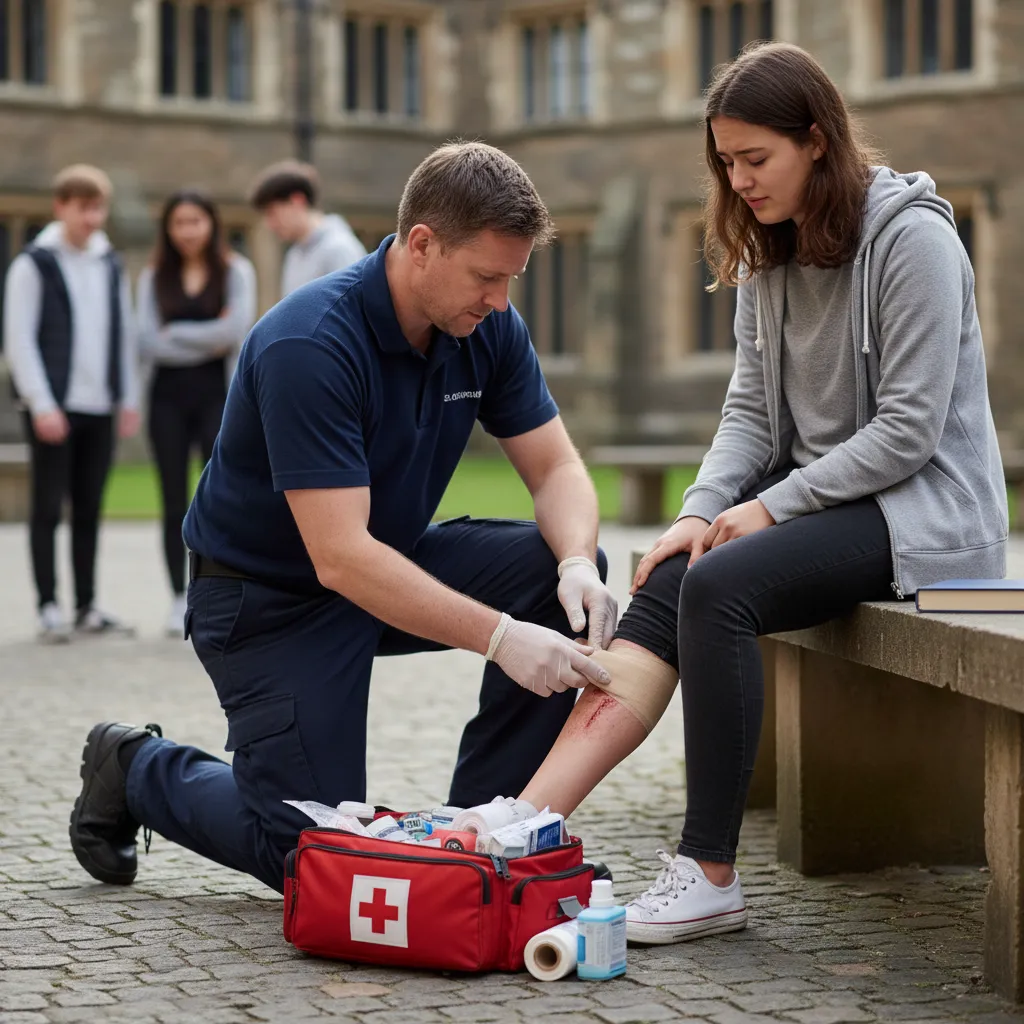
- ✓Include sterile gauze pads (2x2 and 4x4 inches) and rolled gauze for larger wound dressing.
- ✓Add medical-grade adhesive tape and a self-adhering elastic bandage for joint injuries.
- ✓Pack antiseptic wipes, hydrogen peroxide spray, and antibiotic ointment for wound cleaning.
- ✓Include nitrile gloves in multiple sizes to protect both responder and patient during treatment.
- ✓Add trauma shears (safety scissors) for cutting clothing away from injury sites quickly.
- ✓Stock over-the-counter pain relievers: ibuprofen, acetaminophen, and aspirin for adults.
- ✓Include a digital thermometer, CPR face shield, and emergency mylar blanket in every kit.
- ✓Add a tourniquet (CAT or SOFTT-W) and hemostatic gauze for severe extremity bleeding.
- ✓Keep an updated first aid manual and your local emergency contact numbers inside the kit lid.
Your Car First Aid Kit Should Exceed Minimum Standards
The American Red Cross recommends that every car first aid kit include at minimum 20 adhesive bandages, gauze rolls, antiseptic wipes, a CPR mask, and a first aid manual. However, road emergencies often involve traumatic injuries from collisions — meaning your car kit should also include a tourniquet, trauma dressings, and an emergency whistle. Store the kit in an accessible location (not the trunk) and check expiration dates every six months.
Wilderness first aid is the practice of providing emergency medical care in remote environments where evacuation to definitive medical care may be significantly delayed. Unlike urban first aid, which assumes EMS arrival within minutes, wilderness first aid operates under the assumption that the responder may be the only trained person available for hours or even days. This fundamentally changes how decisions are made — wilderness first aid practitioners must be able to assess and treat injuries that urban responders would stabilize and transport immediately.
The foundational wilderness first aid course typically runs 16 to 20 hours over two days and covers patient assessment, musculoskeletal injuries, environmental emergencies (hypothermia, hyperthermia, altitude sickness), wound management, and basic airway management. More advanced certifications like the Wilderness First Responder (WFR) run 70-80 hours and are required by most outdoor guiding companies and park service agencies. The WFR curriculum includes advanced patient assessment, spinal motion restriction, anaphylaxis management, and improvised rescue techniques.
Environmental emergencies are a major focus of wilderness first aid training. Hypothermia — a dangerous drop in core body temperature — kills outdoor recreationists at every skill level and in every season. Recognition is critical: early hypothermia presents with shivering, slurred speech, and poor coordination, while severe hypothermia may present as apparent death (no detectable pulse or breathing). Treatment involves gradual rewarming, insulation from the ground, dry clothing, and warm sugary drinks if the patient is alert enough to swallow safely.
Heat emergencies present the opposite challenge. Heat exhaustion, caused by dehydration and electrolyte loss, can rapidly progress to heat stroke — a life-threatening condition in which the body's cooling system fails and core temperature rises above 104°F. Heat stroke requires aggressive cooling: remove excess clothing, apply cool water to the skin, fan the patient, apply ice packs to the neck, armpits, and groin, and arrange immediate evacuation. Unlike heat exhaustion, heat stroke is a true emergency requiring hospital-level care.
Altitude sickness affects anyone who ascends too quickly above 8,000 feet, regardless of age, fitness level, or prior mountain experience. Acute Mountain Sickness (AMS) presents with headache, nausea, fatigue, and dizziness. The only definitive treatment is descent, though acetazolamide (Diamox) can help prevent and treat mild AMS when descent is not immediately possible. Wilderness first aid courses teach the "golden rule" of altitude medicine: never ascend with symptoms of AMS, and descend immediately if symptoms worsen or do not improve with rest.
Snake bites are another wilderness first aid scenario that generates significant anxiety but is often managed poorly due to outdated folklore. The correct protocol is simple: keep the patient calm, immobilize the affected limb at or below heart level, remove any constricting clothing or jewelry, and evacuate immediately. Do NOT cut and suck the wound, apply a tourniquet, use ice, or give the patient alcohol. Anti-venom is the only effective treatment and is only available at medical facilities, making rapid evacuation the single most important wilderness first aid intervention for snake envenomation.
For those interested in formalizing their wilderness skills, the mental health first aid framework actually extends into wilderness contexts through programs that address the psychological trauma of being involved in or witnessing a remote emergency. Post-incident stress reactions are common among wilderness rescuers and survivors, and integrated training that covers both physical and psychological first aid produces better outcomes for everyone involved in backcountry emergencies.

In wilderness medicine, the most dangerous mistake is waiting too long to initiate evacuation. Conditions like allergic anaphylaxis, heat stroke, severe hypothermia, and high-altitude pulmonary edema (HAPE) can deteriorate from manageable to fatal within 30 to 60 minutes. If in doubt about the severity of any patient's condition, begin evacuation immediately while continuing to provide supportive care en route. The window for effective intervention closes faster in remote settings than in any other emergency context.
Preparing for a first aid certification exam requires a systematic approach that mirrors the logic of emergency response itself: assess the situation, prioritize actions, and execute with calm precision. Whether you are pursuing a basic CPR/AED certification, an American Red Cross First Aid certificate, or the more advanced Wilderness First Responder credential, the study strategies are similar — and the stakes of being unprepared are real. First aid knowledge is not just tested on paper; it is tested in life-or-death moments when training must override panic.
Start your exam preparation by obtaining the official study guide from your certifying organization. The American Heart Association, American Red Cross, and National Safety Council each publish detailed course manuals that outline exactly what knowledge will be assessed. Read these guides cover to cover before attempting any practice questions, because first aid protocols are specific — the correct sequence for checking responsiveness before calling 911, for example, matters as much as knowing what to do once you have made that call. Sequence errors are a leading cause of exam failure.
Practice questions are the single most effective study tool for first aid certification. Research in medical education consistently shows that active recall — testing yourself on material rather than re-reading it — produces far stronger retention than passive review. Our free practice quizzes cover every major first aid domain: bleeding and wound care, cardiac and respiratory emergencies, musculoskeletal injuries, environmental emergencies, and special populations including pediatric and geriatric patients. Taking timed quizzes also helps you develop the decision-making speed that real emergencies demand.
Hands-on practice is equally important, particularly for skills like CPR and bandaging. If your certification requires a skills demonstration, practice the physical techniques until they feel automatic. CPR research shows that compression depth (at least 2 inches for adults) and rate (100-120 compressions per minute) are both frequently performed incorrectly even by trained providers, and only improve with repeated physical practice on a mannequin. Many community centers, fire stations, and Red Cross chapters offer free practice sessions before certification exams.
The first aid kits content area is often underestimated by exam candidates who assume it is just a list of supplies. In reality, exam questions on first aid kits test your ability to improvise when ideal supplies are not available, to select the right dressing for a specific wound type, and to understand the shelf life and proper storage conditions for kit components. Know your kit contents and their uses as thoroughly as you know the protocols themselves.
Time management during the exam is a skill in itself. Most first aid certification written exams allow 90 minutes for 50 to 100 questions, which feels generous until scenario-based questions slow your pace unexpectedly. Scenario questions present a patient situation and ask you to identify the correct sequence of actions, often with multiple plausible answers. The key to answering these correctly is systematic thinking: always start with scene safety, then primary assessment (airway, breathing, circulation), then call for help, then treat in order of life threat. If you apply this sequence consistently, most scenario questions resolve themselves.
After passing your initial certification, plan for renewal well before your certificate expires. Most first aid certifications are valid for two years, and many employers require documentation of continuous certification without lapse. Some organizations now offer blended renewal options — a short online module followed by an in-person skills check — that take as little as four hours to complete. Building renewal into your calendar proactively, rather than scrambling at the last minute, is a hallmark of true emergency preparedness.
Putting everything together requires the kind of integrated thinking that separates truly prepared individuals from those who have simply memorized a checklist. Real first aid competence is built through layered learning: foundational knowledge from a study guide, active reinforcement through practice questions, physical skill development through hands-on training, and contextual application through scenario-based exercises. Each layer reinforces the others, creating a knowledge structure that holds up under the cognitive pressure of an actual emergency.
One of the most powerful shifts in modern first aid education is the move toward community-based training. Rather than relying solely on professional responders, public health organizations now recognize that bystander intervention in the first few minutes of an emergency is often the decisive factor in survival. The "Chain of Survival" concept — recognizing an emergency, calling 911, starting CPR, using an AED, and transferring care to EMS — only works if trained bystanders are present in the first link. Community first aid training programs aim to ensure that every neighborhood has enough trained individuals to fill that role.
First aid beauty as a brand name, while unrelated to emergency response, has inadvertently raised consumer awareness about product safety and skin health — two areas where first aid knowledge genuinely matters. Knowing how to respond to a chemical burn from a high-concentration acid peel, how to manage an allergic reaction to a new moisturizer, or when to seek medical evaluation after applying a recalled product are all practical applications of first aid knowledge in everyday consumer contexts. The SDS first aid section exists precisely to bridge this gap between product use and emergency response.
Workplaces across the United States are required by OSHA to maintain first aid supplies and ensure that trained personnel are available in the event of an injury. The specific requirements depend on the distance from the nearest medical facility — workplaces more than three to four minutes from emergency care must have someone trained in first aid on every shift. OSHA's guidance also addresses the content of workplace first aid kits, which must be appropriate for the hazards present in the specific work environment, not just a generic commercial kit.
Schools represent another critical setting for first aid preparedness. Beyond the growing focus on youth mental health first aid, physical first aid training is increasingly embedded in physical education curricula, particularly CPR instruction. Some states now mandate CPR training for high school graduation, recognizing that young people are often the bystanders present when cardiac events occur in community settings. Teaching teenagers CPR is one of the highest-return public health investments a state can make, given the decades of potential bystander intervention each trained student represents.
Community emergency response teams (CERTs) take this concept even further, training neighborhood volunteers in disaster response skills including first aid, light search and rescue, and fire safety. FEMA's CERT program has trained over 600,000 Americans and is available in most metropolitan areas at no cost to participants. CERT training complements individual first aid certification by adding team coordination skills and an understanding of how citizen responders integrate with professional emergency management systems during large-scale disasters.
As you continue your first aid education journey — whether through formal certification, self-directed study, or community training programs — remember that knowledge without practice degrades over time. Schedule regular refreshers, update your first aid kit supplies annually, and stay current with evolving protocols. CPR guidelines, for example, are updated every five years by the American Heart Association based on the latest resuscitation science. A first aider who learned CPR ten years ago and never refreshed may be using outdated techniques that are less effective than current evidence-based protocols.
First Aid Questions and Answers
First Aid Practice Test PDF 2026: Free Questions & Answers

First Aid Refresher Course: Everything You Need to Know About Certification, Training, and Emergency Preparedness
First Aid: Complete Study Guide 2026

First Aid Training Classic WoW: Complete Guide to First Aid, Mental Health, Wilderness Skills, and Emergency Kits
First Aid 2026
About the Author

Registered Nurse & Healthcare Educator
Johns Hopkins University School of NursingDr. Sarah Mitchell is a board-certified registered nurse with over 15 years of clinical and academic experience. She completed her PhD in Nursing Science at Johns Hopkins University and has taught NCLEX preparation and clinical skills courses for nursing students across the United States. Her research focuses on evidence-based exam preparation strategies for healthcare certification candidates.
Join the Discussion
Connect with other students preparing for this exam. Share tips, ask questions, and get advice from people who have been there.
View discussion (5 replies)