
First Aid Certification: 7 Essential Tips You Need to Know 2026 September
Pass your First Aid Certification: 7 Essential exam on the first attempt. Practice questions with detailed answer explanations, hints, and instant scoring. ✍🏼
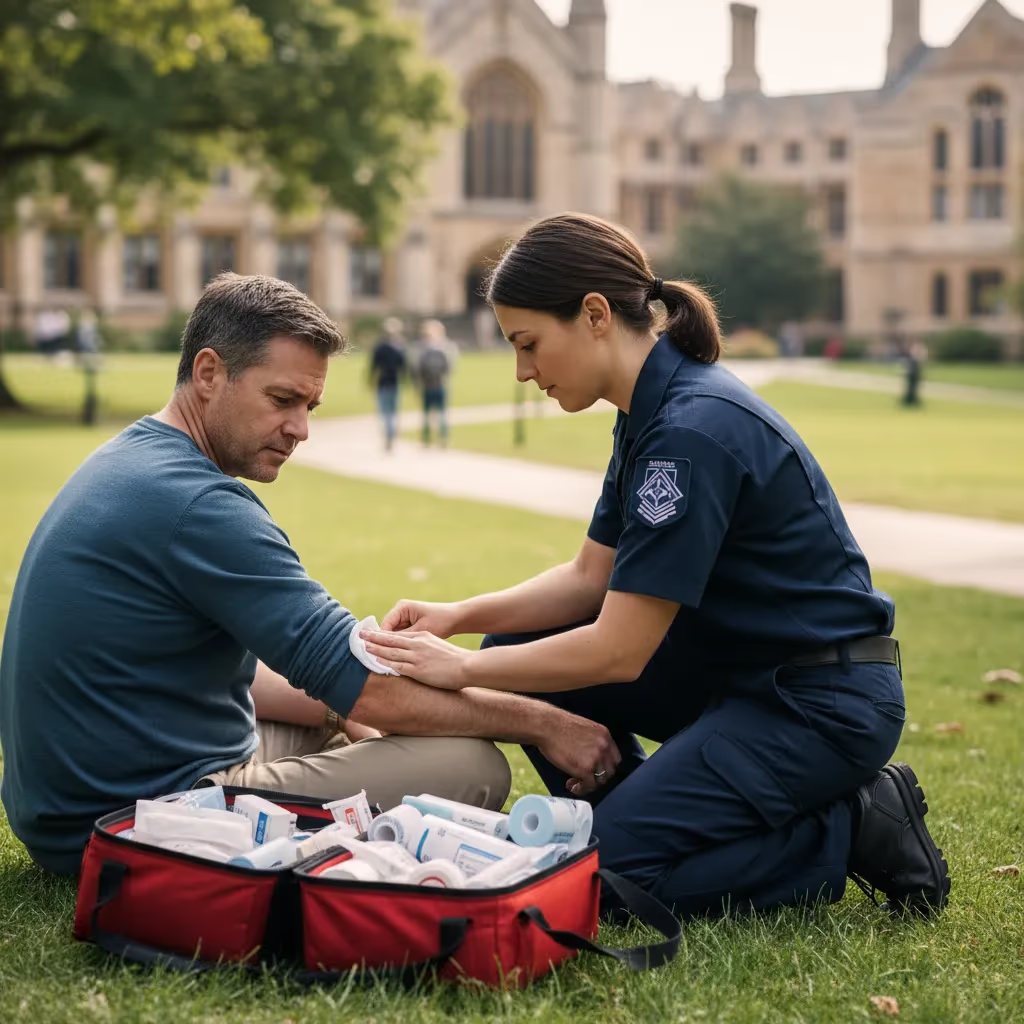
Getting your first aid certification isn't just a box to check. It's a skill set that can save someone's life — maybe even yours. Whether you're preparing for a workplace requirement or you simply want to be ready when emergencies strike, understanding first aid certification 7 tips to know will put you miles ahead of most candidates. The exam covers everything from first aid for burns to cardiac arrest response, and the practical skills portion demands real confidence under pressure.
Here's something most people don't realize: first aid knowledge extends far beyond bandaging cuts. You'll learn how to assess an unconscious person, manage severe bleeding, and respond to choking emergencies in seconds — not minutes. The certification process itself varies by provider, but the core material stays consistent across the Red Cross, AHA, and NSC programs. Each one tests your ability to act fast and think clearly when it matters most.
Some candidates confuse first aid beauty products with actual medical first aid training — they're completely different fields. This guide breaks down seven critical tips that experienced instructors wish every student knew before exam day. We'll cover study strategies, common mistakes during the skills test, and which topics carry the most weight on the written portion. Stick with these tips, and you'll walk into that certification exam ready.
Choosing the right certification course matters more than most people think. Don't confuse a first aid beauty skincare routine with actual emergency medical training — you need a program accredited by OSHA or a recognized body like the American Red Cross. The first aid beauty of proper training lies in its structured approach: classroom instruction paired with hands-on practice creates muscle memory you can rely on during real emergencies.
Watch out for outdated information online. The first aid beauty face moisturizer recall made headlines recently, but it has nothing to do with medical first aid — stay focused on credible training sources. Your course should cover the latest CPR guidelines from 2025, which updated compression depth and ventilation ratios for adult and pediatric patients. Online-only courses exist, but they won't satisfy most employer requirements. Blended learning — online theory plus in-person skills testing — gives you the best of both worlds.
Red Cross, AHA, and NSC each offer slightly different curricula. Red Cross emphasizes scenario-based learning. AHA focuses heavily on cardiac chain of survival. NSC targets workplace safety. Pick the one your employer recognizes, or go with Red Cross for the broadest acceptance. Cost ranges from $25 for basic online courses to $75 for comprehensive in-person training with materials included.
Burns treatment dominates first aid exams — and real-world emergencies. You'll need to classify burns by degree, know when to use cool running water versus when to call 911, and understand why ice is never the right answer. The first aid beauty ultra repair cream might soothe dry skin, but actual burn treatment requires specific medical protocols. Cool the burn under running water for at least 10 minutes. Cover it loosely with a sterile, non-stick dressing. Never pop blisters.
Mental health first aid is gaining traction in certification programs nationwide. It's not just about physical injuries anymore. Recognizing signs of panic attacks, suicidal ideation, and acute stress reactions now appears on many updated exams. The first aid beauty face moisturizer recall showed how product safety intersects with public health awareness — but mental health first aid goes deeper, teaching you to de-escalate crises and connect people with professional help.
Third-degree burns present differently than you'd expect. The skin looks white or charred, and the victim might not feel pain because nerve endings are destroyed. Your job isn't to treat a third-degree burn — it's to keep the person calm, prevent shock, and get emergency services there fast. Time matters enormously here. Every minute of delay increases the risk of infection and tissue damage spreading beyond the original burn site. Cover the entire affected area with a clean, dry, sterile cloth. Don't ever apply creams, ointments, or butter. Ever.
First Aid Certification Providers Compared
The American Red Cross offers the most widely recognized certification in the US. Their blended learning format combines online coursework with in-person skills sessions. Courses run 4-6 hours and cover CPR, AED use, and basic first aid. Certification lasts two years. Cost: $35-75 depending on location. Best for: general preparedness and employer compliance.
Building proper first aid kits is tip number four — and it's one most people get wrong. A good kit isn't a plastic box from the dollar store with a few adhesive bandages inside. Wilderness first aid instructors teach their students to build kits tailored to their environment. A hiking kit needs SAM splints, emergency blankets, and irrigation syringes. An office kit needs burn gel, eye wash, and an AED nearby.
Stock your first aid kits with supplies that match real emergencies, not hypothetical ones. Gauze pads, medical tape, nitrile gloves, trauma shears, and a CPR face shield cover 90% of situations you'll actually encounter. Add an emergency whistle and a compact flashlight — they weigh almost nothing but prove invaluable during nighttime incidents or when you need to signal for help. Replace expired items every six months. Check your kit after every use. Label everything clearly — during an emergency, you won't have time to read fine print or dig through a disorganized bag.
Wilderness first aid certification takes your skills further. These courses — typically 16 hours over two days — teach you to handle emergencies when help is hours away. You'll learn to improvise splints from trekking poles, manage hypothermia with layering techniques, and assess spinal injuries in remote terrain. If you spend time outdoors, this certification complements your standard first aid card perfectly.
Mental health first aid training has become a standalone certification path. The eight-hour course teaches you to recognize warning signs of depression, anxiety disorders, psychosis, and substance abuse. You won't diagnose anyone — that's not your role. But you'll learn a five-step action plan called ALGEE: Assess risk, Listen nonjudgmentally, Give reassurance, Encourage professional help, Encourage self-help strategies. It's practical. It works.
The first aid kit band is a Swedish indie group — not related to medical training, but the name confusion pops up in search results constantly. Stay focused on your certification goals. Mental health first aid training pairs well with traditional first aid certification because emergencies rarely present as purely physical or purely psychological. A car accident victim might be physically fine but psychologically shattered. Knowing how to handle both makes you genuinely useful at the scene.
Employers increasingly value dual-certified employees. Someone with both standard first aid and mental health first aid training brings more to the table during workplace incidents, natural disasters, and community emergencies. The investment is modest — about $200 for both courses — and the skills last a lifetime even though the certifications themselves expire every two to three years.
First Aid Certification: Benefits vs. Challenges
- +Gives you confidence to act during real emergencies instead of freezing
- +Satisfies OSHA workplace requirements for designated first aid responders
- +CPR-trained bystanders double or triple cardiac arrest survival rates
- +Many employers offer pay differentials for certified employees
- +Skills transfer to home, travel, and outdoor recreation scenarios
- +Certification opens doors to lifeguarding, coaching, and childcare roles
- −Requires renewal every two years with additional time and cost
- −In-person skills testing can cause anxiety for some learners
- −Online-only courses don't meet all employer requirements
- −Course quality varies significantly between providers and instructors
- −Hands-on practice with manikins feels awkward for first-time students
- −Some advanced scenarios aren't covered in basic certification courses
Tip five: know what to pack in specialized kits. A baby first aid kit needs infant-sized nasal aspirators, rectal thermometers, saline drops, and pediatric dosing charts for acetaminophen and ibuprofen. Don't just shrink an adult kit — infant emergencies require different tools and different protocols entirely. Febrile seizures, for instance, look terrifying but usually resolve on their own. Your job is to keep the child safe and time the seizure.
Youth mental health first aid is a specialized certification designed for adults who work with teenagers. Teachers, coaches, youth pastors, and camp counselors benefit most from this training. The course covers adolescent-specific issues like self-harm, eating disorders, cyberbullying trauma, and substance experimentation. It's an eight-hour investment that could literally save a young person's life. The statistics are stark — suicide is the second leading cause of death for ages 10-24.
Combining physical and mental health certifications makes you the person everyone looks to during a crisis. School administrators, daycare directors, and sports organizations increasingly require both. If you're already pursuing first aid certification, adding youth mental health first aid costs about $100 more and takes just one additional day. The return on that investment — measured in preparedness and peace of mind — is enormous.
First Aid Certification Exam Day Checklist
- ✓Review the latest CPR compression-to-ventilation ratios (30:2 for adults)
- ✓Practice AED pad placement on both adult and pediatric manikins
- ✓Know the signs of shock: pale skin, rapid pulse, shallow breathing
- ✓Memorize the choking response sequence for conscious and unconscious victims
- ✓Bring a valid photo ID and your course completion certificate
- ✓Wear comfortable clothing that allows you to kneel on the floor
- ✓Arrive 15 minutes early to set up your practice station
- ✓Review burn classification: superficial, partial-thickness, full-thickness
- ✓Practice the recovery position — examiners watch your hand placement closely
- ✓Stay calm during scenarios — rushed responses lose points on technique
Your first aid kit should travel with you. First aid beauty facial radiance pads belong in your skincare bag — but a compact first aid kit belongs in your car, your backpack, and your desk drawer. A car first aid kit faces unique challenges: extreme temperatures degrade medications, and supplies need to handle roadside emergencies like glass cuts, whiplash assessment, and bleeding from impact injuries.
Stock your vehicle kit with items you won't find in a standard home kit. Triangle reflectors, emergency blankets rated for sub-zero temperatures, a seatbelt cutter, and a window breaker tool all belong alongside your medical supplies. Check expiration dates when you change your clocks — twice a year keeps everything current. Heat destroys adhesive on bandages and degrades antibiotic ointments, so store your kit under a seat rather than in the trunk during summer months.
Workplace first aid kits have OSHA-mandated minimum contents. Class A kits handle common injuries for small workplaces. Class B kits add items for high-risk environments. Know which class your workplace requires, and volunteer to be the person who maintains it. That initiative looks great on performance reviews — and it guarantees you'll always know exactly where supplies are when seconds count during a real emergency.
Tip six covers the often-overlooked first aid course structure. A first aid course — whether online, in-person, or blended — follows a predictable pattern. You'll start with scene safety assessment, move through medical versus trauma emergencies, and finish with hands-on skills stations. The first aid beauty kp bump eraser is a skincare exfoliant, not an emergency tool — don't let search results confuse your study focus.
Understanding course structure helps you study smarter. Prioritize the topics that carry the most exam weight: CPR technique (always the biggest section), bleeding control, choking response, and burn treatment. Secondary topics like poisoning, allergic reactions, and diabetic emergencies still appear on the test but usually account for fewer questions. Focus 60% of your study time on the big four and 40% on everything else.
Practice tests accelerate your preparation dramatically. Taking a first aid course with built-in practice exams outperforms reading textbooks alone by a wide margin. Active recall — testing yourself on material rather than passively reviewing it — strengthens memory formation. Research from cognitive science confirms that students who test themselves retain 50% more information after one week compared to those who only re-read their notes. That's why practice questions on this site exist. Use them before your exam, not just after you've finished studying. They'll reveal gaps in your knowledge while you still have time to fill them.
Three errors account for most first aid exam failures: (1) Forgetting to check the scene for safety before approaching a victim — always look for hazards first. (2) Performing compressions too shallow — you need at least 2 inches of depth on adults. (3) Not calling 911 early enough — in many scenarios, activating EMS should be your first action, not your last. Practice these sequences until they're automatic.
Cintas first aid and safety is one of the largest providers of workplace first aid supplies and training in North America. If your employer uses Cintas, you'll likely receive a pre-stocked cabinet that meets OSHA Class A or B requirements. Cintas also offers on-site certification courses — convenient if you've got a team of employees who all need training at once. Their programs align with OSHA 1910.151 standards and include both basic and advanced options.
Here's a detail gamers appreciate: the wow classic first aid guide teaches in-game bandaging skills that mirror a surprisingly logical triage system. While obviously fictional, the tiered progression from linen bandages to heavy runecloth parallels how real first aid skills build from basic wound care to advanced trauma management. Real certification, though, requires real practice with real equipment — no shortcuts.
Tip seven: maintain your skills after certification. The card in your wallet means nothing if you can't perform when someone collapses at the grocery store. Watch refresher videos monthly. Practice chest compressions on a pillow. Review your notes before they gather dust. Skills fade fast — research shows CPR competency drops measurably within three months of training. Set a quarterly reminder on your phone to review the basics. Watch a five-minute refresher video, practice on a pillow, or quiz yourself using the practice tests on this page. The best certified responders treat learning as ongoing, not one-and-done.
First Aid Practice Test Questions
Prepare for the First Aid exam with our free practice test modules. Each quiz covers key topics to help you pass on your first try.
First Aid Bleeding, Wounds, and Shock
First Aid Exam Questions covering Bleeding, Wounds, and Shock. Master First Aid Test concepts for certification prep.
First Aid Burns and Temperature Extremes
Free First Aid Practice Test featuring Burns and Temperature Extremes. Improve your First Aid Exam score with mock test prep.
First Aid Choking and Airway Emergencies
First Aid Mock Exam on Choking and Airway Emergencies. First Aid Study Guide questions to pass on your first try.
First Aid CPR and AED Procedures
First Aid Test Prep for CPR and AED Procedures. Practice First Aid Quiz questions and boost your score.
First Aid Bleeding, Wounds, and Shock Ques...
First Aid Questions and Answers on First Aid Bleeding, Wounds, and Shock Questions and Answers. Free First Aid practice for exam readiness.
First Aid Burns and Temperature Extremes Q...
First Aid Mock Test covering First Aid Burns and Temperature Extremes Questions and Answers. Online First Aid Test practice with instant feedback.
First Aid Choking and Airway Emergencies Q...
Free First Aid Quiz on First Aid Choking and Airway Emergencies Questions and Answers. First Aid Exam prep questions with detailed explanations.
First Aid CPR and AED Procedures Questions...
First Aid Practice Questions for First Aid CPR and AED Procedures Questions and Answers. Build confidence for your First Aid certification exam.
First Aid Musculoskeletal Injury Managemen...
First Aid Test Online for First Aid Musculoskeletal Injury Management Questions and Answers. Free practice with instant results and feedback.
First Aid Poisoning, Bites, and Stings
First Aid Study Material on First Aid Poisoning, Bites, and Stings. Prepare effectively with real exam-style questions.
First Aid Poisoning, Bites, and Stings Que...
Free First Aid Test covering First Aid Poisoning, Bites, and Stings Questions and Answers. Practice and track your First Aid exam readiness.
First Aid Sudden Illness and Allergies Que...
First Aid Exam Questions covering First Aid Sudden Illness and Allergies Questions and Answers. Master First Aid Test concepts for certification prep.
First Aid FREE First Aid Bleeding and Woun...
Free First Aid Practice Test featuring FREE First Aid Bleeding and Wound Care Questions and Answers. Improve your First Aid Exam score with mock test prep.
First Aid FREE First Aid Bone, Muscle, and...
First Aid Mock Exam on FREE First Aid Bone, Muscle, and Joint Injuries Questions and Answers. First Aid Study Guide questions to pass on your first try.
First Aid FREE First Aid Burns and Tempera...
First Aid Test Prep for FREE First Aid Burns and Temperature Extremes Questions and Answers. Practice First Aid Quiz questions and boost your score.
First Aid FREE First Aid Choking and Airwa...
First Aid Questions and Answers on FREE First Aid Choking and Airway Emergencies Questions and Answers. Free First Aid practice for exam readiness.
First Aid FREE First Aid CPR and AED Usage...
First Aid Mock Test covering FREE First Aid CPR and AED Usage Questions and Answers. Online First Aid Test practice with instant feedback.
First Aid FREE First Aid/Emergency Questio...
Free First Aid Quiz on FREE First Aid/Emergency Questions and Answers. First Aid Exam prep questions with detailed explanations.
First Aid FREE First Aid Principles Questi...
First Aid Practice Questions for FREE First Aid Principles Questions and Answers. Build confidence for your First Aid certification exam.
First Aid FREE First Aid Sudden Medical Em...
First Aid Test Online for FREE First Aid Sudden Medical Emergencies Questions and Answers. Free practice with instant results and feedback.
First Aid FREE First Aid Workplace Safety ...
First Aid Study Material on FREE First Aid Workplace Safety Questions and Answers. Prepare effectively with real exam-style questions.
First Aid Musculoskeletal Injury Management
Free First Aid Test covering Musculoskeletal Injury Management. Practice and track your First Aid exam readiness.
First Aid Sudden Illness and Allergies
First Aid Exam Questions covering Sudden Illness and Allergies. Master First Aid Test concepts for certification prep.
First Aid Bleeding and Wound Care
Free First Aid Practice Test featuring Bleeding and Wound Care. Improve your First Aid Exam score with mock test prep.
First Aid Bone, Muscle, and Joint Injuries
First Aid Mock Exam on Bone, Muscle, and Joint Injuries. First Aid Study Guide questions to pass on your first try.
First Aid CPR and AED Usage
First Aid Test Prep for CPR and AED Usage. Practice First Aid Quiz questions and boost your score.
First Aid/Emergency
First Aid Questions and Answers on First Aid/Emergency. Free First Aid practice for exam readiness.
First Aid Principles
First Aid Mock Test covering Principles. Online First Aid Test practice with instant feedback.
Some niche first aid products cause unnecessary confusion during certification study. First aid beauty - facial radiance pads with glycolic acid treat skin texture issues — they're a cosmetic product, not a medical supply. When you search for first aid study materials, filter your results carefully. Stick to sources from the Red Cross, AHA, NSC, or accredited training organizations. Product marketing and medical training occupy very different spaces online.
A dog first aid kit deserves mention because pet emergencies happen more often than most people expect. If you're building kits for your household, include one for your pets. Dog-specific items include a muzzle (injured dogs bite), styptic powder for nail bleeding, hydrogen peroxide for vet-directed vomiting induction, and self-adhering wrap that won't stick to fur. Your human first aid skills transfer partially — you can control bleeding and assess breathing — but dosing and wound care differ significantly.
Bringing it all together: first aid certification isn't just a course you take and forget. It's a commitment to being the person who acts while others stand around recording on their phones. These seven tips — choosing the right course, mastering burns and bleeding, understanding mental health response, building proper kits, preparing for exam day, studying smart, and maintaining skills — give you a framework that goes well beyond passing a test. You're building the ability to save lives. Start with a practice test below, then sign up for your course.
First Aid Questions and Answers
About the Author

Enrolled Agent & Tax Certification Preparation Expert
NYU School of Professional StudiesMichael Chen is a Certified Public Accountant, IRS Enrolled Agent, and holds a Master of Science in Taxation from NYU School of Professional Studies. With 16 years of individual, corporate, and estate tax practice experience, he coaches candidates through the EA Special Enrollment Examination, CPA tax sections, VITA certification, and state tax preparer licensing programs.
Join the Discussion
Connect with other students preparing for this exam. Share tips, ask questions, and get advice from people who have been there.
View discussion (5 replies)