
EPA Section 608 A31 Practice Test: Free Questions, Answers, and a Study Plan
🎯 Prep for the epa section 608 a31 exam with free practice questions, answers, Core/Type I/II/III coverage, and a proven study plan to pass first try.
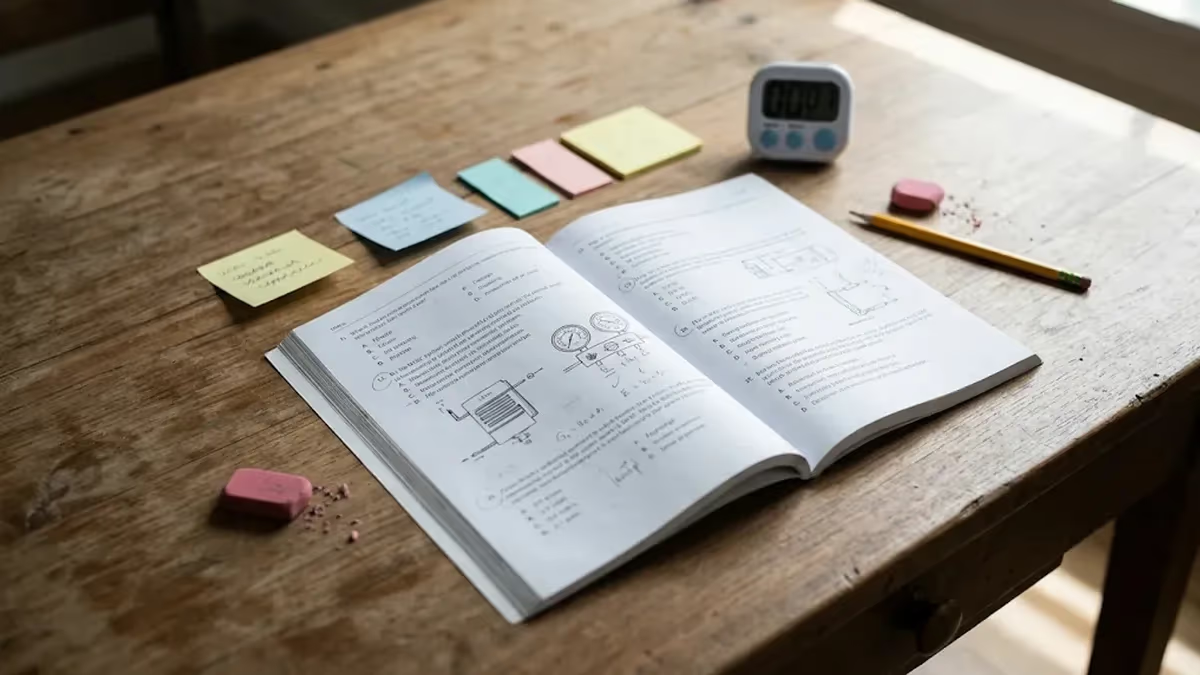
If you searched for epa section 608 a31, you are probably hunting for the kind of practice question that appears on the real Section 608 certification exam, and you want to know whether you are ready. This page gives you a realistic way to prepare. You will find an exam breakdown, free quiz links, an explanation of how questions are written, and a study plan built for working HVAC technicians, apprentices, and career changers who need certification quickly.
Section 608 of the Clean Air Act requires anyone who maintains, services, repairs, or disposes of equipment that could release refrigerants into the atmosphere to be certified. The exam is given by EPA-approved organizations, and it is proctored and closed book. Without a certificate you cannot legally buy most refrigerants, and most employers will not let you touch a system. That is why a disciplined epa section 608 practice test routine pays for itself before you ever sit the real exam.
The test has four parts. Core covers ozone depletion, regulations, the three Rs, safety, and shipping. Type I covers small appliances holding five pounds or less of refrigerant. Type II covers high-pressure systems such as residential air conditioners and commercial refrigeration. Type III covers low-pressure chillers. Pass all four sections and you earn Universal certification, which is what most employers want to see on a résumé and what most career-minded technicians eventually choose.
Each section contains 25 multiple-choice questions, and you need 18 correct answers, or 72 percent, to pass that section. You can pass Core and fail Type II, then retake only Type II. The certificate never expires, so you earn it once and keep it for your whole career. That combination of a modest passing score and permanent credentials makes the exam very winnable for anyone who studies the right material and practices under realistic conditions.
Most people who fail do not fail because the material is impossibly hard. They fail because they memorize a number without understanding the rule behind it, or they read a question too fast and pick the first answer that sounds right. Practice questions fix both problems. Each time you miss a question, you learn which rule, number, or definition you actually did not know, and that targeted feedback is far more efficient than rereading a manual cover to cover.
A good practice routine mixes three things: untimed learning questions where you read every explanation, timed sets that mimic the pressure of a proctored room, and spaced review of the questions you missed. This article shows you how to combine all three. You can start immediately with the free quizzes linked below, then return to the sections that explain the logic behind refrigerant recovery levels, leak repair rules, and the safety questions that trip up first-time test takers.
Plan on roughly two to four weeks of part-time study if you already work in the trades, and four to six weeks if you are brand new. Studying thirty to forty-five minutes a day beats a single weekend cram, because the exam rewards recall of specific numbers and dates that fade quickly. By the end of this guide you will know what to study, how to practice, what to avoid, and how to walk into the testing room calm and prepared.
EPA Section 608 Exam by the Numbers
EPA Section 608 Exam Format and Passing Score
| Section | Questions | Time | Weight | Notes |
|---|---|---|---|---|
| Core | 25 | About 30 min | 25% | Required for every certification type |
| Type I | 25 | About 30 min | 25% | Small appliances, 5 lbs or less |
| Type II | 25 | About 30 min | 25% | High-pressure and very-high-pressure systems |
| Type III | 25 | About 30 min | 25% | Low-pressure systems such as chillers |
| Total | 100 | No fixed limit (about 2 hours for Universal) | 100% |
How EPA Section 608 Practice Questions Are Written
Section 608 questions are straightforward multiple choice with four options, and only one is correct. They are not written to trick you with obscure wording, but they do punish carelessness. A typical question asks you to recall a number, identify a rule, or choose the correct procedure. For example: when recovering refrigerant from a high-pressure appliance with a charge under 200 pounds that was manufactured after November 15, 1993, to what level must you evacuate?
The correct answer is 0 inches of mercury, while an appliance with 200 pounds or more is evacuated to 10 inches of mercury. Notice how that single question tests two ideas at once: the size threshold and the manufacturing date. Practice questions that include full explanations teach you to spot these paired variables. When you review a missed question, always ask which variable you ignored, because the real exam will present the same logic with different numbers and different refrigerants.
Another common format is the definition question. You might see a prompt asking which refrigerant class contains chlorine, bromine, or neither, and the answer depends on whether you know that CFCs, HCFCs, and HFCs differ in ozone depletion potential. CFCs like R-12 carry chlorine and cause the most damage. HCFCs like R-22 carry chlorine but less of it. HFCs like R-134a and R-410A contain no chlorine, so their ozone depletion potential is zero, although they still contribute to global warming.
Scenario questions describe a technician on a job and ask what they should do next. A typical one: you find a refrigerant leak on a commercial refrigeration system with a 100-pound charge. What are your obligations? The correct reasoning requires you to know the leak rate thresholds that trigger repair, the time allowed to complete repairs, and the records you must keep. These questions reward people who understand the purpose of the rules instead of trying to memorize every sentence from a study guide.
Safety questions deserve special attention because they are easy points when you prepare and easy losses when you do not. Expect questions on oxygen deficiency in enclosed spaces, why you never use a torch near refrigerant vapor, how to handle cylinders, why you must never fill a recovery cylinder beyond 80 percent of its capacity, and what color-coded cylinders mean. Recovery cylinders are gray with a yellow top, while virgin refrigerant cylinders use colors specific to the refrigerant.
Because the question pool is finite, high-quality practice sets expose you to nearly every concept the real exam can ask. The wording will differ, but the underlying rule will not. That is why repeating sets matters. The first pass shows what you do not know, the second pass confirms what you learned, and the third pass builds speed. By your fourth session you should be recognizing patterns and eliminating wrong answers within seconds instead of agonizing over every choice.
One more habit separates people who pass from people who retake: reading all four options before choosing. Test writers often include an answer that is almost correct, such as the right number paired with the wrong refrigerant type. If you jump to the first familiar option, you will walk straight into that trap. Slow down for two extra seconds per question and you will recover several points over a 25-question section without learning a single new fact.
What Each EPA Section 608 Exam Part Tests
The Core section is the foundation, and every certification type requires it. Expect questions on stratospheric ozone depletion, the Montreal Protocol, the Clean Air Act, and the difference between CFCs, HCFCs, and HFCs. You will also see the three Rs: recover means to remove refrigerant from a system, recycle means to clean it for reuse, and reclaim means to process it to virgin specifications at an EPA-certified facility.
Core also covers venting prohibitions, the sales restriction that limits refrigerant purchases to certified technicians, safe cylinder handling, and Department of Transportation shipping requirements. Because Core applies to every type, it is the best place to start practicing. Aim for at least 85 percent on Core practice sets before moving on, since a strong Core score builds the confidence you need for the harder, more numerical sections that follow.
Is Practice Test Prep Better Than Reading the Manual Alone?
- +Practice questions show exactly which rules and numbers you do not know yet.
- +Explained answers teach the reasoning behind regulations, not just the facts.
- +Timed sets build the pace and calm you need in a proctored room.
- +Repeated exposure moves key numbers into long-term memory.
- +Free online quizzes cost nothing and fit into short breaks on the job.
- +Score tracking lets you decide objectively when you are ready to test.
- −Memorizing answers without understanding can fail you when wording changes.
- −Low-quality question banks may contain outdated rules or wrong numbers.
- −Practice alone does not replace hands-on experience with recovery machines.
- −Over-practicing one section can leave you weak on another.
- −Easy practice sets can create false confidence before the real exam.
- −Studying passively, without reviewing misses, wastes valuable time.
Your epa section 608 a31 Practice Test Prep Checklist
- ✓Decide whether you are targeting Type I, II, III, or Universal.
- ✓Take one untimed Core practice set to find your baseline score.
- ✓Write down every missed question and the rule behind it.
- ✓Make flashcards for evacuation levels, leak rates, and cylinder rules.
- ✓Review the three Rs until you can define each without hesitation.
- ✓Complete a timed 25-question set for every section you plan to test.
- ✓Score at least 80 percent on three practice sets in a row.
- ✓Confirm your proctor, format, and ID requirements before exam day.
- ✓Rest well the night before and eat a real meal that morning.
- ✓Read every answer option before you commit to a choice.
Pass each section separately if you need to
You do not have to pass all four parts in one sitting. A passing score on Core, Type I, Type II, or Type III is recorded individually, so a retake only covers the section you missed. Use that flexibility: if one section is weak, study it deliberately instead of rushing.
Key Numbers and Rules You Must Memorize
Numbers are the single biggest source of lost points on the Section 608 exam. Start with recovery requirements for Type I appliances: recover 90 percent of the refrigerant if the compressor operates, or 80 percent if it does not. Those two figures appear constantly on practice sets and on the real test. Write them on a flashcard, say them aloud while driving to work, and quiz yourself until the answer comes automatically without any visible effort or hesitation.
For Type II high-pressure systems, evacuation levels depend on charge size and manufacture date. For equipment built after November 15, 1993, a charge below 200 pounds requires evacuation to 0 inches of mercury, and a charge of 200 pounds or more requires 10 inches of mercury. Equipment manufactured earlier uses 0 and 4 inches for the same size split. Very-high-pressure refrigerants such as R-13 and R-503 require 0 inches regardless.
For Type III low-pressure systems, the requirement is recovery to 25 millimeters of mercury absolute. Low-pressure chillers also use a rupture disc rated at 10 psig, which protects the vessel from overpressure. If you are working on a chiller and want to open it for repair, you typically raise the pressure to about 3 psig with controlled warming or nitrogen, never higher, because you want to avoid cracking the disc or leaking refrigerant.
Leak repair rules matter on both Type II and Core questions. Historically, EPA required repairs when the annual leak rate exceeded 20 percent for commercial refrigeration, 30 percent for industrial process refrigeration, and 10 percent for comfort cooling on appliances holding 50 or more pounds. Newer rules under the AIM Act apply similar logic to HFC appliances with 15 or more pounds. Repairs generally must be completed within 30 days, and you should verify with follow-up tests.
Cylinder rules are another predictable source of questions. Never fill a recovery cylinder beyond 80 percent of its capacity by weight, because liquid refrigerant expands as it warms and can rupture an overfilled vessel. Recovery cylinders are gray with a yellow top, and they must be DOT-approved with a current hydrostatic test date. Never transport a cylinder unsecured, and never refill a disposable cylinder, which is another very common wrong-answer trap on practice tests.
Recordkeeping questions usually reference three-year retention. Technicians servicing appliances with 50 or more pounds of refrigerant must keep service records, including the quantity added, and owners keep them for three years. For disposal of appliances between 5 and 50 pounds, the person who recovers the refrigerant must keep records, and safe disposal requires a signed statement from the owner. Know who keeps which records, since exam questions often ask who is responsible.
Finally, memorize the refrigerant classes and common examples: R-12 is a CFC, R-22 is an HCFC, and R-134a, R-410A, and R-404A are HFCs. Know that R-11 and R-123 are low-pressure, that R-22 and R-410A are high-pressure, and that R-134a is medium to high pressure depending on context. Building this lookup table once and reviewing it daily will earn you several points on every section where refrigerant identity matters.
Leak repair thresholds, refrigerant lists, and technician requirements have been updated by the AIM Act and recent EPA rulemakings. Always confirm the current rule with your proctoring organization or the EPA website, and use study material dated within the last few years.
Common Mistakes, Edge Cases, and Safety Rules
The most common mistake on the Section 608 exam is confusing recovery, recycling, and reclaiming. Recovery removes refrigerant from a system and stores it in an external container, with no testing or processing required. Recycling cleans refrigerant using oil separation and single or multiple passes through filter-driers, and it can be done on site. Reclaiming restores refrigerant to the purity of new product and requires laboratory verification at an EPA-certified reclaimer. If you mix these up, you will lose points on Core.
A second trap involves the sales restriction. Only certified technicians may purchase most refrigerants, and sales of ozone-depleting refrigerants to uncertified people are prohibited. Exam writers sometimes ask whether a small can of refrigerant sold to a do-it-yourselfer is exempt, and the answer depends on the refrigerant and container size. Know the general principle that certification gates purchasing, and remember that recent rules extended similar restrictions to many HFC refrigerants as well.
Venting rules produce edge-case questions. Intentionally venting CFCs, HCFCs, and HFCs is illegal, but small releases that occur while connecting or disconnecting gauges in good-faith service are considered de minimis. Refrigerant substitutes like hydrocarbons have their own exemptions. The exam typically tests the simple version: if you can recover, you must recover, and if you vent on purpose, you are violating the Clean Air Act and risk significant fines for each day of the violation.
Penalties are worth knowing even if the exact dollar figure changes yearly. Violations can result in civil fines of tens of thousands of dollars per day, and knowing falsification of records or knowingly venting can carry criminal penalties. EPA also pays rewards for tips about illegal venting, which is why many companies take compliance seriously. On the exam, the principle is that technicians, owners, and sellers can all be held responsible depending on the violation.
Safety edge cases are where many first-time takers slip. Never use a torch or open flame near refrigerant, because heat can decompose it into toxic gases such as phosgene and hydrofluoric acid. Refrigerant vapor is heavier than air and displaces oxygen in low-lying or enclosed areas, so ventilation and self-contained breathing equipment matter. Wear safety glasses and gloves to prevent frostbite from liquid refrigerant. Never pressurize a system with oxygen or compressed air, only dry nitrogen with a regulator.
Equipment questions create more confusion than most people expect. Recovery machines are certified by EPA-approved testing labs, and they must meet standards from AHRI or UL. System-dependent recovery uses the appliance's own compressor and is allowed only on Type I appliances with five pounds or less. Self-contained recovery uses its own compressor and is required for larger equipment. The exam likes to ask which type fits which situation, so practice with scenarios rather than lists.
When you finish each practice set, spend as much time reviewing as you spent answering. Sort your misses into three piles: facts you did not know, facts you knew but misread, and careless slips. Each pile needs a different fix. Unknown facts need flashcards, misreads need slower reading, and slips need a final check before you submit. This simple triage can raise a stubborn 70 percent practice score above 85 percent within a couple of weeks.
Final Prep Advice and Test Day Strategy
Start your final preparation about a week before the exam by taking a full-length practice set for each section you plan to test, under timed conditions. Turn off your phone, close your notes, and sit at a desk. If you score above 80 percent on every section, you are likely ready. If one section sits below 75 percent, spend your remaining days on that section only, since improving your weakest area yields the largest gain.
Use spaced repetition for the numbers. Review your flashcards the day you create them, then again two days later, then four days later, then a week later. This pattern moves facts into long-term memory far faster than rereading the same page. Keep your deck small and focused: evacuation levels, leak rate thresholds, cylinder rules, refrigerant classes, and recordkeeping periods. Thirty well-chosen cards beat three hundred cards you never actually finish reviewing.
Choose your exam format deliberately. Some organizations offer proctored online exams, and others use testing centers or supply paper exams at supply houses and trade schools. Check that your proctor is EPA-approved, confirm the fee, and learn what ID you must bring. Fees vary, commonly ranging from about $25 to around $150 depending on provider and whether you test for one type or Universal, so compare before you book.
On test day, arrive early, bring a government-issued photo ID, and carry a calculator only if the proctor allows it. Most exams are closed book, though some provide a pressure-temperature chart. Read each question completely, answer the ones you know first, and mark the uncertain ones for review. Because there is no penalty for guessing, never leave an answer blank. Eliminating two wrong options turns a guess into a fifty-fifty choice.
Manage your nerves with a simple routine. Breathe slowly before you begin, drink water, and remind yourself that you only need 18 out of 25 correct. If you hit a hard question, circle it and move on rather than burning five minutes. Many test takers find that later questions jog their memory about earlier ones. Come back with fresh eyes, and trust your first instinct unless you can point to a specific reason to change.
After you pass, you will receive a certificate and often a wallet card. Make photocopies and a digital scan, because employers and refrigerant suppliers will ask for proof. If you lose your card, contact the organization that certified you, since EPA does not issue replacements directly. Remember that your certification does not expire, but regulations evolve, so keep reading industry updates and review rule changes each year to stay compliant on the job.
If you fail a section, do not panic. Review the score report if one is provided, identify the weak topics, and schedule a retake after another week or two of targeted practice. Most people who retake pass with ease because they now know the exam's style and pace. Treat the first attempt as expensive diagnostic feedback. Keep using free practice quizzes, tighten your flashcards, and approach the next sitting with the confidence that comes from real preparation.
EPA 608 Questions and Answers

EPA 608 Certification Cost: Complete Breakdown of Exam Fees, Study Materials, and Total Investment

EPA 608 Test Flashcards: The Complete Study System for Section 608 Certification

Licencia EPA 608: Guía Completa de Certificación y Estudio

EPA 608 Certification Exam Locations: Complete Guide to Finding & Scheduling Your Test
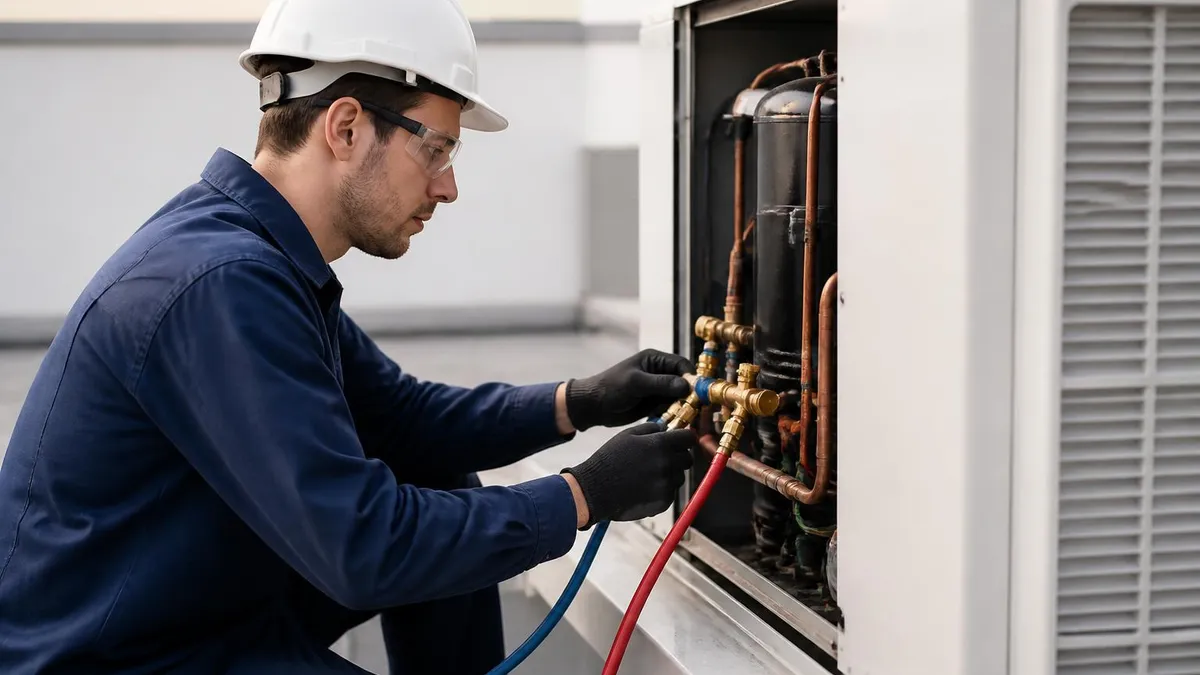
EPA 608 Certification: Complete Guide
Written and edited by Nathan Beja, founder of Practice Test Geeks, with AI assistance. Exam facts are checked against the official sources linked below. Editorial policy
Sources & references
Exam facts on this page (fees, format, dates, passing scores) are checked against these official sources; the date is our last check. Editorial policy