
Electrocardiogram Technician Salary — Complete Guide (2026 September)
BLS national salary, state pay, certifications boost, 📝 hourly rates for EKG/ECG techs in 2026 September. Range $32K-$78K.
What EKG Techs Actually Earn
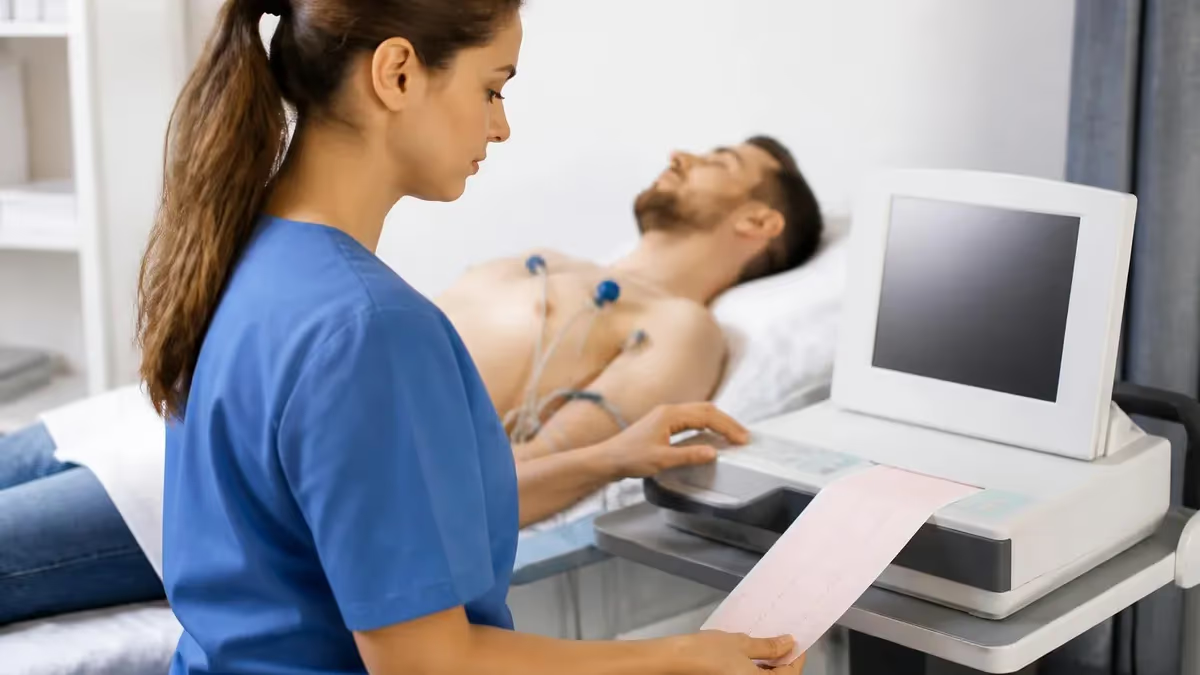
BLS national median sits at $44,360/year — that's roughly $21.33 per hour. New techs start around $32K. Senior cardiac monitor specialists in California can clear $78K. The spread is real, and your state, setting, and certifications drive most of it.
Electrocardiogram Technician Salary — Complete Guide (2026)
Short answer: most EKG techs make between $38,000 and $56,000 a year. The Bureau of Labor Statistics pegs the national median at $44,360 for 2026 — but that single number hides a wide spread that matters when you're picking a state, a hospital system, or a specialty role.
Here's the honest picture. A first-year EKG tech in rural Mississippi might pull $33K. The same tech, three years later in San Francisco with a CCI rhythm analysis credential, can hit $72K. That's not a fantasy. It's the same job description, just different geography and a credential that took six weeks to earn.
This guide breaks down every variable that moves your paycheck. State-by-state pay, certification bumps, hospital versus clinic settings, hourly versus salaried roles, and the cardiac specialty roles (monitor tech, stress test tech, Holter tech) that pay $10-25K more than baseline EKG work. You'll also see the career ladder — how EKG opens the door to electrocardiogram technician specialist paths and beyond.
Worth knowing upfront: this is one of the fastest-entry healthcare careers in 2026. No degree required. A 4-to-12-week certificate program plus the electrocardiogram and electrocardiograph fundamentals — that's your entry ticket. We'll cover the ROI math too, because the program cost versus first-year salary is genuinely lopsided in the tech's favor.
One more thing before we dig in. Salary numbers in this guide are 2026 figures, blending BLS Occupational Employment Statistics, hospital pay band data from major US health systems, and reported numbers from travel staffing firms. Where the BLS uses the broader "cardiovascular technologist" code, we've pulled out the EKG-tech subset specifically. The numbers are honest. The bumps from certifications and setting changes are real and measurable.

EKG Technician Salary Snapshot 2026
Salary by Experience Level
Experience drives the biggest jump in this field — bigger than in most allied health roles. Why? Because EKG interpretation skill compounds fast. A tech who's read 5,000 strips spots arrhythmias faster, catches subtle ST changes, and earns the trust that lets supervisors move you into specialty roles. That trust shows up in the paycheck.
Entry Level (0-2 Years)
You'll start somewhere between $32,000 and $38,000 right out of certification. Hourly: $15.50 to $18. Most entry roles are hospital floor work — running 12-lead EKGs on admitted patients, sometimes stress test setup. Night shift differential adds $2-4/hour, and weekend rates run 1.5x. A new grad working three night shifts a week can clear $42K when shift premiums kick in.
Experienced (3-7 Years)
Here's where it gets interesting. By year three, most techs land between $50,000 and $65,000. You're trusted with telemetry monitoring, Holter scanning, and stress test administration. Hospital systems pay $24-28/hour at this band. If you've added the electrocardiogram st segment elevation recognition certification on top of your base CET, you're at the top of this range.
Senior / Lead Tech (8+ Years)
Senior techs in major metros clear $65,000-$78,000. Lead positions add charge differential — usually $3-5/hour. Some senior techs transition into cardiovascular technologist hybrid roles or take supervisory paths that push into the low $80s. The ceiling is real, but the path to it is well-marked.
Top-Paying States in 2026
Geography matters more than years of experience for the first salary bump. Moving from Alabama to California can double your paycheck overnight. Literally. Here's the 2026 picture, ranked by mean annual wage.
States Where EKG Techs Earn the Most
California tops the list at $62,000 mean annual wage. New York follows at $58K. Massachusetts, Alaska, Washington, New Jersey, and Connecticut all cluster between $51K-$55K. These states share three traits: high cost of living, strong nursing union influence (which pulls allied health pay up), and dense hospital networks competing for techs.
States Where Pay Lags
The bottom of the table tells a different story. Alabama, Mississippi, Arkansas, South Dakota, and West Virginia all sit between $33K-$37K mean wage. Cost of living is lower, but the dollar gap is real. A tech in San Jose earning $68K isn't living large compared to an Arkansas tech at $35K, but the absolute numbers favor coastal metros for savers and relocators.
Texas and Florida deserve a special mention. Both states are huge healthcare employers without state income tax, putting effective take-home pay higher than the raw wage suggests. A Texas EKG tech earning $44K nets more than a New Jersey tech earning $47K once state taxes are pulled out. That math matters when you're choosing between job offers in similar metros.
One workaround: travel EKG tech contracts. Travel agencies place certified techs into 13-week assignments at $32-45/hour plus housing stipends. A travel tech working 48 weeks a year can clear $85-110K. The catch: you're moving every quarter and benefits are thinner.
EKG Technician Salary by State (2026 Mean Annual Wage)
- California: $62,000
- New York: $58,000
- Massachusetts: $55,000
- Alaska: $54,000
- Washington: $52,000
- New Jersey: $52,000
- Connecticut: $51,000
- Oregon: $49,000
- Minnesota: $47,000
- Illinois: $45,000
- Alabama: $37,000
- Mississippi: $35,000
- Arkansas: $34,000
- South Dakota: $33,000
- West Virginia: $33,500
Salary by Work Setting
Where you work — not just which state — shapes your paycheck. Hospitals pay the most for staff EKG techs because the patient volume is constant and the acuity is higher. Outpatient clinics pay less but offer better hours and no weekends. Diagnostic labs sit in the middle but often pay the best when you factor in specialty work.
Hospital Settings (Inpatient)
Hospital techs earn $46,000 on average — slightly above the national median. Why? You handle stat orders, code blue support, cardiac unit rounds. The work is harder and the hours include nights and weekends, but shift differentials push effective hourly pay to $22-26 when you stack premium shifts.
Physician Offices and Cardiology Clinics
Outpatient clinic techs average $42,000. Pay's lower, but you'll work Monday-to-Friday daytime hours. No call. No weekends. For techs who value lifestyle, this trade-off works — especially mid-career when family schedules tighten.
Diagnostic Imaging Labs
Diagnostic labs sit at the top of non-hospital settings at $48,000. These labs run stress tests, Holter studies, and event monitor downloads in volume. Pay is good because the test volume is steady and the techs need cross-training across modalities.
Ambulatory and Mobile Cardiac Monitoring
Ambulatory cardiac monitoring jobs — companies like BioTel and iRhythm — pay around $43,000 baseline, with remote scanning roles available. Remote EKG/Holter readers can work from home after enough on-site training. That's a growing niche in 2026.
Certifications That Boost Your Pay
Certifications stack. Each one adds $2-6K to your base. Stack two or three and you're at the top of your state's pay band without changing employers. Here's what actually moves the needle in 2026.
Certified EKG Technician (CET) via NHA
This is the baseline credential — most employers require it within 12 months of hire. Cost: about $117 for the exam. Salary bump: +$2,000 to $5,000 over uncertified EKG aides. The NHA CET is the most widely recognized US credential. Prep with electrocardiogram technician program materials before sitting the test.
Certified Rhythm Analysis Technician (CRAT) via CCI
The CRAT is the bigger lever. Rhythm analysis means you read 24-hour Holter studies, event monitors, and inpatient telemetry strips. Pay bump: +$3,000 to $6,000. Exam fee around $175. CRAT-credentialed techs move into telemetry monitor tech roles ($55-70K) that are simply closed to uncredentialed staff.
Other Credentials Worth Stacking
The ASCP-equivalent cardiovascular tech credential adds $2-4K. The Certified Cardiographic Technician (CCT) — also via CCI — is for stress testing specialists and adds $3-5K. Phlebotomy certification on top of EKG opens combined roles paying $46-52K. Stack what fits the setting where you want to work.

Certification Costs vs Salary Bumps
Comparing Top Cardiac Tech Career Tracks
Salary: $50,000-$70,000. Watches banks of 16-32 telemetry monitors in cardiac units. Calls rhythm changes to nurses in real time. Requires CRAT certification. Night shift roles in academic medical centers in NYC and Boston pay $34-38/hour. High mental focus, low patient contact. Best for techs who like pattern recognition and high-stakes vigilance work.
Specialty Cardiac Tech Roles Pay More
Once you've worked a year or two as a general EKG tech, specialty roles open up. These aren't different careers — they're the same skill set applied to higher-acuity work. Pay jumps $5-25K when you move into one. Worth the cross-training.
Cardiac Monitor Technician
Cardiac monitor techs (sometimes called telemetry techs) watch banks of 16-32 patient monitors and call rhythm changes to nurses in real time. Pay range: $50,000 to $70,000. CRAT certification is usually required. Night shift roles pay the highest in this category — major academic medical centers in NYC and Boston post $34-38/hour for experienced monitor techs.
Stress Test Technician
Stress test techs run treadmill ECG studies, sometimes with pharmacologic stress agents under physician supervision. Pay: $45,000 to $58,000. CCT credential helps. The work's predictable and daytime — popular with mid-career techs who want stability.
Holter and Event Monitor Tech
Holter techs hook up 24-to-48-hour ambulatory monitors and analyze the recordings after return. Pay: $42,000 to $55,000. The analysis work can shift remote — several large monitoring companies hire remote Holter readers after enough on-site experience.
Pediatric and Cardiac ICU Specialists
Hospitals with pediatric cardiac programs pay a premium for techs comfortable working with neonatal and pediatric ECG lead placement. Pay: $52,000 to $68,000. The work requires patience and the ability to soothe anxious kids — not a fit for everyone, but the techs who like it stay for decades.
Electrophysiology (EP) Lab Tech
EP lab techs assist electrophysiologists during cardiac ablation, pacemaker implantation, and defibrillator placement procedures. Pay: $62,000 to $82,000. This is high-end specialty work — usually requires 3-5 years of general cardiac tech experience plus CCI RCIS or RCES credentials. EP labs cluster in major academic medical centers. The role is invasive, demanding, and well-compensated. Many techs treat it as the apex of the EKG career path without going to nursing or medical school.
Hospital Float Pool Techs
Float pool techs rotate across units — same hospital, different departments each shift. Pay: $48,000 to $62,000. The variety adds $4-8K to typical staff salaries because float techs absorb staffing gaps and short-notice coverage. Best for techs comfortable with constant context switching.
Cardiac Monitor Tech vs General EKG Tech: Trade-Offs
- +Higher pay — $10-25K more annually
- +Skill development in arrhythmia recognition
- +Often allows remote/hybrid work after experience
- +Strong demand — most hospitals understaffed
- +Path to RN bridge programs and CVT roles
- −Mental fatigue from continuous monitor watching
- −Higher stress — missed arrhythmias have consequences
- −Night shift work common at entry to role
- −Requires CRAT certification ($175 + study time)
- −Less patient interaction than floor EKG work

Education Pathway and ROI Math
EKG technician is one of the cheapest healthcare entries in 2026. The math is honestly absurd in the tech's favor — but only if you pick the right program. Here's what works and what doesn't.
Certificate Program: 4-12 Weeks, $300-$2,000
Community college non-credit EKG programs run $300-800 and take 8-12 weeks of evening classes. Private programs (Stautzenberger, Concorde) charge $1,500-2,200 for accelerated 6-week formats. Online options exist but require a clinical practicum component to qualify for NHA testing — pure online without clinical doesn't cut it.
What's Included
Coursework covers cardiac anatomy, lead placement, rhythm identification, stress test protocols, Holter setup, and patient communication. Most programs include 40-80 clinical hours. After completing the program you sit for the CET exam — pass rate hovers around 75% for well-prepared candidates.
ROI Reality Check
Spend $1,500 on training. Earn $36,000 your first year. That's a 24x return on investment in year one alone. Compare to a four-year nursing degree at $40-80K tuition for a $70K starting salary — better long-term ceiling, but the EKG path pays back immediately and lets you bridge to RN later if you want.
Picking a Legitimate Program
Three filters separate real programs from diploma mills. First: program must include hands-on clinical hours, not just video lectures. Second: program must align graduates to sit the NHA CET or CCI CET exam (ask before enrolling). Third: program must publish recent pass rates. If a school dodges any of these three questions, walk away.
Career Advancement Path
EKG isn't a dead-end job. It's a launching pad. The techs who treat it as one — stacking credentials and bridging into adjacent roles — end up in $80-120K positions within 8-10 years. Here's the typical ladder.
Cardiovascular Technologist (CVT)
Two-year associate degree program. Pay: $65,000 to $80,000. CVTs perform cardiac catheterizations, vascular studies, and advanced ECG interpretation. Many EKG techs bridge into CVT programs while working — community colleges run evening cohorts specifically for working techs. The credit you earn from EKG certification often transfers as elective hours.
Cardiovascular Sonographer / Echo Tech
The big jump. Echo techs run cardiac ultrasound — different equipment, different skill, much higher pay. Range: $85,000 to $100,000. Requires either CVT-to-echo bridge programs or a full two-year sonography associate degree. ARDMS certification on top adds another $5-8K.
International Note: Argentina Equivalent
For Spanish-speaking techs or readers planning to work in Latin America: the Técnico en Electrocardiograma role in Argentina pays roughly $8,000 to $12,000 USD per year in major hospitals. Pay scales differ dramatically by region — Buenos Aires private hospitals pay better than public sector, and bilingual techs who can serve the medical tourism market earn premium rates.
Bridging to RN or Cath Lab
Some EKG techs use the role as a springboard into nursing. ADN programs accept EKG certification as healthcare experience for competitive admissions. A few hospital systems will reimburse tuition for techs pursuing RN credentials in exchange for a multi-year work commitment after graduation. Cath lab tech is another adjacent path — pay sits at $72-90K and the work is invasive cardiology rather than diagnostics.
Negotiating Your First Pay Raise
Most EKG techs leave money on the table at their first review. Here's the playbook that works. Document specific contributions — number of EKGs run, stress tests assisted, telemetry shifts covered. Bring a market comp print-out from Glassdoor or BLS for your metro. Ask for 8-12% as opening — most managers have authority up to 5% without escalation, so anchor higher. If you've added CRAT mid-cycle, lead with that credential at the table. Techs who negotiate at year one earn $4-7K more by year five than techs who accept whatever their manager offers.
For a fuller set of questions on this topic, see our free ekg practice test resource.
EKG Tech to $80K+ Career Path
Year 1: EKG Tech (CET)
Year 2-3: Add CRAT
Year 3-5: Senior Tech
Year 4-6: CVT Bridge
Year 6+: CVT Role
Year 8+: Echo Tech
Steps to Maximize Your EKG Tech Salary in 2026
- ✓Get the NHA CET certification within 6 months of starting work — most employers require it within 12
- ✓Add CCI CRAT certification by month 18 — biggest single salary lever in the field
- ✓Pick up shifts with differential pay: nights add $2-4/hour, weekends 1.5x base
- ✓Cross-train into stress testing and Holter analysis within your first 2 years
- ✓Apply to telemetry/cardiac monitor tech roles after 18-24 months of floor experience
- ✓Consider travel EKG contracts at year 3 — $32-45/hour plus housing stipends
- ✓Bridge to CVT associate degree by year 4 if you want to clear $70K
- ✓Network through ACVP or local cardiology professional associations
- ✓Track state pay differentials — moving from a low-pay state to a top-pay state can double income
- ✓Stack credentials annually — phlebotomy, BLS instructor, and CPT add small bumps that compound
EKG Questions and Answers
Continue Your EKG Career Research

About the Author

Educational Psychologist & Academic Test Preparation Expert
Columbia University Teachers CollegeDr. Lisa Patel holds a Doctorate in Education from Columbia University Teachers College and has spent 17 years researching standardized test design and academic assessment. She has developed preparation programs for SAT, ACT, GRE, LSAT, UCAT, and numerous professional licensing exams, helping students of all backgrounds achieve their target scores.