
EEG Tech Jobs in 2026 October: Career Paths, Salaries, and How to Get Hired
💡 Explore EEG tech jobs in 2026 October: salaries, certifications, settings, and hiring tips. Learn what an EEG test technologist does and how to get hired fast.
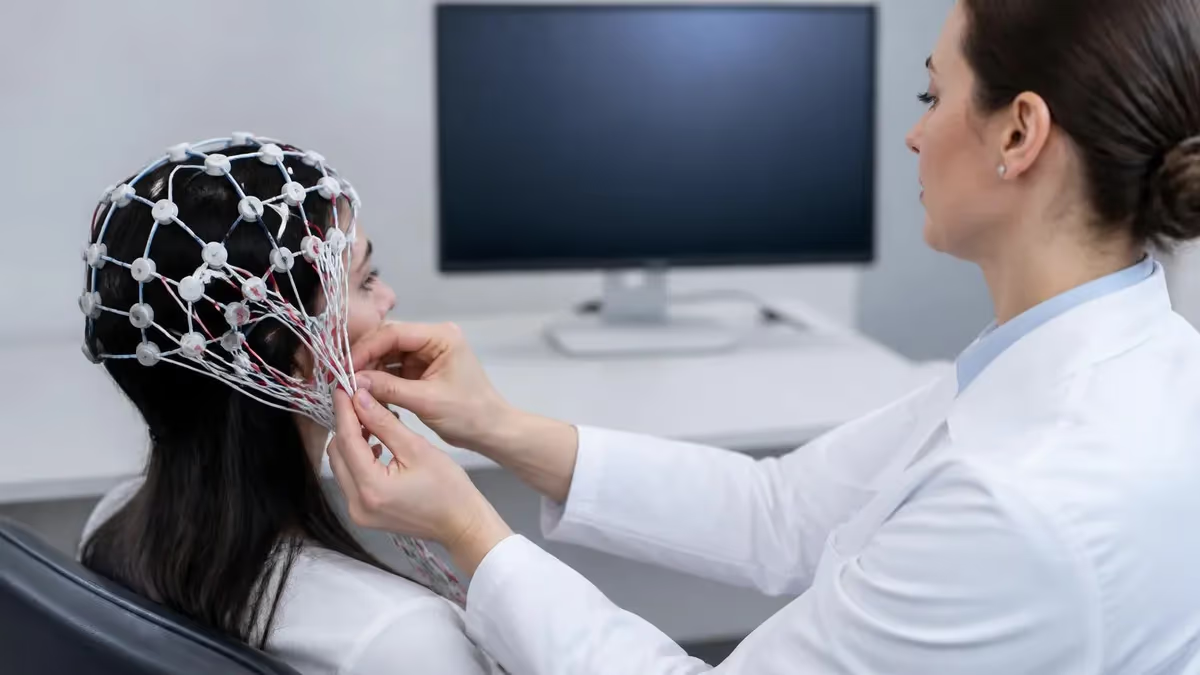
EEG tech jobs sit at one of the most stable intersections in allied health: aging neurology demand, expanding epilepsy monitoring units, and a chronic shortage of registered technologists. If you have ever wondered what an eeg test technologist actually does day to day, the short answer is that they run the brainwave recordings neurologists rely on to diagnose seizures, encephalopathy, sleep disorders, and coma. The work is technical, patient-facing, and far less physically demanding than many bedside roles.
Demand has accelerated since 2023 because hospitals are opening more long-term monitoring beds, ambulatory EEG vendors are scaling home recordings, and pediatric epilepsy programs are expanding. The Bureau of Labor Statistics groups EEG technologists under neurodiagnostic technologists and projects roughly 7% growth through 2032, which is faster than average. Real-world recruiter data from 2025 shows postings climbing closer to 11% year over year, especially in the South and Mountain West.
The barrier to entry is lower than nursing or imaging but higher than a typical medical assistant role. Most employers hire candidates with a one-year certificate, a two-year associate degree, or significant on-the-job training that leads to the R. EEG T. credential through ABRET. Pay scales with credentialing, shift differential, and whether you work routine outpatient studies or complex inpatient long-term monitoring with intracranial electrodes.
If you are already in the field, the question is usually about leveling up: moving from routine EEG into long-term monitoring, intraoperative neuromonitoring, or sleep technology. If you are new, the question is how to break in without a four-year degree. Both paths are realistic in 2026, and both reward people who can stay patient with anxious children, restless inpatients, and the occasional 60-electrode high-density montage at 2 a.m.
This guide walks through the full landscape: what the work looks like, where the jobs are, what they pay, which credentials matter, how interviews are structured, and what red flags to watch for in postings. We will lean on real numbers from 2025 hiring data and call out the differences between hospital, outpatient, mobile, and research roles. Expect concrete advice, not job-board fluff.
One last note before we dig in. EEG technology rewards curiosity. The techs who advance fastest are the ones who learn to recognize patterns themselves, even though interpretation belongs to the neurologist. Reading waveforms, understanding artifact, and knowing when to call the on-call physician at 3 a.m. are skills you build over years, and they are exactly what makes this career feel like more than a job.
EEG Tech Jobs by the Numbers (2026)

Where EEG Techs Actually Work
Long-term monitoring units, ICU continuous EEG, and emergency department coverage. Highest pay, most variety, but rotating shifts and complex setups including subdermal electrodes are common.
Routine 20-30 minute studies, photic stimulation, and hyperventilation protocols. Predictable weekday hours, lower acuity, and fewer emergencies — ideal for techs prioritizing schedule stability.
Hook patients up in office, send them home with a portable recorder for 24-72 hours. Growing fastest in 2026 as insurers approve home studies over inpatient admissions.
Highest-paid niche. Monitor brain and nerve activity during spine, neuro, and vascular surgery. Requires CNIM credential and tolerance for 10-hour surgical cases.
Quantitative EEG, event-related potentials, sleep research, and brain-computer interface studies. Lower pay but flexible hours and pathways into clinical research coordinator roles.
Pay for EEG tech jobs in 2026 ranges from roughly $44,000 for new graduates in low-cost-of-living regions to $110,000-plus for credentialed intraoperative neuromonitoring techs in major metros. The national median hovers around $64,800 according to BLS and credentialed-tech salary surveys conducted by ASET in late 2025. Knowing what is an eeg test looks like in different settings helps explain why the spread is so wide — a routine 30-minute outpatient study and a 72-hour video EEG with sphenoidal leads are not the same job.
Geography matters more than people expect. California, Massachusetts, Washington, and the New York metro area regularly post starting salaries 20-30% above the national median, though cost of living often eats that premium. Texas, North Carolina, Arizona, and Tennessee offer strong middle-tier pay with much cheaper housing. The genuine sweet spots in 2026 are mid-sized academic medical centers in cities like Pittsburgh, Indianapolis, Salt Lake City, and Richmond, where pay has caught up to coastal levels but living costs have not.
Shift differentials are where motivated techs build real income. Nights, weekends, and on-call coverage commonly add $4-$8 per hour, and some EMU programs offer call-back bonuses of $150-$300 per activation. A tech willing to work three 12-hour nights plus one weekend day can clear $85,000 in markets where the base rate is only $58,000. The trade-off is real fatigue, especially during status epilepticus cases that stretch a shift to 14 hours.
Benefits vary dramatically by employer type. Large hospital systems usually offer pension contributions or 5-6% 401(k) matches, tuition reimbursement up to $5,250 annually, and partial coverage of ABRET credentialing fees. Smaller neurology groups and mobile EEG companies tend to pay a higher hourly base but skimp on retirement and continuing education support. Mobile and contract roles increasingly pay $50-$75 per hour as 1099 contractors, which sounds great until you price your own health insurance.
Travel EEG positions deserve their own paragraph. Since 2022, travel tech contracts have offered $2,200-$3,400 per week including stipends, with 13-week assignments at major academic centers. The market cooled slightly from its 2023 peak but remains strong, and travel work is the fastest way for a credentialed tech with two years of experience to clear six figures. Most travelers work 36-48 hours weekly and bank significant tax-advantaged stipends if they maintain a tax home elsewhere.
Finally, pay raises track credentials more reliably than tenure. A technologist who earns R. EEG T. typically sees a $4,000-$8,000 bump within six months. Adding CLTM (long-term monitoring), CNIM (intraoperative), or RPSGT (sleep) can each add another $5,000-$15,000. The fastest path to $90,000 in this field is stacking two credentials and being willing to cover unattractive shifts during years three and four.
One overlooked benefit: most EEG roles are not as physically demanding as nursing or sonography. You spend hours seated at a recording station, with the heaviest lifting being head measurements and electrode application. Techs with prior musculoskeletal injuries often migrate to EEG specifically for this reason, and the field welcomes them.

EEG Practice Test Questions
Prepare for the EEG - Electroencephalography exam with our free practice test modules. Each quiz covers key topics to help you pass on your first try.
EEG Abnormal Epileptiform Patterns
EEG Exam Questions covering Abnormal Epileptiform Patterns. Master EEG Test concepts for certification prep.
EEG Activation Procedures
Free EEG Practice Test featuring Activation Procedures. Improve your EEG Exam score with mock test prep.
EEG Artifact Identification
EEG Test Prep for Artifact Identification. Practice EEG Quiz questions and boost your score.
EEG Electrode Placement and Montages
EEG Questions and Answers on Electrode Placement and Montages. Free EEG practice for exam readiness.
EEG - Electroencephalography Abnormal Epil...
EEG Mock Test covering - Electroencephalography Abnormal Epileptiform Patterns. Online EEG Test practice with instant feedback.
EEG - Electroencephalography Activation Pr...
Free EEG Quiz on - Electroencephalography Activation Procedures. EEG Exam prep questions with detailed explanations.
EEG - Electroencephalography Artifact Iden...
EEG Practice Questions for - Electroencephalography Artifact Identification. Build confidence for your EEG certification exam.
EEG - Electroencephalography Electrode Pla...
EEG Test Online for - Electroencephalography Electrode Placement and Montages. Free practice with instant results and feedback.
EEG - Electroencephalography Instrumentati...
EEG Study Material on - Electroencephalography Instrumentation and Calibration. Prepare effectively with real exam-style questions.
EEG - Electroencephalography Neuroanatomy ...
Free EEG Test covering - Electroencephalography Neuroanatomy and Physiology. Practice and track your EEG exam readiness.
EEG - Electroencephalography Non-Epileptif...
EEG Exam Questions covering - Electroencephalography Non-Epileptiform Abnormalities. Master EEG Test concepts for certification prep.
EEG - Electroencephalography Normal EEG Wa...
Free EEG Practice Test featuring - Electroencephalography Normal EEG Waveforms. Improve your EEG Exam score with mock test prep.
EEG - Electroencephalography Patient Safet...
EEG Mock Exam on - Electroencephalography Patient Safety and Ethics. EEG Study Guide questions to pass on your first try.
EEG - Electroencephalography Pediatric and...
EEG Test Prep for - Electroencephalography Pediatric and Neonatal EEG. Practice EEG Quiz questions and boost your score.
EEG ICU and Continuous EEG Monitoring
EEG Questions and Answers on ICU and Continuous EEG Monitoring. Free EEG practice for exam readiness.
EEG Instrumentation and Calibration
EEG Mock Test covering Instrumentation and Calibration. Online EEG Test practice with instant feedback.
EEG Neuroanatomy and Physiology
Free EEG Quiz on Neuroanatomy and Physiology. EEG Exam prep questions with detailed explanations.
EEG Non-Epileptiform Abnormalities
EEG Practice Questions for Non-Epileptiform Abnormalities. Build confidence for your EEG certification exam.
EEG Normal EEG Waveforms
EEG Test Online for Normal EEG Waveforms. Free practice with instant results and feedback.
EEG Patient Safety and Ethics
EEG Study Material on Patient Safety and Ethics. Prepare effectively with real exam-style questions.
Education Paths Into an EEG Medical Test Career
Certificate programs run 12 months on average and are offered through community colleges, hospital-based schools, and a handful of accredited online programs paired with local clinical sites. Tuition typically falls between $4,500 and $14,000, with hospital-sponsored programs often free in exchange for a two-year work commitment. CoA-NDT (Committee on Accreditation for Neurodiagnostic Technologists) accreditation is the credential you want to verify before enrolling.
Graduates of accredited programs become eligible to sit for the ABRET R. EEG T. exam after the required hours. Non-accredited or shorter programs can leave you stuck waiting for clinical hours to accumulate on the job, which delays credentialing and the pay bump that comes with it. Always confirm pathway requirements directly with ABRET before signing a tuition contract or relocating for school.
Is an EEG Tech Career Right for You?
- +Strong job security with 7-11% projected growth through 2032
- +Lower physical demands than nursing, sonography, or radiologic tech
- +Multiple specialization paths: EMU, IONM, sleep, and research
- +Travel and contract opportunities pay $2,200-$3,400 per week
- +Entry possible with a 12-month certificate, no bachelor's required
- +Patient interaction is meaningful but rarely involves trauma or codes
- +Predictable shift patterns in outpatient and clinic settings
- −Night, weekend, and on-call coverage common in hospital roles
- −Salary plateaus around $75K without stacking specialty credentials
- −Anxious pediatric and confused inpatient cases require real patience
- −Credentialing fees and CEUs run $400-$800 annually out of pocket
- −Limited career mobility outside neurodiagnostics without more school
- −Some rural areas have very few job openings at any given time
- −Equipment troubleshooting at 3 a.m. is a regular part of EMU work

New EEG Tech Hiring Checklist
- ✓Confirm the program is CoA-NDT accredited before paying tuition
- ✓Track every clinical hour with patient initials, study type, and date
- ✓Apply for ABRET R. EEG T. eligibility as soon as you meet hour minimums
- ✓Request BLS or CPR certification reimbursement during onboarding
- ✓Negotiate shift differential and on-call rates before signing the offer
- ✓Ask whether the employer covers ASET membership and CEU costs
- ✓Verify the tuition reimbursement cap and any tenure-based clawback
- ✓Get scrub allowance, parking, and badge-pay terms in writing
- ✓Confirm orientation length — anything under three weeks is a warning sign
- ✓Tour the EMU and meet at least one staff tech before accepting
R. EEG T. plus one specialty credential is the magic combination
Techs who hold ABRET R. EEG T. plus either CLTM (long-term monitoring) or CNIM (intraoperative) consistently earn $12,000-$20,000 more than single-credentialed peers and have visibly easier paths into senior roles. The investment is roughly $700 in exam fees and 12-18 months of focused study, and most employers will reimburse the cost.
Advancing from a competent EEG tech to a sought-after specialist takes a deliberate three-to-five-year plan, and the techs who climb fastest treat it that way from day one. The first year is about volume and pattern fluency. You want to run at least 400 routine studies, see normal variants in every age group, and start to recognize benign patterns like wickets, mu rhythm, and 14-and-6 positive spikes without checking a reference. Reading literature on what is eeg test coverage in ambulatory and home settings also broadens your perspective beyond hospital workflows.
Year two is when most techs sit for R. EEG T. The exam has roughly a 70% first-time pass rate among graduates of accredited programs and a much lower rate for on-the-job candidates. Plan on 200-300 hours of focused study using practice question banks, the Niedermeyer textbook chapters relevant to your weak areas, and at least one live review course. The pay bump and confidence boost from passing usually open doors to long-term monitoring rotations almost immediately.
Year three is the natural pivot point. By now you should know whether you prefer the controlled pace of outpatient work, the adrenaline of the EMU, the OR-focused mindset of intraoperative monitoring, or the procedural rhythm of sleep technology. Each path has its own credential — CLTM, CNIM, RPSGT — and each rewards a slightly different personality type. Trying to do all three simultaneously usually leads to burnout and half-finished study plans.
For techs who want leadership without leaving the field, the lead tech and chief technologist tracks usually open around year four or five. These roles add scheduling, quality assurance, vendor management, and trainee supervision to the clinical workload. Pay typically runs $5,000-$15,000 above staff rates, but most leads still spend half their hours at the recording station. Hospitals that have invested in epilepsy center accreditation (NAEC Level 3 or 4) tend to have the strongest career ladders.
Education-bridging is another viable path. EEG techs with associate degrees and several years of patient experience frequently get accepted into physician assistant programs, nursing bridge programs, or health administration master's tracks. The neurology exposure looks excellent on applications, and many programs award credit for prior clinical hours. Just be aware that none of these transitions are quick — most require two to three additional years of school plus prerequisites you may not have completed during your EEG training.
The least-discussed but most lucrative pivot is into industry. EEG equipment vendors (Natus, Nihon Kohden, Cadwell, Persyst), software companies, and the growing tele-EEG sector all hire experienced techs for clinical specialist, training, and product roles. These positions usually pay $90,000-$140,000 with full benefits and rarely require nights. The trade-off is travel, sometimes 40-60% of the calendar, and a sales-adjacent culture that not every clinical tech enjoys.
Whichever path you choose, document everything. Maintain a clean CEU portfolio, keep certificates current, save records of any unusual cases you helped capture, and update your resume every six months. Recruiters in 2026 move fast, and the techs who land the best jobs are usually the ones with a polished resume already in their drafts folder when an opening appears.
Some employers advertise an EEG tech role but expect the hire to also do nerve conduction studies, evoked potentials, or full polysomnography without additional pay or training. Confirm the exact scope, required credentials, and pay differential in writing before accepting. A single posting that claims to want a generalist neurodiagnostic tech at routine EEG wages is the biggest red flag in this field.
Choosing the right EEG tech job is half about pay and half about avoiding traps the listings rarely mention. The first thing to scrutinize is patient volume. A reasonable outpatient lab runs 4-7 routine studies per tech per day. Above 9 you are sprinting between rooms, skipping documentation, and increasing the odds of inadequate electrode contact. Below 3 may signal a struggling program that could face layoffs. Even checking the published eeg test price a clinic charges patients gives you a rough sense of how the program is positioned in its market and how stable revenue is likely to be.
Equipment age is the second underrated factor. Modern Natus, Nihon Kohden, and Cadwell systems with quality digital amplifiers make your job dramatically easier than 12-year-old machines running outdated software. Ask during the interview when the lab last refreshed its hardware. A program that has not upgraded since 2014 will produce more impedance problems, more artifact, and more rejected studies, and you will absorb the frustration.
EMU staffing ratios deserve direct questions. The current ASET guideline is one monitor tech for every 4-6 patients during active video EEG monitoring. Programs that stretch this to 8 or 10 patients per tech are common and quietly dangerous. Missed seizure captures, delayed event annotations, and patient safety issues all increase when ratios get thin. Ask explicitly, and if the answer is evasive, that tells you what you need to know.
Compensation transparency continues to improve thanks to pay-range disclosure laws in California, Colorado, Washington, New York, and a growing list of other states. If a posting in a covered state lacks a range, the employer is either non-compliant or hoping you will accept the lower end without negotiating. Cross-reference offers against ASET's annual salary survey and at least two regional postings before signing.
Mobile EEG and contract roles deserve extra scrutiny. The pay can be excellent — $50-$75 per hour as a 1099 contractor — but you typically lose health insurance, retirement matching, paid time off, and malpractice coverage. Calculate the true value of the benefit package you are giving up. For most techs with families, a $35-$45 hourly W-2 role with full benefits comes out ahead of a $60 hourly contract role once health insurance and self-employment taxes are accounted for honestly.
Finally, culture matters more in this field than people admit. EEG techs work in tight teams, often share recording stations, and depend on each other for relief breaks and complex setups. A toxic lead tech or a chronically understaffed unit will erode your enthusiasm fast. During interviews, ask to speak with a current staff tech privately — most reasonable hiring managers will allow this — and listen for what is said about overtime, scheduling fairness, and how mistakes are handled when they happen.
One subtle warning sign worth naming: if a recruiter cannot tell you the average tenure of current staff techs, the answer is probably less than 18 months. Healthy programs retain people, and managers in healthy programs know their retention numbers. The ones who do not are usually running through people quickly and hoping you will not notice until you are already onboarded.
Practical preparation for landing your first or next EEG tech job comes down to a handful of concrete actions you can take in the next 30 days. Start with a tightly written one-page resume that leads with clinical hours, credentials in progress, and three or four specific case types you have worked. Generic resumes get filtered out by applicant tracking systems before a human ever sees them. Mention the actual EEG software systems you have used (NicoletOne, Natus Brain Monitor, Cadwell Easy III, Persyst) because those keywords are exactly what recruiters search for.
Build a portfolio of artifact examples. Saving anonymized screenshots of difficult cases — sweat artifact you cleaned up, electrode pops you isolated, a clear photic driving response, a captured focal seizure — gives you something concrete to discuss in interviews. Most candidates can recite textbook patterns. The candidates who get offers can show how they have handled real-world problems with their own hands.
Network strategically. ASET's annual conference, regional EEG society meetings, and even smaller hospital grand rounds are reliable places to meet lead techs and epilepsy nurse coordinators who often have unposted openings. LinkedIn is useful but secondary. The neurodiagnostic field still runs largely on personal referrals, and a hallway conversation at a conference frequently converts into an interview faster than 30 cold applications ever will.
Practice the technical interview. Expect to be asked about 10-20 electrode placement landmarks, common artifact identification, basic montage logic, hyperventilation protocols, photic stimulation contraindications, and what you would do if a patient seized during a routine study. You do not need to interpret like a neurologist, but you do need to demonstrate that you know exactly what to capture, annotate, and escalate. Run through these out loud with another tech if possible.
Salary negotiation should be data-backed, not aspirational. Bring a printed copy of the ASET salary survey for your region, two or three comparable postings, and a clear ask. The script that works is simple: state the role you want, the range you are seeking based on those data points, and the value you bring (credentials, case mix, software fluency, shift flexibility). Most hospitals have $2,000-$5,000 of negotiation room on base pay and more on sign-on bonuses and CEU stipends than they advertise.
Plan your first 90 days before you start. Identify which case types you most want exposure to, which senior tech you will ask to shadow on complex setups, and which CEUs you will complete by the end of your probationary period. Walking into orientation with a written plan signals that you are serious, and managers remember those new hires when promotion conversations start two years later.
If you take only one piece of advice from this guide, take this: the EEG techs who build long, satisfying careers are the ones who treat each recording as a contribution to a patient's diagnosis, not a clerical task to finish. Neurologists notice the difference. Patients feel it. And the jobs that lead to leadership, specialization, and meaningful pay growth tend to find techs who already work that way.
EEG Questions and Answers
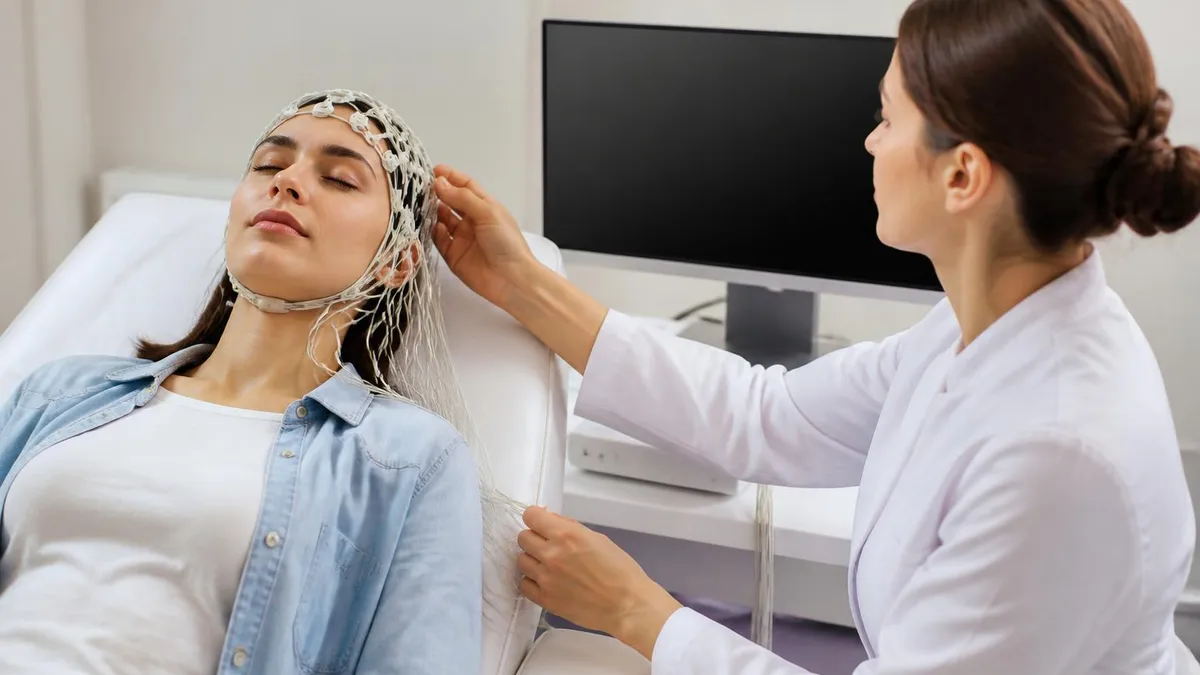
EEG Tech Salary 2026: Pay by State, Experience, and Certification
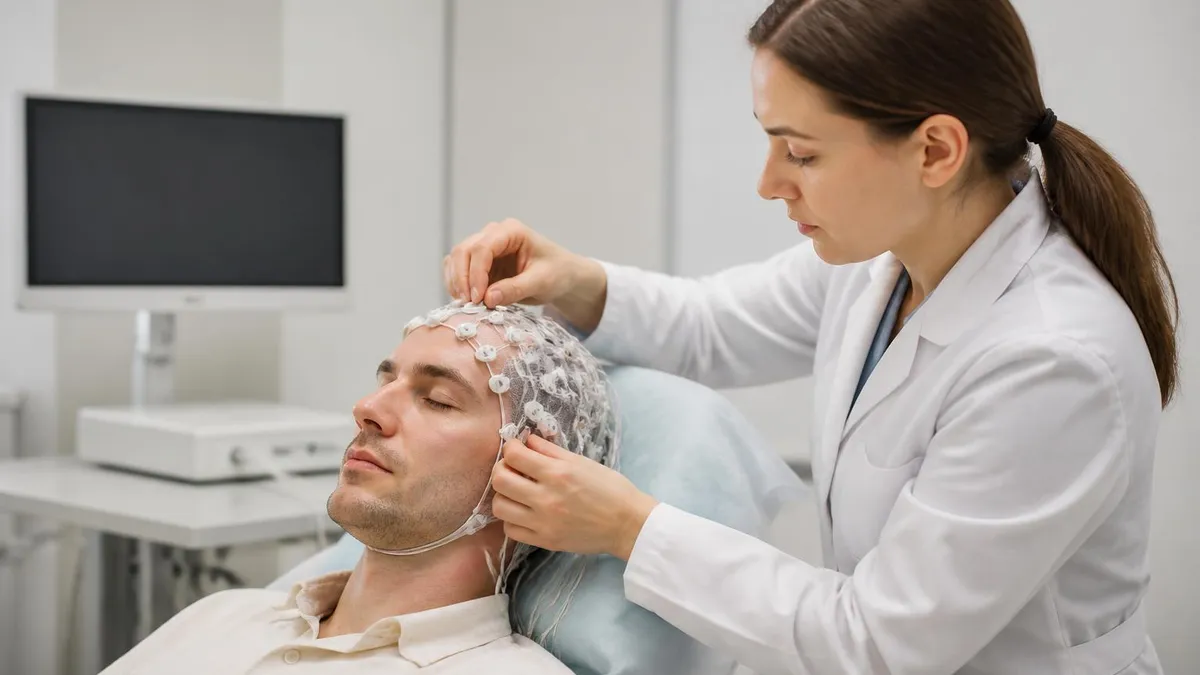
Reading EEG Patterns: A Practical Reference for Techs and Trainees
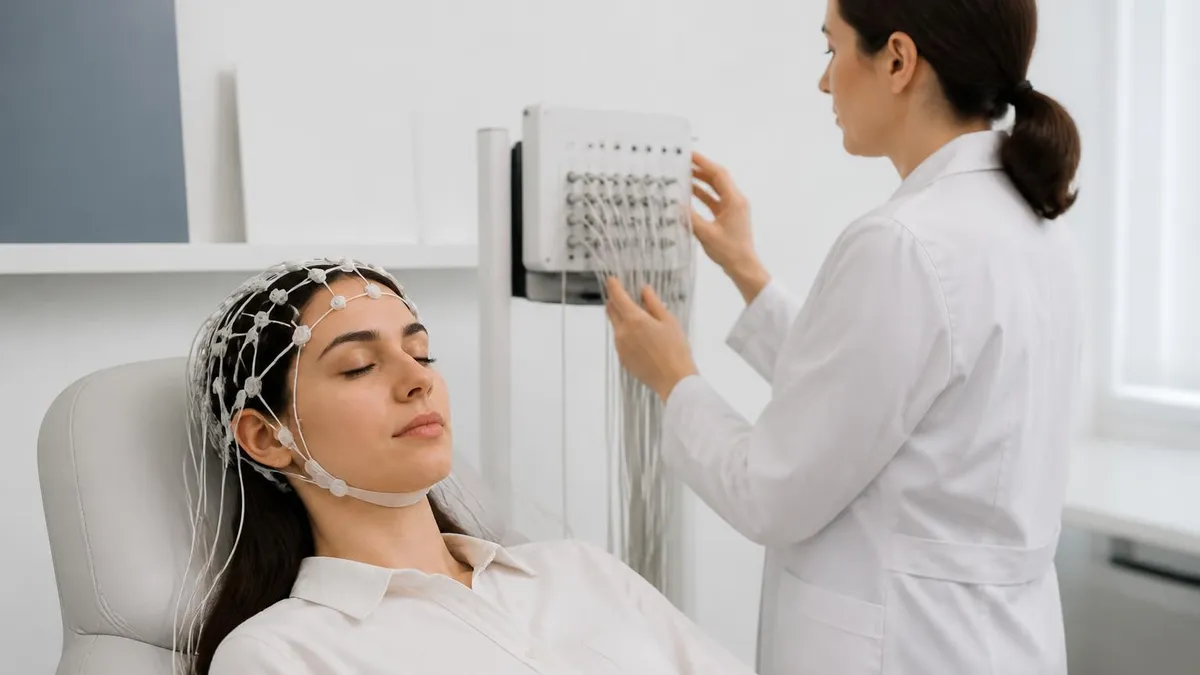
Ambulatory EEG: 24-72 Hour Home Recording for Suspected Seizures

What Is an EEG? Electroencephalography Complete Guide 2026

EEG Practice Test 2026 Prep - Ace Your Certification
About the Author

Educational Psychologist & Academic Test Preparation Expert
Columbia University Teachers CollegeDr. Lisa Patel holds a Doctorate in Education from Columbia University Teachers College and has spent 17 years researching standardized test design and academic assessment. She has developed preparation programs for SAT, ACT, GRE, LSAT, UCAT, and numerous professional licensing exams, helping students of all backgrounds achieve their target scores.