

EDAIC Practice Test
Updated October 2026Facts verified Oct 21, 2026 against European Society of Anaesthesiology and Intensive Care
The EDAIC exam is recognized globally as a mark of excellence in anesthesiology. Candidates must pass EDAIC Part 1 before proceeding to EDAIC Part 2. The diploma is accepted for medical registration in many countries and demonstrates a high standard of knowledge in EDAIC anesthesia practices. Practice with the free EDAIC - European Diploma in Anesthesiology and Intensive Care practice test on PracticeTestGeeks (500+ questions with answer explanations).
EDAIC: upcoming dates and official changes
- Updated Oct 21, 2026: Time limit (Part I) is now 2 hours per paper (90 minutes on computer) (previously 2 hours per paper (90 minutes on computer)).
- Updated Oct 21, 2026: Passing score (Part I) is now Pass mark varies yearly; both papers must be passed; no negative marking (previously Pass mark varies yearly; both papers must be passed; no negative marking).
- Updated Oct 21, 2026: Passing score (Part II) is now ≥60/80 overall, with ≥25/40 in both morning and afternoon (previously ≥60/80 overall, with ≥25/40 in both morning and afternoon).
Facts verified Oct 21, 2026 against European Society of Anaesthesiology and Intensive Care. Dates that have passed are removed automatically.
- Each EDAIC Part I paper lasts two hours, or 90 minutes when taken on computer. (European Society of Anaesthesiology and Intensive Care)
- The EDAIC Part I pass mark varies slightly each year, there is no negative marking, and candidates must pass both papers to pass Part I. (European Society of Anaesthesiology and Intensive Care)
- To pass the EDAIC Part II, candidates need at least 60 out of 80 overall, with at least 25 out of 40 in both the morning and afternoon sessions. (European Society of Anaesthesiology and Intensive Care)
- Most 2026 EDAIC Part II oral examinations take place online, with seven onsite centres: Ankara, Porto, Uppsala, Frankfurt, Erlangen, Istanbul and Cairo. (European Society of Anaesthesiology and Intensive Care)
- Medical graduates of any nationality are eligible to sit the EDAIC Part I examination. (European Society of Anaesthesiology and Intensive Care)
- To sit the EDAIC Part II, candidates must have passed Part I and hold a specialist diploma in anaesthesiology, or be final-year anaesthesiology trainees in a WHO European member state or Brazil. (European Society of Anaesthesiology and Intensive Care)
- EDAIC Part II candidates receive their results on the day of their examination. (European Society of Anaesthesiology and Intensive Care)
Facts verified Oct 21, 2026 against European Society of Anaesthesiology and Intensive Care. Dates that have passed are removed automatically.
EDAIC Exam at a Glance
| Item | Detail | Official source |
|---|---|---|
| Time limit (Part I) | 2 hours per paper (90 minutes on computer) | European Society of Anaesthesiology and Intensive Care |
| Passing score (Part I) | Pass mark varies yearly; both papers must be passed; no negative marking | European Society of Anaesthesiology and Intensive Care |
| Passing score (Part II) | ≥60/80 overall, with ≥25/40 in both morning and afternoon | European Society of Anaesthesiology and Intensive Care |
| Delivery (Part II) | Mostly online orals in 2026; 7 onsite centres | European Society of Anaesthesiology and Intensive Care |
| Eligibility (Part I) | Medical graduates of any nationality | European Society of Anaesthesiology and Intensive Care |
| Eligibility (Part II) | Passed Part I + specialist anaesthesiology diploma (or final-year trainee in WHO-Europe/Brazil) | European Society of Anaesthesiology and Intensive Care |
| Score release (Part II) | Same day as the exam | European Society of Anaesthesiology and Intensive Care |
Facts verified Oct 21, 2026 against European Society of Anaesthesiology and Intensive Care. Dates that have passed are removed automatically.
Free EDAIC - European Diploma in Anesthesiology and Intensive Care Study Tools
Interactive EDAIC - European Diploma in Anesthesiology and Intensive Care resources on PracticeTestGeeks, free to start:
- Free EDAIC Basic Sciences Questions and Answers — 11 questions with instant scoring and answer explanations
- EDAIC - European Diploma in Anesthesiology and Intensive Care flashcards — review key terms and concepts card by card
- EDAIC - European Diploma in Anesthesiology and Intensive Care study guide — topic-by-topic overview of what the exam covers
- EDAIC - European Diploma in Anesthesiology and Intensive Care cheat sheet — one-page printable summary for last-minute review
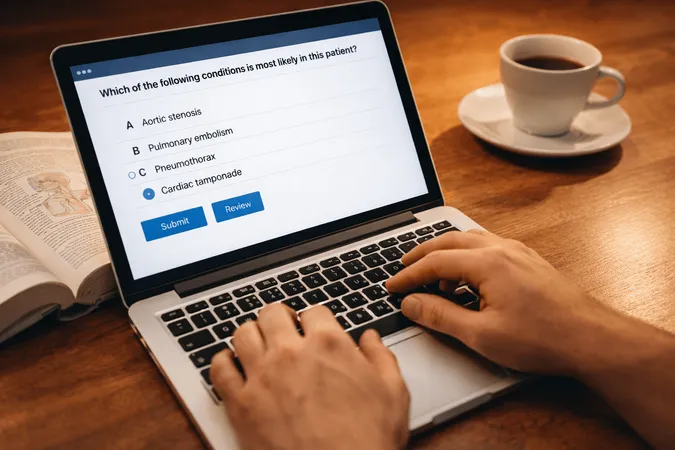
EDAIC Practice Test Questions
Prepare for the EDAIC - European Diploma in Anesthesiology and Intensive Care exam with our free practice test modules. Each quiz covers key topics to help you pass on your first try.
EDAIC Airway Management
EDAIC Exam Questions covering Airway Management. Master EDAIC Test concepts for certification prep.
EDAIC Anesthetic Equipment and Safety
Free EDAIC Practice Test featuring Anesthetic Equipment and Safety. Improve your EDAIC Exam score with mock test prep.
EDAIC - European Diploma in Anesthesiology...
EDAIC Practice Questions for - European Diploma in Anesthesiology and Intensive Care Cardiovascular Physiology and Pharmacology. Build confidence for your EDAIC certification exam.
EDAIC - European Diploma in Anesthesiology...
EDAIC Test Online for - European Diploma in Anesthesiology and Intensive Care Clinical Measurement and Physics. Free practice with instant results and feedback.
EDAIC - European Diploma in Anesthesiology...
EDAIC Study Material on - European Diploma in Anesthesiology and Intensive Care Coagulation and Transfusion Medicine. Prepare effectively with real exam-style questions.
EDAIC - European Diploma in Anesthesiology...
Free EDAIC Test covering - European Diploma in Anesthesiology and Intensive Care Intensive Care and Emergency Medicine. Practice and track your EDAIC exam readiness.
EDAIC - European Diploma in Anesthesiology...
EDAIC Exam Questions covering - European Diploma in Anesthesiology and Intensive Care Neuroanesthesia and Neuromonitoring. Master EDAIC Test concepts for certification prep.
EDAIC - European Diploma in Anesthesiology...
Free EDAIC Practice Test featuring - European Diploma in Anesthesiology and Intensive Care Obstetric Anesthesia and Analgesia. Improve your EDAIC Exam score with mock test prep.
EDAIC - European Diploma in Anesthesiology...
EDAIC Mock Exam on - European Diploma in Anesthesiology and Intensive Care Pediatric and Neonatal Anesthesia. EDAIC Study Guide questions to pass on your first try.
EDAIC - European Diploma in Anesthesiology...
EDAIC Test Prep for - European Diploma in Anesthesiology and Intensive Care Pharmacokinetics and Pharmacodynamics. Practice EDAIC Quiz questions and boost your score.
EDAIC - European Diploma in Anesthesiology...
EDAIC Questions and Answers on - European Diploma in Anesthesiology and Intensive Care Regional Anesthesia and Pain Management. Free EDAIC practice for exam readiness.
EDAIC Exam Flashcards
Click to flip and test your knowledge on key topics.
⚡What is the mechanism of action of Suxamethonium?
Suxamethonium acts as a depolarizing neuromuscular blocker by binding to acetylcholine receptors and causing prolonged depolarization.
GET EDAIC EXAM PREP🧠What are the signs of Local Anesthetic Systemic Toxicity (LAST)?
Signs include perioral numbness, tinnitus, metallic taste, seizures, and cardiovascular collapse.
TRY EDAIC MOCK EXAM🏥What is the first line treatment for anaphylaxis during anesthesia?
Intramuscular or intravenous adrenaline (epinephrine) is the first-line treatment for anaphylaxis.
ACCESS EDAIC STUDY GUIDE🫁What does the FRC (Functional Residual Capacity) represent?
FRC is the volume of air remaining in the lungs after a normal passive exhalation.
PRACTICE EDAIC TEST NOWEDAIC Exam Study Guide
Comprehensive preparation is key to passing the EDAIC exam. Our guide breaks down essential information into manageable sections. Review these FAQs to understand the EDAIC part 1 exam requirements, format, and scoring.
EDAIC Score Calculator
Total Scored Questions
120
84 out of 120 correct
70%
Required to Pass: ~70% (Estimated)
EDAIC Salary and Career Potential
Holders of the EDAIC diploma often command higher salaries and have better access to senior consultant roles across Europe.
| Experience Level | Annual Salary | Monthly Income | Typical Timeline |
|---|---|---|---|
| 🎓 Resident (Trainee) | €50,000 - €60,000 | €4,200 - €5,000 | Years 1-3 |
| 👨⚕️ Registrar | €60,000 - €80,000 | €5,000 - €6,600 | Years 4-6 |
| 🏥 Specialist | €80,000 - €100,000 | €6,600 - €8,300 | Years 7-10 |
| 👨💼 Consultant | €100,000 - €150,000 | €8,300 - €12,500 | 10+ Years |
| 🏆 Dept. Head | €150,000+ | €12,500+ | Senior Role |
How to Get EDAIC Certified
The path to becoming a Diplomate of the European Society of Anaesthesiology and Intensive Care involves several steps. From meeting EDAIC eligibility criteria to passing both exam parts, here is the roadmap.
- Verify Eligibility - Ensure you have a primary medical qualification and are enrolled in or have completed anesthesia training.
- Register for Part 1 - Create an ESAIC account and register for the EDAIC Part 1 exam, typically held in September/October.
- Prepare for Part 1 - Use an EDAIC question bank and standard textbooks to study basic sciences and clinical topics.
- Pass Part 1 - Achieve the required pass mark in both Paper A and Paper B of the written examination.
- Register for Part 2 - Once you pass Part 1, you can register for the EDAIC Part 2 oral examination, held at various times.
- Pass Part 2 - Successfully navigate the four oral viva sessions covering basic sciences and clinical scenarios.
- Receive Diploma - Upon passing Part 2, you will be awarded the European Diploma in Anaesthesiology and Intensive Care (DESA).
EDAIC Exam Fees and Costs
Varies Travel For Part
2 Centers
Varies Accommodation Exam
duration stay
Full Fee Retake Fee Per
attempt
Budget approximately €1,500 - €2,000 for the entire process, including edaic exam fees, study resources, and travel expenses for the oral examination.
EDAIC Career Opportunities
The EDAIC diploma opens doors to various sub-specialties within anesthesiology.
Pediatric Anesthesiologist
Specializes in anesthesia for infants and children, requiring knowledge of unique physiological differences.
Critical Care Specialist
Manages life-threatening conditions in the ICU, a core component of the
EDAIC Test Day Checklist
- ✓Valid Photo ID (Passport)
- ✓Admission Letter (Printed)
- ✓Water Bottle (Clear)
- ✓Arrive 30 Mins Early
- ✓Check Exam Center Location
- ✓Comfortable Clothing
- ✓Review Exam Rules
- ✓Rest Well Beforehand
Ready to Pass Your EDAIC Exam?
Join thousands of candidates who have successfully obtained their European Diploma with our help.

EDAIC Renewal and CME
CME Credits
50/Year
Re
-validation5 Years
Engage in regular training and attend ESAIC conferences to stay updated with the latest in EDAIC anesthesia and intensive care guidelines.
EDAIC: Pros and Cons
- +EDAIC exam preparation strengthens your knowledge across all domains
- +Passing the exam proves competency to employers and clients
- +Study materials and practice tests are widely available
- +Exam-based credentials are portable across states and employers
- +Clear exam objectives help focus your study plan effectively
- −Exam anxiety can affect performance — practice tests help reduce it
- −Registration fees are non-refundable if you miss your test date
- −Limited retake opportunities may apply with waiting periods
- −Exam content updates periodically — use current study materials
- −Testing center availability may require advance scheduling
Sample EDAIC - European Diploma in Anesthesiology and Intensive Care Practice Questions
Try these questions from our free EDAIC - European Diploma in Anesthesiology and Intensive Care practice tests. The correct answer and an explanation follow each question.
When a breathing system leak test is performed and the circuit cannot maintain pressure at 30 cmH2O, the FIRST corrective action should be:
- A. Systematically inspect all connections, the reservoir bag, and the CO2 absorber canister seal
- B. Replace the entire breathing circuit immediately
- C. Increase fresh gas flow to compensate for the leak
- D. Proceed with the case and monitor SpO2 closely
Answer: A. Systematically inspect all connections, the reservoir bag, and the CO2 absorber canister seal
A systematic check of all connections, the bag, and the canister seal identifies the most common sites of leak before replacing components or proceeding.
A patient has a suspected intravascular injection during an epidural test dose with epinephrine. Which response confirms intravascular placement?
- A. Heart rate decrease >10 bpm
- B. Heart rate increase >20 bpm within 60 seconds
- C. Blood pressure drop >20 mmHg systolic
- D. SpO2 decrease >5%
Answer: B. Heart rate increase >20 bpm within 60 seconds
The classic epidural test dose uses 3 mL of 1.5% lidocaine with 1:200,000 epinephrine; intravascular injection causes a heart rate increase of >20 bpm within 60 seconds.
Which drug should be immediately available when performing test dose confirmation of epidural catheter placement?
- A. Epinephrine to detect intravascular placement
- B. Atropine for bradycardia treatment
- C. Phenylephrine for hypotension
- D. Naloxone for opioid reversal
Answer: A. Epinephrine to detect intravascular placement
Epidural test dose contains epinephrine 15 mcg; intravascular injection causes a transient heart rate increase >20 bpm, confirming misplacement.
The standard of care for managing malignant cerebral edema following large hemispheric ischemic stroke includes which intervention?
- A. IV dexamethasone 10 mg bolus
- B. Decompressive hemicraniectomy
- C. Hyperbaric oxygen therapy
- D. Lumbar CSF drainage
Answer: B. Decompressive hemicraniectomy
Decompressive hemicraniectomy within 48 hours reduces mortality and improves functional outcomes in malignant MCA infarction with refractory edema.
Take the full EDAIC - European Diploma in Anesthesiology and Intensive Care practice test
Official Resources
- ESAIC EDAIC programme page – the official EDAIC examination hub from the European Society of Anaesthesiology and Intensive Care, covering Part 1, Part 2, eligibility and registration.
- European Society of Anaesthesiology and Intensive Care (ESAIC) – the body that administers the EDAIC and publishes exam dates, centres and fees.
- European Board of Anaesthesiology (EBA-UEMS) – the UEMS board that co-awards the Diploma and sets European training and competency standards.
EDAIC Questions and Answers
How this page was made: written with AI tools and published by Nathan Beja, founder of Practice Test Geeks, who is responsible for its content. Exam facts are checked against the official sources listed below. Not reviewed by a subject-matter expert. Editorial policy
Sources & references
Exam facts on this page (fees, format, dates, passing scores) are checked against these official sources; the date is our last check. Editorial policy
- esaic.org — Eligibility, passing score, time limit, test delivery, score release, exam dates · verified Oct 2026