
How Does a Theory Test Work? Complete UK Guide for 2026 October
How does a theory test work? Full breakdown of the multiple-choice and hazard perception sections, pass marks, booking, and top tips. ✅
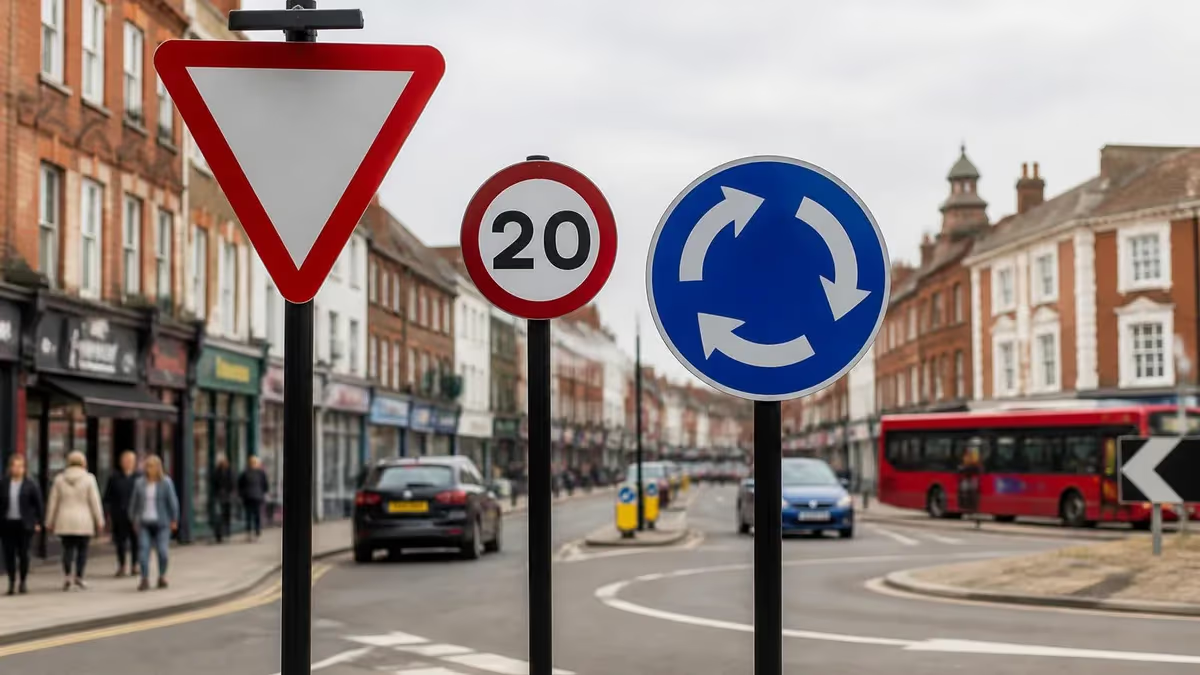
Understanding how does a theory test work is the essential first step for every learner driver in the UK. Before you can book your practical driving test with the DVSA, you must pass the theory test — a computer-based assessment that checks whether you have the knowledge and awareness needed to drive safely on public roads.
The test is split into two distinct parts, and you must pass both on the same day to receive an overall pass. Failing either section means you will need to rebook and sit the full test again, so understanding the format from the outset is vital.
The theory test is administered by the Driver and Vehicle Standards Agency (DVSA) at over 180 approved test centres across Great Britain. Candidates book online through the official GOV.UK website and pay a fee of £23. Sessions are typically available Monday to Friday during business hours, with some Saturday slots offered at busy centres. You must be a current UK provisional licence holder to book, and you should bring your provisional licence with you on the day — without it, you will be turned away and forfeit your fee.
The first part of the test is the multiple-choice section, where you answer 50 questions drawn from a bank of nearly 800 possible questions covering topics such as road signs, speed limits, vehicle safety, motorway driving, rules of the road, environmental factors, and first aid procedures. You have 57 minutes to complete this section and must score at least 43 out of 50 to pass. Questions are presented one at a time on a touchscreen terminal, and you may flag any question you are unsure of and return to it before submitting.
The second part is the hazard perception test, which requires you to watch 14 video clips filmed from a driver's perspective on real UK roads. Each clip contains at least one developing hazard — a situation that would cause a real driver to slow down, change direction, or stop. One clip contains two developing hazards. You score points for clicking as soon as you spot the hazard beginning to develop. The maximum score per hazard is five points, giving a total of 75 points available. You must score at least 44 out of 75 to pass the hazard perception section.
Between the two sections, you are offered a short optional break of up to three minutes. This is a good moment to collect your thoughts and reset your focus before the hazard perception clips begin. The break is not compulsory, so if you feel ready, you can proceed straight away. Test centre staff will explain the process on arrival and give you a brief tutorial before both sections, so even if this is your first time sitting a computer-based test, you will not be thrown in at the deep end.
Your results are confirmed at the test centre immediately after you complete both sections. You receive a pass certificate (officially a pass notification letter) that you will need when booking your practical test. This certificate is valid for two years from your theory test pass date, meaning you must pass your practical test within that window or you will need to retake the theory test. For a detailed breakdown of scores for different vehicle categories, see our guide on how theory test works including pass marks for cars, motorcycles, lorries, and buses.
Preparation is everything when it comes to the theory test. The DVSA publishes all the source material through its Official Highway Code and the Know Your Traffic Signs booklet, both of which are available free online. Most successful candidates also use dedicated practice test platforms, official apps, and hazard perception video tools to rehearse under realistic conditions. Research consistently shows that candidates who complete more than 20 hours of deliberate practice across both test sections are significantly more likely to pass first time, saving both money and the time involved in rebooking.
UK Theory Test by the Numbers
Key Facts at a Glance
| Item | Value | Details |
|---|---|---|
| Multiple-Choice Questions | 50 | 57 minutes to complete |
| Multiple-Choice Pass Mark | 43/50 | 86% score required |
| Booking Fee | £23 | Paid online via GOV.UK |
| Pass Certificate Validity | 2 Years | Book practical test within this window |
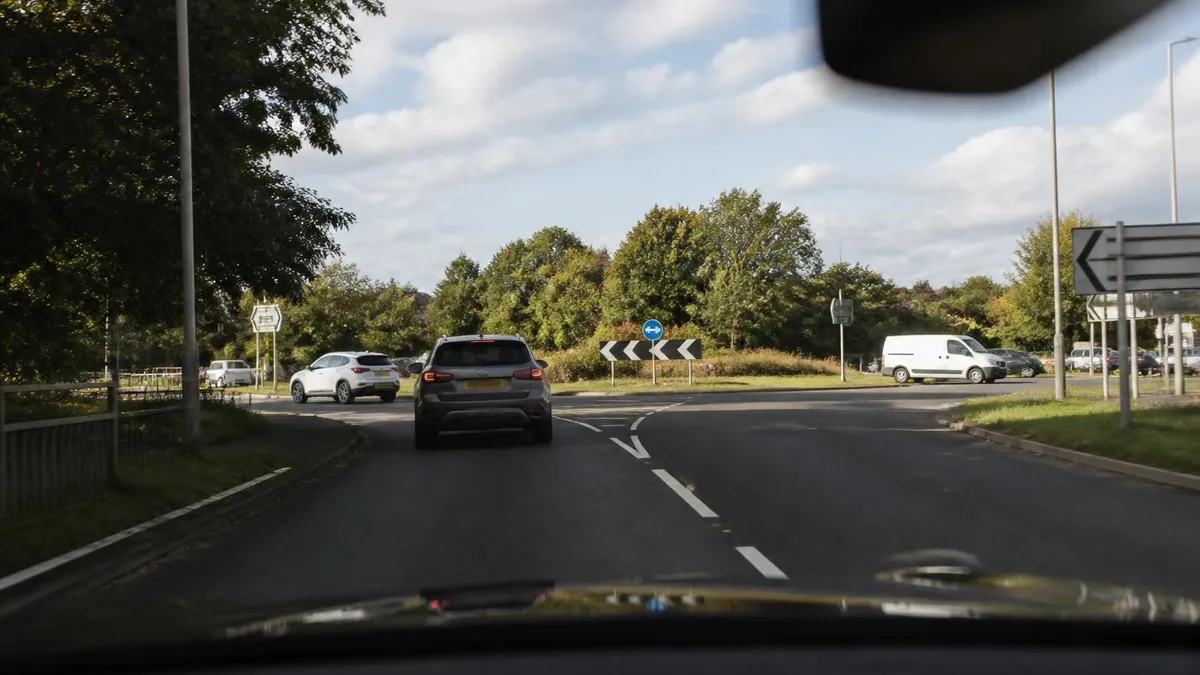
Theory Test Format Explained
| Section | Questions | Time | Weight | Notes |
|---|---|---|---|---|
| Multiple-Choice | 50 | 57 min | Pass/Fail | Pass mark: 43 out of 50 |
| Hazard Perception | 15 | ~20 min | Pass/Fail | Pass mark: 44 out of 75 points |
| Total | 65 | ~1 hour 20 min | 100% |
The multiple-choice section is where most candidates begin their serious revision, and for good reason — it covers a vast breadth of driving knowledge drawn from official DVSA source materials. The question bank contains approximately 800 questions, and although only 50 appear in any single sitting, the randomised selection means you cannot simply memorise a small subset and expect to pass. Effective preparation requires working through the full question bank methodically, understanding the reasoning behind each answer rather than rote-learning options by position or letter.
Questions are grouped into 14 topic areas by the DVSA: alertness, attitude, safety and your vehicle, safety margins, hazard awareness, vulnerable road users, other types of vehicle, vehicle handling, motorway rules, rules of the road, road and traffic signs, documents, accidents, and vehicle loading. Each topic area carries different weighting in the test, with road and traffic signs and rules of the road typically generating the highest proportion of questions. Candidates who neglect any single topic area risk losing multiple marks and falling below the 43-point threshold.
On the day of your test, you will sit at a dedicated touchscreen workstation in a supervised examination room. You cannot bring notes, revision materials, a mobile phone, or any electronic device into the testing area. The system allows you to move freely between questions using on-screen navigation buttons, and a flag feature lets you mark any question you want to revisit before you submit your final answers. Many candidates find it helpful to answer every question on the first pass, even if they are unsure, and then return to flagged questions with a fresher perspective during the remaining time.
Some questions include photographs, diagrams, or illustrations — particularly those relating to road signs, vehicle controls, or accident scenarios. When a photograph is shown, take a moment to study it carefully before reading the answer options. The DVSA designs image-based questions specifically to test whether you can correctly interpret visual information in the same way you would need to while driving. Misreading a sign or failing to notice a detail in a diagram is a common source of avoidable errors.
Time management is straightforward for most candidates: 57 minutes for 50 questions gives you just over a minute per question, which is generally more than sufficient. The average candidate completes the multiple-choice section in 30 to 40 minutes, leaving ample review time. However, candidates who struggle with reading speed or who have additional learning needs can apply for extra time or other reasonable adjustments through the DVSA before booking. These accommodations must be requested in advance and cannot be granted on the test day itself.
Scoring in the multiple-choice section is binary — there is no partial credit. Each correct answer scores one mark, and each incorrect or unanswered question scores zero. There is no penalty for wrong answers, so it is always better to make your best guess rather than leave a question blank. If you have genuinely no idea, eliminating obviously incorrect options and choosing from the remaining answers gives you a statistically better chance than omitting the question entirely. This approach is particularly useful for questions about obscure regulations or numerical values you have not memorised precisely.
One detail that catches some candidates off guard is that the test is computer-based, not paper-based. If you are unfamiliar with touchscreen interfaces, it is worth practising using online mock tests before your test date to ensure you feel comfortable navigating the system. The DVSA provides a demonstration tutorial at the start of the test, but arriving already familiar with the format removes one potential source of stress on the day. Most reputable practice platforms replicate the on-screen interface closely, making your online revision sessions directly relevant to the real test experience.
Hazard Perception: Tips by Vehicle Type
For standard car theory test candidates, the hazard perception section consists of 14 clips with 15 scorable developing hazards. You must click the mouse or tap the screen as soon as you see a hazard beginning to develop — not when it has fully formed. Clicking too late scores zero for that hazard, and clicking in a rapid repetitive pattern (known as "cheating") will also result in zero for that clip. The key is to click once when you spot the hazard emerging and once more if you are unsure you clicked at the right moment.
Car candidates should pay particular attention to junctions, pedestrian crossings, parked vehicles, and vulnerable road users such as cyclists and children. The DVSA clips are filmed on a wide variety of UK road types including residential streets, A-roads, and dual carriageways. Practising with official DVSA hazard perception video clips is essential preparation, as the visual style and timing of the real test clips are specific to DVSA productions — generic YouTube dashcam footage does not replicate the experience accurately enough to be reliable revision material.

Theory Test: Benefits and Challenges for Learner Drivers
- +Confirms you have the knowledge to drive safely before getting behind the wheel independently
- +Computer-based format allows you to flag and revisit questions before submitting
- +Official practice materials from the DVSA cover exactly what appears in the real test
- +Results are given immediately on the day — no waiting for a letter or email
- +The two-year validity window gives you plenty of time to pass your practical test
- +Reasonable adjustments are available for candidates with reading difficulties or disabilities
- −You must pass both sections on the same day — failing one means rebooking the entire test
- −The £23 fee is forfeited if you cancel within three clear working days of your appointment
- −The question bank is large and requires sustained revision across 14 topic areas
- −Hazard perception clips cannot be paused or rewound, so concentration is critical throughout
- −Rapid or repetitive clicking during hazard perception automatically scores zero for that clip
- −The two-year pass certificate expires if you do not pass the practical test in time, requiring a full retest
Theory Test Day Preparation Checklist
- ✓Bring your valid UK provisional driving licence — photocard only, no paper counterparts accepted
- ✓Arrive at the test centre at least 15 minutes before your appointment time
- ✓Leave your mobile phone and all electronic devices in your car or a locker — they are not permitted in the test room
- ✓Read through the Highway Code one final time the evening before your test to refresh key rules
- ✓Complete at least one full 50-question mock test under timed conditions the day before
- ✓Watch five or more hazard perception practice clips to calibrate your clicking timing
- ✓Get a full night of sleep — fatigue significantly impairs both memory recall and hazard recognition speed
- ✓Eat a proper meal before your test — low blood sugar reduces concentration and processing speed
- ✓Double-check your test centre address and plan your journey in advance to avoid arriving late
- ✓Accept the optional tutorial at the start of each section to confirm you understand the interface
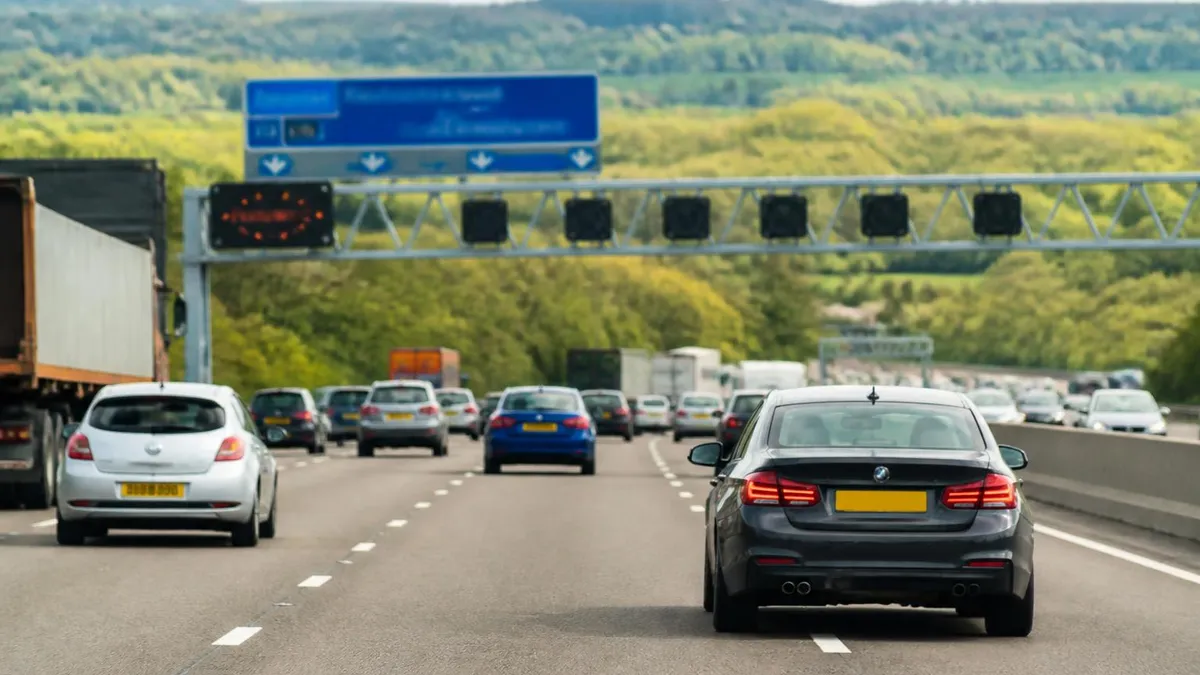
You Must Pass Both Sections on the Same Day
Many candidates are surprised to learn that passing the multiple-choice section but failing hazard perception — or vice versa — counts as a full test failure. You must pass both sections in the same sitting to receive an overall pass. If you fail either section, you must rebook the entire test, pay the £23 fee again, and wait at least three clear working days before your next attempt. There is no limit on the number of times you can resit.
Effective revision for the theory test is not simply a matter of reading the Highway Code once and hoping for the best. Research into how learner drivers actually pass the test consistently shows that active practice — working through questions, getting them wrong, understanding why, and then revisiting them — produces far better outcomes than passive reading. The DVSA question bank is publicly available through official channels, and working through every question at least twice before your test date is one of the most reliable strategies for achieving a confident pass score.
Spaced repetition is one of the most evidence-based revision techniques you can apply to theory test preparation. Rather than cramming all your revision into a single long session, spreading your practice across multiple shorter sessions over two to four weeks allows your brain to consolidate information more effectively. Most successful candidates aim for 30 to 45 minutes of dedicated practice per day, five days a week, for three to four weeks. This approach not only improves retention but also helps you identify and systematically address your weaker topic areas before the test date.
The hazard perception section requires a different revision approach to the multiple-choice content. Watching official DVSA practice clips through the official app or a reputable practice platform trains your eye to spot the early visual cues that signal a developing hazard: a pedestrian stepping towards a kerb, a vehicle edging out of a side road, a cyclist wobbling in poor road conditions. The earlier you detect the hazard beginning to develop, the higher your score — but only if you click in response to what you genuinely see, not in anticipation of where a hazard might appear.
Topic weighting matters when planning your revision schedule. Road signs and traffic signals are among the most heavily tested areas, yet they are also the topics many candidates underestimate because they assume they already know them from everyday driving experience. In reality, many test questions relate to relatively uncommon signs or edge-case scenarios that most people have never consciously considered. Spending dedicated time on road signs — including warning signs, information signs, and road markings — is one of the highest-return investments you can make in your revision.
Many candidates find that using multiple revision formats improves their performance more than any single method. Reading the Highway Code provides context and narrative explanation. Answering mock questions tests recall under pressure. Watching hazard perception clips builds pattern recognition. Reviewing incorrect answers with written explanations addresses knowledge gaps. Combining all four formats across your revision period creates a more rounded understanding than relying on any one approach in isolation, and keeps revision sessions varied enough to maintain motivation over several weeks.
One frequently overlooked revision area is the section on vehicle safety and first aid. Questions about what to do at the scene of an accident, how to use a fire extinguisher correctly, how to treat a casualty for shock, and when to call emergency services appear regularly in the test and are often answered poorly by candidates who have focused their revision on road rules and signs. Taking time to read and understand the first aid and accident sections of the Highway Code in full will typically net you several additional marks that other candidates miss.
Finally, it is worth noting that the theory test is regularly updated to reflect changes in road law, new Highway Code rules, and emerging road safety concerns. The 2022 Highway Code updates, for example, introduced new hierarchy of road users guidance and revised rules around cycling infrastructure that subsequently appeared in the question bank. Always revise using the most recent edition of the Highway Code and check the DVSA website for any announcements about question bank updates before your test date, particularly if you have been preparing over an extended period.
Your theory test pass certificate is valid for exactly two years from the date you pass. If you do not pass your practical driving test within this two-year window, your theory test pass expires and you must sit the theory test again from scratch before you can rebook the practical. Plan your practical test bookings carefully to avoid losing your theory pass due to delays in practical test availability, especially during periods of high demand.
Once you have passed the theory test, the next stage in your journey towards a full driving licence is booking and passing your practical driving test with the DVSA. The practical test assesses your ability to drive safely in real traffic conditions, perform set manoeuvres, respond correctly to road signs and markings, and demonstrate the safe, responsible driving habits that the theory test tested you on in knowledge form. Having a solid theory foundation genuinely helps you perform better in the practical, because you will already understand the rules your examiner is assessing you against.
Booking the practical test requires your theory test pass certificate reference number, which you will receive when you pass. You can book online through GOV.UK, by phone, or through your driving instructor. The fee for a car practical test is £62 on a weekday or £75 on a weekend or bank holiday.
Wait times for practical test appointments vary significantly by region and time of year — in some areas and during busy periods, waits of eight to twelve weeks are common, which is another reason why passing your theory test as early as possible in your learning journey is sensible rather than waiting until you feel fully ready for the practical.
Between passing the theory test and taking the practical, you should continue developing your driving skills with a qualified approved driving instructor (ADI). The DVSA recommends an average of 47 hours of professional tuition combined with 22 hours of private practice for a typical learner driver. However, this varies significantly between individuals. The important thing is not to rush the practical test booking based on an arbitrary target number of lessons — your instructor's professional assessment of your readiness is the most reliable indicator of whether you are likely to pass.
Many driving instructors use the theory test knowledge as an active part of practical lessons. They will ask you to identify hazards as you drive, explain your decision-making at junctions, and demonstrate knowledge of speed limits and road signs in real time. The synergy between theoretical knowledge and practical skill is intentional — the DVSA designed the two tests to work together, and candidates who approach their theory revision as active driving preparation rather than a separate paper exercise tend to develop better all-round road sense as a result.
If you fail your theory test, you can rebook after three clear working days. There is no limit on the number of attempts, and your previous attempts are not recorded on your driving licence. However, repeated failures are worth taking seriously as a signal that your revision approach needs to change rather than simply continuing the same preparation and hoping for a different result. Analysing your score breakdown after each attempt helps you identify which topic areas let you down and where to focus your renewed effort before your next sitting.
The theory test is sometimes described as the harder of the two DVSA tests by candidates who underestimate its scope, and approximately 50% of candidates fail on their first attempt. This is partly because many learners book too early without sufficient preparation, and partly because the hazard perception section is genuinely challenging for candidates who have not practised with realistic clips.
Treating the theory test with the same seriousness as the practical test — including dedicated daily revision over several weeks — dramatically improves your chances of passing first time and avoiding the cost and delay of a resit. For comprehensive scoring information across all licence categories, see our guide on how theory test works including the exact pass marks for LGV, PCV, ADI, and motorcycle tests.
Support is available for candidates who find the standard test format difficult due to a disability, learning difficulty, or language barrier. The DVSA offers a voiceover option for the multiple-choice section in English and Welsh, extra time for candidates with reading difficulties, and the option to request a translator for non-English speakers (though the test itself must still be completed in English). These adjustments must be arranged before booking and require supporting documentation.
Contacting the DVSA Theory Test booking team in advance of your booking to discuss available accommodations is the recommended approach for any candidate who may need additional support.
In the final weeks and days before your theory test, the quality of your practice matters more than the quantity. Rather than attempting to cover every topic for the first time in a panic, experienced candidates focus their late-stage revision on their personal weak spots — the topic areas where their mock test scores are consistently lowest. Most reputable practice platforms track your performance by category and show you your accuracy rate for each of the 14 topic areas, making it straightforward to identify exactly where to direct your final revision sessions.
Mock tests taken under fully realistic conditions are the single most valuable preparation tool in the final week before your test. Set a 57-minute timer, sit in a quiet room without distractions, answer all 50 questions without pausing to look anything up, and then review your score. If you are consistently scoring 46 or above on mock tests, you are well placed to pass the real thing. If your score is regularly falling below 45, you need more topic-specific revision rather than more mock tests — the latter without the former will not move your score significantly.
For hazard perception practice, the goal in the final week is calibration rather than discovery. You should already understand how to spot developing hazards — late-stage practice is about ensuring your reaction speed and clicking timing feel natural and confident. Many candidates find that slightly earlier clicking than feels comfortable during practice produces the best scores in the real test, because the pressure of the actual test environment can cause a small but consequential delay in response time compared to relaxed home practice.
Sleep is a non-negotiable part of pre-test preparation that many candidates neglect. Memory consolidation during sleep is a well-established neurological phenomenon — the knowledge you absorbed during revision is literally organised and stored more effectively during the sleep that follows. Cutting short your sleep in the nights before the test to squeeze in more revision is counterproductive.
Aim for at least seven to eight hours of sleep on both nights before your test, and do not attempt intensive new learning on the morning of the test itself — light review of key facts is fine, but heavy studying the morning of the test adds stress without adding meaningful knowledge.
On the morning of your test, give yourself plenty of time to arrive at the test centre without rushing. Traffic delays, parking difficulties, or difficulty finding the entrance are common sources of pre-test anxiety that are entirely avoidable with good planning. Use a mapping app to check your route the evening before, identify parking options in advance, and plan to arrive at least 15 minutes before your appointment time. Test centres will not admit late candidates, and your fee will not be refunded if you miss your slot due to a late arrival.
Mindset plays a genuine role in test performance. Candidates who approach the theory test with anxiety and self-doubt are more likely to second-guess correct answers, change their initial responses unnecessarily, and lose marks as a result.
Research on test performance consistently shows that initial intuitive responses are correct more often than the alternative chosen after prolonged deliberation in a multiple-choice context. Trust your preparation, commit to your first answer unless you have a clear and specific reason to change it, and remember that 43 correct answers out of 50 — not a perfect score — is all you need to pass.
After your test, whether you pass or fail, take a few minutes to note down the topic areas where you felt least confident. If you pass, these notes will help you focus your continued learning as you move into practical lessons. If you fail, they will form the foundation of your revised study plan for the next attempt. The theory test is a genuine measure of driving knowledge, and engaging with it seriously — rather than treating it as a box-ticking exercise — builds the foundation of road awareness that will serve you for the rest of your driving life.
Sample DVSA UK Driving Theory Practice Questions
Try these questions from our free DVSA UK Driving Theory practice tests. The correct answer and an explanation follow each question.
What does a broken white line along the centre of the road indicate?
- A. You must not overtake under any circumstances
- B. You may cross it to overtake if it is safe to do so
- C. The road ahead is closed to through traffic
- D. You must stop and give way to oncoming vehicles
Answer: B. You may cross it to overtake if it is safe to do so
A broken centre line means you may cross it to overtake or turn, provided it is safe and legal to do so.
You see brake lights come on several vehicles ahead of you on a motorway. What does this suggest?
- A. The vehicles are keeping the correct distance
- B. There may be a hazard or traffic queue forming ahead
- C. The road surface has changed
- D. There is a speed camera ahead
Answer: B. There may be a hazard or traffic queue forming ahead
Multiple brake lights ahead on a motorway indicate that traffic is slowing — there may be a hazard, congestion, or a queue forming. You should reduce your speed early and check your mirrors in case you need to change lanes or warn drivers behind you.
What does a flashing amber beacon on the roof of a moving vehicle typically indicate?
- A. The vehicle is responding to an emergency call
- B. The vehicle is a slow-moving or oversized hazard
- C. The vehicle is carrying hazardous materials
- D. The vehicle has broken down and is stationary
Answer: B. The vehicle is a slow-moving or oversized hazard
An amber flashing beacon warns other road users that the vehicle is slow-moving, wide, or poses an unusual hazard.
What does a triangular sign containing an exclamation mark (!) indicate?
- A. A speed camera is ahead
- B. A general hazard that is not covered by a specific sign
- C. Road works beginning in 200 metres
- D. A pedestrian crossing is ahead
Answer: B. A general hazard that is not covered by a specific sign
An exclamation mark in a red triangle is a general warning sign indicating an unspecified hazard ahead.
DVSA Questions and Answers
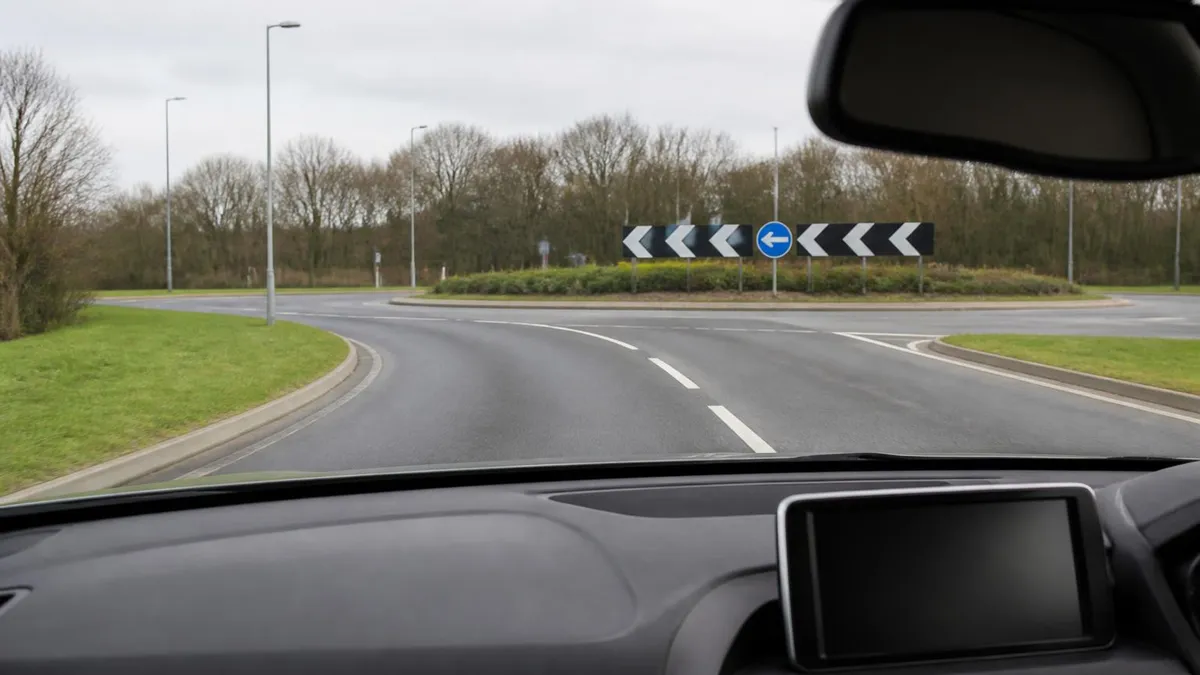
UK Theory Test Pass Mark: Car, Bike, LGV, PCV & ADI Scores

Free Theory Test App: The Complete UK Guide to Choosing, Using and Passing With Mobile Practice in 2026

Cancelling Driving Test: The Complete UK Guide to Refunds, Rebooking and Avoiding Lost Fees in 2026
Theory Test Certificate: Complete UK Guide to Passing and Using Your DVSA Pass Letter in 2026
How To Pass Theory Test: Free DVSA Practice & Pass First Time (2026)
About the Author

Licensed Driving Instructor & DMV Test Specialist
Penn State UniversityRobert J. Williams graduated from Penn State University with a degree in Transportation Management and has spent 20 years as a certified driving instructor and DMV examiner consultant. He has personally coached thousands of applicants through written knowledge tests, skills assessments, and commercial driver licensing programs across more than 30 states.