
Failing Driving Test: The Complete UK Guide to What Happens Next and How to Pass
Failed your driving test? 🎯 Discover exactly what to do next, how to rebook, what faults mean, and proven tips to pass on your next attempt.
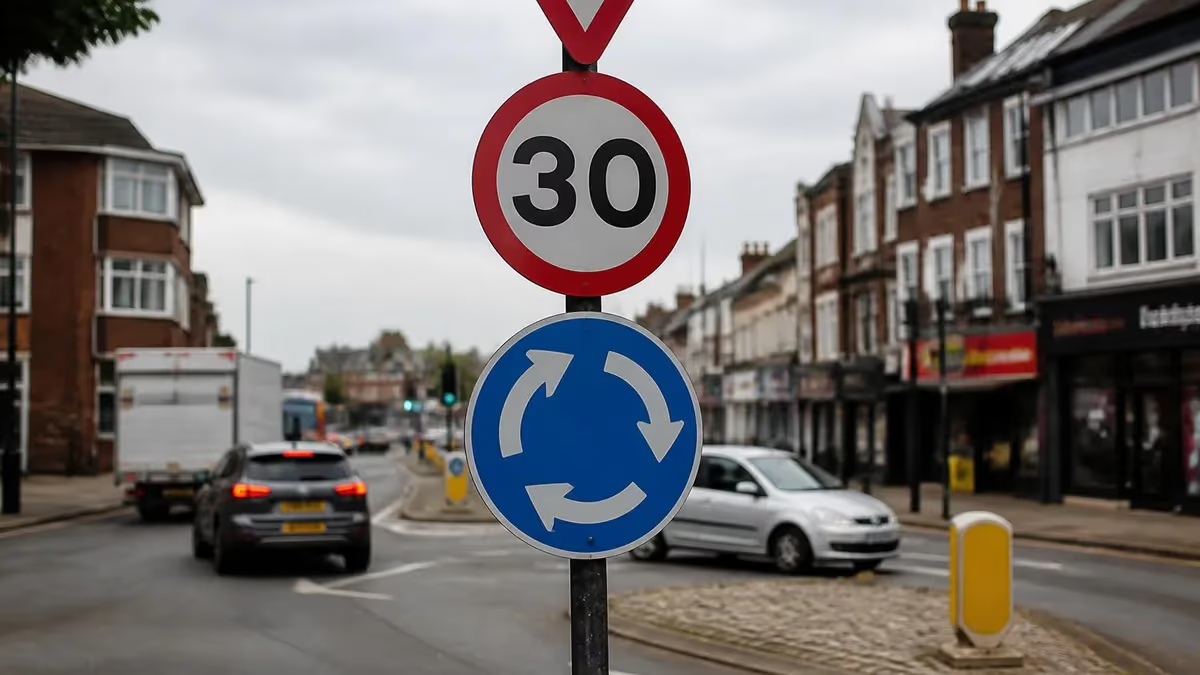
Failing driving test is one of the most disheartening experiences a learner driver can face, but it is far more common than most people realise. According to DVSA statistics, fewer than half of all practical test candidates pass on their first attempt, meaning that millions of UK drivers have sat in that passenger seat, heard the examiner's verdict, and had to find a way forward.
The important thing to understand from the very start is that failing does not mean you cannot drive — it simply means you need a little more time and targeted practice before you are ready to pass.
When you fail your practical driving test, the examiner will hand you a DL25 form — commonly known as the driving test result sheet. This document is genuinely valuable. It lists every fault recorded during your test, categorised as either a minor (driving fault), a serious fault, or a dangerous fault. One serious or dangerous fault is enough to fail the test outright, while accumulating fifteen or more minor faults also results in failure. Reading and understanding this form carefully is the most important thing you can do in the hours immediately after your test.
Many candidates feel too upset or flustered to absorb the examiner's verbal feedback at the end of the test, and that is completely understandable. This is exactly why the DL25 form exists — it gives you a permanent written record of where things went wrong. Your driving instructor will be able to sit down with you, go through each fault in detail, and explain the precise circumstances in which each error was recorded. This targeted analysis is far more productive than simply booking another test and hoping for a better outcome.
Understanding the theory behind safe driving also plays an important role in practical test performance. Many serious faults — such as failing to act on hazards, poor lane discipline, or incorrect responses to road signs — have their roots in gaps in theoretical knowledge. If you feel your understanding of the Highway Code or hazard awareness could be stronger, revisiting theory practice is a smart move even after you have already passed the theory test. Understanding failing driving test requirements and thresholds gives you a clearer picture of the standard the DVSA expects.
The financial reality of failing also deserves honest acknowledgement. Each practical driving test costs £62 for weekday appointments and £75 for evenings, weekends, and bank holidays. Add in the cost of additional lessons — typically £25 to £40 per hour depending on your region and instructor — and a second or third attempt can represent a significant investment. Planning strategically, targeting your specific weak areas, and making sure you are genuinely ready before rebooking can save you considerable money in the long run, as well as the emotional cost of repeated disappointment.
It is also worth remembering that some of the best, most cautious, and most skilled drivers on UK roads today failed their first practical test. The testing environment is high-pressure, artificial, and can trip up even competent drivers who simply have an off day. Nerves, unfamiliar road layouts near the test centre, or encountering an unusual traffic situation can all contribute to a fail that does not accurately reflect your overall ability. What matters most is how you respond: systematically, positively, and with a clear plan to address whatever the DL25 form identified.
In this guide, we cover everything you need to know about what happens when you fail your driving test in the UK — from understanding your result sheet and rebooking procedures, to the most common reasons for failure and the targeted strategies that give you the best possible chance of passing next time. Whether this is your first fail or you are working through multiple attempts, the information here will help you approach your next test with confidence, knowledge, and a realistic plan.
Failing Your Driving Test: The Numbers
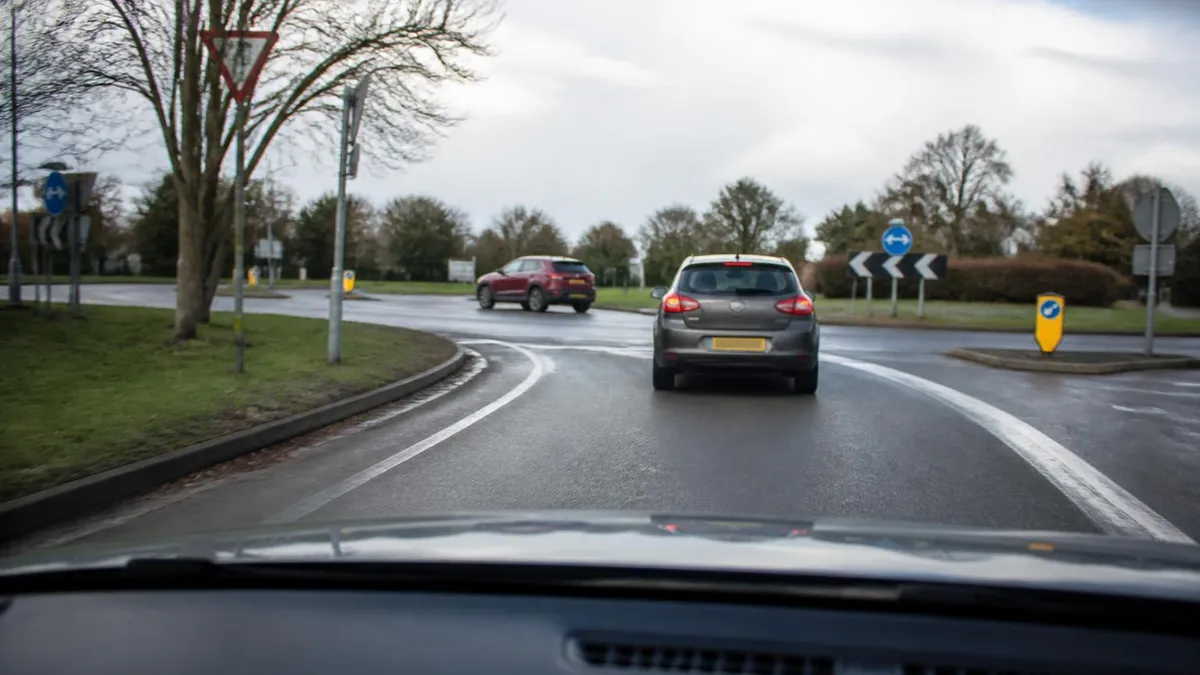
What to Do Immediately After Failing Your Driving Test
Collect Your DL25 Form
Listen to the Examiner's Debrief
Debrief With Your Instructor
Wait at Least 10 Working Days to Rebook
Book Your Retest Through Official DVSA Channels
Resume Targeted Practice
Rebooking your driving test after a failure is a straightforward process, but there are important rules and practical considerations to keep in mind. The DVSA requires all candidates to wait a minimum of ten working days after a failed practical test before they are permitted to sit another one. This cooling-off period exists for good reason — it ensures candidates have time to take additional lessons, address identified faults, and arrive at their next test genuinely better prepared rather than simply retrying the same performance and hoping for a different outcome.
To rebook, visit the official DVSA website at gov.uk/book-driving-test. You will need your driving licence number and your theory test pass certificate number — your theory test pass remains valid for two years from the date you passed, so unless your certificate has expired, you can proceed directly to booking the practical retest. If your theory test has lapsed, you will need to pass the theory test again before you can take another practical test. This catches many candidates off guard, particularly those who have been learning to drive for an extended period.
When choosing your retest date, resist the temptation to book the very first available slot purely because it is available. Instead, have an honest conversation with your driving instructor about how many additional lessons you realistically need before you are ready. A common mistake after failure is under-preparing for the retest, leading to a second failure for the same or similar reasons. Your instructor knows your driving better than anyone, and their professional assessment of your readiness should guide your booking decision far more than impatience or financial pressure.
Test centre choice is also worth considering carefully. If you failed at a test centre with particularly challenging roads — complex junctions, busy roundabouts, or confusing one-way systems — it is worth discussing with your instructor whether practising at a different test centre area might be beneficial. Some candidates find it psychologically easier to attempt their retest at the same centre, while others prefer a fresh environment. There is no universally right answer, but discussing the pros and cons with your instructor is sensible.
The cost of rebooking must be budgeted for honestly. Each retest costs £62 for a weekday appointment or £75 for an evening, weekend, or bank holiday slot. These fees are paid in full at the time of booking and are non-refundable unless you cancel with at least three clear working days' notice. If you need to cancel within three working days of your appointment, you will lose the full fee. Planning your lessons and readiness assessment carefully before committing to a booking date can help you avoid unnecessary financial loss.
Some candidates explore whether they can use a different examiner for their retest, perhaps believing that certain examiners are stricter than others. In practice, DVSA examiners are trained to apply the same objective standard at every test. The DL25 marking sheet removes subjectivity, and the standard you are being assessed against is the same regardless of who conducts your test. Focusing energy on improving your driving rather than on examiner selection is always the more productive approach.
Finally, remember that there is no limit to the number of times you can take the practical driving test. While repeated failures are disheartening and expensive, many ultimately successful drivers needed four, five, or even more attempts before passing. The key is ensuring that each attempt is preceded by a genuine improvement in the specific skills that caused the previous failure, rather than simply repeating the same preparation and expecting a different result.
Most Common Reasons for Failing the Driving Test
Junction errors are the single most common category of serious fault recorded on UK practical driving tests. The most frequently cited problems include failing to observe properly before emerging, emerging when it is not safe to do so, and cutting the corner when turning right. Candidates often make the mistake of looking but not seeing — performing the physical act of checking mirrors and blind spots without processing the information accurately enough to make a safe decision about when to move.
Improving junction performance requires deliberate, structured practice at a variety of junction types — T-junctions, crossroads, roundabouts, and staggered junctions — in different traffic conditions and at different times of day. Your instructor should narrate what they expect you to observe and when, helping you build a consistent mental checklist. Many candidates find it helpful to talk through their observations aloud during practice, saying things like "clear right, clear left, safe to go" — this habit of verbalising translates directly into more thorough checking behaviour during the actual test.

Failing vs Passing: Honest Perspectives on Retaking Your Driving Test
- +You receive detailed written feedback on exactly where you went wrong, which is genuinely valuable for targeted improvement
- +A retest gives you additional time to build confidence and consolidate skills before driving unsupervised
- +Identifying serious weaknesses before passing means you are a safer driver once you do get your licence
- +Many candidates report that their second or third attempt feels calmer because the test environment is no longer entirely unfamiliar
- +Your instructor can use the DL25 fault categories to design a highly specific training programme for your retest
- +Taking more time to prepare means you are less likely to develop dangerous habits that go uncorrected during unsupervised driving
- −Each retest costs £62 to £75 in fees alone, plus the cost of additional driving lessons at £25 to £40 per hour
- −You must wait a minimum of ten working days before your next test, which delays your independence
- −Repeated failures can significantly damage confidence and increase test anxiety, creating a self-reinforcing cycle
- −If your theory test was passed more than two years ago, it may expire before you pass the practical, requiring you to resit it
- −Failing can put financial and emotional pressure on your relationship with your driving instructor
- −Test centre availability can mean waiting weeks for a suitable appointment, especially in busy urban areas
Pre-Test Readiness Checklist Before Rebooking
- ✓Review your DL25 form in full and discuss every fault category with your driving instructor before booking a retest date.
- ✓Complete at least one full mock test on the roads around your test centre with your instructor acting as examiner.
- ✓Confirm that your theory test pass certificate is still valid — it expires two years after the date you passed.
- ✓Check that all manoeuvres (parallel park, bay park, pull up on the right) are consistently accurate across multiple practice attempts.
- ✓Ensure you can drive confidently on dual carriageways and at higher speeds, as the independent driving section may include faster roads.
- ✓Practise the independent driving segment by following sat-nav instructions on unfamiliar routes without relying on your instructor.
- ✓Check your eyesight meets the legal standard — you must be able to read a number plate from 20 metres in good daylight.
- ✓Review the most common serious fault categories from DVSA published data and discuss whether any apply to your recent driving.
- ✓Confirm your provisional driving licence is up to date and that you have all required documents for test day.
- ✓Discuss with your instructor whether you are consistently driving at appropriate speeds and making decisive, timely progress.
Your DL25 Form Is a Training Blueprint — Not Just a Rejection Letter
Every serious and dangerous fault on your DL25 form corresponds directly to a specific, trainable skill. Candidates who treat this document as a structured improvement plan — rather than a source of shame — consistently outperform those who simply rebook and hope for the best. Share it with your instructor at your very next lesson and build your entire retest preparation around it.
Targeted practice is the single most important differentiator between candidates who pass on their second attempt and those who fail repeatedly for the same reasons. The instinct after a failed test is often to simply do more general driving — more miles, more lessons, more time behind the wheel. While additional seat time is never wasted, general practice without a specific focus will not necessarily address the particular fault categories that caused your failure. What you need is structured, deliberate practice directed precisely at your identified weak areas.
If junctions were your downfall, dedicate entire lessons to nothing but junction work. Have your instructor take you to the specific types of junctions — staggered junctions, crossroads with limited visibility, busy mini-roundabouts — that you find most challenging. Practise approaching, assessing, and emerging at these junctions until your decision-making process becomes automatic and consistent. Your instructor should initially talk you through the sequence of observations required and then gradually withdraw that guidance until you are performing the checks independently and correctly every time.
For manoeuvre failures — parallel parking, bay parking, or the pull-up-on-the-right exercise — precision practice is essential. These manoeuvres are assessed not just on whether the vehicle ends up in roughly the right place, but on whether the candidate maintains proper observations throughout, avoids causing inconvenience to other road users, and completes the exercise within a reasonable number of steering movements. Identify the exact reference points on your specific car that help you judge distances and angles, and practise until using them is completely natural.
Speed management is another area where targeted practice pays significant dividends. If your DL25 noted that you were driving too slowly or failing to make appropriate progress, spend dedicated lesson time on roads where maintaining the speed limit requires active attention — dual carriageways, national speed limit rural roads, and faster A-roads. Your instructor can prompt you to check your speed more frequently and encourage you to build confidence at higher speeds in a safe, supervised environment before your retest.
The independent driving section, which now lasts approximately 20 minutes and typically involves following sat-nav directions, catches many candidates off guard. If you struggled with the independent driving portion of your test — perhaps missing a turn due to late instruction or becoming flustered — practise following sat-nav guidance on routes you do not know well. The key skill is maintaining safe driving standards while processing navigational information, and this is something that improves quickly with dedicated practice in a variety of traffic conditions.
Mock tests are arguably the most valuable preparation tool available to you before a retest. Ask your instructor to conduct a full, uninterrupted mock test on the roads around your test centre, using the same format as the real test — including the eyesight check, the show-me-tell-me vehicle safety questions, and the complete 38 to 40 minute drive without instructor guidance. This simulated test experience helps you practise managing your concentration and composure over the full duration of a test, which is different from a standard lesson where the instructor is actively coaching you throughout.
Finally, do not neglect the theoretical foundations of safe driving even at the practical preparation stage. Many practical faults — particularly those related to hazard awareness, road positioning, and responding correctly to road markings and signs — have direct roots in theoretical knowledge. Revisiting key sections of the Highway Code, particularly those on road junctions, lane discipline, and speed limits, can provide the conceptual framework that makes your practical improvements stick more reliably and durably.
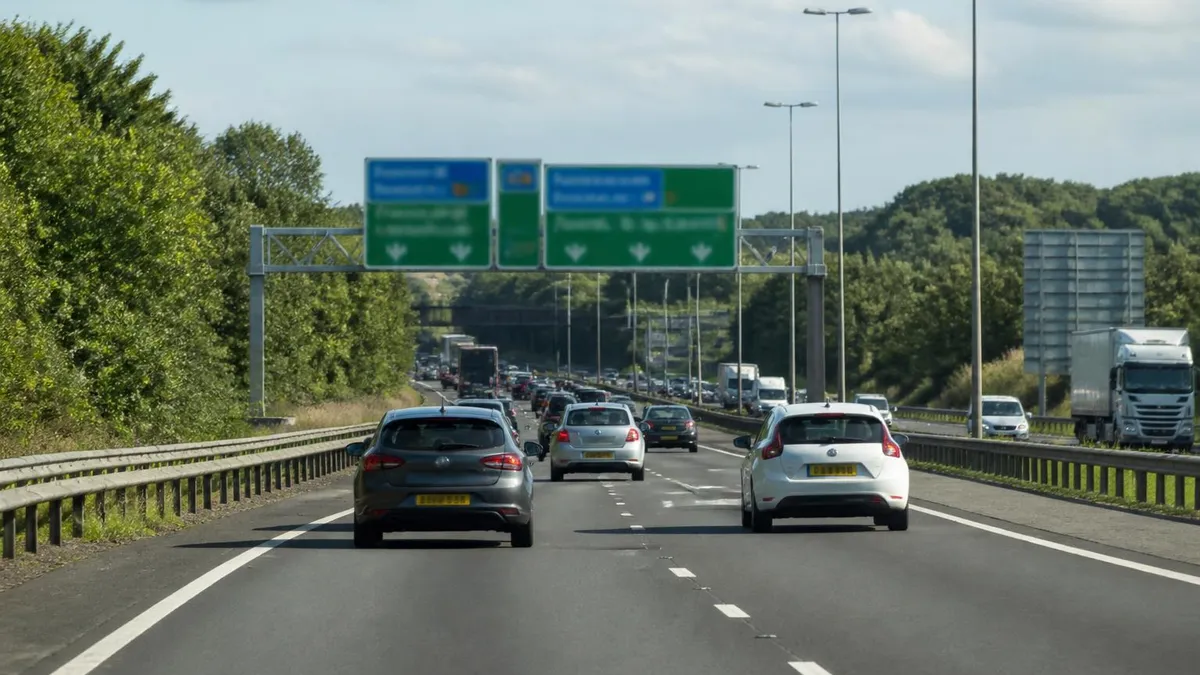
Your theory test pass certificate is only valid for two years from the date you passed. If you have been working towards your practical test for an extended period and your theory certificate is approaching expiry, you must pass your practical test before the expiry date — otherwise you will need to pass the theory test again before you can rebook the practical. Check your certificate's expiry date as soon as possible and factor it into your retesting timeline.
Managing nerves and mental preparation are aspects of retest readiness that many candidates and even some instructors underestimate significantly. The psychological pressure of a driving test — particularly a second or third attempt after previous failures — can impair your performance in ways that have nothing to do with your actual driving ability. Understanding how test anxiety affects you specifically, and developing strategies to manage it, can make a decisive difference to your next result.
Anxiety during a driving test typically manifests in predictable ways: rushing at junctions without proper observation, gripping the steering wheel too tightly, forgetting to check mirrors at routine moments, and either driving too slowly out of excessive caution or making impulsive decisions to get out of perceived difficulty quickly. Recognising which of these patterns applies to you is the first step to addressing it. Your instructor will almost certainly have observed your anxiety responses during lessons and can give you specific, personalised feedback about how your nerves affect your driving technique.
Breathing techniques are among the most evidence-backed tools for managing acute performance anxiety. Before your test and during quiet moments while driving — at red lights, when waiting to emerge from a junction — deliberately slowing your breathing to a pace of approximately four seconds in and six seconds out activates the parasympathetic nervous system and reduces the physical symptoms of anxiety. Practise this technique during lessons so that using it on test day feels natural rather than contrived or distracting.
Preparation routine on the morning of your test also plays an important role. Arriving at the test centre well rested, having eaten a balanced meal, and arriving with enough time to avoid rushing all contribute to a calmer starting state. Many candidates find it helpful to have a brief warm-up drive with their instructor in the hour before the test appointment, which allows them to settle into their driving rhythm before the examiner gets in the car. Check whether your instructor offers this service if you think it would help you.
Cognitive reframing — changing the way you think about the test — is another powerful tool. Rather than viewing the examiner as an adversary looking for reasons to fail you, try to understand their actual role: they are assessing whether your driving meets the minimum standard for safe, independent road use. They are not hoping you will fail. They are not judging you as a person. They are observing a set of specific driving behaviours against a published standard. This mental shift from threat to neutral assessment can significantly reduce the emotional charge of the test experience.
If test anxiety has been a significant factor in your previous failures — or if you have noticed that you drive noticeably better in lessons than in tests — it is worth discussing with your instructor whether additional mock test experience could help desensitise you to the high-pressure format. Some candidates benefit from taking informal mock tests with a different observer (a trusted adult passenger, for example) to practise performing under observation. The goal is to make the test environment feel less uniquely threatening through repeated, low-stakes exposure.
For comprehensive advice on managing the emotional and psychological dimensions of test preparation, the guide on failing driving test anxiety covers specific techniques that have helped many UK learners perform closer to their true ability level on the day. Combining practical driving improvement with deliberate mental preparation gives you the fullest possible picture of what it takes to convert a fail into a confident, well-deserved pass on your next attempt.
Practical preparation for your retest should begin the moment you leave the test centre, not the week before your next appointment. The emotional rawness of a fresh failure is actually a powerful motivational resource if you channel it constructively. Candidates who go home, review their DL25 form the same evening, and contact their instructor to book a lesson within 24 hours consistently make faster progress than those who take an extended break from driving due to disappointment. Momentum matters enormously in skill-based learning.
One of the most underused preparation tools is reviewing DVSA's own published data on the most common test failure reasons. The DVSA publishes an annual breakdown of the fault categories that generate the most failures nationally, which gives you a useful external benchmark even if your own DL25 faults differ. The top five most common serious fault categories year after year include observations at junctions, mirrors when changing direction, control when moving off, steering, and response to traffic lights. If your faults align with any of these, you know your struggles are widely shared and well understood by driving instructors.
Choosing the right time of day for your retest can make a meaningful practical difference to your experience. If your previous test was at a time that coincided with heavy rush-hour traffic and you found the conditions overwhelming, consider requesting an appointment at a quieter time — mid-morning on a weekday, for example.
Conversely, if you feel more alert and composed earlier in the day, avoid late afternoon appointments when test centres are often busier and your own concentration may be at a lower ebb. Discuss time preferences with your instructor, who will know the patterns of traffic around your specific test centre.
Vehicle familiarity is also worth considering before your retest. The DVSA requires that the vehicle used for the practical test meets specific requirements — it must be roadworthy, have a valid MOT, display L plates, and be fitted with a working rear-view mirror for the examiner's use.
Most candidates use their instructor's car, which has the significant advantage of being the vehicle they have practised in and know intimately. If you are considering using your own vehicle for the retest for cost reasons, make sure you have had substantial practice in that specific car and are completely comfortable with its dimensions, controls, and blind spots before committing.
In the days leading up to your retest, avoid cramming excessive additional lessons right up to the appointment. While it is important to maintain your skills through regular practice, arriving at your test physically and mentally fatigued from intensive driving sessions in the 48 hours beforehand is counterproductive. Most experienced driving instructors recommend a moderate lesson — perhaps 90 minutes — the day before the test to keep your skills fresh, followed by rest and a relaxed evening. The goal is to arrive at the test centre feeling alert, rested, and confident rather than exhausted and overloaded.
On test day itself, the show-me-tell-me vehicle safety questions asked at the start of the test are an easy source of free marks — or an avoidable source of minor faults. The DVSA publishes the full list of possible show-me-tell-me questions on its website, and there are only 19 questions in total.
Spending 30 minutes familiarising yourself with all of them in the week before your test eliminates any risk of fault in this section. A minor fault here, while not enough to fail on its own, contributes to your overall minor fault tally and is entirely preventable with minimal preparation effort.
Finally, trust the process. Every hour of targeted practice, every mock test, every detailed debrief with your instructor is building the foundation for a genuine, durable pass. The DVSA practical test is not a lottery — it is an objective assessment of specific, learnable skills. If you are consistently meeting the standard during supervised practice, the test is simply an opportunity to demonstrate what you already know how to do. Approach it with that confidence, backed by thorough preparation, and your next result may surprise you.
DVSA Questions and Answers
UK Theory Test Pass Mark: Car, Bike, LGV, PCV & ADI Scores

Free Theory Test App: The Complete UK Guide to Choosing, Using and Passing With Mobile Practice in 2026

Cancelling Driving Test: The Complete UK Guide to Refunds, Rebooking and Avoiding Lost Fees in 2026
Theory Test Certificate: Complete UK Guide to Passing and Using Your DVSA Pass Letter in 2026
Driving Test Nerves: The Complete UK Guide to Calming Anxiety and Passing First Time in 2026
About the Author

Licensed Driving Instructor & DMV Test Specialist
Penn State UniversityRobert J. Williams graduated from Penn State University with a degree in Transportation Management and has spent 20 years as a certified driving instructor and DMV examiner consultant. He has personally coached thousands of applicants through written knowledge tests, skills assessments, and commercial driver licensing programs across more than 30 states.