
Driving Test Anxiety: The Complete UK Guide to Overcoming Nerves and Passing With Confidence
Struggling with driving test anxiety? 🧠 Discover proven UK techniques to manage nerves, build confidence, and pass your DVSA test first time.
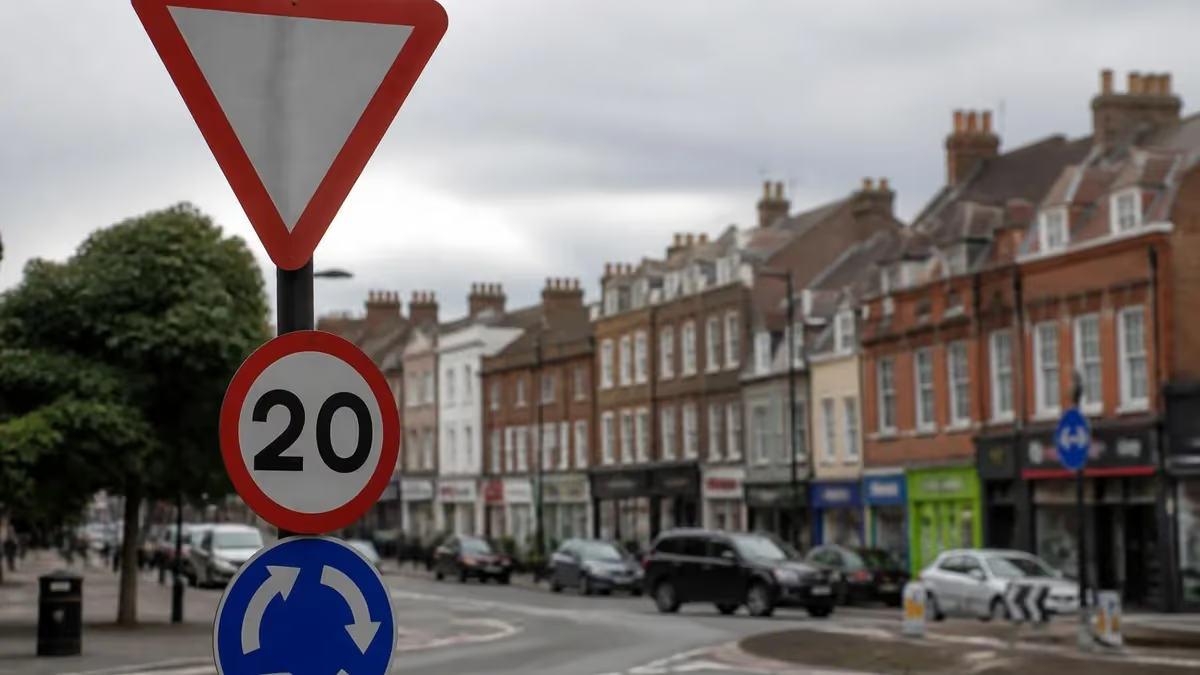
Driving test anxiety is one of the most common reasons UK learners fail their practical or theory test — not because they lack ability, but because nerves overwhelm their thinking in the moment. Research suggests that well over 50% of candidates report feeling significantly anxious before stepping behind the wheel for their DVSA test. That nervous energy can cause you to freeze at junctions, misread hazard clips, or blank on rules you know perfectly well. Understanding why it happens is the first step toward managing it effectively.
The physiology behind test anxiety is straightforward: your brain perceives the high-stakes examination as a threat, triggering the fight-or-flight response. Adrenaline surges, your heart rate climbs, palms sweat, and concentration narrows to the point where peripheral information — like a cyclist creeping into your mirror — becomes easy to miss. For driving tests specifically, this response is doubly unhelpful because safe driving demands calm, distributed attention across multiple streams of information simultaneously.
Many learners mistakenly believe that anxiety means they are not ready. In reality, a moderate level of arousal actually improves performance — psychologists call this the Yerkes-Dodson curve. The problem arises when anxiety tips past an optimal point and begins to interfere with memory recall, decision-making, and fine motor control. Learning to keep nerves in a productive zone, rather than eliminating them entirely, is the realistic and achievable goal.
One thing worth knowing early is that driving test anxiety affects both theory and practical candidates differently. Theory candidates often struggle with time pressure and blank-mind moments during the hazard perception clips, while practical candidates tend to suffer from performance anxiety — the awareness of being watched and judged. Both are valid, both are manageable, and this guide covers techniques tailored to each scenario so you can approach your test date with genuine confidence.
The DVSA conducts roughly 1.7 million practical driving tests per year in the UK. The overall first-time pass rate hovers around 47-48%, which means slightly more than half of all candidates fail on their first attempt. Anxiety is not the only factor, but it is a significant and often underappreciated contributor. Examiners are trained to be neutral and professional — they are not trying to catch you out — but many candidates project a hostile or judgmental role onto them, which amplifies stress unnecessarily.
Preparing for your test with the right mental toolkit is every bit as important as knowing the Highway Code or perfecting your parallel park. This guide walks you through the science of test anxiety, practical coping strategies, structured preparation timelines, what to do on the morning of your test, and how to reframe failure if things do not go to plan the first time around. Whether your test is two weeks or two days away, there is something here that can make a measurable difference to how you perform.
Finally, it is worth noting that anxiety around driving tests tends to be self-reinforcing. The more you worry about worrying, the bigger the problem becomes. Breaking that cycle requires both practical preparation — thorough knowledge of the material — and psychological preparation, which most learners neglect entirely. By the end of this article you will have a complete toolkit covering both dimensions, giving you the best possible foundation for walking into your DVSA test centre feeling prepared, grounded, and ready to drive.
Driving Test Anxiety by the Numbers
Why Anxiety Hits During Driving Tests
Your brain treats the driving test as a genuine threat because the consequences feel enormous — failing means cost, delay, and embarrassment. This threat perception triggers the stress response even when no physical danger exists, hijacking the calm thinking you need to drive well.
Being watched by a stranger with a clipboard fundamentally changes how self-conscious you feel behind the wheel. Learners who drive confidently with their instructor often freeze under examiner observation — a well-documented psychological phenomenon called evaluation apprehension.
Many candidates secretly believe they are not quite ready, even after months of lessons. This internal doubt amplifies anxiety on test day because every small hesitation feels like confirmation of their fears rather than a normal, inconsequential moment of driving.
Poor sleep the night before dramatically lowers your anxiety threshold. A tired nervous system is far more reactive to perceived threats, meaning stress you could normally manage becomes overwhelming. Physical preparation is inseparable from psychological preparation.
Candidates who have already failed once or who experienced a frightening driving incident carry additional psychological baggage into the test. The memory of a previous failure acts as a mental anchor, making the brain expect the same outcome again unless actively challenged.
Understanding why anxiety happens is useful, but what every learner really needs are concrete, field-tested techniques for managing it in the moment. The good news is that sports psychology, cognitive behavioural therapy, and mindfulness research all converge on a set of strategies that work reliably for high-pressure performance situations — and a driving test qualifies perfectly as one of those situations. None of these techniques require years of practice; most can be learned and applied within the weeks before your test date.
Controlled breathing is the single most immediately effective tool available to you. When anxiety spikes, breathing becomes shallow and rapid, which actually amplifies the physical symptoms of stress. The 4-7-8 technique — inhale for four counts, hold for seven, exhale slowly for eight — activates the parasympathetic nervous system within seconds. Practise this at home until it becomes automatic, then use it in the waiting room before your name is called. Even one or two cycles makes a measurable physiological difference to your heart rate and perceived stress level.
Visualisation is the technique used by elite athletes, surgeons, and pilots to prepare for high-pressure performance. The idea is simple: mentally rehearse the entire test going well, in vivid detail, including the drive to the test centre, meeting the examiner, completing manoeuvres confidently, and receiving a pass. Your brain does not easily distinguish between a vividly imagined experience and a real one — the neural pathways activated during mental rehearsal are the same ones that fire during the actual event. Spend ten minutes each evening for the week before your test doing this deliberately.
Cognitive reframing means changing the story you tell yourself about what the test means. Instead of thinking "I must not fail or this will be a disaster," try "this is a chance to show what I have learned, and even if I need another go, I will get there." This is not naive positivity — it is an evidence-based psychological technique for reducing catastrophising, which is one of the primary drivers of debilitating anxiety. Write your reframed thought down, read it back to yourself, and use it as a mental anchor when worry intrudes.
Progressive muscle relaxation (PMR) is particularly useful the night before your test. Working systematically from your feet upward, you tense each muscle group for five seconds and then release for thirty. The contrast between tension and release produces deep physical relaxation that carries over into improved sleep quality. Candidates who use PMR the night before a test consistently report feeling more physically settled the following morning — less clenching of the jaw, less tightness in the shoulders, less physical reactivity to small stressors during the drive.
Routine and familiarity dramatically reduce anxiety because the brain is threat-detecting in novel situations. This means visiting the test centre in advance — even just driving past it with your instructor — so that the environment on test day is not new territory. Arrive early enough to orient yourself without rushing. Use the same pre-test playlist you have been practising with. Wear clothes you are comfortable in. Every small familiar element reduces the cognitive load imposed by novelty, freeing mental bandwidth for the actual driving.
Social support matters more than most candidates acknowledge. Talking honestly with your instructor about your anxiety, rather than pretending confidence you do not feel, allows them to tailor the final lessons to address your specific fears. Many instructors offer a mock test in the actual test centre environment — this is one of the highest-value things you can do in the final fortnight. Peer support also helps: connecting with online communities of UK learners who share pre-test nerves normalises the experience and reduces the isolation that feeds anxiety.
Finally, limit your caffeine intake on test day. Caffeine is a stimulant that raises cortisol and increases heart rate — the exact physiological state you are trying to avoid. Switching to decaffeinated options on test morning is a small but meaningful practical step. Eat a proper breakfast with slow-release carbohydrates, drink water to stay hydrated, and avoid sugary snacks that cause blood sugar spikes and crashes. Physical state is the foundation on which all psychological techniques rest, and neglecting it undermines even the best mental preparation.
Theory vs Practical: How Anxiety Shows Up Differently
The theory test creates a specific type of anxiety rooted in time pressure and the fear of mind-blanking. The multiple-choice section gives you 57 minutes for 50 questions, which sounds generous until nerves make reading comprehension slow and second-guessing eats up minutes. Many candidates with strong knowledge scores in practice freeze when a question uses unfamiliar phrasing, convincing themselves they never learned that topic when in fact they know it thoroughly. Preparation through timed mock tests is the single most effective counter-strategy here.
The hazard perception section provokes a different kind of anxiety: candidates worry about clicking too early, too late, or too frequently and triggering the fraud-detection algorithm that scores them zero for that clip. This specific fear causes some learners to hesitate so long that they miss genuine hazards entirely. The solution is to practise the hazard clips under realistic conditions — using an app or official DVSA material — until your instinct for developing hazards becomes automatic rather than calculated, removing the need for anxious deliberation in the test room.

Preparing Early vs Booking Before You Feel Ready
- +Early preparation gives you time to address anxiety through repeated exposure to test conditions
- +More practice hours correlate strongly with higher pass rates and reduced test-day stress
- +You can identify weak areas weeks in advance and target them without last-minute panic
- +Building genuine competence is the most reliable antidote to imposter syndrome and self-doubt
- +Structured revision timetables reduce anxiety by replacing vague worry with concrete daily action
- +Completing official mock tests builds familiarity with the format, dramatically reducing novelty-induced stress
- −Waiting indefinitely for perfect confidence means many learners never book and delay progress unnecessarily
- −Over-preparation without a deadline can lead to analysis paralysis and increased self-scrutiny
- −Extra lessons add cost — the financial pressure of prolonged preparation creates its own anxiety
- −Repeated near-readiness without committing to a test date can erode motivation over time
- −Some anxiety is performance-enhancing; trying to eliminate it entirely can leave candidates under-aroused
- −Booking too far in advance means anxiety has longer to build before the test date arrives
Pre-Test Day Checklist: Reduce Anxiety Through Preparation
- ✓Visit the test centre in advance so the environment feels familiar on the day
- ✓Complete at least three timed mock theory tests under realistic exam conditions
- ✓Ask your instructor to conduct a full mock practical test with debrief feedback
- ✓Practise the 4-7-8 breathing technique daily for one week before your test
- ✓Spend ten minutes each evening visualising the test going smoothly and confidently
- ✓Prepare your documents the night before — driving licence, theory pass certificate, booking confirmation
- ✓Plan your route to the test centre and identify parking or public transport options
- ✓Set two alarms and arrange transport so you cannot be late on the morning
- ✓Avoid caffeine on test morning and eat a breakfast with slow-release carbohydrates
- ✓Write down your cognitive reframing statement and read it aloud before leaving home
Neutral Does Not Mean Hostile
DVSA examiners are trained to maintain a neutral expression throughout the test — this is deliberate policy, not personal judgment. Candidates who interpret this neutrality as disapproval create anxiety from nothing. Remind yourself that a blank face means absolutely nothing about how the test is going. Your examiner genuinely wants you to pass; a successful test means less paperwork and a productive morning for them too.
Building genuine confidence before your driving test is not about pretending to feel calm — it is about accumulating so many hours of quality practice that competence becomes the default, and anxiety has less factual basis to feed on. There is a meaningful difference between telling yourself you are ready and actually having the evidence base to back that up. Every mock test you complete, every tricky junction you navigate, every manoeuvre you practise under pressure adds to that evidence base and makes the inner critic's voice a little quieter.
The concept of deliberate practice, developed by psychologist Anders Ericsson, offers a useful framework here. Deliberate practice means targeting the specific skills you find hardest, not simply repeating what you already do well. If your parallel parking triggers disproportionate anxiety, that is precisely the skill deserving your focused attention — not because failure there is catastrophic, but because reducing uncertainty in a feared area has an outsized effect on overall confidence. Work with your instructor to design lessons that specifically confront your weak points rather than comfort zones.
Graduated exposure is a technique borrowed from anxiety treatment that translates directly to driving preparation. The principle is to systematically expose yourself to increasingly anxiety-provoking versions of the driving scenario, in a controlled progression. This might start with practising in the test centre car park outside test hours, progress to driving the actual test routes with your instructor, and culminate in a full mock test with a stranger as passenger. Each step desensitises the threat response slightly, so by the time the real test arrives, the situation feels familiar rather than novel and frightening.
Keeping a progress journal is underused but highly effective for managing test anxiety. After each lesson, write down one thing that went well and one thing you improved on since last time. Over weeks, this journal becomes concrete evidence of your development — a factual record that counters the anxiety-driven narrative of "I am not getting any better." Many candidates are poor judges of their own progress because anxiety selectively highlights failures while minimising successes. A written record corrects this cognitive bias with objective data.
Your relationship with your driving instructor is central to confidence building. A good instructor understands that preparing a learner for the test means preparing their mindset as well as their skills. If you feel unable to discuss your anxiety with your current instructor, or if their teaching style makes you feel judged rather than supported, it may be worth considering a change. Personality fit between learner and instructor has a measurable impact on learning pace, lesson enjoyment, and ultimately test readiness. Do not stay in an uncomfortable working relationship out of loyalty if it is slowing your progress.
Mock tests in unfamiliar areas are worth considering in the final fortnight before your actual test date. If all your practice has been on routes you know intimately, you may find genuinely unfamiliar road situations harder to handle under exam pressure. Asking your instructor to take you somewhere new — a different town centre, an unfamiliar dual carriageway — builds the adaptive confidence that comes from handling novelty successfully. It proves to yourself that your skills are transferable, not just route-specific, which is exactly the kind of evidence your anxious mind needs.
Sleep hygiene in the week before your test deserves specific attention. Anxiety and sleep deprivation form a mutually reinforcing cycle — anxiety disrupts sleep, and poor sleep amplifies anxiety. Breaking this cycle proactively involves winding down screens an hour before bed, keeping consistent sleep and wake times throughout the week, and using PMR or guided meditation to ease the transition into sleep. If pre-test anxiety is keeping you awake for several nights running, discuss this honestly with your GP — there are safe, short-term options for managing acute anxiety that will not impair your driving performance.
If you have a diagnosed anxiety disorder, learning difficulty, or other condition that affects your test performance, you may be entitled to reasonable adjustments from the DVSA — including extra time, a rest break between sections, or a separate room for the theory test. Contact the DVSA before booking and provide supporting documentation from a medical professional. These adjustments exist precisely to ensure the test measures your driving ability rather than the impact of a recognised condition.
Failing your driving test is genuinely disappointing, and it is important not to minimise that. You have invested time, money, and emotional energy, and walking out with a fail sheet rather than a pass certificate stings regardless of how philosophically you approach it. Giving yourself space to feel that disappointment for a day is healthy and human. What matters most is what happens after that first twenty-four hours — how you frame the experience, what you take from the examiner's feedback, and how quickly you can move from feeling defeated to feeling determined.
The examiner's debrief after a failed test is one of the most valuable pieces of feedback you will ever receive about your driving. It is specific, expert, and free. Many candidates are so emotionally overwhelmed in the moment that they barely absorb what the examiner says — this is why asking your accompanying instructor to take notes is useful. If anything in the debrief is unclear, it is entirely acceptable to ask the examiner to clarify. Understanding precisely what went wrong is the essential first step toward ensuring it does not go wrong again.
After a failed test, book your next attempt as soon as you feel ready — but not as an impulsive reaction within hours of failing. Take a day or two to process the experience and discuss it with your instructor.
Then look at your schedule, identify how many lessons you need to address the specific faults noted, and book a date that gives you that preparation time without stretching so far into the future that motivation fades. The sweet spot is typically two to four weeks for minor fault patterns, longer if a serious fault reveals a genuine skill gap that needs systematic work.
Reframing failure as information rather than verdict is not a cliche — it is a cognitive strategy with real psychological traction. Every failed test tells you something specific and actionable about where your driving needs development. Candidates who approach their second attempt with genuine curiosity about what went wrong, rather than shame about having failed, tend to use the intervening weeks more productively and perform significantly better when they return. The DVSA's own statistics show that pass rates improve substantially on second and third attempts, precisely because targeted learning fills the gaps the first test revealed.
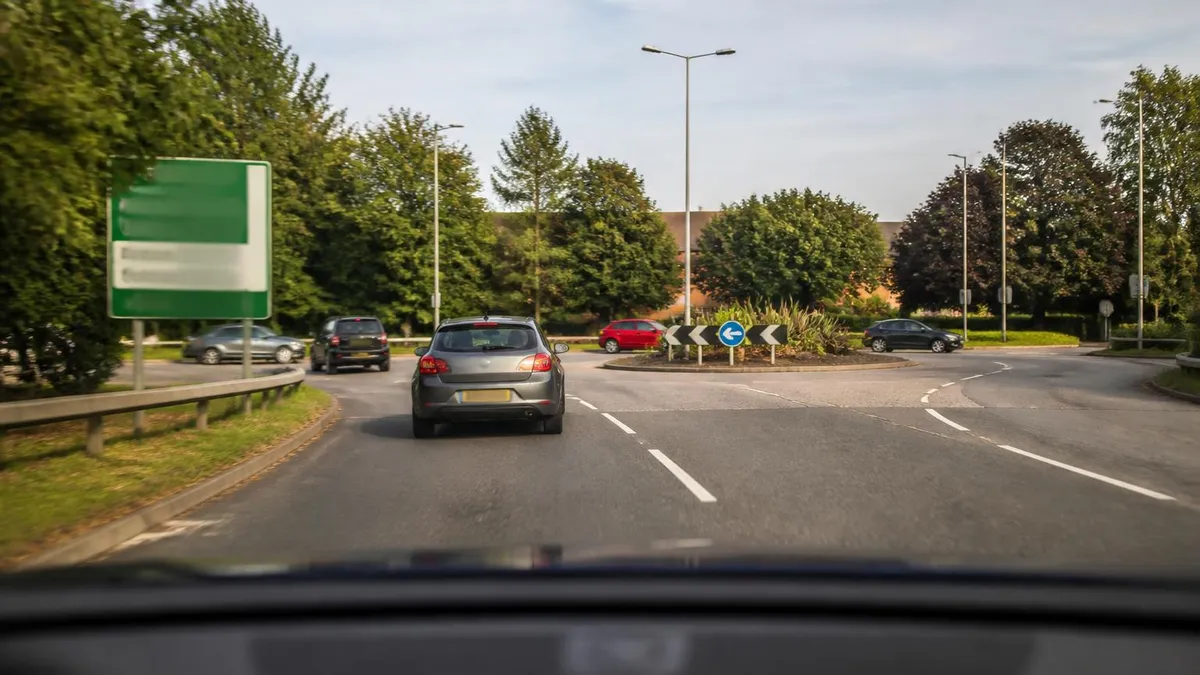
It is also worth examining what anxiety-related behaviours contributed to any faults noted. Did you hesitate too long at a roundabout because you were second-guessing yourself? Did you position incorrectly for a turn because you were too focused on the examiner to process the road layout? Identifying the specific interface between anxiety and error allows you to address both the technical fault and the psychological pattern that generated it. This dual-track approach — technical correction plus anxiety management — is what separates candidates who pass on their next attempt from those who repeat the same mistakes.
Financial anxiety about the cost of retaking deserves acknowledgment. Each theory test costs £23 and each practical test costs £62 on weekdays, rising to £75 in evenings and weekends. If budget is a genuine constraint, discuss this openly with your instructor — many will adjust lesson frequency or structure to help you prepare as efficiently as possible.
Some instructors offer package deals for candidates who have already partially completed their training. The key is not to let financial pressure push you into rebooking before you have genuinely addressed the faults from your previous attempt, as this simply increases the risk of failing again and spending more overall.
Community support after a failed test can be unexpectedly powerful. UK learner driver forums and social media groups are full of honest accounts from people who failed once, twice, even several times before passing. Reading these stories normalises your experience and provides perspective on the non-linearity of the learning journey. The national average of 2.6 attempts to pass means that failing first time is statistically the most common experience — you are in the majority, not an outlier. Keeping that perspective accessible during moments of self-doubt is part of a healthy psychological response to a setback.
The week leading up to your test is a critical period for managing anxiety, and many candidates make the mistake of cramming intensively right up to the final evening. Research on performance under pressure consistently shows that excessive last-minute revision increases anxiety without meaningfully improving knowledge — by the eve of your test, you either know the material or you do not, and an extra four hours of practice clips will not change that.
What will change it is arriving well-rested, physically prepared, and mentally settled. Scale back revision three days out and shift your focus to rest and psychological readiness.
Morning-of-test routines matter enormously and are worth designing deliberately rather than leaving to chance. Decide the night before what you will eat, what you will wear, what time you will leave, and what you will listen to in the car. Eliminating as many decisions as possible from test morning reduces cognitive load and preserves mental energy for the actual driving.
Some candidates find it helpful to do a short five-minute mindfulness or breathing session immediately after waking, before checking their phone or engaging with anything potentially stressful. Starting the day with intentional calm sets a neurological baseline that is harder to disturb than one built on rushed, reactive morning activity.
In the waiting room at the test centre, avoid comparing yourself to other candidates. It is easy to observe someone who appears calm and confident and conclude that they are more ready than you — but you have no idea what they are feeling internally, and comparison serves no useful function. Instead, use the waiting time actively: run through your breathing technique, silently recite your reframing statement, and mentally rehearse the first five minutes of the test — starting the engine, checking mirrors, pulling away smoothly. Keeping your mind occupied with constructive mental activity prevents anxiety from filling the vacuum.
During the test itself, the most important practical advice is to drive to your own standard, not to a perceived examiner standard. Many candidates alter their driving style under observation — becoming over-cautious, hesitating at moments they would normally judge and act decisively, or over-checking mirrors to the point where they miss what is happening ahead.
Your instructor has prepared you to drive at the standard required to pass; the task on test day is to reproduce that standard, not to somehow exceed it. Trust your training, drive the way you have been practising, and resist the urge to perform rather than simply drive.
Communication with the examiner should be natural but limited. You do not need to explain your decisions as you make them — simply drive. If you mishear an instruction, ask calmly for it to be repeated rather than guessing and potentially taking the wrong route. If you take a wrong turn following the sat-nav or examiner directions, that is not automatically a fault — it is how you handle the recovery that matters. Staying calm in small moments of confusion, rather than visibly panicking, is itself evidence of the composed driving DVSA examiners are trained to look for.
Post-test, regardless of outcome, give yourself credit for sitting the test. Many learners delay booking for months or years because anxiety feels too overwhelming — simply showing up and completing the test is an act of courage that deserves recognition. If you pass, celebrate properly and allow yourself to feel the full satisfaction of the achievement. If you do not pass, give yourself the processing time discussed earlier before moving into action mode. Either way, the experience of taking the test under real conditions is irreplaceable preparation that makes every future attempt easier and calmer than the one before.
Long-term, the skills you build in managing driving test anxiety are transferable to every high-pressure performance situation you will encounter — job interviews, presentations, medical procedures, public speaking. The discipline of deliberate breathing, cognitive reframing, visualisation, and preparation under pressure are life skills dressed up in a driving context.
Many candidates who struggled significantly with test anxiety report that working through it deliberately made them measurably more resilient in other domains of life. The driving test, in that sense, is not just a gateway to a licence — it is an opportunity to develop a relationship with pressure that serves you far beyond the test centre car park.
DVSA Questions and Answers
UK Theory Test Pass Mark: Car, Bike, LGV, PCV & ADI Scores

Free Theory Test App: The Complete UK Guide to Choosing, Using and Passing With Mobile Practice in 2026

Cancelling Driving Test: The Complete UK Guide to Refunds, Rebooking and Avoiding Lost Fees in 2026
Theory Test Certificate: Complete UK Guide to Passing and Using Your DVSA Pass Letter in 2026
Driving Test Nerves: The Complete UK Guide to Calming Anxiety and Passing First Time in 2026
About the Author

Licensed Driving Instructor & DMV Test Specialist
Penn State UniversityRobert J. Williams graduated from Penn State University with a degree in Transportation Management and has spent 20 years as a certified driving instructor and DMV examiner consultant. He has personally coached thousands of applicants through written knowledge tests, skills assessments, and commercial driver licensing programs across more than 30 states.