
How Many Driving Hours Do You Need to Pass in the UK? 2026 September
How many driving hours do you need to pass in the UK? 🎯 DVSA guidance, averages by learner type, and tips to make every lesson count.

If you have recently started learning to drive — or you are about to book your first lesson — one of the first questions you will ask your instructor is how many driving hours do you need before you are ready to take your practical test.
The honest answer is that there is no single magic number that works for everyone, but the DVSA and the Driver and Vehicle Licensing Agency have studied learner data extensively and produced figures that give a realistic target to aim for, and understanding those numbers from day one will save you both time and money.
The DVSA's own research consistently shows that the average learner driver in the UK takes approximately 45 hours of professional tuition alongside around 22 hours of private practice with a family member or friend before they are ready for test. Those two figures are not interchangeable: professional hours and private hours serve different purposes, and the best outcomes come from combining both intelligently rather than treating them as substitutes for each other.
It is worth noting straightaway that these averages mask enormous individual variation. Some learners are genuinely ready after 30 hours of combined practice; others may need 70 or more. Factors such as your natural spatial awareness, how often you can practise between lessons, the complexity of the roads near your test centre, and even your level of anxiety behind the wheel all push the real figure up or down. The average is a useful benchmark, not a deadline or a guarantee.
One thing that every learner can do alongside their practical training is to prepare thoroughly for the theory test. Understanding road signs, stopping distances, hazard perception, and the Highway Code from an early stage actually accelerates your on-road learning, because you arrive at each lesson already knowing the rules rather than discovering them at the wheel. The theory test is the foundation that makes every practical hour more productive, and learners who pass theory early tend to need fewer practical hours overall.
Cost is inevitably a consideration. At a typical lesson rate of £35–£40 per hour in 2026, 45 hours of professional tuition represents an investment of £1,575 to £1,800 before you factor in test fees, theory test costs, and any additional lessons after a failed attempt. Budgeting realistically from the start — and making the most of every lesson through good preparation — is therefore genuinely important, not just an afterthought.
Throughout this guide we will break down exactly what the research says about driving hours needed for different types of learner, explain what professional versus private practice hours each contribute, look at the factors that push your personal total higher or lower, and give you a practical road map for making every hour count. Whether you are a teenager picking up your provisional licence this week or an adult learner returning to driving after a long gap, there is specific, actionable advice here for you.
By the end of this article you will have a clear, realistic picture of the journey ahead — the hours, the milestones, the costs, and the strategies that experienced instructors use to help their pupils progress as efficiently as possible. Let us start with the numbers.
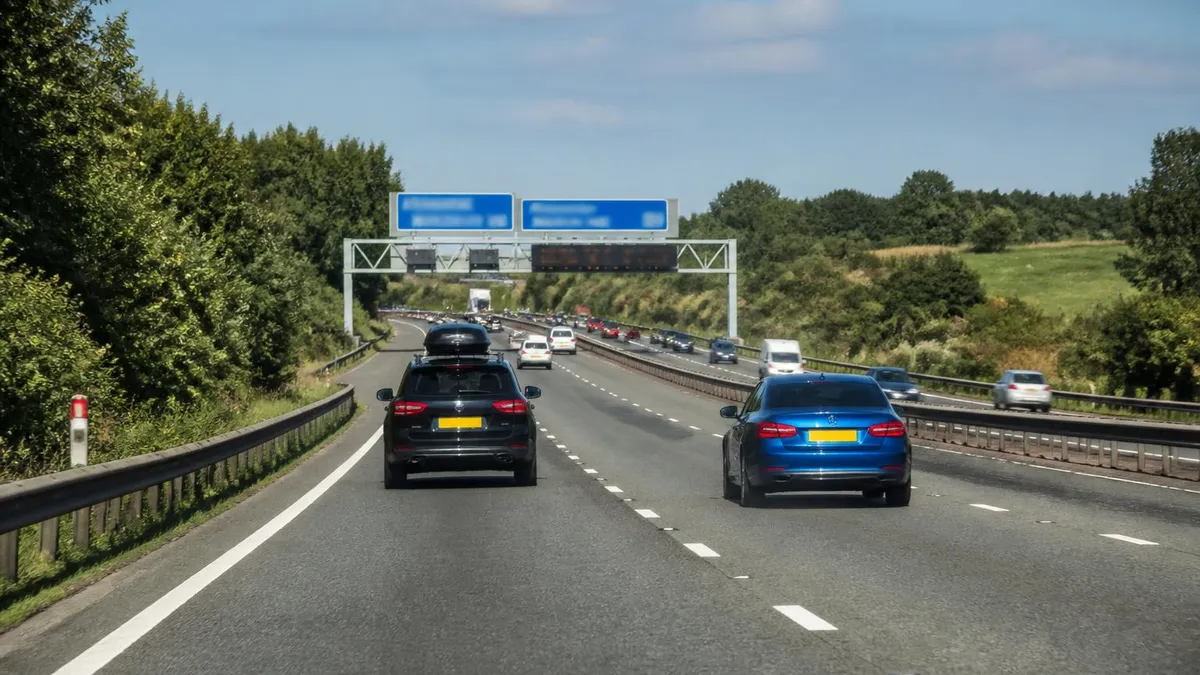
UK Learner Driving Hours by the Numbers
Your Road Map: Key Stages From First Lesson to Test Pass
Get Your Provisional Licence
Pass Your Theory Test
Build Core Skills (0–20 Hours)
Develop Confidence (20–40 Hours)
Pre-Test Polish (40–45+ Hours)
Take Your Practical Test
Understanding the difference between professional tuition hours and private practice hours is one of the most important distinctions any learner driver can make early in their training. Professional lessons with a DVSA-approved driving instructor (ADI) are structured learning experiences where an expert identifies your weaknesses, introduces new skills in the correct sequence, and gives you the kind of precise feedback that family members simply cannot provide. The DVSA recommends 45 hours of this structured, professional input as the core of your training.
Private practice, on the other hand, serves a complementary but quite different purpose. When you drive with a parent, guardian, or friend who holds a full UK licence (and has held it for at least three years), you are consolidating the skills you have already been taught rather than learning new ones. Private practice hours build fluency, muscle memory, and confidence — particularly in familiar local roads where you can repeat the same junction or manoeuvre multiple times without the pressure of a formal lesson.
The DVSA's recommended 22 hours of private practice assumes that you are using those hours productively. Simply driving to the supermarket and back on autopilot is not the same as deliberately practising bay parking, hill starts, or emergency stops. To get genuine value from private sessions, plan each one in advance: identify one or two specific skills to work on, choose appropriate roads, and ask your accompanying driver to give honest, constructive feedback rather than just sitting in silence.
Insurance is a practical consideration that many learners overlook until it causes a problem. Before any private practice session, ensure you are properly insured — either as a named driver on the accompanying driver's policy (check the small print carefully, as learner cover is not automatic on every policy) or through a dedicated learner driver insurance policy that covers short-term, pay-as-you-go use. An uninsured incident during private practice can have serious legal consequences that derail your entire training timeline.
The vehicle used for private practice also matters more than most learners realise. If your instructor's car has dual controls and your family's car does not, there are certain exercises — particularly those approaching hazards at speed — that are safer to introduce in the lesson car first. Your instructor can advise when each manoeuvre is ready to be practised privately. Rushing private practice before a skill is sufficiently embedded can reinforce bad habits rather than good ones.
From a cost perspective, private practice hours are significantly cheaper than professional lessons — the main expenses are insurance and fuel. A learner who manages 22 hours of effective private practice alongside their 45 professional hours will typically spend several hundred pounds less overall than a learner who relies exclusively on paid lessons to reach test standard. That saving is meaningful, but it only materialises if the private hours are genuinely productive rather than merely accumulated.
Finally, it is worth emphasising that the 45-hour and 22-hour figures are averages across the entire UK learner population. If you are a quicker learner who practices diligently between lessons, you may reach test standard in fewer total hours. If you face particular challenges — anxiety, limited availability for lessons, or complex local roads near your test centre — you may need more. The goal is readiness, not hitting a specific number, and a good instructor will tell you honestly when you are genuinely ready rather than simply when you have clocked a target number of hours.
Factors That Affect How Many Driving Hours You Need
Younger learners aged 17–24 often progress slightly faster on pure motor skills, but research shows they sometimes take longer on hazard perception and decision-making because they have less general road experience as pedestrians and passengers. Older learners — particularly those in their 30s and 40s — frequently bring better focus and discipline to each lesson, which can offset any slower initial skill acquisition.
Adults who previously held a driving licence in another country and are converting to a UK licence often need fewer professional hours, typically 20–30, because core car-control skills transfer well. However, they frequently need targeted work on UK-specific rules such as roundabout priority, national speed limit interpretation, and the Highway Code's approach to pedestrian crossings, which differ significantly from many other countries.
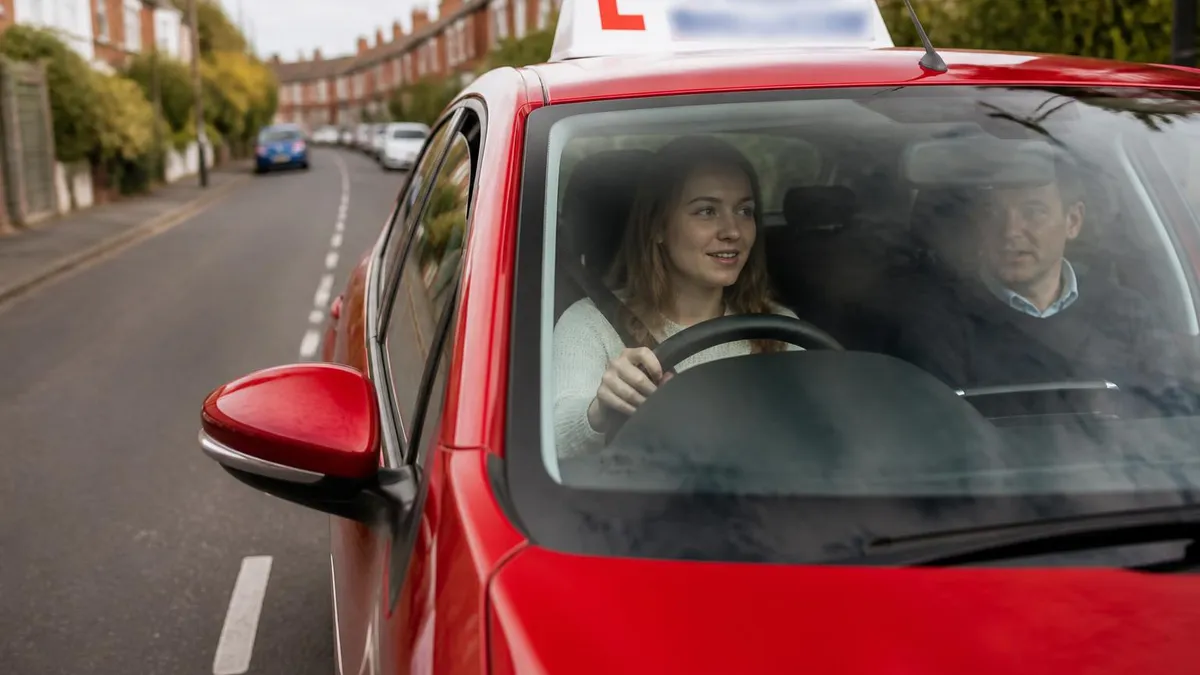
Intensive Courses vs Weekly Lessons: Which Is Right for You?
- +Intensive courses compress learning into days or weeks, which many learners find helps skills stick faster
- +No gap between lessons means less time re-warming on already-covered material
- +You can book your test date as soon as you complete the course, creating a clear end-point and deadline
- +Useful for adults who need a licence quickly for a new job or life change
- +Some intensive providers include the test fee in their package price, simplifying budgeting
- +Total elapsed calendar time from start to pass is much shorter than with weekly lessons
- −Intensive courses are expensive upfront — a week-long course can cost £800–£1,500 in one payment
- −Fatigue sets in quickly when driving for 6–8 hours per day; skill quality often drops by the afternoon
- −There is very limited time to consolidate each skill before the next one is introduced
- −If you fail the test at the end of the course, additional lessons and a new test date add significant extra cost
- −Not suitable for learners who experience high anxiety, as the pace can feel overwhelming
- −Private practice opportunities are minimal during an intensive course, so the recommended 22 private hours are rarely achieved
Learner Driver Milestone Checklist: Are You Test-Ready?
- ✓Pass your theory test before reaching 20 professional practical hours
- ✓Complete at least 45 hours of professional tuition with a DVSA-approved instructor
- ✓Log a minimum of 22 hours of private practice on varied roads and in different conditions
- ✓Drive confidently in both daylight and dusk or night conditions
- ✓Complete all four DVSA manoeuvres (bay park, parallel park, forward/reverse bay park, pull up on the right) without instructor prompting
- ✓Demonstrate consistent independent driving on a 20-minute stretch without sat-nav errors or hesitation
- ✓Drive on dual carriageways and in 70 mph national speed limit conditions at least three times
- ✓Complete two full mock tests on your actual test-centre routes with no more than 3 minor faults each
- ✓Show your instructor you can answer both vehicle safety questions (the 'show me, tell me') without hesitation
- ✓Confirm you can manage motorway-style driving if your test area includes link roads or ring roads near 70 mph limits
The 45-Hour Average Is a Starting Point, Not a Finish Line
DVSA data shows that learners who pass first time average 47 professional hours — slightly above the overall mean — while those who eventually pass after multiple attempts averaged fewer initial hours but more total lessons across all attempts. Rushing to your test date before you are genuinely ready almost always costs more in the long run, both in money and in lost confidence.
Making every driving lesson as productive as possible is not just about turning up on time and following your instructor's directions. The learners who progress fastest are those who treat each session as a deliberate practice opportunity — arriving with specific questions, reviewing what went wrong in the previous lesson, and actively thinking about what they want to improve rather than passively waiting to be told what to do next. This mindset shift can genuinely reduce your total hours needed by 10–15% compared with a passive approach.
Before each lesson, spend five to ten minutes reviewing the relevant section of the Highway Code or your instructor's notes from last time. If you are working on roundabouts this week, re-read the rules on priority, lane discipline, and signalling before you get in the car. When you arrive at the lesson already understanding the theory, your instructor can spend more time on practical execution and less time on explanations, which means more genuine road time per hour paid.
After each lesson, write down three things you did well and two things you want to improve next time. This simple habit, recommended by sports psychologists and now widely adopted by driving instructors, prevents the common problem of making the same mistake in lesson after lesson simply because it was never deliberately identified and addressed. Keep a small notebook in your bag or use a notes app on your phone — the medium does not matter; the habit does.
Private practice sessions should be planned, not improvised. Sit down with your accompanying driver before you leave the house and agree on a specific focus for the session: today we are practising hill starts on the hill by the supermarket, or today we are working on left turns in residential streets. Unfocused private practice — where you simply drive wherever feels comfortable — tends to reinforce the skills you are already good at rather than developing the areas where you are weaker.
Driving in varied weather and lighting conditions is something many learners neglect until it is too late. If your test is booked in November or December and you have spent your entire training period driving in bright summer conditions, you will be at a genuine disadvantage. Ask your instructor to include at least one lesson in wet conditions, one at dusk, and if possible one in light rain on faster roads. These experiences build the adaptability that examiners look for during independent driving sections of the test.
Video feedback is an increasingly popular tool among progressive instructors. Some ADIs install dashcams that record both the road ahead and the driver's inputs, allowing you to review your own performance after the lesson. Watching yourself approach a junction, check mirrors, or execute a manoeuvre can reveal habits — a hesitant steering grip, a tendency to drift toward the kerb — that are almost impossible to self-identify in real time. If your instructor does not offer this, ask whether it is available, or consider purchasing an inexpensive dashcam for private practice sessions.
Finally, never underestimate the role of mental preparation. Driving is a cognitive skill as much as a physical one, and stress, poor sleep, or personal distractions affect your performance more than most learners expect. If you arrive at a lesson after an argument, a bad night's sleep, or significant anxiety, tell your instructor at the start of the session. A good ADI will adjust the lesson plan accordingly — working on familiar, confidence-building exercises rather than introducing new challenges — which means you will still make progress rather than having a demoralising session that sets you back emotionally.
Booking your practical test before your instructor believes you are ready is one of the most common and costly mistakes UK learners make. DVSA test slots are in high demand and waiting times in many areas exceed 12 weeks. If you book prematurely, fail, and need to rebook, you may face a further 12-week wait — extending your overall timeline and increasing your total lesson costs significantly while you wait.
The weeks immediately before your practical test are when your training should shift from skill-building to performance consistency. Up to this point, your instructor has been introducing new scenarios and correcting mistakes in real time.
In the final two to three weeks before your test, the focus should change: you need to demonstrate that you can drive to test standard independently, repeatedly, and on the actual roads your examiner will use. This is the phase where many learners make the mistake of assuming they are ready when they have simply had a few good lessons — readiness means consistency, not occasional excellence.
Mock tests are the single most valuable tool in your pre-test preparation. Ask your instructor to conduct at least two full mock tests — ideally three — on the roads surrounding your test centre, using the same format as the real examination.
That means no prompts, no interventions unless safety demands it, and a debrief at the end using the same language the examiner will use. Your instructor should fill in a mock test marking sheet so you can see exactly where your faults are accumulating. Any area that produces a serious fault in a mock test needs targeted work before you sit the real thing.
Sleep and routine on test day are more important than most candidates realise. Research on cognitive performance consistently shows that sleep deprivation — even mild sleep deprivation of one to two hours below your normal amount — significantly impairs reaction time, decision-making, and spatial awareness. All three of these are directly tested in the DVSA practical examination. In the 48 hours before your test, prioritise sleep over last-minute cramming or anxious revision. Your brain needs to be rested, not saturated with information it will not need in the examination itself.
Eat a proper meal before your test but avoid anything unusually heavy or rich that might make you feel sluggish. Mild hunger is actually associated with sharper alertness, but genuine hunger — the kind that distracts your attention from the road — is counterproductive. Most candidates find a moderate, familiar meal two to three hours before their test time works well. Stay hydrated, but not so much that you are uncomfortable during the 40-minute examination.
Arrive at the test centre with at least 10 minutes to spare. Being rushed or late creates a spike of cortisol — the body's primary stress hormone — that takes 20 to 30 minutes to subside fully. If you arrive calm and with time to spare, your nervous system has an opportunity to settle before you even get into the examiner's car. Use the waiting time to breathe slowly, review one or two key rules mentally, and remind yourself of your preparation. Anxiety is normal and expected; it becomes a problem only when it is allowed to overwhelm your focus.
During the test itself, remember that minor faults are allowed — up to 15 of them — and that the examiner is assessing your overall safety and control, not looking for perfection. If you make a mistake, do not dwell on it or assume you have failed. Many candidates who pass accumulate several minor faults in the first five minutes as nerves settle, then drive cleanly for the remainder. Treat each junction and manoeuvre as a fresh opportunity rather than carrying the weight of earlier errors through the rest of the test.
After the test — whether you pass or fail — ask for a debrief from your examiner. Examiners are required to explain the reason for any serious or dangerous faults, and this feedback is genuinely useful for understanding exactly what went wrong. If you pass, celebrate; if you do not, use the feedback to plan your next steps with your instructor immediately.
Many candidates who fail once go on to pass comfortably on their second attempt precisely because they understand specifically what to address, rather than guessing. The driving hours needed to reach that second-attempt standard are usually far fewer than the original training total.
Practical tips from experienced DVSA-approved instructors consistently point to a handful of habits that separate learners who pass first time from those who need multiple attempts. The first and most cited is mirror discipline. The DVSA's marking criteria place enormous weight on effective observation — mirrors checked at the right moment, before every signal, before every manoeuvre, and before every change of speed. Many candidates lose serious faults not because they drove dangerously, but because examiners observed that their mirror checks were mechanical and untimed rather than genuinely informative.
Signal timing is the second habit that instructors raise repeatedly. Signalling too early at complex junctions can mislead other road users about which exit you are taking; signalling too late removes any practical benefit of the signal. The rule of thumb is to signal at the point where your signal gives useful information to others — not as a reflex before every turn regardless of context. During your final lessons, ask your instructor to specifically critique your signal timing rather than accepting it as good enough.
Speed management on approach to hazards is the third critical area. Many learners develop a habit of braking too late and too sharply, which feels controlled but actually scores a minor fault for each occurrence. The DVSA expects learners to anticipate hazards and begin braking progressively, early enough that the final approach is smooth rather than urgent. Practising this on familiar roads during private sessions — approaching junctions at the correct speed without relying on dual controls — is one of the best ways to internalise this habit before test day.
Independent driving, introduced to the test format in 2010 and expanded in 2017 to include sat-nav directions, now accounts for approximately 20 minutes of your 40-minute test. During this section you will either follow a series of verbal directions from the examiner or follow a sat-nav route. The examiner is assessing whether you can drive safely while managing navigation — a real-world skill. Practise following sat-nav instructions during private sessions, and specifically practise what to do when you take a wrong turn: stay calm, take the next safe opportunity to correct course, and do not panic or brake suddenly.
Manoeuvre accuracy is another area where targeted preparation pays dividends. The four manoeuvres currently tested — parallel parking, forward or reverse bay parking, pulling up on the right, and the emergency stop (only asked of approximately one in three candidates) — are all learnable with repetition. Each has a specific set of reference points and decision moments that your instructor should teach you explicitly. Once you know the reference points for a bay park, for example, the manoeuvre becomes almost a checklist rather than a judgement call, which dramatically reduces anxiety and error rate.
Your vehicle safety questions — the show me, tell me section that now takes place partly while driving — are worth taking seriously even though they are only worth one minor fault if answered incorrectly. An incorrect answer does not fail you, but a correct, confident answer contributes to the overall impression of a competent, knowledgeable candidate. More importantly, the questions are entirely predictable: the DVSA publishes the complete list of possible questions on its website, and learning them takes no more than two or three hours of study.
Finally, build in a genuine rest day the day before your test. Do not take a final lesson on the day before — this is a surprisingly common mistake that leaves candidates fatigued and overthinking. Trust your preparation, get an early night, and arrive at the test centre ready to demonstrate the skills you have spent dozens of hours developing. Confidence comes from preparation, and by the time you reach your test date following the approach described in this guide, you will have done the work. The test is simply the opportunity to show it.
DVSA Questions and Answers
UK Theory Test Pass Mark: Car, Bike, LGV, PCV & ADI Scores

Free Theory Test App: The Complete UK Guide to Choosing, Using and Passing With Mobile Practice in 2026

Cancelling Driving Test: The Complete UK Guide to Refunds, Rebooking and Avoiding Lost Fees in 2026
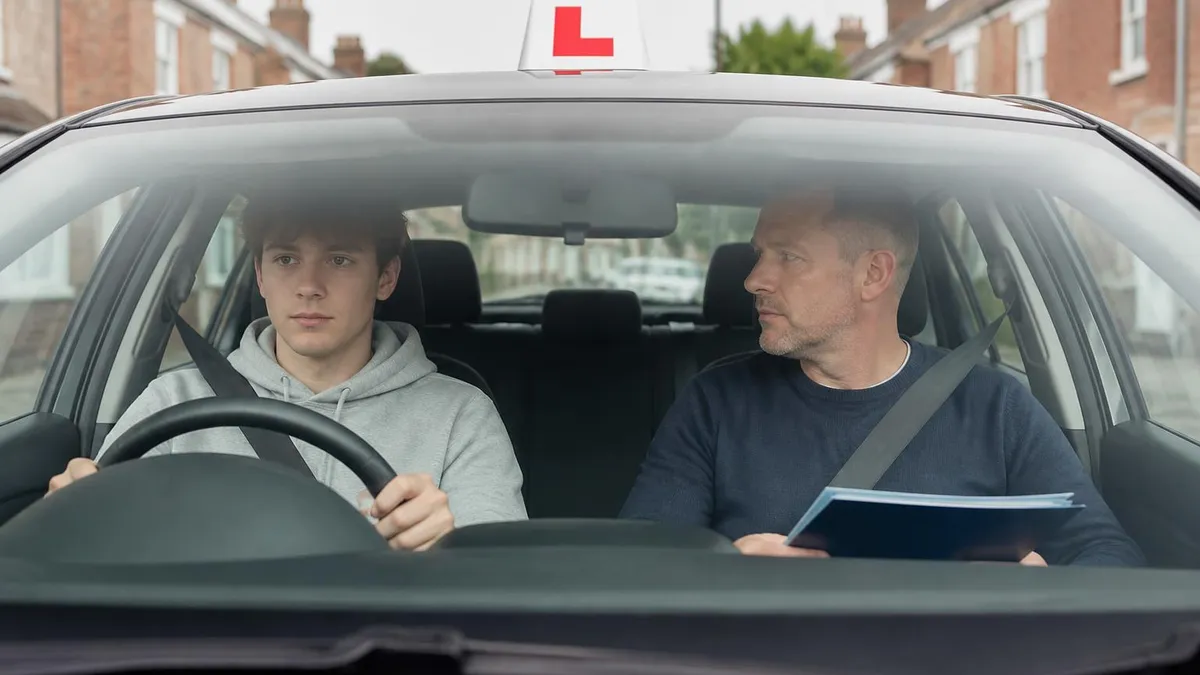
Driving Test Nerves: The Complete UK Guide to Calming Anxiety and Passing First Time in 2026

Mock Driving Test: Complete UK Guide to Passing Your Theory and Practical Exams
About the Author

Licensed Driving Instructor & DMV Test Specialist
Penn State UniversityRobert J. Williams graduated from Penn State University with a degree in Transportation Management and has spent 20 years as a certified driving instructor and DMV examiner consultant. He has personally coached thousands of applicants through written knowledge tests, skills assessments, and commercial driver licensing programs across more than 30 states.