
DMV Customer Service Representative: Complete Study Guide for the NY DMV Sample Test
Prepare for the dmv sample test ny with our complete DMV customer service representative study guide. 🧠 Practice questions, exam tips, and free quizzes.
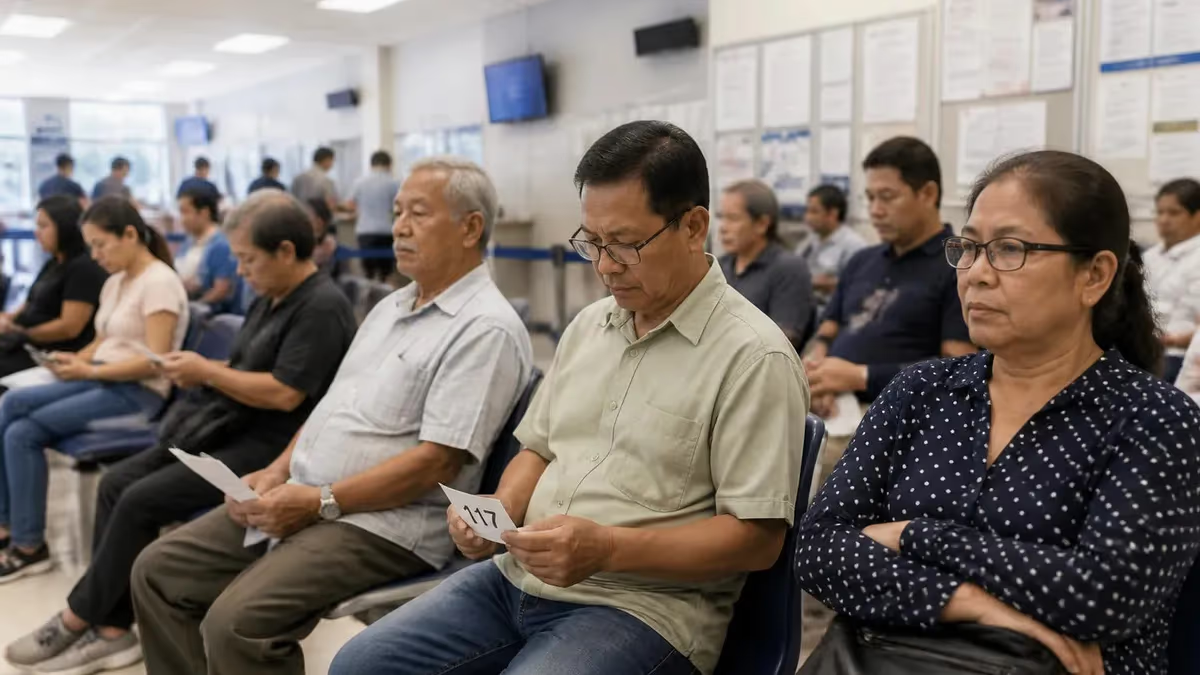
If you are preparing for the DMV customer service representative exam in New York, understanding what to expect on the assessment is the single most important step you can take before test day. The dmv sample test ny is a standardized civil service examination that evaluates your knowledge of motor vehicle regulations, consumer protection policies, vehicle inspection standards, and customer service best practices. New York State uses this exam to screen candidates for front-line DMV representative roles across its network of offices statewide, making it one of the more competitive entry-level government positions available.
Working as a DMV representative means you are the face of the Department of Motor Vehicles for thousands of drivers, vehicle owners, and business clients every day. The job requires a strong command of New York State Vehicle and Traffic Law, the ability to explain complex regulatory requirements in plain language, and the composure to handle frustrated customers in high-pressure situations. The civil service exam tests all of these competencies, which is why targeted preparation — using official study materials and realistic dmv sample test practice questions — is essential.
The DMV customer service representative title covers a wide range of duties depending on which office you are assigned to. Some representatives handle title transfers, license plate issuances, and vehicle registration renewals at the front counter. Others work in back-office roles reviewing inspection certificates, processing dealer paperwork, or responding to written consumer complaints. The civil service exam tests knowledge relevant to all of these functions, so your preparation should be comprehensive rather than narrowly focused on one topic area.
Many candidates underestimate the breadth of material covered on this exam. Beyond basic motor vehicle law, the test includes questions on dispute resolution procedures, consumer rights under New York State law, and the specific documentary requirements for dozens of different transaction types. Candidates who rely solely on general knowledge or a quick skim of the DMV website often find themselves surprised by the level of detail the exam demands, particularly in the consumer protection and vehicle inspection sections.
Preparation timelines vary by candidate background, but most successful test-takers report spending between four and eight weeks studying before sitting for the examination. Those with prior customer service experience in a government setting tend to move faster, while candidates coming from private-sector roles often need additional time to internalize the regulatory framework. Regardless of your starting point, a structured study plan that cycles through every major topic area — combined with consistent practice test sessions — will dramatically improve your score and your confidence walking into the exam room.
This guide is designed to give you everything you need: a clear breakdown of the exam format, the highest-yield topic areas, targeted practice quizzes, a realistic study schedule, and the most commonly asked questions from candidates who have already been through the process. Whether you are aiming for a position in New York City, Albany, Buffalo, or any other office location, the material on the exam is standardized, and this guide addresses all of it.
DMV Customer Service Representative Exam by the Numbers
DMV Representative Exam Study Schedule
- ▸Read the NYS Vehicle and Traffic Law overview chapters
- ▸Study license classification requirements and restrictions
- ▸Review vehicle registration and title transfer procedures
- ▸Complete one full practice quiz on VTL basics
- ▸Study NYS consumer protection statutes relevant to DMV transactions
- ▸Review the formal complaint and dispute resolution process
- ▸Learn refund and fee waiver eligibility criteria
- ▸Take the consumer protection practice test and review all wrong answers
- ▸Memorize the NYS annual inspection checklist items
- ▸Study enhanced inspection requirements for high-emissions vehicles
- ▸Review rejection and reinspection procedures
- ▸Complete the vehicle inspection practice quiz set
- ▸Review acceptable proof-of-identity documents for each transaction type
- ▸Study dealer and commercial vehicle paperwork requirements
- ▸Practice calculating fees for common transaction scenarios
- ▸Complete two timed full-length practice exams under test conditions
The DMV customer service representative exam covers more material than most candidates initially expect, and understanding the weight of each topic area is critical to allocating your study time efficiently. The exam is divided into two primary knowledge domains: consumer protection and dispute resolution, which accounts for roughly half the questions, and vehicle inspections and safety standards, which covers the other half. Within each domain, questions test both rule recall and applied judgment — you will be asked not only what the law says but how to apply it to realistic scenarios that mirror actual DMV counter interactions.
Consumer protection questions focus on the rights that vehicle owners and drivers have when dealing with the DMV and with licensed dealers and repair shops. This includes the Lemon Law provisions that New York State is known for, the procedures for disputing a denied registration, and the steps a representative must follow when a customer alleges they were overcharged or given incorrect information by another DMV office. Candidates frequently underperform in this section because they assume it is straightforward customer service logic, but the exam tests specific statutory thresholds and procedural timelines that must be memorized.
Vehicle inspection questions cover the full range of NYS annual inspection requirements, including brake performance standards, emissions testing thresholds, lighting requirements, tire condition criteria, and the specific items that constitute an automatic rejection. The exam also tests knowledge of the enhanced inspection program that applies to vehicles registered in downstate counties, the fleet inspection rules for commercial operators, and the procedures for issuing inspection extension certificates in cases where a vehicle needs repairs. This section rewards candidates who have studied systematically rather than those who rely on general automotive knowledge.
Beyond these two core domains, the exam includes questions on general office procedures, basic math calculations for fee assessments, and reading comprehension passages drawn from policy documents and regulation excerpts. The reading comprehension component surprises many candidates — you will be given a short excerpt from a DMV policy manual or a section of the Vehicle and Traffic Law and asked to identify the correct interpretation or the appropriate action in a described scenario. Strong readers who are also familiar with regulatory document structure tend to perform significantly better on this portion of the exam.
Document verification is another area worth focused study. The exam tests your knowledge of which documents are acceptable as proof of identity, proof of insurance, proof of residency, and proof of vehicle ownership for various transaction types. The requirements differ based on whether the applicant is a first-time New York resident, a business entity rather than an individual, or a vehicle owner transferring a title from another state. Mistakes in document verification are among the most common errors made by new DMV representatives, which is why the exam weights this knowledge heavily.
Understanding the eligibility requirements for different license classes and endorsements is also tested. The exam includes questions on the minimum age, vision, and medical requirements for standard Class D licenses, as well as the additional requirements for Class A, B, and C commercial driver's licenses. Candidates applying for positions at offices that handle a high volume of CDL transactions may find this material particularly relevant to their day-to-day work once hired.
Finally, the exam tests interpersonal and communication competencies through scenario-based questions. These are not abstract personality assessments — they present specific customer situations and ask which response or action is most appropriate under DMV policy. Studying the department's published customer service standards and the escalation procedures for difficult situations will help you answer these questions correctly, even when multiple answer choices seem reasonable on the surface.
How Do I Speak to a DMV Representative in NY?
The fastest way to reach a DMV representative in NY by phone is to call the statewide contact center at (518) 486-9786 during business hours, Monday through Friday, 8:00 AM to 4:00 PM. Wait times are typically shorter early in the morning or late in the afternoon, so avoid calling between 11 AM and 2 PM when call volume peaks. Have your driver license number and vehicle registration information ready before you dial to speed up the verification process.
When navigating the automated phone system, listen carefully to all menu options before pressing a number — the system updates periodically, and selecting an incorrect option can route you to a queue that handles different transaction types. If you cannot find the right option, pressing zero or saying "representative" repeatedly will typically connect you to a live agent. For complex matters involving title disputes or suspended registrations, ask to be transferred to a supervisor or specialist rather than accepting a callback from the general queue, as callbacks can take one to three business days.

Is Becoming a DMV Representative Right for You?
- +Stable government employment with strong job security and civil service protections
- +Competitive salary starting around $45,000–$64,000 annually in New York State
- +Comprehensive benefits package including health insurance, pension, and paid leave
- +Clear promotional pathway through the civil service grade structure
- +Meaningful public service role that directly helps community members every day
- +Predictable daytime hours with no evenings, weekends, or on-call requirements in most offices
- −The civil service exam process is lengthy — from application to job offer can take 12–18 months
- −High customer volume in busy offices creates a stressful, fast-paced work environment
- −Strict procedural requirements leave little room for independent judgment in many transactions
- −Starting salary may be lower than comparable private-sector customer service roles
- −Limited remote work options since most transactions require in-person document verification
- −Advancement can be slow in offices with low turnover and few higher-grade vacancies
DMV Representative Exam Preparation Checklist
- ✓Confirm your exam eligibility and register through the NYS Civil Service portal at least 30 days before your target test date.
- ✓Download the official NYS Vehicle and Traffic Law PDF and read through the chapters on registration, licensing, and inspections.
- ✓Study the New York State Lemon Law provisions, including the mileage and time thresholds that trigger eligibility.
- ✓Review the DMV's published list of acceptable proof-of-identity documents for each major transaction category.
- ✓Memorize the annual vehicle inspection checklist items, including all automatic-rejection defects.
- ✓Practice at least three full-length timed mock exams to build exam-day stamina and identify weak topic areas.
- ✓Study the enhanced emissions inspection requirements that apply to vehicles in downstate NY counties.
- ✓Review the formal DMV complaint and dispute resolution process, including escalation timelines and documentation requirements.
- ✓Calculate practice fee scenarios for registration renewals, title transfers, and license issuances using the DMV fee schedule.
- ✓Read two or three DMV policy document excerpts per day to build comfort with the reading comprehension question format.

Scenario-Based Questions Are Worth the Most Preparation Time
Approximately 40% of the DMV customer service representative exam consists of scenario-based questions that describe a real counter interaction and ask you to identify the correct response under DMV policy. These questions cannot be answered by memorization alone — they require you to understand both the rule and how it applies in context. Candidates who practice with realistic scenario questions consistently outperform those who only study raw regulatory facts.
The consumer protection and dispute resolution section of the DMV customer service representative exam is the area where many otherwise well-prepared candidates lose points unnecessarily. This happens for a predictable reason: candidates assume that consumer protection questions are primarily about being helpful and professional, when in fact they test knowledge of specific statutory rights, procedural timelines, and documentation requirements that have no margin for interpretation. Understanding the structure of this section is the key to performing well on it.
New York's Lemon Law is among the most consumer-friendly in the nation, and it is tested extensively on the DMV representative exam. Under the law, a new vehicle that has a substantial defect covered by the manufacturer's warranty may qualify for replacement or refund if the defect persists after a reasonable number of repair attempts.
For most defects, "reasonable" means four or more repair attempts within the first two years or 18,000 miles of ownership, whichever comes first. For safety-related defects that substantially impair the use or safety of the vehicle, just two failed repair attempts within that same period can trigger eligibility. Representatives must be able to explain these thresholds accurately and direct customers to the correct arbitration resources.
The dispute resolution process at the DMV involves multiple layers, and exam questions often test whether candidates understand which level handles which type of complaint. Routine transaction errors — a fee charged incorrectly, a document processed with a typo — are typically resolved at the office level by a supervisor.
More complex disputes involving registration denials, license suspensions, or title fraud allegations are escalated to the Regional Office or to Albany headquarters. Formal arbitration through the New York State Attorney General's consumer protection division is available for dealer-related complaints that cannot be resolved administratively. Knowing these pathways and the approximate timeframes for each is essential exam knowledge.
Fee disputes are a particularly common topic in this section because they combine regulatory knowledge with basic arithmetic. The DMV fee schedule is not simple — it varies by vehicle type, weight class, county surcharges, and transaction category. Exam questions may present a scenario with a specific vehicle and transaction type and ask you to calculate the correct fee or identify which fee was incorrectly charged. Candidates who have reviewed the DMV fee schedule and practiced fee calculations under time pressure perform significantly better on these questions than those who treat them as common-sense math problems.
Refund eligibility is another nuanced area. Not all fees are refundable, and the conditions under which a refund may be issued are defined by regulation rather than discretion. Registration fees paid in error are generally refundable within one year of payment. Personalized plate fees are non-refundable once the plate has been manufactured. Application fees for licenses that are subsequently denied are non-refundable in most cases. Representatives who understand these distinctions can set accurate customer expectations and avoid creating disputes where customers believe they are owed money they are not entitled to receive.
Document fraud is a topic that appears in both the consumer protection and the general office procedures sections. Representatives are the first line of defense against fraudulent title applications, counterfeit inspection stickers, and fabricated proof-of-insurance documents. The exam tests candidates' knowledge of the visual security features on legitimate DMV documents, the red flags that should trigger additional scrutiny, and the correct reporting procedures when fraud is suspected. This is not merely a policy topic — DMV employees can face personal liability if they knowingly process fraudulent documents, which is why the exam treats it as a high-stakes knowledge area.
The final major topic within the consumer protection section is the rights of disabled drivers and the accommodation requirements that apply to DMV offices and transactions. New York State law requires the DMV to provide reasonable accommodations for customers with disabilities, including accessible counter heights, sign language interpretation upon request, and alternative document formats for visually impaired applicants. Representatives are expected to know what accommodations are available and how to request them through the proper internal channels, and the exam tests this knowledge directly.
New York State civil service exams for DMV customer service representative positions are not offered continuously — they are scheduled periodically, and the registration window typically closes 3 to 4 weeks before the exam date. Missing the registration deadline means waiting for the next examination cycle, which can be 12 to 24 months away. Monitor the NYS Department of Civil Service website and set a calendar reminder as soon as an exam announcement is posted to ensure you do not miss the window.
Vehicle inspection knowledge is tested extensively on the DMV representative exam because inspection violations are one of the leading sources of customer disputes and safety enforcement actions in New York State. A representative who does not understand inspection requirements cannot answer customer questions accurately, cannot verify that submitted inspection documentation is legitimate, and cannot explain why a vehicle was rejected or what repairs are needed to pass. This section of the exam rewards candidates who have taken the time to study the full inspection checklist systematically.
New York requires all registered motor vehicles to pass an annual safety inspection at a licensed inspection station. The safety inspection covers dozens of specific components across several categories: brake system performance and condition, steering and suspension components, lighting systems including headlights, taillights, and turn signals, tires and wheels, windshield and mirrors, horn and wipers, and exhaust system integrity. Each of these categories has specific pass/fail thresholds — for example, brake lining thickness below a specified minimum is an automatic rejection, as is any crack in the windshield within the driver's critical viewing area.
The enhanced inspection program — formally known as the New York State Vehicle Emissions Inspection Program — applies to passenger cars and light trucks registered in 13 downstate counties and uses an OBD-II diagnostic scan combined with a visual inspection to detect emissions system malfunctions. Vehicles registered in the remaining counties receive a standard tailpipe emissions test at lower cost.
Candidates testing for positions in downstate offices should pay particular attention to the enhanced program requirements, including the OBD monitor readiness requirements that must be met before a vehicle can pass, and the repair cost waiver thresholds that allow a vehicle with a documented repair attempt to receive a conditional pass.
Inspection sticker fraud is a significant concern that the DMV takes seriously at both the enforcement and administrative levels. Counterfeit stickers have been used to avoid the expense and inconvenience of legitimate inspections, and stolen sticker books from licensed stations represent a recurring security vulnerability. The exam tests representatives' knowledge of the visual security features embedded in genuine inspection stickers — including the holographic elements, serialization format, and the specific information that must be legibly printed — as well as the reporting procedures for suspected sticker fraud.
Fleet vehicles operated by commercial carriers, government agencies, and school districts are subject to different inspection requirements than privately owned passenger vehicles. Commercial vehicles with a gross vehicle weight rating above 10,000 pounds must pass a DOT-level federal inspection in addition to the standard state safety inspection. School buses are subject to semi-annual inspections rather than annual ones, reflecting their higher safety standards and the vulnerability of their passengers. Representatives who handle commercial accounts need to understand these distinctions and be prepared to answer questions from fleet managers about the applicable requirements for their specific vehicle types.
The inspection extension certificate is a lesser-known but frequently tested document. When a vehicle fails inspection and requires repairs, the vehicle owner may be entitled to a temporary extension certificate allowing the vehicle to be legally operated while repairs are in progress.
The extension is valid for a limited period — typically 10 days for a standard repair and up to 30 days for a repair that requires a part to be ordered — and is issued by the inspection station, not by the DMV office. Representatives need to understand what the extension certificate looks like, when it is valid, and how to handle situations where a customer presents an expired extension certificate at a registration renewal transaction.
Finally, roadside inspection enforcement by the New York State Police and Department of Transportation inspectors intersects with the DMV's administrative records in ways that create customer service scenarios. When a vehicle is placed out of service at a roadside inspection, the owner must provide documentation of corrective repairs to the DMV before the vehicle's registration can be reinstated.
The exam tests representatives' knowledge of the specific documentation required, the processing timeline, and the fees associated with reinstatement. This is an area where accuracy matters enormously — an incorrect answer given to a commercial carrier whose truck is out of service can have significant financial consequences, and the exam is designed to identify candidates who understand the stakes.
Practical test-taking strategy matters as much as subject matter knowledge when you are sitting for a timed civil service examination. The DMV customer service representative exam is a multiple-choice test, which means every question has one definitively correct answer among the options presented. When you are uncertain, the goal is not to guess randomly but to eliminate clearly wrong answers and reason your way to the most defensible choice based on what you know about DMV policy and procedure.
Time management is critical. With approximately 80 to 100 questions in a three-hour window, you have roughly two minutes per question on average. Most questions should take less than a minute if you know the material — save that extra time for the scenario-based questions, which require more careful reading and analysis. Mark any question you skip or are uncertain about and return to it after completing the rest of the exam. Many candidates find that working through the easier questions first builds confidence and sometimes triggers recall of information relevant to the harder ones.
Read every question stem carefully before looking at the answer choices. The DMV exam is known for using qualifying language — words like "always," "never," "most likely," "except," and "first" — that completely change the correct answer. A question asking what a representative should do "first" when a customer presents a potentially fraudulent document has a different answer than one asking what the representative should do "after" confirming fraud. Missing these qualifiers is one of the most common sources of preventable errors on civil service exams.
For scenario-based questions, identify the key facts before you read the answer choices: what type of transaction is involved, what the customer is asking for, what documents have been presented, and whether any unusual circumstances are described. Then evaluate each answer choice against DMV policy rather than against your intuition about what seems helpful. The exam is testing policy knowledge, not general judgment — the technically correct answer under DMV regulation is always the right choice, even if a different approach might seem more customer-friendly in a real interaction.
During your study sessions, simulate exam conditions as closely as possible at least twice before test day. Sit in a quiet room, set a timer for three hours, work through a full-length practice exam without pausing, and review every wrong answer carefully afterward.
The cognitive load of sustained focus over three hours is significant, and candidates who have practiced under realistic conditions perform measurably better than those who only study in short sessions. Pay particular attention to the questions you got wrong not due to a knowledge gap but due to careless reading — these errors are the most correctable with deliberate practice.
On the day of the exam, arrive at the testing site at least 20 minutes early to allow time for check-in, ID verification, and settling into your seat without feeling rushed. Bring two forms of valid identification, your exam admission notice, and approved pencils or pens as specified in your exam instructions. Do not bring study materials, phones, or electronic devices into the testing room. Eat a balanced meal beforehand and stay hydrated — physical comfort has a measurable effect on cognitive performance during a three-hour assessment.
After the exam, the civil service scoring process typically takes several weeks to complete. Scores are posted to your online civil service account, and candidates who achieve a passing score are placed on an eligible list ranked by score. When DMV offices have vacancies, they request candidates from the list in rank order, which means a higher score translates directly to faster consideration and more location options. This is why thorough preparation is a genuine competitive advantage, not just a test-passing exercise.
DMV Questions and Answers

DMV Written Test Cheat Sheet: The Complete 2026 Study Guide for First-Time Passers

Colorado DMV Renew Registration: Complete 2026 Guide to Renewing Your Vehicle Tags Online, By Mail, and In Person

How to Chat With DMV: Reach a Customer Service Representative Fast

DMV Representative Practice Test PDF (Free Printable 2026)

DMV Customer Service Representative: Complete Guide to DC DMV Registration and How to Get Help Fast
About the Author
Licensed Driving Instructor & DMV Test Specialist
Penn State UniversityRobert J. Williams graduated from Penn State University with a degree in Transportation Management and has spent 20 years as a certified driving instructor and DMV examiner consultant. He has personally coached thousands of applicants through written knowledge tests, skills assessments, and commercial driver licensing programs across more than 30 states.
Join the Discussion
Connect with other students preparing for this exam. Share tips, ask questions, and get advice from people who have been there.
View discussion (8 replies)