
DMV Customer Service Representative: How to Reach a DMV Rep and Pass Your Road Test
Reach a DMV customer service representative fast and prep for the dmv new jersey road test. Phone tips, scheduling, requirements, and free practice tests. 📗
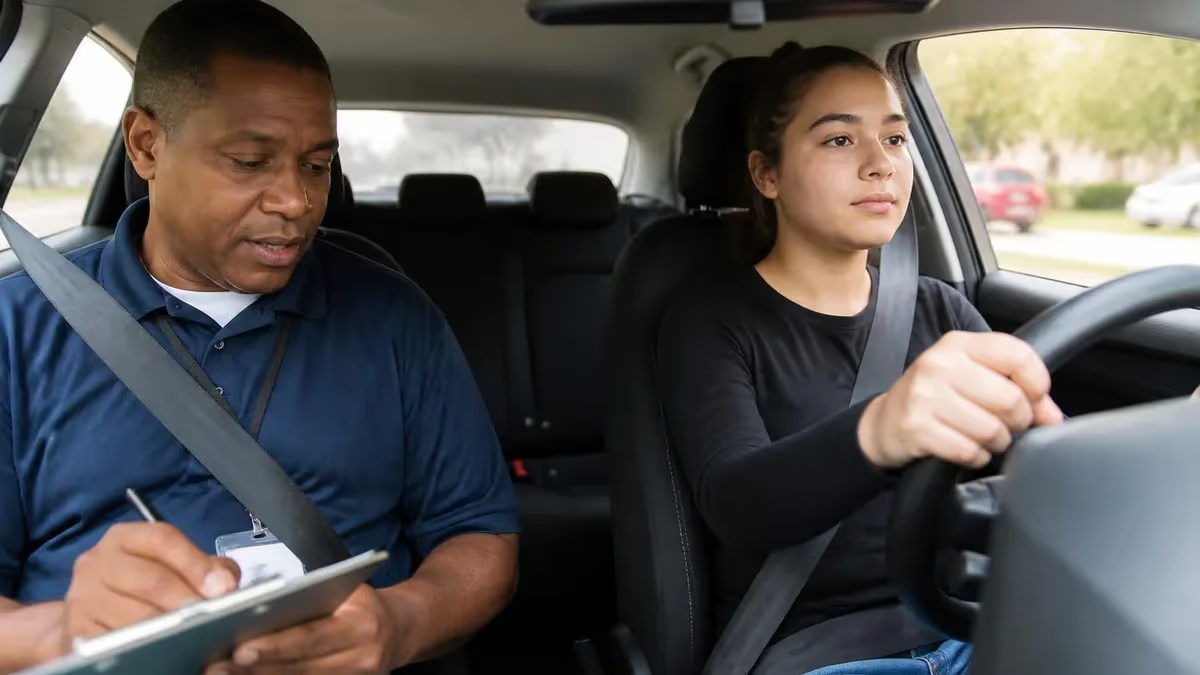
Booking and passing the dmv new jersey road test starts long before you ever sit behind the wheel at an examiner's station, and for most people the very first hurdle is simply getting a human on the line. A capable dmv customer service representative can confirm your appointment, explain documentation rules, and clear up eligibility questions that the website leaves frustratingly vague. Knowing how to reach one quickly, and what to ask, saves hours of confusion and prevents the missed-appointment fees that derail so many first-time applicants every single week.
This guide treats the road test and the customer service experience as two halves of the same journey. We will walk through phone trees, callback windows, and the documents an agent will ask you to verify, then move into the mechanics of the road test itself: the parallel parking box, the three-point turn, controlled stops, and the scoring sheet examiners actually use. By the end you will understand both how to get answers and how to earn a passing score on your first attempt.
New Jersey runs its road test through the Motor Vehicle Commission rather than a traditional DMV, but the public still searches for "DMV" because the term is universal across states. Whatever your state calls it, the principles overlap heavily. You schedule online or by phone, you present a permit that has been held the required number of months, you bring an inspected and insured vehicle, and you demonstrate a fixed set of maneuvers to a licensed examiner who marks deductions on a standardized form.
A common myth is that the test is designed to fail you. It is not. Examiners pass the majority of well-prepared candidates and reserve failures for genuine safety problems: rolling through a stop sign, clipping a curb during parallel parking, failing to check mirrors and blind spots, or panicking in traffic. Most failures trace back to nerves and a handful of avoidable habits, all of which you can drill in advance with a parent, instructor, or a quiet empty lot near your home.
The customer service side matters because rules change. Required hold times for permits, accepted forms of identification, vehicle inspection windows, and even which locations offer road tests can all shift between the moment you start studying and the moment you book. A quick call to a knowledgeable agent confirms the current rules so you are not turned away at the door. We will give you the exact scripts and timing tricks that get you through to a person instead of an endless hold loop.
If you are also weighing the broader cost of getting on the road, our breakdown of the dmv road test and related fees explains what to budget for permits, identification cards, and the license itself. Pairing that financial picture with the practical steps below gives you a complete plan: know the cost, reach a representative, gather your documents, practice the maneuvers, and walk into the test center calm and ready to drive.
DMV Road Test and Customer Service by the Numbers

How to Reach a DMV Representative
Find the Official Number
Call Off-Peak Hours
Navigate the Phone Tree
Have Your Info Ready
Request a Callback
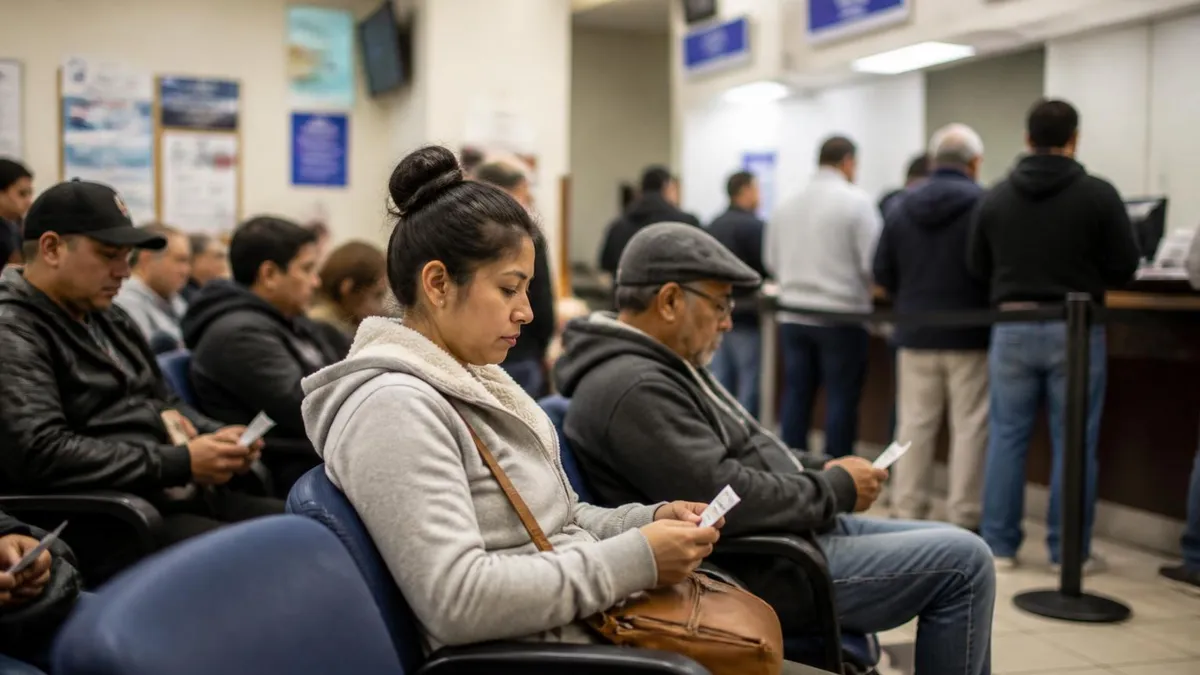
Scheduling your road test is where talking to a dmv representative pays off most directly. Online booking systems are convenient, but they frequently show no availability for weeks, hide cancellation slots, or fail to explain why your account is blocked. A representative can see openings the public portal does not surface, override a glitch that flags your permit as ineligible, and tell you exactly which documents to bring so you are not turned away at check-in on test day.
Before you call or book, confirm three eligibility basics. First, has your learner's permit been held for the minimum required period? Many states require six months for adults and longer for teens under graduated licensing. Second, have you logged any required supervised driving hours? Third, is the vehicle you plan to use currently registered, insured, and inspected? A representative will verify all three, and any gap means rescheduling, so resolve them well in advance.
When you book, choose a test center strategically. Smaller suburban offices often have shorter routes and lighter traffic than busy urban centers, which can make the experience less stressful for a nervous first-timer. Some candidates deliberately drive an extra twenty minutes to test at a quieter location. Ask the representative which nearby centers have the soonest openings and the calmest routes; they handle these questions constantly and usually offer candid guidance.
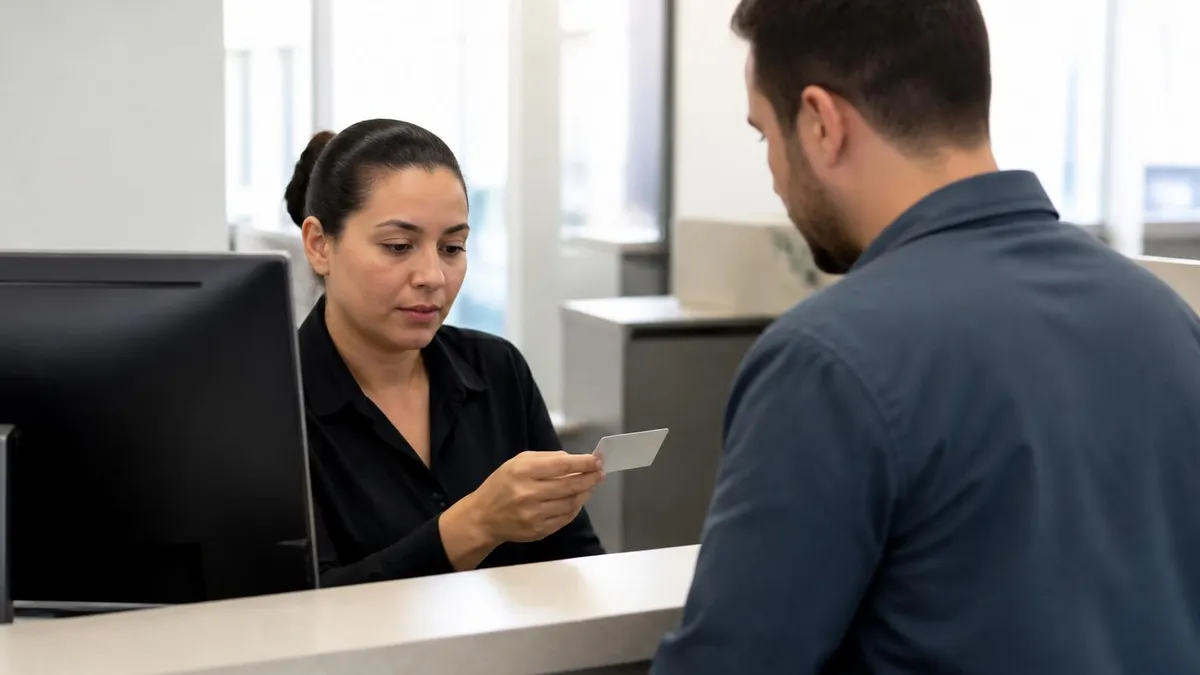
Expect to provide identity and residency documentation that satisfies federal REAL ID standards if you want a compliant license. That typically means proof of identity such as a birth certificate or passport, a Social Security card or equivalent, and two proofs of address like utility bills or bank statements. The representative can read you the current accepted-documents list, which changes periodically, so you assemble the exact folder needed rather than guessing and risking a wasted trip.
Cancellations and rescheduling carry rules worth confirming on the same call. Some states require 24 or 48 hours notice to avoid forfeiting a fee, and a no-show can push your next available date out by weeks. If weather, illness, or a vehicle problem forces a change, call immediately rather than simply not showing up. A representative can often move you to a same-week slot if you act promptly and politely explain the situation.
Keep a written record of every interaction. Note the date, the representative's name or ID, and any reference number. If a promised appointment does not appear in the system, that record lets the next agent quickly correct the error. Many disputes over missed or double-booked slots are resolved in minutes when the caller can quote a confirmation number, so treat every call as something you may need to reference again later.
Finally, if you are still studying, blend the scheduling call with a knowledge check. Ask whether your written exam results are still valid, since some states expire them after a year. Resolving the paperwork while you continue practicing maneuvers means that the day your skills are ready, the bureaucratic path is already clear and you can book the earliest possible road test without administrative surprises slowing you down.
How Do I Speak to a DMV Representative in NY and Other States
If you are wondering how do i speak to a dmv representative in ny, start with the official NY DMV phone line during weekday business hours. The automated menu offers options for licenses, registrations, and road tests; listen carefully and select the live-agent path rather than the self-service prompts that loop you back to recordings.
New York also offers a robust online account and a callback feature for many services. For road test questions specifically, the regional scheduling office is often more knowledgeable than the general line. Have your permit and confirmation number ready, call mid-morning midweek, and ask the agent to note your record so any follow-up call starts where this one ended.

Calling a DMV Representative vs. Using the Online Portal
- +A live representative can see cancellation slots the public portal hides
- +Agents clarify document and eligibility rules that the website leaves vague
- +Phone support can override glitches that wrongly block your account
- +You get tailored advice on which test centers have calm, easy routes
- +Reps can reschedule a same-week slot if you call promptly after a problem
- +A confirmation number from the call protects you in future disputes
- −Hold times during peak hours can exceed 30 minutes
- −Phone lines have limited hours and are closed on holidays
- −Automated menus can loop you without reaching a person
- −Verbal answers are harder to prove later than a written transcript
- −Agents vary in knowledge, so answers can occasionally conflict
- −High call volume on Mondays and Fridays makes connecting difficult
DMV New Jersey Road Test Day Checklist
- ✓Bring your valid learner's permit, not expired or damaged.
- ✓Confirm the test vehicle is registered, insured, and inspected.
- ✓Carry proof of insurance and registration in the glove box.
- ✓Check that all lights, brakes, and signals work before leaving home.
- ✓Clear the back seat and remove clutter from the cabin.
- ✓Adjust mirrors and seat before the examiner enters the car.
- ✓Bring any required supervised-driving log or eligibility paperwork.
- ✓Arrive at least 15 minutes early to check in calmly.
- ✓Silence your phone and remove headphones before the test begins.
- ✓Bring your appointment confirmation number and a backup ID.
Incomplete stops and missed blind-spot checks
Examiners report that the most common automatic failures come from rolling stops and failing to physically turn your head to check blind spots. Come to a full, complete stop at every stop sign and red light, count one full second, and visibly glance over your shoulder before every lane change or turn. These two habits alone prevent a large share of first-attempt failures.
The road test evaluates a fixed set of maneuvers, and understanding the scoring sheet removes much of the mystery. Examiners do not grade on style or speed; they grade on safety and control. Each maneuver carries possible point deductions, and certain critical errors result in automatic failure regardless of how well you performed everything else. Knowing which errors are deal-breakers lets you prioritize the habits that matter most rather than fixating on minor polish.
Parallel parking is the maneuver candidates fear most, yet it is highly learnable. Most tests require you to park within a marked box roughly twice your car's length. The technique is mechanical: pull alongside the front vehicle or cone, reverse while turning the wheel toward the curb at the right moment, then straighten as the rear approaches the curb. Practicing in an empty lot with cones until the motion is automatic turns this dreaded step into an easy, repeatable sequence.
The three-point turn, sometimes called a K-turn, tests your ability to reverse direction on a narrow road. You signal, pull forward while turning sharply, stop, reverse while turning the wheel the other way, then pull forward to complete the turn. Examiners watch for full stops, proper signaling, and constant checking for traffic. Hitting the curb, failing to check both directions, or rolling without control are the errors that cost points or fail the maneuver.
Controlled stops and intersection behavior account for a surprising share of deductions. Approach every stop sign and signal smoothly, stop fully behind the line, and proceed only when clear. At intersections, yield correctly, do not block crosswalks, and never enter on a stale yellow you cannot safely clear. Smooth, predictable braking shows the examiner you read the road ahead rather than reacting at the last possible moment.
Lane changes, merging, and general road position round out the route. Signal early, check mirrors and the blind spot with a clear head turn, and move over only when there is a safe gap. Stay centered in your lane, maintain a steady speed appropriate to the limit and conditions, and keep a safe following distance. Drifting, straddling lane lines, or tailgating all signal poor control and accumulate deductions quickly across a typical route.
Finally, understand the automatic-failure list. Striking a pedestrian or object, causing the examiner to grab the wheel or brake, disobeying a traffic signal, dangerous speeding, or any action requiring intervention ends the test immediately. These are not arbitrary; they represent genuine safety risks. If you drive defensively, communicate your intentions clearly, and never gamble at intersections, you will avoid every item on that list and keep your score comfortably in passing range.
Treat the examiner as a calm passenger, not a judge. Listen to each instruction fully, ask for clarification if you did not hear it, and execute deliberately. There is no penalty for driving carefully and slightly slowly within the speed limit, but there is a steep penalty for rushing. A measured, confident pace demonstrates exactly the controlled judgment the test is designed to measure, and it keeps your nerves in check throughout the route.
Examiners will refuse to test you in a vehicle that lacks current registration, insurance, or a passing inspection, and they check before you start. A burned-out brake light or expired sticker can end your appointment before you turn the key. Verify every requirement the day before, and confirm details with a representative so a paperwork gap does not cost you weeks of waiting.
With the mechanics understood, the difference between passing and failing often comes down to preparation and mindset. The candidates who pass on the first try are rarely the most naturally gifted drivers; they are the ones who practiced the specific test maneuvers repeatedly, arrived rested, and managed their nerves. Treat the weeks before your appointment as a structured training plan rather than hoping casual everyday driving will be enough to carry you through the exam.
Practice on the actual test route if you can. Many test centers use predictable loops through the surrounding neighborhood, and driving those streets in advance reveals the tricky intersections, the parallel parking spot, and the speed-limit changes you will face. You are not cheating; you are familiarizing yourself with the environment so that on test day your attention is free for the examiner's instructions rather than consumed by unfamiliar roads and surprises.
Simulate the test conditions during practice. Have a supervising driver sit silently and call out maneuvers the way an examiner would, then critique your stops, mirror checks, and signaling afterward. This rehearsal trains you to perform under the slightly artificial pressure of being watched, which is exactly the condition that trips up otherwise competent drivers. The more normal that pressure feels, the steadier your hands and judgment will be on the real day.
Sleep and timing matter more than last-minute cramming. Book a slot at a time of day when you are sharp, avoid scheduling immediately after work or a stressful event, and get a full night's rest beforehand. Eat something light so hunger does not distract you. Arrive early enough to use the restroom, adjust your seat and mirrors, and take several slow breaths before the examiner approaches. Calm physiology produces calm, controlled driving.
Keep your knowledge fresh alongside your driving skills. Reviewing the rules of the road, right-of-way scenarios, and signage with realistic practice questions reinforces the split-second decisions you will make during the test. Many candidates discover gaps in their understanding only when a practice question stumps them, and closing those gaps before test day prevents hesitation at a four-way stop or an unfamiliar yield situation that could otherwise cost points.
If you are mapping out the full path to licensure, our guide to the dmv road test fees and identification costs helps you budget every stage, from permit through final license. Pairing a clear cost plan with a disciplined practice schedule and confirmed paperwork means nothing catches you off guard. You will walk in knowing what you owe, what to expect, and exactly how to demonstrate the safe driving the examiner is there to certify.
On the morning of your test, run a final ten-minute walkthrough before you leave home. Check that every exterior light works by having someone stand outside while you cycle the signals, brakes, and headlights. Confirm your registration and insurance cards are in the glove box, your permit is in your wallet, and your appointment confirmation is on your phone or printed. This tiny ritual catches the small problems that otherwise end appointments before they begin.
During the drive to the center, rehearse calm. Play music you find soothing, breathe slowly, and resist the urge to mentally replay every worst-case scenario. Anxiety narrows attention and makes you miss the obvious, like a stop sign or a pedestrian. Remind yourself that the examiner wants safe drivers on the road and is rooting for you to demonstrate that you are one. Confidence grounded in preparation is your strongest asset.
When the examiner gives an instruction, repeat it back silently and execute deliberately. If you miss a turn or make a small mistake, do not spiral; a single minor error rarely fails you, but visibly panicking afterward can cause a cascade of further mistakes. Acknowledge it internally, reset, and focus entirely on the next maneuver. Examiners score the whole route, and recovering gracefully from a small slip demonstrates exactly the composure they are looking for.
Mind your speed throughout. Driving too fast is an obvious risk, but driving far below the limit is also penalized because it impedes traffic and signals uncertainty. Aim to match the posted limit and the flow of surrounding cars, adjusting smoothly for conditions. Steady, appropriate speed paired with early signaling and clear blind-spot checks paints the picture of a driver who is in full, deliberate control of the vehicle at all times.
If you do not pass on the first attempt, do not be discouraged. A large share of new drivers need a second try, and examiners provide a marked sheet showing exactly what to improve. Treat it as free, specific coaching. Drill the flagged maneuvers, rebook through a representative who can find the soonest slot, and return with the one or two weak spots corrected. Most second attempts succeed precisely because the feedback is so concrete.
After you pass, the customer service skills you learned still serve you. You will call representatives again to handle your license issuance, REAL ID upgrades, address changes, and registration renewals for years to come. The same off-peak timing, prepared documentation, and confirmation-number habits that got you through the road test phase will keep every future DMV interaction quick and painless. Save the official number, and you will never again dread reaching the agency.
DMV Questions and Answers

DMV ID Card Cost: Complete 2026 Guide to Fees, Requirements, and Application Steps
DMV Learners Permit Practice Test: Complete 2026 Prep Guide for First-Time Test Takers

Carrboro DMV and Beyond: How to Find DMV Locations and Reach a Representative

Virginia DMV Driving Test: Complete 2026 Guide to Passing Your Road Skills Exam

DMV Drivers License: Application, Tests, REAL ID and Renewals
About the Author
Licensed Driving Instructor & DMV Test Specialist
Penn State UniversityRobert J. Williams graduated from Penn State University with a degree in Transportation Management and has spent 20 years as a certified driving instructor and DMV examiner consultant. He has personally coached thousands of applicants through written knowledge tests, skills assessments, and commercial driver licensing programs across more than 30 states.
Join the Discussion
Connect with other students preparing for this exam. Share tips, ask questions, and get advice from people who have been there.
View discussion (8 replies)