
DMV Customer Service Representative: What Percent Do You Need to Pass the DMV Permit Test?
What percent to pass DMV permit test? 🎯 Learn passing scores by state, prep tips, and how DMV representatives help applicants succeed.
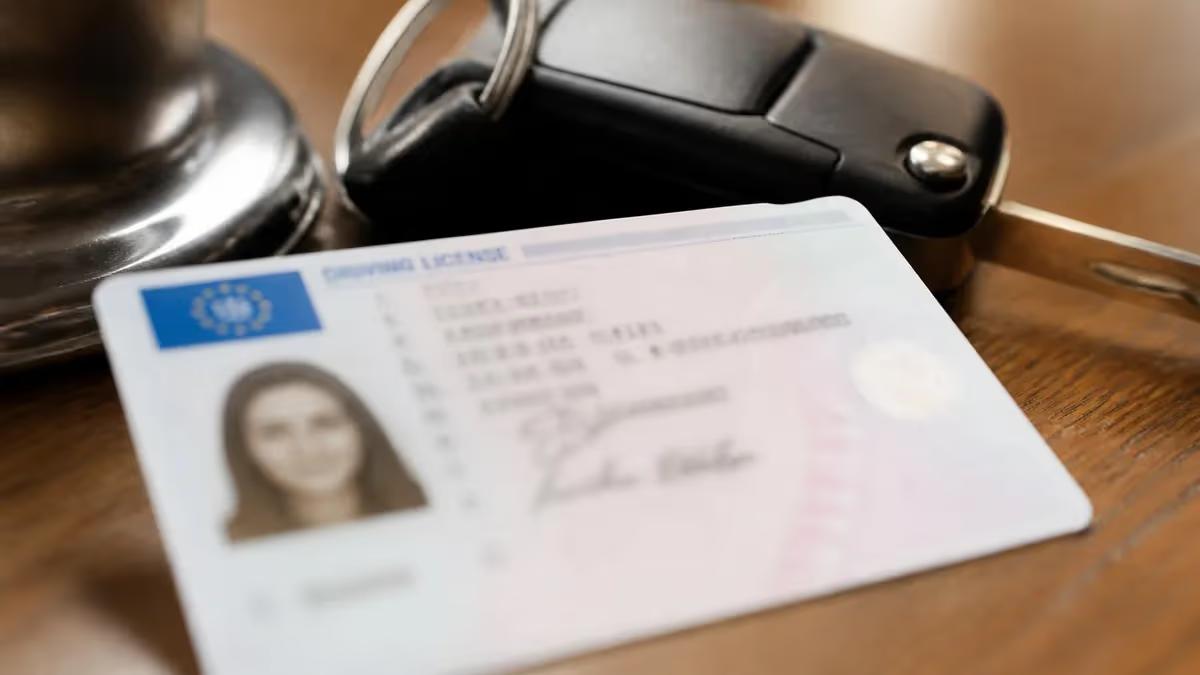
If you have ever wondered what percent to pass the DMV permit test, you are not alone — it is one of the most commonly asked questions by first-time drivers heading to their local DMV office. Across the United States, most states require applicants to score between 70% and 80% on the written knowledge exam, though some states like California and Maryland set the bar higher at 83%. Understanding the exact threshold for your state is critical, and a knowledgeable dmv customer service representative can clarify the specific requirement before you schedule your appointment.
The written knowledge test is a legal requirement for obtaining a learner's permit in all 50 states. This exam covers traffic laws, road signs, safe driving practices, and vehicle operation rules outlined in your state's driver handbook. The number of questions varies by state — typically between 20 and 50 questions — and the minimum number you must answer correctly determines whether you pass or fail. Knowing these specifics upfront helps you set a realistic study goal and avoid the frustration of retaking the test unnecessarily.
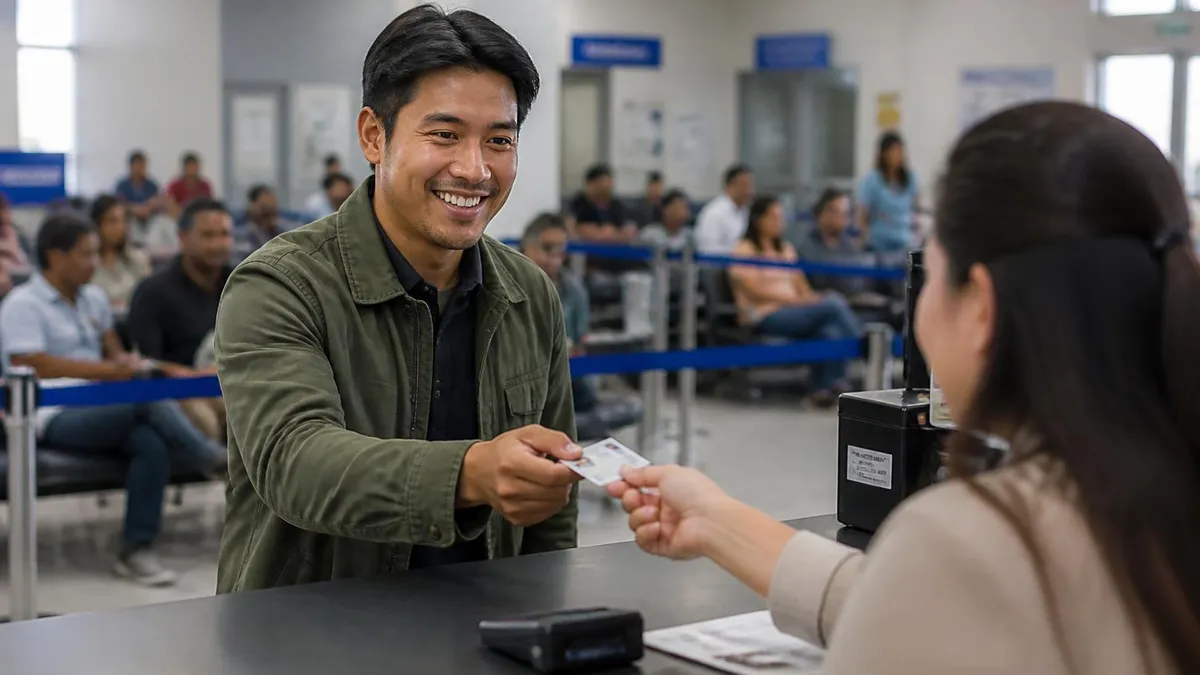
A dmv representative at the testing counter plays a crucial role in your licensing journey. They verify your identity documents, confirm your eligibility to test, explain any special requirements for your age group or license class, and administer the test itself. Many applicants underestimate how valuable a five-minute conversation with a representative can be before sitting down at the testing kiosk. They can tell you exactly how many questions are on the exam, the current passing threshold, and whether any recent law changes affect the test content.
Preparing effectively means studying smart, not just studying hard. Most state DMV handbooks are 100 to 150 pages long, and not every section carries equal weight on the exam. Traffic signal meanings, right-of-way rules, speed limits in school and residential zones, and alcohol-related driving laws consistently appear on nearly every state's test. Focusing your study time on these high-frequency topics gives you the best return on the hours you invest before test day.
Practice tests are among the most effective preparation tools available to you. Research consistently shows that simulated testing conditions improve recall under pressure and reveal knowledge gaps that passive reading misses entirely. Taking at least five to ten full-length practice exams before your scheduled appointment gives your brain repeated exposure to question formats and phrasing that closely mirror what you will encounter at the DMV. You can find accurate, state-specific practice materials at dmv permit test passing score resources designed specifically for this purpose.
The consequences of failing the permit test vary by state. Some states allow you to retake it the same day after a brief waiting period, while others impose a mandatory 24-hour or 7-day waiting period before you can test again. A few states limit the number of attempts within a 12-month period or require a fee for each retake. Understanding your state's retake policy before your first attempt removes the anxiety of uncertainty and helps you approach the test with a calm, confident mindset that measurably improves performance.
This guide covers everything you need to know about DMV permit test passing scores, how DMV customer service representatives support applicants, state-by-state score requirements, proven study strategies, and what to expect on test day. Whether you are a teenager taking the knowledge test for the first time or an adult learner obtaining your first license, the information here will help you walk into the DMV fully prepared and ready to pass on your first attempt.
DMV Permit Test Passing Score: Key Numbers
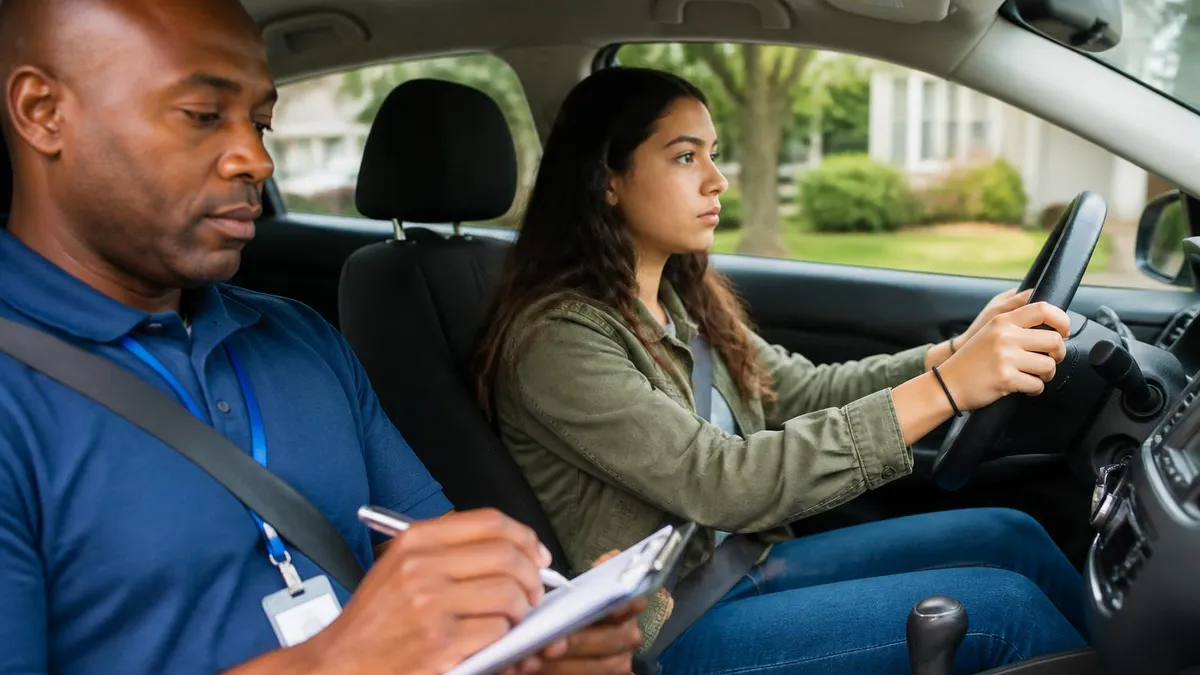
Passing Score Requirements Across the United States
States like Texas, Florida, and Ohio require a 70% score — typically 14 correct out of 20 questions. These states emphasize accessibility while maintaining meaningful safety standards for new drivers on public roads.
New York, Illinois, and Michigan set the bar at 75%. With 20-question exams, this means answering 15 correctly. These states see this as the sweet spot between achievable and rigorous for first-time permit applicants.
States including Georgia, Arizona, and Virginia require 80% correct answers. On a 25-question exam, that means getting at least 20 right — demanding solid knowledge of traffic laws, signs, and safe driving practices.
California and Maryland maintain the strictest standards, requiring 83% or higher. California's test has 46 questions and allows only 8 errors. Maryland requires 22 of 25 correct. These states have significantly lower first-attempt pass rates.
The role of a dmv customer service representative extends far beyond handing out forms and collecting fees. These trained professionals serve as the primary point of contact between the public and one of the most consequential government agencies in everyday life. They process millions of license applications, vehicle registrations, title transfers, and permit tests annually, and their expertise can genuinely make the difference between a smooth licensing experience and a frustrating series of failed visits. Understanding what representatives can do for you — and how to interact with them effectively — is an underrated part of test preparation.
When you arrive at the DMV for your permit test, the representative at the check-in counter will review your documentation before allowing you to proceed. This includes proof of identity (usually a birth certificate or passport), proof of legal presence in the United States, proof of Social Security number, and proof of Virginia, California, New York, or state-specific residency depending on where you live. Having every document ready and organized before you approach the counter demonstrates respect for the representative's time and dramatically speeds up the check-in process for everyone in the office.
Many applicants feel nervous about interacting with DMV staff and avoid asking questions out of fear of seeming unprepared. This is a mistake. Representatives are specifically trained to help applicants understand requirements, and most are genuinely pleased to answer questions clearly and thoroughly.
If you are unsure whether your documents are sufficient, call the DMV office before your appointment and ask to speak with a representative. In New York, for example, many applicants specifically ask how do I speak to a dmv representative in ny — the answer is to call the DMV Contact Center at (518) 486-9786 or use the online chat feature available on business days.
Representatives also play an important role in accommodating applicants with special needs. If you require testing accommodations such as extended time, a reader, a translator, or large-print materials, a representative can arrange these in advance. Most states require you to request accommodations at least a week before your scheduled test date. Failing to request accommodations in advance can result in taking the standard version of the test under conditions that disadvantage you — something entirely preventable with a single phone call or online request to a knowledgeable DMV representative.
After the exam, the representative processes your results and — if you pass — initiates the permit issuance process. This typically involves taking a photograph, collecting payment for the permit fee (which ranges from $5 in some states to $35 in others), and reviewing the restrictions printed on your learner's permit. These restrictions, such as prohibited nighttime driving or passenger limits, are legally enforceable, and the representative will briefly explain them to ensure you understand your responsibilities as a permitted driver before you leave the office.
If you fail the test, the representative will inform you of your score, tell you which sections you performed poorly on (some states provide this breakdown, others do not), and explain the waiting period and retake process. This is a valuable moment for candidates who failed narrowly — you can ask targeted questions about the areas where you struggled and get guidance on which sections of the driver handbook to review before your next attempt. Treat the representative as an ally in your licensing journey, not an obstacle to overcome.
For those pursuing a career as a dmv representative rather than simply interacting with one as an applicant, the position requires completing a civil service examination and demonstrating customer service competency. DMV representatives earn an average salary of approximately $42,000 to $58,000 per year depending on their state and level of experience, with benefits including health insurance, retirement plans, and paid leave. The job offers stability, consistent community engagement, and the satisfaction of helping residents navigate an important government process every single day.
DMV Customer Service Representative Study Strategies by Learning Style
Visual learners retain information most effectively through diagrams, charts, and flashcards. For the DMV permit test, creating a visual reference sheet of all road signs — organized by shape and color — accelerates recognition and recall. Red octagonal signs mean stop, triangular yellow signs warn of hazards, and rectangular white signs convey regulations. Printing or drawing these signs repeatedly builds the visual memory needed to identify them instantly under test pressure.
Color-coded annotation of your driver handbook is another powerful technique. Use different highlighter colors for different categories: green for speed limits, yellow for right-of-way rules, orange for alcohol and DUI laws, and blue for parking regulations. When you review your notes, your brain processes the color coding as an additional layer of meaning that makes retrieval faster and more reliable during the actual exam. Supplementing with YouTube videos of real driving scenarios reinforces the handbook content with real-world context.
Online Practice Tests vs. Driver Handbook: Which Is Better for Permit Prep?
- +Online practice tests simulate real exam conditions with timed questions and instant feedback
- +Practice tests reveal specific knowledge gaps that passive reading completely misses
- +Repeated testing through spaced repetition is proven to improve long-term retention
- +Free practice tests are available 24/7 from any device, enabling flexible study scheduling
- +State-specific practice tests mirror the exact question formats used at your local DMV
- +Immediate answer explanations help you understand WHY an answer is correct, not just what it is
- −Practice tests cannot replace reading the handbook for comprehensive coverage of all rules
- −Some third-party practice test sites use outdated questions that no longer reflect current laws
- −Over-reliance on memorizing specific questions can fail you if the real test rewords them
- −The handbook covers local ordinances and state-specific laws that generic tests may omit
- −Practice tests do not help with sign recognition the way visual flashcard study does
- −Without handbook context, you may pass the test but lack practical understanding of the rules
DMV Permit Test Day Preparation Checklist
- ✓Confirm your test appointment date, time, and DMV office location the evening before.
- ✓Gather all required identity documents: birth certificate or passport, Social Security card, and two proofs of state residency.
- ✓Review road signs flashcards for 20 minutes the morning of your test to activate visual memory.
- ✓Eat a full meal and drink water before your appointment — low blood sugar reduces focus and recall.
- ✓Arrive at least 15 minutes early to complete check-in without feeling rushed before testing.
- ✓Ask the DMV customer service representative how many questions are on today's exam before sitting down.
- ✓Read every question on the test twice before selecting an answer to avoid misreading phrasing.
- ✓Skip difficult questions and return to them after answering the questions you know with confidence.
- ✓Use the process of elimination on multiple-choice questions where you are unsure of the correct answer.
- ✓After submitting the test, ask the representative for a score breakdown to guide future study if you need to retake.
Aim for 90%+ on Practice Tests Before Scheduling Your Real DMV Appointment
Scoring exactly at the passing threshold on practice tests gives you almost no safety margin for test-day nerves, misread questions, or recently updated content. DMV research consistently shows that applicants who score 90% or higher on three consecutive practice exams pass the real permit test on their first attempt at a rate exceeding 85%. Build your buffer — then schedule your appointment.
Once you pass the written knowledge exam, the journey toward your full driver's license has truly begun. The learner's permit you receive after passing authorizes you to practice driving on public roads under the supervision of a licensed adult driver, typically someone 21 or older who holds a valid license for the class of vehicle you are operating. Most states require permit holders to accumulate a minimum number of supervised driving hours — commonly 50 hours, including at least 10 hours of nighttime driving — before they become eligible to take the behind-the-wheel skills test.
The graduated driver licensing (GDL) system in place across most states is specifically designed to reduce crash rates among new drivers by progressively expanding driving privileges as skills develop. Understanding the three stages of GDL — the learner's permit phase, the restricted license phase, and the full license phase — helps you plan your timeline and avoid violations that could reset your eligibility clock. A dmv customer service representative can provide the specific GDL requirements for your age group and state, including any exceptions that apply to drivers over 18 who are obtaining their first license as adults.
The skills test, also called the road test or driving test, evaluates your ability to perform basic vehicle maneuvers and follow traffic laws under real-world conditions. Examiners assess parallel parking, three-point turns, lane changes, intersection navigation, speed management, and general situational awareness. Practicing these maneuvers deliberately in a low-traffic environment before your road test appointment is essential — the skills test has a national first-attempt failure rate similar to the written test, hovering around 40% in many states.
Between passing the permit test and scheduling the road test, many new drivers benefit from professional driving instruction. Enrolling in a state-approved driver's education course not only accelerates skill development but also frequently reduces insurance premiums for teen drivers by 5% to 15%. Some states reduce the mandatory supervised hours requirement from 50 to 30 hours for applicants who complete a certified driver education program, making professional instruction a smart investment both educationally and financially.
When you are finally ready to take the road test, the same principles that helped you succeed on the written exam apply: thorough preparation, realistic practice conditions, and familiarity with the specific evaluation criteria your state uses. Ask a representative at your DMV office for a copy of the road test evaluation rubric — many offices make this available upon request, and knowing exactly what the examiner will be watching for gives you a significant advantage in focused preparation over the weeks before your appointment.
Passing both the written and road tests earns you a provisional or restricted driver's license in most states. This license comes with specific limitations, such as prohibited late-night driving, passenger restrictions, and a zero-tolerance alcohol policy, that remain in effect for a defined period — usually 6 to 12 months — before you become eligible for a full unrestricted license. Violating these restrictions can result in suspension, extension of the restricted period, or mandatory return to an earlier GDL stage, so understanding and complying with your permit conditions is non-negotiable during this transitional period.
Many drivers complete the entire process from first permit test to full unrestricted license within 12 to 18 months of their initial DMV visit. Staying organized, tracking your supervised driving hours accurately, maintaining a clean driving record during the provisional period, and building a positive relationship with your local DMV office all contribute to a smooth progression through the licensing stages. The comprehensive knowledge you developed while studying for the written test forms the safety foundation you will draw on for decades of driving ahead.

If you fail the DMV permit test, do not assume you can retake it immediately. California imposes a 7-day waiting period and limits applicants to 3 attempts before requiring a new application and fee. New York allows same-day retakes, while Texas mandates a 7-day wait after the third failure. Always confirm your state's specific retake policy with a DMV representative before leaving the office after a failed attempt.
For individuals considering a career as a dmv customer service representative, the position offers one of the most stable and community-oriented roles available within state government employment. DMV representatives process an enormous volume of transactions daily — vehicle registrations, title transfers, license renewals, permit tests, and identity document verifications — making their work genuinely consequential to the daily lives of millions of residents. The skills required include attention to detail, patience under pressure, clear verbal communication, and a solid working knowledge of state motor vehicle laws and administrative procedures.
Entry-level positions typically require a high school diploma or GED and the successful completion of a state civil service examination. Some states require applicants to pass a background check due to the sensitive nature of identity documents handled at DMV offices. Once hired, new representatives complete a structured on-the-job training period lasting two to six weeks, during which they shadow experienced staff, study the relevant sections of the state vehicle code, and practice using the DMV's proprietary computer systems before working independently at a public-facing counter.
The civil service examination for DMV representative positions typically covers reading comprehension, basic arithmetic, situational judgment, and state government administrative procedures. Preparation strategies mirror those used for the driver's permit test — obtain official study materials from the state civil service commission, take multiple timed practice exams, and focus your study time on the content categories that carry the most weight on the actual assessment. Many states make previous exam versions available online, and reviewing these carefully gives you an accurate preview of the question formats and difficulty level.
Career advancement within the DMV follows a clearly defined civil service ladder. Entry-level representatives can advance to senior representative, team lead, supervisor, and ultimately branch manager positions as they accumulate experience and pass increasingly demanding civil service promotional exams. Each advancement comes with meaningful salary increases — senior representatives typically earn 15% to 25% more than entry-level staff, while supervisory roles command salaries in the $55,000 to $75,000 range in most states, with additional compensation for managing high-volume urban offices.
The job market for DMV representatives remains consistently stable because driving and vehicle ownership are fundamental to daily life in the United States, and demand for DMV services does not decline during economic downturns the way private-sector employment often does. State government positions also come with comprehensive benefit packages that typically include employer-subsidized health insurance, defined-benefit pension plans, generous paid leave accrual, and tuition reimbursement programs that support continued education — making the total compensation package considerably more valuable than the base salary figure alone suggests.
If you are currently preparing for the permit test rather than the civil service exam, visiting the DMV to observe how representatives interact with applicants can be genuinely illuminating. You will notice that the most effective representatives communicate complex regulatory requirements in plain, accessible language; remain calm and professional under pressure from frustrated applicants; and consistently demonstrate thorough knowledge of current state vehicle laws. These are exactly the qualities that the civil service examination is designed to identify and that successful candidates demonstrate throughout the hiring process.
Whether your current goal is passing your first permit test or launching a career serving others through a role as a DMV representative, the resources and strategies covered in this guide give you a practical, actionable path forward. Study consistently, use official state materials alongside quality practice tests, and do not hesitate to ask for help from the professionals who work at your local DMV office every day. For targeted practice on the most frequently tested topics, explore the dmv permit test passing score practice resources available to you right now.
With your test date approaching, the final two weeks of preparation should shift from broad content review to focused exam simulation and strategic reinforcement. Begin each study session by taking a full-length timed practice exam under conditions that mirror the actual DMV testing environment as closely as possible — sit at a desk, put your phone in another room, and time yourself strictly.
Record your score for each session and track which question categories you consistently miss. This data-driven approach to preparation reveals patterns that random studying cannot identify and allows you to direct your final study hours where they will have the greatest impact.
Pay particular attention to questions about right-of-way rules, which consistently account for 15% to 20% of most state knowledge exams. Right-of-way scenarios are nuanced — the rules differ at four-way stops, T-intersections, roundabouts, and uncontrolled intersections, and they interact with pedestrian rights in ways that many applicants find confusing. Create a simple reference sheet that covers each intersection type with the applicable right-of-way hierarchy, and review it daily during your final week of preparation to ensure these rules are instantly accessible during the test.
Road sign recognition deserves dedicated daily practice in the days leading up to your test. The sign recognition questions on most state exams require you to identify both the shape and color category of a sign (regulatory, warning, informational, guide) as well as its specific meaning.
A highly effective last-minute technique is to pay close attention to every road sign you encounter during your normal daily travel — in a car, on a bus, or even walking — and silently quiz yourself on its meaning and category. This passive immersion reinforces textbook knowledge with real-world visual exposure that significantly improves test performance.
Sleep and physical preparation matter more than most candidates realize. The night before your DMV test is not the time for late-night cramming — it is the time for review of your notes, a moderate practice session if it helps reduce anxiety, and a full eight hours of sleep. Research on academic testing consistently demonstrates that sleep deprivation reduces recall and processing speed by measurable amounts, effectively undoing hours of preparation. Arriving well-rested is one of the highest-leverage actions you can take in the 24 hours before your appointment.
On test day itself, the mental approach you bring to the testing kiosk is as important as the knowledge in your head. Read every question carefully and completely before looking at the answer choices — a common mistake is to begin reading answers before finishing the question, which causes candidates to select partially correct options that do not fully address what is being asked.
When you encounter a question you are uncertain about, use active elimination to remove options you know are wrong, then make your best choice from the remaining options rather than leaving it blank. On most state DMV tests, unanswered questions count as incorrect answers.
After completing the test, take a moment to review any flagged questions before submitting if your state's testing system allows it. Many kiosks provide a review function that lets you revisit questions you marked as uncertain. Use this opportunity to reconsider with fresh eyes rather than changing answers impulsively — research on test-taking consistently shows that first instincts are correct more often than second-guessing, so only change an answer if you have a clear, specific reason based on something you recalled during the test.
The moment you pass and hold your learner's permit in your hands, the real learning begins. The written knowledge exam tests your understanding of the rules; actually driving in traffic tests your ability to apply them in dynamic, unpredictable conditions.
Approach every supervised driving session with the same intentional focus you brought to your permit test preparation — ask your supervising driver for specific feedback after each trip, practice in a variety of weather and traffic conditions, and never let the routine nature of repeated practice drives reduce your attention to safety. The permit phase is your most valuable opportunity to develop the habits that will protect you and others on the road for the rest of your driving life.
DMV Questions and Answers

DMV Customer Service Representative: Complete Career Guide & Permit Test Practice

DMV Drivers License: Application, Tests, REAL ID and Renewals

DMV ID Card Cost: Complete 2026 Guide to Fees, Requirements, and Application Steps

Colorado DMV Walk-In Locations: How to Talk to a DMV Customer Service Representative

What Are 6 Points of ID for NJ DMV: Complete Guide to New Jersey ID Requirements
About the Author
Licensed Driving Instructor & DMV Test Specialist
Penn State UniversityRobert J. Williams graduated from Penn State University with a degree in Transportation Management and has spent 20 years as a certified driving instructor and DMV examiner consultant. He has personally coached thousands of applicants through written knowledge tests, skills assessments, and commercial driver licensing programs across more than 30 states.
Join the Discussion
Connect with other students preparing for this exam. Share tips, ask questions, and get advice from people who have been there.
View discussion (8 replies)