
DMV Administrative Services: Public Records, Customer Service, and Representative Access Guide
❓ Learn how DMV public records work, how to reach a DMV customer service representative, and what administrative services every driver needs in 2026 September.

Understanding how to access dmv public records and navigate administrative services has become essential for drivers, employers, attorneys, insurance adjusters, and anyone responsible for compliance in 2026. The Department of Motor Vehicles processes hundreds of millions of record requests every year, and the path to a clean abstract, a corrected title, or a verified driving history starts with knowing exactly which office, form, and fee applies to your situation. This guide walks you through every administrative function the DMV performs and the people who run it.
The phrase administrative services covers a remarkably wide range of duties: certified driving abstracts, vehicle title transfers, lien recordings, accident report retrieval, address changes, hearing scheduling, and the public records requests that fall under each state's Freedom of Information laws. Most of these tasks never involve a road test or a vision screen. Instead, they sit inside the customer service division, where a dmv customer service representative answers phones, validates documents, and routes complicated cases to specialists.
The people behind the counter and on the phones receive structured training that mirrors what new hires learn before sitting for the state's representative exam. They must know record retention windows, redaction rules, eligibility for restricted records, and the fee schedules attached to every transaction. They also need patience, because many customers are juggling expired registrations, suspended privileges, or disputed surcharges while they speak. The combination of legal knowledge and customer-facing skill is why the role exists as a distinct civil service classification.
For the public, the practical question is usually simple: how do I get the document I need, and how fast can I get it? Some records are instantaneous through the state portal, others require notarized authorization, and a handful demand an in-person visit with original identification. Knowing which bucket your request falls into saves hours of frustration and prevents the all-too-common scenario where a request is rejected on the third business day for a missing signature or a missing fee.
This guide is structured to be useful in both directions. If you are a driver trying to pull your own abstract, transfer a title from a deceased relative, or correct a misspelled name on your license, you will find the exact steps and fees here. If you are studying for the representative exam, you will see the administrative framework that the test questions assume you understand, including how the agency handles redaction, customer escalations, and the legal basis for charging public records fees.
We will also cover the modern reality that most DMV interactions begin online and only escalate to a human when something breaks. The phone tree, the chatbot, the email queue, and the in-person ticket system all coexist, and each one has different limits on what it can do. Knowing the limits up front is half the battle, especially when a deadline is approaching and the wrong channel will simply tell you to come back later or call a different number.
DMV Administrative Services by the Numbers

Core Administrative Functions of the DMV
The DMV is the legal custodian of every driver's abstract, including convictions, points, suspensions, accidents, and license history. Records are retained for varying periods, and the agency must release them only to authorized requesters under state law.
Vehicle ownership is recorded, transferred, and encumbered through DMV title services. Administrative staff verify chain of ownership, apply lien notations, issue duplicate titles, and process salvage and rebuilt brands after inspection approval.
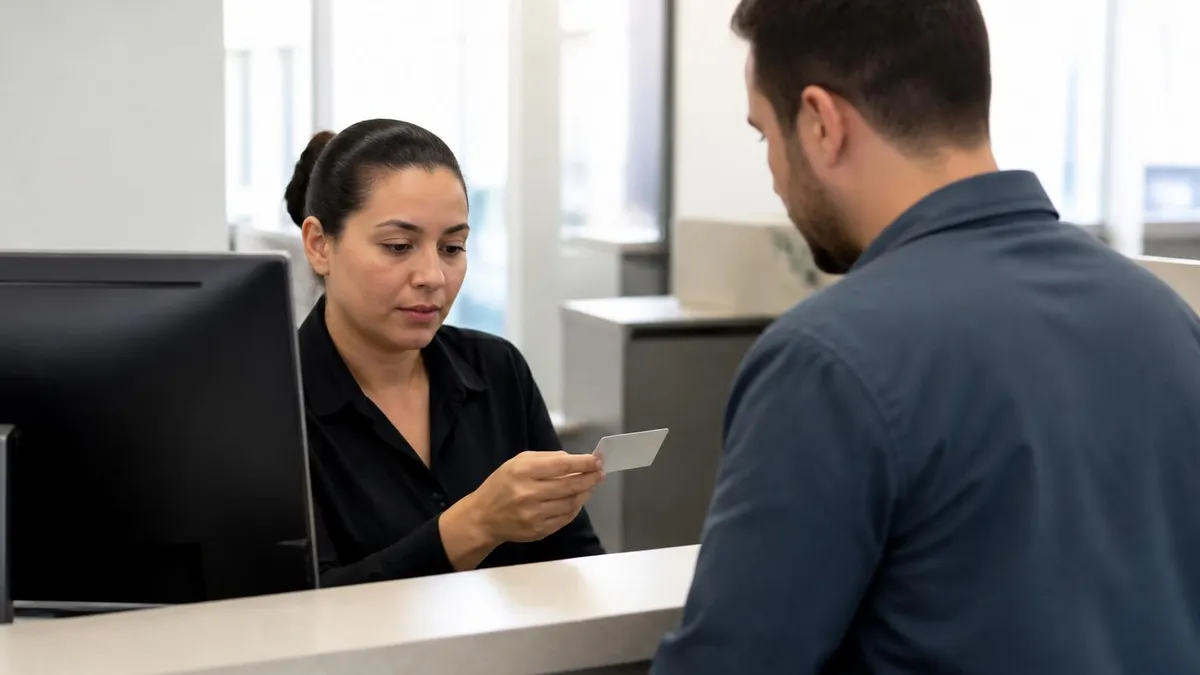
Phone banks, chat queues, walk-in counters, and email centers handle millions of inquiries per year. Representatives explain forms, schedule hearings, accept payments, redirect complex cases, and de-escalate disputes within published policy boundaries.
Administrative law judges housed inside the DMV decide suspension appeals, financial responsibility cases, and dealer complaints. Clerks schedule the dockets, distribute exhibits, and record the outcomes for the permanent driver file.
Each state's open records law forces the DMV to publish fee schedules, redact protected fields, and respond within statutory windows. The disclosure unit reviews subpoenas, journalist requests, and bulk data licenses for commercial users.
DMV public records are governed by a careful balance between transparency and privacy. The federal Driver's Privacy Protection Act, enacted in 1994, set a national floor that prohibits states from selling personal driver information to the general public without a permissible use. Each state then layered its own open records statute on top, deciding how much of an accident report, dealer license file, or vehicle history can be released to ordinary requesters. Understanding which layer applies is the first step in any successful records request.
The kinds of records a member of the public can typically obtain include vehicle title histories, registration ownership trails, accident reports involving them personally, certified copies of their own driving abstract, and dealer license verifications. With proper authorization or a court order, attorneys and insurance investigators can access broader files. Without that authorization, the front-line dmv representative is legally required to deny the request and document the denial, even when the customer becomes upset.
Most states now offer self-service portals that satisfy 60 to 70 percent of record requests with no human involvement. A driver logs in, pays a small fee, and downloads a PDF instantly. The catch is that self-service abstracts are often labeled noncertified, which means they cannot be used for court, CDL employment, or insurance disputes. A certified record carries the state seal and the signature stamp of the commissioner, and almost always requires either mail-in or counter pickup.
The retention period for driver records varies widely. Minor violations may stay on the abstract for three years, major violations for ten, and certain alcohol-related convictions for life. Vehicle records, by contrast, are typically retained for the entire ownership chain plus a statutory tail of five to seven years. When you request a record, you are pulling from these structured retention windows, not from a single perpetual file, which is why old tickets sometimes vanish and old titles sometimes do not.
Third-party data resellers complicate the landscape. Companies that license bulk DMV data must execute contracts that prohibit redistribution to unauthorized parties, and they must purge records when the state instructs. The DMV's audit unit periodically samples downstream usage and revokes access when violations are found. For consumers, this means the version of your record sold by a background-check website may be incomplete, out of date, or improperly sourced, and it carries no legal weight compared to the official certified copy.
Finally, public records access is not free. Even when the underlying law guarantees disclosure, states are permitted to charge cost-recovery fees that fund the records infrastructure. A typical state charges seven to twenty-five dollars for a certified abstract, two to fifteen dollars for a title search, and per-page copy fees for accident reports. Waivers exist for indigent requesters and for certain government agencies, but the default expectation is that the requester pays before the record is released.
DMV Practice Test Questions
Prepare for the DMV - Representative Exam exam with our free practice test modules. Each quiz covers key topics to help you pass on your first try.
DMV - Representative Consumer Protection a...
DMV Exam Questions covering DMV - Representative Consumer Protection and Dispute Resolution. Master DMV Test concepts for certification prep.
DMV - Representative Vehicle Inspections a...
Free DMV Practice Test featuring DMV - Representative Vehicle Inspections and Safety Standards. Improve your DMV Exam score with mock test prep.
DMV - Representative Advertising and Sales...
DMV Mock Exam on - Representative Advertising and Sales Practices. DMV Study Guide questions to pass on your first try.
DMV - Representative Bonds and Business Re...
DMV Test Prep for - Representative Bonds and Business Records. Practice DMV Quiz questions and boost your score.
DMV - Representative Dealer-Specific Regul...
DMV Questions and Answers on - Representative Dealer-Specific Regulations. Free DMV practice for exam readiness.
DMV - Representative Registration and Tran...
DMV Mock Test covering - Representative Registration and Transfer Fees. Online DMV Test practice with instant feedback.
DMV - Representative Sales Contracts and D...
Free DMV Quiz on - Representative Sales Contracts and Disclosures. DMV Exam prep questions with detailed explanations.
DMV - Representative Salesperson Licensing...
DMV Practice Questions for - Representative Salesperson Licensing Requirements. Build confidence for your DMV certification exam.
DMV - Representative Unlawful Acts and Con...
DMV Test Online for - Representative Unlawful Acts and Conduct. Free practice with instant results and feedback.
DMV - Representative Vehicle Code Definitions
DMV Study Material on - Representative Vehicle Code Definitions. Prepare effectively with real exam-style questions.
DMV - Representative Vehicle Registration ...
Free DMV Test covering - Representative Vehicle Registration Procedures. Practice and track your DMV exam readiness.
DMV Representative Basic Arithmetic
DMV Exam Questions covering Representative Basic Arithmetic. Master DMV Test concepts for certification prep.
How Do I Speak to a DMV Representative in NY and Other States
The fastest way to reach a live agent in New York is to call 518-486-9786, then press option 6 followed by option 2 to bypass the automated billing tree. California uses 1-800-777-0133 with the same general principle: skip the menus by pressing zero or saying 'representative' three times. Most states reset their phone queues at 8:00 a.m. local time, so calls placed in the first thirty minutes of the business day connect roughly four times faster than midday attempts.
Once connected, have your license number, last four digits of your Social Security number, and date of birth ready. The representative will verify identity before discussing any record-specific issue, and refusing identification will end the call. Keep a pen handy because confirmation numbers, hearing dates, and case identifiers move quickly and are rarely repeated more than twice. The query how do i speak to a dmv representative in ny is among the most common searches for a reason.

Online Records Portal vs. In-Person Service
- +Records available 24/7 with no appointment required
- +Most non-certified abstracts download instantly as PDFs
- +Lower fees than counter or mail-order pricing in most states
- +Payment options include credit cards and digital wallets
- +Status tracking shows exactly when a record is released
- +Reduces phone wait times for everyone in the queue
- +Confirmation emails serve as proof of timely request
- −Certified records still require mail or counter pickup
- −Identity verification can lock accounts after failed attempts
- −Some browsers and older devices fail the security checks
- −Complex cases with multiple flags cannot be resolved online
- −Customer service chat cannot accept payments or sworn statements
- −Portal outages can stall time-sensitive requests for days
DMV Public Records Request Checklist
- ✓Confirm which type of record you need: certified or noncertified
- ✓Gather full legal name, date of birth, and license or vehicle ID
- ✓Identify the permissible use under state and federal privacy law
- ✓Locate the correct request form on the state DMV website
- ✓Notarize the form only if the state explicitly requires it
- ✓Calculate the correct fee, including any expedited processing charge
- ✓Pay using an accepted method: credit card, money order, or e-check
- ✓Submit through the matching channel: portal, mail, or counter
- ✓Record the confirmation number and expected delivery window
- ✓Follow up after the published response deadline expires
Submit before 10:00 a.m. local time
Records requests submitted before 10:00 a.m. local time enter the same-day processing batch in most states. Requests submitted after the cutoff move to the next business day, which can add 24 to 72 hours to your turnaround. For mail-in requests, USPS Priority Mail with tracking shaves three to five days off Standard Mail and gives you a delivery receipt for any future dispute.
The legal foundation for DMV administrative services rests on three pillars: the federal Driver's Privacy Protection Act, state vehicle and traffic codes, and each state's open records or freedom of information statute. The DPPA controls what personal information can be released and to whom, the vehicle and traffic code establishes the substantive rules being recorded, and the open records statute governs the process by which the public can inspect or copy nonconfidential portions of the file. Representatives must navigate all three when answering basic questions.
Fees are not arbitrary. State legislatures authorize the DMV to recover the cost of producing records, maintaining databases, training staff, and providing the secure printing required for certified documents. When a state raises its certified abstract fee from ten to fifteen dollars, the increase typically appears in a budget bill or a regulatory filing with public comment. Customers who feel a fee is unjustified can challenge it through the state administrative procedure act, though successful challenges are rare and almost always resolved by rule changes rather than refunds.
Confidentiality protections matter just as much as fee structures. Social Security numbers, medical fitness evaluations, photographs, signatures, and certain home addresses are redacted from records released to ordinary requesters. The redactions happen at the system level, meaning the public-facing PDF is generated from a filtered view of the underlying file. When a court orders unredacted disclosure, the DMV's legal unit pulls a separate version with a chain-of-custody log that survives appellate review.
Subpoenas and court orders represent a special category. Civil subpoenas issued by private attorneys typically receive driver abstracts and vehicle ownership data, but not photographs or medical records, unless the order specifies. Criminal subpoenas signed by a judge can compel almost any field, including unredacted photos used in identification proceedings. Administrative staff who receive subpoenas route them to the legal unit immediately rather than fulfilling the request at the counter, because incorrect disclosures expose the state to liability.
Commercial bulk data licensing is a multimillion-dollar revenue stream for many states. Insurance companies, fleet operators, ride-share platforms, and credit bureaus license daily updates of vehicle registration and driver status data under contracts that restrict redistribution. The contracts include audit clauses, breach penalties, and termination rights. A representative working in the customer service division will rarely touch these contracts, but knowing they exist explains why some seemingly public information is available only through paid third-party aggregators.
Penalties for unauthorized access run in both directions. A clerk who pulls a celebrity's record without a job-related reason can be fired, prosecuted under state computer access laws, and personally sued by the data subject under the DPPA's private right of action. A member of the public who falsifies a permissible use on a records request form can face fraud charges and civil damages. The disclosure unit logs every internal query and audits patterns monthly to deter both kinds of misuse.

Failing identity verification three times on the online portal will lock your account for 24 hours and trigger a security flag on your file. After five failures within seven days, you must visit a DMV office in person with two original identity documents to restore access. Do not guess answers; if you cannot recall details, call customer service first instead of cycling through attempts.
The career path inside DMV administrative services starts at the customer service representative level and branches into several specialties. Some new hires move toward title and registration auditing, where they verify ownership chains, catch fraudulent transfers, and work directly with law enforcement on stolen vehicle recoveries. Others move into the hearings division, scheduling administrative law dockets and preparing exhibits for judges. A third common track is records and disclosure, where staff process subpoenas, redact files, and coordinate with the legal unit.
Compensation for administrative roles varies by state and metropolitan cost of living, but a typical starting salary in 2026 runs from forty-two thousand to fifty-eight thousand dollars, with senior representatives reaching seventy thousand within five years. Civil service step increases, pension contributions, and union-negotiated health benefits often make the total package competitive with private-sector administrative jobs. New York, California, Massachusetts, and Washington tend to anchor the high end of the pay scale, while several southern and mountain states cluster near the lower bound.
The representative exam itself tests roughly the same administrative knowledge described throughout this guide. Candidates can expect questions on records retention, fee schedules, permissible uses, redaction rules, hearing scheduling, and the soft skills required to handle distressed customers. Reviewing a how do i speak to a dmv representative in ny style of customer journey from both sides helps test takers see why each policy exists. The agency wants people who understand the rules and can explain them in plain language to anxious drivers.
For drivers using these services rather than working in them, the takeaway is to treat the DMV like any complex bureaucracy: read the form once, gather every document on the list, pay the published fee, and submit through the matching channel. Cutting corners on documentation almost always costs more time than gathering everything correctly the first time. When something goes wrong, the front-line representative is your first ally rather than your adversary, because their performance is measured on first-call resolution.
Escalation paths exist when first contact fails. Most states publish an ombudsman or commissioner's complaint line that handles cases the front-line cannot resolve. Filing a written complaint creates a tracked ticket that supervisors review, and ombudsman intervention often produces a callback within five business days. Documenting the original interaction with dates, times, and representative names is critical, because the ombudsman office cannot review what was not recorded.
Finally, keep your contact information current. The single most common reason that records cannot be released or that suspension notices go undelivered is an outdated address. Most states require you to notify the DMV within ten to thirty days of any move, and many of the worst administrative outcomes, including suspension warrants issued in absentia, trace back to a forgotten address change form. Take five minutes online today to verify your address on file, and you will save yourself hours of administrative repair later.
Practical tips for navigating DMV administrative services begin with timing. The DMV is most crowded during predictable windows: lunch hour on weekdays, the first three days of every month when registrations expire, and the week leading up to any holiday weekend. If you have schedule flexibility, target mid-morning Tuesday through Thursday at offices located outside major commute corridors. Suburban branches reliably have shorter waits than the flagship offices that anchor every state's largest city, even when the underlying transaction is identical.
Prepare a transaction folder before you leave home. Include your current license, the original of any document the form requests, a backup payment method, your insurance card, vehicle registration, and a printed copy of your appointment confirmation. Keep the folder in the car so you can grab everything in one trip from parking lot to counter. Forgotten documents are the leading cause of failed appointments, and every state's online help desk reports the same pattern: the customer returns three or four times because each visit reveals one more missing piece.
Train yourself to read DMV correspondence on the day it arrives. A notice of proposed suspension has a fixed response window, usually fifteen to thirty days, and that window starts on the mailing date printed in the upper right corner. Customers who delay opening the envelope often discover the deadline passed while it sat on the kitchen counter, and reinstating driving privileges after a default suspension typically costs more than responding to the original notice. The same principle applies to medical review requests, financial responsibility filings, and accident report deadlines.
Use the right vocabulary when you call. Representatives are trained to recognize specific phrases that route your call to the right specialist queue. Saying you need a certified abstract for a court hearing routes faster than saying you need your driving record. Mentioning a specific surcharge number, ticket number, or case number bypasses several layers of menu. The same phrase that the agency uses in its written materials usually opens doors that conversational synonyms do not.
Document every interaction. Save confirmation emails, take screenshots of portal submissions, keep mailed receipts, and note the names and IDs of representatives you speak with. If a dispute escalates to the ombudsman or to court, this documentation is the foundation of your case. The DMV maintains its own internal records of every call and submission, but those records are released to you only after a separate records request, which adds days or weeks you may not have when a deadline is approaching.
Finally, recognize when professional help is worth the cost. Title disputes involving multiple parties, license suspensions following serious convictions, financial responsibility lawsuits, and complicated hearings often benefit from an attorney or licensed advocate. The administrative process is designed to be navigable by ordinary people, but the rules are intricate and the consequences are real. Pay for an hour of consultation early rather than spending months trying to undo a poorly handled hearing or a missed deadline. Your time and your driving privileges are worth more than the fee.
DMV Questions and Answers



About the Author
Licensed Driving Instructor & DMV Test Specialist
Penn State UniversityRobert J. Williams graduated from Penn State University with a degree in Transportation Management and has spent 20 years as a certified driving instructor and DMV examiner consultant. He has personally coached thousands of applicants through written knowledge tests, skills assessments, and commercial driver licensing programs across more than 30 states.
Join the Discussion
Connect with other students preparing for this exam. Share tips, ask questions, and get advice from people who have been there.
View discussion (8 replies)