
DMV Customer Service Representative & CA DMV Registration Renewal: Complete Guide
Learn when CA DMV mails registration renewal & how a DMV customer service representative can help. Tips, deadlines & practice tests. ✅
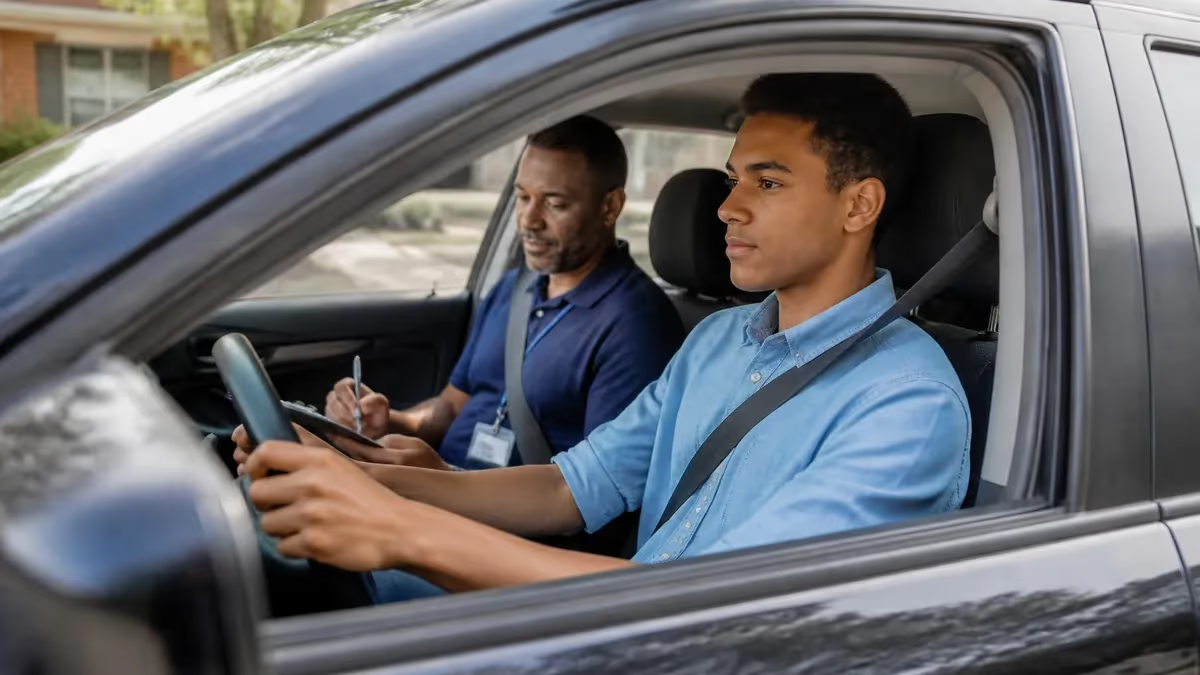
If you have ever wondered when does CA DMV mail registration renewal notices, the answer is typically 60 days before your vehicle registration expires. California's Department of Motor Vehicles sends renewal notices to the address on file, which is why keeping your address updated is absolutely critical. A skilled dmv customer service representative can walk you through every step of this process, ensuring you never miss a deadline, pay unnecessary late fees, or drive with an expired registration sticker on your vehicle. Practice with the free DMV - Representative practice test on PracticeTestGeeks (7 questions with answer explanations).
Vehicle registration renewal in California is not a one-size-fits-all process. Your renewal notice will include your current registration fees, any outstanding fees or penalties, and a Vehicle Identification Number (VIN) verification requirement if applicable. The CA DMV sends these notices by first-class mail to your address of record, so if you have moved recently, the notice may never reach you. This is one of the most common reasons drivers end up paying late fees — and it is entirely avoidable with a proactive approach.
Whether you are a vehicle owner trying to renew on time, or someone studying to become a dmv representative, understanding the registration renewal timeline is fundamental. The renewal process intersects with smog check requirements, insurance verification, and fee calculations — all areas that a front-line DMV representative handles daily. Knowing how these systems connect gives you a significant advantage, whether you are serving customers or navigating the process yourself.
California law requires that registration renewal be completed by the expiration date printed on your current registration card and sticker. Renewals can be processed up to 75 days before the expiration date, giving you a comfortable window to complete smog checks, gather necessary documents, and submit payment. Renewals completed after the expiration date are subject to penalty fees that escalate the longer you wait, making timely action essential for every California vehicle owner.
If you did not receive your CA DMV renewal notice, you are still legally required to renew your registration on time. You can visit the CA DMV website, use a self-service terminal at a DMV office, call the main DMV phone line, or speak directly with a dmv customer service representative who can look up your renewal information using your license plate number or VIN. Many people find that speaking with a live representative resolves questions far faster than navigating automated systems alone.
For those preparing for the ca dmv registration renewal process for the first time, or for professionals who want to assist customers more effectively, understanding the full spectrum of renewal scenarios is invaluable. These include standard passenger vehicle renewals, commercial vehicle renewals, planned non-operation (PNO) filings, and disabled person placard renewals. Each type has its own rules, timelines, and required documentation, and a knowledgeable DMV representative must be fluent in all of them.
This comprehensive guide covers everything you need to know: when the CA DMV mails renewal notices, how to renew if your notice never arrived, what role a DMV customer service representative plays in the renewal process, and how to prepare for the DMV Representative exam if you are pursuing that career path. By the end, you will have a thorough understanding of registration renewal and the skills needed to handle it with confidence.
Free DMV - Representative Exam Study Tools
Interactive DMV - Representative Exam resources on PracticeTestGeeks, free to start:
- Free DMV Representative MCQ Question and Answer — 7 questions with answer explanations
- DMV - Representative Exam flashcards — review key terms and concepts card by card
- DMV - Representative Exam study guide — topic-by-topic overview of what the exam covers
- DMV - Representative Exam cheat sheet — one-page printable summary for last-minute review
- The Motor Vehicle Representative exam allows 120 minutes. (California Department of Motor Vehicles)
- The Motor Vehicle Representative exam requires 70% for eligible-list placement. (California Department of Motor Vehicles)
- Motor Vehicle Representative exam participants must wait 12 months before retesting. (California Department of Motor Vehicles)
- Motor Vehicle Representative exam eligibility lasts 24 months. (California Department of Motor Vehicles)
- The Motor Vehicle Representative exam must be retaken to restore expired eligibility. (California Department of Motor Vehicles)
- The Motor Vehicle Representative exam is delivered online with multiple-choice questions. (California Department of Motor Vehicles)
Facts verified Oct 16, 2026 against California Department of Motor Vehicles. Dates that have passed are removed automatically.
DMV Exam at a Glance
| Item | Detail | Official source |
|---|---|---|
| Time limit | 120 minutes | California Department of Motor Vehicles |
| Passing score | 70% | California Department of Motor Vehicles |
| Retake policy | 12-month waiting period | California Department of Motor Vehicles |
| Validity | 24 months | California Department of Motor Vehicles |
| Renewal | Retake to reestablish eligibility | California Department of Motor Vehicles |
| Delivery | Online multiple choice | California Department of Motor Vehicles |
| Registration deadline | Continuous applications | California Department of Motor Vehicles |
Facts verified Oct 16, 2026 against California Department of Motor Vehicles. Dates that have passed are removed automatically.
CA DMV Registration Renewal by the Numbers
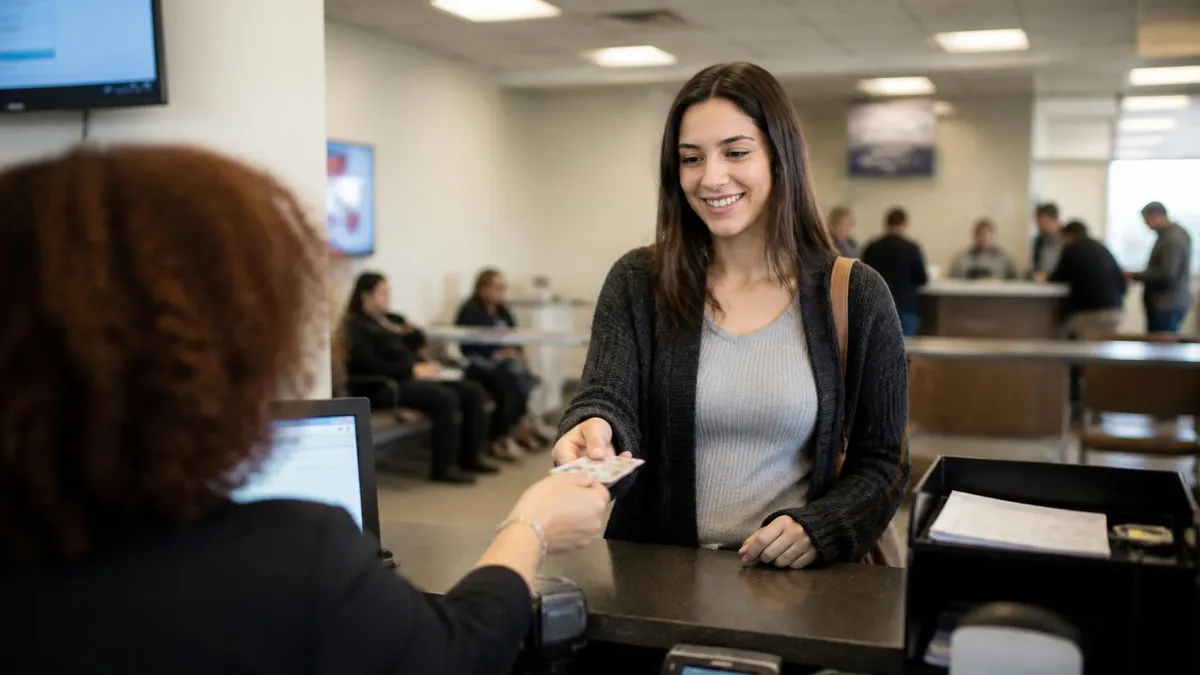
CA DMV Registration Renewal: Step-by-Step Timeline
90 Days Before Expiration: Smog Check Reminder
60 Days Before: Renewal Notice Mailed by CA DMV
45 Days Before: Review & Gather Documents
30 Days Before: Submit Your Renewal
Expiration Date: Deadline for Late-Fee-Free Renewal
Post-Expiration: Contact a DMV Representative for Help
The dmv customer service representative is often the first — and most important — point of contact for California drivers navigating the registration renewal process. These professionals sit at the front lines of DMV offices, self-service kiosks, and telephone help lines, fielding thousands of questions each week about renewal notices, fee calculations, smog exemptions, and address changes. Their ability to quickly understand a customer's situation and provide accurate information is what separates a frustrating DMV visit from an efficient one.
A trained DMV representative understands the full lifecycle of vehicle registration. They can tell you exactly when does CA DMV mail registration renewal notices for your specific vehicle type, explain why your fee amount changed from last year, and help you understand what happens when a vehicle fails a smog check. They also know the nuances of specialty registrations: historic vehicles, off-highway vehicles, vessels, and commercial fleet accounts each have different renewal cycles and fee structures that require specialized knowledge.
Consumer protection is a core part of every DMV representative's job. When a customer disputes an unexpected fee or believes they were overcharged, the representative must review the account history, apply the correct fee schedule, and explain the calculation clearly. California's Vehicle Code gives DMV representatives specific authority to waive certain fees under defined circumstances — for example, when a renewal notice was mailed to an outdated address through no fault of the customer. Understanding these provisions is essential both for providing fair service and for passing the DMV Representative exam.
Dispute resolution is another critical skill. If a customer believes their vehicle was incorrectly classified, which directly affects their registration fee, the representative must know how to escalate the matter appropriately. This might involve consulting a supervisor, submitting a Vehicle Record Request, or directing the customer to the appropriate DMV Appeals process. A well-trained representative remains calm, empathetic, and methodical even when customers arrive frustrated after receiving an unexpected bill in their renewal notice.
The dmv representative role also involves understanding California's financial responsibility laws. When a customer comes to renew registration, the DMV system automatically checks insurance status. If the system shows a lapse in insurance coverage, the representative must explain the implications, including potential registration suspension, and walk the customer through the process of providing proof of current insurance to restore their registration eligibility. This intersection of insurance law and registration renewal is a frequent source of customer confusion.
Staying current on changing DMV policies is a non-negotiable part of the job. California periodically updates its fee schedules, smog exemption criteria, and online service offerings. A DMV representative who relies on outdated information can unintentionally misinform a customer, leading to missed renewals, incorrect fees, or even legal penalties. This is why the DMV Representative exam tests not just procedural knowledge but also the ability to apply rules correctly to novel situations and edge cases that arise in daily customer interactions.
For anyone studying for the DMV Representative exam, mastering the registration renewal process — including fee structures, smog requirements, address update procedures, and dispute resolution protocols — is one of the highest-value areas to focus on. It directly corresponds to the highest volume of customer inquiries in any DMV office and represents a significant portion of the consumer protection and vehicle registration sections of the exam.
How to Speak to a DMV Representative: Phone, In-Person & Online
Many drivers ask how do I speak to a DMV representative in NY or California by phone. In California, the main DMV phone number is (800) 777-0133. Call during off-peak hours — typically mid-morning on Tuesdays through Thursdays — to minimize hold times. When prompted by the automated system, say "registration renewal" or press the corresponding number to be routed toward the most relevant representative for your question.
Once connected to a live DMV customer service representative, have your license plate number, VIN, and current mailing address ready. The representative can look up your renewal status, confirm whether a smog certificate has been received, verify your fee amount, and even process a change of address on the spot. Phone representatives can also flag your account if you report that your renewal notice was never received, ensuring the issue is documented for any future audit or fee dispute.

Online Renewal vs. In-Person DMV Visit: Pros and Cons
- +Online renewal is available 24/7 — no appointment or wait time required
- +DMV Now kiosks issue your new sticker instantly, eliminating mail delays
- +Online systems automatically verify smog and insurance compliance in real time
- +Phone and online options let you speak to or message a DMV representative without driving to an office
- +Digital renewal history is stored on your DMV account for easy reference
- +Online payment options include credit card, debit card, and electronic check for maximum flexibility
- −Online and kiosk systems cannot process renewals with active holds or outstanding penalties
- −Fee disputes and waiver requests require speaking with a live DMV customer service representative
- −Technical issues with the dmv.ca.gov website occasionally cause renewals to fail at peak times
- −Mail delivery of registration cards can take 10–14 business days after online payment
- −Not all vehicles are eligible for online renewal — commercial, historic, and some specialty vehicles require in-person processing
- −If your smog check has not yet been uploaded to the DMV database, the online system may incorrectly deny your renewal even if you have a passing certificate in hand
Pros and Cons at a Glance
| Pros | Cons |
|---|---|
| DMV Now kiosks issue your new sticker instantly, eliminating mail delays | Online and kiosk systems cannot process renewals with active holds or outstanding penalties |
| Online systems automatically verify smog and insurance compliance in real time | Fee disputes and waiver requests require speaking with a live DMV customer service representative |
| Phone and online options let you speak to or message a DMV representative without driving to an office | Technical issues with the dmv.ca.gov website occasionally cause renewals to fail at peak times |
| Digital renewal history is stored on your DMV account for easy reference | Not all vehicles are eligible for online renewal — commercial, historic, and some specialty vehicles require in-person processing |
| Online payment options include credit card, debit card, and electronic check for maximum flexibility | If your smog check has not yet been uploaded to the DMV database, the online system may incorrectly deny your renewal even if you have a passing certificate in hand |
CA DMV Registration Renewal Checklist: 10 Steps to Renew Without Penalties
- ✓Confirm your mailing address is current in the DMV system at least 90 days before your registration expires.
- ✓Check your vehicle's smog requirement using the DMV's online vehicle record lookup and schedule a smog test early.
- ✓Watch for your official CA DMV renewal notice, which should arrive approximately 60 days before expiration.
- ✓Review the notice carefully and verify that all vehicle information, fees, and your name and address are correct.
- ✓Complete a smog check at a licensed STAR station if your vehicle requires one, and keep the certificate.
- ✓Confirm that your auto insurance policy is active and that your insurer has reported current coverage to the DMV.
- ✓Choose your renewal method — online at dmv.ca.gov, by mail, at a DMV Now kiosk, or in person at a field office.
- ✓Submit your renewal and payment at least 15 days before your expiration date to allow for mail delivery of your new sticker.
- ✓Write your new expiration month and year on a sticky note and place it on your dashboard until your sticker arrives.
- ✓File for Planned Non-Operation (PNO) status at least one day before expiration if your vehicle will not be driven during the renewal period.
Missing Your Renewal Notice Does Not Excuse a Late Renewal
California law makes each vehicle owner responsible for renewing on time regardless of whether a notice was received. If you did not get your renewal notice, the CA DMV recommends contacting a DMV customer service representative immediately — they can look up your renewal information by license plate or VIN, confirm your fee, and accept payment over the phone or direct you to an online renewal portal so you can renew before your expiration date without paying any late penalties.
Becoming a dmv customer service representative in California is a rewarding career choice for people who enjoy helping others navigate complex bureaucratic processes. The position requires passing a competitive civil service exam, demonstrating strong customer communication skills, and showing the ability to apply complex regulatory rules accurately and consistently. DMV representatives in California are state employees who receive competitive salaries, comprehensive benefits, and strong job security — factors that make the position highly sought after in every region of the state.
The hiring process begins with the California Department of Human Resources (CalHR) examination, which tests candidates on California DMV laws and regulations, customer service principles, mathematical calculations related to fee assessments, and document verification procedures. Candidates who pass the exam are placed on a ranked eligibility list, and DMV offices draw from this list when positions become available. The higher your exam score, the better your placement on the eligibility list, making thorough exam preparation a direct investment in your career prospects.
A significant portion of the DMV Representative exam covers vehicle registration — including the registration renewal process, fee structures, smog requirements, and the rules around planned non-operation filings. Understanding when does CA DMV mail registration renewal notices, how late penalties are calculated, and what exemptions exist for seniors, disabled veterans, and low-income applicants gives candidates a strong foundation for multiple exam sections simultaneously. This interconnected knowledge base reflects the reality of the job, where a single customer interaction often touches on several regulatory areas at once.
Consumer protection and dispute resolution make up another major exam category. Representatives must know how to handle situations where a customer received an inflated bill, believes their vehicle was incorrectly classified, or was charged a penalty that should have been waived. California's Vehicle Code includes specific provisions for fee waivers in cases of DMV error, and a competent representative knows both the legal basis for these waivers and the correct procedure for requesting supervisory approval when needed.
Vehicle inspection and safety standards round out the core knowledge areas tested. Representatives who work in registration-adjacent roles need to understand basic vehicle inspection requirements, how smog compliance data flows from test stations to the DMV database, and what happens when a vehicle fails inspection and needs a referee evaluation. This knowledge helps representatives guide customers through the sometimes confusing path from failed smog test to successful registration renewal without unnecessary additional delays or costs.
Soft skills are equally important in this role. The ability to de-escalate a frustrated customer, communicate complex fee calculations in plain language, and maintain accurate records under time pressure are qualities that distinguish excellent DMV representatives from adequate ones. The exam includes scenario-based questions that test judgment in difficult customer situations, and practice tests that simulate these scenarios are one of the most effective preparation tools available to candidates.
The DMV Representative career also offers significant advancement opportunities. With experience, representatives can move into senior representative roles, supervisory positions, and specialized units handling commercial vehicles, dealer licensing, or fraud investigation. Many DMV managers began their careers as front-line customer service representatives, and the broad regulatory knowledge gained in that role serves as an excellent foundation for leadership positions throughout the department.
California's late registration penalties start at 10% of the base registration fee for the first month past expiration and can climb to 60% or more for registrations that remain unpaid for a year. Vehicles with expired registration are also subject to traffic citations, and in some cases, a California Highway Patrol officer may require the vehicle to be towed if registration has been expired for more than six months. Contact a DMV customer service representative at the first sign of a problem to explore your options before penalties compound.
Preparing effectively for the DMV Representative exam requires a structured study approach that covers all tested knowledge areas while prioritizing the topics most heavily weighted on the exam. Vehicle registration — including renewal procedures, fee calculations, and smog compliance — consistently appears as one of the highest-weight domains. Candidates who can accurately calculate registration fees for a variety of vehicle types and scenarios, and who understand the timeline for when does CA DMV mail registration renewal notices, enter the exam with a measurable advantage over less-prepared competitors.
Practice tests are among the most effective preparation tools because they train both content knowledge and exam-taking technique. Working through scenario-based questions under timed conditions builds the mental fluency needed to apply rules accurately when exam pressure is high. Many successful candidates report that their first few practice tests revealed significant gaps in their knowledge of edge cases — for example, the rules around renewing a vehicle that has been on Planned Non-Operation status for multiple years, or how to handle a renewal for a vehicle that changed ownership mid-registration period.
Consumer protection law is another high-yield study area. The California Vehicle Code and the Consumer Affairs division's regulations contain specific rules about fee transparency, the right to dispute a charge, and the DMV's obligations when a customer receives an erroneous notice. Candidates should be able to identify which situations trigger a mandatory fee waiver, which situations allow discretionary waiver at a supervisor's approval, and which situations require the customer to pursue a formal appeal through the Office of Administrative Hearings.
For the vehicle inspection and safety standards domain, candidates benefit from studying not just the rules themselves but also the workflow: how a vehicle owner gets a smog referral, what happens at a referee station, how test results are transmitted to the DMV database, and what the representative should do when the database has not yet been updated with a recently passed smog result. This process knowledge is tested through scenario questions that require more than just memorizing a rule — they require understanding how the rule operates in a real office environment.
Time management during the exam is a skill unto itself. The DMV Representative exam includes a large number of questions that must be completed within a fixed time limit. Candidates who spend too long on difficult questions risk running out of time before reaching questions they could answer quickly. Practicing with timed question sets — such as those available through ca dmv registration renewal study resources — builds the pacing awareness needed to allocate time effectively across all exam sections.
Many candidates also benefit from joining study groups with other exam candidates. Discussing difficult scenarios, quizzing each other on fee calculations, and sharing tips on how to interpret ambiguous question wording can accelerate learning significantly. Online forums and DMV employee associations sometimes host study sessions for exam candidates, and connecting with currently employed DMV representatives who are willing to share their experience can provide insights that no textbook captures — the practical wisdom of daily customer interactions.
Finally, taking care of your physical and mental readiness on exam day is important. Arrive early, bring required identification, and review your most-tested weak areas one more time the evening before without cramming to exhaustion. Candidates who combine thorough content preparation with good test-day habits consistently outperform those who rely on content knowledge alone. The DMV Representative exam rewards disciplined, systematic preparation — and the career it unlocks is well worth the effort.
Practical tips for exam day begin well before you walk through the testing center door. One of the most commonly overlooked preparation steps is familiarizing yourself with the actual format of the DMV Representative exam — how many questions are in each section, how much time you have per section, and whether there is a penalty for wrong answers (California civil service exams typically do not penalize for guessing, which means leaving no question blank is always the right strategy). Understanding the exam architecture lets you build a time budget before the clock starts.
Content-wise, the vehicle registration renewal domain rewards candidates who can calculate fees from first principles rather than memorizing specific dollar amounts. Registration fees in California depend on a vehicle's purchase price (for the Vehicle License Fee), its weight (for commercial vehicles), its model year, and county-specific add-ons. On the exam, you may be given a scenario with specific vehicle attributes and asked to determine the correct fee or to identify an error in a fee assessment — skills that require genuine understanding rather than rote memorization.
Consumer protection scenarios on the exam often involve a customer who is upset about an unexpected charge. The best-performing candidates know that the correct representative response always begins with active listening and verification — pulling up the account, reviewing the transaction history, and explaining the basis for each charge clearly before moving into dispute resolution. Exam questions that test this skill often include a "distractor" answer that jumps straight to offering a waiver, which is incorrect without first verifying the basis for the customer's complaint.
Vehicle inspection questions frequently involve the smog referee program, which is a resource that many customers are unaware of. When a vehicle fails a smog check at a regular test station and the owner has spent a minimum amount on repairs (the current threshold is $650 for most vehicles), the vehicle may qualify for a smog referee evaluation and a potential registration extension. A knowledgeable DMV representative can explain this program accurately, which transforms a frustrated customer who believes they are stuck with an impossible situation into one who has a clear path forward.
After passing the exam and beginning work as a DMV customer service representative, the learning curve continues. New representatives typically complete a structured onboarding program that includes shadowing experienced colleagues, reviewing DMV operations manuals, and completing online training modules. The most effective new representatives are those who ask questions proactively, document the edge cases they encounter for future reference, and actively seek feedback from supervisors on their customer interaction style.
Staying current on policy changes is a career-long commitment. California's Legislature regularly passes bills that affect DMV operations — changing fee structures, creating new vehicle categories, modifying smog requirements, or expanding online services. DMV representatives receive updates through internal communications, but the best representatives read the source materials and proactively understand how changes will affect the customers they serve. This curiosity and commitment to accuracy is what builds the reputation of a truly exceptional DMV representative over the course of a career.
Whether you are a California driver wanting to understand your registration renewal rights or a career-focused individual preparing for the DMV Representative exam, the knowledge in this guide gives you a strong starting point. Take advantage of the free practice tests linked throughout this page, build your study schedule around the highest-weight exam domains, and approach both the exam and the job with the same methodical, customer-focused mindset that defines the best professionals in this field.
Sample DMV - Representative Exam Practice Questions
Try these questions from our free DMV - Representative Exam practice tests. The correct answer and an explanation follow each question.
Which document proves that a vehicle's safety and emissions standards have been met before registration renewal?
- A. Bill of sale
- B. Vehicle inspection certificate
- C. Lien release
- D. Title transfer form
Answer: B. Vehicle inspection certificate
A vehicle inspection certificate confirms the car meets required safety and emissions standards for registration.
Under what circumstance may the DMV waive accrued registration renewal penalties for a transferee (such as a dealer)?
- A. If the vehicle was purchased for less than $5,000.
- B. If the transferee was unaware of the due fees and the vehicle displays a valid sticker for the year in question.
- C. If the transferee promises to pay the back fees within 90 days of the transfer.
- D. Penalties can never be waived for a dealer.
Answer: B. If the transferee was unaware of the due fees and the vehicle displays a valid sticker for the year in question.
California Vehicle Code §9562 allows for the waiver of penalties if the transferee was not aware of the unpaid fees and the vehicle's license plate displays a valid year sticker for which the waiver is being requested. A Statement of Facts (REG 256) is typically required.
What is the typical consequence of driving a vehicle with an expired registration tag?
- A. A warning is issued on the first offense only
- B. A traffic citation and fine, plus the vehicle may be impounded if significantly overdue
- C. Only a written notice mailed to your home
- D. Loss of driving privileges for 30 days
Answer: B. A traffic citation and fine, plus the vehicle may be impounded if significantly overdue
Driving with expired registration can result in a traffic fine and, if the registration is severely overdue, the vehicle may be subject to impoundment.
A franchised new car dealer receives a vehicle from the manufacturer with a defect listed on a technical service bulletin (TSB). What is the dealer's obligation before selling the vehicle?
- A. Disclose the TSB to the buyer in writing
- B. Perform the TSB repair before delivery
- C. Report the defect to the DMV within 48 hours
- D. Return the vehicle to the manufacturer immediately
Answer: B. Perform the TSB repair before delivery
Dealers are generally required to perform outstanding TSB repairs and any open recalls before delivering a new vehicle to a customer.
Take the full DMV - Representative Exam practice test
DMV Questions and Answers

DMV Drivers License: Application, Tests, REAL ID and Renewals

Colorado DMV Walk-In Locations: How to Talk to a DMV Customer Service Representative

What Are 6 Points of ID for NJ DMV: Complete Guide to New Jersey ID Requirements

DMV Customer Service Representative: Alcohol Questions, Permit Test Prep & Career Guide
How this page was made: written with AI tools and published by Nathan Beja, founder of Practice Test Geeks, who is responsible for its content. Exam facts are checked against the official sources listed below. Not reviewed by a subject-matter expert. Editorial policy
Sources & references
Exam facts on this page (fees, format, dates, passing scores) are checked against these official sources; the date is our last check. Editorial policy
- calcareers.ca.gov — Test delivery, passing score, registration deadline, retake policy, time limit, score validity · verified Oct 2026