
CRCST Meaning: What Is a CRCST and How Do You Become One? 2026
Learn the CRCST meaning, job duties, certification requirements, and how to become a Certified Registered Central Service Technician in 2026. ✅
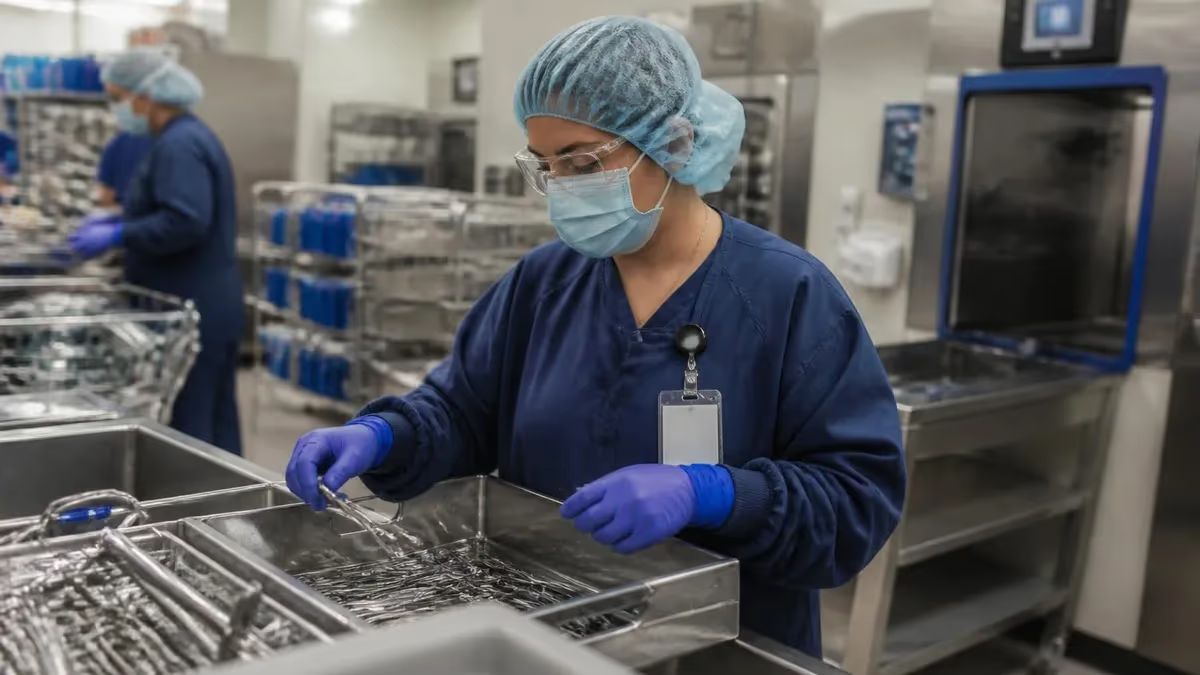
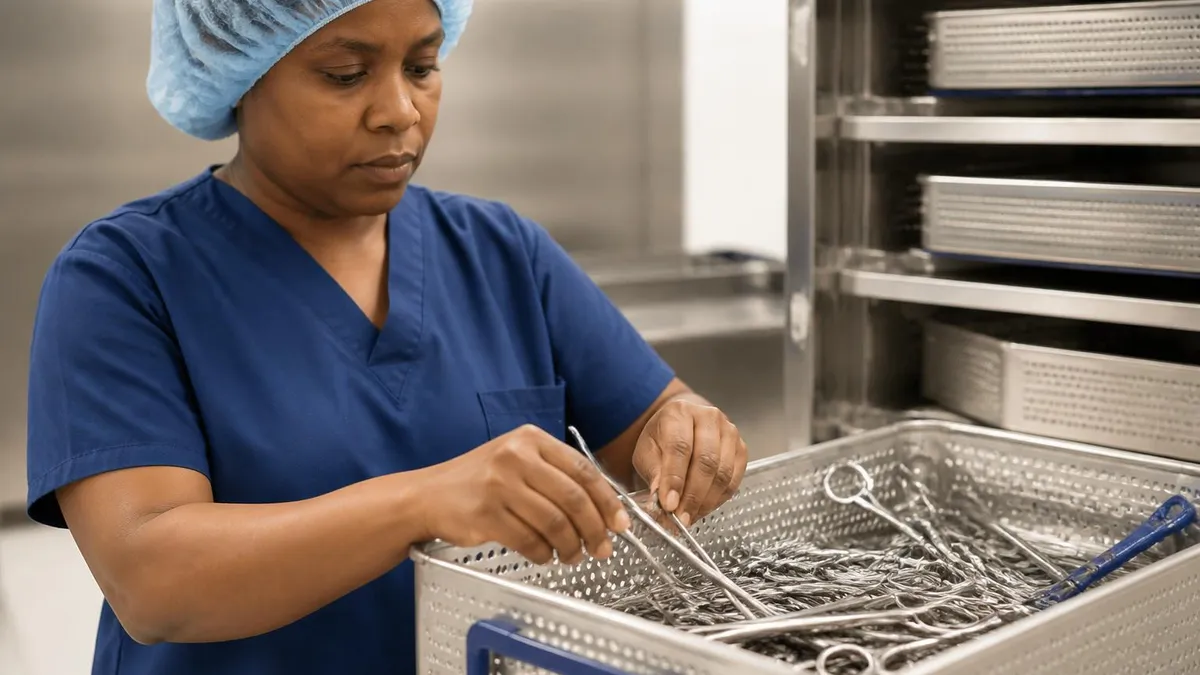
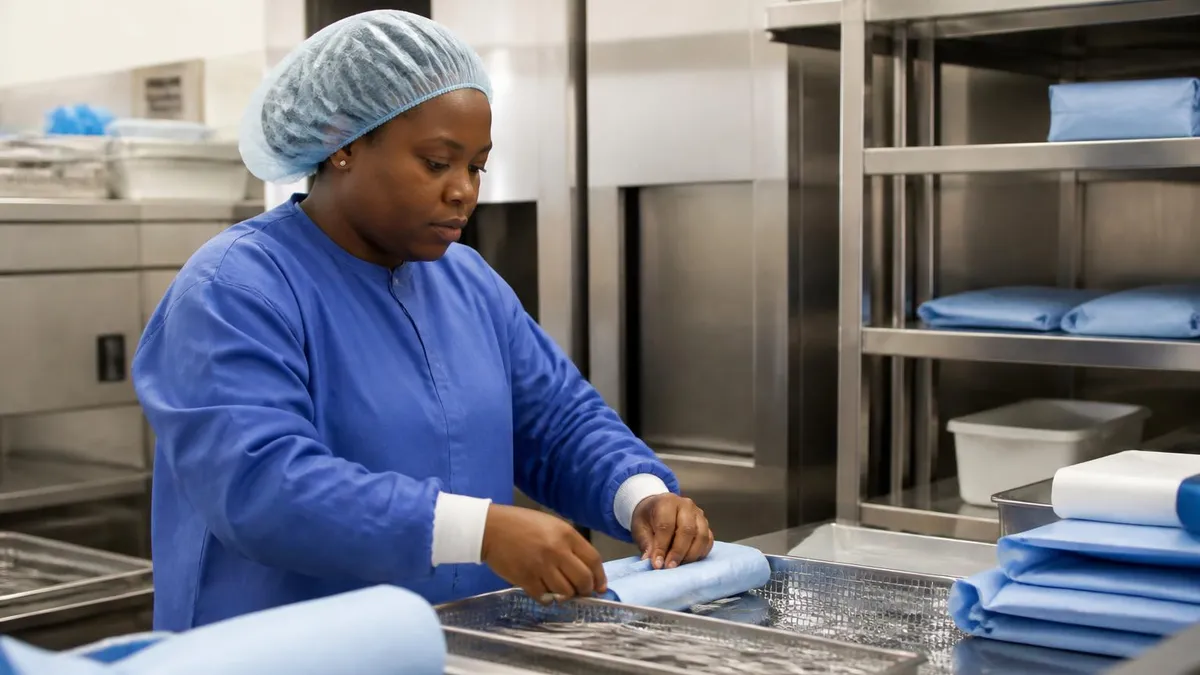
The CRCST meaning is Certified Registered Central Service Technician — a nationally recognized professional credential awarded by the Healthcare Sterile Processing Association (HSPA, formerly IAHCSMM) to individuals who demonstrate competency in decontaminating, inspecting, assembling, sterilizing, and distributing surgical instruments and medical devices. Central service technicians work behind the scenes in hospital sterile processing departments (SPDs), and their careful work is a direct line of defense against healthcare-associated infections. Without skilled CRCST-credentialed professionals, operating rooms would face dangerous shortages of sterile instruments. Practice with the free Certified Registered Central Service Technician practice test on PracticeTestGeeks (7 questions with answer explanations).
If you have ever wondered what CRCST stands for or why it matters so much in modern healthcare, the short answer is patient safety. Every scalpel, forceps, endoscope, and implant that enters a patient's body must first pass through the hands of a trained sterile processing technician. The CRCST credential proves to hospitals, accreditation bodies, and peers that a technician has mastered the science and procedures required to protect patients from surgical site infections and cross-contamination events.
Earning the CRCST requires meeting specific education and work-experience requirements, passing a rigorous written examination, and committing to ongoing continuing education to maintain the credential. The pathway is structured but achievable — many technicians complete it within a year of entering the field. Whether you are considering a career change, recently started a hospital job, or are a department manager looking to credential your team, understanding the full scope of the CRCST certification is the essential first step.
The healthcare industry's demand for credentialed sterile processing professionals continues to climb sharply. Regulatory agencies such as The Joint Commission and CMS have increased their scrutiny of SPD practices, and many state legislatures are now advancing mandatory certification bills. That regulatory momentum means CRCST holders enjoy stronger job security, better earning potential, and clear pathways to supervisory roles compared to uncredentialed colleagues in the same department.
This comprehensive guide covers everything you need to know: what the CRCST exam tests, how to qualify to sit for it, how long the process takes, what the credential costs, and the smartest strategies to pass on your first attempt. You will also find insider tips on study materials, recommended timelines, and how to use what is crcst resources to reinforce your knowledge before exam day.
Whether you are brand new to sterile processing or a seasoned technician looking to formalize your expertise, this guide gives you the full roadmap. The CRCST is more than a test — it is the foundation of a long, meaningful healthcare career dedicated to the principle that every patient deserves instruments that are reliably clean, sterile, and safe. Read on to understand exactly what earning this credential requires and how to make it happen as efficiently as possible.
Free Certified Registered Central Service Technician Exam Study Tools
Interactive Certified Registered Central Service Technician Exam resources on PracticeTestGeeks, free to start:
- CRCST Surgical Instrumentation 1 — 7 questions with answer explanations
- Certified Registered Central Service Technician Exam flashcards — review key terms and concepts card by card
- Certified Registered Central Service Technician Exam study guide — topic-by-topic overview of what the exam covers
- Certified Registered Central Service Technician Exam cheat sheet — one-page printable summary for last-minute review
CRCST Certification by the Numbers
- The CRCST exam has 150 multiple-choice questions, of which 125 are scored and 25 are unscored pretest questions. (Healthcare Sterile Processing Association)
- HSPA sets the CRCST passing point with a criterion-referenced Angoff procedure supplemented by the Beuk compromise method, and it does not publish a fixed passing number. (Healthcare Sterile Processing Association)
- Each CRCST exam retake costs $140, the same as the initial exam fee. (Healthcare Sterile Processing Association)
- A candidate who fails the CRCST exam must wait at least 6 weeks before retesting and must submit a retake application with the $140 fee. (Healthcare Sterile Processing Association)
- CRCST certification is valid for one year after passing and must be renewed every year. (Healthcare Sterile Processing Association)
- The CRCST exam is a computer-based test taken in person at a Prometric testing center, and no paper version is available. (Healthcare Sterile Processing Association)
- CRCST certification requires 400 hours of hands-on sterile processing experience, earned either in the five years before applying or within six months after passing the exam (provisional route). (Healthcare Sterile Processing Association)
- CRCST candidates get a preliminary pass/fail result at the Prometric test center, and official results appear in their HSPA account portal within 24 hours. (Healthcare Sterile Processing Association)
Facts verified Oct 17, 2026 against Healthcare Sterile Processing Association. Dates that have passed are removed automatically.
CRCST Exam at a Glance
| Item | Detail | Official source |
|---|---|---|
| Number of questions | 150 multiple-choice questions (125 scored, 25 unscored pretest) | Healthcare Sterile Processing Association |
| Passing score | Criterion-referenced cut score (Angoff method); number not published | Healthcare Sterile Processing Association |
| Retake fee | $140 per retake | Healthcare Sterile Processing Association |
| Retake policy | Wait at least 6 weeks; new retake application and fee | Healthcare Sterile Processing Association |
| Validity | 1 year, renewed annually | Healthcare Sterile Processing Association |
| Delivery | Computer-based at Prometric test centers; no paper version | Healthcare Sterile Processing Association |
| Eligibility | 400 hands-on SPD hours (past 5 years, or within 6 months after passing for provisional) | Healthcare Sterile Processing Association |
| Score release | Preliminary pass/fail on screen; results in portal within 24 hours | Healthcare Sterile Processing Association |
| Registration deadline | Rolling; allow 3-4 weeks for processing | Healthcare Sterile Processing Association |
| Testing window | Year-round; 120 days to test after approval | Healthcare Sterile Processing Association |
Facts verified Oct 17, 2026 against Healthcare Sterile Processing Association. Dates that have passed are removed automatically.
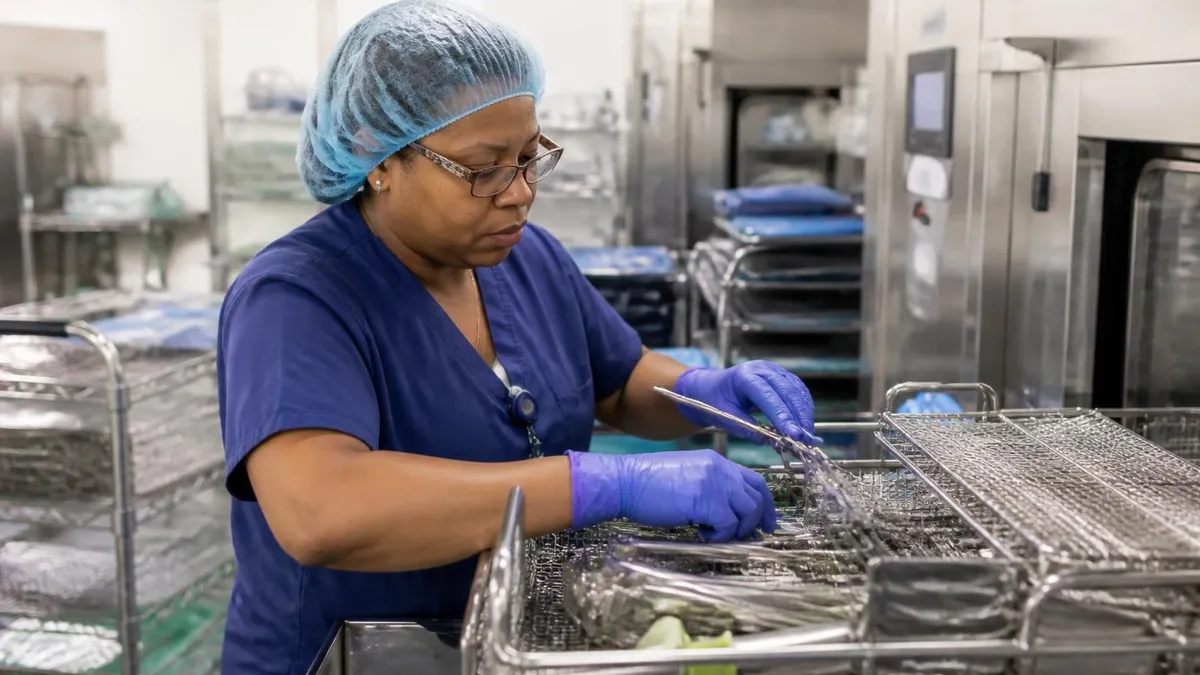
CRCST Exam Format & Structure
| Section | Questions | Time | Weight | Notes |
|---|---|---|---|---|
| Cleaning, Decontamination & Disinfection | 30 | — | 20% | Manual and automated cleaning processes |
| Preparation & Packaging | 26 | — | 17% | Instrument inspection, set assembly, wrapping |
| Sterilization | 26 | — | 17% | Steam, EO, hydrogen peroxide plasma methods |
| Storage & Distribution | 19 | — | 13% | Sterile storage, event-related sterility |
| Anatomy, Microbiology & Terminology | 23 | — | 15% | Infection control, spore types, surgical terminology |
| Management & Career Development | 26 | — | 18% | Regulatory standards, leadership, continuing ed |
| Total | 150 | 3 hours | 100% |
To sit for the CRCST examination, candidates must fulfill both an education requirement and a work-experience requirement set by HSPA. Specifically, you need to complete a formal central service training program — typically a certificate program offered through a community college, hospital, or accredited online provider — and accumulate a minimum of 400 hours of hands-on clinical work experience in a sterile processing department. The education and experience components can often be completed simultaneously if you are working in an SPD while studying.
HSPA-approved training programs cover all the core subject areas tested on the CRCST exam: decontamination science, disinfection chemistry, sterilization methods (steam autoclave, ethylene oxide, hydrogen peroxide plasma), packaging and wrapping techniques, instrument identification, quality assurance protocols, and regulatory compliance. Many community colleges offer the coursework in a one-semester accelerated format, while hospital-based apprenticeship programs typically run 12 to 18 months. Regardless of the format, the curriculum must align with HSPA's published content outline.
Documentation of your 400 clinical hours is critical. HSPA requires verification through an employer attestation form signed by your direct supervisor or department manager. Keep careful records of the dates and hours you work in the SPD, because discrepancies in your work history can delay your application significantly. Some states and hospital systems now require documentation to be submitted through a credentialing portal, so check both HSPA's national requirements and any state-specific regulations that may apply to your location.
Once your eligibility is verified, you will receive an Authorization to Test (ATT) letter, which grants you access to schedule your exam at a Pearson VUE testing center. ATT letters are typically valid for 90 days, so do not request yours until you are genuinely ready to sit for the exam. Pearson VUE operates hundreds of testing centers across the United States, so scheduling is generally flexible, though busy periods like January through March can fill seats quickly.
Candidates who do not pass on their first attempt must wait 30 days before retesting and pay the full examination fee again. There is no limit to the number of times you can retake the CRCST exam, but each attempt requires a new fee payment. For this reason, investing in thorough preparation before your first attempt is financially as well as professionally wise. The average candidate who uses structured study materials passes within two attempts, while those who study consistently for eight to twelve weeks before their first attempt have the strongest first-time pass rates.
Special accommodations for disabilities are available through Pearson VUE's accessibility services. Candidates who require extended testing time, a separate testing room, screen-reader software, or other accommodations should submit their request to HSPA and Pearson VUE well in advance — ideally four to six weeks before their desired test date — to ensure the necessary documentation review can be completed without delaying the ATT issuance.
International candidates and U.S. candidates who completed training programs outside the country should contact HSPA directly to confirm that their education credentials meet equivalency standards. HSPA evaluates foreign transcripts on a case-by-case basis, and the review process can add several weeks to the overall application timeline. Planning ahead prevents surprises that could push back your target exam date.
CRCST Study Strategies by Domain
Decontamination accounts for 20 percent of the CRCST exam and covers manual cleaning, ultrasonic cleaners, automated washer-disinfectors, enzymatic detergents, and the proper sequence for processing contaminated instruments. Focus on understanding the difference between cleaning, disinfection, and sterilization — examiners frequently test whether candidates can correctly place each process on the Spaulding Classification spectrum. Know Spaulding's three device categories (critical, semi-critical, non-critical) cold.
When studying decontamination, use flashcards to memorize the specific cleaning solutions and dilution ratios approved for different instrument types (e.g., carbon steel vs. titanium vs. flexible endoscopes). Pay particular attention to personal protective equipment (PPE) requirements for decontamination zone staff, since OSHA's Bloodborne Pathogen Standard mandates specific protective gear and these questions appear reliably on the exam every testing cycle.
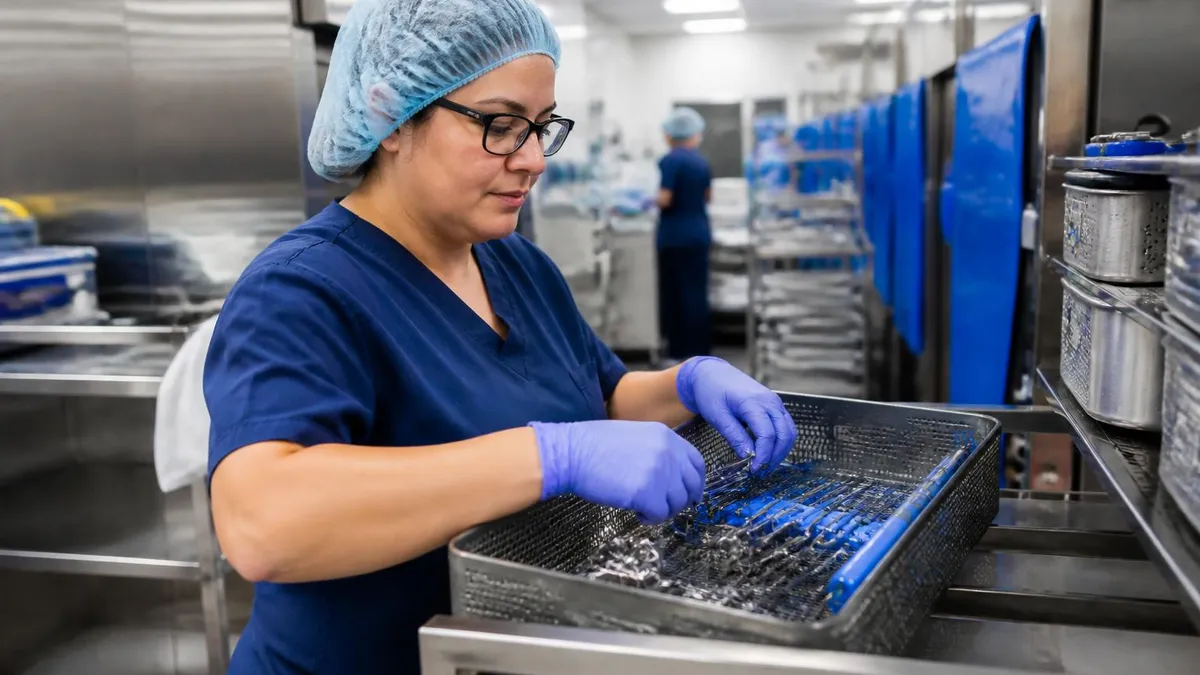
Is the CRCST Worth It? Benefits and Challenges
- +Higher earning potential — credentialed techs typically earn $4,000–$8,000 more annually than non-credentialed peers
- +Stronger job security as states increasingly mandate certification for SPD employment
- +Clear pathway to supervisory and management roles in sterile processing departments
- +National portability — the credential is recognized at hospitals across all 50 states
- +Professional credibility with surgeons, infection control teams, and accreditation surveyors
- +Continuing education requirement keeps your knowledge current with evolving best practices
- −Exam fee of $164–$249 plus study materials can add up to $400+ in upfront costs
- −400 hours of clinical experience required before you can even apply to sit for the exam
- −The 54 percent first-time pass rate means many candidates need a retake and additional cost
- −Continuing education (12 CEUs every year) requires ongoing time and sometimes money investment
- −Exam content is highly technical — anatomy, chemistry, and microbiology demand genuine study
- −Testing center availability varies by region, which can delay scheduling in rural areas
CRCST Exam Day Checklist: 10 Steps to Be Ready
- ✓Confirm your Pearson VUE appointment date, time, and testing center address at least one week before the exam.
- ✓Bring two valid forms of government-issued ID — the primary ID must include a photo and signature.
- ✓Arrive at the testing center at least 30 minutes early to complete check-in without rushing.
- ✓Review your Authorization to Test (ATT) letter the night before and ensure it has not expired.
- ✓Avoid cramming the night before — spend that evening reviewing your flashcard deck lightly and sleeping well.
- ✓Eat a balanced meal before the exam; hunger and low blood sugar measurably impair test performance.
- ✓Wear comfortable, layered clothing since testing center temperatures vary widely between facilities.
- ✓Practice pacing: with 150 questions and 180 minutes, you have roughly 72 seconds per question — internalize this rhythm.
- ✓Flag difficult questions and return to them rather than spending excessive time on any single item.
- ✓After submission, take note of any topics you found difficult so you can address them if a retake is needed.
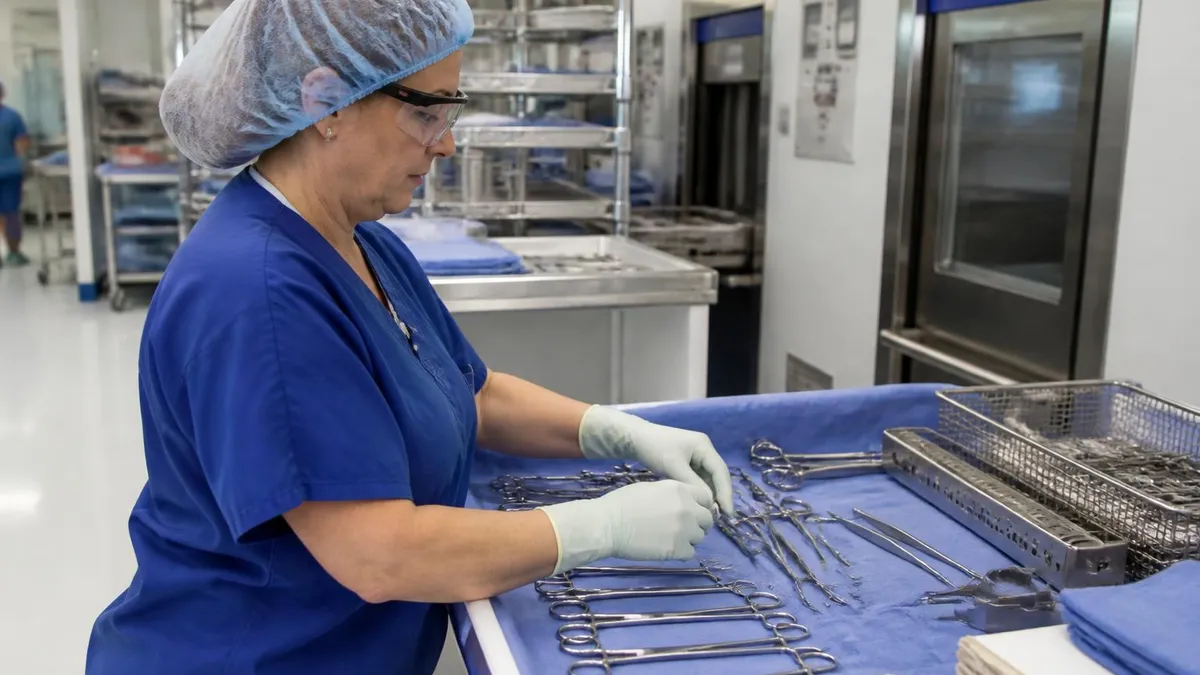
You Need a Scaled Score of 70 to Pass
HSPA uses a scaled scoring system, meaning your raw number of correct answers is converted to a standardized score on a 0–100 scale. A scaled score of 70 or above earns a passing result. Because of this conversion, the exact number of questions you must answer correctly can vary slightly between exam versions — aim to answer at least 105 of the 150 questions correctly as a safe target during practice sessions.
The financial investment in CRCST certification pays dividends throughout an entire career. HSPA member candidates pay $164 to sit for the exam; non-members pay $249. HSPA annual membership costs approximately $99, so joining before applying saves most candidates money immediately. Many hospital employers cover examination fees as part of their professional development benefits — ask your HR department or department manager before paying out of pocket, because reimbursement programs are more common than new technicians realize.
Beyond the initial examination fee, candidates typically spend $50 to $150 on study materials: the HSPA Central Service Technical Manual (the primary reference text), practice question banks, and online review courses. Budgeting $300 to $450 total for your first certification attempt is realistic when including membership, exam fee, and study resources. If you need a retake, factor in the full exam fee again plus any additional study materials you determine you need based on your first-attempt performance report.
Once you pass, the CRCST credential must be renewed every year. Annual renewal requires completing 12 continuing education units (CEUs) and paying a renewal fee of approximately $50 for HSPA members. CEUs can be earned through HSPA-approved online courses, live webinars, regional workshops, and in-person conferences. Many hospitals pay for their credentialed staff members' annual renewal and CEU costs as part of employee retention programs, recognizing that credentialed teams perform better on accreditation surveys and have lower instrument-related incident rates.
The salary impact of CRCST certification is measurable and significant. According to industry surveys, certified central service technicians in the United States earn a median annual salary of approximately $45,000 to $52,000, with experienced credentialed technicians in high-cost-of-living markets earning $60,000 to $70,000 or more. Non-credentialed sterile processing technicians typically earn $8,000 to $12,000 less annually at comparable experience levels. Over a 10-year career, that earnings differential compounds substantially — the upfront investment of $300 to $450 to obtain the CRCST yields an extraordinary return.
Credentialed technicians also access promotional pathways that are effectively closed to non-credentialed staff. Lead technician, shift supervisor, SPD manager, and sterile processing educator positions almost universally require active CRCST or equivalent credentialing. HSPA also offers advanced credentials — the Certified Sterile Processing and Distribution Supervisor (CSPDS) and the Certified Instrument Specialist (CIS) — that build directly on the CRCST foundation and open doors to even higher-compensated roles in hospital administration and healthcare technology companies.
State-level mandatory credentialing legislation is another powerful reason to pursue the CRCST now rather than waiting. As of 2026, several states including New Jersey, New York, and Tennessee have enacted or are actively advancing laws requiring sterile processing personnel to hold active credentials within defined timeframes. Hospitals operating in non-mandate states are also voluntarily adopting credentialing requirements because of Joint Commission standards pressure. Technicians who are already credentialed when these mandates take effect in their state experience zero disruption, while uncredentialed colleagues face job-threatening compliance deadlines.
From a career trajectory perspective, the CRCST is the clearest signal you can send to a hiring manager that you are a serious, committed healthcare professional. The credential appears prominently on your resume, verifiable through HSPA's public registry, and it tells department managers exactly what competency level you bring to their team on day one. In a hiring environment where hospitals are competing for qualified sterile processing staff, CRCST certification is one of the most effective tools you have for standing out from applicants who lack formal credentials.
Once HSPA issues your Authorization to Test (ATT), you have only 90 days to schedule and sit for the exam. If your ATT expires before you test, you must reapply and pay the full examination fee again. Request your ATT only when you have completed your study plan and are genuinely ready to test within the next few weeks — premature requests are one of the most avoidable extra costs in the certification process.
Choosing the right study resources is arguably the single biggest determinant of first-attempt success on the CRCST exam. The official HSPA Central Service Technical Manual, currently in its ninth edition, is the primary source document from which examination questions are derived. Every candidate should own a copy and use it as the foundational reference throughout their study period. Read each chapter once for comprehension, then return to high-weight domains — decontamination, sterilization, and management — for deeper review sessions focused on memorizing specific facts, parameters, and regulatory requirements.
Supplementing the technical manual with a structured question bank is the most effective way to build exam-ready knowledge. Active recall through practice questions is neurologically superior to passive re-reading for retaining technical material. Aim to complete at least 500 to 600 practice questions in the weeks leading up to your exam, reviewing not just whether you got each answer right or wrong but why the correct answer is correct and why the distractors are wrong. That analytical habit catches conceptual gaps that simple correct/incorrect tracking misses entirely.
Online video lectures offer another powerful study modality, particularly for visual learners who benefit from seeing decontamination workflows and sterilization loading demonstrations in action. Several HSPA-affiliated educators publish video content that walks through instrument identification, proper packaging techniques, and biological indicator interpretation. Watching these videos after reading the corresponding technical manual chapter reinforces the material through a second sensory channel and dramatically improves retention over reading alone.
Study groups — either in person with departmental colleagues or in online forums dedicated to CRCST candidates — add an important social accountability layer. Explaining a concept to a peer forces you to organize your knowledge in ways that solo studying does not, and hearing peers explain concepts they understand well often fills blind spots more efficiently than re-reading the same paragraph multiple times. HSPA's online community and several Facebook groups maintain active CRCST study threads where candidates share study tips, mnemonics, and encouragement throughout the credentialing process.
Building a realistic study schedule is just as important as selecting quality materials. Most candidates find that committing to 60 to 90 minutes of focused study five days per week for eight to twelve weeks produces the knowledge depth needed to pass comfortably. Front-load the domains you find most difficult — typically microbiology and chemistry-heavy sterilization content — so you have maximum time to revisit and reinforce those areas before exam day. Save the final two weeks for comprehensive review, timed practice tests, and light memorization of specific parameters and standards.
Timed practice tests deserve special emphasis because pacing is a genuine challenge for many CRCST candidates. With 150 questions and 180 minutes, you have an average of 72 seconds per question. Many candidates lose time by dwelling on difficult questions, which then creates anxiety-driven rushing on the remaining questions. Practicing under timed conditions multiple times before your actual exam date inoculates you against that pattern — you train your brain to recognize when a question needs to be flagged and revisited rather than solved immediately, keeping your overall pacing smooth throughout the test.
Finally, do not underestimate the value of hands-on reinforcement in your actual SPD workplace. Every shift you work is a study session if you approach it with the CRCST content outline in mind. When you run a steam autoclave cycle, mentally connect what you are doing to the biological indicator placement requirements and time-temperature parameters you studied.
When you assemble an instrument set, consciously review the inspection criteria for each item. This active integration of classroom knowledge and clinical practice accelerates mastery faster than studying alone — and it is free preparation time you are already paid to be at work for.
Passing the CRCST on your first attempt requires more than knowing the content — it requires strategic test-taking. One of the most reliable strategies is reading every question stem twice before looking at the answer choices. The first read gives you a general sense of what is being asked; the second read lets you notice qualifying words like "always," "never," "first," "most important," or "except" that fundamentally change the correct answer. Many test-takers select wrong answers because they misread a qualifier during a rushed first pass.
Process of elimination is your most powerful tool on difficult questions. Even when you are unsure of the correct answer, you can almost always eliminate one or two clearly wrong distractors immediately. Narrowing from four choices to two doubles your odds of guessing correctly on a question you are genuinely uncertain about. Combined with good pacing, systematic elimination keeps your score well above the passing threshold even when you encounter unfamiliar content, which every candidate experiences somewhere in a 150-question exam.
For scenario-based questions — which make up a meaningful portion of the CRCST exam — always ask yourself: what is the single safest, most compliant, most patient-protective action described in the answer choices? The CRCST exam consistently rewards the answer that prioritizes infection prevention, regulatory compliance, and patient safety above convenience, efficiency, or cost. When two answers both seem partially correct, the one that is more protective and more conservative is almost always the intended correct choice.
Managing exam anxiety is practical, not just motivational advice. Breathing exercises — specifically slow diaphragmatic breathing at a pace of four seconds in, four seconds hold, four seconds out — activate the parasympathetic nervous system and measurably reduce acute anxiety within 60 to 90 seconds. Practice this technique during your study sessions so it is automatic on exam day. The few seconds it takes to reset your nervous system before a difficult question cluster pays back in improved focus and accuracy for the remainder of the exam.
Know your weak domains before exam day and have a plan for them. When you complete practice tests, categorize your incorrect answers by domain. If you consistently miss questions about EO sterilization parameters or biological indicator protocols, dedicate extra review time specifically to those areas in the final week. The CRCST exam is domain-weighted, meaning performing poorly in a single high-weight domain like sterilization or management can sink an otherwise solid overall performance. Targeted remediation of weak areas is the most efficient use of limited study time.
Use the day before your exam for light review only. Attempting to learn new material in the 24 hours before testing causes more anxiety than it cures, and sleep-deprived memory consolidation is significantly worse than well-rested memory. The knowledge you have built over weeks of studying is far more reliable than anything you could cram the night before. Trust your preparation, confirm your logistics, sleep 7 to 8 hours, and arrive at the testing center calm and confident.
After you pass — and the strategies in this guide significantly improve your odds of doing so — take a moment to formally update your professional profiles, notify your employer's HR department to update your employee record, and ensure HSPA has your current contact information for renewal notices. The CRCST credential you earn is a professional asset that belongs entirely to you, transferable to any hospital or healthcare facility in the country, and renewable for as long as you commit to the continuing education that keeps it active and meaningful throughout your career.
Sample Certified Registered Central Service Technician Exam Practice Questions
Try these questions from our free Certified Registered Central Service Technician Exam practice tests. The correct answer and an explanation follow each question.
What is the best approach when encountering an unfamiliar question during the CRCST exam?
- A. Leave it blank and move on permanently
- B. Use process of elimination and mark it for review
- C. Guess randomly without reading all choices
- D. Exit the exam immediately
Answer: B. Use process of elimination and mark it for review
Process of elimination narrows options, and marking for review allows you to return with fresh perspective after completing other questions.
What is the format of the CRCST Exam?
- A. 200 multiple-choice questions in 4 hours
- B. 150 multiple-choice questions in 3 hours
- C. 100 essay questions in 3 hours
- D. 150 true/false questions in 2 hours
Answer: B. 150 multiple-choice questions in 3 hours
The CRCST Exam is structured to efficiently assess a candidate's comprehensive knowledge. It consists of 150 multiple-choice questions, which candidates must complete within a 3-hour time limit. This format tests both knowledge recall and the ability to manage time effectively under exam conditions.
What is a primary responsibility of a CRCST-certified technician in the workplace?
- A. Diagnosing patient illnesses
- B. Managing sterile medical equipment
- C. Conducting surgical procedures
- D. Administering medications
Answer: B. Managing sterile medical equipment
The primary responsibility of a CRCST-certified technician is to ensure the proper cleaning, decontamination, sterilization, and distribution of medical and surgical equipment. This critical role directly supports patient safety by providing healthcare professionals with sterile instruments for various procedures.
What is a major benefit of taking practice tests for the CRCST Exam?
- A. They guarantee a passing score on the first attempt.
- B. They help candidates understand exam format and time management.
- C. They provide exact questions that appear on the real exam.
- D. They reduce the number of hours needed for study.
Answer: B. They help candidates understand exam format and time management.
Practice tests are crucial for CRCST Exam preparation as they familiarize candidates with the actual exam's structure, question types, and time constraints. By simulating the testing environment, they help candidates develop effective time management strategies and reduce test-day anxiety, improving their overall performance.
Take the full Certified Registered Central Service Technician Exam practice test
CRCST Questions and Answers


How this page was made: written with AI tools and published by Nathan Beja, founder of Practice Test Geeks, who is responsible for its content. Exam facts are checked against the official sources listed below. Not reviewed by a subject-matter expert. Editorial policy
Sources & references
Exam facts on this page (fees, format, dates, passing scores) are checked against these official sources; the date is our last check. Editorial policy
- myhspa.org — Test delivery, fees, exam format, retake policy, score release, test dates, score validity, eligibility, registration deadline, retake fee · verified Oct 2026