
How Long Does It Take to Get a CRCST Certification? Complete Timeline & Study Guide
Learn how long it takes to get a CRCST certification, 🆕 step-by-step requirements, study timeline, exam tips, and costs for 2026 September.

If you are asking how long does it take to get a CRCST certification, the honest answer is between six months and two years, depending on your experience, your state's requirements, and how quickly you complete the required hours on the job. The Certified Registered Central Service Technician credential is issued by the Healthcare Sterile Processing Association (HSPA), and it is the gold-standard entry-level credential for anyone working in sterile processing and central service departments across US hospitals and surgical centers.
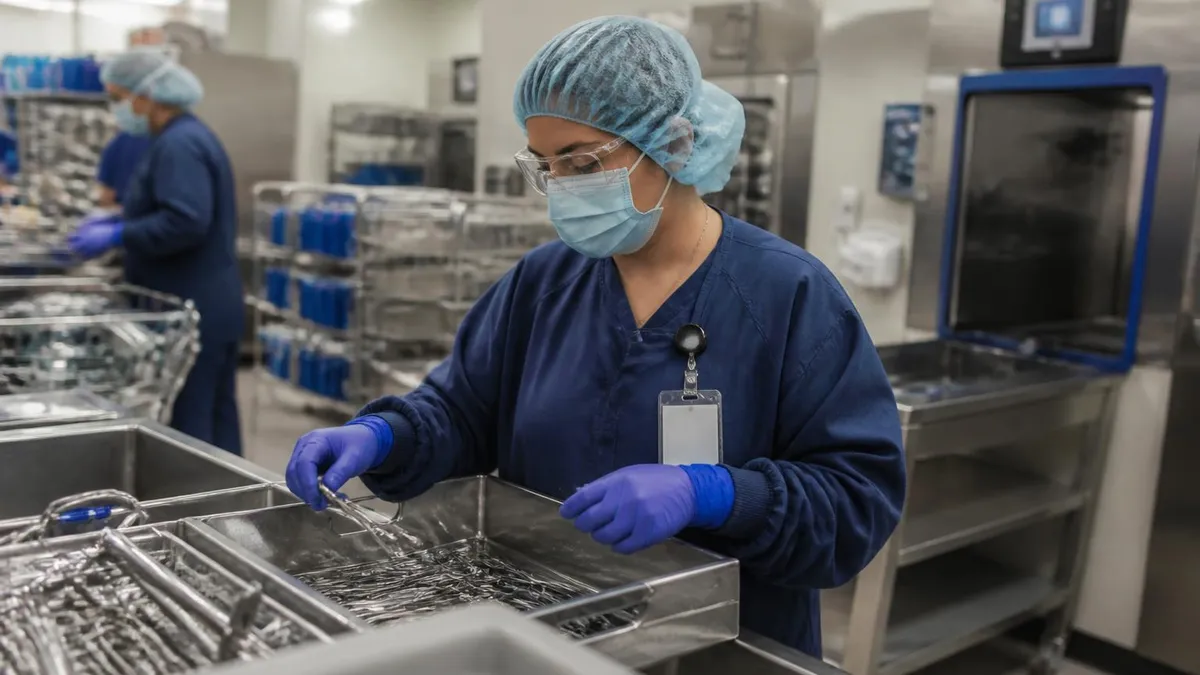
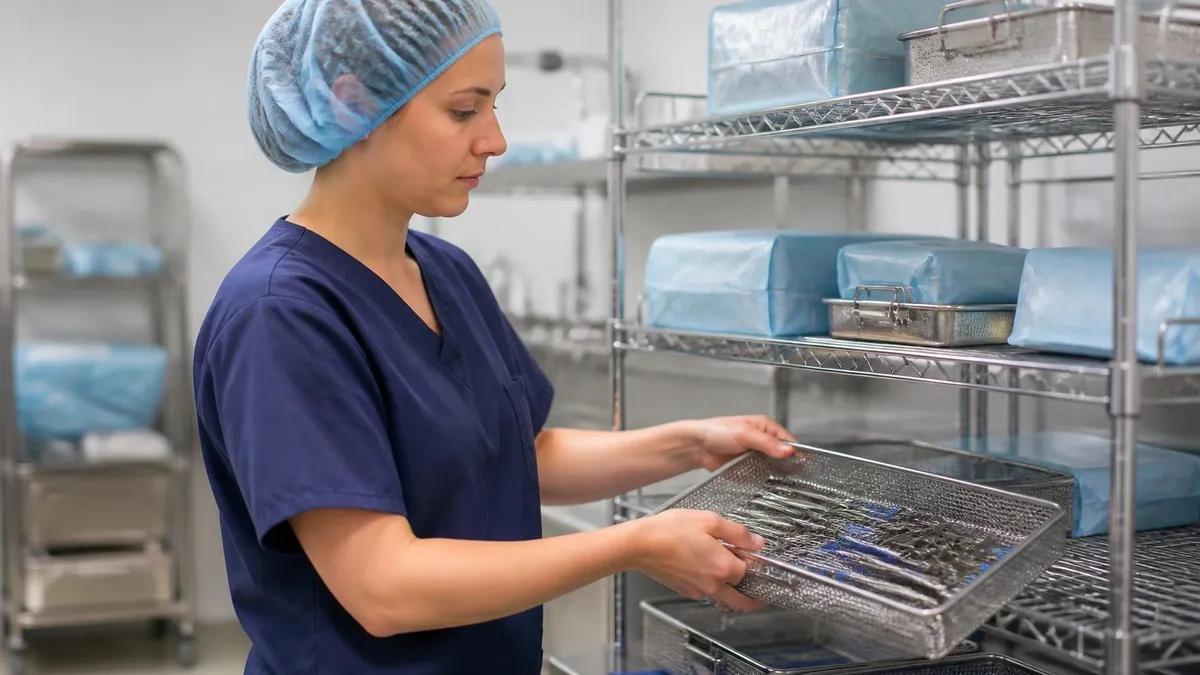
The CRCST is not a certification you can earn by studying alone. HSPA requires candidates to log a minimum of 400 hours of hands-on work experience in a functioning central service department before they are eligible to sit for the written exam. Those 400 hours represent real patient-safety work: decontaminating surgical instruments, assembling trays, operating sterilizers, and managing distribution workflows. Most full-time central service technicians accumulate those hours within four to six months of starting employment.
After meeting the work-hour requirement, most candidates need an additional four to twelve weeks of dedicated exam study before they feel confident enough to schedule the test. The CRCST exam itself contains 150 scored questions drawn from nine content domains, and the pass rate hovers around 54 percent on first attempt, which means structured preparation genuinely matters. Simply showing up after completing your hours is not a reliable strategy for passing.
The entire pathway — finding a job, completing the 400 hours, studying, and passing the exam — typically takes most people nine to twelve months from a standing start. Candidates who enter with prior healthcare experience or who work full-time in a high-volume sterile processing department often reach the eligible-to-test milestone in as few as four to five months, while part-time workers or those in facilities with lower instrument volume may take eighteen months or more to accumulate the required hours.
State regulations add another layer of complexity. Several US states, including New Jersey, New York, Texas, and Tennessee, have enacted laws requiring all central service technicians working in licensed healthcare facilities to hold an active CRCST or equivalent credential within a set timeframe of employment. In those states, your employer's timeline becomes your timeline, which creates additional urgency to pass the exam on the first attempt rather than waiting for a second testing window.
This guide walks you through every stage of the CRCST journey: eligibility rules, the work-experience clock, a realistic study timeline, exam-day format details, costs, and the renewal cycle you will need to plan for after you earn the credential. Whether you are a brand-new central service trainee or a healthcare worker transitioning from another department, the information here will help you build a clear, actionable plan. You can also explore how to get crcst certification through video-based practice resources that reinforce the material covered in this article.
By the time you finish reading, you will know exactly what stands between you and your CRCST card, how long each stage realistically takes, and what you can do right now to accelerate your path to certification without cutting corners on the foundational knowledge that makes central service professionals genuinely valuable to the surgical teams they support.
CRCST Certification by the Numbers

CRCST Certification Step-by-Step Timeline
Step 1: Land a Central Service Position
Step 2: Complete 400 Hours of Hands-On Work
Step 3: Submit Your HSPA Application
Step 4: Study for the CRCST Exam
Step 5: Schedule and Pass the Exam
Step 6: Receive Your Credential and Maintain It
Understanding how long each individual stage takes is essential for planning a realistic timeline. The work-experience phase is the longest single component for most people, and it is the one factor that is almost entirely outside your control once you are employed. HSPA does not accept simulation hours, volunteer time, or externship hours from non-accredited programs as substitutes for the 400 paid-work-experience requirement. Every hour must be logged in a real patient-care facility where actual surgical instruments are processed for real procedures.
Full-time central service technicians working 40-hour weeks technically accumulate 400 hours in 10 weeks, but that assumes every shift counts from day one. In practice, most new hires spend their first two to four weeks in orientation, HR onboarding, and department-specific safety training before they begin hands-on instrument processing. A more realistic expectation for a full-time employee is four to five months before the 400-hour threshold is reached and documented by a supervisor.
Part-time employees face a proportionally longer timeline. Someone working 20 hours per week will take roughly five months just to hit the raw hour count, not counting onboarding overhead. Workers who are transitioning from another role within the same hospital — say, from materials management or surgical tech work — may be able to apply some of those hours if they were performed in a central service setting and can be verified by a qualifying supervisor, but each situation requires individual review by HSPA before application approval.
The exam-preparation phase is the stage you have the most control over. Candidates who build a structured study plan and start preparing while they are still accumulating their final hours consistently report higher confidence and better first-attempt pass rates than those who wait until they have submitted their application to open a textbook. The HSPA Central Service Technical Manual, 9th Edition, is the primary reference for all exam content. Chapters covering microbiology and infection control, sterilization methods, and medical device reprocessing carry the heaviest weighting and deserve the most study time.
Practice exams are arguably the single most effective preparation tool. The CRCST exam uses application-level questions that test your ability to apply knowledge to real scenarios, not just recall definitions. Reading the manual is necessary but not sufficient on its own. Working through timed practice sets forces you to engage with questions the way the exam presents them: as clinical scenarios requiring judgment, not just memory. Aim to complete at least 300 to 400 practice questions before exam day, reviewing every wrong answer and understanding why the correct answer is correct.
The scheduling process through PSI is straightforward once HSPA approves your application. PSI has testing centers in all 50 states, and most metro areas have multiple locations. Exam slots are generally available within one to two weeks of searching, though popular times like weekday mornings book faster. If you live in a rural area with no nearby PSI center, HSPA offers online proctored testing through a remote examination option, which requires a quiet space with a working webcam and stable internet connection.
From the moment you pass the exam to receiving your physical certificate, allow two to four weeks. HSPA sends credentials by mail, and your name will appear in the HSPA online credential verification database within a few business days of passing — useful if your employer or state licensing board needs proof of certification before the physical card arrives. Many employers will update your title and pay grade as soon as the online database reflects your credential, without waiting for the paper certificate.
CRCST Study Strategies by Learning Style
Visual learners retain information best through diagrams, flowcharts, and color-coded notes. For CRCST preparation, create instrument tray assembly diagrams, draw sterilization cycle timelines, and map out the decontamination-to-sterile-storage workflow as a visual flowchart. Color-code your notes by content domain — blue for microbiology, green for sterilization methods, orange for distribution — so your brain builds spatial memory anchors for each topic cluster.
Flashcard apps like Anki are highly effective for visual learners because spaced-repetition algorithms surface cards right before you are about to forget them. Build one card per instrument family, one per sterilization parameter set, and one per regulatory standard (AAMI, OSHA, CDC). Reviewing 20 to 30 cards daily for six weeks will cement the factual recall layer that underlies the application-level questions on the actual CRCST exam.

Is the CRCST Worth It? Honest Pros and Cons
- +Significantly increases your earning potential — certified technicians earn 10–20% more on average than non-certified peers
- +Required by law in multiple states including NJ, NY, TX, and TN, making it essential for legal employment in those markets
- +Recognized nationally by hospitals, surgery centers, and healthcare staffing agencies as the standard entry-level credential
- +Opens the door to advanced HSPA credentials including the CIS (Certification in Infection Prevention) and CSPDT supervisor certification
- +Demonstrates patient-safety commitment that makes you a stronger candidate for promotion into lead tech and supervisor roles
- +Provides career portability — your CRCST is valid at any accredited facility in all 50 states, not just your current employer
- −Requires 400 hours of paid work experience before you can even apply, which means you cannot earn it through school alone
- −Exam fees ($169–$299) plus study materials can total $300–$500 out-of-pocket, which is significant on an entry-level salary
- −First-time pass rate is approximately 54%, meaning nearly half of candidates must pay retesting fees and wait 30 days to try again
- −Recertification requires 12 CE credits every two years, creating an ongoing time and cost commitment beyond initial certification
- −The HSPA Central Service Technical Manual (required study resource) costs $75–$150 and is revised periodically, requiring updated purchases
- −State-specific continuing education rules vary, meaning you may need extra CE hours if you relocate to a more regulated state
CRCST Exam Day Preparation Checklist
- ✓Confirm your testing appointment time and PSI testing center address at least 72 hours before exam day.
- ✓Bring two valid forms of ID — your primary ID must be government-issued with a photo and signature.
- ✓Arrive at the testing center at least 30 minutes early to complete check-in procedures without stress.
- ✓Leave all study materials, phones, and smartwatches in your vehicle — no personal items are allowed in the testing room.
- ✓Eat a balanced meal before the exam and bring a water bottle for the check-in area (not inside the testing room).
- ✓Review your weakest content domain one final time the night before — focus on sterilization parameters and microbiology.
- ✓Get at least 7 hours of sleep the night before the exam; fatigue significantly impairs recall and reading comprehension.
- ✓Budget your time during the exam — 170 questions in 3 hours means roughly 63 seconds per question on average.
- ✓Flag difficult questions and return to them after completing the rest rather than spending 5+ minutes on a single item.
- ✓After finishing, note the topics of questions that felt uncertain so you can review them whether you pass or need to retest.
Start Studying Before You Hit 400 Hours
The single most impactful scheduling decision CRCST candidates make is when to begin studying. Candidates who start exam preparation during their final 60 hours of work-experience accumulation — rather than waiting until after their application is approved — consistently report shorter total prep times and higher first-attempt confidence. Use the overlap period strategically: your on-the-job experience reinforces what you are reading, and the textbook gives theoretical context to what you are doing on the floor every shift.
Once you pass the CRCST exam, the immediate next steps are simpler than the road that led you here, but they still require attention. HSPA will update the online credential verification database within a few business days of your passing score being recorded. Your employer's HR department will likely request that you provide your HSPA certification number so they can update your employee record, adjust your job title from trainee or technician I to certified central service technician, and — in many facilities — initiate a wage adjustment that reflects your new credentialed status.
If you work in one of the states that mandates CRCST or equivalent certification for all central service technicians, passing the exam resolves any conditional employment language in your offer letter. New Jersey, for example, requires all sterile processing technicians in licensed acute care facilities to hold a recognized certification within a defined grace period of employment. Tennessee passed similar legislation, as did Texas, which applies its requirement to facilities above a certain bed count. Knowing your state's specific deadline — not just the existence of a requirement — is critical for avoiding employment complications.
Many newly certified technicians use the momentum of passing as a catalyst to explore advanced HSPA credentials. The Certified Instrument Specialist (CIS) credential focuses on the identification, care, and handling of complex surgical instrumentation, and it is highly valued in facilities with large orthopedic or cardiovascular surgical programs. The Certified Sterile Processing and Distribution Technician (CSPDT) is another HSPA credential that some technicians pursue, though the CRCST remains the most widely recognized and employer-requested entry credential in the field.
Leadership pathways open up meaningfully after CRCST certification. Many hospitals require lead technician and shift supervisor applicants to hold an active CRCST, and some facilities add a minimum number of years of post-certification experience as a prerequisite for those roles. If your career goal is department management, the CRCST is the first rung of a ladder that leads through lead tech, shift supervisor, and eventually department director roles — each of which commands progressively higher compensation and organizational influence.
Salary growth is real and measurable after CRCST certification. The median annual wage for central service technicians in the US was approximately $47,000 as of recent Bureau of Labor Statistics data, but certified technicians in high-cost-of-living metro areas — including New York, San Francisco, Boston, and Seattle — routinely earn $60,000 to $75,000 or more, especially with shift differentials for evening, night, or weekend work. Facilities that are Joint Commission accredited or pursuing AAAHC accreditation particularly value certification as a compliance and quality assurance signal, and they tend to compensate accordingly.
Networking within the HSPA community after certification opens professional development resources that non-members do not access. HSPA's local chapters host educational events, equipment demonstrations, and facility tours that deepen your technical knowledge beyond what any textbook covers. National conferences bring together sterile processing professionals, instrument manufacturers, and regulatory experts for continuing education programming that is both CE-credit-eligible and genuinely useful for day-to-day work quality. Building relationships in this community positions you for awareness of job opportunities before they are publicly posted.
Finally, consider mentorship as both a receiver and eventually a giver. Most experienced central service professionals remember the uncertainty of their own credentialing journey and are genuinely willing to share what worked for them. Seeking out a mentor in your facility or through HSPA chapter connections provides personalized guidance that generic study guides cannot match. Once you are established and certified, paying that forward by supporting colleagues working toward their own CRCST is both professionally satisfying and a recognized element of the patient-safety culture that defines excellent sterile processing departments.

If you work in New Jersey, New York, Texas, Tennessee, or another state with mandatory sterile processing certification laws, failing to earn your CRCST within the state-mandated employment grace period can result in termination, and your facility may face regulatory penalties for employing uncertified technicians. Check your state's specific law — and your offer letter's conditional language — so you know exactly how many months you have from your start date to hold an active, verified credential.
Renewal is the phase of CRCST certification that many technicians underestimate when they are focused on passing the initial exam. Your credential expires every two years from the date it was issued — not from a fixed calendar date — which means your renewal deadline is personal to you and easy to lose track of. HSPA does send reminder emails as your expiration approaches, but the responsibility for tracking your renewal date and completing the required continuing education credits sits entirely with you.
The renewal requirement is 12 continuing education credits earned within each two-year certification period. HSPA accepts CE credits from a wide range of sources: HSPA-approved online courses, manufacturer-sponsored in-services, attendance at approved conferences, IAHCSMM courses (which are cross-recognized), and facility-based education sessions that meet HSPA's documentation standards. Credits must be in content areas relevant to sterile processing — you cannot fulfill your CRCST CE requirement with general healthcare or unrelated clinical education.
The renewal fee for HSPA members is currently $99, while non-members pay $149. Given that HSPA membership itself costs approximately $75 to $99 per year and provides access to discounted exam fees, free or reduced-cost CE webinars, and the PROCESS magazine subscription, membership typically pays for itself through CE savings alone. Most committed central service professionals find HSPA membership a straightforward financial decision once they are credentialed and planning for long-term career development.
Late renewal carries real consequences. If your CRCST lapses — meaning your renewal is not completed before your expiration date — you must apply for reinstatement, which in many cases requires retaking and passing the full CRCST examination again. This is not a theoretical risk: technicians who change jobs, move to a non-mandate state, or take family leave sometimes let their renewal date slip, only to discover that reinstatement means returning to square one on the exam. Treat your renewal deadline with the same seriousness you applied to the initial exam date.
Continuing education in sterile processing is genuinely valuable, not just a compliance checkbox. The field evolves regularly: new sterilization modalities, updated AAMI standards, revised CDC guidance on endoscope reprocessing, new regulatory requirements from CMS, and the introduction of complex single-use versus reusable device determinations all represent areas where a technician's knowledge can become outdated surprisingly quickly. The CE requirement exists because patient safety depends on current knowledge, and surgical site infections linked to instrument reprocessing failures remain a serious, preventable harm.
Planning your CE credits proactively — rather than scrambling to complete 12 credits in the final month before expiration — also improves the quality of your learning. Spreading CE activity across the two-year cycle allows you to choose topics that fill actual knowledge gaps or align with new technologies your department is adopting, rather than selecting whatever is available and quick in a last-minute rush. HSPA's online learning catalog includes a mix of short webinars (1 credit), longer modules (2–3 credits), and full-day conference recordings (4–6 credits), giving you flexibility to build a CE plan that fits your schedule.
For technicians who eventually pursue leadership roles, the CE cycle also builds the professional portfolio that hiring managers review for supervisor and manager positions. Documenting 24 or 36 credits of continuing education over your career — with evidence of progressively advanced topics — signals professional commitment far more compellingly than simply holding an unexpired certification card. If career advancement is part of your long-term plan, treat each CE cycle as an investment in that trajectory rather than a bureaucratic hurdle to clear as cheaply and quickly as possible.
Practical test-taking strategy on exam day can make a meaningful difference in your score, especially given the CRCST's 54 percent first-time pass rate. The exam's 170-question format — 150 scored plus 20 unscored pilot questions distributed throughout — means you cannot identify which questions are being piloted. Treat every single question as though it counts, because you cannot tell which ones do not. Guessing on a few genuine pilot questions does not hurt your score, but dismissing scored questions as possibly unscored certainly does.
Time management is the most commonly cited challenge by technicians who do not pass on the first attempt. Three hours for 170 questions gives you roughly 63 seconds per question on average, but some questions with long clinical vignettes require 90 to 120 seconds to read carefully and reason through. The best approach is to move at a steady pace through the exam, answer the questions you are confident about immediately, and flag those requiring deeper thought for a second pass. Most testing platforms allow you to mark questions for review without losing your earlier answer.
The CRCST's nine content domains are not weighted equally. According to the HSPA exam blueprint, the decontamination domain and the sterilization domain together account for more than 40 percent of the scored content. These two areas deserve the heaviest proportion of your study time because statistical probability alone means they will disproportionately affect whether you pass or fail.
Distribution and delivery, microbiology and infection control, and inventory and management round out the other major content areas. Career implications — while important — carries a smaller exam weight and is the one domain where lighter review is a reasonable allocation of finite study time.
Question elimination strategy is useful for CRCST questions where you are uncertain. HSPA writes most questions with one clearly correct answer, one clearly wrong distractor, and two plausible-but-incorrect options. If you can confidently eliminate two options, your odds of guessing correctly from the remaining two jump from 25 percent to 50 percent. Practicing this elimination strategy on practice exams — explicitly asking yourself why each wrong answer is wrong, not just why the right answer is right — builds the analytical habit that serves you under time pressure on exam day.
Candidates who fail the first attempt and return for a second sitting often pass, but only when they invest in targeted remediation rather than simply rescheduling after 30 days with no additional preparation. Your score report from PSI includes a domain breakdown showing how you performed in each content area.
Use this data as a diagnostic: identify the two or three domains where your performance was weakest, pull the corresponding chapters from the HSPA manual, and build a focused four-to-six-week remediation plan before your retest date. Do not rereview content you already mastered — that time is better spent converting your weak domains into passing-level performance.
Study groups specifically focused on practice-question review — not just reading together — consistently outperform solo study for improving pass rates on second attempts. Find colleagues who are also preparing to retest, commit to weekly video calls where you work through 20 to 30 questions together, and hold each other accountable for domain-specific remediation between sessions. The combination of social accountability, immediate discussion of answer rationales, and peer teaching of difficult concepts is more effective than any single commercial study resource.
Finally, take care of your physical and mental state in the days before the exam. Central service work is physically demanding, and showing up to a three-hour cognitive test exhausted from a back-to-back overnight shift is not optimal. If possible, request the day before your exam off, or at minimum ensure you are not working a closing shift the night before a morning exam time.
Sleep, nutrition, and stress management are not soft productivity tips — they are physiologically significant factors in working memory capacity and reading comprehension performance, both of which directly affect your ability to correctly interpret the application-level questions that determine whether you pass the CRCST.
CRCST Questions and Answers


About the Author

Educational Psychologist & Academic Test Preparation Expert
Columbia University Teachers CollegeDr. Lisa Patel holds a Doctorate in Education from Columbia University Teachers College and has spent 17 years researching standardized test design and academic assessment. She has developed preparation programs for SAT, ACT, GRE, LSAT, UCAT, and numerous professional licensing exams, helping students of all backgrounds achieve their target scores.