
CRCST Salary Guide: How Much Central Service Techs Earn in 2026
CRCST salary guide: average pay, hourly rates, top-paying states, shift differentials, and how certification boosts your earnings as a central 🟢
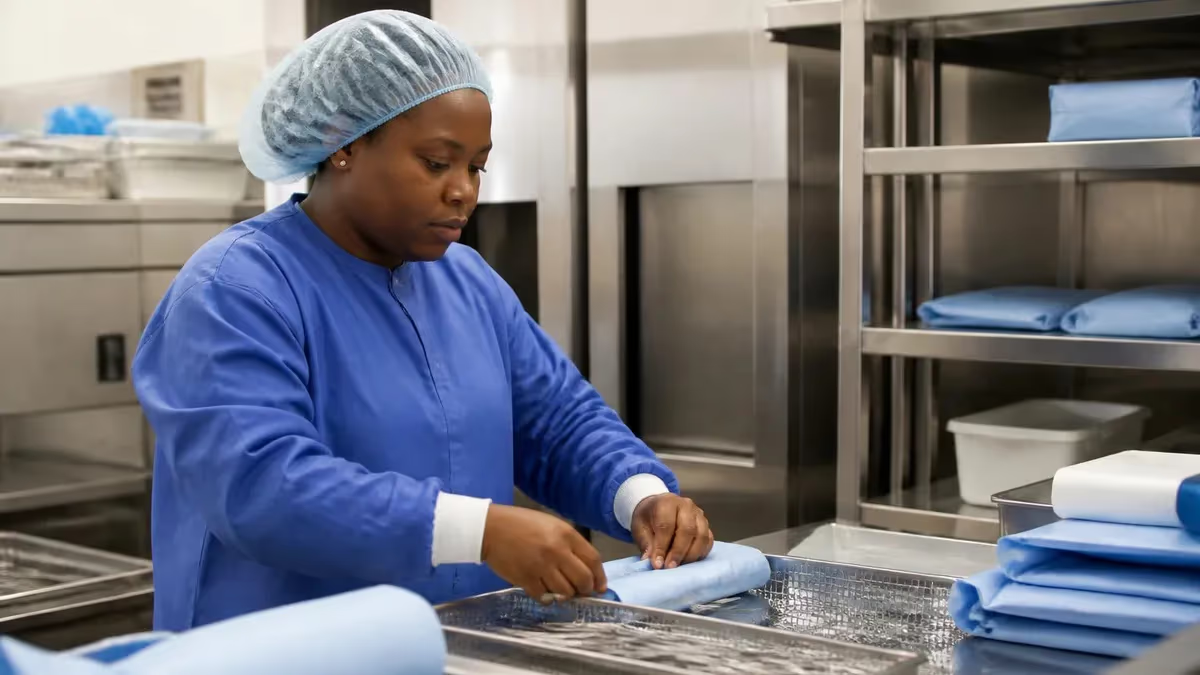
The CRCST salary is one of the first questions aspiring central service technicians ask when weighing whether to pursue this healthcare career, and the answer in 2026 is genuinely encouraging. Certified Registered Central Service Technicians earn a national average of roughly $44,500 per year, or about $21.40 per hour, with experienced specialists in major metros pulling in well above $55,000 annually. That pay comes with steady hospital demand, predictable hours, and a clear ladder for advancement into lead, supervisor, and educator roles. Practice with the free Certified Registered Central Service Technician practice test on PracticeTestGeeks (7 questions with answer explanations).
What separates CRCST earnings from comparable entry-level healthcare jobs is the certification multiplier. Uncertified sterile processing techs typically start around $16 to $18 per hour, while CRCST-credentialed peers in the same department often start two to four dollars higher and reach top-of-scale faster. Hospitals reward the credential because it reduces immediate-use steam sterilization errors, shortens orientation time, and satisfies Joint Commission documentation standards that surveyors actively check.
Pay is also remarkably geography-sensitive. A CRCST in rural Mississippi may earn $18 per hour while the same job description in San Francisco or Boston commands $32 or more. Cost of living explains part of the spread, but union density, hospital system size, and local tech shortages drive equally large differences. Travel CRCST contracts have added a third tier on top, with 13-week assignments paying $1,800 to $2,400 weekly when housing stipends are included.
Shift selection adds another lever most candidates underestimate. Evening shifts typically add 8 to 12 percent to base pay, nights add 15 to 20 percent, and weekend differentials stack on top. A CRCST willing to work a permanent 3pm-to-11pm rotation in a level-one trauma center can realistically out-earn a day-shift colleague by $7,000 to $10,000 annually without taking a single overtime hour, which makes shift strategy nearly as important as certification itself.
The career path also offers genuine wage compression resistance. Unlike fields where five-year veterans earn barely more than newcomers, CRCSTs see steady step increases tied to tenure, additional IAHCSMM credentials (CIS for instruments, CHL for leadership, CER for endoscopes), and movement into specialty areas like robotic instrument processing. Before diving into the numbers, candidates who want to lock in the credential first should review our complete CRCST: Your Guide to Certification Success walkthrough.
This guide breaks down everything that drives a CRCST paycheck in 2026: the base salary by state, hourly rates by experience, shift differentials, overtime patterns, benefit values, signing bonuses, travel-tech premiums, and the specific certifications and skills that push earnings into the top quartile. You will also find realistic year-one expectations, negotiation scripts, and the questions hiring managers expect during salary discussions.
Whether you are choosing between sterile processing and a competing healthcare program, currently enrolled in a CRCST course, or already certified and wondering if your pay is fair, the numbers below give you concrete benchmarks to act on. By the end you will know exactly where you stand, what your next pay bump should look like, and which moves accelerate your earning trajectory the fastest.
Free Certified Registered Central Service Technician Exam Study Tools
Interactive Certified Registered Central Service Technician Exam resources on PracticeTestGeeks, free to start:
- CRCST Surgical Instrumentation 1 — 7 questions with answer explanations
- Certified Registered Central Service Technician Exam flashcards — review key terms and concepts card by card
- Certified Registered Central Service Technician Exam study guide — topic-by-topic overview of what the exam covers
- Certified Registered Central Service Technician Exam cheat sheet — one-page printable summary for last-minute review
- The CRCST exam has 150 multiple-choice questions, of which 125 are scored and 25 are unscored pretest questions. (Healthcare Sterile Processing Association)
- HSPA sets the CRCST passing point with a criterion-referenced Angoff procedure supplemented by the Beuk compromise method, and it does not publish a fixed passing number. (Healthcare Sterile Processing Association)
- Each CRCST exam retake costs $140, the same as the initial exam fee. (Healthcare Sterile Processing Association)
- A candidate who fails the CRCST exam must wait at least 6 weeks before retesting and must submit a retake application with the $140 fee. (Healthcare Sterile Processing Association)
- CRCST certification is valid for one year after passing and must be renewed every year. (Healthcare Sterile Processing Association)
- The CRCST exam is a computer-based test taken in person at a Prometric testing center, and no paper version is available. (Healthcare Sterile Processing Association)
- CRCST certification requires 400 hours of hands-on sterile processing experience, earned either in the five years before applying or within six months after passing the exam (provisional route). (Healthcare Sterile Processing Association)
- CRCST candidates get a preliminary pass/fail result at the Prometric test center, and official results appear in their HSPA account portal within 24 hours. (Healthcare Sterile Processing Association)
Facts verified Oct 17, 2026 against Healthcare Sterile Processing Association. Dates that have passed are removed automatically.
CRCST Exam at a Glance
| Item | Detail | Official source |
|---|---|---|
| Number of questions | 150 multiple-choice questions (125 scored, 25 unscored pretest) | Healthcare Sterile Processing Association |
| Passing score | Criterion-referenced cut score (Angoff method); number not published | Healthcare Sterile Processing Association |
| Retake fee | $140 per retake | Healthcare Sterile Processing Association |
| Retake policy | Wait at least 6 weeks; new retake application and fee | Healthcare Sterile Processing Association |
| Validity | 1 year, renewed annually | Healthcare Sterile Processing Association |
| Delivery | Computer-based at Prometric test centers; no paper version | Healthcare Sterile Processing Association |
| Eligibility | 400 hands-on SPD hours (past 5 years, or within 6 months after passing for provisional) | Healthcare Sterile Processing Association |
| Score release | Preliminary pass/fail on screen; results in portal within 24 hours | Healthcare Sterile Processing Association |
| Registration deadline | Rolling; allow 3-4 weeks for processing | Healthcare Sterile Processing Association |
| Testing window | Year-round; 120 days to test after approval | Healthcare Sterile Processing Association |
Facts verified Oct 17, 2026 against Healthcare Sterile Processing Association. Dates that have passed are removed automatically.
CRCST Salary by the Numbers
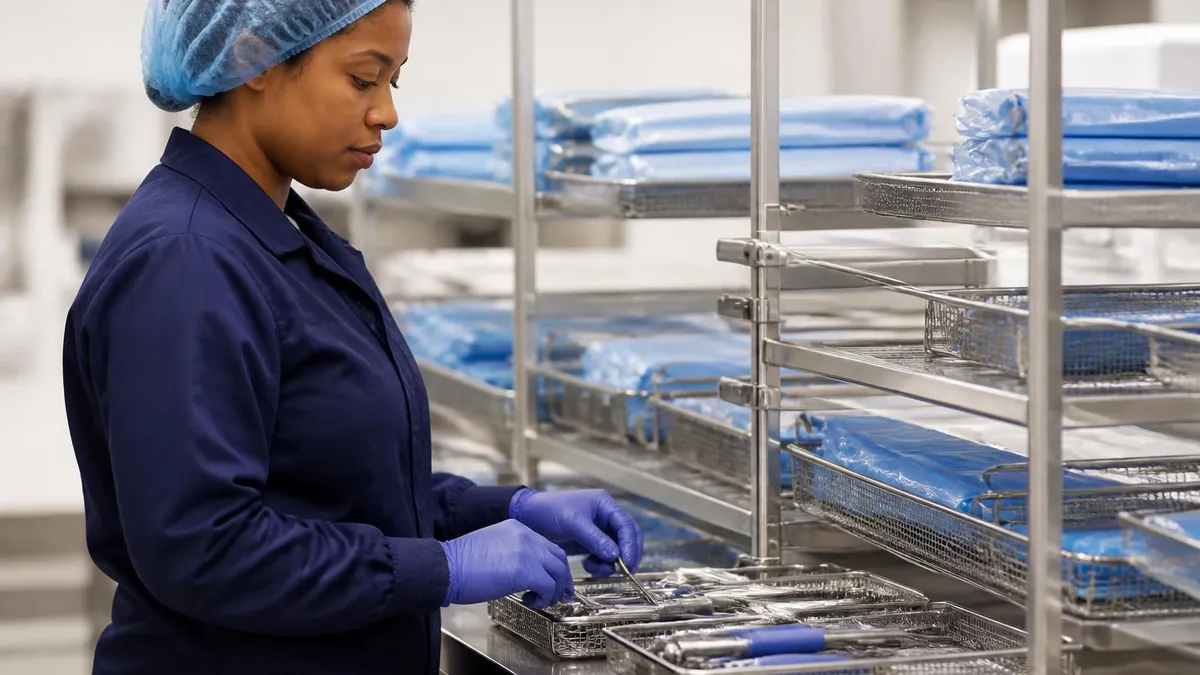
CRCST Salary by U.S. Region
California, Washington, and Oregon lead the country with averages of $28 to $34 per hour. San Francisco Bay Area hospitals routinely post CRCST roles above $36, driven by union contracts and severe technician shortages.
Massachusetts, New York, New Jersey, and Connecticut cluster around $26 to $32 per hour. Academic medical centers in Boston and NYC pay top-of-band, with night-shift differentials pushing total hourly compensation past $38.
Illinois, Minnesota, and Michigan sit near the national average at $20 to $25 per hour. Large health systems like Mayo, Cleveland Clinic, and Northwestern offer competitive benefits packages that offset slightly lower base rates.
Texas, Florida, Georgia, and the Carolinas range from $17 to $23 per hour, with Houston, Atlanta, and Miami metros paying the top of the range. Lower cost of living means real purchasing power often matches coastal peers.
Colorado and Arizona pay $22 to $27 per hour thanks to growing populations and hospital expansion. Rural areas in Wyoming, Montana, and the Dakotas often offer signing bonuses of $3,000 to $7,500 to attract certified techs.
CRCST hourly pay follows a predictable arc tied directly to years of department experience, additional certifications, and the complexity of instrumentation the technician handles. Entry-level CRCSTs in their first twelve months typically earn $17 to $20 per hour at community hospitals and $20 to $24 at academic centers. The credential alone does not max out starting pay; what matters is whether you can independently process orthopedic trays, flexible endoscopes, and robotic instruments without supervision by month six.
By years two through four, most CRCSTs reach $22 to $27 per hour as they take on lead-tech responsibilities, train new hires, and handle escalations during off-shifts. This is also the window where pursuing a Certified Instrument Specialist (CIS) credential begins paying obvious dividends, typically adding $1.50 to $3.00 per hour because instrument-focused techs are scarcer and own the most error-prone workflows. Hospitals will often reimburse the CIS exam fee if you commit to a one-year retention period.
Mid-career CRCSTs with five to nine years of experience commonly earn $26 to $32 per hour, particularly when they layer on the Certified Healthcare Leader (CHL) credential and step into charge-tech or assistant-supervisor roles. At this stage, pay structures shift from pure hourly increases to a blend of base raises, on-call stipends, and bonus eligibility tied to departmental quality metrics like tray accuracy rates and instrument turnover times.
Senior CRCSTs with ten or more years routinely earn $30 to $38 per hour as supervisors, educators, or sterile processing managers. Manager-level salaries often convert to exempt status with annual compensation between $72,000 and $98,000, plus performance bonuses of 5 to 12 percent. The path from bench tech to manager generally takes seven to ten years for self-directed candidates, faster in systems with formal leadership development tracks.
Overtime opportunities significantly inflate take-home pay across all experience levels. CRCSTs in level-one trauma centers and large surgical hospitals frequently log 4 to 10 overtime hours weekly, especially on weekends and during emergency case surges. At time-and-a-half, even ten hours of weekly overtime adds roughly $16,000 to annual earnings for a tech at $25 per hour. Many CRCSTs intentionally pick employers with chronic open shifts for exactly this reason.
Shift differentials remain the most underused earning lever in the field. Evening (3pm-11pm) shifts typically add $1.50 to $2.50 per hour, night (11pm-7am) shifts add $3.00 to $5.00, and weekend shifts add another $1.00 to $3.00. Stacking a permanent weekend-night rotation can push effective hourly pay from $24 base to $32 or higher, which is why experienced techs often deliberately choose these schedules. To prepare for the credentialing exam that unlocks these rates, candidates should work through our CRCST Practice Test: Free Questions, Answers & Exam Prep Guide.
Geographic arbitrage adds another dimension. A CRCST who moves from rural Alabama at $18 per hour to Seattle at $32 per hour effectively doubles their hourly rate, though housing costs absorb a meaningful chunk of that increase. Travel CRCST contracts let technicians capture metro-level pay without permanent relocation, making them especially attractive for younger techs without family obligations or for veterans wanting to bank savings before retirement.
CRCST Practice Test Questions
Prepare for the CRCST - Certified Registered Central Service Technician Exam exam with our free practice test modules. Each quiz covers key topics to help you pass on your first try.
CRCST Career Implications
CRCST Exam Questions covering Career Implications. Master CRCST Test concepts for certification prep.
CRCST Distribution and Delivery
Free CRCST Practice Test featuring CRCST Distribution and Delivery. Improve your CRCST Exam score with mock test prep.
CRCST Microbiology and Infection Control
CRCST Mock Exam on CRCST Microbiology and Infection Control. CRCST Study Guide questions to pass on your first try.
CRCST Decontamination
CRCST Test Prep for Decontamination. Practice CRCST Quiz questions and boost your score.
CRCST Equipment Maintenance
CRCST Questions and Answers on Equipment Maintenance. Free CRCST practice for exam readiness.
CRCST Evaluation Summary
CRCST Mock Test covering Evaluation Summary. Online CRCST Test practice with instant feedback.
CRCST Instrument Processing
Free CRCST Quiz on Instrument Processing. CRCST Exam prep questions with detailed explanations.
CRCST Inventory Control
CRCST Practice Questions for Inventory Control. Build confidence for your CRCST certification exam.
CRCST Preparation Tips
CRCST Study Material on Preparation Tips. Prepare effectively with real exam-style questions.
CRCST Quality Assurance
Free CRCST Test covering Quality Assurance. Practice and track your CRCST exam readiness.
CRCST Recertification and Maintenance
CRCST Exam Questions covering Recertification and Maintenance. Master CRCST Test concepts for certification prep.
CRCST Salary by Employer Type
Acute-care hospitals employ roughly 70 percent of all CRCSTs and set the benchmark for industry pay. Large academic medical centers and level-one trauma hospitals pay the highest base rates, typically $24 to $32 per hour for mid-career techs, plus rich benefit packages including pension contributions, tuition reimbursement, and discounted family health insurance valued at $8,000 to $15,000 annually.
Community hospitals pay slightly less in base wages but offer faster promotion timelines because departments are smaller and turnover creates frequent openings. Critical-access rural hospitals often supplement lower base pay with $3,000 to $10,000 signing bonuses, relocation assistance, and guaranteed overtime, making total first-year compensation surprisingly competitive with metro positions.

Is CRCST Salary Worth the Certification Investment?
- +Certification typically pays for itself within the first 90 days through hourly rate increases
- +Steady hospital demand means near-zero unemployment risk even in recessions
- +Clear ladder to lead tech, supervisor, and manager roles with defined pay jumps
- +Generous shift differentials let motivated techs significantly boost earnings
- +Strong benefit packages including health insurance, retirement, and tuition reimbursement
- +Overtime is plentiful for techs willing to pick up extra shifts
- +Travel contracts allow geographic flexibility with premium pay
- −Starting wages in rural southern states can be modest at $17 to $19 per hour
- −Physical demands include long hours standing, heavy trays, and chemical exposure
- −Night and weekend shifts pay best but disrupt sleep and family schedules
- −Annual certification renewal requires 12 continuing education credits and a fee
- −Pay ceiling without leadership transition tops out around $40 per hour
- −Smaller community hospitals may offer limited advancement opportunities
- −Burnout risk is real during high-volume surgical periods and short-staffing
Pros and Cons at a Glance
| Pros | Cons |
|---|---|
| Steady hospital demand means near-zero unemployment risk even in recessions | Physical demands include long hours standing, heavy trays, and chemical exposure |
| Clear ladder to lead tech, supervisor, and manager roles with defined pay jumps | Night and weekend shifts pay best but disrupt sleep and family schedules |
| Generous shift differentials let motivated techs significantly boost earnings | Smaller community hospitals may offer limited advancement opportunities |
| Strong benefit packages including health insurance, retirement, and tuition reimbursement | Burnout risk is real during high-volume surgical periods and short-staffing |
CRCST Salary Negotiation Checklist
- ✓Research three local hospital pay bands using Glassdoor, Indeed, and union contract data
- ✓Document every credential you hold: CRCST, CIS, CHL, CER, and any vendor certifications
- ✓List specific high-value skills like robotic instrument processing or flexible endoscope reprocessing
- ✓Calculate total compensation including shift differentials, overtime patterns, and benefit values
- ✓Identify two competing offers or counter-offers to use as use in conversations
- ✓Ask for the top of the posted range rather than the midpoint when negotiating
- ✓Request a sign-on bonus separately if base pay is non-negotiable due to band ceilings
- ✓Negotiate a six-month pay review tied to completion of orientation and competencies
- ✓Confirm tuition reimbursement covers CIS, CHL, and CER exam fees and study materials
- ✓Get every commitment in writing in the offer letter before resigning your current position
Stack credentials beyond CRCST to escape the entry-level band
Holding CRCST alone caps most technicians around the 60th percentile of pay. Adding the CIS (instrument specialist) credential typically unlocks $2 to $4 more per hour within six months, and pairing CIS with CHL (leadership) opens supervisor roles that pay $15,000 to $25,000 more annually. The certifications cost roughly $250 each but generate lifetime earnings increases measured in tens of thousands of dollars.
Career advancement in sterile processing follows a remarkably structured progression that directly translates into pay. The typical trajectory starts at bench technician, moves through senior tech and lead tech, then up to coordinator, supervisor, manager, and finally director or system-wide service line leader. Each step adds between $4,000 and $20,000 to annual earnings, and most steps are achievable within an eighteen-month window if you actively pursue the prerequisite credentials and visible projects.
Lead technician is the first major bump and usually requires two to four years of bench experience plus demonstrated competency across decontamination, assembly, sterilization, and storage. Lead techs typically earn $1.50 to $3.00 more per hour than bench staff, take responsibility for shift quality metrics, train new hires, and serve as the escalation point for surgical-team complaints. Many hospitals require CIS certification before promotion to lead, making it the single highest-ROI credential after CRCST itself.
The coordinator and assistant-supervisor tier sits between hourly and salaried roles. Coordinators handle scheduling, vendor relationships, instrument tracking system administration, and quality audits. Pay ranges from $28 to $36 per hour, often with eligibility for annual bonuses tied to departmental KPIs. Assistant supervisors begin attending leadership meetings, owning specific service lines like orthopedics or cardiology, and managing small teams of three to seven technicians.
Sterile processing supervisor and manager positions typically convert from hourly to salaried compensation between $65,000 and $98,000, with directors at large health systems clearing $110,000 to $145,000. These roles require strong written communication, comfort with budget management, and the political skills to advocate for the department in front of surgical leadership. The CHL (Certified Healthcare Leader) credential is increasingly considered a baseline requirement for any role above lead tech.
Specialty paths offer alternative earning routes for technicians who prefer technical depth over management. Sterile processing educators design competency programs and conduct annual skills assessments, typically earning $30 to $40 per hour with weekday schedules. Endoscope reprocessing specialists with the CER credential are in particularly short supply and command premium pay because flexible-scope errors are the highest-risk failure mode in most departments.
Industry positions outside the hospital represent another high-paying exit. Medical device manufacturers like Stryker, Medtronic, Steris, and Getinge hire experienced CRCSTs as clinical educators, technical sales representatives, and product specialists, with base salaries between $75,000 and $115,000 plus bonus and travel reimbursement. Joint Commission and CMS survey-readiness consulting firms also recruit veteran CRCSTs for project-based engagements paying $400 to $800 per day.
Finally, the explosion of single-use device reprocessing companies, third-party sterilization vendors, and instrument tracking software firms has created entirely new career lanes. Account managers, implementation specialists, and clinical advisors at companies like Censis, SPM, and Stericycle frequently start at $80,000 to $100,000 with stock options, drawing heavily from the CRCST talent pool because field credibility matters enormously to hospital buyers.
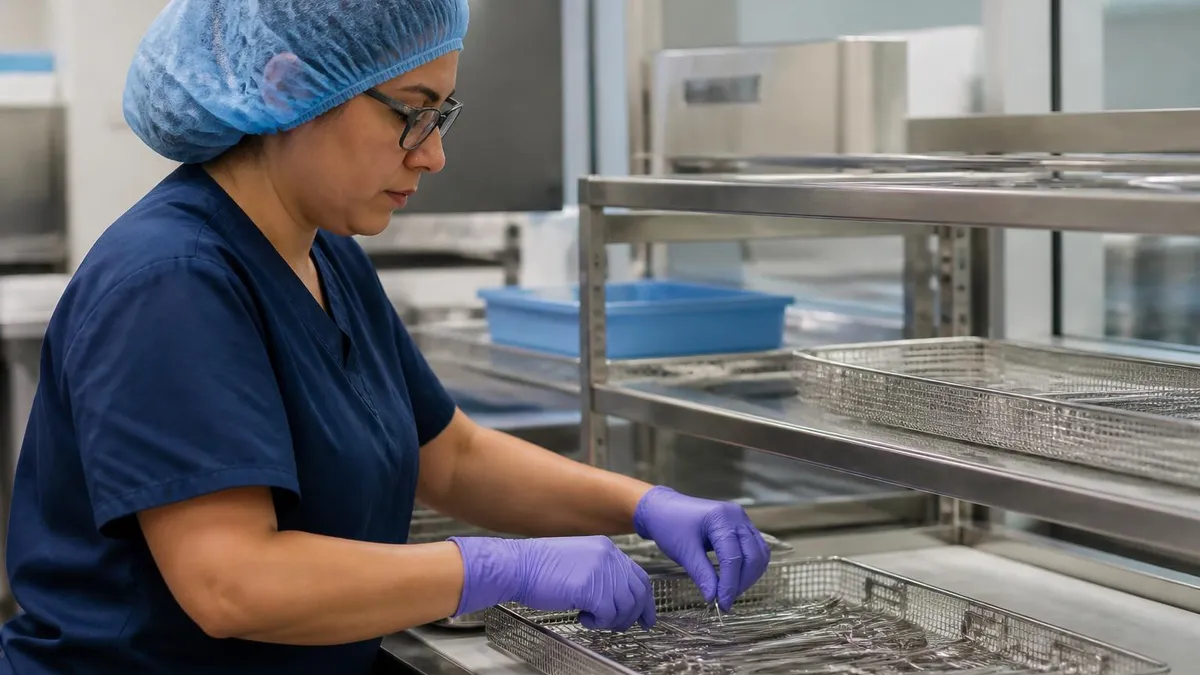
HSPA requires 12 continuing education credits and a $50 to $125 renewal fee every year to maintain the CRCST credential. Letting certification lapse can disqualify you from differential pay, lead-tech eligibility, and certain hospital positions entirely. Always set calendar reminders 90 days before your renewal date and confirm whether your employer reimburses the fee and CE materials.
Maximizing CRCST earnings comes down to a small set of high-use decisions made early and revisited annually. The first is choosing a starting employer with a known reputation for pay transparency and internal promotion. Large academic medical centers, unionized public hospitals, and major nonprofit systems publish their pay bands, conduct annual market adjustments, and offer formal career-ladder programs. A technician who starts at one of these systems typically out-earns identical peers at small community hospitals by $8,000 to $14,000 within five years.
The second high-use decision is committing to one additional credential within your first eighteen months. Most successful CRCSTs add the CIS credential first because instrument processing is where mistakes get caught by surgeons and where pay differentials are largest. If your hospital has a strong endoscopy program, the CER credential may pay even better. The exam fees of $250 to $350 typically recoup within 60 to 90 days at the new hourly rate.
The third lever is intentional shift selection. Many technicians default to day shift because it feels more normal, but the math strongly favors evening and overnight positions. A permanent 11pm-to-7am shift with weekend rotation can add $9,000 to $13,000 annually compared to identical day-shift work, and the schedule actually allows for daytime college courses, side businesses, or childcare coverage that day shifts make impossible. Try a six-month commitment before deciding it is not for you.
Overtime strategy matters more than most candidates realize. Hospitals chronically short on weekend coverage will pay time-and-a-half plus weekend differential, effectively delivering $40 to $50 per hour for techs whose base is $25. Working four planned overtime shifts per month adds roughly $10,000 to annual income. The trick is making overtime predictable and bounded so it does not turn into burnout; pre-committing to specific recurring shifts works better than reacting to last-minute calls.
Negotiation is the single most underused skill in sterile processing. Many CRCSTs accept the first offer without countering, leaving $2,000 to $5,000 on the table annually. A simple script works in most cases: thank the recruiter, express enthusiasm, mention you have researched the market and a competing range, and ask whether the offer can move toward the top of band given your credentials and experience. Roughly two-thirds of healthcare employers will adjust at least modestly when asked professionally.
Annual reviews are the second negotiation opportunity most CRCSTs waste. Prepare a one-page document listing accomplishments, training hours delivered, quality-metric improvements, and certifications added during the year. Bring competitive pay data printed from current job postings. Request a specific percentage increase tied to documented value rather than waiting to see what HR offers. Techs who prepare this way receive raises 1.5 to 2 times larger than peers who do not. For ongoing exam-readiness practice, our CRCST Practice Test PDF (Free Printable 2026) gives you offline study material for continuing education.
Finally, treat your career as a five-year planning horizon rather than a job-to-job sequence. Map where you want to be at year three (lead tech), year five (CIS plus supervisor track), and year seven (manager or specialty expert). Backwards-plan the credentials, projects, and employer moves required to land each milestone. CRCSTs who plan this way routinely double their starting wages within seven years; those who drift typically gain only modest cost-of-living increases.
Practical salary maximization starts with documenting everything you do that creates measurable value for the department. Track the number of trays you assemble per shift, your error-free streak, the new hires you train, the in-services you deliver, and any committees you join. Performance review conversations go very differently when you can quantify your contributions versus when you rely on subjective recollections. A simple shared spreadsheet updated weekly takes ten minutes and pays dividends for years.
Build relationships with the operating room team early and visibly. Surgical staff and OR managers carry enormous influence over which sterile processing technicians get rewarded, promoted, and protected during budget cuts. Volunteer to round in the OR during downtime, ask surgeons what frustrates them about tray quality, and follow up with documented fixes. CRCSTs who become known to surgeons by name almost always advance faster than equally skilled peers who never leave the department.
Invest deliberately in instrument and equipment knowledge that few peers have. Robotic instrument processing for da Vinci systems, complex orthopedic loaner trays, neurosurgery sets, and flexible endoscopes all carry premium pay because they require specialized expertise and the consequences of errors are severe. Volunteering to be the department expert on one of these areas typically results in being asked to train others within twelve months, which is a direct stepping stone to lead-tech or educator roles.
Avoid the trap of chasing tiny raises by job-hopping every twelve months. While one or two strategic moves early in your career can accelerate pay significantly, employers eventually flag short-tenure resumes as risk indicators. A pattern of two to four year stays with clear promotion or credential growth at each stop signals stability and ambition simultaneously. Recruiters and hiring managers consistently rate this resume pattern as the strongest predictor of offer competitiveness.
Use professional associations strategically. HSPA membership costs roughly $99 annually but provides access to discounted certification renewal, free continuing education credits, conference networking, and a job board where positions often pay above market because employers expect serious candidates. Local chapter meetings are particularly valuable because they connect you with hiring managers and supervisors at every hospital in your region, which is exactly the network you want when planning your next move.
Plan retirement and benefit contributions aggressively. Many hospital systems match 4 to 6 percent of salary in 403(b) contributions, which is essentially free money worth $1,800 to $3,000 annually for a typical CRCST. Capturing the full match should be non-negotiable from day one. Tuition reimbursement programs, often offering $3,000 to $7,500 per year, can fund associate or bachelor degrees in healthcare administration, opening management-track positions that would otherwise be inaccessible.
Finally, take care of your body. Sterile processing is physically demanding work involving long standing hours, repetitive motions, chemical exposure, and lifting heavy trays. Chronic injuries shorten careers and force premature exits from the highest-paying shift schedules. Invest in good shoes, request ergonomic workstations, take legitimately scheduled breaks, and use available employee wellness benefits. The CRCSTs who reach the top of the pay band at year ten are almost universally the ones who treated their physical health as a career asset from year one.
Sample Certified Registered Central Service Technician Exam Practice Questions
Try these questions from our free Certified Registered Central Service Technician Exam practice tests. The correct answer and an explanation follow each question.
Which organization offers the CRCST certification that is widely recognized as the national standard for central service technicians?
- A. AAMI
- B. IAHCSMM
- C. APIC
- D. CBSPD
Answer: B. IAHCSMM
The International Association of Healthcare Central Service Materiel Management (IAHCSMM) administers the CRCST credential.
Which of the following is an acceptable way to earn CE credits for CRCST recertification?
- A. Attending IAHCSMM-approved webinars
- B. Watching general medical TV shows
- C. Reading unrelated healthcare blogs
- D. Completing an unrelated college course
Answer: A. Attending IAHCSMM-approved webinars
To ensure the quality and relevance of continuing education, IAHCSMM specifies acceptable activities for earning CE credits. Attending IAHCSMM-approved webinars is a direct and recognized method, as these programs are designed to provide up-to-date information pertinent to central service professionals.
A CRCST technician reads an IAHCSMM-approved article and passes the associated quiz. What does this activity typically earn?
- A. A department merit badge
- B. Continuing education contact hours
- C. A bonus examination attempt
- D. An exemption from the annual renewal fee
Answer: B. Continuing education contact hours
Completing approved journal articles with post-tests is a recognized method for earning continuing education contact hours.
Which factor most directly affects salary negotiation leverage for an experienced CRCST?
- A. Years of general hospital employment
- B. Specialty certifications and documented competencies
- C. Seniority within the nursing department
- D. Number of surgical procedures observed
Answer: B. Specialty certifications and documented competencies
Specialty certifications and documented competencies demonstrate measurable value and justify higher compensation during negotiations.
Take the full Certified Registered Central Service Technician Exam practice test
CRCST Questions and Answers


How this page was made: written with AI tools and published by Nathan Beja, founder of Practice Test Geeks, who is responsible for its content. Exam facts are checked against the official sources listed below. Not reviewed by a subject-matter expert. Editorial policy
Sources & references
Exam facts on this page (fees, format, dates, passing scores) are checked against these official sources; the date is our last check. Editorial policy
- myhspa.org — Test delivery, fees, exam format, retake policy, score release, test dates, score validity, eligibility, registration deadline, retake fee · verified Oct 2026