
CPR Certification Renewal: Classes, Cost, and Continuing Education 2026 October
CPR renewal class guide: 🟢 types (Heartsaver, BLS, ACLS, PALS), cost, format options, and how to renew through AHA or Red Cross before expiration.
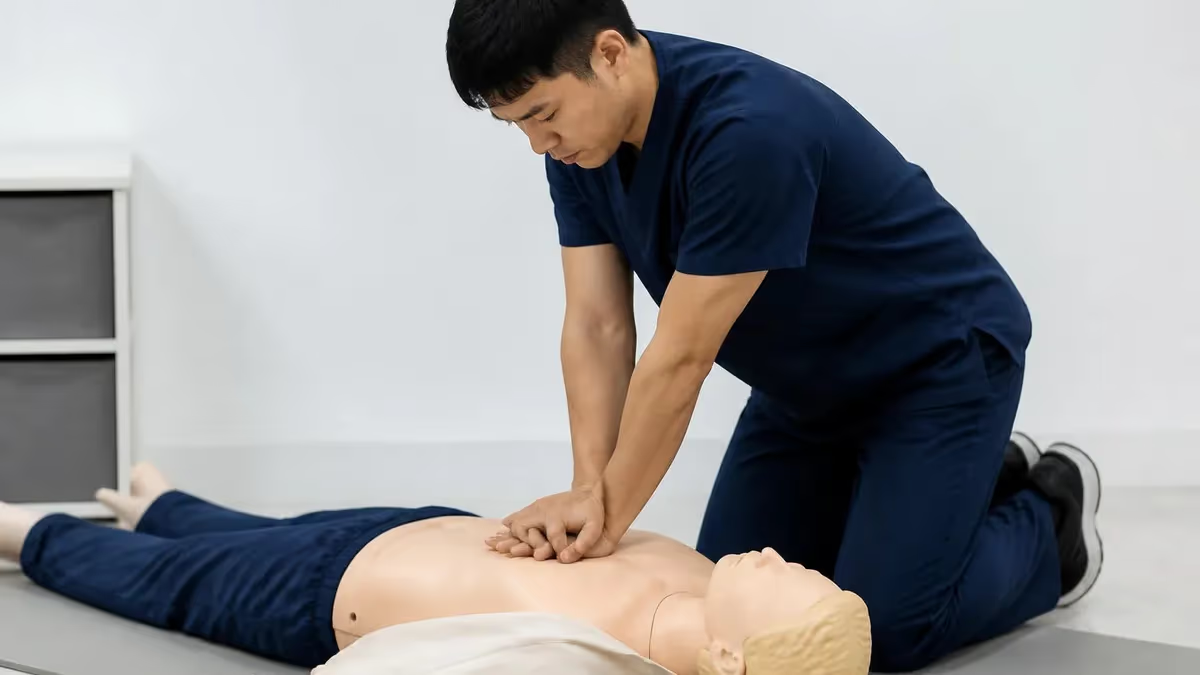
CPR Renewal: Keep Your Certification Active
CPR certification typically lasts 2 years from issue date. Healthcare workers, fitness professionals, lifeguards, childcare workers, teachers in some states, and many others maintain CPR certification as a workplace requirement. Renewal classes refresh skills, update content based on the latest American Heart Association (AHA) guidelines, and produce a new card extending certification for another 2-year cycle. Letting your card expire typically requires a full course rather than the shorter renewal — significantly more time and cost.
This guide walks through CPR renewal in detail: the major certification types (Heartsaver, BLS, ACLS, PALS), certifying bodies (AHA, Red Cross, NSC, ASHI), class format options (in-person, blended online plus skills check, HeartCode), typical renewal costs, what to expect during renewal classes, how to find classes locally, and what happens if your card lapses. If you need to refresh CPR knowledge before renewal, the CPR practice test covers current AHA guideline content. The CPR certification guide covers the foundation credential. The BLS certification guide covers healthcare-specific BLS requirements.
For most workers, CPR renewal is a routine compliance task rather than a learning event. The skills are similar to your initial certification, the format is familiar, and the time investment is modest. Plan ahead and the renewal slots cleanly into your professional development cycle without becoming a source of stress.
For workers approaching expiration without prior renewal experience, the process is genuinely straightforward. AHA and Red Cross have streamlined registration and class scheduling to support both individuals and employer-sponsored cohorts. The biggest mistake new renewers make is waiting too long — renew at least 30-60 days before expiration to avoid lapse penalties.
One common confusion: continuing education credit hours for healthcare licenses are separate from CPR renewal. Both may need maintenance simultaneously, but they're distinct administrative processes. A 4-hour CPR renewal might also count toward your nursing or paramedic CE requirements if your state accepts it — verify with your specific licensing board.
The 2-year cycle reflects research on skill decay. Studies show CPR technique deteriorates measurably within 6-12 months without practice. The 2-year cycle balances the cost of frequent renewal against the safety value of regular skill refresh. More frequent practice between formal renewals improves real-world response capability.
Bottom Line
CPR certification expires every 2 years. Renewal options include in-person classes (2-4 hours, $50-$150), blended learning (online theory plus in-person skills check, $40-$120), and HeartCode for healthcare workers (online plus skills session, $100-$200). Major certifying bodies: American Heart Association (most accepted), American Red Cross, National Safety Council, ASHI. ACLS and PALS renewals run $200-$400. Renew BEFORE your card expires — expired cards require full new course rather than renewal.
The Major CPR Certifying Bodies
American Heart Association (AHA) is the most widely-accepted CPR certifying body in the US. AHA certifications are required by virtually every hospital, healthcare facility, EMS service, and most fitness facilities. The AHA also sets the guidelines for CPR best practices that other certifying bodies follow. AHA cards are digitally issued through atrainings.com and are easy to verify electronically by employers. For healthcare workers specifically, AHA BLS is essentially mandatory — workplace requirements typically specify AHA cards.
American Red Cross is the second-most-accepted CPR certifying body. Red Cross certifications cover the same skills as AHA but use slightly different protocols and terminology. Many non-healthcare employers (fitness facilities, childcare centers, schools, summer camps) accept Red Cross certifications interchangeably with AHA. National Safety Council (NSC) and American Safety and Health Institute (ASHI) are smaller certifying bodies more common in workplace safety contexts and some non-healthcare environments. Some specialty employers accept only specific certifying body credentials; verify your employer's requirements before choosing where to renew.
Some smaller certifying bodies have come and gone over the years. Stick with established providers (AHA, Red Cross, NSC, ASHI) that have broad employer acceptance. Choosing a lesser-known certifying body can leave you with cards that aren't accepted at your target workplace.
Cross-acceptance between certifying bodies works in most contexts but has occasional friction. Some hospitals exclusively accept AHA cards. Some smaller employers accept any reputable certifying body. The AHA dominance in healthcare reflects historical relationships and quality consistency, not regulatory mandate.
For internationally-trained healthcare workers transitioning to US practice, US-issued CPR certifications are typically required regardless of equivalent foreign credentials. Plan to complete US AHA or Red Cross certification during the credentialing transition.
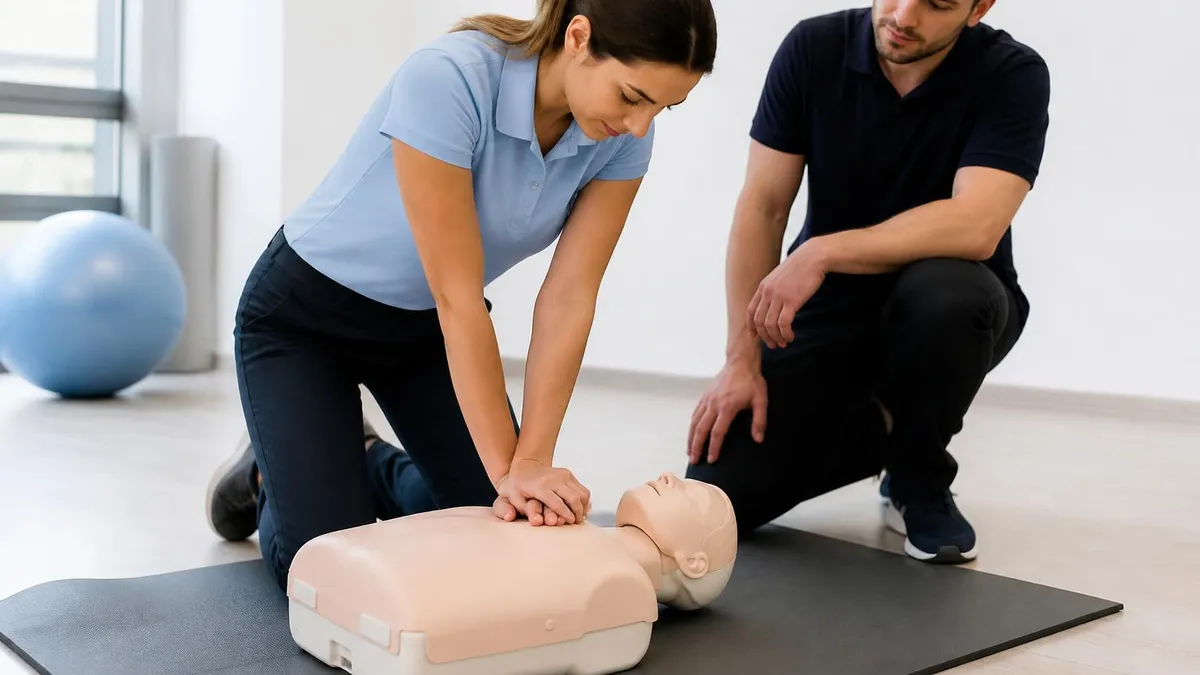
CPR Certification Types Explained
For non-healthcare workers — fitness professionals, lifeguards, childcare workers, teachers, parents wanting basic skills. Covers adult and child CPR, AED use, choking response. 2-4 hour class. Renewal $50-$120. AHA and Red Cross both offer equivalent courses.
Heartsaver CPR plus comprehensive first aid (wound care, environmental emergencies, allergic reactions, head/spine injuries). Typical for occupational health requirements at non-healthcare workplaces. 4-6 hour class. Renewal $70-$130.
For healthcare workers — nurses, doctors, EMTs, paramedics, healthcare students. More comprehensive than Heartsaver, includes team-based resuscitation, infant CPR with rescuer pairs, bag-mask ventilation. 4-5 hours initial; renewal 2-3 hours. $80-$150 for renewal.
For physicians, nurses, paramedics, and other advanced healthcare workers. Includes ECG rhythm recognition, advanced airway management, medication administration during resuscitation, and team leadership. 12-16 hours initial; renewal 6-8 hours. $200-$400 for renewal.
For healthcare workers caring for children and infants — pediatric nurses, pediatric residents, pediatric ICU staff, emergency department workers. Pediatric-specific algorithms for cardiac arrest, respiratory failure, shock. 14-16 hours initial; renewal 6-8 hours. $250-$400 for renewal.
For healthcare workers in newborn and labor/delivery contexts. Specific to neonatal resuscitation immediately after birth. Online theory plus in-person skills check. 4-6 hours total. $150-$300 for renewal.
Renewal Class Formats
Traditional in-person classes are the original format. Students attend a 2-4 hour session at a training center, fire station, hospital, or community college. The class combines lecture content, video instruction, skills practice on manikins, and skills assessment. The instructor reviews proper technique, current guidelines, and updates since the prior certification. At the end, you complete a skills check that may include a written test or just a hands-on assessment. Pass and you receive your renewal card.
Blended learning combines online theory completion with an in-person skills check. You complete the online portion (typically 1-2 hours) at your own pace through the certifying body's online platform — AHA HeartCode, Red Cross Resuscitation Suite, or similar. Then schedule a 30-60 minute in-person skills check at a local training center. Blended is faster than traditional in-person but requires self-paced online learning discipline. For healthcare workers, HeartCode is the AHA online theory platform; it integrates with various skills check options including in-person sessions and AHA-approved simulator-based assessments.
HeartCode integration with feedback manikins represents an interesting middle ground. Voice-Assisted Manikins (VAM) provide real-time technique feedback during practice — compression depth, rate, and recoil are measured electronically. This technology has substantially improved practice quality at training centers that have invested in it.
Mobile training options have expanded recently. Some training providers bring instructors and manikins to workplaces for on-site group training. Cost is typically higher per participant but the time savings for staff scheduling justify the premium for many employers.
For workers comfortable with online learning, the blended format typically saves 1-2 hours total compared to traditional in-person classes while producing equivalent certification. The online portion can be completed in fragments — 15-20 minutes at a time across multiple sessions — fitting into busy schedules better than traditional all-at-once classes.
Renewal Class Formats Compared
Full class at training center. 2-4 hours for Heartsaver or BLS renewal. 6-8 hours for ACLS/PALS renewal. Includes instructor-led lecture, video content, skills practice on manikins, and skills assessment. Best for hands-on learners and candidates who haven't practiced CPR recently. Cost $50-$400 depending on certification level.
Renewal Costs and What Affects Them
Heartsaver CPR/AED renewal typically runs $50-$120 depending on provider, location, and format. Heartsaver First Aid/CPR/AED combined classes run $70-$150. Basic Life Support (BLS) renewal for healthcare workers runs $80-$150 typical. Advanced Cardiac Life Support (ACLS) renewal runs $200-$400. Pediatric Advanced Life Support (PALS) renewal runs $250-$400. Costs vary by region (urban centers higher), instructor (hospital-affiliated centers may charge less for affiliated employees), and certifying body (AHA typically higher than smaller bodies).
Some employers cover renewal costs as professional development benefits. Hospital systems, fire departments, EMS services, and many other healthcare employers reimburse CPR renewal as standard employment benefit. Some fitness facilities, summer camps, and childcare centers similarly cover renewal costs for required-credential employees. Ask your employer's HR or training coordinator about reimbursement policies before paying out of pocket. Self-employed workers (personal trainers, swim instructors, child care providers) typically pay their own renewal costs as business expenses.
Multi-certification packages sometimes offer cost savings for healthcare workers renewing BLS plus ACLS plus PALS together. Some training centers bundle these renewals into 1-2 day sessions with package pricing. Worth investigating if you maintain multiple certifications simultaneously.
Group rates matter. Many training centers offer 10-20% discounts for groups of 6+ candidates from the same workplace. Coordinate with HR or colleagues to schedule shared renewal sessions if your timing aligns. The group savings can be substantial across a healthcare system.
Some certifying bodies require purchasing instructor-led course materials (workbook, video access) in addition to class fees. AHA student manuals run $20-$40 if not included in class registration. Verify what your class fee covers before assuming everything is included.
Consider the total cost of credentialing alongside other professional development expenses when budgeting your annual continuing education spend.
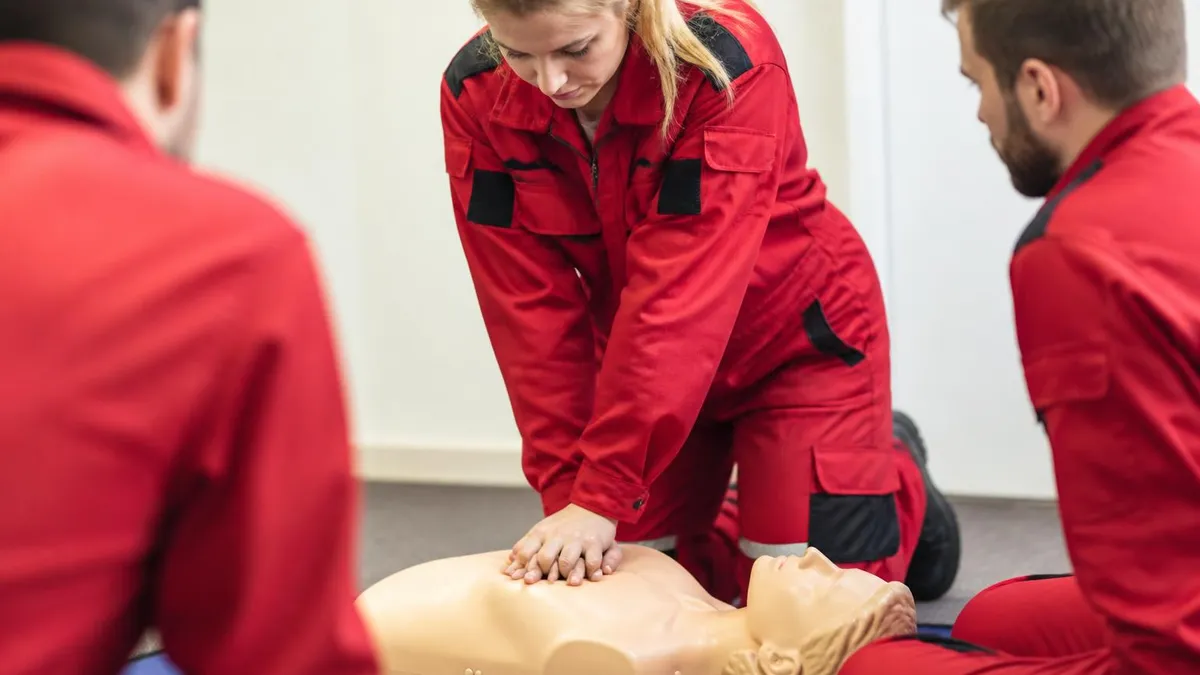
If your CPR card expires before renewal, most certifying bodies require a full initial course rather than the shorter renewal. Full BLS or Heartsaver courses run 4-5 hours versus 2-3 hours for renewal. Full ACLS or PALS courses run 14-16 hours versus 6-8 hours for renewal. The cost difference is substantial — full courses typically cost 30-50% more than renewals. Schedule renewal at least 30-60 days before expiration to avoid this. Some certifying bodies allow grace periods of 30 days past expiration but verify policies before assuming lapses are forgiven.
How to Find Renewal Classes
The AHA Class Finder at heart.org and the American Red Cross Take-A-Class website provide nationwide directories of approved CPR training centers. Enter your ZIP code to see classes within driving distance with dates, times, and registration links. Most large metropolitan areas have multiple training centers offering classes weekly or more. Smaller communities may have fewer options requiring more advance scheduling.
Other class sources include hospital training centers (often serve their employees and external students), community college continuing education programs, fire departments (often offer CPR classes as community service), Red Cross local chapters, YMCA branches, dive shops (for scuba diving CPR endorsements), and corporate training providers. Workplace-arranged classes through your employer often save time and cost compared to self-arranged renewal. The HeartCode online program enables self-paced renewal completion regardless of physical location — only the brief skills check requires in-person attendance.
For workers in healthcare systems, internal training departments often offer free renewal sessions for employees. Check with your HR or training coordinator before paying for external classes. Free internal renewals are one of the underappreciated perks of healthcare employment.
For rural candidates or those in underserved areas, some certifying bodies and training centers offer mobile classes or scheduled regional visits. Check with state EMS coordinators or regional healthcare workforce organizations about traveling training resources.
Booking online appointments is easier than ever at most training centers. Real-time class schedules, instant registration confirmation, and digital payment processing have eliminated most administrative friction. Plan ahead by 2-4 weeks for popular class times.
Plan early to secure preferred times.
Steps to Renew Your CPR Certification
- ✓Check your current card expiration date — renew 30-60 days before
- ✓Verify which certification you need (Heartsaver, BLS, ACLS, PALS) for your role
- ✓Confirm employer-acceptable certifying body (typically AHA for healthcare)
- ✓Search for classes at heart.org Class Finder or RedCross.org Take-A-Class
- ✓Choose format that fits your schedule (in-person, blended, HeartCode)
- ✓Register and pay for the class (or arrange employer reimbursement)
- ✓Complete any pre-class online theory (for blended learning options)
- ✓Attend in-person skills check or full class
- ✓Pass the skills demonstration on manikins
- ✓Receive your new card (typically digital eCard within 24-48 hours)
- ✓Save digital card and provide copy to employer per their requirements
What to Expect During Renewal Class
Renewal classes assume you have prior CPR experience and focus on skill refresh plus updates since your prior certification. Instructors review the latest AHA guidelines (typically updated every 5 years — most recent major update was 2020), demonstrate proper technique, and supervise practice on manikins. The class is hands-on rather than lecture-heavy — expect to perform compressions, give rescue breaths, use AED training equipment, and demonstrate choking response throughout.
The skills check at the end varies by certification level. For Heartsaver and BLS renewal, the instructor typically watches you perform a complete adult CPR sequence (compressions, breaths, AED use) and may also have you demonstrate child or infant CPR depending on certification scope. ACLS and PALS renewals include team-based scenario practice where you lead or participate in simulated resuscitations with rhythm recognition and medication decisions. The assessment is pass/fail; failed candidates typically have one immediate retake opportunity. Multiple failures may require additional practice time before re-attempting.
Instructors generally accommodate candidates needing extra practice time before assessment. The goal is skill validation, not exam-style filtering. Ask for additional practice rounds if you feel uncertain before the formal skills check; instructors typically appreciate the proactive approach.
For candidates who struggle with the skills check, instructors typically offer additional practice and immediate retest. Failing a renewal once doesn't typically require re-registering for the full course; same-day retake opportunities are standard practice at most training centers.
If you witnessed a real-world CPR situation between renewals, share the experience with the instructor during class discussion. Real-world reflections often help fellow students contextualize the formal training in practical situations.
Digital Card Issuance
Modern CPR certifications use digital cards (eCards) rather than physical paper cards. After passing your renewal, AHA delivers your eCard through atrainings.com (or similar platforms for Red Cross and other bodies). You receive an email notification within 24-48 hours of class completion. Log in to download the eCard or access it via the platform's mobile app. Employers can verify your card directly through the platform using your QR code or eCard number.
Keep digital records of your renewal class completion, eCard, and any continuing education credits. Some healthcare credentialing systems require uploading or providing your eCard for primary source verification. Lost eCards can be retrieved through the issuing platform; lost paper cards (if you have older physical cards from before digital transition) typically require contacting the training center where you took the class. Digital cards are the dominant format for renewals issued after 2018-2019; nearly all current renewals produce digital cards regardless of class format.
If your eCard hasn't arrived within 48 hours of class completion, contact your training center directly. Most issues resolve through the training center's administrative team rather than AHA directly. Save your class confirmation email and instructor information for follow-up.
Save your card information in a secure location alongside other professional credentials for easy access during employment verification or emergency reference.
Keep records organized.
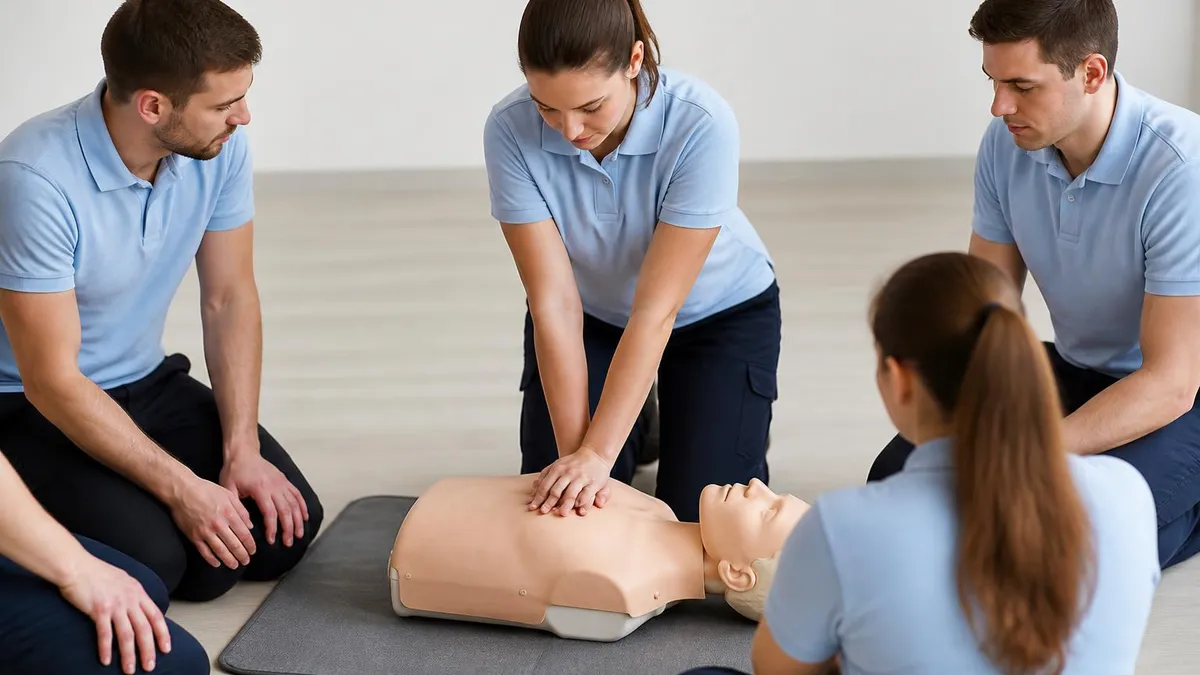
CPR Renewal at a Glance
Key Facts at a Glance
| Item | Value | Details |
|---|---|---|
| Typical certification validity period | 2 years | |
| Typical renewal class duration (Heartsaver/BLS) | 2-4 hours | |
| Typical Heartsaver/BLS renewal cost | $50-$150 | |
| Typical ACLS/PALS renewal cost | $200-$400 |
Who Needs CPR Renewal
Nurses, doctors, EMTs, paramedics, healthcare assistants typically need BLS (Basic Life Support) renewal. ICU, ED, critical care, and code team members often also need ACLS. Pediatric staff often need PALS. Mandatory for employment at most healthcare facilities.
Personal trainers, group fitness instructors, swim instructors, yoga instructors often required to maintain Heartsaver CPR/AED certification by employer policy or industry standard. NASM, ACE, ACSM, and other fitness certifications often require valid CPR.
Lifeguards, swim instructors, pool operators, scuba divers requiring rescue diver certification all maintain CPR — often with specialized aquatic emergency components. Heartsaver CPR/AED with First Aid is the typical baseline.
Daycare workers, preschool teachers, K-12 teachers in some states, school nurses, school athletic trainers, summer camp staff. Pediatric CPR (child and infant) skills emphasized. State licensing requirements vary widely.
OSHA requires CPR-trained personnel at many workplaces with elevated injury risk. Construction sites, manufacturing facilities, warehouses, mining operations frequently designate safety officers who maintain Heartsaver First Aid/CPR/AED certifications.
Parents, grandparents, family caregivers, and engaged citizens often pursue CPR certification without workplace requirement. Heartsaver CPR/AED course covers the essentials in 2-4 hours and provides genuine life-saving skill capability.
Maintaining Skills Between Renewals
The 2-year renewal cycle is the minimum standard, but skills genuinely deteriorate without practice during that window. Healthcare workers practicing CPR regularly at work maintain skills naturally. Workers who certified for compliance but rarely use the skills often find themselves rusty during renewal. Some certifying bodies and employers recommend or require annual refresher sessions for high-risk roles like ICU or ED staff.
Self-directed practice options include AHA HeartCode refresher modules, manikin practice at home (compact training manikins cost $50-$150), and free YouTube instructional content from major certifying bodies. Some workplaces maintain practice manikins in break rooms or training areas for informal staff use. Annual skills competency checks at employers like hospitals serve a similar purpose. The combination of routine work practice plus deliberate skills maintenance keeps actual life-saving competence current during the 2-year window between formal renewals.
For workers in cardiac arrest-prone environments (ICU, ED, EMS), maintaining sharp CPR skills can literally save lives. The investment in periodic refreshers beyond minimum renewal cycles pays back in better real-world response capability.
YouTube channels like the American Heart Association's official channel, Red Cross channel, and various reputable medical educator channels publish free refresher content. Watching CPR demonstration videos monthly maintains familiarity with technique even without hands-on practice.
Skill maintenance pays dividends when emergencies actually happen.
In-Person vs Blended Learning
- +In-person: hands-on practice with instructor guidance throughout
- +In-person: immediate feedback on technique from experienced instructors
- +In-person: best for candidates who haven't practiced CPR recently
- +Blended: faster total time investment (2-3 hours versus 4 hours)
- +Blended: flexible online theory scheduling fits busy lives
- +Blended: AHA HeartCode platform provides quality theory content
- −In-person: scheduled 3-4 hour blocks may conflict with work or family
- −In-person: limited class availability in smaller communities
- −Blended: online theory completion requires self-paced discipline
- −Blended: separate in-person skills check still required
- −Blended: some candidates miss the comprehensive instructor-led practice
- −Both: full course required if certification has lapsed past expiration
CPR Questions and Answers
About the Author

Registered Nurse & Healthcare Educator
Johns Hopkins University School of NursingDr. Sarah Mitchell is a board-certified registered nurse with over 15 years of clinical and academic experience. She completed her PhD in Nursing Science at Johns Hopkins University and has taught NCLEX preparation and clinical skills courses for nursing students across the United States. Her research focuses on evidence-based exam preparation strategies for healthcare certification candidates.