
CPC Training Programs: Best Courses, Tutors & Prep Options 2026 October
Pass the CPC Training Programs: Best Courses, exam with confidence. Practice questions with detailed explanations and instant feedback on every answer. 🔎

Choosing the right CPC training program is one of the most consequential decisions you'll make on the path to the Certified Professional Coder credential. The CPC exam, administered by the American Academy of Professional Coders (AAPC), tests 150 questions across 17 sections covering CPT codes, ICD-10-CM diagnoses, HCPCS Level II supplies, medical terminology, anatomy, and coding guidelines. Candidates who try to self-study without structured preparation often underestimate the breadth of content and struggle to finish within the five-hour, forty-minute time limit.
CPC training programs range from AAPC's own official curriculum to community college medical coding certificate programs, self-paced online courses, and live tutoring from credentialed coders. Each approach has different cost structures, time commitments, and levels of support. Understanding what each option provides — and what it doesn't — helps you avoid paying for more preparation than you need or, conversely, going into exam day underprepared.
The good news is that CPC training is widely available and accessible at multiple price points. You don't have to spend thousands of dollars on a formal degree program to pass the CPC exam. Many successful test-takers prepare through a combination of a focused coding course, practice tests, and targeted tutoring for specific sections where they need more support. This guide breaks down each option so you can build a preparation plan that fits your timeline and your budget.
AAPC offers its own official CPC training program — the Professional Medical Coding Curriculum (PMCC) — which covers the full range of content tested on the CPC exam. AAPC's curriculum is the most directly aligned with the exam because AAPC writes the exam itself. The curriculum covers anatomy and physiology, medical terminology, ICD-10-CM diagnosis coding, CPT procedure coding across every specialty chapter, HCPCS Level II, and the official guidelines that govern how codes are applied in each section.
AAPC's training is available in multiple formats. The online self-paced course allows you to work through modules at your own speed, which works well for students who are employed full-time and need flexible scheduling. AAPC also offers virtual instructor-led training (VILT) sessions that provide scheduled classes with a live instructor, which adds accountability and the ability to ask questions in real time. Occasionally, AAPC partners with local chapters and educational institutions to offer in-person training events, though these are less common than the online options.
Cost for AAPC's official training ranges from approximately $1,299 for the online self-paced version to $2,499 or more for the instructor-led format, depending on the current pricing structure and any bundled package deals. AAPC frequently bundles exam registration, study guides, and access to their online coding manuals with training purchases — comparing the all-in bundle price against purchasing components separately often shows the bundle is a better deal. AAPC members receive discounted pricing on training programs, so if you're not already a member, joining before purchasing training can reduce your total cost.
The PMCC curriculum is rigorous and comprehensive. Some students find it more material than they need if they already have a background in medical terminology or work in a clinical setting. Others find that the structured approach and the direct connection to AAPC exam content makes the investment worthwhile. If your goal is to pass the CPC on the first attempt with confidence, AAPC's official training is the most direct path — though not the only viable one.

AAPC membership ($170/year) discounts both training programs and exam registration. The CPC exam fee drops from $499 to $399 for members — a $100 savings — and AAPC training bundles are priced lower for members. If you're purchasing AAPC training and planning to sit for the exam, membership typically pays for itself through the combined discounts.
Community colleges across the United States offer medical coding certificate programs and associate degrees in health information management that prepare students for the CPC exam. These programs typically run 6–12 months for a certificate or 2 years for an associate degree, and they often include AAPC exam registration as part of the curriculum or offer exam prep as a final-semester requirement.
The advantages of community college programs include structured learning with instructor support, a clear curriculum sequence, and a credential beyond the CPC itself — a certificate or degree that adds value to your resume. Community college programs are often eligible for financial aid, which can make them more accessible than paying out of pocket for private training. Costs vary significantly by institution and state, but community college tuition for a coding certificate is typically in the $2,000–$6,000 range for in-state students.
The main drawback of community college programs is time. If you're already working in healthcare and just need to add the CPC credential to advance your career, spending a year in a community college program may be more time than necessary. Community college programs are best suited for career changers entering the medical coding field from scratch, individuals who want the associate degree credential alongside the CPC, and students who benefit from a structured cohort learning environment with instructor accountability.
When evaluating community college programs, check whether the curriculum is aligned with current CPC exam content (ICD-10-CM and CPT current editions), whether the instructors hold active CPC credentials, and what the program's CPC pass rate history looks like. Programs with high first-time pass rates are delivering on their preparation promise; programs with opaque outcomes deserve more scrutiny before you commit.
CPC Training Options Compared
| Section | Questions | Time | Weight |
|---|---|---|---|
| AAPC PMCC (Official) | 1 | — | $1,299–$2,499 |
| Community College Certificate | 2 | — | $2,000–$6,000 |
| Online Self-Paced (Third Party) | 3 | — | $200–$800 |
| CPC Tutoring (1-on-1) | 4 | — | $50–$150/hr |
| Self-Study (Books + Practice Tests) | 5 | — | $100–$350 |
Beyond AAPC's official program, a large market of third-party online CPC courses exists at various price points. Platforms like Udemy, MedicalCodingCert.com, and specialty coding education sites offer CPC prep courses ranging from $50 to several hundred dollars. These courses vary widely in quality, depth, and instructor credentials — and that variability matters significantly when you're preparing for a credentialing exam.
When evaluating any third-party online CPC course, check whether the instructor holds an active CPC credential (not just a CCS or other coding credential, though those may indicate general competence). Review the course syllabus to confirm it covers all 17 CPC exam sections with appropriate depth.
Look at the edition year of the content — medical coding changes annually with new CPT and ICD-10-CM code sets, so a course created in 2021 may not cover content tested in the current exam year. Check student reviews specifically for mentions of exam pass rates and whether students felt the practice questions matched the difficulty of the real exam.
The best third-party online courses typically supplement their core content with practice tests that simulate the CPC exam format — 150 questions, timed, with access to physical codebooks (since the CPC is open book). Courses that only provide content lectures without practice questions leave students unprepared for the practical challenge of applying coding rules quickly under time pressure. The CPC is fundamentally a test of how fast and accurately you can navigate codebooks — skill that only develops through repeated timed practice.

The CPC exam allows you to bring physical CPT, ICD-10-CM, and HCPCS Level II codebooks. However, you have only 5 hours and 40 minutes for 150 questions — about 2.3 minutes per question. Candidates who rely on codebook lookups for every question often run out of time. Effective training builds the pattern recognition and tab navigation skills needed to find codes quickly, not just correctly.
CPC tutoring — working one-on-one with a credentialed coder — is one of the most effective ways to close specific knowledge gaps before exam day. Unlike a course that covers all material sequentially, a tutor can diagnose exactly where you're losing points and focus session time on those specific sections. A candidate who consistently misapplies ICD-10-CM sequencing rules for acute and chronic conditions, for example, can spend three tutoring sessions drilling that specific skill rather than re-reviewing CPT sections they've already mastered.
Finding a qualified CPC tutor typically happens through a few channels. AAPC's local chapter network often connects students with experienced coders willing to tutor. Platforms like Wyzant, Tutor.com, and LinkedIn are also used by credentialed coders who offer tutoring services. When hiring a tutor, confirm that they hold an active CPC (not expired) and have recent experience in the specialty sections where you need the most help — a coder who works exclusively in radiology coding may not be the best tutor for surgical package coding questions.
Hourly rates for CPC tutoring typically range from $50 to $150 per hour depending on the tutor's credentials, experience, and market. Most students who use tutoring don't need an extensive number of sessions — five to ten hours of targeted help in the weeks before exam day can meaningfully improve performance in problem sections without the time and cost commitment of a full course. Tutoring is best used as a supplement to self-study or a course, not as a standalone preparation strategy.
Group tutoring sessions are also available through some AAPC local chapters and online coding communities. These sessions are typically lower cost than individual tutoring and can be particularly effective because hearing other students' questions often illuminates issues you hadn't recognized in your own understanding. Online forums and study groups, while not formal tutoring, serve a similar function — the CPC Reddit community (r/medicalcoding) and AAPC's own member forums are active resources where candidates share practice questions and troubleshoot difficult coding scenarios.
- ✓ICD-10-CM Official Guidelines — Chapter-specific instructions, sequencing rules, combination codes
- ✓CPT code structure and all specialty chapters (E&M, Surgery, Radiology, Pathology, Medicine)
- ✓HCPCS Level II modifiers and supply/equipment coding
- ✓Medical terminology and anatomy — sufficient to interpret operative notes and clinical documentation
- ✓Modifier usage — CPT and HCPCS modifiers, when to append, multiple procedure rules
- ✓Evaluation and Management (E&M) coding — high-weight section on exam
- ✓Surgical packages, global surgery rules, add-on codes, bundling edits
- ✓Timed practice tests with 150 questions in open-book format
- ✓Codebook tabbing strategy and navigation techniques
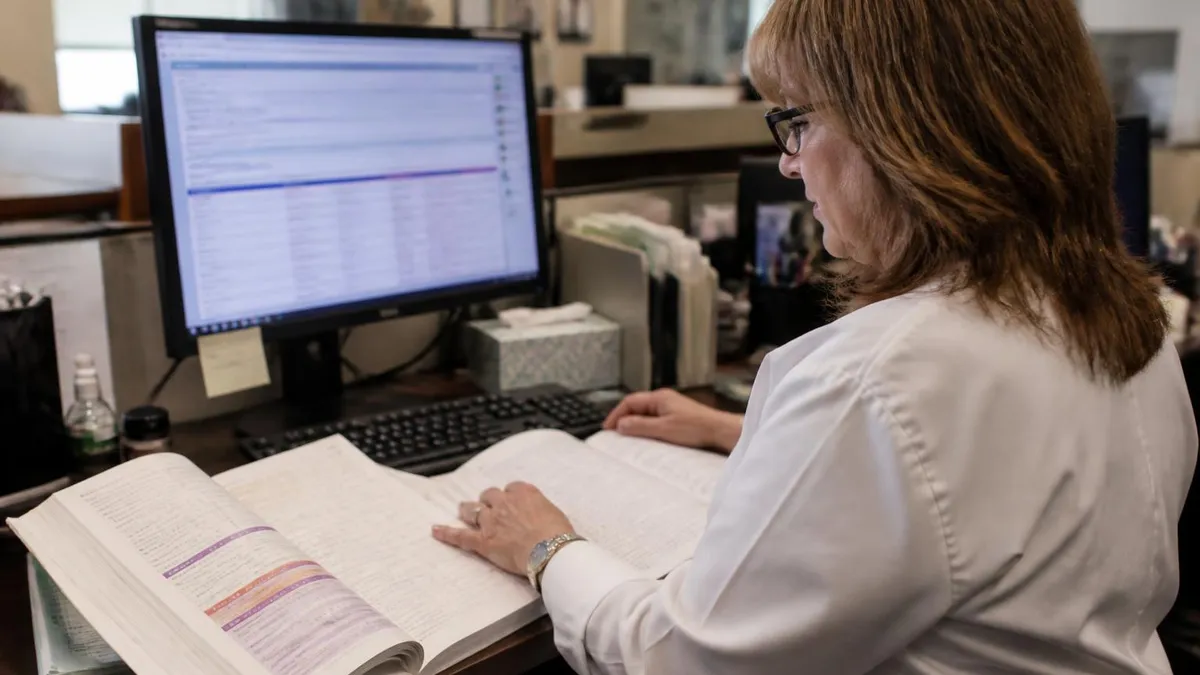
For candidates who already work in medical billing, healthcare administration, or clinical settings, a structured self-study approach can be a viable and cost-effective CPC preparation path. Self-study works best when you're starting with meaningful baseline knowledge — you understand basic medical terminology, you're familiar with how insurance claims flow from documentation to submission, and you've handled procedure and diagnosis codes in some capacity, even if not as a dedicated coder.
A self-study plan typically centers on a few core resources: the current CPT codebook, the current ICD-10-CM codebook with Official Guidelines, the current HCPCS Level II book, and one of several available CPC study guides. AAPC publishes an official CPC study guide that outlines exam domains and provides sample questions. Third-party study guides from publishers like Practice Test Geeks provide additional practice with detailed explanations. The combination of study guide content review and extensive practice testing is the foundation of effective self-study preparation.
The discipline required for self-study is its biggest challenge. Without scheduled classes or instructor accountability, it's easy to procrastinate on difficult sections or spend too much time on comfortable material and not enough on weak areas. Effective self-studiers use a structured schedule — allocating specific blocks of time each week to each exam section — and regularly assess their progress using full-length timed practice tests to identify where improvement is needed. Setting a specific exam date when you begin self-study creates a deadline that maintains momentum.
The right CPC training program depends on three factors: your current knowledge baseline, your available time, and your budget. Spending more on training isn't always better — if you already have five years of experience in medical billing and understand ICD-10-CM coding workflows, paying $2,000 for a comprehensive training program covering foundational anatomy may not be the best use of resources. Conversely, if you're entering medical coding from an unrelated field, skimping on training to save money often leads to a failed first attempt and the cost of retaking the exam.
Time availability matters too. The CPC exam is offered year-round at Prometric testing centers and online via remote proctoring, so you can set a target date and work backward to build your preparation schedule.
Most exam-ready candidates spend 3–6 months in active preparation, though candidates with strong prior knowledge can be ready in as few as 6–8 weeks and those starting from scratch may benefit from 9–12 months of study. Your training program choice should align with this timeline — a community college program spanning two semesters is a poor fit if you want to sit for the exam in two months.
Budget is a real constraint for many candidates. The CPC exam fee itself is $399 for AAPC members ($499 for non-members), and codebooks add another $150–$250. If your total preparation budget is limited, prioritizing quality practice tests and targeted tutoring for weak sections often delivers better ROI than spending several hundred dollars on a comprehensive course. Free and low-cost resources — AAPC's free sample questions, coding-focused YouTube channels from credentialed coders, and active online study groups — can supplement paid preparation meaningfully.
Whatever training approach you choose, do not skip timed practice tests. The most common reason experienced coders fail the CPC on the first attempt is not knowledge gaps — it's time management. Running a 150-question timed session with your physical codebooks three or four times before exam day trains your brain for the pacing demands of the real exam in a way that reading study guides simply cannot replicate.
After passing the CPC, your continuing education obligations begin. AAPC requires 36 continuing education units (CEUs) every two years to maintain the credential, with a portion of those CEUs required to come from AAPC-approved sources. Many coders complete CEUs through AAPC chapter meetings, webinars, conferences, and online modules.
Planning for CEUs before you earn the CPC — knowing that this is an ongoing professional responsibility, not a one-time event — helps you approach certification as the beginning of a career, not just the end of an exam process. The investment you make in quality training pays dividends not just on exam day, but across the career that follows.
A final note: the CPC credential is specialty-neutral, but many employers and coders pursue additional specialty credentials after earning the CPC. AAPC offers specialty-specific certifications like the Certified Outpatient Coder (COC), Certified Inpatient Coder (CIC), and various specialty credentials in cardiology, oncology, and risk adjustment coding.
The training foundation you build for the CPC directly supports preparation for these advanced credentials — making your initial preparation investment in quality training even more valuable over the long arc of a coding career. Many credentialed coders report that their preparation for the CPC was the single most important professional investment they made early in their career.
- +AAPC official training is written by the same organization that creates the CPC exam — content alignment is guaranteed
- +Instructor-led options add accountability and allow real-time Q&A on difficult coding scenarios
- +Bundles often include exam registration, reducing the total cost of going all-in on one package
- +AAPC's curriculum covers all 17 exam sections systematically, leaving no content gaps
- −AAPC training is significantly more expensive than self-study approaches, which may not be justified for experienced coders
- −Online self-paced format still requires personal discipline — having access to AAPC's course does not guarantee completion
- −Community college programs take significantly longer than focused self-study, delaying the credential by months
- −Third-party online courses vary widely in quality and currency — cheap courses often use outdated code sets or superficial content coverage
Pros and Cons at a Glance
| Pros | Cons |
|---|---|
| AAPC official training is written by the same organization that creates the CPC exam — content alignment is guaranteed | AAPC training is significantly more expensive than self-study approaches, which may not be justified for experienced coders |
| Instructor-led options add accountability and allow real-time Q&A on difficult coding scenarios | Online self-paced format still requires personal discipline — having access to AAPC's course does not guarantee completion |
| Bundles often include exam registration, reducing the total cost of going all-in on one package | Community college programs take significantly longer than focused self-study, delaying the credential by months |



Sample Certified Professional Coder Practice Questions
Try these questions from our free Certified Professional Coder practice tests. The correct answer and an explanation follow each question.
Which federal law established the False Claims Act, allowing the government to sue individuals or companies that defraud federal programs?
- A. HIPAA
- B. False Claims Act of 1863
- C. Stark Law
- D. Anti-Kickback Statute
Answer: B. False Claims Act of 1863
The False Claims Act of 1863 (updated in 1986) allows the government—and whistleblowers—to sue parties that knowingly submit false claims to federal programs like Medicare.
The OIG Work Plan is best used by compliance officers to:
- A. Determine correct code assignments for new procedures
- B. Identify areas the OIG plans to review, helping prioritize internal audits
- C. Appeal denied Medicare claims
- D. Calculate expected reimbursement rates
Answer: B. Identify areas the OIG plans to review, helping prioritize internal audits
The OIG Work Plan outlines focus areas for upcoming investigations, allowing providers to proactively audit those areas internally.
Which ICD-10-CM code category is used to report external causes of morbidity?
- A. A00-B99
- B. S00-T88
- C. V00-Y99
- D. Z00-Z99
Answer: C. V00-Y99
ICD-10-CM codes V00-Y99 capture external causes of injuries and health conditions, such as accidents, falls, and poisonings.
A radiologist performs a bilateral mammogram with computer-aided detection (CAD). Which CPT code range applies to the CAD add-on?
- A. 77065
- B. 77067
- C. 77046
- D. 77061
Answer: B. 77067
CPT 77067 describes bilateral screening mammography with CAD included as a bundled service.
CPC Training Questions and Answers
About the Author

Certified Internal Auditor & Compliance Certification Expert
University of Illinois Gies College of BusinessBrian Henderson is a Certified Internal Auditor, Certified Information Systems Auditor, and Certified Fraud Examiner with an MBA from the University of Illinois. He has 19 years of internal audit and regulatory compliance experience across financial services and healthcare industries, and coaches professionals through CIA, CISA, CFE, and SOX compliance certification programs.
Join the Discussion
Connect with other students preparing for this exam. Share tips, ask questions, and get advice from people who have been there.
View discussion (8 replies)