
Cosmetology Jobs in 2026 September: Pay, Paths and How to Land One
Cosmetology jobs guide: 🏆 pay ranges, career paths, license reciprocity, working interviews, and how to earn six figures behind the chair.

Walk into any salon at 11 a.m. on a Saturday and you'll get the real answer to the question everyone's asking: yes, cosmetology jobs are out there, and yes, they pay. The U.S. Bureau of Labor Statistics projects 78,200 openings each year through 2032 for barbers, hairstylists, and cosmetologists — most of them from people retiring, switching careers, or going independent. That churn is your way in.
But the field has changed. The cosmetology job market in 2026 isn't your aunt's salon chair anymore. It's TikTok-trained colorists charging $400 for a balayage, mobile lash artists running six-figure businesses out of a converted van, and salon-suite renters who never punched a clock in their life. The licensing is still real. The school hours are still long. What's different is how you cash in once you've got that license in your wallet.
This guide walks through every cosmetology career path worth your time — what each one actually pays, what skills hiring managers want, and how to move from a first booth-rental gig to running your own shop. We'll cover salon jobs, freelance work, education roles, product reps, and the kind of niche specialties (think on-set film work or medical aesthetics) that most schools don't bother mentioning. By the end you'll know whether to chase a chain salary, a commission split, or your own LLC.
One thing to set straight up front: "cosmetology job" is a broad bucket. It covers everyone from a teenager doing manicures at a strip-mall nail bar to a film-set hair department head making $200,000 a year. Lumping all that together and looking at one median wage is how people convince themselves the industry doesn't pay. It pays plenty — if you know what to specialize in, where to work, and how to negotiate.
Cosmetology Job Market Snapshot
Those numbers tell a story most career counselors miss. The $33,400 median is the floor — it's what a brand-new stylist earns at a chain like Great Clips or Supercuts on day one. Senior colorists in a Manhattan salon clear $90,000 before tips. Lash techs in Phoenix pull $7,000 a month working four days a week. The gap is huge, and it comes down to specialty, location, and whether you're an employee or your own boss.
The self-employment figure is the one to watch. A third of working cosmetologists rent their own booth or run a private studio. That's why the job description matters less than the business model. You can be the best cutter in town and still go broke if you split 60/40 with a salon owner who keeps the walk-ins for herself.
Geography also matters more than most beauty schools admit. The same exact service — say, a partial highlight with a toner — bills at $85 in rural Kentucky and $285 in Manhattan. Cost of living is part of that, but client expectations are the bigger driver. Urban clients tip 20% and rebook every six weeks. Small-town clients often tip cash and come in twice a year for a special occasion. Plan your location based on the math, not just where your family lives.

The cosmetology field covers six broad categories of paid work, each with its own license requirements, pay range, and career ceiling:
- Hair services — cutting, coloring, styling, chemical treatments, extensions
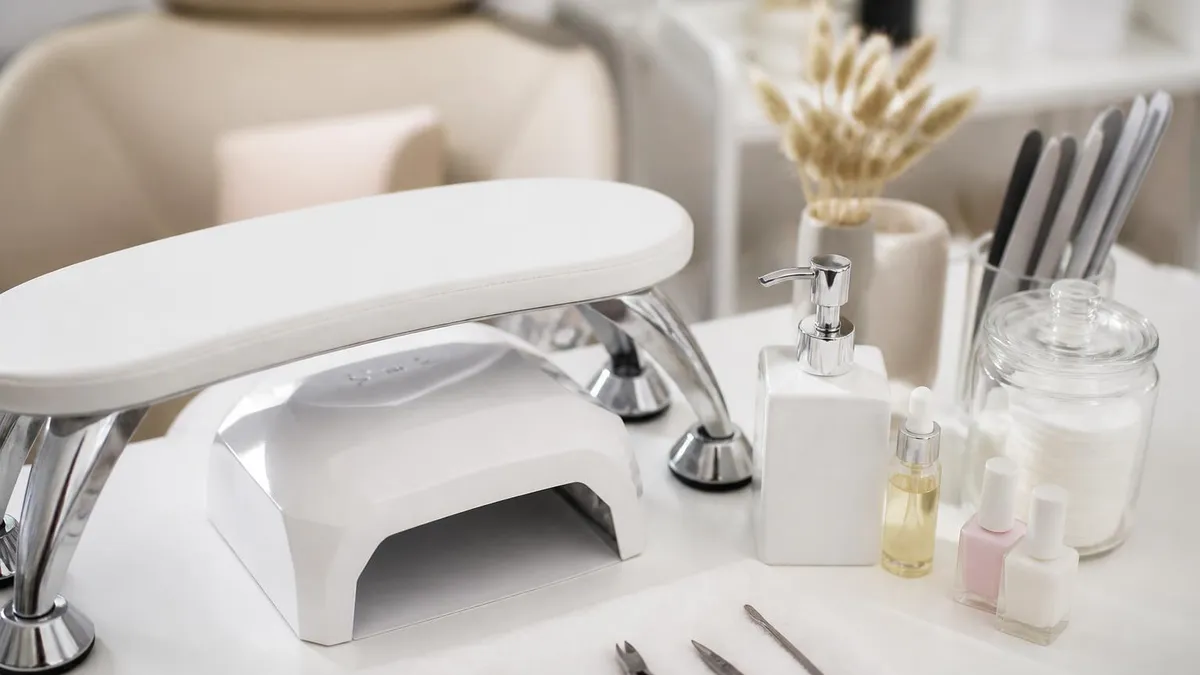
- Nail services — manicures, pedicures, acrylics, gel, dip powder, nail art
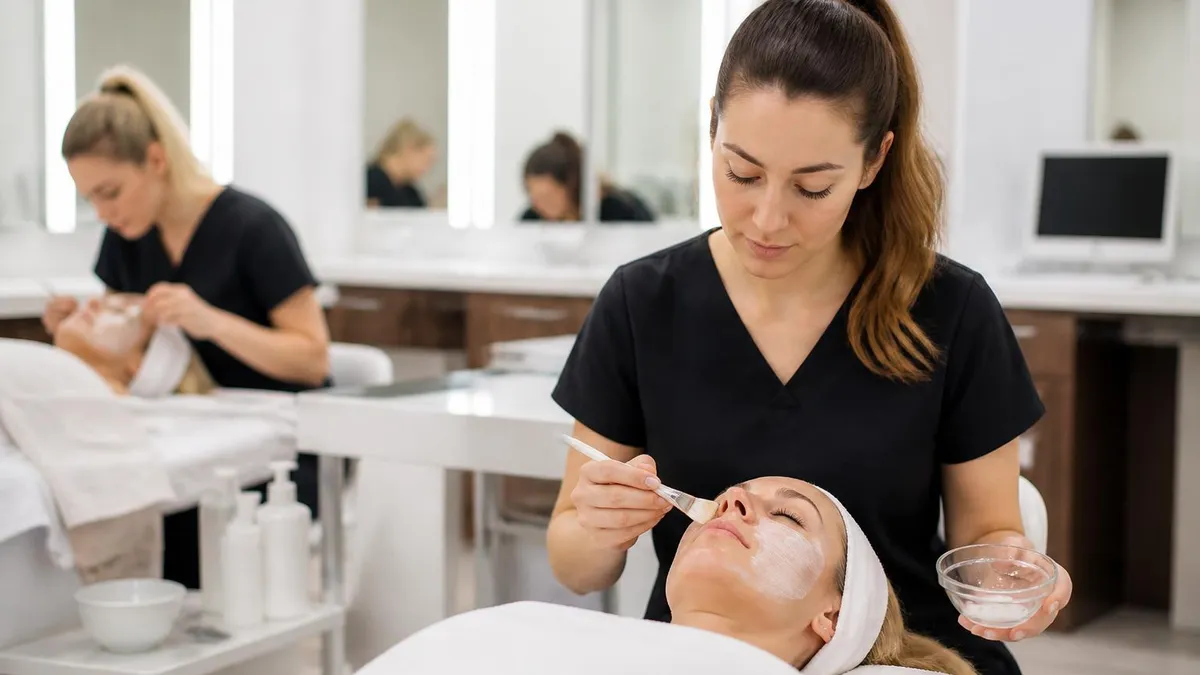
- Skincare — facials, waxing, brow shaping, basic chemical peels (state-dependent)
- Makeup — bridal, special event, theatrical, airbrush, lash application
- Education — cosmetology instructor, brand educator, online course creator
- Sales and management — product rep, salon manager, distributor account exec
Most state cosmetology licenses cover all four core service categories (hair, nails, skin, makeup), but earning a license doesn't mean you'll do all four. Most stylists pick a lane within their first year. A junior who tries to be a generalist usually loses out to specialists who can charge premium rates for one service. The girl who only does balayage in your town is probably booked six weeks out. The one who does "a little of everything" is begging for walk-ins on Tuesday afternoon.
Education roles are the sleeper category. Brand educators for L'Oréal, Redken, or Olaplex earn $60,000 to $95,000 with benefits, travel the country teaching technique classes, and never have to clean a sink. Salon managers at high-volume franchises top out around $70,000 plus a profit-sharing bonus. These jobs go to working stylists with five-plus years on the floor — they're not entry-level, but they're how you stop standing on your feet ten hours a day.
One more category gets overlooked: theatrical, film, and television hair and makeup. Local IATSE Local 706 (the makeup and hair stylists' union in Los Angeles) members working studio productions earn union scale of around $52 an hour with full health coverage, pension, and overtime after eight hours. Getting in is hard — you need a portfolio of unpaid film-school work, three sponsors, and to pass a skills test — but once you're in, the work is steady. Other markets (Atlanta, Albuquerque, Vancouver) have parallel union structures. If you love film, this path is worth the multi-year on-ramp.
Six Career Paths Inside Cosmetology
Traditional commission or hourly role inside a salon. Best for new grads who need mentorship and steady walk-in traffic.
You pay weekly rent for a chair, keep 100% of revenue. Common after 2–3 years of building clientele.
Solo suite (Sola Salon, Phenix) with your own door and key. Highest profit margin, highest overhead.
Lash, brow, nails, or extensions only. Fastest path to $1,000/day cash flow with the right niche.
Brand educator, school instructor, or online course creator. Salary plus travel, requires teaching skill.
Distributor rep for SalonCentric, CosmoProf, or direct brand. Base salary + commission, company car common.
Pick a path based on your money personality, not your skill level. People who like predictable paychecks and zero admin should stay employed at a commission salon. People who hate splitting tips and want to write off mileage should rent a booth. People who don't mind buying their own backbar and paying for their own electricity bill should open a suite. The skill required is roughly the same across all three — the business risk and reward changes completely.
One warning about booth rental: in some states the IRS has cracked down on salons that misclassify employees as independent contractors. If your "booth rent" salon sets your hours, supplies your products, and pays you a commission, you're an employee, not a renter. Ask for a 1099 at year-end and check that the math works in your favor before signing anything.
Beauty industry sales is the path nobody mentions in school. SalonCentric, CosmoProf, State Beauty Supply, and the major brand distributors hire active or former licensees to run territories that cover 80 to 150 salons each. Base salary runs $45,000 to $70,000, plus commission that can double total comp, plus a company car or mileage stipend, plus full benefits. You stop standing behind a chair and start visiting accounts, demoing new products, and writing orders. It's the most overlooked exit ramp for stylists in their late 30s who don't want to spend another 20 years on their feet.
Cosmetology Specialties Compared
Colorists, cutters, and extension artists. Top earners are colorists who specialize in one technique — balayage, color correction, or vivids — and charge $200 to $500 per service. Master colorists in major metros earn $80,000–$150,000. Extension specialists (hand-tied, tape-in, fusion) can clear $200,000 if they certify with a premium brand like Great Lengths and serve a wealthy clientele.
If you're choosing a specialty for income alone, lashes and color win in 2026. Both have low ceiling on retail competition (no big chain does lash extensions well), high client retention (lashes need fills every 2–3 weeks, color every 6–8 weeks), and pricing power that scales with technique. A lash artist who learns mega volume and posts before-and-afters consistently can build a six-figure book in 18 months.
What about the trades that schools push hardest? Cutting and basic styling are saturated. Every cosmetology grad can cut hair, which means walk-in cut clients shop on price. That's why chain salons hire so many new grads — they're cheap labor for a service the public considers a commodity. If you stay in cuts long-term, you need to either go celebrity-level (own a YouTube channel, work backstage at fashion week) or pair cutting with a higher-margin service like color.
There's also a quietly booming category nobody warned you about: medical aesthetics. Med spas hire licensed cosmetologists and estheticians to assist with injectable consultations, post-procedure facials, microdermabrasion, dermaplaning, and laser hair removal (state-dependent on who can pull the trigger on the laser). Pay starts at $22 an hour but tops out near $90,000 with retail bonuses. The schedule is salon-like, the clientele is high-income, and the burnout rate is lower because you're not doing manual scissor work for ten hours straight. Look for postings at MedSpa, Ideal Image, LaserAway, and dermatology practices.
Your cosmetology license is granted by the state, not federally. If you move from Texas to California, you may need to retake a written exam, complete additional hours, or pay a reciprocity fee. New York and Florida have particularly strict requirements. Check the destination state's board of cosmetology website before accepting an out-of-state job offer — some salons will rescind offers if you can't legally work within 60 days.
Reciprocity matters more than new stylists realize. A licensed pro from Pennsylvania moving to California has to apply for a temporary practice permit, then take the California written exam, which covers state-specific sanitation law that wasn't in the Pennsylvania curriculum. The whole process takes 8 to 12 weeks. During that window you can't take clients legally, so plan your moving date around your license transfer, not the other way around.
The good news: about 30 states have full reciprocity for licenses earned in another state with comparable hours. Use the Beauty Schools Directory or your destination state board's website to confirm. Some states (Florida, Texas) accept licenses from any state if you can prove 1,200+ hours of training. Others (California, New York) require state-specific testing no matter where you trained.
Job hunting strategy depends a lot on which path you're chasing. Indeed and ZipRecruiter dominate chain salon postings. StyleSeat, Vagaro, and Instagram are where most premium salons recruit — they don't advertise openings, they DM stylists whose work catches their eye. The lesson is to post your portfolio publicly even when you're not actively looking. The best jobs in this industry are filled before they're ever posted, and your social grid is the de facto resume that owners check first.
How to Land Your First Cosmetology Job
- ✓Finish state-required training hours and pass the written + practical board exam
- ✓Build a portfolio (10–20 photos minimum) before you start applying
- ✓Pick 2–3 specialties to highlight on your resume — generalists get fewer callbacks
- ✓Create an Instagram business account with consistent before-and-after posts
- ✓Apply to chain salons (Great Clips, Hair Cuttery, Sport Clips) for steady walk-in volume
- ✓Apply to premium salons for mentorship and education benefits, even at lower commission
- ✓Request a working interview — most salons will pay for a 2–4 hour trial
- ✓Negotiate education stipend, product cost coverage, and assistant time during offer stage
- ✓Ask current stylists at the salon what their take-home looks like before accepting
- ✓Sign a non-compete only if it's narrow (geographic + time-limited), and never longer than 12 months
The working interview is the single most important step on that list. Salons hire based on chair-side presence, not resume bullet points. You'll be asked to do a haircut, color application, or blow-dry on a real client (or a mannequin if it's a chain). The owner watches for sanitation habits, timing, product knowledge, and how you handle the consultation. Most new grads bomb their first one because they freeze when asked to free-style.
To pass a working interview, treat it like a real appointment. Bring your own tools (they expect this). Greet the model, do a five-minute consultation with mirror checks, sanitize visibly before touching anyone, narrate your steps without over-explaining, and finish on time. If you don't finish on time you didn't get the job. Speed is part of the test.
Negotiation matters too. New grads often accept the first commission split offered (usually 40/60 in the salon's favor) because they're afraid to push back. Ask instead about an education stipend ($1,500 a year is reasonable), free or discounted backbar product, paid assistant time for shampoos and folding foils during your first 90 days, and a written timeline for split increases as you hit revenue milestones. The salons that say no to all of those are usually the same ones with high stylist turnover. The ones that say yes are the ones worth working at.
Working as a Cosmetologist: The Honest Tradeoffs
- +Recession-resistant industry — people don't stop getting haircuts
- +Flexible hours after you build a clientele — work 4 days a week is realistic
- +High income potential if you specialize and learn business basics
- +Creative work that keeps your brain engaged year after year
- +Strong path to self-employment without needing a college degree
- −Physically demanding — standing 8–10 hours, repetitive arm motion, chemical exposure
- −Income is inconsistent for the first 2–3 years while you build a book
- −No paid vacation, sick days, or health insurance unless you're at a corporate chain
- −Booth rent + product costs can eat 40% of revenue if you're not careful
- −Burnout is real — wrist, back, and shoulder injuries end careers early
The injury risk is the part nobody talks about until it happens. Carpal tunnel, rotator cuff tears, plantar fasciitis, and varicose veins are common after a decade behind the chair. Smart stylists invest in anti-fatigue mats, ergonomic shears, padded floor shoes, and weekly massage from day one — not after the pain starts. Disability insurance is also worth pricing. A six-week injury can wipe out a self-employed stylist's emergency fund.
On the upside, cosmetology is one of the few careers where your earning power keeps growing past 50. Established colorists in their 60s often earn more than they did in their 30s because their clientele has aged with them and their prices have climbed. A salon owner I know in Boston charges $475 for a single-process root color — her clients are women who started with her in 1998 and now have $300,000 incomes. That kind of compounding doesn't happen in many trades.
The trick is to plan for the long game from your first day. Treat your client list as your retirement plan. Capture phone numbers and emails. Keep a CRM. Send rebooking reminders. The stylist who walks out of a salon after 10 years with a list of 600 loyal clients and zero documentation lost most of her business value. The one who left with a spreadsheet and a Square account can rebuild anywhere in 90 days.
Tax planning is the second pillar of long-term cosmetology success and it is wildly overlooked. Booth renters and suite owners are sole proprietors by default, which means self-employment tax of 15.3% on every dollar of profit, on top of regular income tax. Set up an LLC and elect S-corp status once profits clear roughly $50,000 — the payroll-versus-distribution split usually saves $5,000 to $9,000 a year in self-employment tax. Hire a beauty-industry accountant who already understands product write-offs, mileage logs for client home visits, and the home-office deduction for stylists who do consultations from home.
Continuing education isn't optional once you've found your specialty. The brands that drive premium pricing — Goldwell, Schwarzkopf Professional, Davines, Olaplex, K18 — run their own academy classes throughout the year. A $400 class on color correction can pay for itself with one new service offering you didn't know how to charge for before. Plan to spend 2% to 5% of gross revenue on education every year. The stylists who don't are usually the ones who freeze on prices and lose clients to the new grad across the street with a fresh Instagram reel.
Learn more in our guide on Cosmetology Practice Test PDF (Free Printable 2026). Learn more in our guide on board of barbering and cosmetology. Learn more in our guide on cosmetology state board. Learn more in our guide on cosmetology colleges in dallas.
Cosmetology Questions and Answers
Cosmetology jobs reward the people who treat the work as a small business from day one. That doesn't mean opening a salon. It means tracking your numbers, owning your clients' contact info, charging what your time is worth, and building a personal brand that travels with you when you change locations. The stylists who never do that math — who collect paychecks and let the salon owner manage the marketing — stay stuck in the $35,000 band for a full career.
If you're already licensed, the next move is to audit your last 90 days of bookings. How many were rebooks? How many new clients came from referrals versus walk-ins? What's your average ticket? Stylists who don't know these numbers can't grow. Stylists who do can usually find $500–$1,000 a week in lost revenue inside two hours — missed rebookings, underpriced services, unsold retail. Plug those leaks before chasing a new job title.
If you're still in school, focus your last 200 hours on one specialty and start an Instagram account today. Post your model heads. Post your fellow students' makeovers (with permission). Show before-and-afters. By the time you graduate you'll have a portfolio that beats most second-year stylists, and you'll walk into your working interview with the kind of confidence that earns a higher commission split on day one. The market rewards specialization and visibility — the rest is timing.
Finally, don't let the licensing exam itself become your bottleneck. The written and practical board tests trip up a surprising number of grads — usually not because they don't know the work, but because they haven't drilled the sanitation, infection control, and state law content that dominates the written half.
Practice tests are the single fastest way to find your weak spots. Once you can score 85% on a full mock exam, the real test feels routine. Start practicing six weeks out, not six days out, and treat the studying like billable hours — because the difference between passing on the first try and waiting 90 days for a retake is a full quarter of lost income.
About the Author

Licensed Cosmetologist & Beauty Licensing Exam Specialist
Paul Mitchell SchoolsMichelle Santos is a licensed cosmetologist with a Bachelor of Science in Esthetics and Salon Management from Paul Mitchell School. She has 16 years of salon industry experience and 8 years preparing students for state cosmetology board exams in theory, practical skills, and sanitation. She specializes in licensure preparation for cosmetologists, estheticians, and nail technicians.