
Cosmetology State Board Exam Guide 2026 September
✏️ Cosmetology state board guide covers written theory, practical demos, fees, retakes, reciprocity, and a clear study plan to get you licensed faster.
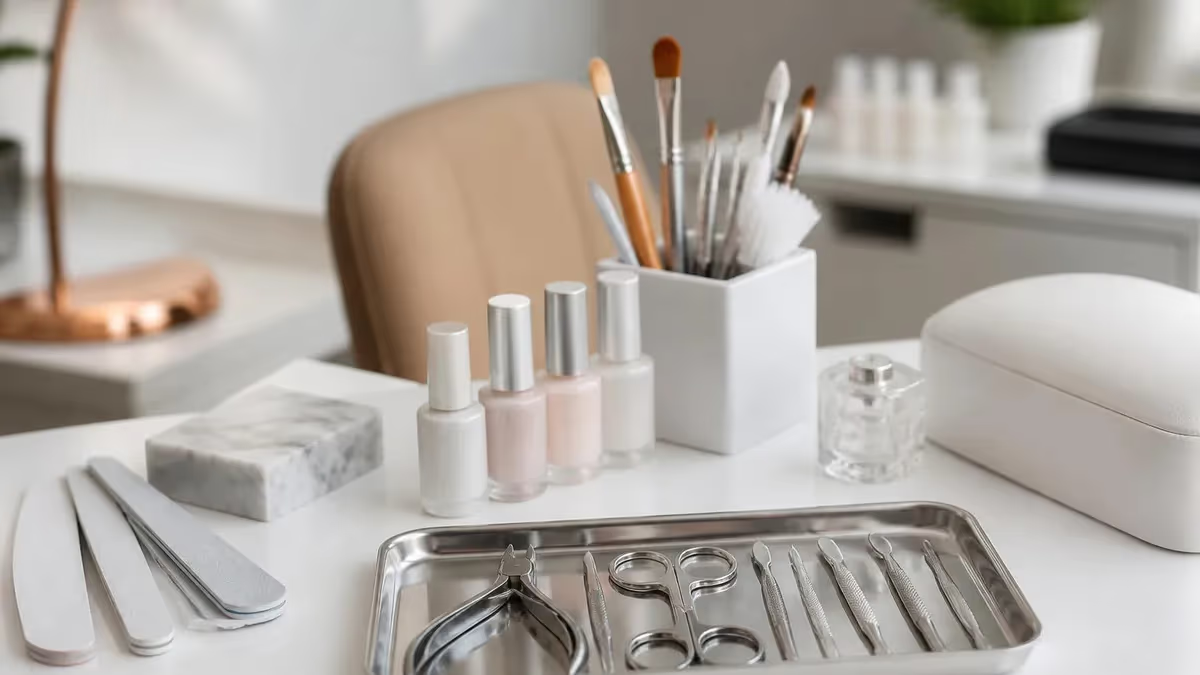
The cosmetology state board exam stands between a finished training program and a working license. It is not a single test. It is a pairing of a written theory section and a practical demonstration, run by the state board of cosmetology or, in many states, a third-party testing vendor like PSI or Prometric. The written part checks what you know about chemistry, infection control, and the rules that keep clients safe. The practical part checks what your hands can do under timed pressure with judges watching.
Each state sets its own structure, fee schedule, and content outline, yet the bones look similar everywhere. You finish the required training hours at a licensed cosmetology school. You submit an application, fingerprints, and proof of hours. You schedule the exam, you sit for it, and you wait for results. Pass both portions and your license arrives by mail, often within a few weeks. Fail one and you retake just that portion after paying a retake fee.
This guide walks through what the state board exam looks like in real life, how to study without burning out, and how to approach the practical day so nerves do not sink months of work. Whether you trained 1,000 hours in Florida or 1,600 in Texas, the moves on test day are mostly the same.
Most candidates underestimate the practical and overestimate the written. The written is doable with steady review of a few core domains. The practical is doable too, but it asks for muscle memory, sanitation reflexes, and clean timing. Treat them as two different sports that share an athlete.
Cosmetology Board Exam by the Numbers
Key Facts at a Glance
| Item | Value | Details |
|---|---|---|
| Typical Passing Score | 75% | |
| Training Hours | 1,000-1,600 | |
| Written Questions | 100-125 | |
| Practical Length | 2-4 hours | |
| Exam Fee | $50-$150 |
Those numbers are averages. Your state board posts the exact hour requirement, passing score, and fee on its licensing page. Always read the candidate information bulletin for your state before you schedule. The bulletin tells you what to bring, what is banned, and what the proctors will check at the door.
Hour requirements have been shifting downward in several states. New York dropped to 1,000 hours. Florida sits at 1,200. Texas trimmed to 1,000 in late 2023. A handful of states still hold at 1,500 or 1,600. The trend matters because shorter programs mean less in-school drill time, which means more self-study before the board.
Pass rates also tell a story. Schools with strong mock-board programs report 85 percent or higher on first attempts. Schools that treat the exam as an afterthought sit closer to 60 percent. If your school does not run timed mock practicals at least three times before graduation, build that drill into your own schedule.
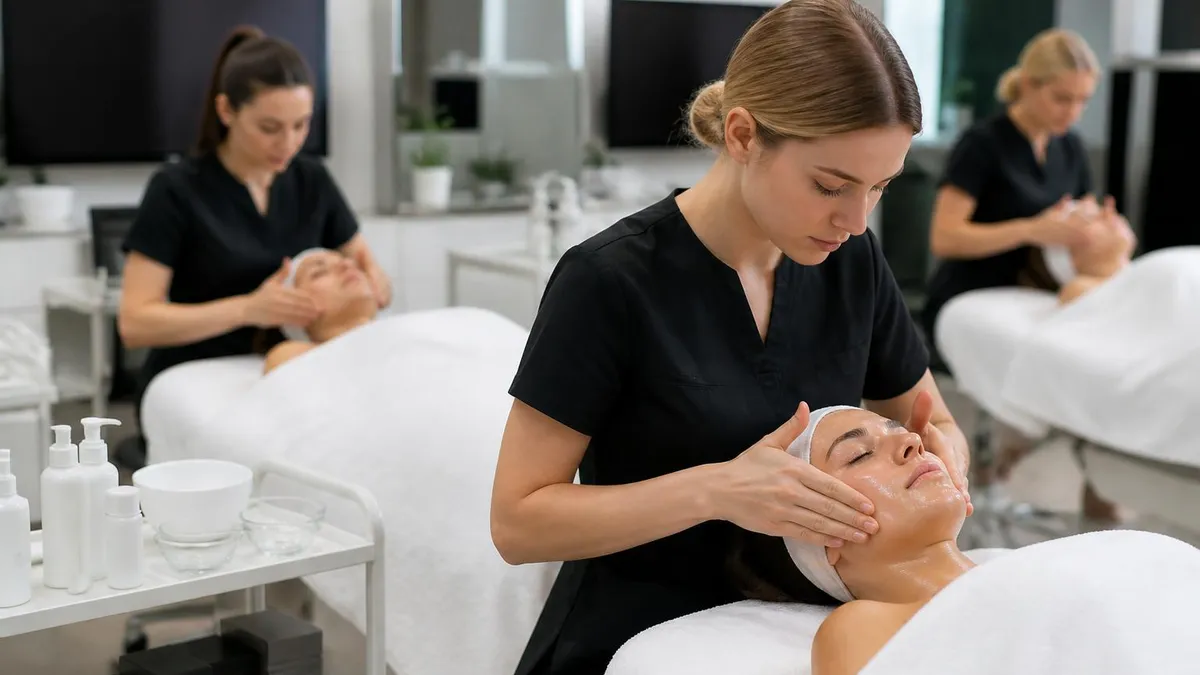
The cosmetology board exam is built around public safety. Every question, every practical task, traces back to one question: can this person work on a paying client without hurting them? That frames how you should study. When you are stuck between two answers, pick the one that protects the client. When you are unsure how much time to spend on a practical step, prioritize the sanitation and draping moves because those are non-negotiable scoring points.
The written exam pulls from a published content outline. Most outlines give you the rough percentage weight per domain. Scientific concepts, including infection control and chemistry, typically account for 30 to 40 percent of items. Hair services come in around 25 to 30 percent. Skin and nail services pull another 15 to 20 percent. State law and professional practices round out the rest. Study to the weights, not to your comfort zone.
Reading the content outline early is the single highest-use move you can make. Many candidates spend weeks reviewing material that barely shows up on the test while neglecting domains worth 30 percent of their score. Print the outline, mark each topic with a confidence rating from one to five, and let the low ratings tell you where to put your hours.
Infection control is the most-tested cluster on the written portion in almost every state. You will see questions about EPA-registered disinfectants, contact time, single-use versus multi-use tools, blood spill protocols, and how to handle a dropped comb. Memorize the chain of decontamination: clean, disinfect, sterilize when required. Know which items must be disposed after one use. Know what to do if a client bleeds during a service.
Chemistry questions feel intimidating but reward simple frameworks. Hair products work on pH. Acidic products close the cuticle. Alkaline products lift it. Oxidative color uses developer to open the cuticle and react with dye precursors. Thio relaxers break disulfide bonds with high pH. Hydroxide relaxers do similar work through a different pathway. Once you map the pH continuum, half of the chemistry items answer themselves.
State law questions are pure memorization. Read your state practice act. Note the license renewal cycle, continuing education hours required, the scope-of-practice line between cosmetology and esthetics, and the rules around sanitation logs. Boards love to ask about the size of the salon license you must display and how long sanitation records must be kept.
Knowing the structure ahead of time strips out one whole category of test stress. You stop worrying about format and start focusing on content. Walk into the testing center with the rubric and the content outline already mapped in your head, and the only variable left is execution.
One detail worth mentioning early: every state allows you to view your testing center photo and signature on file before exam day. Confirm the spelling of your name and your scheduled date through the candidate portal at least 72 hours before you sit. Mismatch problems are easier to fix three days out than three minutes before check-in.
Six Domains You Will Be Tested On
EPA disinfectants, contact times, blood exposure procedures, single-use tools, draping, and proper hand hygiene before and after every client service.
Haircutting fundamentals, chemical texture, hair color theory, scalp conditions, and the proper sequencing of multi-step services like color plus relaxer.
Basic facials, hair removal, contraindications, skin types, and conditions a cosmetologist must refer to a licensed professional instead of treating.
Manicures, pedicures, polish application, basic nail extensions where allowed by state scope, and recognizing nail disorders that require referral.
Bones and muscles of the head and neck, basic dermatology of the skin, hair growth cycle, and circulatory pathways relevant to scalp and facial massage.
License display, renewal cycles, continuing education, sanitation recordkeeping, scope of practice, and the legal definition of cosmetology in your state.
Each domain rewards a slightly different study tactic. Infection control and state law respond to flashcards and repetition. Hair services and chemistry respond to diagrams and worked examples. Anatomy responds to labeled drawings of the head and neck. Skin and nails respond to image-based study where you match photos to conditions.
Stop treating the exam as one giant block of material. Break it into the six domains above and assign sessions by domain. Twenty minutes of focused infection control beats two hours of unfocused page-flipping. Set a timer, pick one domain, and drill until the timer rings.
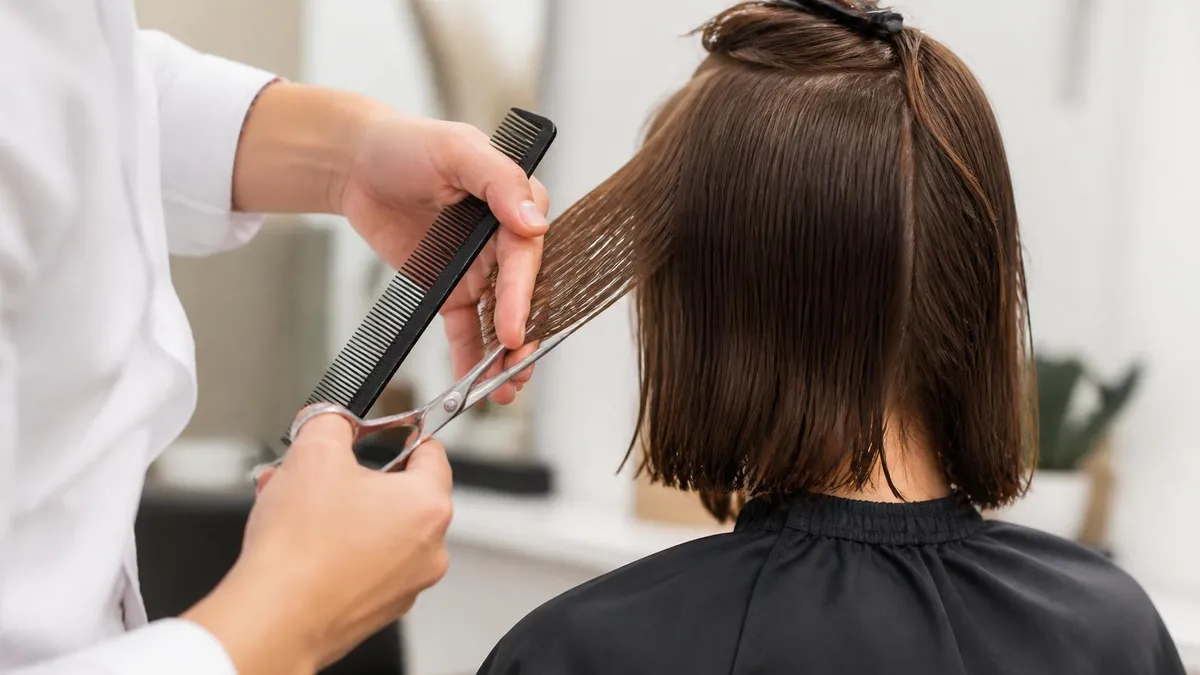
Written vs Practical: What to Expect
The written cosmetology exam is delivered on a computer at a PSI, Prometric, or state-run testing center. You will sit in a quiet room, sign in with a government ID, and place all belongings in a locker. The proctor walks you to a workstation, and the test begins.
Most states use 100 to 125 multiple-choice questions. You have between 90 minutes and 2 hours. Each question has four answer choices, and only one is correct. There is no penalty for guessing, so never leave an item blank. Flag uncertain items, finish the test, then return to your flags with fresh eyes.
Read the question stem twice before looking at the choices. Many wrong answers are technically true statements that simply do not answer the question. The trap is recognizing a true sentence and clicking it without checking whether it matches the stem.
Knowing the difference between the two parts helps you plan study time. The written rewards reading, flashcards, and practice questions. The practical rewards repetition with your hands. A common mistake is to read another textbook chapter when your hands have not touched shears in a week. Books help the written. They do almost nothing for the practical.
Build your week so written study and practical drill alternate. One day on theory, the next day on mannequin work. Aim for at least three two-hour practical sessions weekly in the final month. Practice draping, sectioning, and the most likely chemical services on a mannequin until each move feels automatic.
If you are nervous about the practical, record yourself. Set a phone on a tripod, walk through a haircut from setup to cleanup, then watch it back. You will spot wasted motion, missed sanitation steps, and timing problems that you cannot feel while you are in the middle of working.
One more practical note before you schedule. Verify the candidate bulletin posted by your state board is the current edition rather than a cached older version. Boards update kit lists and task rotations once or twice a year, and an outdated bulletin can leave you missing a required item on test day. The current version is always linked from the state board licensing page, and the file usually includes a revision date stamped on page one.
Sanitation mistakes are the fastest way to fail the practical. Judges watch for clean tools, proper draping, and correct waste disposal on every task. Touching your face, using a dropped comb without re-disinfecting, or skipping hand sanitizer between clients can sink an otherwise strong performance. Treat sanitation as the spine of every task, not a step you add at the end.
Take that warning seriously. Sanitation failures are the most common reason candidates with strong technique still fail the practical. The graders are not just checking whether you can cut a clean line. They are checking whether you would be safe to put behind a chair in a paying salon tomorrow.
One reliable cue: every time you change tools, ask yourself whether the tool is clean. Every time you touch your face, your phone, or any non-sanitized surface, wash or sanitize before returning to the client. Every time something hits the floor, replace it with a clean version from your kit. Build those reflexes during study and they will fire on exam day without thinking.
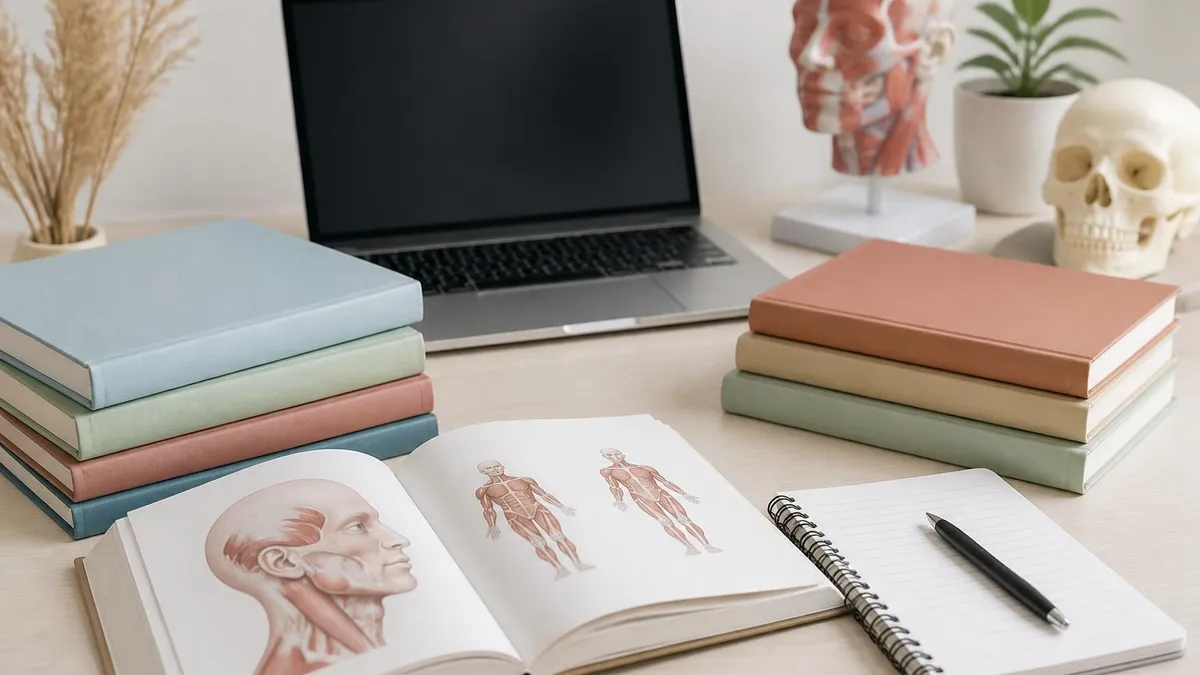
Pre-Exam Checklist for the Practical Day
- ✓Government-issued photo ID that matches your application name exactly, with no nicknames or unrelated middle names.
- ✓Admission letter or scheduling confirmation printed on paper, since some centers will not accept a phone screen.
- ✓Complete kit packed the night before, including shears, combs, clips, perm rods, end papers, and any state-specific tools listed in the bulletin.
- ✓Mannequin head pre-set with hair washed and detangled, mounted to a clamp that fits standard testing center workstations.
- ✓Freshly laundered uniform or smock in the color required by your state, plus closed-toe shoes that grip on tile floors.
- ✓Disinfectant solution mixed at the correct ratio in a labeled, sealed container that the proctor will not flag at entry.
- ✓Disposable items such as neck strips, gloves, end papers, and cotton, packed in factory packaging so judges can see they are unopened.
- ✓Snack and water bottle for the break window, since exam days can run four to six hours and low blood sugar destroys hand steadiness.
- ✓Quiet warmup routine planned for the morning, including ten minutes of sectioning practice to wake up muscle memory before judging starts.
- ✓Backup plan for transportation, including the testing center address loaded in two map apps and a confirmed arrival time at least thirty minutes early.
Practice testing is the closest analog to the real exam. Working through a written practice test under timed conditions surfaces gaps you cannot see while reading a textbook. You discover that you can recite the difference between thio and hydroxide relaxers but freeze when a question wraps the topic in a salon scenario. That freeze is what you fix with practice.
Aim for at least 400 practice questions across the six domains before exam day. Track which domains pull your score below 75 percent and revisit those before the next test cycle. Do not retake the same practice exam back to back. Use a fresh question pool each session so you measure knowledge instead of memory of specific items.
For the practical, mock boards run by your school are gold. Sit a mock practical at least three times before the real exam. Have an instructor or senior student score you with a rubric similar to the state scoresheet. Each mock surfaces something new, whether it is a missed sanitation step, a slow perm wrap, or sloppy draping that you stopped noticing months ago.
Print the bulletin so you can mark up the kit list and tasks during prep, then bring a clean copy to test day for quick reference in the lobby.
Approaches to State Board Prep
- + —
- + —
- + —
- + —
- + —
- + —
- + —
- + —
- − —
- − —
- − —
- − —
- − —
- − —
Your prep approach matters more than your training school. Two graduates of the same program walk in with the same hours, and one passes while the other retakes. The difference is almost always how the last six weeks were spent. Daily reps, mock boards, and honest self-assessment beat raw talent every time.
Build a four-week countdown plan once you have your exam date. Week one is diagnostic. Take a full-length practice test cold and let the score report tell you where you stand. Week two is targeted drill on the two weakest domains. Week three is full mock boards in both written and practical formats. Week four is taper, review of high-frequency items, and rest.
Sleep matters more than candidates expect. The night before the exam, get at least seven hours. Hand steadiness on the practical correlates with sleep more than with any last-minute study. Skip the late-night re-read. Pack your kit, set two alarms, and go to bed.
Cosmetology Questions and Answers
The cosmetology state board exam is winnable. Thousands pass every month, and many of them tested with the same nerves, the same imperfect training, and the same fear of forgetting a step. What separated them from the retake pile was usually one thing: they trained for the specific test, not a vague idea of cosmetology.
Read your state bulletin. Map your weak domains. Drill on a mannequin until sanitation and timing are reflexes. Sleep. Eat. Show up early. The license is paperwork waiting on a passing score, and the passing score is a function of how the next month of preparation goes.
Money matters too. A licensed cosmetologist working full time in a salon can expect to earn between $30,000 and $55,000 in their first year, depending on commission split, booth rent setup, and the local market. That range climbs sharply once you build a steady book of repeat clients who tip well.
Specializing in color, extensions, or chemical texture can lift your average ticket and shorten the path to a six-figure book in busier metros. The math behind the license is straightforward. Pass the board, get into a chair, and protect every client you ever work on. Reputation in cosmetology compounds faster than in almost any service industry because each client tells five or six people about a great cut or color.
Many candidates wonder whether they should test in their home state or move first and test where they intend to work. The rule of thumb is to test where you trained. Your school taught to that state outline, your mock boards mirrored that state rubric, and your kit was assembled to that state checklist. Move after you pass. Reciprocity is generally smoother than transferring an in-progress application across state lines.
Application timing is another quiet variable. Some states release exam dates only a few weeks out. Others book months in advance. The instant you finish your last hour at school, request your official transcript and submit your application. Sitting on paperwork for three weeks pushes your exam date back proportionally and gives nerves and forgetting more time to set in. Test as soon as you are eligible.
Test anxiety is a real factor that few schools address head-on. The first time you walk into a testing center with judges scoring every move, your heart rate climbs, your hands shake, and the room feels colder than it should. Mock practicals at school reduce this effect because the brain learns the routine.
By the third mock, your body recognizes the rhythm of timed tasks. Add a short pre-exam ritual you control, such as five deep breaths, a sip of water, and a quick mental check of your station, and you give your nervous system a familiar anchor that calms it down within the first minute of testing.
Choosing test centers is sometimes flexible. PSI and Prometric usually offer multiple sites within a state. Pick the closest one to reduce travel stress, but consider a slightly farther center if it is in a building you have visited before for any reason. Familiar surroundings drop your baseline cortisol and free up working memory for the test itself. Save twenty minutes by knowing which entrance to use and where parking is.
Finally, consider what happens after you pass. The license arrives, your name goes on the salon wall, and clients begin to fill your book. The exam was the cover charge for a career, not the career itself. Continuing education hours, advanced color classes, and specialty certifications keep your scope sharp and your pricing climbing. Treat the state board pass as day one of a learning curve that never really ends, and the chair you eventually rent will become a small business with you at the center.
About the Author
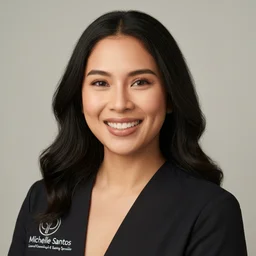
Licensed Cosmetologist & Beauty Licensing Exam Specialist
Paul Mitchell SchoolsMichelle Santos is a licensed cosmetologist with a Bachelor of Science in Esthetics and Salon Management from Paul Mitchell School. She has 16 years of salon industry experience and 8 years preparing students for state cosmetology board exams in theory, practical skills, and sanitation. She specializes in licensure preparation for cosmetologists, estheticians, and nail technicians.