
How to Get a COA Certificate: Complete Training Guide & Requirements
Learn how to get a COA certificate step by step. Eligibility, exam prep, costs, and tips for 2026 September. 🎯 Complete guide for aspiring ophthalmic assistants.
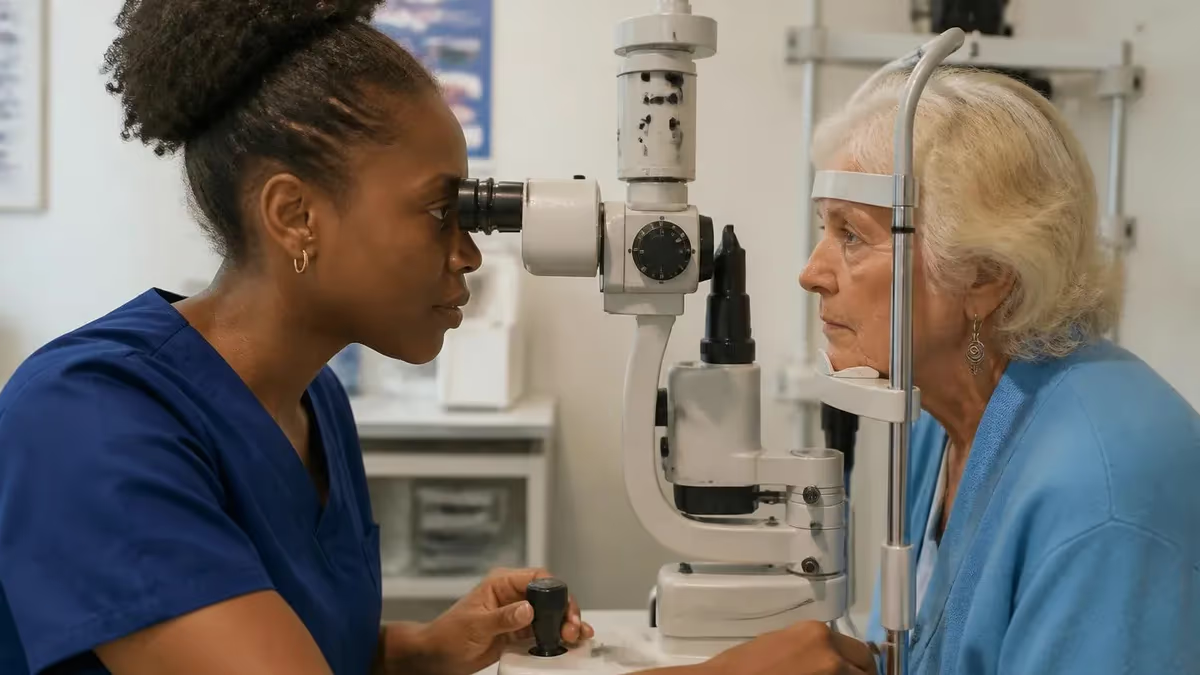
Understanding how to get a COA certificate is the first critical step for anyone pursuing a career as a Certified Ophthalmic Assistant. The COA credential — offered by the Joint Commission on Allied Health Personnel in Ophthalmology (JCAHPO) — is widely regarded as the entry-level gold standard in ophthalmic medicine.
Whether you are transitioning from another healthcare field or entering eye care for the first time, this guide lays out every requirement, milestone, and exam strategy you need to move from candidate to certified professional efficiently and confidently. You can also review how to get a coa certificate scoring data to understand what passing looks like.
The COA certification signals to employers that you possess the clinical knowledge and hands-on skills required to support ophthalmologists in patient care settings. Certified Ophthalmic Assistants perform visual acuity testing, take patient histories, conduct preliminary eye exams, administer eye drops, and operate diagnostic equipment. In competitive hiring markets, the COA designation separates entry-level applicants from one another and can meaningfully accelerate salary negotiations. Across the United States, COA-certified professionals earn demonstrably higher wages than their non-certified counterparts, even at the same experience level and in the same practice setting.
Before diving into study materials or registering for the exam, every candidate must confirm they meet JCAHPO's eligibility standards. The most common pathway requires that you have worked in ophthalmology for at least one year, accumulating a minimum of 1,000 hours of direct patient care. There is no formal degree prerequisite for the standard experience pathway, which makes the COA accessible to people from a wide range of educational backgrounds, including those who hold a high school diploma and have on-the-job training in a busy ophthalmology practice or ambulatory surgical center.
For candidates who have completed an accredited ophthalmic medical personnel training program, JCAHPO offers an alternative eligibility route that can reduce or eliminate the experience-hours requirement. These accredited programs — offered through institutions that meet the Committee on Accreditation for Ophthalmic Medical Personnel (CoA-OMP) standards — provide structured classroom instruction alongside supervised clinical rotations. Graduates of these programs often feel more confident walking into the exam room because their curriculum directly mirrors the content domains tested on the COA exam, including refractometry, tonometry, and ocular motility assessment.
The COA exam itself consists of 170 scored questions delivered in a computer-based format at Pearson VUE testing centers across the country. Candidates have three hours to complete the examination, and the content is drawn from five major domains: history taking and patient communication, ocular anatomy and physiology, ophthalmic clinical procedures, optics and refraction, and general medical knowledge. The exam is criterion-referenced, meaning your score is compared against a fixed performance standard — not against other test-takers — so every point you earn through disciplined preparation counts directly toward your result.
Many candidates underestimate the depth of biochemistry and physiology knowledge the exam requires. Questions about metabolic processes — such as the role of coenzyme A and acetyl-CoA in ocular tissue energy metabolism — occasionally appear in the basic science sections of the COA exam. While these topics represent a small fraction of total questions, they illustrate the breadth of foundational science knowledge JCAHPO expects from certified professionals. Candidates who invest time in understanding anatomical and physiological principles, not just clinical procedures, consistently outperform those who focus exclusively on procedural memorization.
This guide will walk you through the complete certification journey: eligibility verification, application submission, exam content domains, study strategies, testing day logistics, and post-certification renewal requirements. Whether you are just starting your ophthalmic career or returning to upgrade from a COA to a COT designation in the future, the information in the sections below will give you a clear, actionable roadmap to earning your credential and launching a rewarding career in eye care.
COA Certification by the Numbers

How to Get a COA Certificate: Step-by-Step Pathway
Confirm Eligibility
Create a JCAHPO Account & Apply
Receive Authorization to Test (ATT)
Schedule Your Exam at Pearson VUE
Study, Practice, and Prepare
Sit for the Exam & Receive Results
The application process for the COA certification begins on the JCAHPO website, where candidates create a personal account and access the online application portal. Before you fill out a single form, take time to gather every piece of supporting documentation you will need, because incomplete applications are a leading cause of processing delays. You will need an employer attestation letter signed by a licensed ophthalmologist or practice administrator confirming the dates of your employment and verifying that your work involved direct patient care in a clinical ophthalmology setting.
Candidates who are applying via the education pathway — meaning they completed a CoA-OMP accredited training program — need to request an official transcript from their institution and have it sent directly to JCAHPO. Some programs include a verification form that the program director signs and submits on your behalf, which can simplify the documentation process. If your program has graduated many COA candidates in the past, the administrative staff will likely be familiar with the submission process and can help you move quickly through this step without unnecessary back-and-forth.
The examination fee for the COA credential is currently set at $295 for JCAHPO members and $345 for non-members. Creating a JCAHPO membership before applying is worthwhile for most candidates, particularly those who plan to advance to the COT or COMT level in the future, because membership dues pay for themselves through reduced examination fees across the certification ladder. Payment is collected at the time of application submission, and fees are non-refundable after JCAHPO processes your file, so confirm your eligibility before you pay.
Once JCAHPO reviews your application and confirms your eligibility, you will receive an Authorization to Test (ATT) email within approximately two to four weeks. This message contains your candidate ID number and activates your one-year testing window. Do not delay scheduling your appointment once you receive your ATT. Many candidates make the mistake of waiting until they feel fully prepared, only to find that testing center appointments fill up quickly — particularly in metropolitan areas and during peak exam seasons in spring and fall.
Scheduling your exam through Pearson VUE is straightforward. You log in with your JCAHPO candidate credentials, search for available testing centers by zip code, and select an open appointment slot. Most major US cities have multiple Pearson VUE locations, so you will generally have some flexibility in choosing a site that is convenient for you. Rural candidates may need to travel, so factor travel logistics into your study timeline. If you need to reschedule after booking, Pearson VUE allows changes up to 24 hours before your appointment without a penalty fee.
On the day of your exam, plan to arrive at least 30 minutes early. You must present two forms of identification: a primary government-issued photo ID (such as a driver's license or passport) and a secondary ID with your name on it. The testing center staff will photograph you, collect your signature, and explain the rules before escorting you to your workstation.
You are not permitted to bring personal items — including phones, notes, or food — into the testing room, but secure lockers are provided. The exam interface is intuitive and includes a flagging feature that lets you mark questions for review before submitting your final answers.
Many first-time COA candidates find that practicing under timed, exam-like conditions during their preparation reduces test-day anxiety significantly. Block out three-hour study sessions where you work through full-length practice exams without interruption, mimicking the actual testing environment. When you sit down at the Pearson VUE workstation, a familiar format and pacing will already feel natural, allowing you to focus entirely on answering questions rather than navigating an unfamiliar interface or managing time pressure for the first time.
COA Exam Content Domains: What You Need to Know
Clinical procedures make up the largest portion of the COA exam and cover the hands-on skills ophthalmic assistants perform daily. Topics include visual acuity measurement at various distances, confrontation visual field testing, color vision assessment, stereopsis testing, pupil evaluation, and the use of the slit lamp for anterior segment examination. Candidates must demonstrate conceptual knowledge of how each test is performed, why it is ordered, and what abnormal results indicate about underlying ocular pathology.
Tonometry and intraocular pressure measurement represent a particularly high-yield subdomain within clinical procedures. The COA exam tests knowledge of Goldmann applanation tonometry, non-contact tonometry, and Tono-Pen devices, as well as the significance of elevated IOP in glaucoma screening. Understanding proper technique, calibration steps, and the factors that can cause artificially high or low readings — such as corneal thickness and recent contact lens wear — is essential for answering these questions confidently and accurately.

Is COA Certification Worth the Effort?
- +Nationally recognized credential that signals clinical competence to employers across all 50 states
- +Increases earning potential — certified assistants typically earn $5,000–$10,000 more annually than non-certified peers
- +Opens doors to advancement toward COT and COMT designations without restarting from scratch
- +No bachelor's degree required — accessible to candidates with high school diplomas and clinical experience
- +Employer-sponsored exam fees are common, reducing or eliminating out-of-pocket costs for many candidates
- +Demonstrates commitment to professional development, making you a stronger candidate for supervisory roles
- −Requires a minimum of 1,000 documented clinical hours, which can take up to a year to accumulate
- −Exam fee ($295–$345) plus study materials represent a meaningful financial investment for entry-level workers
- −Three-year renewal cycle with 24 CE credits requires ongoing time and financial commitment
- −Exam content spans five domains, requiring broad preparation beyond day-to-day job responsibilities
- −Some rural employers do not require or prioritize COA certification, limiting the immediate salary benefit
- −Failing the exam results in reapplication fees and a mandatory waiting period before retesting
COA Exam Preparation Checklist
- ✓Download the official JCAHPO COA exam blueprint and use it as your master study outline
- ✓Obtain a copy of the Ophthalmic Medical Assisting textbook (5th edition or later) as your primary reference
- ✓Create a 10-week study schedule with daily topics aligned to the five exam content domains
- ✓Practice visual acuity testing, lensometry, and tonometry hands-on during working hours
- ✓Complete at least three full-length timed practice exams before your scheduled test date
- ✓Review every incorrect practice question and look up the underlying concept — not just the correct answer
- ✓Join a JCAHPO study group or online forum to discuss difficult topics with other COA candidates
- ✓Memorize normal ranges for IOP, visual acuity, pupil size, and corneal thickness values
- ✓Study anatomical diagrams of the eye and be able to label all major structures from memory
- ✓Schedule your Pearson VUE appointment at least six weeks before you plan to sit for the exam
The Pass Rate Rewards Broad Preparation
JCAHPO reports that first-time pass rates for the COA exam hover around 54%. Candidates who study all five content domains — not just the clinical procedures they perform at work — consistently outperform those who rely on job experience alone. Allocating dedicated study time to optics, anatomy, and general medical knowledge is the single most effective strategy for improving your odds of passing on the first attempt.
Walking into the COA exam with a clear understanding of how the test is scored gives you a meaningful strategic advantage. The COA is a criterion-referenced examination, which means your performance is measured against an absolute standard of competency — not ranked against other candidates. You do not need to beat anyone else; you simply need to demonstrate that you meet the defined threshold of clinical knowledge and skill. This distinction should reduce competitive anxiety and redirect your mental energy toward thorough, systematic preparation.
The 170 questions on the COA exam are all selected-response (multiple-choice) items, with four answer choices per question. There is no penalty for guessing, which means you should always select an answer for every question rather than leaving items blank. The exam contains a small number of pretest questions — new items being evaluated for future use — that do not count toward your score. Because these pretest questions are not identified, treat every question as scored and give each one your full attention throughout the three hours.
Time management during the exam is a skill that requires deliberate practice. With 170 questions and 180 minutes, you have approximately 63 seconds per question on average. Most candidates find that straightforward knowledge questions take 20–40 seconds, while clinical scenario questions requiring multi-step reasoning take 90 seconds or more. Practice pacing yourself during full-length timed simulations so you develop an intuitive sense of when to move on from a difficult question and when to invest extra time in careful analysis.
The flagging feature in the Pearson VUE testing interface allows you to mark questions for review before you submit your answers. Use this feature strategically: if you are confident in an answer, move forward without flagging. If you are torn between two choices, flag the question and continue — returning with fresh eyes often helps you identify the correct answer more quickly than staring at a difficult question for an extended period. Reserve your final 10 minutes for a sweep through all flagged items before final submission.
After completing the exam, you will see a preliminary result on the screen — either a pass or fail indicator. This on-screen result is unofficial but is rarely overturned during the formal scoring process. If you pass, your official COA certificate and wallet card will arrive within approximately four to six weeks by mail, and your certification will be listed in the JCAHPO online registry, which employers can verify independently. If you do not pass, your score report will include a domain-by-domain performance breakdown that identifies your relative strengths and weaknesses, giving you a targeted roadmap for retesting.
Candidates who do not pass on their first attempt are permitted to retake the COA exam after a mandatory 60-day waiting period. You must reapply and pay the examination fee again, but you do not need to resubmit eligibility documentation if your credentials remain current. Most retakers who study systematically using their score report as a guide pass on the second attempt. If you fail twice within your original ATT window, you will need to submit a new application after the window expires before scheduling a third attempt.
Beyond the exam itself, understanding what happens after you pass helps you plan your professional trajectory. COA certification is valid for three years, and renewal requires earning 24 continuing education (CE) credits during that period. JCAHPO-approved CE activities include live conferences, webinars, home study courses, and hands-on skills workshops. Renewal also requires an administrative fee. Staying current with your CE requirements from the moment you receive your certificate — rather than scrambling to accumulate credits in the final months of your certification cycle — is a habit that sustained career professionals consistently recommend.
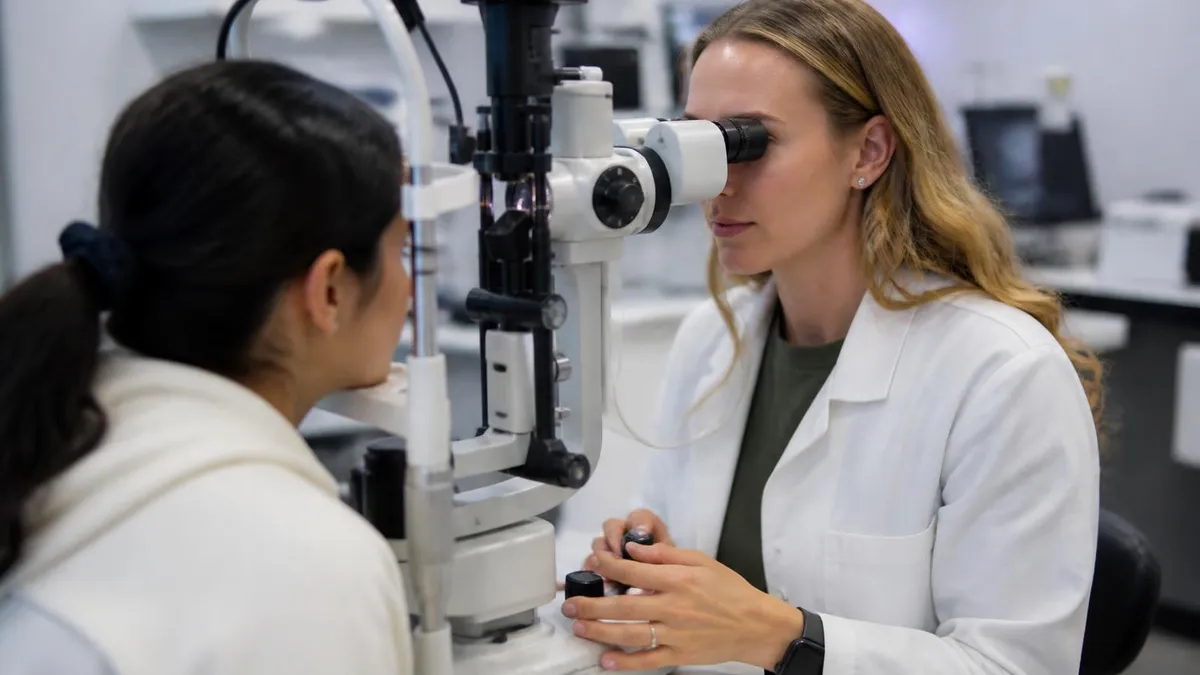
Your Authorization to Test (ATT) is valid for one year from the date of issuance. If you do not schedule and sit for the exam within that window, your application and fees are forfeited and you must reapply from the beginning. Do not wait until the last minute — Pearson VUE appointment availability can be limited, especially in smaller markets, and scheduling conflicts can quickly consume your remaining testing window.
Once you hold your COA certificate, you are not at the end of a journey — you are at the beginning of a structured professional development ladder that JCAHPO has designed to reward ongoing clinical growth. The COA is the foundation upon which the Certified Ophthalmic Technician (COT) and Certified Ophthalmic Medical Technologist (COMT) credentials are built.
Each level requires additional clinical hours, broader examination content, and in the case of the COMT, a formal assessment of technical proficiency. Many ophthalmic assistants set a long-term goal of reaching the COMT level, which represents the highest credential in the non-physician ophthalmic workforce.
Employers across the country actively seek COA-certified staff because the credential reduces onboarding costs and provides a reliable, nationally standardized measure of clinical competence. Large ophthalmology practice groups, academic medical centers, Veterans Affairs eye clinics, and ambulatory surgical centers all list COA certification as preferred or required on job postings. In competitive hiring markets — particularly in urban areas with multiple ophthalmology practices competing for the same talent pool — holding a current COA certificate can be the factor that moves your resume from the screening pile to the interview queue.
Salary data consistently demonstrates that COA certification pays for itself quickly. The national median salary for a Certified Ophthalmic Assistant in 2025 is approximately $64,000 per year, compared to approximately $52,000–$56,000 for non-certified ophthalmic assistants in similar roles. That gap of $8,000–$12,000 annually means the roughly $500 total investment in exam fees and study materials — plus the time you invested in preparation — delivers a return on investment measured in months, not years. Geographic variation is significant: COA-certified professionals in California, New York, and Massachusetts tend to earn considerably above the national median.
Continuing education activities you complete for COA renewal also serve double duty as preparation for the COT examination. JCAHPO's CE catalog includes advanced courses in biometry, ophthalmic imaging, surgical assisting, and low vision rehabilitation — all of which are tested on the COT exam. Intentional selection of CE activities that align with COT content domains allows you to build advanced knowledge while satisfying your renewal requirements simultaneously, reducing the additional study burden when you are ready to sit for the next level of certification.
Professional networking through JCAHPO membership and attendance at the American Academy of Ophthalmology (AAO) annual meeting provides access to continuing education content, industry updates, and peer connections that accelerate career development. Many COA-certified professionals credit their professional networks — built through conferences, online communities, and local study groups — with helping them navigate job transitions, negotiate salary increases, and identify mentors who guided them toward leadership roles within their practices. The value of professional community compounds over time in ways that are difficult to quantify but consistently cited by experienced ophthalmic professionals.
For candidates exploring remote or telehealth-adjacent roles in ophthalmology, the COA credential remains relevant even as care delivery models evolve. Many teleophthalmology platforms that screen for diabetic retinopathy and glaucoma risk rely on trained technicians to capture images, verify patient histories, and communicate results to supervising physicians. COA-certified professionals are well-positioned to fill these roles because their credential demonstrates exactly the competencies these platforms require, including proficiency in fundus photography, patient history documentation, and clinical quality standards.
Finally, if you are researching the COA from outside the traditional eye care pathway — for example, as a medical assistant, optometric technician, or ophthalmic photographer — know that JCAHPO evaluates each application individually and may grant credit for experience gained in adjacent clinical settings. Contact JCAHPO directly before applying to discuss whether your specific work history qualifies. Many candidates with non-traditional backgrounds have earned the COA credential by documenting their relevant clinical hours carefully and supplementing gaps with targeted self-study prior to the examination.
Building an effective study plan for the COA exam requires more than simply reading through a textbook from cover to cover. The most successful candidates treat their preparation like a clinical rotation — actively engaging with material, testing recall frequently, and tracking their performance across content domains over time. Start by downloading the official JCAHPO exam blueprint from their website and mapping every topic to a specific chapter or resource. This mapping exercise alone reveals which areas of your knowledge are strong and which need the most attention before your test date.
Active recall — the practice of generating answers from memory rather than passively recognizing correct responses — is the single most evidence-supported study technique for medical certification examinations. Flashcard systems like Anki, which use spaced repetition algorithms to schedule review of items based on how well you know them, are particularly effective for memorizing normal lab values, anatomical structures, and procedural steps. Spend at least 20 minutes per day on active recall practice, even on days when your primary study focus is reading or watching instructional videos.
Practice questions are indispensable, but the way you use them matters as much as the volume you complete. Resist the temptation to answer questions in large batches without pausing to review. Instead, after every 20–30 questions, stop and carefully examine every item you got wrong — or that you got right by guessing. Understanding why a distractor is wrong is just as important as knowing why the correct answer is right, because this reasoning process builds the flexible clinical judgment the COA exam is designed to measure.
Forming a study group with colleagues who are also preparing for the COA exam can dramatically accelerate your preparation, particularly for topics that are difficult to study in isolation. Assign each group member a content domain to teach to the others each week — the act of teaching a concept forces a level of understanding that passive reading rarely achieves.
Many candidates also find value in peer quizzing: one person reads a question aloud while others write their answers, followed by discussion of the reasoning behind each choice. This format mirrors the cognitive demands of the actual exam more closely than individual silent studying.
On the week before your exam, shift your focus from learning new material to consolidating what you already know. Review your notes, revisit flagged flashcards, and complete one final practice exam under strict timed conditions. Avoid introducing unfamiliar topics during this final week, as the cognitive load of processing new information can displace well-consolidated knowledge at a critical moment. Trust the preparation you have done and channel your remaining energy into mental readiness, logistics confirmation, and physical self-care including adequate sleep.
On the morning of the exam, eat a substantial breakfast that includes protein and complex carbohydrates to sustain your concentration across the full three hours. Bring both required forms of ID and arrive at the testing center at least 30 minutes before your scheduled start time. If possible, drive to the testing center the day before to confirm the location, parking situation, and estimated travel time. Eliminating logistical uncertainty on exam day frees your cognitive resources for the task that actually matters: demonstrating your clinical knowledge across 170 carefully written questions.
After your exam — whether you pass or need to retest — take time to reflect on your preparation process and identify what you would do differently. Candidates who treat each exam experience as a learning opportunity, regardless of the outcome, consistently make faster progress through the JCAHPO certification ladder than those who view an exam result as a final verdict on their competence. The COA is a rigorous but achievable credential, and the ophthalmic profession is better served by every qualified, committed professional who earns it.
COA Questions and Answers

COA Scores Explained: Understanding Your COA Result and What Comes Next

How to Obtain a COA: Complete Step-by-Step Guide to COA Certification

COA in Healthcare: The Complete Guide to the Certified Ophthalmic Assistant Role

COA Certification Online: Complete Training Guide & Requirements for 2026

COA Practice Questions 2026: Complete Study Guide for Certified Ophthalmic Assistant Exam Prep
About the Author

Educational Psychologist & Academic Test Preparation Expert
Columbia University Teachers CollegeDr. Lisa Patel holds a Doctorate in Education from Columbia University Teachers College and has spent 17 years researching standardized test design and academic assessment. She has developed preparation programs for SAT, ACT, GRE, LSAT, UCAT, and numerous professional licensing exams, helping students of all backgrounds achieve their target scores.
Join the Discussion
Connect with other students preparing for this exam. Share tips, ask questions, and get advice from people who have been there.
View discussion (7 replies)