
COA in Healthcare: The Complete Guide to the Certified Ophthalmic Assistant Role
What does a COA do in healthcare? Explore roles, salary, exam prep & career paths for Certified Ophthalmic Assistants. ✅ Full 2026 October guide.

Understanding coa in healthcare starts with recognizing the critical front-line role these allied health professionals play in ophthalmology clinics, hospital eye departments, and vision care centers across the United States. A Certified Ophthalmic Assistant — or COA — works under the supervision of a licensed ophthalmologist to gather patient histories, perform preliminary diagnostic tests, and prepare patients for more complex examinations. Their work directly shapes the quality and efficiency of every eye care visit, making the COA credential one of the most respected entry-level certifications in ophthalmic medicine.
The term COA meaning is straightforward on paper: it stands for Certified Ophthalmic Assistant, a credential awarded by the Joint Commission on Allied Health Personnel in Ophthalmology (JCAHPO). But in daily clinical practice, the meaning is far richer. COAs are the first clinical contact most patients have after checking in, and their ability to accurately measure visual acuity, screen for conditions like glaucoma, and document patient concerns sets the foundation for the ophthalmologist's diagnosis. Errors at this stage cascade throughout the entire clinical encounter, so precision and technical competency are non-negotiable skills for anyone earning the COA designation.
Many people who first encounter the abbreviation COA in a non-medical context — perhaps related to a rifle sight like the aimpoint coa or a glock coa trigger component — are surprised to discover that in healthcare, the acronym carries an entirely different and deeply patient-centered meaning. The aimpoint coa and glock coa references belong to the firearms accessories world, where COA stands for something unrelated to medicine. In the ophthalmic field, COAs are skilled technicians who support some of the most delicate and precision-dependent clinical work in all of medicine: the assessment and preservation of human vision.
The biochemistry world also uses the COA abbreviation in a very different way. Researchers studying metabolism frequently reference coenzyme A and acetyl-coa, as well as coenzyme a to acetyl coa conversion, when describing how the body processes fats and carbohydrates for energy. Acetyl-CoA is a central molecule in the Krebs cycle, and understanding coenzyme a acetyl coa pathways is fundamental to biochemistry. None of this overlaps with the healthcare COA role, but the shared abbreviation can create confusion for students and professionals searching for information across disciplines — hence the importance of context when discussing coas in any setting.
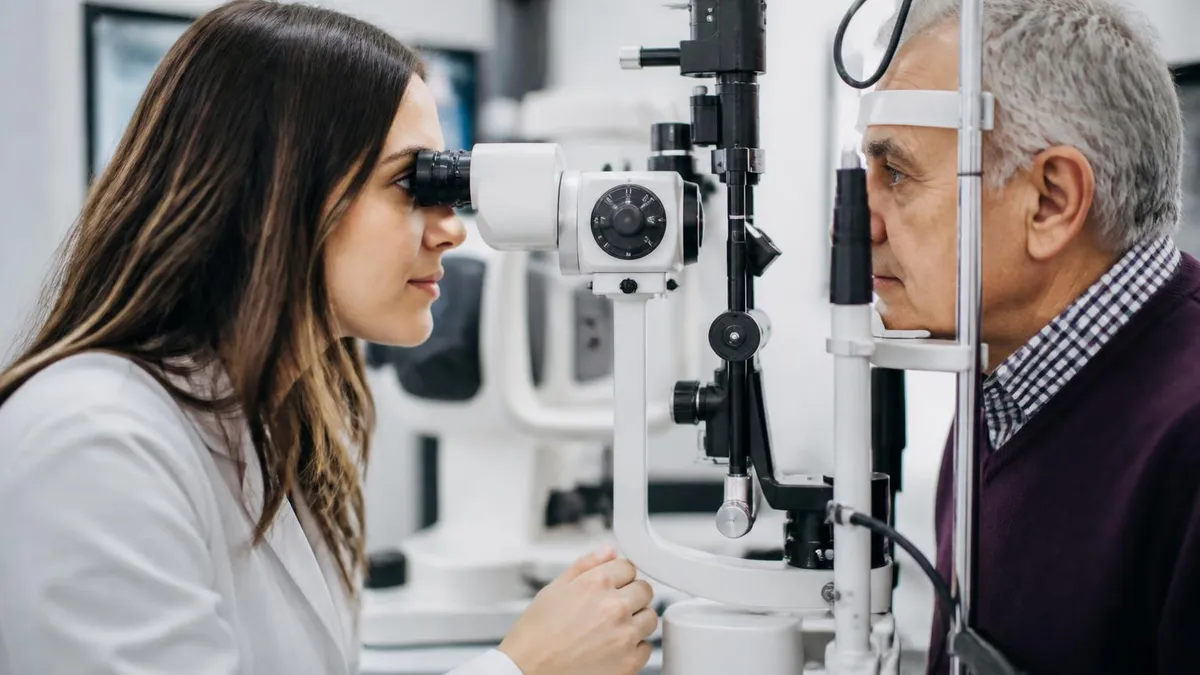
In practical terms, a COA in a busy ophthalmology practice will perform dozens of tasks daily that require both technical skill and interpersonal sensitivity. These include administering eye drops, operating slit-lamp biomicroscopes, performing automated visual field tests, and accurately recording patient medication histories. The COA also plays a vital patient education role, explaining pre-operative instructions for procedures like cataract surgery, describing how to instill prescribed eye drops at home, and reassuring anxious patients before potentially uncomfortable tests such as tonometry.
The scope of COA utilities — meaning the range of practical clinical tasks these professionals handle — extends well beyond what most patients realize. Some COAs specialize in contact lens fitting assistance, working alongside optometrists and ophthalmologists to help patients select appropriate lens types, understand insertion and removal techniques, and troubleshoot comfort issues.
Others focus on diagnostic imaging, operating optical coherence tomography (OCT) machines or fundus cameras that produce the detailed retinal images physicians rely on to diagnose conditions such as macular degeneration, diabetic retinopathy, and glaucoma. The breadth of these responsibilities explains why the COA exam is comprehensive and why earning the credential requires genuine clinical competency.
Geographic location also shapes the COA experience in meaningful ways. A COA working in a coastal urban center such as coa del mar or another major metropolitan area may encounter a more diverse patient population with varied language needs, insurance complexities, and socioeconomic factors that influence access to care.
Rural COAs, by contrast, may serve as a critical — and sometimes the only — ophthalmic technical resource for patients who cannot easily travel to larger eye care centers. Regardless of setting, the COA credential signals to employers, colleagues, and patients alike that this professional has met a nationally recognized standard of ophthalmic knowledge and clinical skill.
COA in Healthcare by the Numbers
Key Facts at a Glance
| Item | Value | Details |
|---|---|---|
| Questions on COA Exam | 200 | Multiple-choice format |
| COA Exam Duration | 3.5 hrs | Timed, computer-based |
| Minimum Clinical Experience | 1 year | Required before sitting exam |
Core COA Responsibilities in Clinical Settings
COAs conduct detailed intake interviews to capture chief complaints, medication lists, allergy histories, and prior ocular conditions. Accurate documentation at this stage ensures the supervising ophthalmologist has a reliable clinical picture before the examination even begins.
From automated refraction and visual acuity testing to color vision screening and confrontation visual fields, COAs administer the diagnostic battery that informs the physician's assessment. Precision in these measurements directly affects the accuracy of prescriptions and treatment plans.
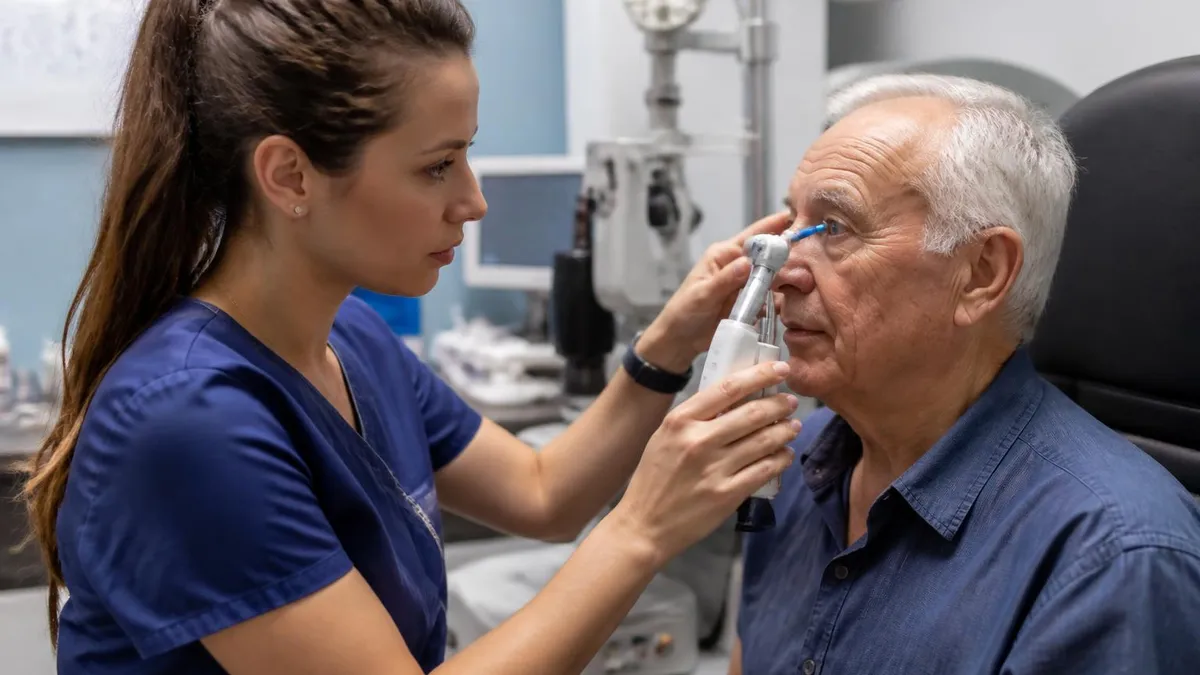
Measuring intraocular pressure with a tonometer is one of the most critical COA skills. Improved IOP is a key glaucoma risk factor, and COAs must use non-contact or Goldmann applanation tonometry accurately to flag at-risk patients for further evaluation.
COAs operate slit-lamp biomicroscopes, lensometers, keratometers, and fundus cameras. Mastery of these instruments requires both technical training and ongoing practice to maintain image quality and measurement consistency across varied patient presentations.
Preparing patients for surgical procedures such as cataract extraction, laser treatments, or intravitreal injections involves explaining pre-op instructions, obtaining informed consent documentation, and addressing patient anxiety — all key COA responsibilities requiring strong communication skills.
Earning the COA credential through JCAHPO requires candidates to demonstrate both educational preparation and verified hands-on clinical experience. The minimum requirement is one year — or approximately 1,000 hours — of supervised ophthalmic assisting experience under a licensed ophthalmologist or optometrist. This practical foundation ensures that candidates sitting for the exam have genuine exposure to the clinical scenarios they will be tested on, rather than purely theoretical knowledge acquired from textbooks alone. Understanding coa in healthcare means understanding that experience and competency go hand in hand from the very beginning of the certification process.
The COA written examination itself consists of 200 multiple-choice questions covering a broad spectrum of ophthalmic content. Major domains include ocular anatomy and physiology, patient history and documentation, visual assessment and testing, optics and refraction, ocular motility and alignment, contact lens fundamentals, and tonometry with glaucoma screening.
Each domain carries a weighted percentage of the total exam score, with patient history, visual assessment, and ophthalmic procedures typically representing the largest shares of tested content. Candidates who underestimate the breadth of the exam often find themselves underprepared, particularly in areas like optics and pharmacology that demand rigorous study beyond clinical habit alone.
Preparation strategies that consistently produce passing scores share several common elements. First, successful candidates use structured study materials that mirror the JCAHPO content outline, ensuring comprehensive coverage rather than relying solely on workplace experience. Second, they incorporate regular timed practice testing into their study routine, which builds both content mastery and the pacing skills needed to complete 200 questions within the 3.5-hour time limit without feeling rushed.
Third, they seek feedback on weak areas — if a candidate consistently misses questions about coenzyme a acetyl coa metabolism pathways in the pharmacology context, or confuses the mechanisms of different classes of glaucoma medications, targeted review of those specific domains pays dividends on exam day.
The cost of the COA examination and credentialing process is an important practical consideration for candidates. JCAHPO charges application and examination fees that, combined with required study materials, can represent a meaningful investment for a healthcare worker early in their career.
Many employers — particularly large ophthalmology practices, academic medical centers, and hospital-based eye departments — reimburse COA examination fees for employees who pass, recognizing the value that a credentialed assistant brings to the practice. Prospective candidates are strongly encouraged to discuss financial support with their employer before applying, as this benefit is more common than many new entrants to the field realize.
Recertification is a critical ongoing responsibility for practicing COAs. The credential must be renewed every three years through completion of continuing education credits that keep practitioners current with advances in ophthalmic technology, pharmacology, and clinical protocols. This continuing education requirement ensures that the COA designation remains meaningful over time — a COA who earned their credential a decade ago has been required to maintain and update their knowledge continuously, unlike a one-time certification with no renewal obligation. For patients, this recertification cycle provides an important quality assurance mechanism that supports trust in the ophthalmic care team.
Understanding the COA exam's structure also helps candidates develop smarter study schedules. Because the exam is computer-based and offered at Prometric testing centers nationwide, candidates have flexibility in scheduling that allows them to align their test date with a period of intensive preparation.
Most successful candidates report studying for 8 to 16 weeks before their exam date, dedicating between 10 and 20 hours per week to review. This schedule accommodates the reality that most COA candidates are actively working in clinical settings during their preparation period, making efficient use of study time a practical necessity rather than just a strategic preference.
One dimension of COA preparation that deserves special emphasis is the development of anatomical vocabulary and its clinical application. Many questions on the COA exam require candidates not just to recall isolated facts but to apply anatomical knowledge to clinical scenarios — for example, understanding why a patient with a particular pattern of visual field loss is likely to have a lesion at a specific point along the optic pathway.
This applied reasoning approach reflects the real-world demands of ophthalmic assisting, where a COA who understands the clinical significance of findings — not just how to measure them — provides far more value to the supervising physician and to the patient.
COA Meaning in Different Healthcare Contexts
In private and group ophthalmology practices — the most common setting for COAs — these professionals manage patient flow, perform pre-examination testing, assist with minor surgical procedures in the office, and maintain diagnostic equipment. A typical COA in this setting might see 20 to 40 patients per day, moving efficiently between examination rooms while maintaining the accuracy and documentation standards that regulatory compliance and quality care demand.
The clinic-based COA also plays a central role in patient communication, answering follow-up phone calls about test results, explaining medication instructions, and helping patients understand referral processes. Their position at the intersection of clinical work and patient relations makes them indispensable to the smooth functioning of a high-volume ophthalmology practice, and practices that invest in credentialed COAs consistently report higher patient satisfaction scores than those relying on uncredentialed ophthalmic technicians.
Is Becoming a COA the Right Healthcare Career Choice?
- +Strong job stability in a growing field — demand for eye care services rises as the U.S. population ages
- +Meaningful patient interaction that directly supports vision preservation and quality of life
- +Clear credential pathway through JCAHPO with nationally recognized exam and recertification structure
- +Multiple work settings available — private practice, hospital, research, academic, and specialty clinics
- +Stepping stone to advanced ophthalmic credentials such as COT (Certified Ophthalmic Technician) and COMT
- +Relatively accessible entry point — one year of supervised experience required before examination
- −Salary ceiling is lower than other allied health fields such as radiologic technology or surgical technology
- −Physically demanding work — long hours standing, working in darkened examination rooms, repetitive instrument use
- −Recertification requires ongoing continuing education investment of time and money every three years
- −Exam fees and study materials represent an upfront cost burden for early-career candidates
- −Limited autonomy — COAs always work under physician supervision and cannot diagnose or prescribe independently
- −Burnout risk in high-volume practices where patient-per-day ratios can strain thoroughness and job satisfaction
COA Exam Preparation Checklist: 10 Steps to Certification
- ✓Verify you meet JCAHPO's one-year clinical experience requirement before submitting your application
- ✓Download the official JCAHPO COA candidate handbook and review the content outline in detail
- ✓Create a 10–16 week study schedule that allocates time proportionally across all exam domains
- ✓Use JCAHPO-approved study materials and at least one complete full-length practice exam under timed conditions
- ✓Focus extra review time on high-weight domains: patient history, visual assessment, and ophthalmic procedures
- ✓Practice instrument operation at your clinical site to reinforce hands-on skills tested in scenario-based questions
- ✓Study ocular anatomy diagrams until you can identify all major structures without reference materials
- ✓Review pharmacology with emphasis on glaucoma medications, dilating agents, and anesthetic drops used in clinic
- ✓Complete two or more timed practice tests in the final two weeks before your exam date to build pacing confidence
- ✓Schedule your Prometric testing center appointment at least four weeks in advance to secure your preferred date and time
Experience Without Certification Leaves Salary and Opportunity on the Table
Studies of ophthalmic staffing consistently show that credentialed COAs earn 15–25% more than uncredentialed ophthalmic assistants performing similar duties. Employers use the JCAHPO credential as a reliable quality signal when hiring, and many large ophthalmology groups now list COA certification as a minimum requirement rather than a preferred qualification. If you have the clinical experience, sitting for the exam is one of the highest-return investments you can make in your ophthalmic career.
The career outlook for COAs in the United States remains consistently strong, driven by demographic trends that show no sign of reversing. The U.S. Census Bureau projects that Americans aged 65 and older will represent approximately 21 percent of the total population by 2040, up from about 17 percent today.
Age-related eye conditions — including cataracts, glaucoma, macular degeneration, and diabetic retinopathy — increase in prevalence with every decade of life, meaning the demand for ophthalmic services is structurally tied to the aging of the American population. This demographic tailwind makes COA one of the more recession-resistant allied health careers available to candidates entering the healthcare workforce today.
Salary expectations for COAs vary meaningfully by geographic region, practice setting, years of experience, and whether the COA holds additional advanced credentials. Entry-level COAs in lower-cost-of-living regions can expect starting salaries in the $36,000 to $42,000 range, while experienced COAs in high-demand metropolitan markets — particularly in states like California, New York, Massachusetts, and Washington — regularly command salaries between $55,000 and $64,000 annually. Practices that offer performance bonuses, profit-sharing, or productivity incentives can push total compensation meaningfully above base salary benchmarks, particularly for COAs who demonstrate exceptional efficiency and patient satisfaction outcomes.
Benefits packages for full-time COA positions have become increasingly competitive as healthcare employers struggle to attract and retain qualified ophthalmic support staff. Beyond standard health insurance and paid time off, many ophthalmology practices now offer tuition reimbursement for advanced certification study, covered recertification fees, paid attendance at ophthalmic conferences, and retirement plan contributions with employer matching. COAs who negotiate these benefits proactively at the time of hiring often secure total compensation packages that significantly exceed what the base salary figure alone suggests, making benefit negotiation a valuable skill for career-minded ophthalmic professionals.
The coas — meaning the collective workforce of certified ophthalmic assistants — represent a diverse professional community with active state and national networks. JCAHPO supports a range of educational events, webinars, and resources specifically designed for COAs at all career stages. Many states also have local ophthalmic technician societies that host regional conferences, job boards, and peer learning opportunities. Participation in these professional communities accelerates career development in ways that individual study alone cannot replicate — the relationships and mentorships formed through professional association membership often open doors to career opportunities that are never formally posted in job listings.
International career opportunities represent a growing dimension of the COA professional landscape. As healthcare systems in developing countries expand their capacity to treat preventable blindness — a global health priority supported by organizations such as the World Health Organization and the International Agency for the Prevention of Blindness — demand for trained ophthalmic technical personnel with recognized credentials is rising worldwide. American-trained COAs who hold JCAHPO certification and are open to international work may find opportunities with humanitarian eye care organizations, global health NGOs, and internationally accredited hospital systems in regions ranging from sub-Saharan Africa to Southeast Asia.
Salary growth over a COA career is most rapid for professionals who pursue advanced credentials while accumulating clinical experience. The JCAHPO credentialing ladder progresses from COA to Certified Ophthalmic Technician (COT) and ultimately to Certified Ophthalmic Medical Technologist (COMT), with each level requiring additional experience, continuing education, and a progressively more demanding examination.
A COMT-credentialed professional with ten or more years of clinical experience in a subspecialty area such as retina or glaucoma can command salaries that compete with entry-level allied health roles traditionally seen as higher-status, such as radiologic technology or respiratory therapy. The investment in credential advancement pays measurable dividends across the arc of an ophthalmic career.
Regional variation in COA employment conditions extends beyond salary to include scope of practice considerations. Some states allow COAs to perform a broader range of clinical tasks under physician supervision than others, and state-specific regulations can affect which instruments a COA is permitted to operate, which medications they may administer under standing orders, and what documentation they are authorized to complete. COAs who relocate or who are considering positions in a new state should research their destination state's ophthalmic technician scope of practice regulations carefully, as assumptions based on one state's rules may not transfer directly to another's legal framework.

JCAHPO COA credentials must be renewed every three years through completion of required continuing education credits. Allowing your credential to lapse means you must reapply and potentially re-examine to reinstate certified status. Many employers treat a lapsed COA credential the same as an uncredentialed position for compensation purposes. Mark your recertification deadline on your calendar now and begin accumulating credits well before the renewal window closes.
Advancing beyond the entry-level COA credential is a structured process that rewards sustained commitment to professional growth in ophthalmic medicine. The natural progression leads first to the Certified Ophthalmic Technician (COT) credential, which requires three years of clinical experience post-COA and passage of a more advanced JCAHPO examination covering expanded scope topics including pharmacology, advanced optics, and specialized diagnostic procedures. COTs typically take on greater clinical responsibilities than COAs, including performing more complex anterior and posterior segment examinations, assisting with laser procedures, and supervising uncredentialed ophthalmic support staff in the practice setting.
Beyond the COT, the Certified Ophthalmic Medical Technologist (COMT) represents the pinnacle of ophthalmic technical credentialing in the United States. COMT candidates must hold the COT credential, demonstrate five or more years of clinical experience, and pass an examination that tests mastery of the most advanced ophthalmic technical competencies. COMTs often serve in senior clinical leadership roles, supervising entire ophthalmic technical departments, training new staff members, developing clinical protocols, and serving as the primary technical resource for complex subspecialty procedures. In academic and research settings, COMTs may hold faculty or research associate titles that reflect their advanced expertise.
Subspecialty certifications offer another dimension of professional advancement for COAs who develop deep expertise in a particular area of ophthalmology. JCAHPO offers subspecialty examinations in areas including ophthalmic surgical assisting, ophthalmic photography, low vision assistance, and registered diagnostic ophthalmic sonography. Each subspecialty credential requires its own combination of experience documentation and examination, but each also opens distinct career pathways and salary opportunities that generalist COA credentials alone cannot access. A COA who also holds ophthalmic photography certification, for example, becomes an invaluable asset in retina subspecialty practices where high-quality fundus imaging and fluorescein angiography are central to patient care.
Leadership roles in ophthalmic practice management represent another advancement path for experienced COAs who develop administrative and business skills alongside their clinical expertise. Practice administrator positions in ophthalmology require understanding of clinical workflows, staff management, regulatory compliance, and financial operations — all areas where a credentialed COA with years of floor-level clinical experience brings unique perspective. Some ophthalmology practice management roles offer six-figure compensation for professionals who combine deep clinical knowledge with demonstrated administrative competency, making this pathway attractive for COAs who enjoy the organizational and business dimensions of healthcare delivery.
Continuing education choices significantly shape the trajectory of COA career advancement. The most strategically minded COAs pursue CE credits that simultaneously satisfy JCAHPO recertification requirements and build knowledge in their chosen subspecialty area. Attending the American Academy of Ophthalmology annual meeting, for example, exposes COAs to the cutting edge of clinical practice while providing substantial CE credit hours in a concentrated period. Online educational platforms approved by JCAHPO allow COAs to accumulate credits on flexible schedules that accommodate working professionals — an important practical advantage given that most COAs work full-time clinical schedules throughout their credentialing careers.
Mentorship is perhaps the most underutilized tool available to COAs pursuing career advancement. Experienced COTs and COMTs who are willing to invest time in guiding early-career professionals provide insights that no textbook or examination prep course can replicate — including honest perspectives on which subspecialties offer the best work-life balance, which practice settings offer genuine advancement opportunities, and which professional relationships are worth cultivating for long-term career development. COAs who actively seek out mentors within their clinical settings and through professional associations consistently advance more rapidly and report higher career satisfaction than those who navigate their professional development in isolation.
The future of the COA role in healthcare will be shaped significantly by technology adoption in ophthalmic practice. Artificial intelligence diagnostic tools, automated refraction systems, and teleophthalmology platforms are changing the technical landscape of ophthalmic care — but rather than eliminating the COA role, these technologies are evolving it.
COAs who develop competency in emerging diagnostic technologies position themselves as indispensable navigators of the technological transition underway in ophthalmology, ensuring that their role remains central to high-quality patient care even as the specific tools and workflows of that care continue to change. Staying current with technology is not optional for the forward-looking COA — it is a professional survival strategy.
Building a successful COA study plan requires more than good intentions — it demands structured scheduling, honest self-assessment, and the discipline to follow through even when clinical workdays leave you mentally fatigued. The single most important habit successful COA candidates develop is consistency: studying for 60 to 90 minutes every day produces far better outcomes than marathon weekend sessions that exhaust cognitive reserves without establishing durable long-term memory.
Cognitive science research on spaced repetition confirms that regular, distributed practice over weeks and months encodes information more deeply than cramming, making daily study the scientifically supported approach for high-stakes credentialing examinations like the JCAHPO COA exam.
Content prioritization is equally critical to efficient COA preparation. The JCAHPO content outline published in the official candidate handbook specifies the exact percentage weight of each domain on the exam. Domains that collectively account for 60 percent or more of exam questions deserve proportionally greater study time, while lower-weight domains should receive enough attention to avoid zero-score gaps without consuming preparation hours disproportionate to their contribution to the total score. Candidates who study all domains with equal intensity often find themselves over-prepared in minor areas and under-prepared in the core clinical domains that determine whether they pass or fail.
Practice testing deserves special emphasis as an exam preparation strategy. Research in educational psychology consistently demonstrates that retrieving information from memory — as practice questions force you to do — produces stronger learning than re-reading the same material passively.
For COA candidates, this means that a study session spent answering 50 practice questions and carefully reviewing the explanations for every missed answer is more valuable, hour for hour, than re-reading a chapter of a review textbook. The most effective preparation combines both approaches: read and review to build foundational understanding, then test repeatedly to cement that understanding and identify residual knowledge gaps.
Clinical experience itself is one of the most powerful study tools available to COA candidates, but only if it is engaged with reflectively rather than passively. COA candidates who actively connect their daily clinical observations to the concepts they are studying — asking themselves why a particular measurement technique is performed in a specific sequence, or what anatomical structure explains a patient's particular pattern of visual field loss — build conceptual frameworks that support both exam performance and long-term clinical excellence.
This habit of reflective practice transforms routine clinical work from mere repetition into an active intellectual exercise that reinforces examination preparation throughout the working day.
Time management during the exam itself is a skill that deserves specific practice. At 200 questions in 3.5 hours, COA candidates have slightly over one minute per question — a pace that feels comfortable on easier questions but can create anxiety when complex scenario-based items require more deliberate reasoning.
Candidates who have taken multiple full-length timed practice exams develop an intuitive sense of when to commit to an answer and move on versus when to invest additional time reasoning through a difficult question. This pacing skill is genuinely developed through practice rather than simply understood conceptually, making timed practice testing irreplaceable as an exam preparation tool.
The week before the COA exam should be used for review, rest, and logistical preparation — not intensive new content study. Candidates who attempt to cram large volumes of new material in the final days before their exam typically experience increased anxiety without meaningful improvement in exam-day performance.
Instead, use the pre-exam week to review your notes on the highest-yield topics, revisit questions you previously missed, confirm your testing center location and arrive-time logistics, and prioritize sleep. Well-rested candidates perform measurably better on standardized examinations than sleep-deprived candidates with equivalent content knowledge — a finding strong enough across the cognitive science literature to constitute practical exam advice as much as academic trivia.
After passing the COA exam, the first practical step is communicating your new credential status to your employer and updating your professional materials to reflect your certified status. Request that your employer update your official title to reflect COA certification, as this designation has compensation implications in most practices and serves as important professional documentation.
Begin tracking your continuing education credits immediately — starting fresh records from day one of certification ensures you never face a scramble to document CE hours as your three-year recertification deadline approaches. The professionals who manage their credentials most successfully treat certification not as a finish line but as the starting point of an ongoing commitment to ophthalmic excellence.
Sample COA - Certified Ophthalmic Assistant Practice Questions
Try these questions from our free COA - Certified Ophthalmic Assistant practice tests. The correct answer and an explanation follow each question.
A Certified Ophthalmic Assistant is performing confrontation visual field testing on a patient. The assistant and patient are seated facing each other. To properly test the patient's right eye, the assistant should instruct the patient to cover their left eye and the assistant should cover their:
- A. Left eye, looking at the patient's nose
- B. Right eye, looking at the patient's right eye
- C. Left eye, looking at the patient's right eye
- D. Right eye, looking at the patient's left eye
Answer: B. Right eye, looking at the patient's right eye
Confrontation visual field testing compares the patient's peripheral vision to the examiner's. To test the patient's right eye, the patient covers their left eye. The examiner then covers their own right eye (the one directly opposite the patient's covered eye) and instructs the patient to look at the examiner's open (left) eye. This allows for a direct comparison of the temporal field of the patient's right eye and the nasal field of the examiner's left eye, and vice versa.
An ophthalmic assistant is checking the calibration of a Goldmann tonometer using the supplied calibration bar. At the '0' setting, what should happen when the dial is turned slightly forward (e.g., to +0.05)?
- A. The feeler arm should fall toward the examiner.
- B. The feeler arm should remain perfectly still.
- C. The feeler arm should fall toward the patient.
- D. The measurement drum should lock into place.
Answer: C. The feeler arm should fall toward the patient.
To verify the calibration of a Goldmann tonometer at the 0 position, the feeler arm should move freely. When the dial is turned slightly forward (clockwise, toward a positive value), the arm should fall away from the examiner and toward the patient. If it moves toward the examiner or doesn't move, it indicates an inaccuracy.
In the SOAP note format, where would the ophthalmic assistant's measurement of the patient's visual acuity and intraocular pressure be documented?
- A. Subjective
- B. Objective
- C. Assessment
- D. Plan
Answer: B. Objective
The 'Objective' section of a SOAP note contains all the measurable and observable data collected during the examination, such as visual acuity (VA) and intraocular pressure (IOP).
When documenting the Chief Complaint (CC), the ophthalmic assistant should:
- A. Interpret the patient's symptoms using proper medical terminology.
- B. Record the primary reason for the visit in the patient's own words.
- C. List all symptoms the patient has experienced in the last year.
- D. Detail the suspected diagnosis based on the patient's description.
Answer: B. Record the primary reason for the visit in the patient's own words.
The chief complaint should be a concise statement that documents the patient's primary reason for the visit, recorded verbatim in their own words to avoid misinterpretation.
Take the full COA - Certified Ophthalmic Assistant practice test
COA Questions and Answers

COA Roles and Responsibilities: A Complete Career Overview for Certified Ophthalmic Assistants

COA Meaning 2026: What Is a Certified Ophthalmic Assistant?

COA 2025 Results: Complete Guide to COA Exam Scores, Pass Rates & Next Steps

COA Practice Test PDF 2026: Free Certified Ophthalmic Assistant Exam Questions

COA Practice Questions 2026: Complete Study Guide for Certified Ophthalmic Assistant Exam Prep
About the Author

Educational Psychologist & Academic Test Preparation Expert
Columbia University Teachers CollegeDr. Lisa Patel holds a Doctorate in Education from Columbia University Teachers College and has spent 17 years researching standardized test design and academic assessment. She has developed preparation programs for SAT, ACT, GRE, LSAT, UCAT, and numerous professional licensing exams, helping students of all backgrounds achieve their target scores.
Join the Discussion
Connect with other students preparing for this exam. Share tips, ask questions, and get advice from people who have been there.
View discussion (7 replies)