

COA Practice Test
Updated November 2026Facts verified Nov 1, 2026 against International Joint Commission on Allied Health Personnel in Ophthalmology
The COA has 200 questions, takes about 3 hours and costs $300[1][2] (International Joint Commission on Allied Health Personnel in Ophthalmology, verified Oct 19, 2026).
- The Certified Ophthalmic Assistant (COA) exam is a computer-based multiple-choice test with 200 questions.[1]
- Candidates get 180 minutes for the COA exam, and IJCAHPO counts the verification, recording-acceptance and non-disclosure steps within that time.[1]
- COA results are reported only as pass or fail; candidates do not see their actual score and IJCAHPO does not publish a cut score.[3]
- The initial COA exam application costs $300, and the same fee applies if more than 12 months have passed since the first attempt.[2]
- If a candidate cancels a COA exam application within the 90-day eligibility period, IJCAHPO keeps $75 of the exam fee as a non-refundable portion.[3]
- A first COA retest costs $250 if it is taken within 12 months of the initial exam.[2]
- A second COA retest costs $150 if it is taken within 12 months of the initial exam.[2]
- COA candidates who fail have 12 months from their first test date to submit two retest applications; if they fail the second retest, they must wait 12 months from the first test date and then submit a new application.[3]
- COA certification is valid for 36 months and is kept current with continuing education credits or by retesting.[4]
Numbers in brackets link to the official sources listed under Sources & last verified. Dates that have passed are removed automatically.
COA Exam at a Glance
| Item | Detail | Source · Verified |
|---|---|---|
| Number of questions | 200 multiple-choice questions[1] | International Joint Commission on Allied Health Personnel in Ophthalmology · Oct 19, 2026 |
| Time limit | 180 minutes[1] | International Joint Commission on Allied Health Personnel in Ophthalmology · Oct 19, 2026 |
| Passing score | Pass/fail only; actual score not shown[3] | International Joint Commission on Allied Health Personnel in Ophthalmology · Oct 15, 2026 |
| Exam fee | $300 initial exam[2] | jcahpo.co · Oct 16, 2026 |
| Exam fee (Application cancellation) | $75 non-refundable[3] | International Joint Commission on Allied Health Personnel in Ophthalmology · Oct 15, 2026 |
| Exam fee (COA Practice Examination) | $150, plus $150 for the certificate if you pass[3] | International Joint Commission on Allied Health Personnel in Ophthalmology · Oct 15, 2026 |
| Exam fee (Recertification) | $125 recertification fee[5] | International Joint Commission on Allied Health Personnel in Ophthalmology · Oct 15, 2026 |
| Exam fee (Rush application processing) | $50 rush processing[3] | International Joint Commission on Allied Health Personnel in Ophthalmology · Oct 15, 2026 |
| Retake fee (1st retest) | $250 first retest[2] | jcahpo.co · Oct 16, 2026 |
| Retake fee (2nd retest) | $150 second retest[2] | jcahpo.co · Oct 16, 2026 |
| Retake policy | 2 discounted retests within 12 months, then a 12-month wait[3] | International Joint Commission on Allied Health Personnel in Ophthalmology · Oct 15, 2026 |
| Validity | 36 months[4] | International Joint Commission on Allied Health Personnel in Ophthalmology · Oct 19, 2026 |
| Delivery | Pearson VUE test centers or OnVUE online proctoring[6] | pearsonvue.com · Oct 20, 2026 |
| Eligibility (COA-A1) | ICA-accredited Clinical Assistant program; no work hours[1] | International Joint Commission on Allied Health Personnel in Ophthalmology · Oct 19, 2026 |
| Eligibility (COA-A2) | ICA-accredited Non-Clinical/distance program + 500 supervised hours[1] | International Joint Commission on Allied Health Personnel in Ophthalmology · Oct 19, 2026 |
| Eligibility (COA-A3) | HS diploma + JCAT or AAO course + 1,000 supervised hours[1] | International Joint Commission on Allied Health Personnel in Ophthalmology · Oct 19, 2026 |
| Score release | Unofficial at the test center; official by mail in 2–4 weeks[3] | International Joint Commission on Allied Health Personnel in Ophthalmology · Oct 15, 2026 |
| Late registration deadline | $85 late fee, up to 12 months after the recertification date[3] | International Joint Commission on Allied Health Personnel in Ophthalmology · Oct 15, 2026 |
| Testing window | No fixed dates; 90-day eligibility period, one 30-day extension ($50)[3] | International Joint Commission on Allied Health Personnel in Ophthalmology · Oct 15, 2026 |
The COA exam is administered by JCAHPO and validates your knowledge across 22 weighted content areas of ophthalmic assisting. Passing this test is mandatory for earning the COA certification, which opens doors to higher pay and advanced roles in ophthalmology practices. Allied health professionals may also find our CNA practice test helpful for career development.
If you are searching for a COA exam practice test, start with the free questions on this page: every answer comes with an explanation, and regular COA test practice with the question sets below, plus the study notes, covers the COA exam topics in order.
Free COA - Certified Ophthalmic Assistant Study Tools
Interactive COA - Certified Ophthalmic Assistant resources on PracticeTestGeeks, free to start:
- Free COA Ophthalmic Knowledge and Diagnostic Questions and Answers — 11 questions with instant scoring and answer explanations
- COA - Certified Ophthalmic Assistant flashcards — review key terms and concepts card by card
- COA - Certified Ophthalmic Assistant study guide — topic-by-topic overview of what the exam covers
- COA - Certified Ophthalmic Assistant cheat sheet — one-page printable summary for last-minute review
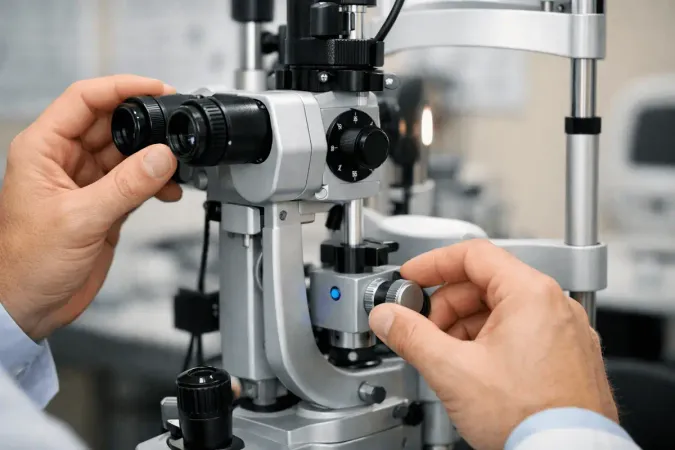
According to International Joint Commission on Allied Health Personnel in Ophthalmology, “These results (pass/ fail) are considered unofficial and the candidate will not see their actual score.”[3]
COA content outline and where to practise each area
The content areas below are copied from the official COA content outline published by International Joint Commission on Allied Health Personnel in Ophthalmology. The right-hand column shows which of our practice sets covers it.
| Official content area | Practice on this site |
|---|---|
| Biometry[7] | COA Ophthalmic Instruments and Procedures Practise what biometry measures, why accurate measurements matter before surgery, and the common sources of error. |
| Diagnostic Ultrasound[7] | COA Ophthalmic Knowledge and Diagnostic Practise when ultrasound is chosen over other imaging and what the basic scan types are used to show. |
| History and Documentation[7] | COA - Certified Ophthalmic Assistant Patie... Practise taking a clear chief complaint, recording history accurately and writing chart entries another clinician can follow. |
| Keratometry[7] | COA Tonometry and Keratometry Practise what corneal curvature readings mean, how to read the mires and how to record the axis and power. |
| Lensometry[7] | COA Lensometry and Refractometry Practise reading sphere, cylinder, axis and add power, and neutralizing a prescription correctly. |
| Microbiology[7] | COA Ophthalmic Knowledge and Diagnostic Practise matching common ocular organisms to the infections they cause and to basic infection control. |
| Pharmacology[7] | COA Ophthalmic Pharmacology Practise drug classes, what each does to the pupil and eye pressure, and the usual cautions. |
| Pupil Assessment[7] | COA Ocular Motility and Pupils Practise the vocabulary of pupil size and reaction, and how to describe a finding the way a chart expects. |
| Supplemental Testing[7] | COA Ophthalmic Instruments and Procedures Practise the purpose of each additional test and how to prepare a patient for it. |
| Tonometry[7] | COA Tonometry and Glaucoma Practise how each tonometry method works, what can falsify a reading and how it relates to glaucoma. |
| Visual Assessment[7] | COA Visual Assessment and Testing Practise acuity testing, correct recording of results and the reasoning behind each chart or method. |
| Visual Field Testing[7] | COA - Certified Ophthalmic Assistant Visua... Practise how field tests are set up, what patient behavior distorts results and how defects are described. |
COA Practice Test Questions
Prepare for the COA - Certified Ophthalmic Assistant exam with our free practice test modules. Each quiz covers key topics to help you pass on your first try.
COA - Certified Ophthalmic Assistant Ocula...
COA Exam Questions covering - Certified Ophthalmic Assistant Ocular Motility and Alignment. Master COA Test concepts for certification prep.
COA - Certified Ophthalmic Assistant Patie...
Free COA Practice Test featuring - Certified Ophthalmic Assistant Patient History and Documentation. Improve your COA Exam score with mock test prep.
COA - Certified Ophthalmic Assistant Tonom...
COA Mock Exam on - Certified Ophthalmic Assistant Tonometry and Glaucoma. COA Study Guide questions to pass on your first try.
COA - Certified Ophthalmic Assistant Visua...
COA Test Prep for - Certified Ophthalmic Assistant Visual Assessment and Testing. Practice COA Quiz questions and boost your score.
COA Contact Lens Fundamentals
COA Questions and Answers on Contact Lens Fundamentals. Free COA practice for exam readiness.
COA Ocular Anatomy and Physiology
COA Mock Test covering Ocular Anatomy and Physiology. Online COA Test practice with instant feedback.
COA Ophthalmic Instruments and Procedures
COA Practice Questions for Ophthalmic Instruments and Procedures. Build confidence for your COA certification exam.
COA Visual Assessment and Testing
Free COA Test covering Visual Assessment and Testing. Practice and track your COA exam readiness.
COA History Taking and Documentation
COA Exam Questions covering History Taking and Documentation. Master COA Test concepts for certification prep.
COA Lensometry and Refractometry
Free COA Practice Test featuring Lensometry and Refractometry. Improve your COA Exam score with mock test prep.
COA Ocular Motility and Pupils
COA Mock Exam on Ocular Motility and Pupils. COA Study Guide questions to pass on your first try.
COA Ophthalmic Knowledge and Diagnostic
COA Test Prep for Ophthalmic Knowledge and Diagnostic. Practice COA Quiz questions and boost your score.
COA Ophthalmic Pharmacology
COA Questions and Answers on Ophthalmic Pharmacology. Free COA practice for exam readiness.
Worked examples: how to reason through COA questions
These are practice questions written for this site, not questions from the real exam. Each explanation shows why the right answer is right and why the others are wrong.
Example 1
Question: What is the primary advantage of silicone hydrogel contact lenses over conventional hydrogel lenses?
- They are less expensive to manufacture
- They have significantly higher oxygen transmissibility (Dk/t)
- They provide better UV protection
- They require no cleaning or disinfection
Answer: B. They have significantly higher oxygen transmissibility (Dk/t)
Explanation:
The correct answer is that silicone hydrogel lenses have significantly higher oxygen transmissibility (Dk/t). The silicone in the material lets far more oxygen pass through to the cornea, which lowers the risk of hypoxia-related problems during wear.
The cost option is wrong because the material is not chosen for being cheap to make. The UV option is wrong because UV protection comes from a blocker added to a lens, not from the silicone itself. The option saying no cleaning or disinfection is needed is wrong because every lens that is reused still needs a care routine.
Rule to remember: when a question asks about the main advantage of a lens material, think oxygen delivery to the cornea first.
Example 2
Question: Which item is not designated as a version?
- Levoversion
- Sursumversion
- Dextroversion
- Intraversion
Answer: D. Intraversion
Explanation:
The answer is Intraversion, because it is not a recognized eye movement term. Versions are movements of both eyes together in the same direction. Levoversion is a shift to the left, dextroversion is a shift to the right, and sursumversion is an upward shift, so all of those are versions.
Our older note linked the prefix "intra-" to convergence. That is misleading. Convergence is a vergence, where the eyes move in opposite directions, and it has its own name. Intraversion is simply not a term in use.
Rule to remember: versions move the eyes the same way, vergences move them toward or away from each other, and you can read the direction from the prefix.
Example 3
Question: The state of pupillary contraction is known as:
- Anisocoria
- Miosis
- Mydriasis
- Photophobia
Answer: B. Miosis
Explanation:
The correct answer is Miosis, which means the pupil is constricted. The name describes the state of the pupil, not a disease.
Anisocoria is wrong because it means the pupils are unequal in size, and it says nothing about whether either one is small. Mydriasis is wrong because it is the opposite of miosis: a dilated pupil. Photophobia is wrong because it is light sensitivity, a symptom the patient reports, not a pupil state.
Rule to remember: pair each term with its opposite. Miosis is small and mydriasis is large. Anisocoria compares one pupil with the other. Photophobia describes how the patient feels in light.
How to use these practice tests
Start with the official content areas, because they tell you what the exam covers. Take one of our broader sets, such as the ophthalmic instruments set, without a timer and mark every area where you hesitate. Those areas become your study list.
Then work topic by topic. Do a short set on lensometry, tonometry, pharmacology or pupils, read the explanation for every question (including the ones you got right), and write the rule behind each miss in your own words. Return to the same set a few days later and see whether the rule holds.
Mix in history and documentation questions regularly. They are easy to neglect, and wording matters there.
Close to your test window, switch to longer mixed sets under the time limit so you get used to reading and answering at pace. Our questions are written by us for practice and are not real exam questions, so use them to find weak spots, not to predict your result.
Before you schedule, reread the official eligibility and fee pages. If you plan to test online, check the OnVUE requirements on the Pearson VUE page so equipment problems do not take up your eligibility period.
COA Exam Flashcards
Quick review of key ophthalmic terms and concepts.
👁️What is Retinoscopy?
A technique to objectively determine the refractive error of the eye using a retinoscope.
START COA PRACTICE TEST💨What is Tonometry?
The procedure for measuring the intraocular pressure (IOP) of the eye, crucial for glaucoma.
START COA DIAGNOSTICS QUIZ📡What is an A-Scan?
Ultrasound measurement of the axial length of the eye, used for IOL calculations.
START COA MOCK TEST👓What is Lensometry?
Using a lensometer to verify the prescription power of eyeglasses or contact lenses.
START COA PRACTICE TESTCOA Study Guide & Exam Prep
This COA study guide breaks down the essential components of the JCAHPO COA exam. Use these tabs to explore registration, format, and scoring details for your COA certification journey.
How to Use a COA Exam Practice Test the Way the Real Exam Is Scored
The real COA exam gives you 200 multiple-choice questions in 180 minutes, so a full-length COA exam practice test should be taken in one sitting with a timer set to 3 hours. That works out to 54 seconds per question; if you regularly need more than a minute, flag the item, move on, and return to it at the end rather than losing time you need for the heavily weighted sections.
Weight your COA test practice the way IJCAHPO weights the outline. Under the content outline in force since August 1, 2025, History and Documentation carries 9% of the exam, Ophthalmic Patient Services and Education and General Medical Knowledge 8% each, and Visual Assessment, Pupil Assessment and Tonometry 7% each. Those six areas together account for nearly half of your 200 questions, so they deserve the first and last review sessions. Areas weighted at 2%, such as Keratometry, Contact Lenses and Equipment Maintenance, still appear, but each contributes only about four questions.
IJCAHPO does not release a numeric score; you receive a pass/fail Performance Report broken down by content area. Mirror that on your own practice runs: record your percentage per topic, not just the overall total, and retest any area that sits below your average. IJCAHPO also sells an optional official COA Practice Examination for $150, which is worth taking once you are consistently scoring well on free question sets, because a passing result on it can be converted into certification for a further $150.
Budget for the $300 IJCAHPO exam fee for your initial COA certification, plus whatever you spend on study materials (the optional official COA Practice Examination is $150; free question sets on this page cost nothing). Many employers may reimburse these costs. Allied health professionals may also find our CNA practice test helpful for career development.

COA Career Opportunities
Explore diverse career paths available to Certified Ophthalmic Assistants.
Pediatric COA
Specialize in working with children, performing vision screenings and strabismus evaluations in pediatric ophthalmology clinics.
Traveling COA
Work as a locum tenens ophthalmic assistant, traveling to different clinics and hospitals to fill temporary staffing needs.
Hospital/Surgical COA
Assist in hospital settings, prepping patients for eye surgery and managing post-operative care in surgical centers.
Geriatric COA
Provide eye care support for elderly patients in nursing homes or hospice settings, focusing on age-related eye conditions.
Home Health COA
Visit patients in their homes to conduct basic vision checks and medication management for those unable to visit clinics.
COA Test Day Checklist
- ✓Valid Government ID
- ✓JCAHPO Confirmation Email
- ✓Arrive 30 Mins Early
- ✓Leave Electronics Behind
- ✓Know Exam Location
- ✓Get Good Sleep
- ✓Eat a Healthy Meal
- ✓Review Key Flashcards
Ready to Pass Your COA Exam?
Join thousands of successful ophthalmic assistants who used our free practice tests to ace their JCAHPO certification. If you have been drilling a Quizlet COA practice test deck, add a timed COA exam practice test here to check pacing under real conditions. Start practicing now!
Ensure you earn your 18 IJCAHPO CE credits (at least 12 from IJCAHPO-approved courses) well before your cycle ends. AMA/CMA Category 1 CME is not accepted for COA renewal. Late renewal incurs an $85 late fee and, after the grace period, requires re-examination.
COA: Pros and Cons
- +COA exam preparation strengthens your knowledge across all 22 content areas
- +Passing the exam proves competency to employers and clients
- +Study materials and practice tests are widely available
- +Exam-based credentials are portable across states and employers
- +Clear exam objectives help focus your study plan effectively
- −Exam anxiety can affect performance — practice tests help reduce it
- −Registration fees are non-refundable if you miss your test date
- −Limited retake opportunities may apply with waiting periods
- −Exam content updates periodically — use current study materials
- −Testing center availability may require advance scheduling
Pros and Cons at a Glance
| Pros | Cons |
|---|---|
| Passing the exam proves competency to employers and clients | Exam anxiety can affect performance — practice tests help reduce it |
| Study materials and practice tests are widely available | Registration fees are non-refundable if you miss your test date |
| Exam-based credentials are portable across states and employers | Limited retake opportunities may apply with waiting periods |
| Clear exam objectives help focus your study plan effectively | Exam content updates periodically — use current study materials |
Sample COA - Certified Ophthalmic Assistant Practice Questions
Try these questions from our free COA - Certified Ophthalmic Assistant practice tests. The correct answer and an explanation follow each question.
The Titmus stereo test (Stereo Fly Test) is used to evaluate a patient's depth perception. This test assesses which of the following visual functions?
- A. Color perception
- B. Contrast sensitivity
- C. Stereopsis
- D. Peripheral vision
Answer: C. Stereopsis
Stereopsis is the term for three-dimensional vision or depth perception, which is the ability to perceive the world in 3D and judge the distance of objects. The Titmus stereo test, which includes the well-known stereo fly, animal figures, and Wirt circles, uses polarized glasses to present slightly different images to each eye (binocular disparity) to measure a patient's level of stereopsis.
During a cover-uncover test, the examiner notes that the uncovered eye moves outward to pick up fixation when the other eye is covered. This movement is only observed during the test. This finding is indicative of a(n):
- A. Esotropia
- B. Exophoria
- C. Esophoria
- D. Exotropia
Answer: C. Esophoria
A phoria is a latent deviation that is only present when binocular vision is interrupted, such as by covering an eye. Since the eye was turned inward (eso-) under the cover and moves outward to fixate when uncovered, this indicates an esophoria. A tropia is a manifest deviation that is always present.
Which of the following is incorrect regarding the mad do rod test?
- A. The test cannot be used to measure both vertical and horizontal photos at a distance and near.
- B. The tests can be used to measure vertical phobias at a distance.
- C. The test can be used to measure vertical phobias in near
- D. The test can be used to measure both verbal and horizontal phobias at a distance and near.
Answer: A. The test cannot be used to measure both vertical and horizontal photos at a distance and near.
Explanation: The Mallett unit (MA) is used to quantify the magnitude and direction of phorias in both vertical and horizontal planes at distance and near. Therefore, option A is incorrect; the test can be used to measure both vertical and horizontal phorias at a distance and near.
During a swinging flashlight test, an ophthalmic assistant observes that the patient's right pupil dilates when the light is moved from the left eye to the right eye. Which of the following does this finding indicate?
- A. Physiologic anisocoria
- B. A left oculomotor nerve palsy
- C. A right efferent pupillary defect
- D. A right afferent pupillary defect (APD)
Answer: D. A right afferent pupillary defect (APD)
The swinging flashlight test is used to detect a relative afferent pupillary defect (RAPD or APD), also known as a Marcus Gunn pupil. This defect indicates a problem with the afferent pathway (optic nerve). When light is swung from the normal eye to the affected eye, the affected pupil receives a weaker signal to constrict and will paradoxically dilate.
Take the full COA - Certified Ophthalmic Assistant practice test
COA Questions and Answers
Official Resources
- IJCAHPO Certified Ophthalmic Assistant (COA) page explains the three eligibility pathways, the application process and the Pearson VUE scheduling steps.
- IJCAHPO COA exam content outline (PDF) lists all 22 weighted content areas and the skills tested under each.
- IJCAHPO recertification page covers the 36-month cycle, the 18 continuing education credits required for COA renewal and the retest-in-lieu-of-CE option.
Sources & last verified
- International Joint Commission on Allied Health Personnel in Ophthalmology — number of questions, time limit, eligibility (official source). “Number of Exam Questions 200” Verified Oct 19, 2026 · source checked Oct 19, 2026.
- jcahpo.co — exam fee, retake fee (official source). “$300.00 Initial (or over 12 months since initial examination)” Verified Oct 16, 2026 · source checked Oct 16, 2026.
- International Joint Commission on Allied Health Personnel in Ophthalmology — passing score, exam fee, retake policy, score release (official source). “These results (pass/ fail) are considered unofficial and the candidate will not see their actual score.” Verified Oct 15, 2026.
- International Joint Commission on Allied Health Personnel in Ophthalmology — validity (official source). “IJCAHPO certifications are valid for 36 months.” Verified Oct 19, 2026 · source checked Oct 19, 2026.
- International Joint Commission on Allied Health Personnel in Ophthalmology — exam fee (official source). “Beginning August 1, 2021, the cost to recertify will change from $115 to $125.” Verified Oct 15, 2026.
- pearsonvue.com — delivery (official source). “OnVUE online testing (Available for COA® and CRT exams only)” Verified Oct 20, 2026 · source checked Oct 20, 2026.
- International Joint Commission on Allied Health Personnel in Ophthalmology — other (official source). “biometry” Verified Nov 1, 2026.
How we verify: editorial & fact-checking policy. Report an error: contact us.
How this page was made: written with AI tools and published by Nathan Beja, founder of Practice Test Geeks, who is responsible for its content. Exam facts are checked against the official sources listed below. Not reviewed by a subject-matter expert. Editorial policy
Sources & references
Exam facts on this page (fees, format, dates, passing scores) are checked against these official sources; the date is our last check. Editorial policy
- documents.jcahpo.org — Fees, late registration, passing score, retake policy, score release, test dates, exam information · verified Nov 2026
- pearsonvue.com — Test delivery · verified Oct 2026
- jcahpo.org — Score validity, eligibility, exam format, time limit · verified Oct 2026
- jcahpo.co — Fees, retake fee · verified Oct 2026