
COA Roles and Responsibilities: A Complete Career Overview for Certified Ophthalmic Assistants
Learn COA responsibilities, daily duties & career scope. Complete guide to certified ophthalmic assistant roles in 2026 October. ✅

Understanding COA responsibilities is the first step toward building a rewarding career in ophthalmic medicine. A Certified Ophthalmic Assistant (COA) is the frontline clinical professional in eye care settings, working directly alongside ophthalmologists and optometrists to deliver thorough, patient-centered care. From taking detailed patient histories to performing preliminary diagnostic tests, the COA role demands a broad clinical skill set, sharp attention to detail, and genuine compassion for patients who may be anxious about their vision health. If you have been researching coa roles and responsibilities, this guide covers everything you need to know.
The COA credential, awarded by the Joint Commission on Allied Health Personnel in Ophthalmology (JCAHPO), signals that a practitioner has demonstrated competency across a wide spectrum of ophthalmic tasks. Earning this credential requires passing a rigorous written examination that covers visual assessment, ocular motility, tonometry, patient documentation, contact lens care, and much more. Professionals who hold the COA designation are recognized throughout the United States as qualified entry-level ophthalmic technicians ready to contribute meaningfully from day one in a clinical setting.
The scope of a COA's daily work is broader than many people expect. On any given morning, a COA might measure a patient's visual acuity, document chief complaints and medical history, administer eye drops for dilation, and then assist the physician by preparing the slit lamp for examination. In the afternoon, that same assistant may perform color vision testing, check intraocular pressure using a tonometer, and counsel a patient about proper contact lens hygiene. The variety of tasks keeps the work intellectually stimulating while ensuring that every patient receives consistent, high-quality pre-examination workup.
Compensation reflects the value COAs bring to a practice. According to the U.S. Bureau of Labor Statistics and industry salary surveys, certified ophthalmic assistants in the United States earn a median annual salary in the range of $38,000 to $55,000, depending on geographic location, years of experience, and practice type.
Those working in high-cost metropolitan areas or specialized retina and cornea clinics often command salaries toward the upper end of that range, while new graduates in rural settings may start closer to the lower bound. Achieving COA certification typically boosts starting pay by 10 to 15 percent compared to uncertified ophthalmic technicians.
Career pathways within ophthalmology extend well beyond the COA credential. Many COAs use their certification as a launching pad to pursue the Certified Ophthalmic Technician (COT) or, ultimately, the Certified Ophthalmic Medical Technologist (COMT) designation. Each successive level adds diagnostic and clinical responsibilities, greater autonomy, and higher earning potential. Some professionals specialize in surgical assisting, laser procedures, or low-vision rehabilitation, while others move into practice management, education, or ophthalmic instrument sales. The COA credential therefore represents not just a job title but an entry point into one of healthcare's most stable and growing subspecialties.
From a professional development perspective, the ophthalmic assisting field is supported by a rich ecosystem of continuing education, regional conferences, and online resources. JCAHPO mandates recertification every three years, requiring COAs to accumulate continuing education credits that keep their knowledge current with advances in diagnostic technology, pharmacology, and clinical protocols. This built-in professional development requirement ensures that COAs remain valuable to their employers and relevant in a field where instruments and treatment protocols evolve rapidly, from widefield imaging systems to femtosecond laser platforms that have transformed cataract surgery preparation.
Whether you are a student considering a career in eye care or an experienced medical assistant looking to specialize, mastering COA responsibilities gives you a competitive edge. This article walks through every major duty, the skills required to perform them well, the pros and cons of the career, and practical advice for exam preparation. By the end, you will have a clear picture of what certified ophthalmic assistants do every day and how to position yourself for long-term success in this rewarding allied health profession.
COA Career by the Numbers
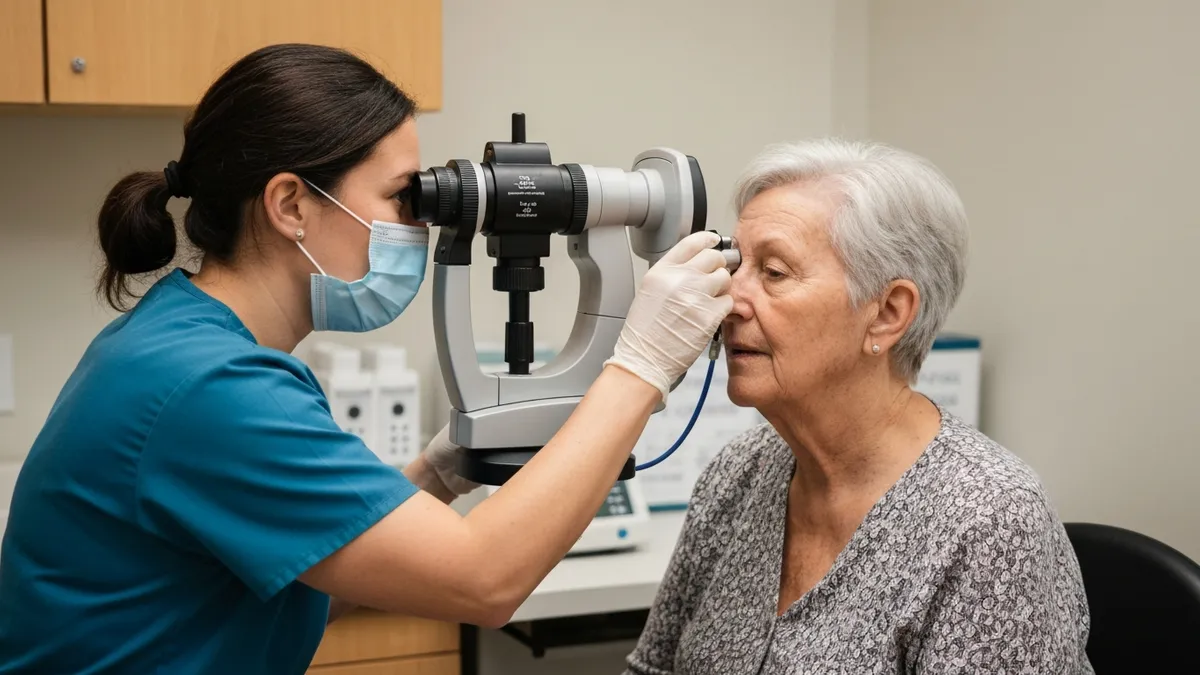
Core Clinical Duties of a Certified Ophthalmic Assistant
COAs measure distance and near visual acuity, perform pinhole tests, assess color vision, and conduct confrontational visual field screening. Accurate acuity measurement is the cornerstone of every ophthalmic encounter and must follow standardized protocols to produce reliable baseline data for the physician.
Gathering a thorough ocular and medical history — including chief complaint, current medications, allergies, and family history of eye disease — is a critical COA duty. Accurate documentation in the electronic health record ensures the ophthalmologist has complete information before stepping into the exam room.
COAs perform intraocular pressure measurement using Goldmann applanation, non-contact (air-puff), or Tono-Pen tonometers. Detecting improved IOP early is essential in glaucoma management. COAs must calibrate instruments, apply topical anesthetic when required, and document readings accurately for physician interpretation.
Assessing extraocular muscle function involves cover tests, prism cover tests, and Hirschberg light reflex testing. COAs identify strabismus, amblyopia risk factors, and motility deficits that guide the ophthalmologist's diagnostic workup, particularly in pediatric patients and those with neurological concerns.
COAs assist with contact lens fittings by taking keratometry readings, instructing patients on insertion and removal techniques, and educating them on proper lens hygiene. They also perform lensometry to measure existing spectacle prescriptions and assist with slit-lamp photography and anterior segment documentation.
The skills required to perform COA responsibilities at a high level span both technical competencies and interpersonal abilities. On the technical side, proficiency with ophthalmic instruments is non-negotiable. A COA must be comfortable calibrating and operating a wide array of equipment including the autorefractor, slit lamp, indirect ophthalmoscope, visual field analyzer, and optical coherence tomography (OCT) machine. Mastery of these instruments does not happen overnight — it typically takes six to twelve months of supervised clinical experience to develop genuine confidence and consistency with complex equipment.
Attention to detail is perhaps the most important character trait for a successful COA. An error in documenting a patient's medication list, recording the wrong eye for a visual acuity measurement, or misidentifying a tonometry reading by even a few millimeters of mercury can lead to clinically significant consequences. Ophthalmologists rely on the COA's pre-workup data to make diagnostic and therapeutic decisions, so accuracy is not optional — it is a professional obligation. Aspiring COAs should practice precision in everything they do from their earliest days of training onward.
Communication skills are equally vital. COAs interact with a diverse patient population that includes children, elderly individuals with multiple comorbidities, patients with anxiety about potential vision loss, and non-English-speaking individuals who may require language assistance. Explaining procedures clearly, answering questions in plain language, and projecting calm confidence are skills that improve patient satisfaction scores, reduce no-show rates, and contribute to a smoother clinical workflow for the entire practice team. Many patients form their first impression of the ophthalmology practice based on their interaction with the COA, making interpersonal skill a direct business asset.
Formal education pathways for aspiring COAs vary. Some practitioners complete accredited ophthalmic medical assistant programs at community colleges or vocational schools, which typically run twelve to eighteen months and include both didactic coursework and hands-on clinical rotations. Others enter the field through on-the-job training, working as uncertified ophthalmic technicians before preparing for the JCAHPO credentialing exam. JCAHPO requires applicants to demonstrate a minimum of one year of ophthalmic clinical experience before sitting for the COA exam, ensuring that all credential holders have practical exposure beyond the classroom.
The JCAHPO COA examination covers a broad range of domains, including optics, ocular anatomy, pharmacology, patient services, and each of the clinical testing categories described in this article. The exam is computer-based and consists of 200 multiple-choice questions administered at Prometric testing centers across the United States. Candidates are given three hours to complete the exam, and a passing score requires correctly answering approximately 70 percent of questions. Preparation typically involves a combination of textbook review, practice questions, and hands-on refreshers with instruments — a multi-modal approach that reinforces both theoretical knowledge and procedural memory.
Beyond initial credentialing, ongoing professional development is built into the COA career framework. JCAHPO's recertification program requires credential holders to earn Continuing Ophthalmic Medical Education (COME) credits every three years through approved educational activities such as workshops, webinars, journal quizzes, and attendance at the American Academy of Ophthalmology or American Society of Ophthalmic Administrators annual meetings. This structure keeps COAs engaged with evolving best practices and provides a natural cadre of networking opportunities with peers and industry professionals across the country.
Adaptability is another underappreciated skill for COAs. Ophthalmic technology evolves rapidly — widefield scanning laser ophthalmoscopes, swept-source OCT devices, and AI-assisted diagnostic tools are reshaping how anterior and posterior segment disease is detected and monitored. COAs who embrace new technology, seek out training proactively, and contribute to quality improvement initiatives within their practices become indispensable members of the clinical team, often advancing more quickly than peers who resist change. Viewing each new instrument or protocol as an opportunity rather than an obstacle is a mindset that separates good COAs from great ones.
Work Settings: COA Meaning Across Different Practice Types
The majority of COAs work in private ophthalmology practices, which range from single-physician solo offices to large multi-provider group practices with subspecialty divisions. In this setting, COAs typically handle the full pre-examination workup independently, including visual acuity, refraction assistance, IOP measurement, dilation, and documentation. The variety of cases — from routine refractions to complex retina and glaucoma patients — keeps the work clinically rich and educationally rewarding for COAs who want broad exposure.
Private practices also offer COAs a more intimate team environment where strong working relationships with physicians and administrators can accelerate career development. COAs in these settings often take on additional responsibilities over time, such as training new staff, managing instrument maintenance schedules, or coordinating surgical scheduling for cataract and refractive procedures. Compensation in well-established private practices can exceed industry averages when COAs demonstrate exceptional clinical skill and institutional loyalty over multiple years of service.

Is the COA Career Right for You? Pros and Cons
- +Strong job security with 15% projected growth through 2032 driven by aging population
- +Diverse daily tasks spanning clinical testing, patient education, and instrument operation
- +Clear credentialing pathway from COA to COT to COMT with salary increases at each level
- +Meaningful patient interaction — helping people preserve and protect their vision
- +Built-in continuing education requirements keep skills current and support career development
- +Variety of work settings including private clinics, hospitals, surgery centers, and specialty practices
- −Entry-level salaries can be modest compared to other allied health credentials requiring similar training
- −Standing for long periods during patient workups can be physically demanding over a full shift
- −Handling anxious or non-compliant patients during eye drop administration requires patience and empathy
- −Instrument proficiency requires months of supervised practice before achieving clinical independence
- −Exposure to infectious pathogens (pink eye, adenovirus) requires consistent adherence to infection control protocols
- −Recertification every three years adds ongoing time and financial investment beyond initial credentialing
Pros and Cons at a Glance
| Pros | Cons |
|---|---|
| Diverse daily tasks spanning clinical testing, patient education, and instrument operation | Entry-level salaries can be modest compared to other allied health credentials requiring similar training |
| Clear credentialing pathway from COA to COT to COMT with salary increases at each level | Standing for long periods during patient workups can be physically demanding over a full shift |
| Meaningful patient interaction — helping people preserve and protect their vision | Handling anxious or non-compliant patients during eye drop administration requires patience and empathy |
| Built-in continuing education requirements keep skills current and support career development | Instrument proficiency requires months of supervised practice before achieving clinical independence |
| Variety of work settings including private clinics, hospitals, surgery centers, and specialty practices | Exposure to infectious pathogens (pink eye, adenovirus) requires consistent adherence to infection control protocols |
COA Daily Responsibilities Checklist
- ✓Greet patients, verify identity, and confirm appointment purpose before beginning the workup.
- ✓Record chief complaint, ocular history, medical history, medications, and allergies in the EHR.
- ✓Measure distance and near visual acuity in each eye using a calibrated Snellen or ETDRS chart.
- ✓Perform automated refraction using an autorefractor and record the manifest refraction result.
- ✓Assess color vision with Ishihara plates or HRR pseudoisochromatic tests when clinically indicated.
- ✓Measure intraocular pressure using the appropriate tonometry method (GAT, NCT, or Tono-Pen).
- ✓Instill dilating drops (tropicamide, phenylephrine) per physician protocol and document time administered.
- ✓Perform cover-uncover and alternate cover tests to assess ocular alignment and motility.
- ✓Take keratometry or corneal topography readings for contact lens or pre-surgical patients.
- ✓Prepare the examination room, instruments, and patient chart for the ophthalmologist's review.
Accuracy in Pre-Workup Data Directly Impacts Patient Outcomes
Ophthalmologists base diagnosis and treatment decisions on the data COAs collect. An incorrectly recorded intraocular pressure, missed medication on the allergy list, or transposed visual acuity can lead to misdiagnosis or inappropriate treatment. Developing a disciplined double-check habit for every measurement before handing the chart to the physician is one of the highest-value professional habits a COA can build.
Career growth for COAs follows a structured and rewarding trajectory within the ophthalmic medicine ecosystem. After gaining two to three years of clinical experience as a COA, many professionals pursue the Certified Ophthalmic Technician (COT) designation, which represents the intermediate credential in the JCAHPO hierarchy. The COT examination covers more advanced topics including manifest and cycloplegic refraction, automated perimetry interpretation, slit-lamp biomicroscopy, and basic ophthalmic surgical assisting. Passing the COT exam typically yields a salary increase of $5,000 to $10,000 annually and expands the scope of independent clinical responsibilities permitted under state regulations.
The pinnacle of the JCAHPO credentialing system is the Certified Ophthalmic Medical Technologist (COMT) designation. COMTs are advanced-level practitioners who may perform complex diagnostic procedures, assist in surgery, and in some states operate under expanded scope protocols that approach those of ophthalmic registered nurses. The COMT examination is widely regarded as one of the most challenging credentialing exams in allied health, covering advanced optics, surgical instrumentation, electrodiagnostics, and pharmacology in depth. Achieving COMT status signals clinical mastery and commands annual salaries that can exceed $65,000 to $75,000 in major metropolitan markets.
Specialization is another compelling growth pathway. COAs who develop expertise in a specific clinical domain often find their market value increases significantly. Surgical assisting for cataract and refractive procedures is particularly sought after, as skilled surgical COAs directly contribute to the efficiency and safety of the operating environment. Similarly, COAs who develop proficiency in optical coherence tomography interpretation, widefield fluorescein angiography, or electrodiagnostic testing become indispensable in retina subspecialty practices, where these skills are used daily and experienced technicians are genuinely scarce.
Practice management represents a non-clinical growth pathway for experienced COAs who develop strong organizational and leadership skills. Senior COAs often transition into roles as ophthalmic clinic managers, overseeing hiring, scheduling, quality assurance, and compliance in eye care practices of all sizes. Some move into ophthalmic pharmaceutical or device sales, using their deep clinical knowledge to educate physician customers about new products. Others pursue careers in medical education, training new COA students at community colleges, vocational programs, or within hospital residency training programs where allied health education is an integral part of the institutional mission.
The geographic dimension of COA career planning deserves attention. Salary and job availability vary substantially by region. Metropolitan areas with high costs of living — such as New York City, San Francisco, and Boston — typically offer the highest absolute salaries for COAs, often 20 to 30 percent above the national median.
However, rural and underserved areas frequently have unfilled COA positions because fewer trained professionals are willing to relocate, creating excellent opportunities for those who are flexible about geography. Some rural health systems offer student loan repayment incentives and sign-on bonuses to attract certified ophthalmic technicians, which can effectively offset any salary differential versus urban markets.
Professional associations play an important role in COA career development. The Association of Technical Personnel in Ophthalmology (ATPO) advocates for ophthalmic allied health professionals, offers educational resources, and provides a community forum where COAs can connect with peers, share best practices, and learn about emerging career opportunities. Membership in ATPO, combined with active participation in JCAHPO's educational programs and attendance at regional ophthalmology conferences, signals professional commitment and creates networking relationships that often lead to job opportunities, mentorships, and collaborative research or quality improvement projects that enhance a COA's professional profile.
For those interested in pursuing advanced education concurrently with clinical work, several universities now offer bachelor's degree completion programs in ophthalmic technology or allied health sciences that are designed for working COAs with associate degrees or diploma-level credentials. These programs, often available fully online, provide pathways to leadership roles in larger healthcare organizations and open doors to graduate-level study in healthcare administration, public health, or clinical education. The combination of a COMT credential and a bachelor's degree in an allied health field positions a professional for the highest-level non-physician roles available in ophthalmic clinical practice and administration.

JCAHPO requires COA exam applicants to document a minimum of one year of ophthalmic clinical experience before testing. Applications must be submitted through the JCAHPO portal, and exam registration closes approximately six weeks before each testing window. Missing a registration deadline can delay certification by an entire testing cycle — plan your application timeline carefully and verify current eligibility requirements at jcahpo.org before submitting.
Preparing effectively for the COA examination requires a strategic approach that addresses both knowledge breadth and clinical application. The JCAHPO content outline, available on the official website, specifies the percentage weight assigned to each domain — visual assessment, ocular motility, tonometry, patient history, contact lenses, and anatomy and physiology, among others. Candidates who align their study time with these weightings rather than spending equal time on all topics consistently perform better than those who study randomly. Prioritize high-weight domains and revisit lower-weight areas after the major sections are well understood.
Practice questions are among the most effective study tools available for COA candidates. Working through timed question banks simulates the pressure of the actual examination and reveals knowledge gaps that passive reading often misses. When reviewing incorrect answers, focus on understanding the reasoning behind the correct choice rather than simply memorizing the answer. The COA exam tests clinical judgment as much as factual recall, so developing the ability to apply foundational knowledge to realistic patient scenarios is more valuable than memorizing isolated facts that may not transfer to novel question formats.
Hands-on instrument review is critical for candidates who have been out of the clinical environment during preparation, or who were trained in practices with limited equipment variety. If possible, arrange additional clinical observation hours in settings that use instruments you have not operated independently — such as a Goldmann applanation tonometer if your training practice uses only non-contact tonometry. Familiarity with a range of instruments ensures you can confidently answer questions about calibration, indications, contraindications, and technique variations that appear regularly on the JCAHPO examination.
Study group participation offers another dimension of exam preparation that solo studying cannot replicate. Discussing clinical scenarios with peers who have different practice backgrounds exposes you to approaches and equipment variations you may not have encountered personally. Online communities of COA candidates on professional forums and social media groups can provide encouragement, shared resources, and crowd-sourced advice about what to expect on the examination. However, always verify information shared in informal communities against official JCAHPO materials, as anecdotal exam accounts may not accurately reflect the current test content or format.
Time management on examination day is a skill that many candidates underestimate. With 200 questions in three hours, you have approximately 54 seconds per question on average. In practice, straightforward recall questions should take far less than 54 seconds, banking time for complex scenario-based questions that require more deliberate reasoning. Flagging questions you are uncertain about and returning to them after completing the more straightforward items is a widely recommended test-taking strategy that prevents you from spending disproportionate time on a single difficult question at the expense of easier points elsewhere in the exam.
Pharmacology is a domain that surprises many COA candidates with its breadth and specificity. The examination covers ophthalmic drops used for dilation, glaucoma management, infection treatment, allergy relief, and anesthesia, including their mechanisms of action, common side effects, contraindications, and appropriate clinical indications.
Understanding why a specific drop is chosen for a given patient scenario — not just what it does — prepares you for the application-level questions that distinguish advanced test-takers. Create a reference sheet of the most commonly tested ophthalmic medications with their categories, mechanisms, and key clinical pearls as a concise review tool in the days before the examination.
Finally, approaching your COA preparation with confidence grounded in thorough preparation is essential. Many candidates report significant test anxiety, particularly if they have invested months of preparation and feel that a single examination will determine their professional future.
While the stakes are real, remember that the examination is designed to test the knowledge and skills you have been building through clinical experience and focused study. Trusting your preparation, maintaining a consistent sleep schedule in the week before the exam, and arriving at the testing center early and relaxed gives you the best possible foundation for demonstrating what you genuinely know on examination day.
Practical tips for thriving in a COA role extend well beyond the examination and into the daily realities of clinical practice. One of the most valuable habits new COAs can develop is a structured pre-workup routine that they execute consistently regardless of how busy the clinic day becomes.
Having a mental checklist of every step — from verifying patient identity to confirming dilation consent — reduces the likelihood of omitting a critical component during high-volume periods when cognitive load is greatest. Consistency is the foundation of clinical quality, and a reliable routine is the mechanism that makes consistency achievable under pressure.
Building strong relationships with the physicians and optometrists you support is another practical priority for COAs who want to advance. Physicians who trust their COAs communicate more openly about diagnostic reasoning, share teaching moments during examinations, and advocate for their COAs when promotion or salary review opportunities arise. Proactively asking clinical questions during quiet periods, volunteering to learn new procedures, and consistently delivering accurate and complete pre-workup data are the concrete behaviors that build physician trust over time. This relationship is genuinely bidirectional — COAs who invest in the physician relationship receive more clinical mentorship in return.
Infection control vigilance is a practical duty that COAs must internalize as second nature. Ophthalmic clinics handle shared equipment — slit lamps, tonometer tips, trial lens sets, and indirect ophthalmoscope lenses — that contact or come near mucous membranes and can transmit adenoviral conjunctivitis, herpes simplex virus, and other pathogens between patients if not properly disinfected between uses. Following the manufacturer's recommended disinfection protocol for each instrument and maintaining proper hand hygiene between every patient contact are non-negotiable infection control practices that protect both patients and clinical staff from preventable nosocomial spread of ocular infections.
Documentation best practices are a practical skill set that new COAs should prioritize from their first week in practice. Clear, complete, and timely entries in the electronic health record protect the patient, protect the physician, and protect the COA professionally. Document what you observed and measured — not what you expected to find or what a previous visit showed.
Note the time of dilation drop instillation, the specific instrument used for IOP measurement, and any patient-reported adverse reactions to medications. If you make an error in the record, follow your practice's documented correction protocol rather than deleting or overwriting the original entry, which can create legal and regulatory complications.
Professional boundaries are an important practical consideration for COAs, particularly regarding the scope of practice. COAs are trained and authorized to perform specific clinical tasks under physician supervision; they are not authorized to diagnose conditions, recommend treatment changes, or interpret diagnostic findings for patients without explicit physician direction.
When patients ask questions that exceed your scope — such as whether their glaucoma is progressing or whether their macular degeneration requires a new injection — the appropriate response is to acknowledge the question, explain that the physician will review the findings and discuss them directly, and ensure the patient knows their questions will be addressed. Respecting scope boundaries protects the patient and insulates the COA from professional liability.
Workplace ergonomics represent a practical self-care consideration for COAs who perform repetitive tasks in fixed positions throughout the day. Adjusting the height of the slit lamp and examination chair to avoid neck flexion, wearing supportive footwear to reduce fatigue from prolonged standing, and taking brief breaks to rest the eyes and stretch between patients are small habits that compound over a career into meaningful reductions in occupational injury risk.
Many experienced COAs who have practiced for a decade or more credit intentional ergonomic habits as a key factor in their ability to continue performing at a high clinical level without the musculoskeletal complaints that sideline some of their peers.
Staying current with advances in ophthalmic technology is both a professional obligation and a practical career strategy for COAs who want to remain competitive in the job market. Instruments such as anterior segment OCT, swept-source biometry platforms, and AI-powered diabetic retinopathy screening systems are entering mainstream ophthalmic practice at an accelerating pace.
COAs who seek out manufacturer training sessions, attend instrument demonstration workshops at conferences, and read accessible ophthalmic technology publications position themselves as early adopters who can train colleagues and contribute meaningfully to a practice's transition to new diagnostic tools — a visible contribution that supports both job security and advancement opportunities.
Sample COA - Certified Ophthalmic Assistant Practice Questions
Try these questions from our free COA - Certified Ophthalmic Assistant practice tests. The correct answer and an explanation follow each question.
When documenting the Chief Complaint (CC), the ophthalmic assistant should:
- A. Interpret the patient's symptoms and record a presumptive diagnosis.
- B. Use standardized medical abbreviations to save space in the chart.
- C. Record the patient's primary reason for the visit in their own words.
- D. List all symptoms the patient mentions during the intake process.
Answer: C. Record the patient's primary reason for the visit in their own words.
The chief complaint is the primary reason for the patient's visit and should be documented verbatim, using the patient's own words, to accurately reflect their main concern. Interpreting symptoms, using excessive abbreviations, or listing all symptoms belongs in other parts of the history, like the History of Present Illness (HPI).
In the SOAP note format, where would the ophthalmic assistant's measurement of the patient's visual acuity and intraocular pressure be documented?
- A. Subjective
- B. Objective
- C. Assessment
- D. Plan
Answer: B. Objective
The 'Objective' section of a SOAP note contains all the measurable and observable data collected during the examination, such as visual acuity (VA) and intraocular pressure (IOP).
While performing keratometry, the ophthalmic assistant obtains two different readings: 44.50 D at 180 degrees and 42.00 D at 90 degrees. This difference is used to quantify which of the following?
- A. Intraocular pressure
- B. Corneal astigmatism
- C. Corneal diameter
- D. Axial length
Answer: B. Corneal astigmatism
Keratometry measures the curvature of the cornea in its two principal meridians. A difference between these two measurements (K-readings) indicates that the cornea is not perfectly spherical. This difference is the amount of corneal astigmatism.
When documenting allergies in an ophthalmic history, which information is MOST important to include beyond the allergen name?
- A. The pharmacy where the allergy was first treated
- B. The specific reaction experienced (e.g., rash, anaphylaxis, GI upset)
- C. The patient's insurance formulary
- D. The date the patient first noticed the allergy
Answer: B. The specific reaction experienced (e.g., rash, anaphylaxis, GI upset)
Knowing the type of reaction helps distinguish true allergies (immune-mediated, potentially life-threatening) from intolerances or side effects. This guides the physician in prescribing alternative medications safely.
Take the full COA - Certified Ophthalmic Assistant practice test
COA Questions and Answers

COA Meaning 2026: What Is a Certified Ophthalmic Assistant?

COA 2025 Results: Complete Guide to COA Exam Scores, Pass Rates & Next Steps

COA Practice Test PDF 2026: Free Certified Ophthalmic Assistant Exam Questions

COA Certification Online: Complete Training Guide & Requirements for 2026
How to Pass the COA Exam in 2026 — Complete Study Guide
About the Author

Educational Psychologist & Academic Test Preparation Expert
Columbia University Teachers CollegeDr. Lisa Patel holds a Doctorate in Education from Columbia University Teachers College and has spent 17 years researching standardized test design and academic assessment. She has developed preparation programs for SAT, ACT, GRE, LSAT, UCAT, and numerous professional licensing exams, helping students of all backgrounds achieve their target scores.
Join the Discussion
Connect with other students preparing for this exam. Share tips, ask questions, and get advice from people who have been there.
View discussion (7 replies)