
How to Obtain a COA: Complete Step-by-Step Guide to COA Certification
Learn how to obtain a COA certification — eligibility, training, exam steps & costs. Complete 2026 September guide for aspiring ophthalmic assistants. 🎓
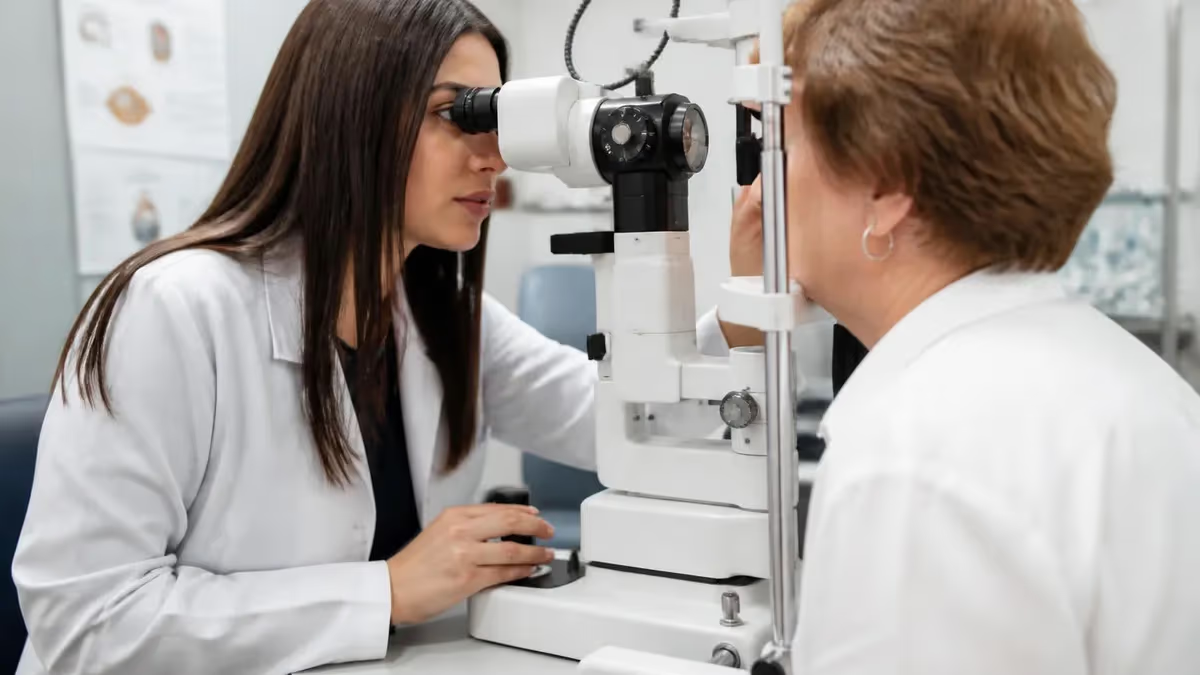
Understanding how to obtain a COA — the Certified Ophthalmic Assistant credential — is the essential first step for anyone looking to build a rewarding career in eye care. The COA is awarded by the Joint Commission on Allied Health Personnel in Ophthalmology (JCAHPO) and represents the entry-level standard for ophthalmic assistants across the United States. Whether you are transitioning from another healthcare role or entering the field fresh, knowing the exact requirements, training pathways, and exam preparation strategies will save you months of confusion and get you credentialed faster.
The COA credential is not just a piece of paper — it signals to employers, patients, and supervising ophthalmologists that you have mastered the clinical, administrative, and technical competencies required to assist in a professional eye care setting. COAs routinely perform visual acuity testing, take patient histories, assist with diagnostic equipment, administer eye drops, and support the ophthalmologist during examinations and minor procedures. The credential is recognized nationally, meaning a COA earned in Texas carries the same weight in New York or California.
Before diving into the step-by-step process, it helps to understand what the acronym COA actually means in this context. While the term COA meaning can vary by industry — you may have encountered references to coenzyme A, acetyl-COA, or even firearms terms like aimpoint COA or Glock COA — in the healthcare world, COA stands specifically for Certified Ophthalmic Assistant. This distinction matters because a Google search for COA can return wildly different results. If you are reading this guide, you are in the right place for the healthcare certification path.
The demand for qualified ophthalmic assistants continues to rise as the U.S. population ages and the prevalence of conditions like glaucoma, cataracts, macular degeneration, and diabetic retinopathy increases. According to the Bureau of Labor Statistics, employment for medical assistants and allied health workers in specialty practices like ophthalmology is projected to grow faster than average through 2032. Earning your COA now positions you ahead of a growing wave of candidates entering the field, giving you a competitive edge in salary negotiations and job placement.
One of the most common questions candidates ask is whether they need formal schooling or can qualify through on-the-job experience. The good news is that JCAHPO accepts both routes. You can qualify through an accredited training program, through supervised work experience in a clinical ophthalmology setting, or through a combination of both. This flexibility makes the COA one of the most accessible professional credentials in allied healthcare, opening doors for people who might not have the resources or time for a two-year degree program.
For those seeking comprehensive background information on the role before committing to the certification path, our guide on how to obtain a coa in a healthcare setting covers the full landscape of the COA profession, including scope of practice, workplace environments, and how the COA fits within the broader ophthalmology team. Reading that resource alongside this step-by-step guide will give you the most complete picture possible before you invest your time and money.
This article walks you through every stage of the COA certification journey — from confirming your eligibility and selecting a training pathway, to registering for the exam, preparing strategically, and maintaining your credential once you earn it. By the end, you will have a clear, actionable roadmap that removes the guesswork and lets you focus entirely on your preparation.
COA Certification by the Numbers
Step-by-Step COA Certification Timeline
Confirm Eligibility Requirements
Complete Training or Work Experience
Submit Your Application to JCAHPO
Schedule Your Exam at Pearson VUE
Prepare and Pass the COA Exam
Receive Your COA Certificate and Maintain It
The eligibility requirements to sit for the COA exam are deliberately designed to be accessible while still ensuring that all candidates have meaningful clinical exposure. JCAHPO requires that every applicant hold a high school diploma or a GED equivalent at minimum. There is no requirement for a college degree, which makes the COA pathway realistic for a broad range of candidates, including those who entered the workforce directly after high school or those making a mid-career change into healthcare from an unrelated field.
For the work-experience pathway, JCAHPO requires a minimum of one year of full-time (or equivalent part-time) employment in a clinical ophthalmology setting under the direct supervision of a licensed ophthalmologist. This experience must be documented on official letterhead, signed by your supervising physician, and submitted along with your application. The documentation should specify your job title, the dates of employment, and a brief description of the clinical tasks you performed — things like measuring visual acuity, performing confrontation visual fields, administering dilating drops, and operating diagnostic instruments like the slit lamp or autorefractor.
The formal training program pathway is increasingly popular, especially as online and hybrid programs have become widely available. JCAHPO-approved programs cover all content domains tested on the COA exam in a structured curriculum, and many include hands-on clinical practicums that simultaneously satisfy the work-experience requirement. Programs vary in length from a few months to a full year, and costs range from roughly $1,500 to $6,000 depending on the institution and format. Community colleges, vocational schools, and ophthalmology professional associations all sponsor accredited programs.
Some candidates pursue a blended approach — completing a short online didactic course while simultaneously working in an ophthalmology office to accumulate clinical hours. This is often the fastest route to exam eligibility because the two requirements can be fulfilled concurrently rather than sequentially. If you are already working as an ophthalmic technician in a non-certified capacity, you may be closer to COA eligibility than you realize — your current job may count toward the one-year experience requirement.
It is worth noting that JCAHPO distinguishes between COA, COT (Certified Ophthalmic Technician), and COMT (Certified Ophthalmic Medical Technologist) — three tiered credentials that represent increasing levels of expertise. The COA is the entry-level credential, and many professionals use it as a launchpad for career advancement. Earning the COA first, gaining additional experience, and then sitting for the COT and COMT exams is a well-established progression in the ophthalmic assisting field. Each step up typically brings a meaningful salary increase and expanded clinical responsibilities.
International candidates and those who trained outside the United States can also apply for the COA, provided their clinical training was supervised by a licensed ophthalmologist and the documentation meets JCAHPO standards. JCAHPO reviews international applications on a case-by-case basis and may request additional supporting materials to verify the equivalency of training received abroad. The exam itself is available only in English, so candidates whose primary language is not English may want to factor language preparation into their study timeline.
Understanding your eligibility pathway is the single most important decision point in the COA certification process. If you choose the wrong route — for example, submitting a work-experience application without adequate documentation — your application may be delayed or denied, costing you both time and the application fee. Review JCAHPO's current candidate handbook carefully before submitting, as requirements are periodically updated. Our resource on how to obtain a coa provides additional context on how the credential fits within different types of ophthalmic practice settings.
COA Exam Content Areas Explained
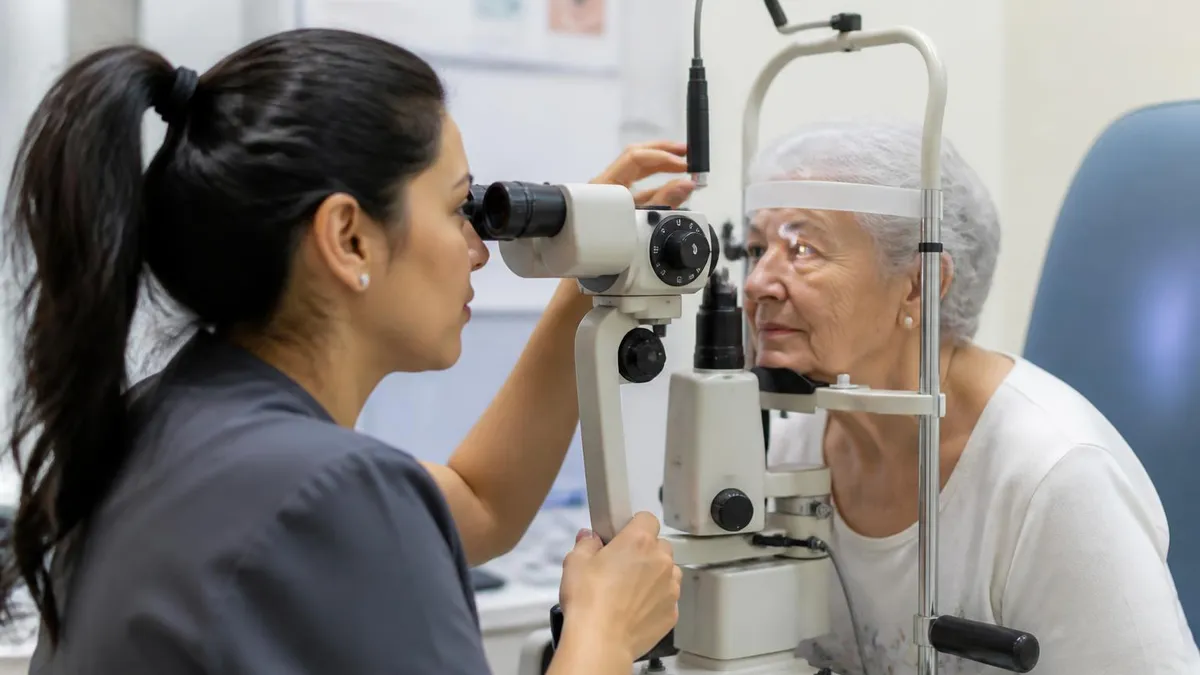
The clinical skills domain is the largest portion of the COA exam and covers the hands-on technical competencies that ophthalmic assistants use every day. This includes measuring visual acuity at distance and near using Snellen charts, performing automated and manual refraction screening, conducting confrontation visual field testing, applying topical ophthalmic medications, and measuring intraocular pressure using non-contact tonometry. Candidates should also understand the basics of slit-lamp use and fundus examination preparation.
Expect questions on proper instrument calibration, infection control protocols specific to ophthalmic equipment, and how to recognize and respond to adverse medication reactions. The clinical domain also includes ophthalmic optics concepts — understanding lens types, prescriptions, prism notation, and basic contact lens parameters. Strong performance in this area is often the difference between a passing and failing score, so prioritize hands-on practice and simulation exercises during your study period alongside textbook review.
Is Pursuing the COA Certification Worth It?
- +Nationally recognized credential that opens doors at any ophthalmology practice across all 50 states
- +Accessible eligibility requirements — a high school diploma and one year of experience are sufficient to qualify
- +Meaningful salary increase over non-certified ophthalmic staff, often $3,000–$8,000 more per year
- +Serves as the foundation for advanced credentials (COT, COMT) and long-term career growth
- +Growing job market driven by an aging U.S. population with rising rates of vision conditions
- +Flexible exam scheduling through Pearson VUE testing centers nationwide with frequent availability
- −Exam fee of $295 plus application costs can be a barrier for candidates paying out of pocket
- −Requires dedicated study time — most candidates need 8–16 weeks of consistent preparation to pass
- −Work-experience documentation can be burdensome, requiring detailed records and supervisor sign-off
- −The credential must be renewed every three years with 20 CECs, adding ongoing time and cost
- −No guaranteed salary increase — compensation ultimately depends on employer and geographic location
- −The exam is available in English only, which can disadvantage candidates whose first language differs
COA Application Checklist — Everything You Need Before Submitting
- ✓Obtain and review the current JCAHPO COA Candidate Handbook from jcahpo.org before starting your application
- ✓Confirm your high school diploma or GED is accessible and can be uploaded or mailed if requested
- ✓Gather employment verification letters from your supervising ophthalmologist(s) covering all relevant work dates
- ✓Ensure your work-experience letter specifies job title, dates of employment, and clinical tasks performed
- ✓Collect certificates of completion from any ophthalmic training programs you attended
- ✓Create your JCAHPO online account and complete your profile before beginning the formal application
- ✓Pay the application fee using an accepted payment method — credit card is standard on the JCAHPO portal
- ✓Double-check that all uploaded documents are legible, properly named, and in accepted file formats (PDF preferred)
- ✓Submit your application at least 8 weeks before your target exam date to allow processing time
- ✓Monitor your email for the Authorization to Test (ATT) letter and act on it promptly before it expires
Most candidates who fail the COA exam report insufficient practice testing — not lack of knowledge
Research on allied health certification outcomes consistently shows that candidates who complete at least 400–500 practice questions before exam day pass at significantly higher rates than those who rely on reading alone. Building a daily practice test habit starting eight weeks before your exam date is the single highest-impact study strategy you can adopt. Timed practice under simulated exam conditions also reduces test-day anxiety and builds the pacing skills needed to complete all 200 questions within the allotted time.
Preparing strategically for the COA exam requires more than simply reading through a textbook once and hoping for the best. The most successful candidates treat exam preparation as a structured project with defined phases: an initial diagnostic phase to identify weak areas, a content review phase to close knowledge gaps, an intensive practice phase to build speed and accuracy, and a final review phase to reinforce high-yield topics in the days before the exam. Giving yourself eight to sixteen weeks for this process is strongly recommended, with twelve weeks being the sweet spot for most candidates.
Begin your preparation by taking a full-length diagnostic practice test under timed conditions before you have studied anything. This may feel uncomfortable, but it is the fastest way to discover exactly which content domains need the most attention. If you score 45% on optics questions but 72% on patient history questions in your diagnostic, you now know exactly where to invest your study hours. Skipping this step and studying content in a random order wastes time on topics you already know while leaving gaps in areas where you are weakest.
The JCAHPO website publishes a detailed content outline that specifies the exact percentage of exam questions drawn from each domain. As of the most recent update, the COA exam draws approximately 25–30% of its questions from clinical procedures, around 20% from anatomy and physiology, 15–20% from optics and refraction, 15% from patient history and documentation, and the remainder from related topics like pharmacology, microbiology, and practice administration. Use these percentages to allocate your study time proportionally — spend more weeks on high-weight domains and use lighter review for areas where you already test well.
Practice questions should be your primary study tool, not a supplementary one. Aim to answer at least 50–75 practice questions every day during your intensive preparation phase. After each practice session, review every question you got wrong — not just the answer, but the reasoning behind it. Understanding why a particular option is correct and why the distractors are incorrect is what builds the deep comprehension needed to handle novel question phrasings on the actual exam. Passive re-reading of notes does not build this level of understanding; active retrieval through practice questions does.
Many candidates find it helpful to form small study groups with colleagues who are also preparing for the COA. Group study sessions can be highly effective for discussing complex concepts like binocular vision, strabismus management, or the optics of intraocular lenses — topics that benefit from explanation and discussion rather than solo reading. However, group study should complement, not replace, individual practice testing. The exam is taken alone, so you need to develop confidence in your independent clinical reasoning as well.
In the final week before your exam, shift away from learning new content and focus entirely on reinforcing what you already know. Review your weakest areas using flashcards, re-take practice tests you completed earlier to confirm your improvement, and make sure your logistical plans are in order: confirm your Pearson VUE testing center location, verify your ID requirements, plan your travel route, and get adequate sleep for the three nights before the exam. Cognitive fatigue is one of the most underestimated obstacles on test day — candidates who arrive rested and calm consistently outperform those who cram the night before.
On exam day, manage your time carefully. With 200 questions and 3.5 hours available, you have approximately one minute and three seconds per question. Some questions will take 20 seconds; others may require 90 seconds of careful reasoning. Do not get stuck on difficult questions — flag them, move on, and return at the end if time permits. Most candidates who fail the COA exam report that poor time management, not lack of knowledge, caused them to leave questions unanswered. Practicing under strict timed conditions during your preparation phase is the best way to build the pacing instincts you need.

Once JCAHPO approves your application and issues your Authorization to Test letter, you typically have 90 days to schedule and sit for the exam. If you do not test within that window, your ATT expires and you must reapply — including paying the application fee again. As soon as you receive your ATT, log in to Pearson VUE and schedule your exam date immediately, even if that date is several weeks away. Do not wait until you feel fully ready to schedule, as available seats at popular testing centers can fill up quickly.
Once you have earned your COA credential, maintaining it is an ongoing responsibility that requires proactive planning. JCAHPO operates on a three-year renewal cycle, meaning your COA certificate expires three years from the date it was issued. To renew, you must complete a minimum of 20 Continuing Education Credits (CECs) within that three-year window and submit your renewal application along with the renewal fee before your expiration date. Failure to renew on time results in credential lapse, which requires additional steps to reinstate — and in some cases, retesting.
The 20 CEC requirement is designed to ensure that COAs stay current with advances in ophthalmic technology, pharmacology, and clinical practice. JCAHPO accepts CECs from a wide variety of sources: live workshops and conferences sponsored by organizations like the American Society of Ophthalmic Registered Nurses (ASORN) or the American Academy of Ophthalmology (AAO), online continuing education modules from approved providers, in-service training programs at your employer, and self-study courses with post-tests. Not all CE sources are automatically accepted — verify that a course is JCAHPO-approved before completing it to ensure the credits count toward your renewal.
Within the 20 required CECs, JCAHPO mandates that at least one credit covers ethics in the healthcare setting. Some renewal cycles also include specific requirements for patient safety or diversity and inclusion training, which JCAHPO announces on its website as renewal deadlines approach. Tracking your CECs throughout the three-year cycle rather than scrambling to accumulate them in the final months is a much more manageable approach. Many COAs aim to earn approximately seven CECs per year, spreading the requirement evenly and ensuring they are never caught short near the expiration date.
Career advancement from the COA level typically follows a structured path within the JCAHPO credential hierarchy. After gaining additional clinical experience post-COA — typically two to three years of full-time work — many COAs choose to sit for the COT (Certified Ophthalmic Technician) exam. The COT requires deeper knowledge of refraction, surgical assisting, diagnostic imaging, and advanced patient care. Beyond the COT, the COMT (Certified Ophthalmic Medical Technologist) represents the highest JCAHPO credential and is often held by senior technicians who take on training and supervisory roles. Each credential level increases your earning potential and professional recognition.
Some COAs choose to pursue subspecialty certifications in addition to maintaining their primary credential. JCAHPO offers subspecialty certificates in areas such as surgical assisting, contact lens fitting, ocular motility, and ophthalmic photography. These subspecialty credentials can make you significantly more valuable to practices that specialize in particular clinical areas — for example, a contact lens subspecialty certificate is highly attractive to private optometry and ophthalmology practices that run active contact lens clinics.
Networking and professional development are equally important parts of a successful long-term COA career. Joining organizations like the Association of Technical Personnel in Ophthalmology (ATPO) gives you access to educational resources, networking events, legislative advocacy, and a community of peers facing the same challenges and opportunities you encounter in practice. Many state-level ophthalmic associations also hold annual meetings where COAs can earn CECs while connecting with colleagues and learning about advances in the field. These connections often lead to job opportunities, mentorship relationships, and collaborative learning that accelerates professional growth.
Finally, consider how your COA credential can serve as a platform for specialization in areas you are passionate about. COAs who develop deep expertise in a specific clinical area — such as low vision rehabilitation, pediatric ophthalmology, or retina imaging — often find that their specialized skills make them indispensable to their teams and open doors to roles with greater responsibility and compensation. The COA is not a destination; it is the foundation of a career that can grow as far as your ambition and commitment take you.
Practical preparation for the COA exam goes beyond content knowledge — it also involves optimizing your study environment, managing test anxiety, and making smart decisions about resources. One of the most common mistakes candidates make is purchasing expensive, comprehensive study packages they never fully use. A targeted approach — one solid study guide, a high-quality practice question bank, and a set of anatomy flashcards — will serve you far better than a cluttered library of materials you lack the time to work through. Quality and consistency beat volume every time.
Create a dedicated study schedule and treat it like a work commitment. Studying in short, focused blocks of 45–60 minutes is more effective than marathon sessions of several hours, which typically produce diminishing returns after the first hour due to cognitive fatigue. The Pomodoro Technique — 25 minutes of focused study followed by a 5-minute break — is particularly well-suited to the type of focused recall that COA preparation demands. Use your breaks to stand up, move around, and rest your eyes before returning to practice questions.
Pay special attention to ophthalmic pharmacology during your preparation, as this is a domain that many candidates underestimate. The COA exam tests your knowledge of common ophthalmic medications including mydriatics, cycloplegics, miotics, beta-blockers for glaucoma, antibiotics, anti-inflammatory agents, and topical anesthetics. You should know the class, mechanism, common brand and generic names, indications, contraindications, and key side effects for each major drug category. Creating a one-page pharmacology reference sheet and reviewing it daily during your preparation phase is an efficient way to keep this material fresh.
Understanding how the COA exam question format works can give you a meaningful tactical advantage. All questions are multiple-choice with four answer options (A through D). Many questions include clinical scenarios that require you to apply knowledge rather than simply recall a fact. When approaching scenario-based questions, read the question stem carefully before looking at the answer choices — identify what is actually being asked, and then formulate your best answer before reading the options. This approach reduces the influence of well-written distractors that can mislead candidates who read all four options simultaneously.
In the weeks before your exam, simulate the actual testing experience as closely as possible. If your Pearson VUE test center is nearby, visit it in advance so the environment feels familiar on test day. Practice your timing by completing full 200-question practice exams in a single sitting rather than doing shorter sets. Eat a nutritious meal before the exam, avoid caffeine overload that could increase anxiety, and wear comfortable layers since testing center temperatures vary widely. These small logistical details matter more than most candidates realize in the moment.
Consider leveraging your employer's support as you prepare. Many ophthalmology practices actively encourage their staff to pursue COA certification and may offer financial assistance with exam fees, paid study time, or access to training materials. It is worth having a direct conversation with your practice manager or supervising ophthalmologist about what support might be available. Employers who invest in certification are not just being generous — they recognize that a COA-credentialed staff member delivers higher-quality patient care and reflects positively on the practice's professional reputation.
Finally, remember that failing the COA exam on your first attempt is not the end of the road. JCAHPO allows candidates to retake the exam after a waiting period, and many successful COAs passed on their second or third attempt. If you do not pass, request a score report from JCAHPO, which will show your performance by content domain and highlight exactly where you need to improve.
Use that data to restructure your study plan, focus on your weakest areas, and approach the retake with a refined strategy. Resilience and adaptability are as important as raw knowledge when it comes to certification success.
COA Questions and Answers

COA in Healthcare: The Complete Guide to the Certified Ophthalmic Assistant Role

COA Certification Online: Complete Training Guide & Requirements for 2026

COA Practice Questions 2026: Complete Study Guide for Certified Ophthalmic Assistant Exam Prep

COA 2025 Results: Complete Guide to COA Exam Scores, Pass Rates & Next Steps

What Does a COA Do? Complete Career Guide for Certified Ophthalmic Assistants
About the Author

Educational Psychologist & Academic Test Preparation Expert
Columbia University Teachers CollegeDr. Lisa Patel holds a Doctorate in Education from Columbia University Teachers College and has spent 17 years researching standardized test design and academic assessment. She has developed preparation programs for SAT, ACT, GRE, LSAT, UCAT, and numerous professional licensing exams, helping students of all backgrounds achieve their target scores.
Join the Discussion
Connect with other students preparing for this exam. Share tips, ask questions, and get advice from people who have been there.
View discussion (7 replies)