
Correctional Officer Jobs in San Antonio: Complete Career Guide 2026 October
Explore correctional officer jobs in San Antonio — salary, requirements, hiring steps & exam prep. 🎯 Complete 2026 October career guide for TX applicants.
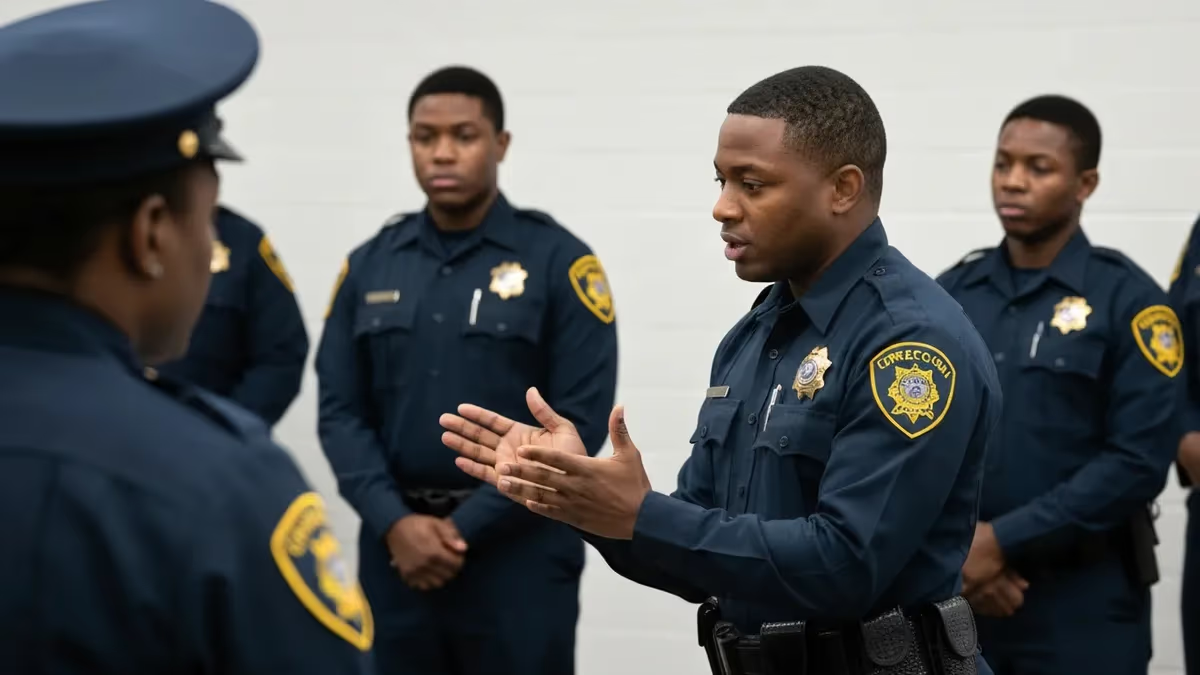
If you are searching for correctional officer jobs in San Antonio, you are entering one of Texas's most stable and rewarding public-safety career paths. San Antonio sits at the intersection of several major correctional systems — Bexar County, the Texas Department of Criminal Justice (TDCJ), and federal Bureau of Prisons facilities — creating consistent, year-round demand for qualified officers. Whether you picture yourself working inside a county jail or a state prison unit, the city offers multiple entry points that pay competitive wages and deliver long-term advancement potential for dedicated professionals.
Much like the popular brand collars and co has built loyal recognition through consistency and quality, correctional departments in San Antonio have built their reputations by cultivating officers who are dependable, disciplined, and professionally trained. The hiring pipeline here is structured: applicants submit an application, pass a written exam, complete a physical fitness evaluation, clear a thorough background check, and then attend a multi-week academy before ever setting foot on a housing unit floor. Understanding each step before you apply dramatically improves your odds of success and shortens your overall timeline to a badge.
San Antonio's economy benefits from a cost of living index well below the national average, which means a correctional officer salary stretches noticeably further here than in comparable metro areas. Entry-level TDCJ officers stationed near San Antonio typically start between $40,000 and $46,000 annually, while Bexar County Sheriff's Office detention officers can earn $48,000 or more with shift differentials factored in. Federal correctional officers at nearby facilities begin at GS-5 or GS-6 pay grades, which translate to roughly $38,000–$52,000 depending on locality adjustments — a meaningful premium once you account for federal benefits.
Advancement opportunities distinguish corrections from many other entry-level government jobs. Within three to five years, a motivated officer can promote to corporal, sergeant, or lieutenant. Each rank increase carries a pay bump, expanded responsibilities, and access to specialized assignments such as K-9 units, transportation details, crisis negotiation teams, or classification review boards. Officers who invest time in college coursework — even an associate degree — position themselves well ahead of peers when promotion boards convene. For a detailed breakdown of how ranks work, explore san antonio correctional officer jobs and the full hierarchy that governs career progression across Texas facilities.
The demand for correctional professionals in San Antonio shows no sign of slowing. Bexar County's population has grown by nearly 20 percent over the past decade, increasing pressure on jail populations and staffing rosters alike. TDCJ units within driving distance of the city have reported vacancy rates that trigger overtime mandates — a reality that frustrates current staff but signals strong job security for incoming applicants. Facilities are actively recruiting bilingual officers, veterans, and college graduates to build a workforce that better reflects the diverse inmate population they supervise.
Preparation is the single most controllable variable in your application outcome. Candidates who research the written exam format, practice scenario-based questions, and study inmate classification protocols consistently outperform those who walk in cold. The exam covers reading comprehension, basic math, situational judgment, and correctional principles — none of which require a law-enforcement background to master, but all of which reward deliberate practice. Free and low-cost study resources are widely available, and structured practice tests let you benchmark your readiness before test day.
This guide walks through every dimension of the San Antonio correctional officer career path: salary benchmarks, facility types, hiring requirements, the application timeline, and the best strategies for exam and physical fitness preparation. By the time you finish reading, you will have a clear roadmap — from deciding which agency to target all the way to your first day of academy training. Let's start with the numbers that matter most to new applicants.
San Antonio Correctional Officer Jobs by the Numbers
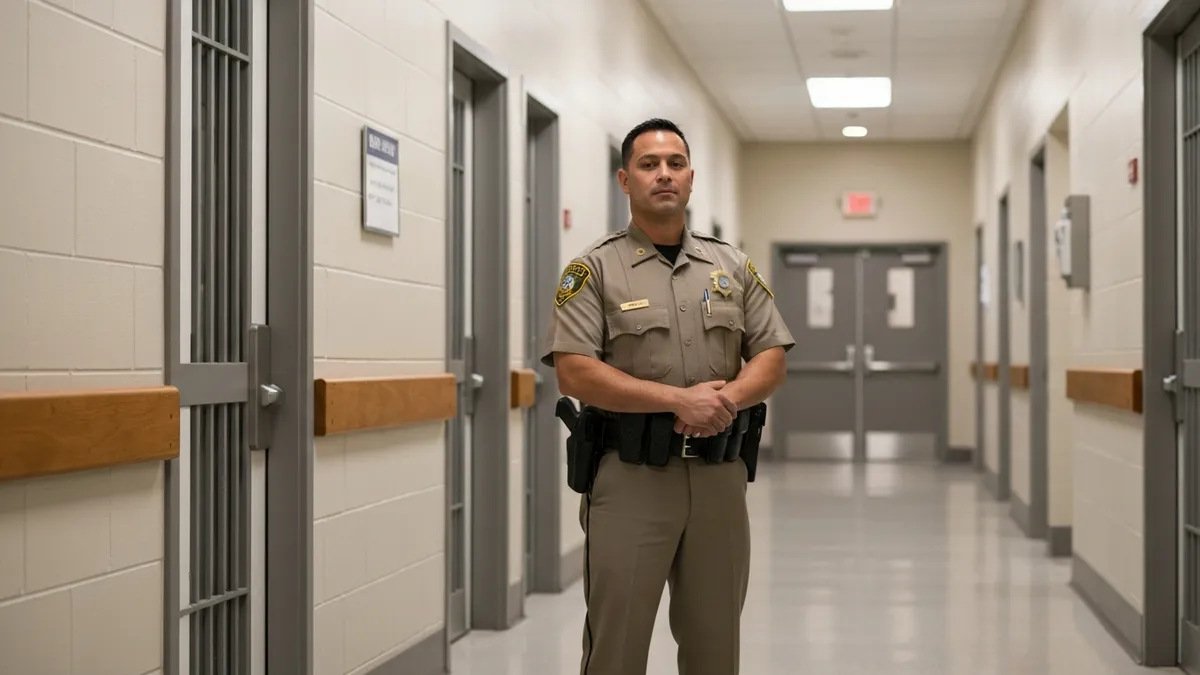
San Antonio Correctional Facilities & Agencies Hiring
Operates the Bexar County Adult Detention Center, one of Texas's largest county jails. Detention officers earn competitive salaries with shift differentials and access to the Texas County and District Retirement System from day one.
Multiple TDCJ units sit within 60 miles of San Antonio including the Connally Unit in Kenedy and the Garza East/West Units in Beeville. State benefits, a defined-benefit pension, and structured promotion ladders make TDCJ the largest single employer of Texas COs.
FCI Three Rivers and FCI Bastrop are the nearest federal facilities. Federal officers receive GS pay scale wages, FEHB health insurance, FERS retirement, and 13–26 days of annual leave — often the richest total compensation package available.
Several privately managed immigration detention and correctional facilities operate near San Antonio. These contracts offer quick hiring timelines and flexible scheduling, though benefits typically do not match public-sector equivalents.
Understanding the minimum eligibility requirements before you apply saves you time and prevents a disqualifying surprise midway through the process. Every agency operating correctional officer jobs in San Antonio shares a core set of baseline standards rooted in Texas law and federal regulation. However, the specific thresholds — age, education, physical fitness benchmarks, and background clearance criteria — vary enough between agencies that reviewing each agency's current posting before submitting is always worth the extra thirty minutes.
Age and education form the most immediate gatekeepers. TDCJ requires applicants to be at least 18 years old and hold a high school diploma or GED. Bexar County's Sheriff's Office sets the same floor but strongly prefers candidates with some college coursework in criminal justice, psychology, or a related field.
The Bureau of Prisons requires applicants to be at least 18 and typically expects a bachelor's degree or at least three years of full-time work experience for entry at the GS-5 level — a bar that filters out a substantial portion of applicants who lack post-secondary credentials or documented supervisory experience.
Citizenship and legal status requirements are non-negotiable. All three major agencies require United States citizenship for sworn officer positions. Permanent residents are generally eligible for civilian support roles within correctional facilities, but uniformed officer billets are restricted to citizens. Applicants must also possess or be able to obtain a valid Texas driver's license by the time of employment, as transport duties are a routine part of the job description at every facility type in the San Antonio region.
Criminal history is reviewed under strict standards that go beyond a simple felony-free check. TDCJ will automatically disqualify applicants for any felony conviction, any conviction involving moral turpitude, domestic violence misdemeanor convictions (per the Lautenberg Amendment), and certain drug offenses within specified timeframes. Bexar County applies similarly rigorous criteria. Juvenile records are sometimes reviewed as well, particularly for offenses that would constitute felonies if charged as an adult. Minor traffic violations and isolated misdemeanors from many years ago may or may not be disqualifying — agencies evaluate context, recency, and demonstrated rehabilitation.
Physical and medical fitness standards exist because the job is physically demanding. Officers must be able to restrain combative inmates, conduct prolonged standing and walking shifts, and respond rapidly to emergency situations. TDCJ administers a standardized physical fitness test that includes a 1.5-mile run, push-ups, sit-ups, and a grip strength assessment. Applicants are also required to pass a medical examination and a vision test; correctable vision to 20/20 is typically acceptable. Hearing must meet minimum thresholds without amplification in most positions. Candidates who begin conditioning months before their scheduled physical test consistently outperform those who wait until the last moment.
Psychological evaluation is a step many candidates underestimate. Applicants at TDCJ and Bexar County undergo a standardized psychological screening — often the Minnesota Multiphasic Personality Inventory (MMPI) or a similar instrument — designed to identify personality traits associated with poor officer conduct, excessive use of force, or vulnerability to corruption. There are no "tricks" to the psychological exam; the most reliable preparation is honest self-reflection and a consistent personal history. Contradictory answers or attempts to game the instrument tend to produce profiles that raise red flags with evaluating psychologists.
Drug testing rounds out the pre-employment screening. All agencies require a urine drug screen as part of the conditional offer stage, and TDCJ explicitly lists marijuana — including CBD products that may contain trace THC — as a disqualifying substance regardless of how recently Texas or another state may have adjusted its own statutes on the subject.
Federal BOP positions apply federal drug policy, which is equally strict. Candidates should plan for ongoing random drug testing throughout their career, not just at the hiring stage. Demonstrating clean habits from the outset is not just a hiring requirement; it is a career-long professional standard in correctional work.
Application Process by Agency: Time in CO Hiring
TDCJ applications are submitted through the Work In Texas portal, which is managed by the Texas Workforce Commission. After creating a profile and uploading your resume, you select the specific unit or region you prefer. TDCJ recruiters typically respond within two to three weeks to schedule a written exam date. The written assessment covers reading comprehension, basic math, and situational judgment scenarios that simulate real inmate interactions — candidates who score 70 or above move forward to the physical fitness evaluation and background investigation phases.
Once the background check clears — a process that can take four to eight weeks depending on the complexity of your history — a conditional offer is extended and you receive an academy start date. TDCJ's Pre-Service Training Academy runs approximately 90 days and is conducted at one of several regional training centers across the state. During academy, trainees receive full pay and are expected to maintain attendance and pass weekly assessments covering legal standards, use of force policy, first aid, and inmate supervision techniques. Graduation from the academy triggers permanent assignment to your designated unit.
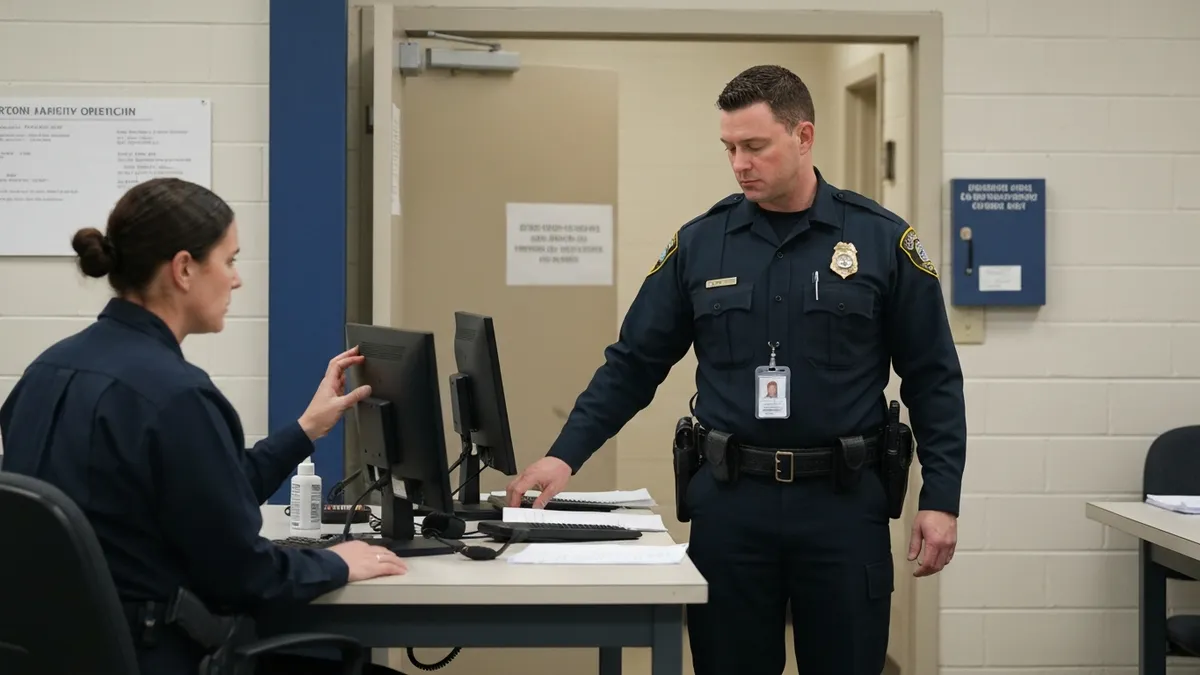
Is a Correctional Officer Career in San Antonio Right for You?
- +Strong job security with consistent statewide and county-level vacancies year-round
- +Defined-benefit pension through TDCJ or Texas County and District Retirement System
- +Competitive starting salary that stretches further given San Antonio's below-average cost of living
- +Clear promotional ladders with rank increases tied to objective testing and time-in-grade criteria
- +Comprehensive health, dental, and vision benefits available from first day of employment
- +Tuition reimbursement and educational incentive programs at TDCJ and federal BOP
- −Mandatory overtime is common at understaffed TDCJ units, disrupting work-life balance
- −Shift work including nights, weekends, and holidays is standard for first several years
- −High-stress environment with daily exposure to trauma, violence, and institutional tension
- −Physical demands increase injury risk, particularly musculoskeletal injuries from use-of-force incidents
- −Career advancement slows significantly without additional education after sergeant rank
- −Strict lifestyle and background standards limit eligibility for candidates with even minor past issues
Pros and Cons at a Glance
| Pros | Cons |
|---|---|
| Strong job security with consistent statewide and county-level vacancies year-round | Mandatory overtime is common at understaffed TDCJ units, disrupting work-life balance |
| Defined-benefit pension through TDCJ or Texas County and District Retirement System | Shift work including nights, weekends, and holidays is standard for first several years |
| Competitive starting salary that stretches further given San Antonio's below-average cost of living | High-stress environment with daily exposure to trauma, violence, and institutional tension |
| Clear promotional ladders with rank increases tied to objective testing and time-in-grade criteria | Physical demands increase injury risk, particularly musculoskeletal injuries from use-of-force incidents |
| Comprehensive health, dental, and vision benefits available from first day of employment | Career advancement slows significantly without additional education after sergeant rank |
| Tuition reimbursement and educational incentive programs at TDCJ and federal BOP | Strict lifestyle and background standards limit eligibility for candidates with even minor past issues |
Correctional Officer Application Readiness Checklist
- ✓Confirm you meet the minimum age (18) and education (diploma or GED) requirements for your target agency.
- ✓Obtain certified copies of your high school diploma, GED, or college transcripts before applying.
- ✓Review your driving record and obtain a clean copy from the Texas Department of Motor Vehicles.
- ✓Disclose all prior criminal history accurately on your application — omissions are worse than the offense itself.
- ✓Begin a 12-week physical fitness training program covering running, push-ups, sit-ups, and grip strength.
- ✓Stop any recreational drug use immediately and allow adequate clearance time before scheduled testing.
- ✓Gather three to five professional references who can speak to your reliability, integrity, and work ethic.
- ✓Create a detailed employment history document covering every job held for the past ten years.
- ✓Practice written exam questions covering reading comprehension, situational judgment, and basic math.
- ✓Research the specific facility or unit you are applying to and prepare informed answers for the interview panel.
Bilingual Officers Earn a Competitive Advantage
Spanish-English bilingual applicants are in especially high demand at San Antonio-area facilities, where a significant portion of the inmate population communicates primarily in Spanish. TDCJ and Bexar County both recognize bilingual proficiency as a hiring preference factor, and some positions offer a modest pay differential for officers who use second-language skills on a daily basis. If you are bilingual, document it clearly on your application and be prepared to demonstrate conversational fluency during the interview process.
Career advancement within San Antonio's correctional systems follows a structured rank progression that rewards seniority, demonstrated competence, and continuing education. Just as duluth trading co built a reputation for equipping workers with durable, functional tools, correctional agencies equip promotion-minded officers with structured testing and evaluation systems that make upward movement predictable and achievable. The first promotion most officers target is corporal or senior officer specialist — a rank that typically requires two to three years of satisfactory performance, a passing score on the promotional exam, and a review of disciplinary history.
The sergeant rank is where career trajectories begin to meaningfully diverge. Sergeants supervise squads of line officers, conduct shift briefings, respond to incidents as supervisors of record, and complete administrative documentation that forms the institutional memory of the facility. The promotional exam for sergeant at TDCJ tests both operational knowledge and supervisory judgment — scenario-based questions ask candidates to manage competing priorities, respond to staff misconduct situations, and interpret agency policy in ambiguous circumstances. Candidates who study systematically and seek out mentoring from current sergeants pass at significantly higher rates.
Beyond sergeant, the lieutenant and captain ranks open doors to administrative assignments including classification, programs, and facility operations management. These upper-mid-level ranks require increasingly sophisticated management skills and, at TDCJ, a minimum of an associate's degree for most advancement tracks. Officers who complete a bachelor's degree in criminal justice, public administration, or psychology while working the floor position themselves strongly for competitive promotion board cycles. Several TDCJ wardens began their careers as entry-level officers in the San Antonio region and used consistent performance and educational attainment to reach the highest institutional leadership roles.
Specialized assignments offer another dimension of career growth that does not require leaving the officer rank entirely. K-9 handler positions, tactical response team assignments, mental health transfer escort details, and court transport units all provide variety, skill development, and in some cases, small pay supplements. These assignments are typically competed through an application and interview process administered at the unit level. Officers who demonstrate reliability on their primary post and express interest in specialized roles during annual performance reviews tend to be considered first when vacancies arise.
Lateral transfers between facilities and even between agencies are more common than many applicants expect. An officer who spends five years at a TDCJ unit near San Antonio may transfer to Bexar County to take advantage of a higher salary or a schedule that better fits family needs — and vice versa.
Transferring between state and federal systems typically requires restarting some elements of the background investigation process, but prior experience is heavily weighted and can compress the overall timeline considerably. Veterans of military correctional facilities (confinement specialists, MAAs) receive similar credit for relevant prior service when transitioning to civilian correctional roles.
Retirement planning is a dimension of career advancement that new officers sometimes overlook entirely in the excitement of hiring and training. TDCJ participates in the Employee Retirement System of Texas (ERS), which provides a defined-benefit pension based on years of service and final average salary. Officers who reach 20 or more years of service can retire with a meaningful monthly benefit, even if they leave before the traditional retirement age.
Bexar County offers the Texas County and District Retirement System (TCDRS), which operates similarly. Federal BOP officers participate in FERS, which combines a smaller defined benefit with Thrift Savings Plan contributions and Social Security — a diversified structure that provides flexibility in retirement planning.
The long-term financial picture for correctional officers in San Antonio compares favorably to many private-sector careers requiring the same level of education. When you factor in pension value, health benefits that continue into retirement, and the relative stability of public-sector employment through economic downturns, the total compensation package often exceeds what peer-education private-sector roles provide. Officers who enter the profession with a five-to-ten year horizon in mind — treating the first few years as an investment in rank advancement and skill development — tend to build the most rewarding and financially secure careers in the field.

Every correctional agency in San Antonio conducts a polygraph examination and a thorough background investigation that will surface discrepancies between your application and your actual history. Omitting prior employment, minimizing criminal history, or misrepresenting education credentials are automatic disqualifiers — agencies treat dishonesty during the application process as more disqualifying than the underlying issue you tried to hide. Review every section of your application for accuracy before you submit, and disclose issues proactively with context rather than hoping investigators will not find them.
Preparing effectively for the written examination is the highest-use action a correctional officer applicant in San Antonio can take before test day. Much like how ivy city co has cultivated a distinctive brand identity through deliberate, consistent design choices, successful exam candidates build their scores through deliberate, consistent preparation habits rather than last-minute cramming. The written exam is not designed to trick candidates with obscure trivia; it is designed to verify that applicants can read and comprehend policy-length documents, perform arithmetic at a basic level, and make sound decisions in supervision scenarios without formal law enforcement training.
Reading comprehension questions are typically the largest section of the written exam and the one where preparation makes the most measurable difference. Officers spend a significant portion of every shift reading and interpreting written policy, incident reports, legal documents, and inmate grievances. The exam simulates this demand by presenting passages of moderate complexity and asking candidates to identify main ideas, draw inferences, and distinguish between facts stated in the passage and conclusions that go beyond the text. Practicing with passages drawn from correctional policy manuals, legal summaries, and government publications builds both speed and accuracy on this section.
Situational judgment questions present brief scenarios — an inmate becomes agitated during a cell search, a colleague appears to be misusing authority, a new officer witnesses a procedure that contradicts what they were taught in academy — and ask candidates to choose the most appropriate response from among four options. These questions are designed to assess ethical reasoning, safety awareness, and institutional values alignment.
The best answers almost always reflect the agency's stated priorities: inmate and officer safety first, policy compliance second, supervisor notification for anything ambiguous, and documentation of unusual events. Candidates who internalize these priorities find situational judgment sections highly manageable.
Mathematical sections are typically limited to basic arithmetic: percentages, ratios, simple word problems involving scheduling or count totals, and unit conversions. The level of math required does not approach anything taught past the seventh or eighth grade.
However, candidates who have not used arithmetic regularly in their daily lives may find the time pressure of an exam environment introduces errors they would not make when working at their own pace. Practicing ten to fifteen math problems per day in the weeks before the exam — using actual paper, pencil, and a timer — rebuilds computational fluency and reduces test-day anxiety considerably.
Physical fitness preparation deserves as much structured attention as the written exam. The 1.5-mile run is the most challenging component for the majority of applicants, particularly those who have been sedentary in recent years. A twelve-week running program that starts with walk-run intervals and progressively increases running distance is the most evidence-supported approach for building the aerobic base needed to pass comfortably. Push-up and sit-up performance improves rapidly with daily volume work — starting at whatever your current maximum is and adding two to three repetitions per set each week produces measurable gains within four to six weeks.
Mental and emotional preparation is an underappreciated dimension of exam readiness. Test anxiety causes measurable performance decrements even when candidates know the material well. Strategies that reliably reduce test anxiety include arriving at the testing site early, completing several full-length practice exams under timed conditions before the actual test, and developing a brief pre-exam routine — controlled breathing, a short review of your strongest topics — that cues a focused, calm mental state. Candidates who have practiced under realistic conditions consistently report feeling more confident and less reactive to difficult questions during the actual examination.
After passing the written exam and physical test, many candidates experience a weeks-long wait while the background investigation proceeds. Use this period productively rather than passively. Review the agency's policy manual if it is publicly available. Research the specific facility or unit where you expect to be assigned. Begin or continue physical conditioning. Connect with current or former officers through professional networks or community events.
The candidates who arrive at academy day one with background knowledge about the facility culture, the chain of command structure, and the operational priorities of their unit adapt faster, perform better in early evaluations, and develop the professional reputation that drives long-term career success. For comprehensive exam resources, review the guidance available at san antonio correctional officer jobs covering rank structure and the competencies each promotion level demands.
Succeeding in your first year as a San Antonio correctional officer requires adapting quickly to the institutional culture, building credible relationships with both supervisors and peers, and demonstrating the kind of consistent, reliable conduct that earns professional trust. New officers are closely observed during their probationary period — not to find reasons to dismiss them, but to identify who will become the facility's next generation of senior officers and supervisors. Treating every shift as an opportunity to reinforce your reputation pays compounding dividends throughout the remainder of your career.
Mentorship is the fastest path to institutional knowledge. Identify two or three experienced officers whose professional conduct you respect and look for opportunities to work alongside them, ask substantive questions during slow periods, and absorb the tacit knowledge that never appears in a policy manual. Experienced officers know which inmate behaviors signal escalating tension before an incident formally occurs, which procedural shortcuts seem efficient but create liability, and which supervisors value proactive communication versus those who prefer officers to handle routine matters independently. None of this can be taught in academy; it must be learned through proximity.
Documentation habits established in the first year tend to persist throughout a career. Officers who write clear, factual, chronologically precise incident reports from the beginning build a professional record that protects them legally and demonstrates competence to promotion boards. The inverse is equally true: officers who develop vague, incomplete, or inconsistently timed documentation habits create institutional vulnerabilities that can derail careers years after the underlying practice began. Invest time in learning the facility's documentation systems thoroughly and ask supervisors for feedback on your early reports before developing habits that are hard to change.
Physical and mental health maintenance is not optional for long-term career sustainability. The correctional environment exposes officers to chronic stress, vicarious trauma, sleep disruption from shift rotation, and a professional culture that sometimes stigmatizes vulnerability. Officers who develop sustainable health practices — regular exercise, adequate sleep, consistent nutrition, and some form of stress-processing practice whether through family connection, physical activity, or professional counseling — maintain performance levels and avoid the burnout that ends too many promising careers in their fifth or sixth year. Agencies are increasingly investing in employee assistance programs; use them without hesitation.
Continuing education keeps career options open. Officers who pursue an associate or bachelor's degree while working full-time benefit not only from enhanced promotion eligibility but from the cognitive and professional development that formal education provides. Many Texas community colleges offer evening and online programs in criminal justice, public safety administration, and psychology at highly affordable tuition rates. TDCJ's Educational Incentive Pay program provides modest monthly stipends for officers who complete associate, bachelor's, and advanced degrees — an explicit institutional endorsement of the value of education for career correctional professionals.
Community engagement distinguishes the most respected correctional officers from those who simply perform a function. Officers who participate in community outreach programs, serve as recruiters for their agency, mentor young people in diversion programs, or engage with faith communities involved in reentry work develop a broader professional perspective and a more nuanced understanding of the populations they supervise.
This perspective consistently shows up in the judgment and interpersonal skills that promotion panels evaluate when selecting candidates for leadership roles. The best correctional officers understand that their work occurs at the intersection of public safety, human dignity, and community health — not in isolation from any of those dimensions.
Finally, stay current with changes in correctional law, policy, and best practice. The correctional profession is evolving rapidly in response to legal settlements, legislative mandates on use of force, mental health diversion policies, and technological innovations in facility management. Officers who read trade publications, attend professional conferences when accessible, and participate in in-service training with genuine engagement rather than passive compliance remain adaptable as the field changes. In a career that may span twenty-five or thirty years, the ability to continuously learn and update professional practice is as important as any technical skill mastered in the initial academy training.
Sample Correctional Officer Practice Questions
Try these questions from our free Correctional Officer practice tests. The correct answer and an explanation follow each question.
Direct supervision of inmates is BEST characterized by:
- A. Officers stationed behind a secure barrier observing the unit
- B. Officers physically present in the inmate living areas interacting directly
- C. Remote monitoring via cameras alone
- D. Inmate trustees managing their own housing units
Answer: B. Officers physically present in the inmate living areas interacting directly
Direct supervision places officers inside living areas to engage with inmates, reduce tension, and address issues proactively.
What role does confidentiality play in communication and reporting?
- A. To spread sensitive details.
- B. To protect information and maintain trust
- C. To share gossip.
- D. To avoid legal standards.
Answer: B. To protect information and maintain trust
Confidentiality in communication and reporting is paramount in corrections to protect sensitive personal information about inmates and staff, as well as security-related details. Upholding confidentiality builds trust among all parties, encourages open communication when appropriate, and prevents unauthorized disclosure that could compromise safety, privacy, or legal proceedings. It is a cornerstone of professional conduct and security.
A correctional officer overhears a staff colleague making threats toward an inmate. The officer should:
- A. Confront the colleague privately and warn them
- B. Ignore it as an internal staff matter
- C. Report the behavior to a supervisor immediately
- D. Ask the inmate if he wants to file a complaint first
Answer: C. Report the behavior to a supervisor immediately
Staff misconduct, including threats to inmates, must be reported to supervisors to maintain safety and legal compliance.
Why is impartiality important in corrections?
- A. To show favoritism.
- B. To ensure fairness and avoid discrimination
- C. To apply inconsistent rules.
- D. To reduce fairness.
Answer: B. To ensure fairness and avoid discrimination
Impartiality is fundamental in corrections because it requires staff to treat all inmates equally, regardless of personal biases or characteristics. This ensures that rules, disciplinary actions, and access to resources are applied consistently and fairly to everyone. Upholding impartiality prevents discrimination, reduces grievances, and maintains order and respect within the facility.
CO Questions and Answers

Correctional Officer Ranks: Complete Guide to CO Hierarchy, Insignia & Promotion Paths 2026

Correctional Officer Physical Test: Complete Training Guide & Requirements 2026

Correctional Officer Jobs: Pay, Requirements & How to Apply

Colorado Correctional Officer — Corrections Career Guide 2026
Correctional Officer Practice Test PDF 2026
About the Author

Educational Psychologist & Academic Test Preparation Expert
Columbia University Teachers CollegeDr. Lisa Patel holds a Doctorate in Education from Columbia University Teachers College and has spent 17 years researching standardized test design and academic assessment. She has developed preparation programs for SAT, ACT, GRE, LSAT, UCAT, and numerous professional licensing exams, helping students of all backgrounds achieve their target scores.
Join the Discussion
Connect with other students preparing for this exam. Share tips, ask questions, and get advice from people who have been there.
View discussion (9 replies)