
CNA Jobs and Certification in Colorado: Your 2026 September Career Guide
Find CNA jobs in Colorado Springs and Denver. Learn about Colorado CNA certification, license lookup, training programs, and salary ranges for 2026 September. 📗
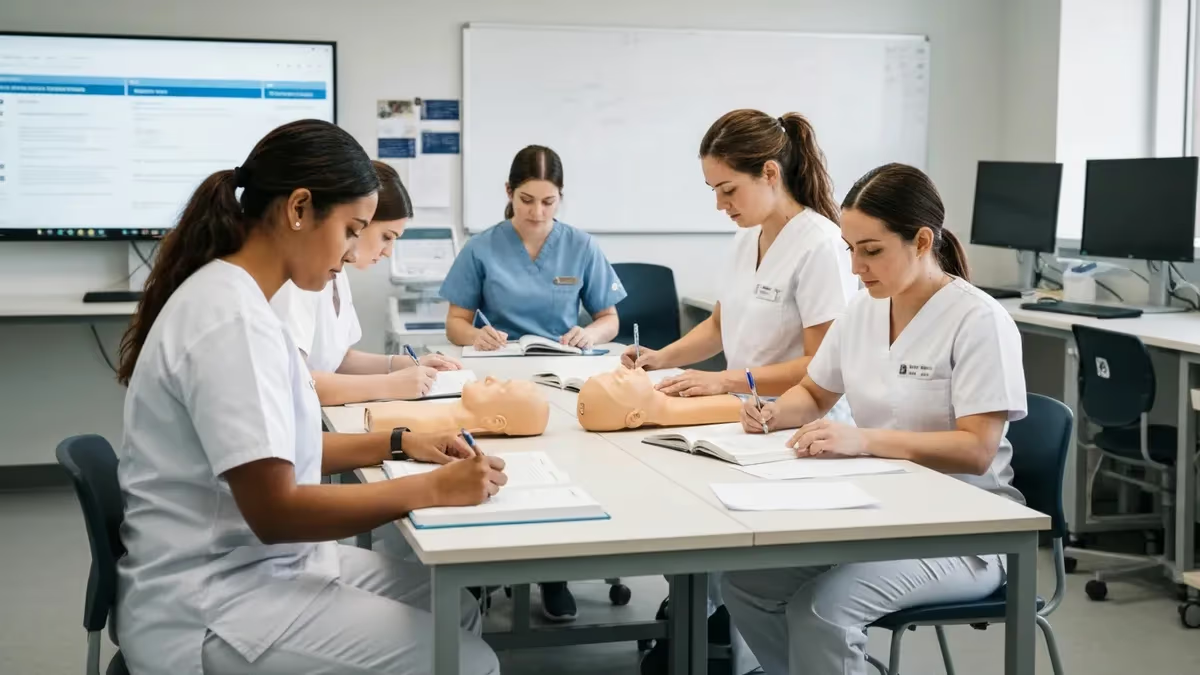
Colorado's healthcare sector is booming — and CNAs sit right at the center of it. Whether you're hunting for cna jobs colorado springs or eyeing openings across the Front Range, this state has more demand than it can fill. Hospitals, skilled nursing facilities, home health agencies — they're all competing for certified nursing assistants right now. That competition means better pay, signing bonuses, and flexible scheduling for you.
Before you start applying, though, you'll want to make sure your credentials are in order. The colorado cna license lookup tool on the DORA website lets you verify your certification status in under two minutes. It's free, it's instant, and employers check it before making offers. If your name doesn't show up in the registry, your application goes straight to the bottom of the pile — or worse, the trash.
Here's what this guide covers: training programs across the state, certification requirements you can't skip, salary data broken down by city and facility type, and a realistic look at what working as a CNA in Colorado actually feels like. Not the brochure version. The real thing — long shifts, tough patients, and the moments that make it worth showing up.
Colorado added over 2,400 CNA positions in the last twelve months alone. Denver metro leads the pack, but Colorado Springs, Fort Collins, and Pueblo all saw double-digit growth in healthcare hiring. The state projects another 15% increase in CNA demand through 2030. That's not a guess — it comes straight from the Colorado Department of Labor and Employment.
So whether you're brand new to healthcare or transferring your certification from another state, you're reading the right page. Let's get into it.
The colorado cna license lookup process is straightforward — head to DORA's online verification portal, type in your name or license number, and you'll see your status within seconds. Employers run this check routinely, so keeping your certification current isn't optional. It's the bare minimum. Let it lapse and you're unemployable in any regulated facility until you reinstate it.
If you're looking at cna jobs denver, the metro area has the highest concentration of openings in the state. UCHealth, Denver Health, and SCL Health post new CNA positions weekly — sometimes daily during flu season or staffing crunches. Night shifts and weekends pay a differential, usually $2–$4 extra per hour. That adds up fast over a full year.
Getting certified in the first place starts with completing an approved training program. You can find cna classes colorado springs at community colleges, Red Cross chapters, and private vocational schools across the Pikes Peak region. Most programs run 4–8 weeks, cost between $800 and $2,500, and include both classroom instruction and hands-on clinical hours. Some employers — particularly large hospital systems — will pay for your training if you commit to working for them afterward.
One thing worth knowing: Colorado requires 75 hours of training at minimum, but many programs exceed that. The state competency exam has both a written knowledge test and a skills demonstration. You need to pass both within 24 months of completing your program. Miss that window? You'll have to retake the entire course.

The cna certification colorado process follows a clear path — complete training, pass the state competency exam, get listed on the registry, and start applying. Sounds simple. The reality has a few more moving parts. Your training program submits paperwork to DORA on your behalf, but you're responsible for scheduling and paying for the competency exam through Pearson VUE. The exam costs around $110, and testing centers operate in Denver, Colorado Springs, Grand Junction, and Pueblo.
For cna jobs in denver colorado, the competition varies wildly by facility type. Hospitals are the hardest to crack — they want experienced CNAs with at least six months on the floor. Skilled nursing facilities and assisted living communities are far more welcoming to new graduates. Home health agencies sit somewhere in the middle. They'll hire newer CNAs but expect you to work independently from day one, which isn't for everyone.
Denver's cost of living is higher than the state average, but CNA wages reflect that. Entry-level CNAs in the Denver metro earn $17–$19 per hour, while experienced aides clear $21–$24. Add shift differentials and overtime, and a full-time CNA in Denver can realistically pull $45,000–$50,000 annually. That won't make you rich, but it's a livable wage — especially if you're splitting rent or living outside the city core.
Travel CNA positions are another option worth considering. Agencies like IntelyCare and ShiftKey connect certified aides with short-term assignments across Colorado at premium rates — sometimes $25–$30 per hour for weekend or holiday shifts.
CNA Training Options in Colorado
Pikes Peak State College in Colorado Springs runs one of the most popular CNA programs in the state — 8 weeks, $1,200, and a 92% first-attempt pass rate on the competency exam. Front Range Community College (Westminster and Longmont campuses) offers similar programs with evening and weekend schedules. Pueblo Community College and Trinidad State round out the southern Colorado options. Community college programs qualify for federal financial aid, which private schools usually don't.
Cna positions colorado springs are concentrated in three main areas: the hospital corridor along Academy Boulevard, the senior living communities clustered near Briargate, and the VA medical complex on the east side. Memorial Hospital Central and UCHealth Memorial are the two largest employers — between them, they hire 200+ CNAs annually. Penrose-St. Francis rounds out the big three.
Finding cna classes colorado springs isn't hard — there are at least six approved programs within a 20-mile radius of downtown. The harder decision is picking the right one. Cost matters, obviously. But so does the clinical site. Programs that place you at a hospital for clinicals give you a massive leg up when applying to hospital jobs later. Skilled nursing facility clinicals are fine, but they don't carry the same weight on a resume.
Schedule flexibility is another factor. If you're working full-time while training, you need an evening or weekend program. Pikes Peak State College runs both. IntelliTec Medical College offers an accelerated daytime track that finishes in just four weeks — intense, but fast. Night-shift-only programs exist at a couple of private schools, though they rotate every semester.
Don't overlook the clinical hour requirements either. Colorado mandates at least 16 hours of supervised clinical practice, but most quality programs include 24–40 hours. More clinical time means more confidence on exam day — and more skills when you hit the floor as a new CNA.

Cna programs colorado springs range from bare-bones crash courses to thorough, well-structured curricula — and the difference shows up on exam day. Programs at Pikes Peak State College and UCCS partner sites consistently post pass rates above 90%. Some private schools hover closer to 70%. Ask for the numbers before you enroll. Any program that won't share its pass rate is waving a red flag.
The colorado cna registry is maintained by DORA — the Department of Regulatory Agencies. Once you pass the competency exam, your name gets added within two to four weeks. That listing is your proof of certification. Without it, you can't legally work as a CNA in any Colorado facility. Period. The registry also tracks any disciplinary actions, complaints, or findings of abuse or neglect — which means a clean registry record is worth protecting.
Reciprocity is available if you're certified in another state. Colorado accepts endorsement applications for CNAs who hold an active, unrestricted certification elsewhere. You'll fill out an application through DORA, provide proof of training and testing, and submit to a background check. The process takes 4–6 weeks on average, though it can drag out longer if your original state is slow to verify records.
Background checks are mandatory for all Colorado CNAs — no exceptions. The state runs both a CBI check (Colorado Bureau of Investigation) and a federal FBI fingerprint check. Any disqualifying offense on your record blocks certification entirely. The list of disqualifying offenses is long and includes most felonies plus certain misdemeanors involving theft, fraud, or violence.
Pros and Cons of Working as a CNA in Colorado
- +Strong job market with 15% projected growth through 2030
- +Higher-than-average wages compared to neighboring states like Wyoming and Nebraska
- +Multiple employer-sponsored training programs that eliminate upfront costs
- +Diverse facility types — hospitals, home health, hospice, travel assignments
- +Beautiful state with high quality of life outside work hours
- +Clear career ladder into LPN or RN programs at Colorado community colleges
- −Denver cost of living eats into CNA wages significantly
- −Physical demands — lifting, standing 12-hour shifts, repetitive motion injuries
- −Emotional toll from patient loss, especially in hospice and long-term care
- −Mandatory overtime during staffing shortages is common at many facilities
- −Background check disqualifications block certification with no appeal process
- −Certification renewal every 24 months requires documented work hours
Cna positions in colorado springs pay competitively for the region — not Denver-level, but the lower cost of living more than makes up the difference. Entry-level CNAs in the Springs earn $16–$18 per hour. With two years of experience, you're looking at $19–$22. Specialized roles — like CNAs working in ICU or emergency departments — can push past $23 per hour at the bigger hospitals.
When it comes to cna salary colorado numbers statewide, the picture is encouraging. The Bureau of Labor Statistics reports a median annual wage of $38,740 for nursing assistants in Colorado — that's about $4,000 above the national median. The top 10% earn over $48,000. Geography matters a lot, though. A CNA in Durango or Alamosa earns 15–20% less than one in Denver or Boulder. Rural facilities often offset lower pay with housing assistance or relocation bonuses.
Benefits packages vary enormously. Hospital CNAs typically get health insurance, retirement matching, tuition reimbursement, and paid time off. Skilled nursing facility CNAs get some of those perks but rarely all of them. Home health and agency CNAs often work as independent contractors — no benefits, but higher hourly rates. You have to do the math for your own situation.
Overtime is where the real money lives. Colorado doesn't cap CNA overtime hours, and many facilities offer time-and-a-half after 40 hours per week. During COVID, some facilities paid double-time. Those bonuses are less common now, but holiday and weekend premiums remain standard — $2–$5 extra per hour depending on the facility and shift.

CNA Job Application Checklist for Colorado
- ✓Verify your certification status on DORA's online portal
- ✓Update your resume with clinical hours, facility types, and specific skills
- ✓Gather two professional references from instructors or supervisors
- ✓Complete a background check through CBI and FBI fingerprinting
- ✓Get current CPR/BLS certification — most employers require it
- ✓Research facility reviews on Indeed and Glassdoor before applying
- ✓Prepare for skills demonstration — many employers test during interviews
- ✓Ask about shift differentials, overtime policy, and benefits during interviews
- ✓Apply to at least 5–8 facilities to maximize callback rates
- ✓Follow up within one week if you haven't heard back
Cna training colorado springs programs prepare you for the Pearson VUE competency exam — but the quality of that preparation varies dramatically. The best programs run mock exams, simulate all 22 possible clinical skills, and give you at least 30 hours of hands-on practice. The worst ones rush through the material and send you to the test barely ready. Ask graduates. Check pass rates. Don't pick a program based on price alone.
Statewide, cna programs colorado are expanding to meet demand. The Colorado Community College System added CNA cohorts at four campuses in 2025 — Lamar, Sterling, Trinidad, and Rangely. These rural programs address a critical shortage: small-town nursing homes struggle to recruit CNAs from Denver or the Springs, so training locals is the only sustainable solution. Tuition at these campuses runs $800–$1,100, well below the Front Range average.
Online CNA training exists but comes with major caveats. Colorado requires in-person clinical hours — no exceptions. So-called "fully online" programs actually mean online didactic coursework plus in-person clinicals at a partner site. Make sure the clinical site is within driving distance before enrolling. A few students have been burned by programs that list clinical sites three hours away.
Veterans get a significant advantage in Colorado. The GI Bill covers CNA training at all VA-approved programs, and several military bases — Peterson, Schriever, Fort Carson — have nearby training facilities. Some programs fast-track military medics and corpsmen, reducing training hours based on prior experience. If you served, ask about credit for prior learning.
The salary for cna in colorado depends on three main factors: location, facility type, and experience level. Denver and Boulder pay the most — $19–$24 per hour for experienced aides. Colorado Springs and Fort Collins fall in the middle at $17–$22. Rural areas like the Western Slope and San Luis Valley pay $15–$18, but housing costs are dramatically lower. A CNA earning $16 per hour in Montrose has more purchasing power than one earning $20 in Denver. That's just math.
Cna classes denver are available at multiple locations — Community College of Denver, Emily Griffith Technical College, Concorde Career College, and several private training centers. Emily Griffith is a standout: their program costs under $1,000, runs 8 weeks, and has a 94% pass rate. It's also located downtown, accessible by RTD light rail. Concorde costs more ($2,200) but includes job placement services and has strong connections with Denver Health and HCA hospitals.
Denver's job market for CNAs stays tight year-round, but peaks in late fall and early winter — flu season drives hospital admissions up and staffing needs spike. If you're timing your certification strategically, finishing training in September or October puts you in prime position to land a job when demand is highest. Summer is the slowest hiring season.
One trend worth watching: telehealth is creating new hybrid roles for CNAs. Some home health agencies now pair in-person CNA visits with remote patient monitoring — you take vitals during your visit, and a nurse reviews the data remotely. These positions pay $1–$2 more per hour and involve less physical labor. They're still rare in Colorado, but growing fast.
If your certification expires, you can't work legally as a CNA in Colorado. Reinstatement requires retaking the full Pearson VUE competency exam — written and skills. There's no grace period. Set a calendar reminder 90 days before your expiration date and start the renewal paperwork early. DORA processes renewals in 2–3 weeks, but delays happen during peak periods.
Maintaining your colorado cna license means meeting renewal requirements every 24 months — at least 8 hours of paid work as a nursing aide and a timely renewal application through DORA. Skip either one and your certification goes inactive. Reactivation isn't automatic. You'll need to retake the competency exam, which means scheduling through Pearson VUE, paying the $110 fee again, and studying for a test you might not have thought about in years.
Cna jobs in colorado span every corner of the state. The Front Range corridor — Fort Collins down through Pueblo — accounts for about 70% of all openings. But rural Colorado has its own appeal. Facilities in Glenwood Springs, Durango, Steamboat Springs, and Craig often struggle to fill positions and offer perks that urban employers don't: housing stipends, sign-on bonuses up to $3,000, and guaranteed overtime. If you don't mind small-town life, the financial math works in your favor.
Travel CNA assignments are growing across Colorado too. Agencies like IntelyCare, ShiftKey, and CareRev post short-term contracts — usually 4–13 weeks — at facilities dealing with staffing emergencies. Rates run $22–$30 per hour, with some holiday shifts paying even more. You'll need reliable transportation and flexibility on location, but the earning potential beats most permanent positions.
The career ladder matters. Colorado community colleges make it relatively easy to move from CNA to LPN (9–12 months) or RN (2 years). Many programs give CNA-certified students priority admission. UCHealth and SCL Health both run CNA-to-RN bridge programs with tuition reimbursement. Working as a CNA while in nursing school is common — the clinical experience you've already logged gives you a head start over classmates who've never touched a patient.
CNA Practice Test Questions
Prepare for the CNA - Certified Nursing Assistant exam with our free practice test modules. Each quiz covers key topics to help you pass on your first try.
CNA Activities of Daily Living
CNA Exam Questions covering Activities of Daily Living. Master CNA Test concepts for certification prep.
CNA Aging Process
Free CNA Practice Test featuring Aging Process. Improve your CNA Exam score with mock test prep.
CNA Anatomy and Physiology Basics
CNA Mock Exam on Anatomy and Physiology Basics. CNA Study Guide questions to pass on your first try.
CNA Assisting with Daily Living
CNA Test Prep for Assisting with Daily Living. Practice CNA Quiz questions and boost your score.
CNA Assisting with Range of Motion Exercises
CNA Questions and Answers on Assisting with Range of Motion Exercises. Free CNA practice for exam readiness.
CNA Basic Human Anatomy and Age-Related Ch...
CNA Mock Test covering Basic Human Anatomy and Age-Related Changes. Online CNA Test practice with instant feedback.
CNA Basic Nursing Skills
Free CNA Quiz on Basic Nursing Skills. CNA Exam prep questions with detailed explanations.
CNA Basic Nursing Skills 10
CNA Practice Questions for Basic Nursing Skills 10. Build confidence for your CNA certification exam.
CNA Basic Nursing Skills 11
CNA Test Online for Basic Nursing Skills 11. Free practice with instant results and feedback.
CNA Basic Nursing Skills 1
CNA Study Material on Basic Nursing Skills 1. Prepare effectively with real exam-style questions.
CNA Basic Nursing Skills 12
Free CNA Test covering Basic Nursing Skills 12. Practice and track your CNA exam readiness.
CNA Basic Nursing Skills 13
CNA Exam Questions covering Basic Nursing Skills 13. Master CNA Test concepts for certification prep.
CNA Basic Nursing Skills 14
Free CNA Practice Test featuring Basic Nursing Skills 14. Improve your CNA Exam score with mock test prep.
CNA Basic Nursing Skills 15
CNA Mock Exam on Basic Nursing Skills 15. CNA Study Guide questions to pass on your first try.
CNA Basic Nursing Skills 16
CNA Test Prep for Basic Nursing Skills 16. Practice CNA Quiz questions and boost your score.
CNA Basic Nursing Skills 17
CNA Questions and Answers on Basic Nursing Skills 17. Free CNA practice for exam readiness.
CNA Basic Nursing Skills 18
CNA Mock Test covering Basic Nursing Skills 18. Online CNA Test practice with instant feedback.
CNA Basic Nursing Skills 19
Free CNA Quiz on Basic Nursing Skills 19. CNA Exam prep questions with detailed explanations.
CNA Basic Nursing Skills 20
CNA Practice Questions for Basic Nursing Skills 20. Build confidence for your CNA certification exam.
CNA Basic Nursing Skills 21
CNA Test Online for Basic Nursing Skills 21. Free practice with instant results and feedback.
CNA Basic Nursing Skills 2
CNA Study Material on Basic Nursing Skills 2. Prepare effectively with real exam-style questions.
CNA Basic Nursing Skills 3
Free CNA Test covering Basic Nursing Skills 3. Practice and track your CNA exam readiness.
CNA Basic Nursing Skills 4
CNA Exam Questions covering Basic Nursing Skills 4. Master CNA Test concepts for certification prep.
CNA Basic Nursing Skills 5
Free CNA Practice Test featuring Basic Nursing Skills 5. Improve your CNA Exam score with mock test prep.
CNA Basic Nursing Skills 6
CNA Mock Exam on Basic Nursing Skills 6. CNA Study Guide questions to pass on your first try.
CNA Basic Nursing Skills 7
CNA Test Prep for Basic Nursing Skills 7. Practice CNA Quiz questions and boost your score.
CNA Basic Nursing Skills 8
CNA Questions and Answers on Basic Nursing Skills 8. Free CNA practice for exam readiness.
CNA Basic Nursing Skills 9
CNA Mock Test covering Basic Nursing Skills 9. Online CNA Test practice with instant feedback.
CNA Basic Restorative Services
Free CNA Quiz on Basic Restorative Services. CNA Exam prep questions with detailed explanations.
CNA Basic Restorative Services 1
CNA Practice Questions for Basic Restorative Services 1. Build confidence for your CNA certification exam.
CNA Bathing and Dressing
CNA Test Online for Bathing and Dressing. Free practice with instant results and feedback.
CNA Body Mechanics
CNA Study Material on Body Mechanics. Prepare effectively with real exam-style questions.
CNA Career Advancement and Opportunities
Free CNA Test covering Career Advancement and Opportunities. Practice and track your CNA exam readiness.
CNA Career Opportunities and Benefits
CNA Exam Questions covering Career Opportunities and Benefits. Master CNA Test concepts for certification prep.
CNA Care for Residents with Cognitive Impa...
Free CNA Practice Test featuring Care for Residents with Cognitive Impairment. Improve your CNA Exam score with mock test prep.
CNA Care of Cognitively Impaired Residents
CNA Mock Exam on Care of Cognitively Impaired Residents. CNA Study Guide questions to pass on your first try.
CNA Care of Cognitively Impaired Residents 1
CNA Test Prep for Care of Cognitively Impaired Residents 1. Practice CNA Quiz questions and boost your score.
CNA Care Of Cognitively Impaired Residents 4
CNA Questions and Answers on Care Of Cognitively Impaired Residents 4. Free CNA practice for exam readiness.
CNA Common Medical Terms and Abbreviations
CNA Mock Test covering Common Medical Terms and Abbreviations. Online CNA Test practice with instant feedback.
CNA Communication and Interpersonal Skills
Free CNA Quiz on Communication and Interpersonal Skills. CNA Exam prep questions with detailed explanations.
CNA Communication and Interpersonal Skills 1
CNA Practice Questions for Communication and Interpersonal Skills 1. Build confidence for your CNA certification exam.
CNA Communication And Interpersonal Skills 4
CNA Test Online for Communication And Interpersonal Skills 4. Free practice with instant results and feedback.
CNA Eligibility and Qualifications
CNA Study Material on Eligibility and Qualifications. Prepare effectively with real exam-style questions.
CNA Emergency Procedure
Free CNA Test covering Emergency Procedure. Practice and track your CNA exam readiness.
CNA Ethics and Professionalism
CNA Exam Questions covering Ethics and Professionalism. Master CNA Test concepts for certification prep.
CNA Exam Structure and Content
Free CNA Practice Test featuring Exam Structure and Content. Improve your CNA Exam score with mock test prep.
CNA Feeding and Hydration
CNA Mock Exam on Feeding and Hydration. CNA Study Guide questions to pass on your first try.
CNA Infection Control
CNA Test Prep for Infection Control. Practice CNA Quiz questions and boost your score.
CNA Infection Control and Safety
CNA Questions and Answers on Infection Control and Safety. Free CNA practice for exam readiness.
CNA Isolation Precautions
CNA Mock Test covering Isolation Precautions. Online CNA Test practice with instant feedback.
CNA Legal & Ethical Behaviours
Free CNA Quiz on Legal & Ethical Behaviours. CNA Exam prep questions with detailed explanations.
CNA Legal & Ethical Behaviours 1
CNA Practice Questions for Legal & Ethical Behaviours 1. Build confidence for your CNA certification exam.
CNA Legal & Ethical Behaviours 4
CNA Test Online for Legal & Ethical Behaviours 4. Free practice with instant results and feedback.
CNA Mental Health and Social Services Needs
CNA Study Material on Mental Health and Social Services Needs. Prepare effectively with real exam-style questions.
CNA Mental Health and Social Services Needs 1
Free CNA Test covering Mental Health and Social Services Needs 1. Practice and track your CNA exam readiness.
CNA Mental Health And Social Services Needs 4
CNA Exam Questions covering Mental Health And Social Services Needs 4. Master CNA Test concepts for certification prep.
CNA Nutrition and Hydration Management
Free CNA Practice Test featuring Nutrition and Hydration Management. Improve your CNA Exam score with mock test prep.
CNA Patient Care Procedure
CNA Mock Exam on Patient Care Procedure. CNA Study Guide questions to pass on your first try.
CNA Personal Care Skills
CNA Test Prep for Personal Care Skills. Practice CNA Quiz questions and boost your score.
CNA Personal Care Skills 1
CNA Questions and Answers on Personal Care Skills 1. Free CNA practice for exam readiness.
CNA Personal Care Skills 4
CNA Mock Test covering Personal Care Skills 4. Online CNA Test practice with instant feedback.
CNA Personal Care Skills 5
Free CNA Quiz on Personal Care Skills 5. CNA Exam prep questions with detailed explanations.
CNA Personal Hygiene and Grooming
CNA Practice Questions for Personal Hygiene and Grooming. Build confidence for your CNA certification exam.
CNA Practice Test - Basic Nursing Skills #2
CNA Test Online for Practice Test - Basic Nursing Skills #2. Free practice with instant results and feedback.
CNA Practice Test - Basic Nursing Skills #2 1
CNA Study Material on Practice Test - Basic Nursing Skills #2 1. Prepare effectively with real exam-style questions.
CNA Preventing Patient Falls and Injuries
Free CNA Test covering Preventing Patient Falls and Injuries. Practice and track your CNA exam readiness.
CNA Promoting Resident Independence and Ch...
CNA Exam Questions covering Promoting Resident Independence and Choice. Master CNA Test concepts for certification prep.
CNA Proper Hand Hygiene and PPE Usage
Free CNA Practice Test featuring Proper Hand Hygiene and PPE Usage. Improve your CNA Exam score with mock test prep.
CNA Resident Rights and Communication
CNA Mock Exam on Resident Rights and Communication. CNA Study Guide questions to pass on your first try.
CNA Resident’s Rights
CNA Test Prep for Resident’s Rights. Practice CNA Quiz questions and boost your score.
CNA Resident's Rights 1
CNA Questions and Answers on Resident's Rights 1. Free CNA practice for exam readiness.
CNA Resident's Rights 4
CNA Mock Test covering Resident's Rights 4. Online CNA Test practice with instant feedback.
CNA Roles and Responsibilities
Free CNA Quiz on Roles and Responsibilities. CNA Exam prep questions with detailed explanations.
CNA Safety and Emergency Procedures
CNA Practice Questions for Safety and Emergency Procedures. Build confidence for your CNA certification exam.
CNA Safety and Emergency Procedures 1
CNA Test Online for Safety and Emergency Procedures 1. Free practice with instant results and feedback.
CNA Safety And Emergency Procedures 4
CNA Study Material on Safety And Emergency Procedures 4. Prepare effectively with real exam-style questions.
CNA Safety and Infection Control
Free CNA Test covering Safety and Infection Control. Practice and track your CNA exam readiness.
CNA Scope of Practice
CNA Exam Questions covering Scope of Practice. Master CNA Test concepts for certification prep.
CNA Skills and Competencies
Free CNA Practice Test featuring Skills and Competencies. Improve your CNA Exam score with mock test prep.
CNA Supporting Rehabilitation Activities
CNA Mock Exam on Supporting Rehabilitation Activities. CNA Study Guide questions to pass on your first try.
CNA The Nurse Aide's Role and Responsibili...
CNA Test Prep for The Nurse Aide's Role and Responsibilities. Practice CNA Quiz questions and boost your score.
CNA Time Management and Prioritization
CNA Questions and Answers on Time Management and Prioritization. Free CNA practice for exam readiness.
CNA Toileting and Elimination
CNA Mock Test covering Toileting and Elimination. Online CNA Test practice with instant feedback.
CNA Using Adaptive Devices
CNA Practice Questions for Using Adaptive Devices. Build confidence for your CNA certification exam.
When it comes to cna wages in colorado, the numbers have been climbing steadily since 2023. The average hourly rate jumped from $16.80 in 2023 to $18.63 in 2025 — an 11% increase in just two years. That's outpacing inflation, which is unusual for entry-level healthcare roles. The driver? Pure supply-and-demand economics. Colorado's aging population is growing faster than the CNA workforce, and facilities are paying more to attract and retain staff.
For cna certification denver specifically, the process mirrors the statewide requirements but with more options for training locations and testing centers. Denver has three Pearson VUE testing sites — more than any other metro area in Colorado. That means shorter wait times for exam appointments. Most Denver-area test-takers get a slot within 2–3 weeks of completing training. In rural areas, you might wait 4–6 weeks.
Specialty certifications can boost your earning power significantly. Medication aide certification (QMAP in Colorado) lets you administer medications — a skill that pays $1–$3 more per hour. Restorative nursing aide certification focuses on rehabilitation exercises and mobility assistance. Some facilities pay premiums for CNAs with dementia care or hospice experience, even without formal specialty credentials. Stack two or three of these and you're looking at $22–$26 per hour without leaving the CNA role.
The bottom line on Colorado CNA careers? Strong demand, rising wages, multiple training pathways, and a clear career ladder into nursing. Not perfect — the work is physically demanding, emotionally taxing, and the pay still trails what nurses earn. But for a career you can start in under two months with minimal upfront investment, it's one of the best entry points into healthcare that exists.
CNA Questions and Answers

Restorative CNA: Duties, Training, Salary & How to Get Started

CNA Hospital Jobs Near Me: How to Find, Apply & Get Hired in 2026

Goodwill CNA Program: Free Classes, Costs, and How to Enroll

Hospice CNA: Duties, Salary, Per Diem Work & How to Get Started

4-Week CNA Program: Online Options, State Programs & How to Enroll
About the Author

Registered Nurse & Healthcare Educator
Johns Hopkins University School of NursingDr. Sarah Mitchell is a board-certified registered nurse with over 15 years of clinical and academic experience. She completed her PhD in Nursing Science at Johns Hopkins University and has taught NCLEX preparation and clinical skills courses for nursing students across the United States. Her research focuses on evidence-based exam preparation strategies for healthcare certification candidates.
Join the Discussion
Connect with other students preparing for this exam. Share tips, ask questions, and get advice from people who have been there.
View discussion (8 replies)