
How to Schedule Your CNA Exam: Complete Step-by-Step Guide for 2026 October
Learn how to schedule your CNA exam step by step. Find CNA jobs near me, certification tips, and what to expect on test day. 🎯
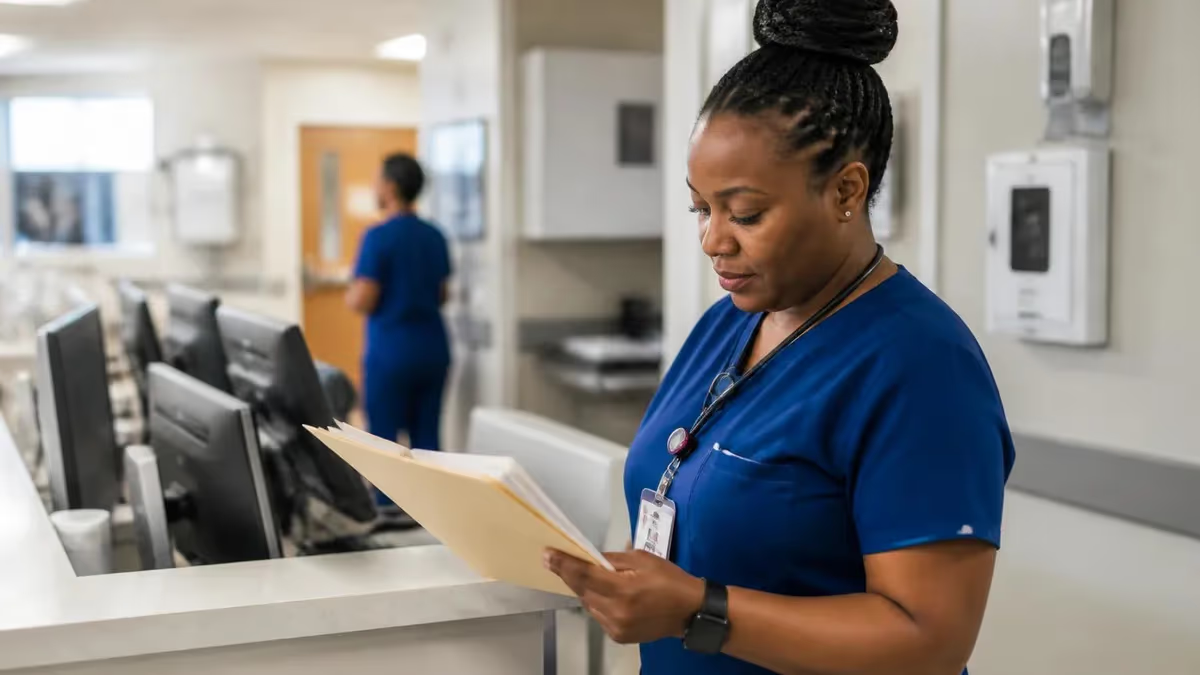
If you are ready to schedule your CNA exam and launch a career in one of the fastest-growing healthcare fields in the United States, this guide walks you through every step of the process. The demand for certified nursing assistants has never been stronger, with cna jobs near me searches hitting record highs across every state. Whether you are finishing a training program or preparing to retake the competency evaluation, understanding how the scheduling system works will save you time, money, and unnecessary stress before test day arrives.
The certified nursing assistant exam is officially called the Nurse Aide Competency Evaluation and is administered by state-approved testing vendors. Most states use Prometric, Pearson VUE, or D&S Diversified Technologies as their primary testing partner. Before you can schedule your seat, your training program must submit your eligibility records to the state registry, which then authorizes the vendor to let you book. This handoff between your school, the state, and the testing vendor is where many candidates get confused and end up delaying their exam by days or weeks.
Once eligibility is confirmed, the actual scheduling process is straightforward — you log into the vendor portal, select your test type (written or oral), choose a testing location, and pick a date that works with your calendar. Most states allow candidates to schedule online, by phone, or in some cases by mail. Online scheduling is strongly recommended because it gives you real-time seat availability and instant confirmation. Phone scheduling can take longer due to hold times, especially during peak registration periods in January and September.
Many candidates searching for cna certification information are surprised to learn that the CNA exam has two separate components: a written (or oral) knowledge test and a hands-on skills evaluation. Both parts must be passed within a specific window, typically 24 months of completing your training program, though requirements vary by state. You must pass both sections — failing one does not disqualify you from retaking only that section in most states, which is a significant relief for candidates who pass the skills portion but struggle with the written questions.
Before you even think about picking a test date, gather these items: your training program completion certificate, a government-issued photo ID (driver's license, state ID, or passport), your Social Security number, and a valid payment method. The exam fee varies by state and vendor — expect to pay between $90 and $175 for the full exam bundle. Some states waive or reduce fees for candidates who completed federally funded training programs, such as those offered through Workforce Development boards or community colleges.
Understanding the cna programs landscape in your area will also help you plan your timeline. If you are still mid-training, ask your program director when they submit eligibility lists to the state — this is usually done in batches at the end of each cohort. Knowing that date helps you calculate the earliest possible test date you can select. Most candidates are able to schedule their exam within two to three weeks of eligibility confirmation, though high-demand markets in large metro areas can have wait times of four to six weeks for certain test centers.
This guide covers everything from eligibility requirements and choosing your testing vendor to what happens on exam day, how to reschedule if life gets in the way, and how to use your CNA certification to land the best cna jobs available in your region. Read every section carefully — the details in the middle sections about rescheduling policies and skills evaluation locations are the parts most candidates skip and then wish they had not.
CNA Exam & Career by the Numbers
Step-by-Step: How to Schedule Your CNA Exam
Complete an Approved Training Program
Confirm Eligibility with Your State Registry
Choose Your Testing Vendor & Locate a Test Site
Register Online and Pay the Exam Fee
Prepare for Both Exam Components
Arrive on Exam Day and Earn Your Certification
Scheduling the written portion of your CNA exam is typically done through your state's designated testing vendor portal. The first thing you will need is your eligibility authorization number, which is issued by the state registry or sometimes by your training program directly. Without this number, the vendor's system will not allow you to book a seat. If your program submitted your completion records but you have not received authorization after 10 business days, contact the state registry directly — processing delays do happen, especially at the end of large training cohorts or around holidays.
When you log into the vendor portal — whether that is Prometric's website, Pearson VUE, or the D&S Diversified Technologies platform — you will be prompted to select your state, your exam type, and whether you want to take the written or oral version of the knowledge test.
The oral version is read aloud to you by a proctor and is available to candidates who have reading difficulties or who speak English as a second language. Both versions test the same content and are scored the same way, so choose whichever format gives you the best chance of performing at your highest level.
Seat availability varies significantly by region. Candidates in large metropolitan areas like New York City, Los Angeles, Chicago, and Houston often find test center seats filling up two to four weeks in advance, particularly in January and September when nursing school cohorts graduate in large numbers. Rural candidates may have fewer test centers within driving distance, which can also limit availability. If the nearest test center is booked solid, check centers in neighboring cities — it is often worth a longer drive to get an earlier date and start your career sooner.
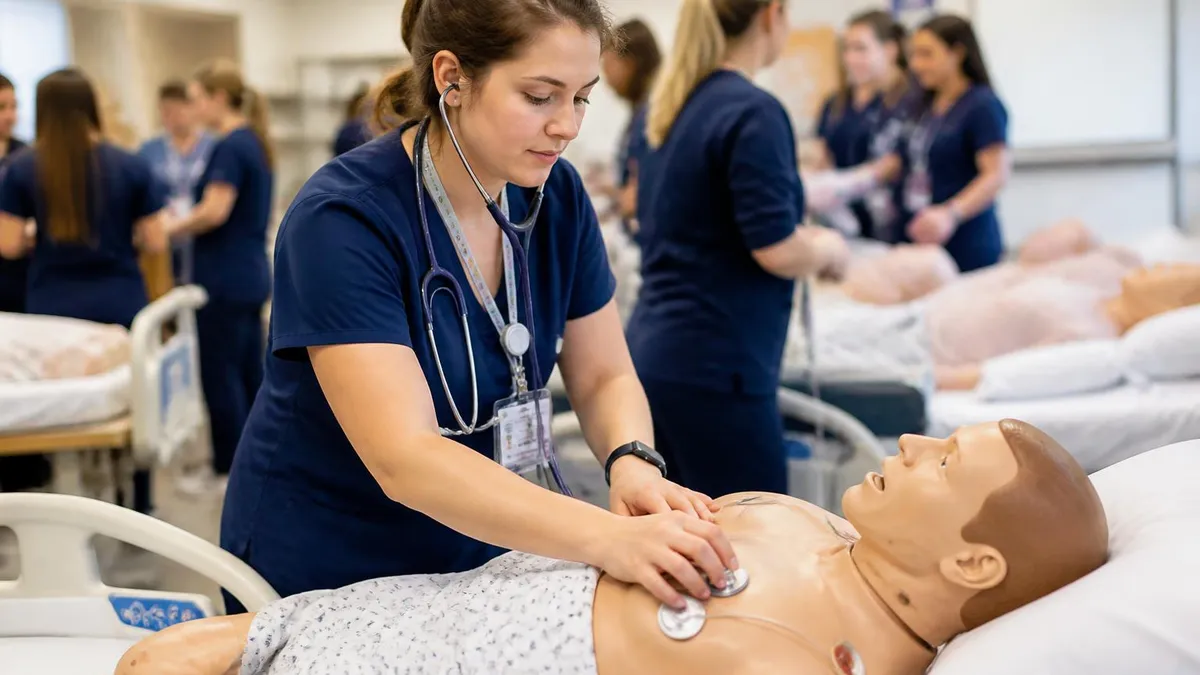
The skills evaluation is scheduled separately from the written exam in most states and takes place at a clinical site — typically a licensed nursing facility, a skills lab, or a community college clinical space. During the skills evaluation, you will be asked to perform five randomly selected skills from a standardized list of approximately 20 to 30 skills.
These almost always include handwashing as a mandatory skill, plus four additional tasks chosen at random. You must perform each skill in the correct sequence, following infection control protocols and treating the evaluator's manikin or volunteer resident with dignity throughout the entire process.
If you need to reschedule your exam, most vendors require at least 24 to 48 hours of advance notice to avoid forfeiting your exam fee. Some states allow one free reschedule; others charge a rescheduling fee of $25 to $50. Always read your vendor's cancellation policy before you confirm your original booking — emergencies happen, and knowing the policy in advance means you will not lose money unnecessarily if your schedule changes. Same-day cancellations are almost universally treated as no-shows, which in most states counts as a failed attempt.
Candidates who fail one portion of the exam do not need to retake both. If you pass the written test but fail the skills evaluation, you only need to retest on skills — and vice versa. However, there is typically a limit of three total attempts per certification cycle (usually 24 months from training completion) before you are required to retake the full training program. Track your attempts carefully and make sure you give yourself adequate preparation time between retakes. Rushing into a retest without additional preparation is one of the most common mistakes candidates make.
For candidates who completed cna classes near me at a facility-based program (like a nursing home), your employer may have a pre-arranged relationship with a testing vendor that allows for on-site or priority scheduling. Ask your employer's HR or education department whether this benefit is available to you — it can dramatically cut down the time between training completion and your first scheduled test date, getting you on the payroll as a certified CNA weeks faster than the standard process allows.
CNA Programs, Classes, and Certification Pathways
Finding accredited cna classes near me has become easier in recent years thanks to community colleges, vocational schools, and hospital-based programs expanding both in-person and hybrid offerings. Most programs run four to eight weeks full-time or eight to twelve weeks part-time, combining classroom instruction with supervised clinical hours at a partnering nursing facility. When comparing programs, always verify state approval status — only graduates of state-approved programs are eligible to sit for the competency exam.
Cost is a major factor for many candidates. Community college programs typically range from $600 to $2,000 in total tuition, while private vocational schools can charge $1,500 to $4,000. Employer-sponsored programs at nursing homes are often free in exchange for a post-certification work commitment of six to twelve months. Some states also offer scholarship funding through workforce development agencies, so check your state's labor department website before paying out of pocket for tuition.
Is Becoming a CNA the Right Career Move for You?
- +Fast entry into healthcare — full certification possible in under 12 weeks
- +High job security with nationwide demand for qualified CNAs in every setting
- +Competitive starting wages with regular shift differentials for nights and weekends
- +Clear pathway to LPN, RN, or other advanced healthcare credentials
- +Emotionally rewarding work with direct positive impact on patients' daily lives
- +Employer-sponsored training programs available in most states — zero upfront cost
- −Physically demanding role involving frequent lifting, turning, and repositioning residents
- −Entry-level wages in some states can be below $18/hour without differentials
- −High burnout risk in understaffed long-term care facilities without adequate support
- −Limited autonomy compared to licensed nursing roles — scope of practice is tightly regulated
- −Night shifts, weekend, and holiday work are commonly required, especially for new hires
- −Registry maintenance requires active employment — gaps in work can lapse your certification
Pros and Cons at a Glance
| Pros | Cons |
|---|---|
| High job security with nationwide demand for qualified CNAs in every setting | Physically demanding role involving frequent lifting, turning, and repositioning residents |
| Competitive starting wages with regular shift differentials for nights and weekends | High burnout risk in understaffed long-term care facilities without adequate support |
| Clear pathway to LPN, RN, or other advanced healthcare credentials | Limited autonomy compared to licensed nursing roles — scope of practice is tightly regulated |
| Emotionally rewarding work with direct positive impact on patients' daily lives | Night shifts, weekend, and holiday work are commonly required, especially for new hires |
| Employer-sponsored training programs available in most states — zero upfront cost | Registry maintenance requires active employment — gaps in work can lapse your certification |
CNA Exam Day Checklist: Everything You Need
- ✓Confirm your appointment 24 hours in advance through the vendor portal or by phone.
- ✓Bring your government-issued photo ID — driver's license, state ID, or passport are all accepted.
- ✓Carry your exam confirmation number (email or printed) to show at check-in.
- ✓Arrive at the test center at least 30 minutes before your scheduled start time.
- ✓Wear comfortable, professional clothing appropriate for a clinical environment.
- ✓Leave your phone, smartwatch, and personal belongings in your vehicle or a designated locker.
- ✓Review your five skills one final time the morning of your skills evaluation.
- ✓Bring an approved calculator if your state allows it for the written portion.
- ✓Eat a nutritious meal and stay hydrated — a 90-minute exam on an empty stomach hurts focus.
- ✓Know the address and parking situation for your test site in advance to avoid last-minute stress.
Handwashing Is Tested on Every Skills Evaluation — Nationwide
Regardless of which five skills you are randomly assigned, every CNA skills evaluation in every state includes a mandatory handwashing demonstration. Candidates who skip or rush through handwashing — even while performing other skills perfectly — are frequently failed on this step alone. Practice proper handwashing technique (20 seconds minimum, friction on all surfaces, wrist to fingertips) until it is completely automatic before your test date.
After you pass both components of the CNA competency exam, your name is submitted to the state nurse aide registry and typically appears within 24 to 72 hours. The registry is a publicly searchable database that employers, state survey agencies, and healthcare licensing boards use to verify your credentials. Before accepting any job offer, make sure your registry listing shows an active status — a listing in pending or inactive status will prevent you from legally working as a CNA until the issue is resolved with the state agency.
With your certification in hand, the cna jobs market is wide open. The Bureau of Labor Statistics projects steady growth in nursing assistant employment through 2033, driven primarily by the aging Baby Boomer population and the continued expansion of home health and long-term care services. The most common employment settings for CNAs are skilled nursing facilities, assisted living communities, hospitals, home health agencies, and rehabilitation centers. Each setting has different pay scales, patient populations, and scheduling structures, so take time to explore which environment fits your personality and career goals before committing to your first position.
Wages vary significantly by geography and setting. CNAs in California, Alaska, Washington, and Massachusetts consistently earn above $22 per hour at the entry level, while wages in rural Southern and Midwestern states can start closer to $14 to $16 per hour. Hospital-based CNAs often earn higher base wages than those in nursing homes but may have less predictable scheduling.
Home health CNAs sometimes receive mileage reimbursement and flexible scheduling, which can offset a slightly lower hourly rate. When evaluating cna jobs, always factor in the full compensation package — benefits, shift differentials, tuition reimbursement, and overtime policies all add meaningful value beyond the base wage.
Many CNAs use their certification as a launchpad for advancement. The most common pathway is from CNA to LPN (Licensed Practical Nurse) to RN (Registered Nurse). Some employers offer bridge programs that allow working CNAs to complete LPN coursework on a flexible schedule while continuing to work. Hospitals and large healthcare systems frequently offer tuition assistance or full tuition reimbursement for employees pursuing nursing degrees, making upward mobility financially achievable even without taking on significant student loan debt.
If you move to a different state after getting certified, you may be eligible to transfer your certification through a process called reciprocity or endorsement. Most states participate in this process, but requirements vary — some states require additional training hours or a state-specific competency test before granting reciprocity. Contact the nurse aide registry in your destination state before relocating to understand exactly what documentation you will need to bring and how long the transfer process typically takes in that jurisdiction.
The nurse and nurse aide relationship at the worksite is one of the most important professional dynamics you will navigate as a new CNA. CNAs work under the direct supervision of LPNs and RNs and are responsible for reporting changes in resident condition, completing assigned care tasks, and documenting completed care accurately.
Building a strong, communicative relationship with your supervising nurses from day one will make your work safer for residents and more rewarding for you. Many experienced RNs credit their early CNA experience as the foundation of their clinical judgment — the skills and patient relationships you build now will serve you throughout your entire healthcare career.
Whether you are working in a bustling urban hospital or a quiet rural nursing home, the fundamentals of excellent CNA care remain the same: observe carefully, communicate clearly, document accurately, and always treat your residents with the dignity and respect they deserve. Your certification is the key that unlocks the door — but the career you build with it is entirely up to the effort, compassion, and professionalism you bring to work every single day.
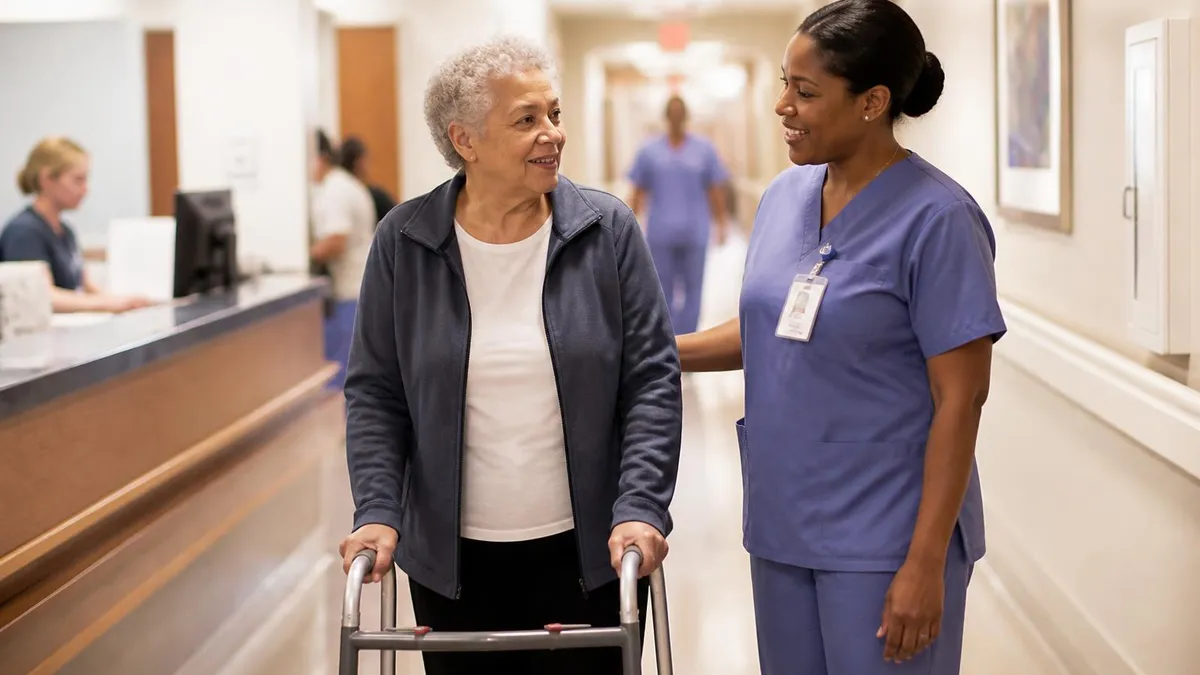
Most states cap the number of times you can attempt the CNA competency exam at three tries within a 24-month window from training completion. If you exhaust all three attempts without passing, you are typically required to repeat the full approved training program before you can test again. Check your state's specific policy before scheduling a retake — some states have even stricter limits — and make sure you give yourself adequate preparation time between attempts rather than retesting too quickly.
Understanding the rescheduling and retake policies for your state's CNA exam is just as important as knowing how to schedule the original appointment. Life happens — illnesses, family emergencies, and work conflicts can all force you to change your test date at the last minute. Most testing vendors require at least 24 hours of advance notice to reschedule without penalty. If you cancel or reschedule within the 24-hour window, you will typically lose your exam fee entirely and be treated as a no-show, which in many states counts as a failed attempt against your three-attempt limit.
To reschedule, log into the vendor portal and navigate to your appointment management page. Most vendors allow online rescheduling right up to the cutoff window. If you are rescheduling due to a documented medical emergency, contact the vendor's customer service line directly — many vendors will waive the rescheduling fee and not count the missed appointment as a failed attempt if you can provide documentation such as a hospital admission record or a doctor's note submitted within five business days of the missed exam.
Candidates who fail the written portion of the exam often rush into their retake without fundamentally changing their study approach, and this is the most common reason for second and third failures. If you did not pass the first time, start by requesting a score breakdown from the testing vendor — most states provide a report showing which content domains you struggled with. Use that information to focus your retake preparation specifically on your weak areas rather than reviewing material you already know well. Targeted study is significantly more efficient than reviewing the entire content outline from scratch.
The five skills selected for your skills evaluation are drawn randomly from a master list, but you should practice every skill on the list — not just the ones you feel most comfortable with. Skills that candidates frequently underperform on include catheter care, range-of-motion exercises, and perineal care.
These are more procedurally complex than skills like oral hygiene or vital signs measurement, and they require careful attention to infection control and patient privacy throughout the entire sequence. If you failed your skills evaluation, review your evaluator's notes carefully to identify whether you made procedural errors, missed an infection control step, or failed to communicate appropriately with your test resident.
Some states offer a performance review process where you can request additional information about why you failed a specific skill. This is distinct from a formal appeal and is simply an informational request. Use this resource if available in your state — the specific feedback you receive can be more valuable than hours of general review. Once you identify the exact step where your performance broke down, you can drill that specific sequence until it becomes second nature before your next attempt.
For candidates who need additional hands-on practice before retesting, many cna programs and community college skills labs offer open lab hours where enrolled or recently graduated students can practice skills with manikins and equipment. Contact your original training program to ask whether they offer this resource for graduates who are retesting — many programs are happy to let former students use their facilities during scheduled lab hours. Some private test preparation companies also offer CNA skills workshops specifically designed for retake candidates, typically running two to four hours and costing between $50 and $120.
Finally, do not overlook the mental and emotional side of retaking an exam. Failing any certification test is discouraging, and it is normal to feel frustrated or anxious about your retake.
Build in additional time for rest and recovery before your next attempt, talk to peers or mentors who have been through the process, and remember that the majority of candidates who retake the CNA exam after targeted preparation do pass on their next attempt. Your persistence and dedication to becoming a certified nursing assistant are exactly the qualities that will make you excellent at the job once you clear this final hurdle.
Maximizing your performance on exam day comes down to preparation quality, not just preparation quantity. Many candidates spend dozens of hours reading textbooks and nursing handbooks but never actually practice answering questions under timed conditions — and then they are shocked when the 70-question written exam feels pressured and unfamiliar. Simulating real testing conditions during your study sessions is one of the highest-use changes you can make to your preparation strategy. Set a timer, put your phone away, and work through 35 to 70 practice questions in one sitting at least three times in the week before your exam.
The written CNA exam tests your knowledge across several major content domains, including physical care skills, psychosocial care, safety and emergency procedures, infection control, resident rights, and the role and function of the nursing assistant. The relative weighting of these domains differs slightly by state, but physical care skills — including personal hygiene, nutrition, elimination, mobility, and vital signs — consistently account for the largest share of exam questions. If you are pressed for time in your final study push, prioritize physical care and infection control above the other domains.
For the skills evaluation, your single most effective preparation strategy is to practice each skill with a partner who reads the evaluator's checklist aloud while you perform the skill. This mirrors the actual evaluation experience almost exactly and helps you identify any steps you are glossing over or performing out of sequence. If you do not have a study partner, video yourself performing each skill and then review the footage against the official skills checklist — most state nurse aide registries publish these checklists on their websites, and they are the exact criteria your evaluator will use on test day.
Nutrition and sleep in the 48 hours before your exam matter more than any last-minute cramming you could do. Cognitive performance on knowledge tests is demonstrably worse when candidates are sleep-deprived, dehydrated, or skipping meals. Plan your study sessions so that your heaviest review work is completed by two days before the exam, leaving the final 48 hours for light review, adequate sleep (seven to nine hours per night), and normal eating. Arriving at the test center well-rested and nourished is genuinely one of the best exam strategies available.
On the morning of your written exam, give yourself extra travel time to account for traffic, parking delays, or difficulty finding the test center entrance. Test centers typically lock their doors at the scheduled start time and do not admit late arrivals — missing your appointment this way counts as a no-show in most states.
Confirm the exact building entrance the night before using satellite maps if needed, and plan to be seated in the waiting area at least 25 minutes before your appointment time. Early arrival also gives you a few quiet minutes to breathe, focus, and mentally prepare before the proctor calls your name.
During the written exam, flag difficult questions and move on rather than spending five or six minutes agonizing over a single item. Most candidates have sufficient time to answer all questions and return to flagged items before the clock runs out, but only if they keep a steady pace of roughly 75 to 90 seconds per question.
If you find yourself stuck on a question that involves an unfamiliar term or a complex clinical scenario, use process of elimination to narrow your choices to two options and then make your best educated guess before moving on. An unanswered question is always wrong; an educated guess is right roughly 50% of the time.
After the exam, resist the temptation to discuss every answer with other test-takers in the parking lot — different candidates receive different question sets in many computerized testing environments, and comparing answers can increase your anxiety without providing any useful information. Instead, go home, rest, and check your results through the vendor portal or your state registry website.
Results for the written portion are often available within 24 hours for computerized exams, while paper-based and oral exam results may take up to 10 business days. Once you have your results, you will know exactly where you stand and what your next step is — whether that is celebrating your certification or scheduling your retake with a stronger study plan in hand.
CNA Questions and Answers

CNA Salary and Wages: Your Complete Pay Guide for 2026

CNA in Missouri 2026: Training, Certification, Salary, and Requirements

CNA in Montana 2026: Training, Certification, Salary, and Requirements
CNA Palliative / Hospice Care Practice Test Video Answers
Maternal / Newborn CNA Practice Test Video Answers
About the Author

Registered Nurse & Healthcare Educator
Johns Hopkins University School of NursingDr. Sarah Mitchell is a board-certified registered nurse with over 15 years of clinical and academic experience. She completed her PhD in Nursing Science at Johns Hopkins University and has taught NCLEX preparation and clinical skills courses for nursing students across the United States. Her research focuses on evidence-based exam preparation strategies for healthcare certification candidates.
Join the Discussion
Connect with other students preparing for this exam. Share tips, ask questions, and get advice from people who have been there.
View discussion (8 replies)