
CNA Programs Atlanta: How to Choose, What They Cost, and How to Get Hired 2026
🎓 Cna programs atlanta run at least 75 hours, 16 of them hands-on. Compare colleges, employers and Goodwill, plus costs, exam steps and jobs.
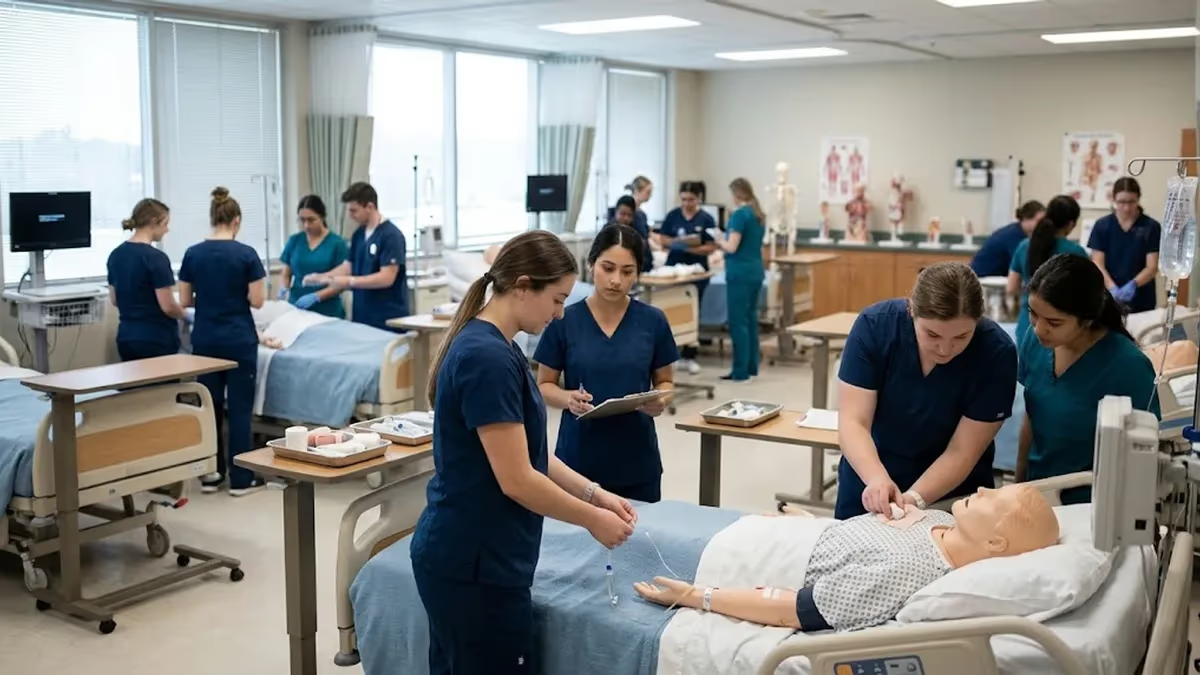
Cna programs atlanta are state-approved nurse aide courses that run at least 75 clock hours, including 16 hours of supervised hands-on practice, and end with a competency exam. Atlanta students choose among technical colleges, nursing-home employers, nonprofit workforce programs and private schools, with costs ranging from free employer-sponsored seats to several hundred dollars.
Cna Programs Atlanta: Key Facts (Updated October 2026)
| Fact | Details | Source |
|---|---|---|
| Minimum training length | No less than 75 clock hours for a federally approved nurse aide program | 42 CFR 483.152 |
| Supervised practical training | At least 16 of the 75 hours must be supervised practical training | 42 CFR 483.152 |
| Written or oral part | The aide chooses between a written and an oral examination | 42 CFR 483.154 |
| Skills part | A skills demonstration of randomly selected items drawn from a pool | 42 CFR 483.154 |
| Registry listing | Passing candidates are listed on the Georgia Nurse Aide Registry | Georgia Nurse Aide Registry |
| Neighboring state comparison | Florida's written CNA exam has 60 multiple-choice questions in 90 minutes | Florida Board of Nursing |
Once you know the format, build your study plan around free cna credential practice exams so the written portion never catches you off guard. The rest of this guide explains how to compare local schools, what to ask before paying, and how to turn a new certificate into a paycheck.
Choosing among cna programs atlanta starts with one question: do you want to pay tuition, or do you want an employer to pay for you? Metro Atlanta has all three paths. Technical colleges offer structured terms, long-term care facilities train their own aides, and nonprofits run workforce courses. Each path leads to the same exam and the same registry listing, so the right choice depends on budget, schedule, and urgency.
Every approved program must follow the federal floor set in 42 CFR 483.152: at least 75 clock hours of training, with at least 16 of them supervised practical training in a lab or clinical setting. Georgia can require more, so confirm the hour count with the school before you pay a deposit. A program that cannot show its state approval, or will not state its total hours in writing, is a red flag worth walking away from.
After training you take a competency evaluation with two parts. Under federal rules, the aide chooses between a written and an oral examination, and must also complete a skills demonstration made up of randomly selected tasks. Because the skills are drawn at random, you cannot study just a favorite few. Practicing every procedure, from handwashing to transfers and measuring vital signs, is the only reliable way to feel calm on test day.
If you are comparing schools, this page walks through what each option really costs, how long it takes, and what happens after you pass. For a broader overview of the local market first, read our guide to CNA Classes in Atlanta, then come back here to compare programs side by side. Either way, treat the checklist later in this article as your script when you call admissions offices.
Timing matters more than most students expect. Full-time programs can finish in a few weeks, while evening and weekend sections stretch over a couple of months so working adults can keep their jobs. Hybrid formats move the lecture portion online, but the skills practice and clinical hours still happen in person. No legitimate program is fully online, because the hands-on component must be supervised and demonstrated on real equipment.
Money is the other big variable. Tuition at private schools can run several hundred dollars before fees for a background check, scrubs, a textbook, and the exam. Employer-sponsored training can cost nothing up front, though some facilities ask for a work commitment of several months. Always request a written, itemized total, and ask whether the exam fee is included, because that single line item surprises many first-time students.
Finally, think about the job you want, not just the certificate. Hospitals, nursing homes, home health agencies, and assisted living communities all hire aides, and their expectations differ. Searching for cna jobs near me becomes much easier once you hold your credential, because employers filter for active registry status. Pick a program with strong clinical placements, since the facility where you train often becomes the first place that offers you a job.
Atlanta CNA Programs by the Numbers
What Types of CNA Programs Are Available in Atlanta?
Public technical colleges in the metro area run nurse aide courses on a semester or short-term schedule. They usually offer on-campus labs, instructor-led clinicals, and advising support. Tuition and fees are higher than employer training, but the structure suits students who want a classroom setting and possible credit toward later nursing coursework.
Some nursing homes and long-term care facilities train aides in-house, often paying tuition and exam costs. You usually learn on the same floor where you will work. The trade-off is a work commitment, so read any agreement carefully and confirm how many months you must stay before leaving.
Community organizations and Goodwill-style workforce programs sometimes offer free or low-cost nurse aide classes, plus job placement help. Seats can be limited and may require an application or eligibility screening. They are worth checking first if cost is your biggest barrier to starting a healthcare career.
Private career schools often offer evening, weekend, and accelerated sections, and some deliver lectures online. The skills lab and clinical hours must still be completed in person. Compare total cost, state approval status, and exam pass rates before you commit to a fast schedule.
Where Can I Find CNA Classes in Atlanta GA?
You can find CNA classes in Atlanta GA at public technical colleges, long-term care employers, nonprofit workforce agencies, and licensed private schools. Start by searching for cna courses atlanta along with your neighborhood, then verify each school's state approval before applying. Approval matters because only graduates of an approved program can sit for the competency exam and be listed on the registry that employers check.
Geography matters in a sprawling metro area. Traffic between Fulton, DeKalb, Cobb, and Gwinnett counties can add an hour to a daily commute, and clinical sites may be assigned rather than chosen. Ask where clinical rotations take place and whether you can request a location. A slightly more expensive program ten minutes from home often beats a cheaper one that makes you late and risks attendance penalties.
Many students begin with a search for cna courses near me and then get overwhelmed by results that look identical. Narrow the list by calling each school and asking four things: total clock hours, clinical hours, total cost including the exam, and the date of the next start. Programs that answer clearly and in writing tend to be well run. Vague answers usually predict vague instruction.
Our companion guide to cna classes explains how training centers and testing sites fit together, which helps if you are unsure whether your school also hosts the exam. In many cases the school arranges the test date for you. In others you register separately, so confirm who handles scheduling and what happens if you need to reschedule because of illness or work.
Class size is an underrated quality signal. The skills portion rewards repetition: transferring a patient, making an occupied bed, and taking blood pressure all improve with supervised practice. A lab with eight students per instructor gives you far more repetitions than one with twenty. Ask how many practice stations the lab has, and whether you may come in for open practice before the skills test.
Schedules vary widely. Daytime programs may meet five days a week for a few weeks, while evening sections might meet three nights and one weekend day for two months. Think honestly about child care, transportation, and your current job. A schedule you can attend perfectly beats a faster schedule you will miss, because most programs require near-perfect attendance to satisfy the clinical hour requirement.
Do not ignore reviews and graduate outcomes, but read them critically. Look for specific comments about instructors, equipment, and how well the school prepared students for the skills test. Ask the admissions office what percentage of recent students passed on the first attempt, and whether any employers recruit directly from the class. A school that cannot answer either question has probably never tracked it.
How Do I Find CNA Courses Near Me in Atlanta?
Technical colleges are the most predictable way to find cna courses near me in metro Atlanta. Their nurse aide courses follow published start dates, list the number of credit or clock hours, and are overseen by an accredited institution. Check each college's continuing education or health sciences page, then call the program coordinator to confirm the next enrollment window, because some sessions fill weeks before classes begin.
Expect an application, proof of identity, a background check, immunization records, and sometimes a basic placement assessment. Financial aid offices can tell you whether the course qualifies for grants or workforce funding, which can reduce or erase tuition. Ask about this before you pay anything out of pocket, since funding applications often have deadlines that arrive earlier than the first day of class.
Is an Employer-Sponsored CNA Program Better Than Paying Tuition?
- +Tuition and exam fees are often covered by the employer
- +You may earn a paycheck while you train
- +Training happens in the facility where you may keep working
- +A job offer can be waiting the day you pass the exam
- +Less financial risk if you are changing careers
- +You learn the facility's real routines and charting systems
- −You may owe a work commitment of several months
- −Early departure can trigger repayment of training costs
- −You have fewer choices about schedule and clinical site
- −Class sizes and instruction quality vary by facility
- −Your first job may not match the setting you prefer
- −Tuition-based schools may offer more transferable college credit
What Should I Check Before Enrolling in CNA Classes in Atlanta?
- ✓Confirm the program is approved by the state for nurse aide training.
- ✓Ask for the total clock hours and the number of supervised clinical hours.
- ✓Get an itemized written cost, including the exam fee.
- ✓Ask whether the exam is scheduled by the school or by you.
- ✓Find out where clinical rotations take place and how you get there.
- ✓Check the class size and the ratio of students to instructors.
- ✓Ask for the first-time pass rate of recent graduates.
- ✓Review the attendance policy and make-up rules in writing.
- ✓Confirm background check, drug screen, and immunization requirements.
- ✓Ask whether the school helps with job placement after you pass.
Ask for the total hours and the total cost in writing
A legitimate program can tell you its clock hours, clinical hours, and full price, including the exam, before you pay. If a school avoids putting those numbers in an email, keep looking. Federal rules require at least 75 hours with 16 supervised practical hours, so anything lower should be a deal-breaker.
How Much Do CNA Courses in Atlanta Cost and How Long Do They Take?
CNA courses in Atlanta cost anywhere from nothing, when an employer or workforce program pays, to several hundred dollars or more at a private school, and most programs take from a few weeks to about two months. Exact prices change often, so treat any number you read online as a starting point and request a current written quote from the school.
Build your own budget instead of relying on the headline tuition. Add the exam fee, a background check, a physical exam or immunization records, scrubs, non-slip shoes, a watch with a second hand, and a gait belt if the school requires one. Transportation and lost work hours also count. A program that looks cheap can end up costing more than a pricier one that bundles everything together.
Free and low-cost options exist, and they are worth researching before you pay anyone. Our guide on cna training near me through Goodwill explains how nonprofit programs work, who qualifies, and how to apply. Seats can be limited, so apply early and have your identification, proof of address, and work history ready. Even if you do not qualify, the staff may point you to other funding.
Timeline depends on format. A full-time daytime course might finish in three to six weeks, while a part-time evening and weekend course could take eight weeks or longer. Add time for the background check, which can take days to clear, and for scheduling the exam, which may fall one to several weeks after your last class. Plan for the total process, not just the classroom portion.
Employer-paid routes change the math completely. If a nursing home covers tuition and pays you during training, your real cost may be a few supplies and a work commitment. Calculate what that commitment is worth: if you would stay at the job anyway, it costs you nothing, but if you want to switch settings quickly, you may owe money or have to stay longer than planned.
Do not forget retake costs. If you fail one part of the competency evaluation, you typically retake only that part, but you pay another fee and wait for another date. That is why thorough practice beats rushing. Spending an extra week on skills drills before the first attempt can save both the fee and the delay in starting work, which may be worth far more than the fee itself.
Finally, compare programs by cost per hour of real skills practice, not by sticker price. A school that charges slightly more but offers open lab time, small groups, and a mock skills test gives you better odds of passing the first time. When you factor in a retake fee and a week or two without a paycheck, the better-prepared student often ends up spending less overall.
Only graduates of an approved nurse aide program can take the competency evaluation and join the registry. Before paying any deposit, confirm the program's approval status with the state and keep a copy of your enrollment agreement. Never pay for a course that promises certification without in-person clinical hours.
How Do I Get on the Georgia CNA Registry and Find CNA Jobs?
You get on the registry by finishing an approved program and passing both parts of the competency evaluation, after which your name appears on the state list employers check. Our guide to the georgia cna registry covers state requirements, renewals, and what to do if your listing lapses. Keep a copy of your certificate and registry confirmation, because many employers ask for both.
Once you are listed, the job search is straightforward. Terms like cna jobs near me, cna job near me, and cna hiring near me all lead to the same pool of employers: nursing homes, hospitals, home health agencies, assisted living communities, and rehabilitation centers. Set up alerts on several job boards, but also walk into facilities near you, since many hire quickly when they have open shifts to fill.
Expect to learn an electronic charting system on the job. Many long-term care facilities use PointClickCare, so you will hear coworkers talk about the pointclick care cna module, sometimes written as click point care cna or point care click cna. Aides use it to record meals, bathing, mobility, and other daily care. Your employer creates your account during orientation, so you should not try to register on your own.
If you forget your credentials later, the pointclickcare cna login page is the starting point, but your facility administrator controls access and resets. Never share your login or chart under a coworker's name, because every entry is tied to you. Many new aides worry about cna point click care charting, yet most facilities provide a short training session, and the screens are built around simple taps and checkboxes.
Pay and schedules vary by setting. Hospitals may offer more structured shifts and a path toward nursing roles, while nursing homes often provide more hours and a steady relationship with residents. Home health can offer flexibility but may mean driving between clients. When you compare offers, ask about shift differentials, overtime, mandatory training hours, and whether the employer helps with continuing education or tuition for nursing school.
Prepare a short resume that lists your training program, clinical hours, registry status, and any prior caregiving or customer service experience. Include CPR certification if you have it, since many facilities require it. During interviews, expect scenario questions about difficult residents, teamwork, and reporting concerns. Concrete answers, such as how you would respond to a resident who refuses a bath, show more readiness than general statements about caring for people.
Plan for renewal as well. Registry listings require proof that you worked for pay as a nurse aide within a set period, so keep pay stubs or employer verification. Letting your status lapse can mean retaking training or testing, which costs time and money. Treat the registry like a driver's license: check the expiration date, keep your contact information current, and set a reminder well before it comes due.
How Can I Prepare for the CNA Exam After Atlanta CNA Classes?
Prepare by splitting your study time between the knowledge test and the skills demonstration, and by practicing under realistic conditions. Most candidates fail because they underestimate the skills portion, not because the written questions are too hard. Treat every procedure as a step-by-step script you can recite out loud while performing it, including the small safety steps that evaluators watch for.
Begin with a two-week plan. Spend the first week reviewing core topics such as infection control, resident rights, communication, basic nursing skills, and activities of daily living. Take short practice quizzes every day and keep a list of missed questions. In the second week, shift toward timed sets and weak areas. Reviewing mistakes teaches more than rereading notes you already know.
For the skills test, practice with a partner who can play the evaluator. Have them watch for handwashing, knocking and introducing yourself, explaining the task, providing privacy, using the call light, lowering the bed, and washing hands again at the end. These repeated steps are easy to forget when nervous. Missing a critical step can fail a skill even if everything else is perfect, so rehearse the full sequence.
Remember that the skills are randomly selected from a pool, so you cannot predict which ones you will draw. Practice them all, including measuring and recording vital signs, counting respirations, positioning a resident, range of motion exercises, feeding assistance, and perineal care. Time yourself, but never rush the safety steps. Smooth, deliberate work looks more confident to an evaluator than fast, sloppy work.
Use the days before the test wisely. Confirm your test location, arrival time, and required identification, and plan your route with extra time for Atlanta traffic. Prepare your approved attire, a watch with a second hand if allowed, and any permitted supplies. Sleep matters more than a last-minute cram session. Light review of your missed-question list the night before is enough to keep information fresh.
On test day, breathe, slow down, and talk yourself through each step. If you make a mistake on a skill, many evaluators allow you to correct yourself before moving on, so say so calmly and fix it rather than freezing. For the written or oral part, read each question fully, eliminate obviously wrong choices, and choose the answer that puts resident safety and dignity first. That principle resolves many tricky questions.
After you pass, do not wait to apply. Registry listing can take time to appear, so ask your employer what proof they accept in the meantime. Update your resume, notify the facilities that interviewed you, and keep studying through short quizzes so your knowledge stays sharp. If you later want to advance, our guide on moving from CNA to LPN explains bridge programs and the realistic timeline for them.
CNA Questions and Answers

Free CNA Practice Test 2026 - CNA Exam Questions

CNA Center: Top Training Programs & Testing Centers Guide

Goodwill CNA Program: Free Classes, Locations, Cost, and How to Apply
CNA in Georgia: State Requirements, Training Programs & Salary Guide

CNA Classes

CNA to LPN: Bridge Programs, Timeline, Cost, and Pay Boost

CNA Jobs Near Me: How to Find, Apply & Get Hired in 2026

Certified Nursing Assistant Salary: An Overview

CNA Training in Massachusetts: Schools, Programs, Pay & Registry Guide
Sources & references
Prepared by the Practice Test Geeks editorial team using AI-assisted drafting; exam facts are checked against the official sources below. Editorial policy
- floridasnursing.gov — Eligibility, exam format · verified Oct 2026
- law.cornell.edu — Eligibility · verified Oct 2026
- law.cornell.edu — Test delivery · verified Oct 2026
- prometric.com — Exam information · verified Oct 2026