
CNA Night Classes: Evening Programs, Costs, Exam Rules and Jobs 2026
🎓 CNA night classes are evening programs covering 75+ hours of state-approved training. See costs, exam rules, and CNA jobs near me.
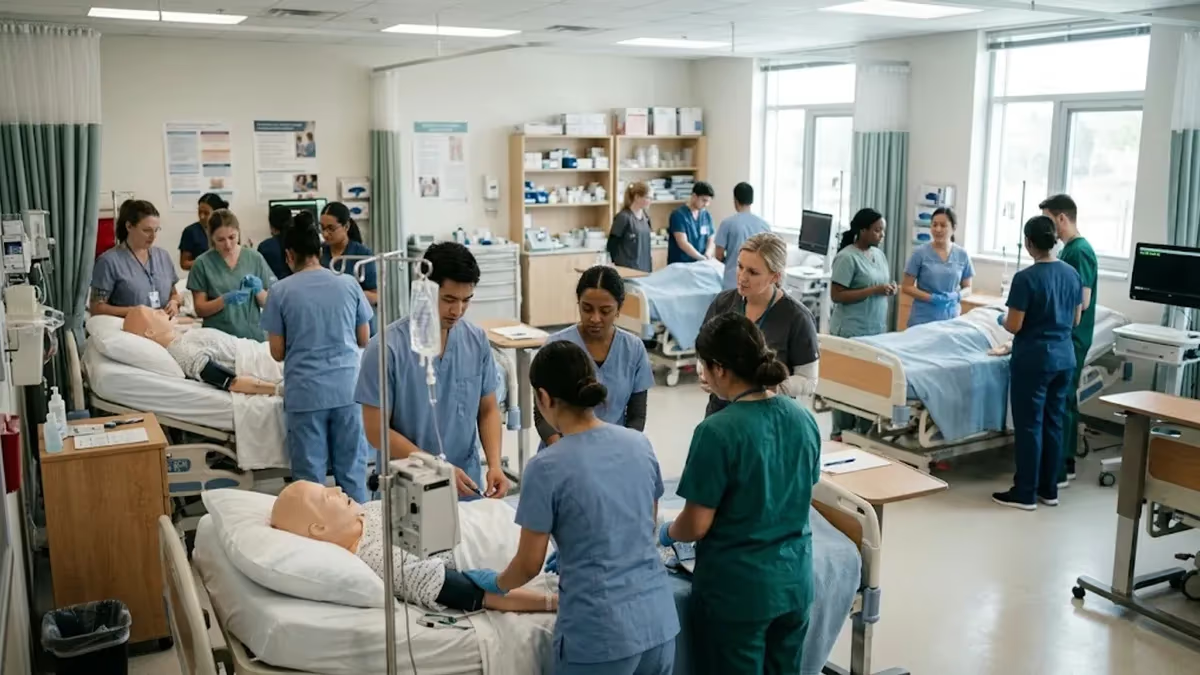
CNA night classes are evening nursing assistant training programs, usually meeting two to five nights a week, that cover the same federally required 75 hours of approved training, including at least 16 supervised clinical hours, as daytime courses. You typically finish in roughly 6 to 16 weeks, then sit your state's competency exam.
Cna Night Classes: Key Facts (Updated October 2026)
| Fact | Details | Source |
|---|---|---|
| Federal training minimum | 75 clock hours of approved training, including at least 16 hours of supervised practical training | Federal regulation, 42 CFR 483.154 |
| Eligibility | Varies by state; Florida lists a high school diploma or equivalent, or age 18+ | Florida Board of Nursing |
| Exam format | Written or oral knowledge test plus an in-person skills demonstration at an approved test center; Florida's written test is 60 multiple-choice questions in 90 minutes | Florida Board of Nursing |
| Passing score | Set by each state; no national percentage is published | State nurse aide registries |
| Exam fees (2026 examples) | Missouri $32 knowledge and $103 skills (from Jan. 1, 2026); Idaho $34 each for written and oral (from July 1, 2026); Connecticut $125 bundled written and skills (from Aug. 1, 2026) | Missouri DHSS, Prometric Idaho, Prometric Connecticut |
| Retake rule | At least 3 attempts must be allowed, and you must be told which areas you failed before each retake | Federal regulation, 42 CFR 483.154 |
| Validity and renewal | Usually 2 years; renewal is state-specific and often requires paid work and continuing education | California CDPH |
If you are also preparing for the test itself, start with a free michigan cna practice test to see how written questions are phrased, then come back to plan your schedule. The format is similar across states because every program follows the same federal framework. Practicing with timed questions early helps you spot weak areas such as infection control, residents' rights, and basic nursing skills long before exam day arrives.
Why do so many people choose evening schedules? Most working adults cannot give up a full-time paycheck for a month of daytime lectures. Night time CNA classes let you keep a job, handle childcare, or cover other commitments, then attend from roughly 5 or 6 p.m. until 9 or 10 p.m. Community colleges, vocational schools, nursing homes, and private career schools offer them, although availability depends heavily on your city and local demand.
Searching for CNA Night Classes usually turns up three formats: weekday evenings, weekend blocks, and hybrid schedules where theory is online and clinicals are in person. The label matters less than the hours. Every state-approved program must deliver the same minimum content, so compare total clock hours, clinical site placement, instructor credentials, and whether the school lists its state approval before you pay a deposit or sign any enrollment paperwork.
A typical evening course splits into classroom theory, a skills lab, and supervised clinical practice in a nursing home or similar facility. Theory covers anatomy basics, communication, safety, infection control, and residents' rights. The lab is where you practice taking vital signs, transfers, feeding assistance, and bathing on mannequins or classmates. Clinicals often fall on weekends or early mornings even in a night program, because residents are awake and staff are on the unit then.
Cost varies widely. Community college courses can run from a few hundred dollars to over a thousand, private schools may charge more, and some nursing homes train you free in exchange for a work commitment. Add scrubs, a watch with a second hand, background check fees, and the state exam fee. As of 2026, examples include Idaho at $34 each for the written and oral parts and Connecticut at $125 for the bundled written and skills package.
Expect a background check, proof of immunizations such as a TB test, a health screening, and CPR requirements at some schools. Many states also want a high school diploma, GED, or a minimum age of 18, though some states allow younger students. Florida, for example, lists a diploma or equivalent, or age 18 or older. Always confirm with your state nurse aide registry because rules differ, and an unapproved school can leave you ineligible to test.
The payoff is steady demand. Facilities need staff on every shift, and listings are everywhere, which is why searches like cna jobs near me and cna hiring near me are so common. Night students frequently finish the program already connected to a clinical site that wants to hire them. The sections below walk through schedules, costs, the exam, software like PointClickCare, and how to land your first position without wasting money on weak programs.
CNA Night Classes by the Numbers
How Do You Start CNA Night Classes Step by Step?
Check your state's eligibility rules
Shortlist state-approved evening programs
Enroll and gather paperwork
Complete theory, lab, and clinical hours
Pass the state exam and join the registry
Are There Weekend CNA Classes and Evening CNA Classes Near Me?
Yes, weekend CNA classes and evening CNA classes exist in most metro areas, but seats are limited and cohorts start only a few times a year. Community colleges, adult education centers, vocational schools, and long-term care employers all run them. Because evening sections fill quickly, register as soon as enrollment opens. If your first-choice school has a waitlist, ask about the next start date and whether a weekday or weekend alternative exists.
The fastest way to build a shortlist is to search cna training near me, then verify each result against your state's approved program list. Check the state Department of Health or nurse aide registry website, not just the school's own claims. Write down start dates, nightly hours, tuition, clinical site locations, and the state exam pass rate if it is published. A school that refuses to share pass rates deserves extra scrutiny.
Weekend CNA programs and weekend CNA training often compress theory into Saturday and Sunday sessions of six to eight hours each. That can mean eight to twelve weekends instead of a few weeks of nightly meetings. The advantage is a predictable schedule for people with weeknight shifts. The drawback is fatigue, because long lecture days followed by skills practice demand real stamina. Ask whether clinical hours are also on weekends so you are not forced into unpaid weekday time off.
Evening programs spread the same workload over more days with shorter sessions, often three or four hours a night. That pace is easier on memory because you review material between classes, yet it stretches the calendar across your whole week. If you work an overnight job, check that class ends early enough for you to commute safely. Skipping sleep for six weeks is a common reason students miss lab sign-offs and fall behind on skills checklists.
Employer-sponsored programs deserve a look. Some nursing homes and assisted living chains run in-house classes, sometimes scheduled around staff availability, and may cover tuition if you agree to work for them for a set period. Read the agreement carefully, including the length of the commitment, the pay rate, and what happens if you leave early. A free class is only a good deal when the repayment terms are reasonable.
Online or hybrid options are growing, yet the skills portion can never be fully remote. Federal rules require supervised practical training, so even a mostly online course sends you to a lab or facility in person. Be cautious with any program that promises certification entirely online, advertises a guaranteed pass, or cannot name its clinical site. Those red flags often mean the course will not qualify you to sit the state exam.
Finally, ask practical questions before enrolling. Is the instructor a registered nurse? What is the student-to-instructor ratio during clinicals? Are textbooks, uniforms, and the exam fee included? What happens if you miss a night? Most states cap absences, so a single missed lab might require makeup hours that are not always offered. Getting clear answers in writing protects your money and keeps you on track to test within the expected window.
Do Night Time CNA Classes Lead to CNA Jobs Near Me?
Yes, weeknight evening classes lead to jobs just like daytime courses, because employers hire based on registry status and clinical performance, not class time. A typical schedule runs Monday through Thursday from 5:30 to 9:30 p.m. for several weeks. Students who impress clinical supervisors are often invited to apply before graduation.
The best part of this format is that you keep your income while you train. The challenge is endurance, since you may work eight hours, commute, and then sit through four hours of instruction. Plan meals, childcare, and transportation in advance, and keep study sessions short and focused to avoid burnout.
Are CNA Night Classes Worth It Compared With Daytime Programs?
- +You can keep your current job and income while training
- +Evening hours fit childcare and family schedules
- +Shorter nightly sessions make material easier to absorb
- +Same federal training hours and exam as daytime courses
- +Clinical supervisors may recruit strong students for open jobs
- +Many programs start several times a year in larger cities
- −Evening sections often fill fast and have waitlists
- −Long days of work plus class can cause fatigue
- −Clinical hours may still be scheduled during the day or weekends
- −Fewer schools offer evening sections in small towns
- −Missed nights can require makeup hours that may cost extra
- −Course length can stretch longer than a full-time daytime program
How Do You Pick CNA Evening Classes and Line Up CNA Jobs Near Me?
- ✓Confirm the program is approved by your state nurse aide registry.
- ✓Request the full schedule showing theory, lab, and clinical dates.
- ✓Ask for total tuition and what it includes, such as books and uniforms.
- ✓Find out the school's published state exam pass rate.
- ✓Verify the clinical site location and your commute at night.
- ✓Check the attendance policy and how makeup hours are handled.
- ✓Complete the background check and immunization records early.
- ✓Budget for the state exam fee and a possible retake.
- ✓Update your resume with clinical experience before graduation.
- ✓Search cna jobs near me and note facilities that hire trainees.
Verify state approval first
Only graduates of state-approved programs can sit the competency exam. Before paying any deposit, look up the school on your state registry's approved list and keep a screenshot. A cheaper course that is not approved costs far more in the end.
How Does Learning PointClickCare Help You on the Job as a CNA?
Many students ask about the pointclickcare cna login before they have even finished class. The honest answer is that schools usually do not issue one. Your employer's administrator creates your account after you are hired, tied to your name, your role, and your facility. Searching for a login page will not help before then, and entering credentials on look-alike sites puts residents' information and your own account at real risk.
PointClickCare is an electronic health record platform widely used in skilled nursing and long-term care. For aides, the point-of-care module is the part that matters. Searching cna point click care or pointclickcare cna often leads to videos and forum threads describing it, and some people type point care click cna by mistake. Whatever the spelling, the idea is simple: you record the care you gave, in real time, for each resident.
On the job, a CNA typically documents activities of daily living such as bathing, dressing, eating, toileting, and mobility, plus items like meal intake and repositioning. Entries happen on a wall kiosk, tablet, or workstation, usually at the end of a task or the end of a shift depending on facility policy. Accurate charting matters because nurses, therapists, and surveyors rely on it to see whether a resident is declining or improving.
Your night class will not usually teach one specific software program, but it will teach the habits that make charting easy: observing carefully, remembering details, reporting changes to the nurse, and using correct terminology. Learn the ADL categories, the meaning of assist levels such as independent, supervision, limited assist, extensive assist, and total dependence, and the abbreviations your instructor shares. Those same terms often appear as menu choices on digital charting screens.
Typing and basic tablet comfort help more than people expect. If you feel nervous about technology, practice on any electronic form, and ask your employer for a training session on day one. If cost is your concern, look at free cna classes near me for programs and employers that pay for training, because a paid path lets you learn the charting workflow while earning a wage.
Treat your credentials like a house key. Never share your login, never leave a session open on a kiosk, and log out when you step away. Privacy rules under HIPAA apply to every entry, and facilities can audit who opened which chart. Looking up a neighbor or relative out of curiosity can end a career. Protecting access is as much a part of the cna job as lifting, feeding, and answering call lights.
Employers value new graduates who show they can chart accurately and still make time for residents. When you interview, mention that you understand ADL documentation and are comfortable learning an electronic record system. It signals reliability. Whether a manager asks about shifts, overtime, or float assignments, honest answers about your availability help them place you where you will succeed, which improves your first-year retention and the quality of the references you earn.
Your electronic records account is tied to you personally. Sharing a password or documenting under a coworker's name can violate facility policy and privacy law, and it may put your certification at risk.
Where Can You Find CNA Jobs Near Me and CNA Hiring Near Me After Night Classes?
A cna job near me search is the easiest starting point, but it works best after you know your certification status. Most facilities will interview you while you are still in class, then confirm the hire once you pass the exam and appear on the state registry. Update your resume with clinical site names, skills you mastered, and your expected test date so hiring managers see that you are close to finishing.
Look beyond job boards. Nursing homes, assisted living communities, hospitals, home health agencies, hospice providers, rehab centers, and dialysis clinics all hire aides. Walking in with a resume during your clinical rotation can lead to an interview the same week. Many cna hiring near me listings repeat the same facility, so call the staffing coordinator directly and ask which shifts are hardest to fill, because those openings often move fastest.
Night-class students have an advantage in negotiating schedules. Because you are used to working around evenings, you may be comfortable with second or third shift, which often pays a differential. Ask about shift pay, weekend rates, and whether the facility offers tuition help toward LPN or RN programs. Compare benefits, including health coverage, paid time off, and how soon they start, rather than looking at hourly pay alone.
Geography matters as much as schedule. Even a search for cna classes omaha will surface rules, prices, and start dates that differ from other states. Our Indiana guide shows how one state lays out approved programs, exam steps, and fees, which makes a useful model when you check your own state registry and compare local training options against what employers nearby expect.
Prepare for the interview with concrete stories. Describe a time you helped a resident who was frightened or confused, how you reported a change in condition, or how you handled several call lights at once. Managers want evidence of patience, dependability, and teamwork. They also ask about lifting, since the work is physical. Be honest about your limits and mention the body mechanics you practiced in the lab.
Understand pay and hours realistically. Wages differ by state, facility type, and experience, so use cna jobs listings in your area to compare real numbers rather than relying on national averages. Many aides start in nursing homes for experience, then move to hospitals or specialized units such as acute care or dialysis. Each setting changes your daily duties, resident mix, and the pace of your shift.
Before accepting any offer, confirm the details in writing: hourly rate, shift differential, overtime policy, orientation length, staffing ratios, and whether your first weeks are paired with a preceptor. Ask how they support new aides learning documentation. A short orientation with no mentor often leads to burnout. A supportive first employer shapes how you experience being a cna on the job, so choose a place that teaches you rather than merely filling a schedule.
How Do You Prepare for CNA Night Classes and the State Exam?
Build a weekly rhythm before your first night. Block two short study sessions on non-class days, one for vocabulary and one for skills steps. Use flashcards for abbreviations and review your notes within 24 hours of each lecture, when memory is strongest. Tell family and your employer your class dates so you are not scheduling shifts that collide with lab sign-offs. Small, consistent habits beat weekend cramming, especially when you are tired after work.
Practice skills out loud. State exams grade steps such as handwashing, introducing yourself, knocking, providing privacy, and checking the call light, and missing a critical step can fail a skill even when the rest looks perfect. Recite each step as you perform it on a mannequin or a willing family member. Ask your instructor for the official skills checklist, and rehearse the ones with the most steps, like perineal care and transfers.
Know the exam format for your state. Many use a written or oral knowledge test plus a skills demonstration at an approved test center. Florida's written section, for example, has 60 multiple-choice questions in 90 minutes. Passing scores are set by each state, and no national percentage is published. Score reports can arrive in days or weeks depending on the state and vendor, so check your testing vendor's timeline before planning your first shift.
Budget for exam fees and plan for a retake just in case. Federal rules require that you be allowed at least three attempts, and you must be told which areas you failed before retrying. Fees are rising in several states in 2026, including Missouri's increase to $32 for knowledge and $103 for skills. Keep your receipts, and register early because test center seats near cities fill up on popular dates.
On exam day, arrive early with valid ID, closed-toe shoes, a watch with a second hand if permitted, and clothes that let you move freely. Read each written question twice, eliminate clearly wrong choices, and choose the answer that protects resident safety, dignity, and independence. In the skills portion, narrate your actions calmly, and if you make a mistake, say so and correct it. Evaluators score what they actually see you do.
After you pass, handle paperwork quickly. Confirm your name appears on the state nurse aide registry, since employers verify it before your first shift. Certification is generally valid for about two years, and renewal usually requires proof of paid nursing-related work plus, in some states, continuing education of roughly 12 to 24 hours per year. Put your expiration date in your phone calendar now so a lapse never costs you a paycheck.
Finally, keep your long-term goal in view. Many aides use night classes as the first step toward LPN, RN, or specialties like dialysis and acute care. Save your certificates, instructor references, and clinical evaluations. Practice questions on our site can sharpen recall in the weeks around your exam, and a calm routine, enough sleep, and an honest plan for transportation will do more for your results than any last-minute trick.
CNA Questions and Answers

Free CNA Practice Test 2026 - CNA Exam Questions

Goodwill CNA Program: Free Classes, Locations, Cost, and How to Apply
Free CNA Classes: How to Find Training Near You and Online

CNA Classes in Indiana 2026: Top Schools, Free Programs & State Exam Guide
Acute Care CNA Practice Test Video Answers
DIALYSIS CNA Practice Test Video Answers

CNA Jobs Near Me: 7 Tips to Find and Land Your First Position
CNA Certification: Training, Exam Requirements & State Registry Guide
Nurse Aide: Training, Certification, Duties & Salary by State
About the Author

Registered Nurse & Healthcare Educator
Johns Hopkins University School of NursingDr. Sarah Mitchell is a board-certified registered nurse with over 15 years of clinical and academic experience. She completed her PhD in Nursing Science at Johns Hopkins University and has taught NCLEX preparation and clinical skills courses for nursing students across the United States. Her research focuses on evidence-based exam preparation strategies for healthcare certification candidates.