
CNA Hospital Jobs: Duties, Pay, and How to Get Hired 2026 September
Prepare for the CNA Hospital Jobs: 📗 Duties, Pay, and How certification. Practice questions with answer explanations covering all exam domains.
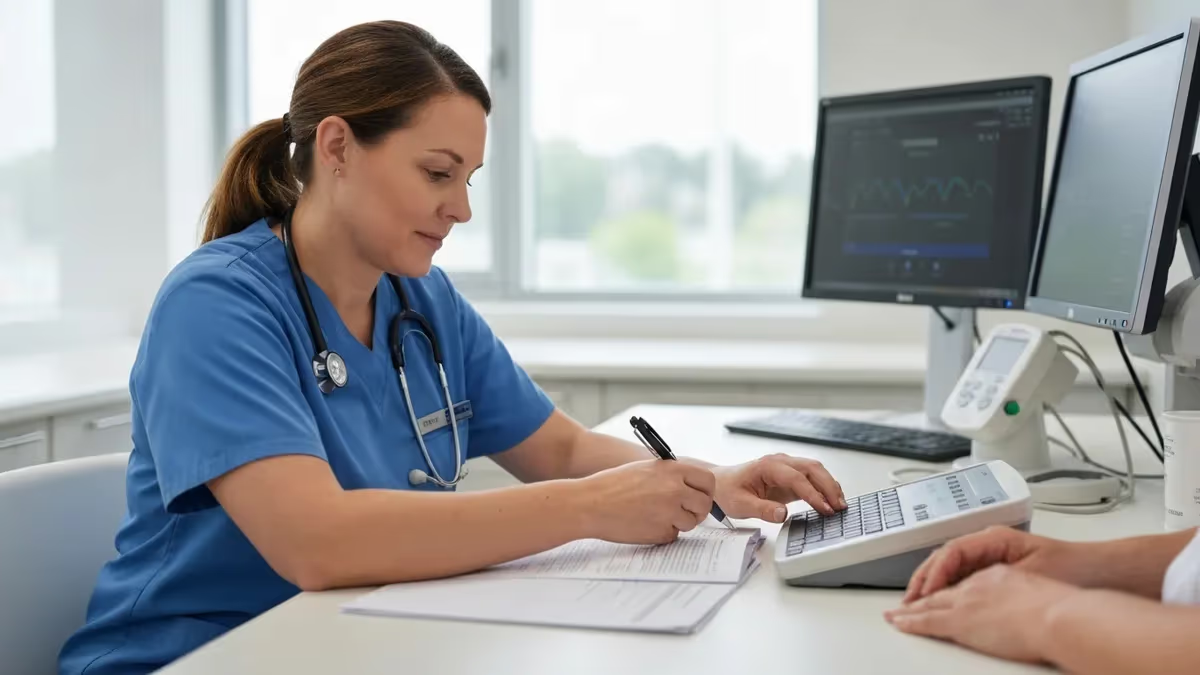
Working as a certified nursing assistant in a hospital is one of the fastest ways to build clinical experience — and it pays better than most people expect. CNA hospital jobs put you at the center of acute patient care, where you'll handle everything from post-surgical monitoring to emergency room intake. That's a far cry from the routine of long-term care facilities.
If you've been searching for cna hospital jobs near me, you're not alone. Hospital CNA positions are among the most competitive in the field — and for good reason. The pay is higher, the skills you develop are broader, and the career ladder is steeper. Many registered nurses started exactly where you're looking right now.
Hospitals need CNAs who can think on their feet. You won't follow the same schedule every shift. One morning you're helping a patient recover from hip replacement surgery; that afternoon you're assisting with vital signs in the cardiac unit. It's demanding work, but the variety keeps you sharp.
This page covers what hospital CNAs actually do day-to-day, what the pay looks like across different states and departments, and the specific steps that get you hired faster than submitting blind applications online. We'll also break down how hospital CNA work stacks up against nursing home positions — because the differences matter more than most job boards tell you.

Finding cna hospital jobs near me starts with knowing which departments actually hire nursing assistants. Not every unit staffs CNAs the same way. Medical-surgical floors tend to hire the most — they need help with patient transfers, ambulation, and basic hygiene tasks around the clock. But emergency departments, orthopedic units, and rehabilitation floors also bring on CNAs regularly.
Hospital CNA jobs differ from facility work in one critical way: acuity. Your patients are sicker, recovering from surgery, or dealing with acute episodes that brought them through the ER. That means you'll take vitals more frequently, monitor intake and output charts with real precision, and report changes to nurses immediately — not at the end of your shift.
The pace catches some new CNAs off guard. In a nursing home, you might have 8 to 12 residents on your assignment. In a hospital, you could have 6 patients — but each one requires more interventions per hour. Blood glucose checks, catheter care, wound dressing changes under nurse supervision. You're moving constantly.
Don't let the intensity scare you off, though. Hospital CNAs consistently report higher job satisfaction than their long-term care counterparts. The learning curve is steep for the first 90 days, then it clicks. You start anticipating what nurses need before they ask.
Hospital CNA positions come with specific duties that vary by department, but several core tasks show up everywhere. You'll assist patients with activities of daily living — bathing, dressing, toileting, feeding. In a hospital setting, these tasks carry extra considerations because patients may have IV lines, surgical drains, or mobility restrictions that change how you approach each one.
If you're looking at hospital CNA jobs near me, pay attention to which units are hiring. Telemetry floors want CNAs comfortable with cardiac monitoring equipment. Oncology units need people who understand infection control at a deeper level. Pediatric units require a completely different communication style. Your background matters when you apply.
Many hospitals also expect CNAs to perform phlebotomy, EKG readings, or specimen collection — tasks that nursing homes rarely assign. Some states allow these expanded duties; others don't. Check your state's nurse aide registry for scope-of-practice details before you interview, so you know what to expect. Hospice cna jobs near me offer a different path if you prefer end-of-life care over acute settings.
Documentation is another big difference. Hospital CNAs chart in electronic health records — Epic, Cerner, Meditech. You'll log vital signs, fluid intake, output measurements, and patient repositioning times digitally. If you've only worked with paper charts, ask about EHR training during your interview. Most hospitals provide it during orientation.
Hospital CNA Duties by Department
Medical-Surgical Floor: This is where most hospital CNAs start. You'll handle 5–8 patients per shift, assist with ambulation after surgery, monitor vital signs every 4 hours (or more frequently for post-op patients), help with meals and hygiene, and document everything in the EHR. Expect heavy lifting — patient transfers from bed to wheelchair and back are constant. Night shifts on med-surg tend to be slightly calmer, but admissions from the ER can arrive at any hour.
Landing CNA jobs hospital recruiters actually respond to takes more than a polished resume. Timing matters. Most hospitals do their heaviest hiring in January and July — that's when new nurse residency cohorts start, which creates downstream demand for CNA support staff. Submit your application 4 to 6 weeks before those dates.
Searching for hospice CNA jobs near me alongside hospital applications is a smart hedge. Hospice agencies hire year-round and the experience translates well if you eventually pivot to hospital work. But if hospital is your goal, focus your energy on the application strategies below — they work better than mass-applying through Indeed.
Internal referrals account for roughly 40% of hospital CNA hires. If you know anyone who works at the hospital — a nurse, a housekeeper, a dietary aide — ask them to submit a referral. Most health systems have formal referral programs that pay employees a bonus for successful hires, so they're motivated to help you.
Volunteer first. Seriously. Many hospitals let you volunteer in patient transport, gift shops, or information desks. After 60 to 90 days, you'll know hiring managers by name, understand the culture, and have an internal track record. When a CNA position opens, you're not a stranger.
Are hospitals hiring CNA near me right now? Probably — but you need to know where to look. Hospital career pages are the primary source; job aggregators like Indeed and ZipRecruiter often post stale listings that have already been filled. Go directly to the health system's website, create a profile, and set up job alerts for "CNA" or "nursing assistant" positions.
Searching for CNA jobs in hospitals near me through state workforce development boards is another underused strategy. Many hospitals partner with these agencies for pipeline programs that include paid training, guaranteed interviews, and sometimes signing bonuses. Check your state's workforce website or call your local American Job Center.
Staffing agencies are a legitimate shortcut. Companies like AMN Healthcare, Cross Country, and local per-diem agencies place CNAs in hospital assignments — sometimes within a week of applying. The pay is often higher than direct-hire positions, though you'll miss out on benefits. It's an excellent way to get your foot in the door and transition to permanent staff later.
Don't overlook smaller community hospitals. Everyone applies to the big academic medical centers, which means competition is fierce. A 100-bed community hospital might have less prestige but offers more hands-on experience, shorter commutes, and faster advancement. Many nurse managers at small hospitals know every CNA by name — that kind of mentorship doesn't happen at a 900-bed facility.
Hospital CNA Work: Pros and Cons
- +Higher pay — hospital CNAs earn $2–$5 more per hour than nursing home CNAs on average
- +Broader clinical exposure across multiple departments and patient populations
- +Better career ladder — hospitals promote CNAs to patient care tech, unit secretary, or nurse residency pipelines
- +Access to continuing education, tuition reimbursement, and certification sponsorship
- +Structured orientation programs with dedicated preceptors for the first 90 days
- +Full benefits packages including health insurance, retirement plans, and PTO from day one
- −Higher patient acuity means more physical and emotional stress per shift
- −Mandatory overtime and on-call requirements are common, especially for new hires
- −Faster pace with less time per patient — some CNAs miss the relationships built in long-term care
- −Stricter documentation and compliance requirements with electronic health records
- −Weekend and holiday shifts are expected — seniority-based scheduling favors veteran staff
- −Emotional toll from patient deaths, especially in ICU and trauma units
Understanding CNA positions in hospitals means understanding the pay structure. Hospital CNAs earn more than their nursing home counterparts — that's consistent across almost every state. The national median sits around $38,270 per year, but hospital-based CNAs in metropolitan areas routinely clear $42,000 to $48,000 with shift differentials factored in.
When you search CNA jobs near me hospital, pay attention to shift differential policies. Most hospitals add $1.50 to $3.00 per hour for evening shifts and $2.00 to $4.50 for overnight shifts. Weekend differentials stack on top of that. A CNA working Friday night through Sunday night could earn 15–20% more than the same CNA working weekday days.
Geography drives the biggest pay differences. California, Alaska, and New York pay the highest CNA wages — above $20 per hour at baseline. Southern and rural states tend to pay less, but the cost of living is lower too. Don't compare raw numbers without adjusting for what housing, groceries, and transportation cost where you live.
Per-diem and travel CNA positions pay even more. Travel CNAs through staffing agencies can earn $25 to $35 per hour plus housing stipends, though you'll move every 8 to 13 weeks and won't have employer-sponsored benefits. It's a trade-off that works well for CNAs without family obligations who want to maximize short-term income.
Hospital CNA Application Checklist
- ✓Verify your CNA certification is current and listed on your state's nurse aide registry
- ✓Complete BLS/CPR certification through the American Heart Association (not an online-only course)
- ✓Build a one-page resume highlighting clinical rotations, patient contact hours, and any specialty skills
- ✓Request official transcripts from your CNA training program if the hospital requires them
- ✓Gather two professional references — clinical instructors and nurse supervisors work best
- ✓Apply directly through the hospital's career portal, not third-party job boards
- ✓Follow up with the nurse recruiter by phone 5–7 business days after submitting your application
- ✓Prepare for a skills demonstration — many hospitals test vital signs, transfers, and hand hygiene during interviews
- ✓Complete a background check and drug screening (most hospitals require both before a conditional offer)
- ✓Arrange scrubs, non-slip shoes, and a watch with a second hand before your first orientation day
The question most new CNAs ask is whether CNA jobs in hospitals are really worth the extra effort to land. Short answer: yes — if you want a nursing career. Hospital experience is the single strongest predictor of acceptance into RN bridge programs. Admissions committees weigh acute-care hours heavily because they signal that you can handle the pace and complexity of nursing school clinicals.
Hospitals hiring CNA staff right now are looking at more than just your certification card. They want proof that you can work under pressure, communicate clearly with an interdisciplinary team, and maintain composure during emergencies. Your interview should include specific examples — not vague answers about being a "team player."
Here's a concrete example. Instead of saying "I'm good with difficult patients," say: "During my clinical rotation at Sunrise Skilled Nursing, I worked with a patient who refused meals for three consecutive days. I documented the refusal pattern, reported it to the charge nurse with my observations about the patient's mood changes, and suggested we try offering smaller portions at different times. The patient started eating again within 48 hours." That answer shows clinical reasoning, communication, and initiative — exactly what hospital nurse managers want to hear.
Behavioral interview questions dominate hospital CNA interviews. Prepare 5 to 7 STAR-format stories (Situation, Task, Action, Result) covering patient safety, conflict resolution, time management under pressure, infection control compliance, and handling emotional situations. Practice them out loud until they feel natural, not rehearsed.
For a fuller set of questions on this topic, see our cna renewal form resource.
For a fuller set of questions on this topic, see our cna verification resource.
Let's talk about the hospital-versus-nursing-home question directly, because it's what drives most searches for CNA jobs in hospital settings. Both environments need skilled CNAs. Neither is objectively better. But they attract different personality types, and knowing which one fits you saves a lot of frustration.
Hospital CNAs thrive on variety and fast decision-making. You want new challenges every shift? Hospital. You want to build deep relationships with the same residents over months? Nursing home. Searching for CNA positions in hospitals near me when you actually prefer stability and routine leads to burnout — and vice versa.
The physical demands differ too. Hospital CNAs do more lifting, more walking, and more standing per shift. A med-surg CNA easily logs 5 to 7 miles on their feet during a 12-hour shift. Nursing home CNAs have heavy lifting demands — transfers, repositioning — but the overall pace is steadier. Your body adapts to whichever environment you choose, but it takes about 6 weeks.
One factor people overlook: team dynamics. Hospital units have larger interdisciplinary teams — doctors, nurses, respiratory therapists, social workers, case managers, pharmacists. You'll interact with all of them. In a nursing home, the team is smaller and more consistent. Some CNAs love the big-team energy of a hospital. Others find it overwhelming and prefer knowing exactly who they'll work with every day.
Most hospitals allow prospective CNAs to shadow a working CNA for 4–8 hours before applying. This lets you see the real pace, talk to current staff, and decide if the unit culture fits your style. Call the nurse recruiter and ask — it's free, and it shows initiative that hiring managers remember.
Landing CNA jobs at hospitals isn't just about getting hired — it's about surviving your first 90 days. New hospital CNAs have the highest turnover rate of any clinical support role, and most who quit do so within the first three months. The reasons are predictable: inadequate orientation, unrealistic expectations about the pace, and poor preceptor matching.
If you've been searching for CNA hospice jobs near me as a backup plan, that's fine — but don't treat hospital work as something you'll "try out." Commit to at least six months before evaluating whether it's the right fit. The first month is chaos. The second month is slightly less chaos. By month three, your muscle memory kicks in and the shift feels manageable.
Ask about the orientation structure during your interview. Good hospitals provide 2 to 4 weeks of supervised orientation with a dedicated preceptor — an experienced CNA who works alongside you, answers questions, and gradually lets you take on patients independently. Red flag: if the hospital says orientation is "a couple of days," they're understaffed and you'll be thrown into the deep end.
Night shifts are often the best entry point for new hospital CNAs. The pace is slightly slower (fewer admissions, discharges, and procedures), the night differential boosts your pay, and veteran night-shift CNAs tend to be generous with teaching because they've had fewer distractions. Many hospitals specifically hire new CNAs onto night shift and let them transfer to days after 6 to 12 months of experience.
CNA Practice Test Questions
Prepare for the CNA - Certified Nursing Assistant exam with our free practice test modules. Each quiz covers key topics to help you pass on your first try.
CNA Activities of Daily Living
CNA Exam Questions covering Activities of Daily Living. Master CNA Test concepts for certification prep.
CNA Aging Process
Free CNA Practice Test featuring Aging Process. Improve your CNA Exam score with mock test prep.
CNA Anatomy and Physiology Basics
CNA Mock Exam on Anatomy and Physiology Basics. CNA Study Guide questions to pass on your first try.
CNA Assisting with Daily Living
CNA Test Prep for Assisting with Daily Living. Practice CNA Quiz questions and boost your score.
CNA Assisting with Range of Motion Exercises
CNA Questions and Answers on Assisting with Range of Motion Exercises. Free CNA practice for exam readiness.
CNA Basic Human Anatomy and Age-Related Ch...
CNA Mock Test covering Basic Human Anatomy and Age-Related Changes. Online CNA Test practice with instant feedback.
CNA Basic Nursing Skills
Free CNA Quiz on Basic Nursing Skills. CNA Exam prep questions with detailed explanations.
CNA Basic Nursing Skills 10
CNA Practice Questions for Basic Nursing Skills 10. Build confidence for your CNA certification exam.
CNA Basic Nursing Skills 11
CNA Test Online for Basic Nursing Skills 11. Free practice with instant results and feedback.
CNA Basic Nursing Skills 1
CNA Study Material on Basic Nursing Skills 1. Prepare effectively with real exam-style questions.
CNA Basic Nursing Skills 12
Free CNA Test covering Basic Nursing Skills 12. Practice and track your CNA exam readiness.
CNA Basic Nursing Skills 13
CNA Exam Questions covering Basic Nursing Skills 13. Master CNA Test concepts for certification prep.
CNA Basic Nursing Skills 14
Free CNA Practice Test featuring Basic Nursing Skills 14. Improve your CNA Exam score with mock test prep.
CNA Basic Nursing Skills 15
CNA Mock Exam on Basic Nursing Skills 15. CNA Study Guide questions to pass on your first try.
CNA Basic Nursing Skills 16
CNA Test Prep for Basic Nursing Skills 16. Practice CNA Quiz questions and boost your score.
CNA Basic Nursing Skills 17
CNA Questions and Answers on Basic Nursing Skills 17. Free CNA practice for exam readiness.
CNA Basic Nursing Skills 18
CNA Mock Test covering Basic Nursing Skills 18. Online CNA Test practice with instant feedback.
CNA Basic Nursing Skills 19
Free CNA Quiz on Basic Nursing Skills 19. CNA Exam prep questions with detailed explanations.
CNA Basic Nursing Skills 20
CNA Practice Questions for Basic Nursing Skills 20. Build confidence for your CNA certification exam.
CNA Basic Nursing Skills 21
CNA Test Online for Basic Nursing Skills 21. Free practice with instant results and feedback.
CNA Basic Nursing Skills 2
CNA Study Material on Basic Nursing Skills 2. Prepare effectively with real exam-style questions.
CNA Basic Nursing Skills 3
Free CNA Test covering Basic Nursing Skills 3. Practice and track your CNA exam readiness.
CNA Basic Nursing Skills 4
CNA Exam Questions covering Basic Nursing Skills 4. Master CNA Test concepts for certification prep.
CNA Basic Nursing Skills 5
Free CNA Practice Test featuring Basic Nursing Skills 5. Improve your CNA Exam score with mock test prep.
CNA Basic Nursing Skills 6
CNA Mock Exam on Basic Nursing Skills 6. CNA Study Guide questions to pass on your first try.
CNA Basic Nursing Skills 7
CNA Test Prep for Basic Nursing Skills 7. Practice CNA Quiz questions and boost your score.
CNA Basic Nursing Skills 8
CNA Questions and Answers on Basic Nursing Skills 8. Free CNA practice for exam readiness.
CNA Basic Nursing Skills 9
CNA Mock Test covering Basic Nursing Skills 9. Online CNA Test practice with instant feedback.
CNA Basic Restorative Services
Free CNA Quiz on Basic Restorative Services. CNA Exam prep questions with detailed explanations.
CNA Basic Restorative Services 1
CNA Practice Questions for Basic Restorative Services 1. Build confidence for your CNA certification exam.
CNA Bathing and Dressing
CNA Test Online for Bathing and Dressing. Free practice with instant results and feedback.
CNA Body Mechanics
CNA Study Material on Body Mechanics. Prepare effectively with real exam-style questions.
CNA Career Advancement and Opportunities
Free CNA Test covering Career Advancement and Opportunities. Practice and track your CNA exam readiness.
CNA Career Opportunities and Benefits
CNA Exam Questions covering Career Opportunities and Benefits. Master CNA Test concepts for certification prep.
CNA Care for Residents with Cognitive Impa...
Free CNA Practice Test featuring Care for Residents with Cognitive Impairment. Improve your CNA Exam score with mock test prep.
CNA Care of Cognitively Impaired Residents
CNA Mock Exam on Care of Cognitively Impaired Residents. CNA Study Guide questions to pass on your first try.
CNA Care of Cognitively Impaired Residents 1
CNA Test Prep for Care of Cognitively Impaired Residents 1. Practice CNA Quiz questions and boost your score.
CNA Care Of Cognitively Impaired Residents 4
CNA Questions and Answers on Care Of Cognitively Impaired Residents 4. Free CNA practice for exam readiness.
CNA Common Medical Terms and Abbreviations
CNA Mock Test covering Common Medical Terms and Abbreviations. Online CNA Test practice with instant feedback.
CNA Communication and Interpersonal Skills
Free CNA Quiz on Communication and Interpersonal Skills. CNA Exam prep questions with detailed explanations.
CNA Communication and Interpersonal Skills 1
CNA Practice Questions for Communication and Interpersonal Skills 1. Build confidence for your CNA certification exam.
CNA Communication And Interpersonal Skills 4
CNA Test Online for Communication And Interpersonal Skills 4. Free practice with instant results and feedback.
CNA Eligibility and Qualifications
CNA Study Material on Eligibility and Qualifications. Prepare effectively with real exam-style questions.
CNA Emergency Procedure
Free CNA Test covering Emergency Procedure. Practice and track your CNA exam readiness.
CNA Ethics and Professionalism
CNA Exam Questions covering Ethics and Professionalism. Master CNA Test concepts for certification prep.
CNA Exam Structure and Content
Free CNA Practice Test featuring Exam Structure and Content. Improve your CNA Exam score with mock test prep.
CNA Feeding and Hydration
CNA Mock Exam on Feeding and Hydration. CNA Study Guide questions to pass on your first try.
CNA Infection Control
CNA Test Prep for Infection Control. Practice CNA Quiz questions and boost your score.
CNA Infection Control and Safety
CNA Questions and Answers on Infection Control and Safety. Free CNA practice for exam readiness.
CNA Isolation Precautions
CNA Mock Test covering Isolation Precautions. Online CNA Test practice with instant feedback.
CNA Legal & Ethical Behaviours
Free CNA Quiz on Legal & Ethical Behaviours. CNA Exam prep questions with detailed explanations.
CNA Legal & Ethical Behaviours 1
CNA Practice Questions for Legal & Ethical Behaviours 1. Build confidence for your CNA certification exam.
CNA Legal & Ethical Behaviours 4
CNA Test Online for Legal & Ethical Behaviours 4. Free practice with instant results and feedback.
CNA Mental Health and Social Services Needs
CNA Study Material on Mental Health and Social Services Needs. Prepare effectively with real exam-style questions.
CNA Mental Health and Social Services Needs 1
Free CNA Test covering Mental Health and Social Services Needs 1. Practice and track your CNA exam readiness.
CNA Mental Health And Social Services Needs 4
CNA Exam Questions covering Mental Health And Social Services Needs 4. Master CNA Test concepts for certification prep.
CNA Nutrition and Hydration Management
Free CNA Practice Test featuring Nutrition and Hydration Management. Improve your CNA Exam score with mock test prep.
CNA Patient Care Procedure
CNA Mock Exam on Patient Care Procedure. CNA Study Guide questions to pass on your first try.
CNA Personal Care Skills
CNA Test Prep for Personal Care Skills. Practice CNA Quiz questions and boost your score.
CNA Personal Care Skills 1
CNA Questions and Answers on Personal Care Skills 1. Free CNA practice for exam readiness.
CNA Personal Care Skills 4
CNA Mock Test covering Personal Care Skills 4. Online CNA Test practice with instant feedback.
CNA Personal Care Skills 5
Free CNA Quiz on Personal Care Skills 5. CNA Exam prep questions with detailed explanations.
CNA Personal Hygiene and Grooming
CNA Practice Questions for Personal Hygiene and Grooming. Build confidence for your CNA certification exam.
CNA Practice Test - Basic Nursing Skills #2
CNA Test Online for Practice Test - Basic Nursing Skills #2. Free practice with instant results and feedback.
CNA Practice Test - Basic Nursing Skills #2 1
CNA Study Material on Practice Test - Basic Nursing Skills #2 1. Prepare effectively with real exam-style questions.
CNA Preventing Patient Falls and Injuries
Free CNA Test covering Preventing Patient Falls and Injuries. Practice and track your CNA exam readiness.
CNA Promoting Resident Independence and Ch...
CNA Exam Questions covering Promoting Resident Independence and Choice. Master CNA Test concepts for certification prep.
CNA Proper Hand Hygiene and PPE Usage
Free CNA Practice Test featuring Proper Hand Hygiene and PPE Usage. Improve your CNA Exam score with mock test prep.
CNA Resident Rights and Communication
CNA Mock Exam on Resident Rights and Communication. CNA Study Guide questions to pass on your first try.
CNA Resident’s Rights
CNA Test Prep for Resident’s Rights. Practice CNA Quiz questions and boost your score.
CNA Resident's Rights 1
CNA Questions and Answers on Resident's Rights 1. Free CNA practice for exam readiness.
CNA Resident's Rights 4
CNA Mock Test covering Resident's Rights 4. Online CNA Test practice with instant feedback.
CNA Roles and Responsibilities
Free CNA Quiz on Roles and Responsibilities. CNA Exam prep questions with detailed explanations.
CNA Safety and Emergency Procedures
CNA Practice Questions for Safety and Emergency Procedures. Build confidence for your CNA certification exam.
CNA Safety and Emergency Procedures 1
CNA Test Online for Safety and Emergency Procedures 1. Free practice with instant results and feedback.
CNA Safety And Emergency Procedures 4
CNA Study Material on Safety And Emergency Procedures 4. Prepare effectively with real exam-style questions.
CNA Safety and Infection Control
Free CNA Test covering Safety and Infection Control. Practice and track your CNA exam readiness.
CNA Scope of Practice
CNA Exam Questions covering Scope of Practice. Master CNA Test concepts for certification prep.
CNA Skills and Competencies
Free CNA Practice Test featuring Skills and Competencies. Improve your CNA Exam score with mock test prep.
CNA Supporting Rehabilitation Activities
CNA Mock Exam on Supporting Rehabilitation Activities. CNA Study Guide questions to pass on your first try.
CNA The Nurse Aide's Role and Responsibili...
CNA Test Prep for The Nurse Aide's Role and Responsibilities. Practice CNA Quiz questions and boost your score.
CNA Time Management and Prioritization
CNA Questions and Answers on Time Management and Prioritization. Free CNA practice for exam readiness.
CNA Toileting and Elimination
CNA Mock Test covering Toileting and Elimination. Online CNA Test practice with instant feedback.
CNA Using Adaptive Devices
CNA Practice Questions for Using Adaptive Devices. Build confidence for your CNA certification exam.
The future for hospital CNA hiring looks strong through 2032 and beyond. The Bureau of Labor Statistics projects steady demand driven by aging baby boomers, hospital expansion, and chronic nursing shortages that push facilities to rely more heavily on CNA support. Every nurse shortage article you read is also a CNA opportunity article — hospitals can't function without bedside assistants.
Searching for a CNA job hospital recruiters will actually respond to means tailoring your application to each facility. Generic cover letters get deleted. Mention the specific unit you're applying to, reference something about the hospital's patient population or values, and explain why your background makes you a good fit for that particular floor. Takes 15 extra minutes per application. Worth it every time.
Certifications beyond your basic CNA license matter more than ever. Hospitals increasingly prefer candidates with BLS, phlebotomy, and EKG certifications — even for entry-level positions. If you're a new CNA competing against experienced candidates, those extra credentials level the playing field. Most community colleges offer phlebotomy and EKG courses that take 4 to 8 weeks to complete.
One last thing: don't underestimate the power of a thank-you email after your interview. Send it within 24 hours, reference something specific the nurse manager said during the conversation, and restate your interest in the position. Fewer than 10% of CNA applicants do this. It's the easiest way to stand out in a stack of qualified candidates who all have the same certification you do.
CNA Questions and Answers
Restorative CNA: Duties, Training, Salary & How to Get Started

CNA Hospital Jobs Near Me: How to Find, Apply & Get Hired in 2026

Goodwill CNA Program: Free Classes, Costs, and How to Enroll

Hospice CNA: Duties, Salary, Per Diem Work & How to Get Started
4-Week CNA Program: Online Options, State Programs & How to Enroll
About the Author

Registered Nurse & Healthcare Educator
Johns Hopkins University School of NursingDr. Sarah Mitchell is a board-certified registered nurse with over 15 years of clinical and academic experience. She completed her PhD in Nursing Science at Johns Hopkins University and has taught NCLEX preparation and clinical skills courses for nursing students across the United States. Her research focuses on evidence-based exam preparation strategies for healthcare certification candidates.
Join the Discussion
Connect with other students preparing for this exam. Share tips, ask questions, and get advice from people who have been there.
View discussion (8 replies)