
How to Take a CLEP Test Online: Complete Guide to CLEP College Board Testing
Learn how to take a CLEP test online with the CLEP College Board. Requirements, costs, prep tips & what to expect. 🎓 Save thousands on college credit.
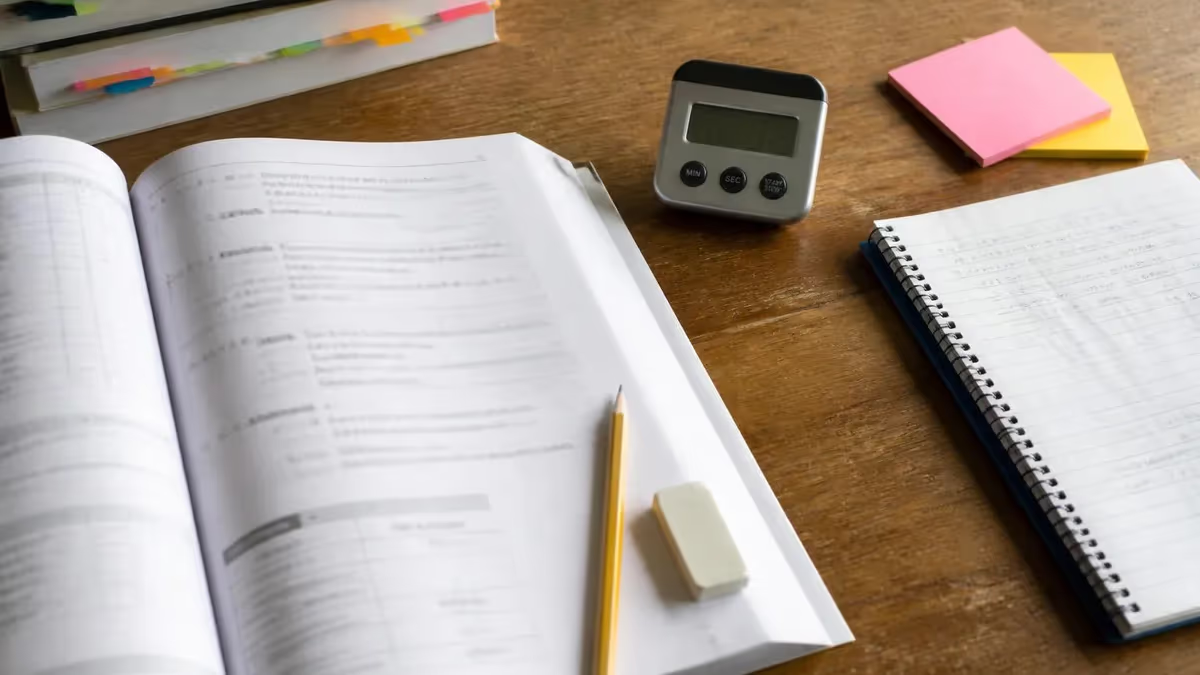
Understanding how to take a CLEP test online has become one of the most searched questions among college-bound students and working adults who want to earn college credit without sitting through an entire semester of coursework. The CLEP College Board program — officially known as the College-Level Examination Program — allows you to demonstrate existing knowledge in a subject and potentially earn college credit in a matter of 90 minutes. With remote proctoring now available through authorized providers, taking a CLEP test from home is a real and increasingly popular option.
The CLEP program is administered by the College Board, the same organization behind the SAT and AP exams. There are 34 distinct CLEP tests covering subjects from CLEP college algebra and calculus to history, psychology, and foreign languages. Each exam costs $93 through the College Board, though institutions may add a testing fee on top of that. When you consider that a single college course can cost anywhere from $1,000 to $5,000 or more, passing a CLEP exam is one of the smartest financial moves a student can make.
One of the most exciting developments in recent years is that CLEP testing is no longer limited to physical test centers. Through partnerships with remote proctoring companies like ProctorU, eligible candidates can now complete CLEP exams from the comfort of their own homes — provided they meet specific technical and environmental requirements. This guide walks you through every step: eligibility, registration, online testing requirements, preparation strategies, and what to do after you receive your scores.
Before diving in, it is worth knowing that not every CLEP exam is available for remote testing at all times. The College Board periodically updates which exams can be taken online versus only at a physical test center. Always verify availability on the official CLEP website before scheduling. That said, the majority of the most popular exams — including English composition, biology, history, and psychology — have been available for remote testing at various points, and access continues to expand.
If you are wondering what is CLEP and whether it is the right path for you, the short answer is: CLEP is ideal for self-directed learners, military service members, career changers, and anyone who has already accumulated knowledge through work experience, independent study, or prior coursework. The exams are designed to measure college-level proficiency, and a passing score — typically 50 on a 20-to-80 scale — is accepted by more than 2,900 colleges and universities across the United States. Take a clep exam practice test to gauge your readiness before committing to a test date.
Modern States is another powerful resource to mention early. The Modern States CLEP program offers free online courses specifically designed to help students prepare for CLEP exams and even provides free testing vouchers for those who qualify. This means it is theoretically possible to earn college credit for free — or very close to it — if you leverage all available resources. We will cover Modern States in detail later in this guide, but keep it in mind as you plan your approach.
Whether you are a high school student looking to start college with credits already in hand, a non-traditional student returning to education after years in the workforce, or an active-duty military member using your MyCAA or tuition assistance benefits, the CLEP program offers a flexible, affordable, and academically credible pathway to college credit. This guide is your comprehensive roadmap to making that happen successfully.
CLEP College Board Testing by the Numbers

How to Take a CLEP Test Online: Step-by-Step Process
Create a CLEP Account on College Board
Select Your Exam and Check Remote Availability
Register, Pay the Exam Fee, and Schedule
Complete a System Check and Environment Setup
Take the Exam with Live Remote Proctor
Receive Scores and Send to Colleges
Once you have created your College Board account and selected your exam, the registration process is relatively straightforward — but there are several details that trip up first-time test-takers. When registering for remote online CLEP testing, you must ensure your legal name on your account exactly matches your government-issued photo ID. Discrepancies, even minor ones like a middle name appearing on the ID but not in your account, can prevent you from being admitted to your exam session. Take a moment during registration to double-check every field.
The technical requirements for taking a CLEP test online via ProctorU are more specific than most students expect. You need a desktop or laptop computer — tablets and Chromebooks are generally not supported. Your operating system must be a recent version of Windows or macOS.
You will need a functioning webcam that can be physically moved to show your entire testing environment, a microphone (built-in is fine), and a stable wired or wireless internet connection with a minimum speed of 2 Mbps upload and download. ProctorU's free system check tool will walk you through all of these verifications before your exam day.
Your testing environment matters just as much as your technology setup. Remote proctors are trained to identify violations, and the consequences of a flagged session can be severe — including score cancellation and a potential ban from future CLEP testing. Your desk must be completely clear of papers, books, phones, and secondary monitors. The room must be private, well-lit, and free from interruptions for the full 90-minute duration of the exam. Inform household members in advance that you cannot be disturbed, and consider putting a sign on your door.
One frequently overlooked step is the identity verification process. When you connect to your ProctorU session, you will need to show your government-issued photo ID to the proctor via webcam. They will also ask you to do a 360-degree pan of your room using your webcam. This entire check-in process can take 10 to 20 minutes, which is why you should connect at least 15 minutes before your scheduled start time. If you are late to connect, your session may be forfeited and you may lose your exam fee.
For students wondering about CLEP testing at a physical test center as an alternative, it remains the default option and is available at over 2,000 authorized locations nationwide — including most colleges and universities, military bases, and some high schools. If your remote testing attempt fails due to technical issues, knowing your nearest test center is a practical backup plan. You can search for test center locations on the College Board's CLEP website by entering your zip code. Check out spanish practice clep test resources to understand when seats are available near you.
One of the most valuable resources for online CLEP testing candidates is the Modern States CLEP initiative. Modern States partners with the College Board to offer free, self-paced preparatory courses for nearly every CLEP exam. After completing a course and watching at least 70% of the video content, you can apply for a free testing voucher that covers the $93 College Board exam fee. For low-income students or those testing multiple subjects, this program can save hundreds of dollars while also providing structured, high-quality preparation content aligned directly with each exam's content specifications.
After completing your CLEP exam online, most tests provide an unofficial score on-screen before you even close the browser. The exception is exams with an essay component, such as CLEP College Composition, which require human scoring and typically take two to three weeks to process. For all other exams, your official score will appear in your College Board account within a few business days. You designate up to one free score recipient on test day — typically the college where you intend to enroll or currently attend — and additional score reports cost $20 each.
CLEP Courses and Study Resources: What to Use
Modern States offers free online preparatory courses for nearly all 34 CLEP exams, delivered through the edX platform. Each course includes video lectures from professors at top universities, practice quizzes, and review materials aligned directly with the College Board's official content specifications. Students who complete a Modern States course and watch at least 70% of the video content become eligible to apply for a free CLEP testing voucher, eliminating the $93 exam fee entirely.
The quality of Modern States content varies somewhat by subject, with math and science courses receiving particularly strong reviews from test-takers. For subjects like CLEP college algebra, students report that the Modern States course alone — supplemented by a few weeks of practice problems — is sufficient preparation to earn a passing score. For more writing-intensive subjects like English composition or history, students often supplement with additional reading and essay practice from REA or other CLEP-specific publishers.

CLEP Online Testing vs. In-Person Test Center: Pros and Cons
- +Test from home — no commute, no need to take time off work or school
- +Flexible scheduling — remote sessions available evenings and weekends
- +Reduces anxiety for students who perform better in familiar environments
- +Eliminates test center fees that physical locations typically charge ($20–$35)
- +Immediate access to sessions without waiting for local test center availability
- +Ideal for students in rural areas far from the nearest authorized test center
- −Strict technical requirements — older computers or slow internet can disqualify you
- −Environment must be completely private, which is difficult in shared housing
- −Not all 34 CLEP exams are available for remote testing at all times
- −Identity verification and room scan can add 15–20 minutes to your total session time
- −Technical glitches during the exam can be stressful and may require rescheduling
- −Some students find remote proctoring more stressful than testing in a controlled center
CLEP Online Testing Preparation Checklist
- ✓Create a verified College Board account with your legal name exactly matching your photo ID.
- ✓Confirm your chosen CLEP exam is available for remote online testing through ProctorU.
- ✓Run ProctorU's free equipment check to verify webcam, microphone, and internet speed.
- ✓Register for your exam at least two weeks before your target test date to allow preparation time.
- ✓Complete at least one full-length timed practice exam under realistic conditions.
- ✓Review the official CLEP exam content specification document available free on the College Board website.
- ✓Clear your testing space of all books, papers, phones, tablets, and secondary monitors.
- ✓Notify household members of your exam date and time to ensure an uninterrupted environment.
- ✓Log in to your ProctorU session at least 15 minutes before your scheduled start time.
- ✓Designate your score recipient college during registration to receive your free score report.
Your CLEP scores never expire — but college policies do.
Unlike AP scores, which some colleges accept only within a certain number of years after high school, CLEP scores do not have an expiration date set by the College Board. However, individual colleges may have their own policies about accepting scores from exams taken many years ago. Always verify your target institution's current CLEP credit policy before testing, and check whether the policy applies retroactively if you are a returning student.
Preparing for CLEP tests requires a fundamentally different mindset than studying for a traditional college course. Instead of following a professor's syllabus week by week over 16 weeks, you are compressing your preparation into a focused sprint — typically four to eight weeks for most subjects. The key to success is working backward from the exam content outline. Every CLEP exam has a publicly available content specification document on the College Board website that lists exactly what percentage of questions come from each topic area. Use that document as your master study guide.
For quantitative subjects like CLEP college algebra, consistent daily practice is more effective than long study sessions spaced far apart. Aim for 30 to 45 minutes of focused problem-solving every day rather than occasional three-hour cramming sessions. Use Khan Academy's free algebra resources to build foundational understanding, then move to CLEP-specific practice problems that mirror the exam's question format. Pay close attention to the types of algebra problems the CLEP emphasizes — linear equations, polynomial operations, systems of equations, and function notation appear frequently.
For humanities and social science subjects, reading comprehension and the ability to apply concepts rather than just memorize facts is what separates passing from failing scores. CLEP history exams, for example, rarely ask you to recall specific dates. Instead, they present scenarios, primary source excerpts, or maps and ask you to analyze them using historical thinking skills. Practicing with sample questions while actively thinking about the reasoning process — not just the correct answer — will develop the analytical muscles you need on test day.
The Modern States CLEP program deserves special attention for students studying on a budget. By completing a Modern States preparatory course, not only do you gain access to structured video instruction from actual university professors, but you also become eligible for a free testing voucher. Students who have used both Modern States and official College Board practice materials consistently report higher pass rates than those who rely on general internet resources alone. The combination of free structured content and official practice questions is the most cost-effective preparation stack available.
Managing your time during the actual CLEP exam is a skill that must be practiced explicitly. Most CLEP exams contain 50 to 80 multiple-choice questions that must be completed in 90 minutes — that works out to roughly 60 to 90 seconds per question.
On your practice exams, train yourself to move on from difficult questions rather than spending four or five minutes on a single item. Mark uncertain questions for review, complete the rest of the exam, and return to marked questions with the time that remains. This strategy ensures you do not leave easy points on the table by running out of time.
For subjects that include an optional or required essay component — most notably CLEP College Composition and CLEP College Composition Modular — you need to budget your preparation time differently. The essay sections are scored holistically by trained readers against a rubric that rewards clear thesis statements, well-organized supporting arguments, and accurate grammar. Practice writing complete essays under timed conditions, not just outlines. Ask a teacher, writing center tutor, or knowledgeable friend to review your practice essays against the College Board's published rubric.
Hydration, sleep, and nutrition in the 24 hours before your CLEP exam may sound like generic advice, but the research on cognitive performance is consistent: well-rested brains process information faster and retrieve memories more accurately than sleep-deprived ones. For an online exam you are taking from home, you have the unique advantage of controlling your entire environment. Use it. Set up your testing space the night before. Lay out your ID. Log in early. A calm, well-prepared start to your exam session sets the tone for the entire 90 minutes that follow.
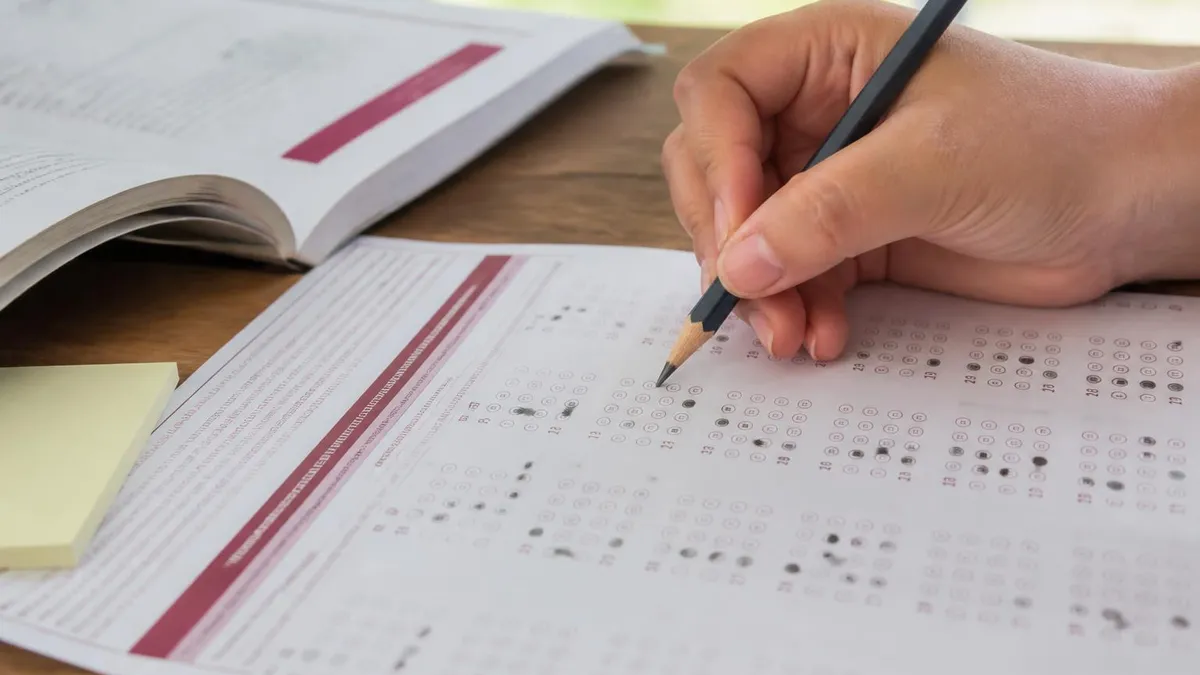
Not every college or university accepts CLEP credit, and those that do often have specific policies about which exams they accept, the minimum passing score required (some require higher than 50), and how many total CLEP credits they will apply toward a degree. Before paying your exam fee, look up your target school's CLEP policy on the College Board's institution search tool or contact the registrar's office directly. Testing without verifying acceptance policies is one of the most common and costly mistakes CLEP candidates make.
After you receive your CLEP scores, the process of converting those scores into actual college credit involves a few important steps that many students overlook. First, confirm that your score meets or exceeds your target college's minimum passing threshold. While the College Board recommends a score of 50 as the standard passing mark, individual institutions may require 50, 55, 60, or even higher for specific subjects. Some highly selective universities require a score in the 60s or 70s to award credit for courses in competitive disciplines like calculus or economics.
Once you know your score qualifies, you will need to submit an official score report to your institution's registrar. If you designated a score recipient on test day, the report is already in transit at no cost. If you need to send scores to additional institutions — for example, if you are applying to multiple colleges — log in to your College Board account and request additional reports for $20 each. Allow two to three weeks for official score reports to be processed and applied to your academic record, especially during high-volume periods like August and January.
Some institutions require an additional step: submitting a Credit by Examination petition or similar form to formally request that the credit be posted to your transcript. Check with your registrar or academic advisor to understand whether this applies to you. Failing to submit the required petition is a surprisingly common reason students end up with CLEP scores sitting in limbo, never converting to actual credit hours on their official record.
Understanding which courses your CLEP credits substitute for can have a significant impact on your academic planning. CLEP credits typically fulfill general education requirements rather than major-specific electives, although this varies by institution and subject. For example, a passing score on CLEP College Algebra might satisfy a math general education requirement but not count toward a mathematics or engineering major's core requirements.
Work with your academic advisor to map your CLEP credits to your degree audit before your first semester to avoid surprises later. Learn more about how specific universities handle credit policies with our guide to clep college composition acceptance requirements.
For military service members, the CLEP program carries additional benefits beyond the standard civilian pathway. Active-duty military personnel are eligible to take CLEP exams at no cost under the Defense Activity for Non-Traditional Education Support (DANTES) program, which covers the $93 College Board fee. Many military bases have on-site education centers with CLEP testing capabilities, and some even provide access to official study materials. Service members should contact their base education office to understand the full scope of benefits available before paying out of pocket for any CLEP-related expenses.
If you do not pass a CLEP exam on your first attempt, you must wait six months before retaking the same exam. This waiting period is enforced by the College Board regardless of whether you tested online or at a physical center.
Use that time productively: analyze which content areas your practice test results suggest were weakest, adjust your study strategy accordingly, and consider working through a different study resource than the one you used the first time. Many students find that changing their primary study resource — for example, switching from a general textbook to REA's CLEP-specific guide — makes a significant difference on the retake.
The long-term financial value of CLEP testing is compelling enough to make it worth pursuing even if it takes two attempts to pass a given exam. At $93 per attempt, two testing fees total $186 — still a fraction of the typical cost of a single college course.
Students who pass just three or four CLEP exams can save an entire semester's worth of tuition and fees, potentially graduating a semester early and entering the workforce six months sooner. For adults returning to complete a bachelor's degree, CLEP credits can dramatically shorten the time to completion and reduce the total cost of earning a degree.
As you finalize your CLEP testing strategy, one of the most practical steps you can take is building a realistic study calendar that works backward from your exam date. Most CLEP candidates need between four and eight weeks of consistent preparation, depending on their existing familiarity with the subject.
If you are testing in a subject you studied extensively in high school — such as a student with strong AP-level biology or Spanish preparation — three to four weeks of focused review may be sufficient. If you are entering a subject with minimal background, plan for six to eight weeks minimum.
Break your study calendar into three phases: content review, active practice, and exam simulation. During the content review phase (weeks one through three for a six-week plan), work through your primary study resource systematically, focusing on the topic areas with the highest weight in the CLEP content specification.
During the active practice phase (weeks four and five), shift to answering practice questions daily, tracking your accuracy by topic area, and targeting your weakest areas with additional review. In the final simulation phase (the week before your exam), take at least one full-length timed practice exam under conditions that mirror the real test as closely as possible.
One often-underestimated aspect of CLEP preparation is vocabulary and terminology. Many CLEP questions — even in quantitative subjects — require understanding specific technical terms correctly. In biology, for example, a question that asks about "phylogenetic relationships" cannot be answered correctly without knowing exactly what that phrase means. In social sciences, terms like "cognitive dissonance," "marginal utility," and "due process" carry precise meanings that differ from their everyday usage. Build a vocabulary list from your study materials and review it regularly throughout your preparation period.
For students who learn best through community and accountability, online CLEP study groups are a surprisingly effective resource. Reddit's r/CLEP community has tens of thousands of members actively sharing study strategies, resource recommendations, pass rates, and detailed exam experience reports for nearly every CLEP subject. Before you begin studying for any exam, spending an hour reading through the relevant megathread on that subreddit will give you invaluable insights about which resources other students found most helpful and which exam areas are trickier than the official content outline suggests.
Technology can also work against you during online CLEP testing if you are not prepared for the technical realities. The CLEP remote testing interface is delivered through a secure, locked browser that prevents you from accessing any other applications on your computer during the exam. This means you cannot use a calculator app, a clock widget, or any reference material — even if it is technically on your computer.
The testing interface does provide a built-in on-screen calculator for subjects that permit one (like college algebra), and the interface itself displays remaining time. Familiarize yourself with the interface through ProctorU's demo environment before your actual exam day.
Pacing yourself throughout your CLEP preparation is just as important as the content you study. Burnout is a genuine risk for students who try to prepare for multiple CLEP exams simultaneously. Most experienced CLEP candidates recommend testing one subject at a time — studying for and completing one exam before beginning preparation for the next. The financial and schedule efficiency gains of passing CLEP exams one at a time, fully, outweigh the appeal of preparing for several simultaneously and risking underperformance on multiple tests. Give each exam the focused attention it deserves, and your pass rate will reflect that discipline.
Finally, remember that the CLEP program is not a shortcut — it is an opportunity to demonstrate knowledge you have genuinely earned through life experience, self-study, or prior education. Students who approach CLEP with this mindset, investing real preparation time and using quality resources, pass at high rates and earn credits that appear identically on their transcripts to credits earned in a classroom.
Take your preparation seriously, use this guide as your roadmap, practice consistently with quality materials, and you will be well positioned to walk away from your CLEP exam — online or in person — with a passing score and real college credit to show for it.
CLEP Questions and Answers

Cost of CLEP Exam: Complete Guide to CLEP Testing Fees, Waivers, and Savings

Biology CLEP: Complete Practice Test Guide to Earn College Credit Fast

University of Central Florida CLEP: Complete Guide to Earning Credit by Exam at UCF

CLEP Test Dates 2026: When to Register, Where to Test, and How to Prepare

Modern States CLEP: Free College Credit & Test Voucher Guide
About the Author

Educational Psychologist & Academic Test Preparation Expert
Columbia University Teachers CollegeDr. Lisa Patel holds a Doctorate in Education from Columbia University Teachers College and has spent 17 years researching standardized test design and academic assessment. She has developed preparation programs for SAT, ACT, GRE, LSAT, UCAT, and numerous professional licensing exams, helping students of all backgrounds achieve their target scores.