
Biology CLEP: Complete Practice Test Guide to Earn College Credit Fast
🆕 Ace the Biology CLEP exam with free practice tests, study tips, and exam format breakdowns. Save money and earn college credit fast.

The biology clep exam is one of the most popular and financially rewarding tests offered through the CLEP College Board program, giving students the opportunity to earn up to 6 semester hours of college credit in a single sitting. Rather than spending an entire semester in a lecture hall, motivated students can demonstrate their existing knowledge of biological sciences and skip straight to more advanced coursework.
Whether you are a recent high school graduate with a strong science background or a working adult returning to school, the Biology CLEP offers a legitimate, accredited path to accelerating your degree and reducing tuition costs significantly.
Understanding what the biology clep test covers is the first step toward effective preparation. The exam assesses knowledge across three broad domains: molecular and cellular biology, organismal biology, and population biology including ecology and evolution. You will encounter questions about cell structure, photosynthesis, respiration, genetics, heredity, animal behavior, ecosystems, and natural selection. The breadth of material may seem daunting at first, but the exam is designed to match the content of a standard two-semester introductory biology sequence, which means systematic review of core concepts goes a long way.
One of the most common questions students ask is what score they need to pass. The College Board sets the credit-granting score at 50 on a scaled score of 20–80. However, individual colleges set their own minimum scores, so you should check with your target institution before assuming a score of 50will transfer. Many competitive universities require a 60 or even a 63 to award credit. Knowing your school's policy upfront prevents wasted effort and allows you to calibrate your preparation target accordingly from day one.
Free and low-cost study resources have never been more accessible than they are today. Programs like modern states clep pair free online courses with a voucher that covers your exam fee, meaning you can potentially earn college credit at zero out-of-pocket cost. These courses are taught by actual university professors and closely mirror the content distribution of the official CLEP exam, making them an excellent starting point for any student who wants structured instruction alongside independent review of textbook material.
Practice testing is the single most evidence-backed strategy for CLEP preparation. Research on retrieval practice consistently shows that students who test themselves on material retain it far better than students who simply reread notes or highlight textbooks. Taking multiple full-length biology practice tests under timed conditions forces you to actively retrieve information, identify weak areas, and build the stamina needed to sustain focus across a 90-minute exam. Every wrong answer becomes a targeted study opportunity rather than a vague concern.
The financial case for the Biology CLEP is compelling no matter where you attend school. A single CLEP exam costs $95 plus any testing center administrative fee, which typically ranges from $0 to $35. Compare that to the average cost of a three-credit college biology course, which can run from $1,500 at a community college to over $6,000 at a private university. Even if you need to purchase a prep book or pay for a few online resources, you will almost certainly come out thousands of dollars ahead by passing the CLEP instead of sitting through the equivalent course.
This guide walks you through everything you need to know about the Biology CLEP exam: the exact format, the highest-yield topics, a realistic study schedule, proven test-taking strategies, and links to free practice questions you can start using today. Whether you are aiming to pass on your first attempt or looking to retake after a previous attempt, the strategies in this article will help you approach exam day with confidence and a clear action plan.
Biology CLEP by the Numbers
Biology CLEP Exam Format
| Section | Questions | Time | Weight | Notes |
|---|---|---|---|---|
| Molecular & Cellular Biology | 38 | ~30 min | 33% | Cell structure, enzymes, DNA, protein synthesis, photosynthesis, respiration |
| Organismal Biology | 46 | ~37 min | 34% | Plant and animal structure, reproduction, development, behavior, genetics |
| Population Biology | 31 | ~23 min | 33% | Ecology, evolution, natural selection, population genetics, diversity |
| Total | 115 | 90 minutes | 100% |
Effective preparation for the Biology CLEP begins with understanding how the exam is actually structured and then building a study plan that allocates time proportionally across each domain. Because the three content areas are each weighted at roughly one-third of the total score, you cannot afford to neglect any single domain. Many students with strong high school biology backgrounds feel confident about cellular processes but have significant gaps in ecology or population genetics. Conducting an honest self-assessment using a diagnostic practice test before you begin studying will reveal exactly where to focus your limited prep hours.
The most efficient study approach combines content review with active recall from day one. Rather than reading a biology textbook cover to cover, experienced test-takers recommend creating concept maps that link related ideas such as the relationship between photosynthesis, cellular respiration, and the broader carbon cycle. When you draw connections between concepts instead of memorizing them in isolation, you build the kind of flexible understanding that the CLEP rewards, since the exam frequently tests your ability to apply principles to novel scenarios rather than simply recall definitions.
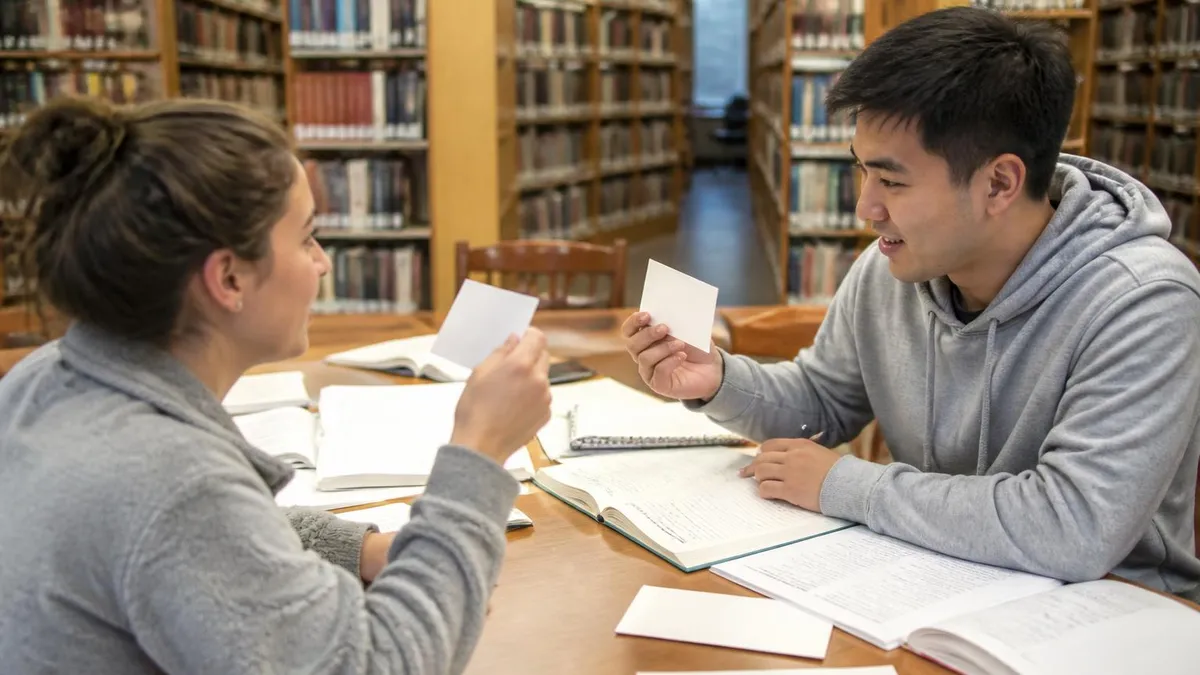
Flashcards remain a powerful tool for mastering the dense vocabulary that biology requires. Terms like mitosis versus meiosis, autotroph versus heterotroph, and genotype versus phenotype must become second nature before exam day. Digital flashcard platforms allow you to use spaced repetition algorithms that show you cards just before you are about to forget them, dramatically improving long-term retention compared to random review. Aim to review at least 20 to 30 new vocabulary terms per study session during the first two weeks of preparation.
Beyond flashcards, working through full-length timed practice tests is essential for building exam stamina. The Biology CLEP gives you 90 minutes to answer 115 questions, which works out to approximately 47 seconds per question. Many students who know the material cold still struggle on their first timed practice test simply because they are not used to the pace. Setting a timer and practicing under realistic conditions inoculates you against the time pressure you will feel on exam day and helps you develop the habit of moving quickly past questions you are uncertain about rather than getting stuck.
For students who want structured instruction rather than purely self-directed study, enrolling in a preparatory course is an excellent option. clep testing courses offered through Modern States and similar platforms provide video lectures, quizzes, and progress tracking in a format specifically designed for CLEP preparation. These courses are particularly valuable for students who have been out of high school for several years and need a refresher on foundational content before diving into practice questions. Many students find that combining a structured course with independent practice tests produces the best results.
Laboratory-based questions occasionally appear on the Biology CLEP, testing your ability to interpret experimental data, read graphs, and analyze results from classic biology experiments. If your background is primarily from textbook study rather than hands-on lab work, make sure to review common experimental setups such as gel electrophoresis, enzyme activity assays, and population growth models. The College Board publishes a free exam guide that includes sample questions with answer explanations, and many of these sample questions specifically test data interpretation skills that pure content review might not address.
Group study can be surprisingly effective for Biology CLEP preparation, particularly for topics like ecology and evolution where discussing real-world examples deepens understanding. Teaching a concept to a peer forces you to articulate your reasoning in plain language, which quickly exposes any gaps in your understanding that quiet reading might let slide. Even informal study sessions where you quiz each other using flashcards or work through practice problems together can accelerate learning and make the preparation process more sustainable over a six-to-eight-week timeline.
Biology CLEP Key Topics by Domain
Molecular and cellular biology accounts for roughly 33 percent of your Biology CLEP score, making it the largest single domain by question count. Core topics include cell membrane structure and function, organelle roles, enzyme kinetics, cellular respiration (glycolysis, Krebs cycle, and oxidative phosphorylation), photosynthesis (light-dependent and light-independent reactions), DNA replication, transcription, translation, and the regulation of gene expression. Understanding how these processes interact — for example, how ATP produced during respiration powers active transport across cell membranes — is crucial for answering integrative questions.
Protein synthesis deserves particular attention because questions in this area frequently appear in multiple-choice formats that require you to trace the journey from DNA sequence to functional protein. Know the roles of mRNA, tRNA, rRNA, and ribosomes cold. Cell division — both mitosis and meiosis — is another high-yield subtopic. Be able to describe each phase, identify what happens chromosomally in each stage, and explain why mitosis produces genetically identical daughter cells while meiosis introduces genetic diversity through crossing over and independent assortment. These distinctions appear on nearly every practice test in this domain.

Is the Biology CLEP Worth It? Pros and Cons
- +Saves thousands of dollars compared to taking a full two-semester intro biology course at most colleges
- +Earns up to 6 credit hours in a single 90-minute exam, dramatically accelerating your degree timeline
- +Accepted at over 2,900 colleges and universities nationwide through the College Board CLEP program
- +No prerequisites required — any student who has biology knowledge can attempt the exam
- +Free preparation resources like Modern States provide full courses at zero cost
- +You can retake the exam after 3 months if you do not achieve your target score
- −Not all colleges accept CLEP credits, and some programs (pre-med, nursing) may require the actual course
- −A single bad test day can cost you the exam fee since there are no partial credit or partial passing options
- −The breadth of material — covering two full semesters of biology — demands significant independent study time
- −Some colleges require a higher minimum score than the College Board's standard of 50 to award credit
- −Laboratory credit is often not awarded, which can create gaps for science majors who need lab hours
- −Test centers may have limited appointment availability, especially during peak academic registration periods
Biology CLEP Prep Checklist: 10 Steps to Exam Day
- ✓Verify that your target college accepts Biology CLEP credits and check their minimum required score before registering.
- ✓Create a College Board account and register for the Biology CLEP exam at least two weeks before your target date.
- ✓Take a full-length diagnostic practice test on day one to identify your weakest content domains.
- ✓Build a 6-to-8-week study schedule allocating roughly equal time across molecular biology, organismal biology, and population biology.
- ✓Complete the free Modern States CLEP Biology course to cover all three content domains with video instruction.
- ✓Master all key vocabulary using spaced-repetition flashcards, targeting 20–30 new terms per study session.
- ✓Practice interpreting graphs, data tables, and experimental results since the exam frequently tests data analysis skills.
- ✓Take at least three full-length timed practice tests under realistic conditions before exam day.
- ✓Review every wrong answer on each practice test and trace the error back to a specific concept gap.
- ✓Confirm your testing center appointment, required ID, and any center-specific rules at least 48 hours before exam day.

The 10-Percent Rule for Exam Time Management
With 115 questions in 90 minutes, you have an average of 47 seconds per question. Budget roughly 10 percent of your total time — about 9 minutes — as a buffer for reviewing flagged questions at the end. If you spend more than 60 seconds on any single question, mark it and move on. Students who get stuck on hard questions and run out of time on easy ones at the end consistently score lower than students who maintain a steady pace throughout the exam.
Understanding how the Biology CLEP is scored and how that score translates into college credit is critical information that many students overlook until after they receive their results. The exam uses a scaled score ranging from 20 to 80, and the College Board recommends a credit-granting score of 50, which it says is equivalent to a grade of C in the equivalent college course.
However, this recommendation is advisory only — each college and university establishes its own minimum score threshold and its own credit award policies, which means the score you need to pass depends entirely on where you plan to transfer the credit.
The American Council on Education (ACE) recommends that colleges grant 6 semester hours of credit for scores of 50 or above on the Biology CLEP, and the majority of CLEP-accepting institutions follow this recommendation. However, highly selective universities, particularly those in the Ivy League or with strong science programs, may not accept CLEP credits at all for their core science requirements. Pre-medical students should be especially cautious, since medical school admissions committees and pre-med advisors often require that prerequisite biology courses be completed in a traditional classroom setting with a laboratory component that the CLEP cannot replace.
Score reports are available immediately after you complete the exam at a testing center, which is one of the distinct advantages of the CLEP over many other standardized tests. You will see your scaled score on screen before you leave the testing room. Within two to three weeks, the score report is sent electronically to the college you designated when you registered.
If you need to send your score to an additional institution later, you can request a score report from the College Board's website for a small fee. You cannot unsubmit a score once you have seen it, but you do have the option — before sitting the exam — to designate that your scores only be sent to you rather than directly to a college, giving you time to decide whether the score is strong enough to submit.
The retake policy for the CLEP is straightforward: if you do not achieve your target score, you must wait a minimum of three months before attempting the same exam again. There is no limit on the total number of times you can retake a CLEP exam, though each attempt requires paying the full exam fee again.
Most students who take advantage of the retake opportunity report meaningful score improvements, particularly when they use their first attempt to identify specific weak areas and then target those areas intensively before the second attempt. A focused four-to-six-week targeted review is often more productive than a longer but less focused study period.
Some students pursue the Biology CLEP as part of a broader strategy to complete an entire associate degree or complete general education requirements entirely through credit-by-examination. This approach — sometimes called the CLEP-heavy degree path — can reduce the total time and cost of a degree dramatically. Students who combine Biology CLEP credit with credits from other where to study clep management subjects can sometimes complete entire general education distributions in biology, English, history, mathematics, and social sciences through exam credit alone, leaving their traditional coursework for upper-division electives and major-specific requirements.
Financial aid implications are another consideration that students sometimes miss. CLEP credits generally do not count toward your enrollment status for financial aid purposes because they are awarded as transfer credit rather than through registered enrollment.
This means that students who are relying on full-time enrollment status to maintain financial aid eligibility need to be careful about reducing their traditional course load too aggressively in favor of CLEP testing. Consulting with your financial aid office before making major changes to your course load based on anticipated CLEP credit is a wise precaution that can prevent unintended consequences for your aid package.
Veterans and active-duty military personnel have special access to CLEP benefits through the Defense Activity for Non-Traditional Education Support (DANTES) program, which covers the exam fee for eligible service members. This makes the CLEP an especially powerful tool for military students pursuing a college degree while managing the demands of service. Many military-friendly institutions also have generous credit-transfer policies that make CLEP credits particularly valuable in these educational pathways, and some have articulation agreements that specify exactly how CLEP Biology credit will apply toward degree requirements.
Not all colleges accept CLEP Biology credit, and those that do often have minimum score requirements higher than the College Board's standard of 50. Some programs — especially pre-med, nursing, and biology majors — may require a traditional lab course regardless of your CLEP score. Always confirm your institution's specific policy before paying the exam fee, and get the policy in writing from your registrar or academic advisor to avoid surprises at graduation.
Test-day preparation is as important as content knowledge, and students who underestimate the logistical side of exam day often find themselves performing below their actual ability level. The Biology CLEP is administered at official CLEP testing centers, which are typically located at colleges, universities, and military bases across the United States. You will need to bring a valid, unexpired government-issued photo ID such as a driver's license or passport. The name on your ID must exactly match the name on your College Board account, so double-check this well in advance since correcting a name discrepancy can take several business days.
Testing centers typically prohibit personal items in the testing room, including phones, smartwatches, bags, notes, and food. You will usually be given scratch paper and a pencil for working through calculations, but no calculator is permitted on the Biology CLEP since the mathematical content — primarily in genetics Punnett squares and Hardy-Weinberg calculations — involves only basic arithmetic. Arriving at least 15 to 20 minutes before your scheduled appointment gives you time to check in, store your belongings, and settle your nerves before the clock starts. Rushing in at the last minute is a preventable stressor that negatively affects performance.
Mental and physical preparation in the 24 hours before the exam matters more than most students expect. Getting a full night of sleep the night before the exam has a measurably positive effect on recall and processing speed, while cramming late into the night tends to impair performance by increasing test anxiety and cognitive fatigue.
A light review of your most difficult topic area for 20 to 30 minutes the morning of the exam is reasonable, but attempting to learn new material the day before is counterproductive. Trust the preparation you have completed over the preceding weeks and focus on arriving calm, rested, and confident.
During the exam itself, the most important tactical decision you will make repeatedly is when to skip a question and when to attempt it. The CLEP does not penalize for wrong answers, which means you should always provide an answer for every question even if you are completely guessing.
For questions you are partially uncertain about, use process of elimination to remove obviously wrong answer choices before selecting your best guess. Even eliminating one out of four answer choices improves your expected score on that question from 25 percent to 33 percent — a significant gain when multiplied across a 115-question exam.
Reading each question stem carefully before looking at the answer choices is a discipline that pays dividends throughout the exam. Biology questions frequently include subtle qualifiers like "all of the following EXCEPT" or "which of the following best describes" that fundamentally change the correct answer.
Students who read too quickly and miss these qualifiers often select a distractor that would be correct in the absence of the qualifier. Slowing down by two or three seconds per question to fully process the stem is a reliable way to avoid these avoidable errors. For clep tests, careful reading is as important as content knowledge.
After completing the exam, you will see your score immediately on screen and be given the opportunity to designate a college to receive your official score report. Take a moment to verify that the institution name and code are correct before confirming, as changing a score recipient after the fact requires an additional fee and processing time.
If you are happy with your score, submit it confidently. If your score falls short of your target institution's minimum, remember that you can retake the exam after three months — and use that intervening period to address the specific weaknesses the exam revealed. Many successful CLEP test-takers pass on their second attempt after a focused and targeted review.
Building on your Biology CLEP success, consider whether additional CLEP exams in related subjects might further accelerate your degree. The natural sciences cluster — which may include Chemistry CLEP or Natural Sciences CLEP depending on your college's offerings — can sometimes satisfy additional general education requirements. Students who develop strong CLEP test-taking skills and effective independent study habits often find that their second and third CLEP exams are significantly easier to prepare for than their first, because they have already internalized the format and developed reliable strategies for efficient content review and timed practice.
Practical preparation tips for the Biology CLEP go beyond simply reading a textbook or watching lecture videos. The students who consistently perform best on this exam are those who integrate multiple study modalities into a cohesive preparation plan that builds knowledge incrementally over six to eight weeks. Starting with a diagnostic test, building a content foundation through structured courses, reinforcing that foundation with flashcards and concept mapping, and then stress-testing your knowledge through repeated timed practice tests — this sequence produces better results than any single study method used in isolation.
Identifying your personal peak performance hours and scheduling your most demanding study sessions during those windows can make a surprising difference in how much you retain per hour of study. If you are sharpest in the morning, block off 60 to 90 minute study sessions before work or other commitments rather than trying to review complex material like protein synthesis pathways late at night when cognitive load is high. Consistency matters more than duration — five focused 60-minute sessions per week will outperform two exhausting five-hour marathon sessions that leave you burned out and resentful of the material.
Nutrition and hydration are practical factors that students consistently overlook when preparing for a high-stakes exam. Your brain requires steady glucose to function optimally, and dehydration equivalent to just one to two percent of body weight measurably impairs cognitive performance. In the week leading up to your exam, maintain regular sleep, eat nutritious meals, and stay well hydrated. On exam day itself, eat a substantial breakfast with a mix of protein and complex carbohydrates to sustain energy without causing a blood sugar spike and crash during the 90-minute exam window.
Using past content from Advanced Placement Biology — AP Bio — is one of the most efficient supplementary resources for Biology CLEP preparation. The content overlap between AP Biology and the CLEP Biology exam is substantial, particularly in molecular and cellular biology and genetics.
AP Biology free-response questions, while not directly applicable to the multiple-choice CLEP format, are excellent for testing whether you can explain complex processes clearly — and if you can articulate a concept in writing, you can certainly identify the correct answer in a multiple-choice context. Free AP Biology resources from Khan Academy are available at no cost and cover nearly all CLEP Biology content.
Mnemonics and memory devices are underutilized tools that can dramatically improve your ability to recall ordered sequences and lists under time pressure. The stages of mitosis — Prophase, Metaphase, Anaphase, Telophase — are commonly remembered with the mnemonic PMAT. The hierarchical levels of biological organization — molecule, cell, tissue, organ, organ system, organism, population, community, ecosystem — can be remembered through similar devices.
For taxonomy, the classic mnemonic "King Philip Came Over For Good Soup" encodes Domain, Kingdom, Phylum, Class, Order, Family, Genus, Species. Building a personal library of such devices during your study period gives you a reliable retrieval toolkit under the pressure of timed testing.
Connecting biological concepts to real-world examples significantly improves retention compared to studying abstract definitions in isolation. When studying the immune system, for example, connecting B cells and antibodies to familiar ideas like vaccination makes the material more concrete and memorable.
When studying ecology, thinking about well-known real-world examples — wolves in Yellowstone as a keystone species, the Irish potato famine as an example of genetic monoculture vulnerability — anchors abstract principles in memorable narratives. The Biology CLEP frequently uses real-world scenarios in its questions, so building your knowledge through examples rather than pure abstraction aligns well with the exam's actual format.
Your final week of preparation should shift away from learning new content and toward consolidation, review, and confidence-building. Spend the last week re-taking previously completed practice tests under timed conditions, reviewing your error log from previous practice sessions, and reinforcing the specific topics where your accuracy has been lowest.
Avoid the temptation to explore new study materials at this stage, as introducing unfamiliar resources in the final week often increases anxiety without meaningfully improving your score. Trust the preparation you have put in, walk into the testing center with a clear mind, and apply the systematic test-taking strategies you have practiced — and you will be well positioned to earn the Biology CLEP credit you are working toward.
CLEP Questions and Answers

CLEP College Board: The Complete 2026 Guide to Earning Cheap, Fast College Credit

CLEP Testing Centers Near Me: How to Find, Book, and Prepare for Your Local Test Site (2026)

CLEP Classes: Best Free and Paid Courses to Pass Your Exam

CLEP Exams 2026–2026 — Types of CLEP Tests, Cost, and How to Get College Credit

CLEP Exams 2026: The Complete Guide to Credit-By-Examination
About the Author

Educational Psychologist & Academic Test Preparation Expert
Columbia University Teachers CollegeDr. Lisa Patel holds a Doctorate in Education from Columbia University Teachers College and has spent 17 years researching standardized test design and academic assessment. She has developed preparation programs for SAT, ACT, GRE, LSAT, UCAT, and numerous professional licensing exams, helping students of all backgrounds achieve their target scores.