

CHBT Practice Test
Updated October 2026Facts verified Oct 31, 2026 against Board of Nephrology Examiners Nursing and Technology, Inc.
Key Takeaways
- The CHBT test is a certification exam for individuals seeking a career in dialysis technology.
- The exam assesses your knowledge and skills in the maintenance, repair, and operation of hemodialysis equipment.
- Passing the CHBT certification ensures you are qualified to work in the field of nephrology and renal care.
- The CHBT certification is a valuable asset for those interested in becoming a Hemodialysis Technician.
- Successful completion of the CHBT test demonstrates your commitment to providing high-quality care for patients with kidney-related conditions.
The CHBT has 150 questions, takes about 3 hours and costs $235[1][2] (Board of Nephrology Examiners Nursing and Technology, Inc., verified Oct 27, 2026).
- The BONENT Certified Hemodialysis Bio-Medical Technician (CHBT) exam consists of 150 multiple-choice questions.[1]
- The BONENT CHBT exam has a three-hour time limit.[1]
- Candidates pass the BONENT CHBT exam with a scaled score of 70 or above.[3]
- The BONENT CHBT exam costs $235 for the paper-and-pencil exam or $255 for computer-based testing in the USA, and $260 (paper) or $255 (CBT) at locations outside the USA.[2]
- Retaking the BONENT CHBT exam costs $235 on paper or $255 by computer in the USA, and $260 on paper or $255 by computer internationally.[4]
- BONENT CHBT candidates get up to three attempts within 12 months; after three failed attempts they must complete 8 hours of nephrology-related continuing education before retesting.[4]
- BONENT CHBT certification must be renewed every four years.[5]
- To recertify the BONENT CHBT every four years, holders earn 40 contact hours (at least 30 in Group A), retake the exam, or use a one-time waiver.[5]
- The BONENT CHBT exam is offered either as a paper-and-pencil exam at scheduled sites or as a computer-based test at CBT locations.[6]
Numbers in brackets link to the official sources listed under Sources & last verified. Dates that have passed are removed automatically.
CHBT Exam at a Glance
| Item | Detail | Source · Verified |
|---|---|---|
| Number of questions | 150 multiple-choice questions[1] | Board of Nephrology Examiners Nursing and Technology, Inc. · Oct 27, 2026 |
| Time limit | 3 hours[1] | Board of Nephrology Examiners Nursing and Technology, Inc. · Oct 27, 2026 |
| Passing score | Scaled score of 70[3] | Board of Nephrology Examiners Nursing and Technology, Inc. · Oct 27, 2026 |
| Exam fee | $235 paper-and-pencil / $255 computer-based (USA); $260 PPE / $255 CBT outside the USA[2] | Board of Nephrology Examiners Nursing and Technology, Inc. · Oct 27, 2026 |
| Retake fee | $235 PPE / $255 CBT (USA); $260 PPE / $255 CBT international[4] | Board of Nephrology Examiners Nursing and Technology, Inc. · Oct 27, 2026 |
| Retake policy | Up to 3 attempts within 12 months, then 8 hours of nephrology CE[4] | Board of Nephrology Examiners Nursing and Technology, Inc. · Oct 27, 2026 |
| Validity | 4 years[5] | Board of Nephrology Examiners Nursing and Technology, Inc. · Oct 27, 2026 |
| Renewal | 40 contact hours (30+ Group A), retake the exam, or one-time waiver[5] | Board of Nephrology Examiners Nursing and Technology, Inc. · Oct 27, 2026 |
| Delivery | Paper-and-pencil (scheduled sites) or computer-based testing[6] | Board of Nephrology Examiners Nursing and Technology, Inc. · Oct 27, 2026 |
| Eligibility | High school diploma + 6 months dialysis biomedical experience + current ESRD facility work[2] | Board of Nephrology Examiners Nursing and Technology, Inc. · Oct 27, 2026 |
| Score release | About 3-4 weeks after the exam, by USPS mail[3] | Board of Nephrology Examiners Nursing and Technology, Inc. · Oct 27, 2026 |
| Registration deadline | Paper exam: 45 days before (60 days international); CBT: no deadline[7] | Board of Nephrology Examiners Nursing and Technology, Inc. · Oct 27, 2026 |
| Testing window | CBT: schedule yourself; take it within 6 months of the confirmation letter[8] | Board of Nephrology Examiners Nursing and Technology, Inc. · Oct 27, 2026 |
What changed for CHBT in 2026
- Oct 27, 2026: Retake policy changed to Up to 3 attempts within 12 months, then 8 hours of nephrology CE (previously Up to 3 attempts within 12 months; then 8 hours of nephrology CE required).[4]
- Oct 27, 2026: Testing window changed to CBT: schedule yourself; take it within 6 months of the confirmation letter (previously CBT: year-round, take within 6 months of confirmation letter).[8]
- Oct 27, 2026: Renewal changed to 40 contact hours (30+ Group A), retake the exam, or one-time waiver (previously 40 contact hours (30+ Group A), retake the exam, or one-time waiver; plus $65 annual fee).[5]
- Oct 27, 2026: Passing score changed to Scaled score of 70 (previously Scaled score of 70 (scale 1-100)).[3]
- Oct 27, 2026: Score release changed to About 3-4 weeks after the exam, by USPS mail (previously Immediately for CBT; 3-4 weeks by mail for paper).[3]
Free CHBT - Certified Hemodialysis Bio-Medical Technician Study Tools
Interactive CHBT - Certified Hemodialysis Bio-Medical Technician resources on PracticeTestGeeks, free to start:
- Free CHBT Patient Safety and Quality Assurance Questions and Answers 1 — 7 questions with answer explanations
- CHBT - Certified Hemodialysis Bio-Medical Technician flashcards — review key terms and concepts card by card
- CHBT - Certified Hemodialysis Bio-Medical Technician study guide — topic-by-topic overview of what the exam covers
- CHBT - Certified Hemodialysis Bio-Medical Technician cheat sheet — one-page printable summary for last-minute review
According to Board of Nephrology Examiners Nursing and Technology, Inc., “The examination has a three-hour time limit and consists of 150 multiple-choice questions.”[1]
CHBT content outline and where to practise each area
The content areas below are copied from the official CHBT content outline published by Board of Nephrology Examiners Nursing and Technology, Inc., with the share of the exam each area carries. The right-hand column shows which of our practice sets covers it.
| Official content area | Weight | Practice on this site |
|---|---|---|
| Concentrate System Management[1] | 11% | CHBT Dialysate Composition and Chemistry Practise dialysate components, mixing and conductivity checks, and what happens when concentrate is wrong. |
| Documentation Practices[1] | 7% | CHBT Regulatory Compliance and Documentation Practise what must be recorded, when, and how corrections and logs should be handled. |
| Life-Safety and Physical Plant Maintenance[1] | 9% | CHBT Electrical Safety and Biomedical Engi... Practise electrical safety, grounding and leakage concepts, and facility systems that protect patients and staff. |
| Medical Machine Maintenance[1] | 24% | CHBT Dialysis Equipment Maintenance and Tr... Practise preventive maintenance, calibration and step-by-step troubleshooting of machine faults and alarms. |
| Professional Responsibilities[1] | 8% | CHBT Alarm Systems and Emergency Response Practise how a technician responds to emergencies and alarms and where the role's responsibilities begin and end. |
| Quality Assurance Performance Improvement[1] | 7% | CHBT Patient Safety and Quality Assurance Practise how data, audits and incident reviews drive corrective action in a dialysis unit. |
| Reprocessing of Dialyzer[1] | 4% | CHBT Reuse and Disinfection Protocols Practise the order of rinsing, cleaning, testing and disinfecting, and why each step exists. |
| Water Treatment System Management[1] | 30% | CHBT Water Treatment Systems for Dialysis Practise the purpose and order of pretreatment, reverse osmosis and monitoring, and how to read test results. |
CHBT Practice Test Questions
Prepare for the CHBT - Certified Hemodialysis Bio-Medical Technician exam with our free practice test modules. Each quiz covers key topics to help you pass on your first try.
CHBT Alarm Systems and Emergency Response
CHBT Exam Questions covering Alarm Systems and Emergency Response. Master CHBT Test concepts for certification prep.
CHBT Anticoagulation in Hemodialysis
Free CHBT Practice Test featuring Anticoagulation in Hemodialysis. Improve your CHBT Exam score with mock test prep.
CHBT Dialysate Composition and Chemistry
CHBT Mock Exam on Dialysate Composition and Chemistry. CHBT Study Guide questions to pass on your first try.
CHBT Dialysis Equipment Maintenance and Tr...
CHBT Test Prep for Dialysis Equipment Maintenance and Troubleshooting. Practice CHBT Quiz questions and boost your score.
CHBT Electrical Safety and Biomedical Engi...
CHBT Questions and Answers on Electrical Safety and Biomedical Engineering Principles. Free CHBT practice for exam readiness.
CHBT Infection Control and Disinfection Pr...
Free CHBT Quiz on Infection Control and Disinfection Procedures. CHBT Exam prep questions with detailed explanations.
CHBT Infection Control in Dialysis Units
CHBT Practice Questions for Infection Control in Dialysis Units. Build confidence for your CHBT certification exam.
CHBT Regulatory Compliance and Documentation
CHBT Study Material on Regulatory Compliance and Documentation. Prepare effectively with real exam-style questions.
CHBT Renal Physiology and Kidney Disease
Free CHBT Test covering Renal Physiology and Kidney Disease. Practice and track your CHBT exam readiness.
CHBT Reuse and Disinfection Protocols
CHBT Exam Questions covering Reuse and Disinfection Protocols. Master CHBT Test concepts for certification prep.
CHBT Vascular Access and Cannulation Basics
Free CHBT Practice Test featuring Vascular Access and Cannulation Basics. Improve your CHBT Exam score with mock test prep.
Worked examples: how to reason through CHBT questions
These are practice questions written for this site, not questions from the real exam. Each explanation shows why the right answer is right and why the others are wrong.
Example 1
Question: What is the purpose of the 'water rinse' step during dialyzer reprocessing?
- To flush out blood, clots, and debris from the fiber bundle before disinfectant is applied
- To apply the disinfectant solution evenly through the fibers
- To rehydrate the dry membrane after the pressure test
- To test water quality before it contacts the dialyzer
Answer: A. To flush out blood, clots, and debris from the fiber bundle before disinfectant is applied
Explanation:
The correct answer is that the rinse flushes blood, clots and debris out of the fiber bundle before disinfectant goes in. Organic material such as blood can neutralise disinfectant, so it has to be removed first.
Applying the disinfectant evenly through the fibers is the job of the disinfectant fill step, not the rinse. Rehydrating the membrane after a pressure test is not what the rinse is for. Testing water quality is a separate check done on the water supply, not by running water through a dialyzer.
Rule to remember: in reprocessing, remove organic load before you disinfect. Cleaning always comes before disinfection, and each step has one distinct purpose.
Example 2
Question: All of the following substances are produced by the kidney EXCEPT:
- renin.
- aldosterone.
- erythropoietin.
- calcitriol.
Answer: B. aldosterone.
Explanation:
The answer is aldosterone, because it is made by the adrenal glands, not the kidneys. It acts on the kidney to regulate sodium and potassium, which is why it is easy to confuse with a kidney product.
Renin is released by the kidney and helps regulate blood pressure, so it is wrong as an answer to an EXCEPT question. Erythropoietin comes from the kidney and stimulates red blood cell production. Calcitriol is the active form of vitamin D, finished in the kidney.
Rule to remember: the kidney makes renin, erythropoietin and calcitriol, and responds to aldosterone without producing it. With EXCEPT questions, find the three true statements and the odd one out is your answer.
Example 3
Question: Why must a reprocessed dialyzer not be used within a minimum contact time after disinfectant filling?
- The disinfectant requires a minimum contact time (typically several hours) to achieve sufficient germicidal efficacy against all target organisms
- The dialyzer membrane needs time to rehydrate after the reprocessing rinse
- CMS regulations require a minimum 12-hour quarantine for all reprocessed equipment
- The disinfectant must evaporate partially before the dialyzer is safe to use
Answer: A. The disinfectant requires a minimum contact time (typically several hours) to achieve sufficient germicidal efficacy against all target organisms
Explanation:
The correct answer is that the disinfectant needs a minimum contact time to reach sufficient germicidal effect against the target organisms. Using the dialyzer early risks leaving organisms alive.
Membrane rehydration is not the reason for the wait, since the issue is microbial kill, not the membrane. The claim of a fixed 12-hour quarantine for all reprocessed equipment is not how the requirement works; the contact time depends on the disinfectant and the manufacturer's instructions. Disinfectant does not need to evaporate, and a dialyzer is rinsed of disinfectant before use, not left to dry it off.
Rule to remember: follow the labelled contact time for the product in use, and never shorten it.
How to use these practice tests
Start with the official BONENT CHBT page and the content outline, then rank the areas by how comfortable you are with each. Spend the most time on the areas that carry the most weight in the outline, which are water treatment and machine maintenance.
Work through a practice set for one area at a time, such as Water Treatment Systems for Dialysis or Dialysis Equipment Maintenance and Troubleshooting. Do not just check the score. For every miss, write down the rule behind the right answer in your own words, then look it up in your facility's procedures or the manufacturer's manuals.
- Pair reprocessing questions with Reuse and Disinfection Protocols and learn the order of steps, not just the names.
- Use Regulatory Compliance and Documentation for the recording and compliance material.
- Return to your weakest sets a few days later and redo them without notes.
Our questions are written by us with AI tools and are not real exam questions, so treat them as practice for reasoning, not a preview. Before test day, time yourself on a long mixed run so the 3-hour limit feels familiar.
What is the CHBT Exam?
Understanding the CHBT (Certified Hemodialysis Bio-Medical Technician) Test
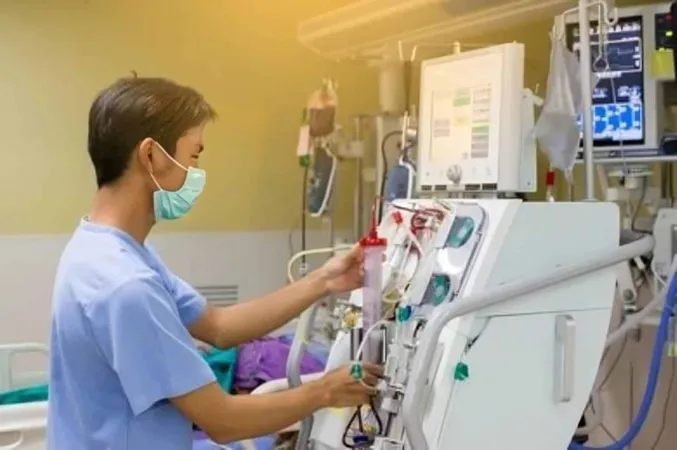
The CHBT (Certified Hemodialysis Bio-Medical Technician) is key in dialysis care. They make sure dialysis equipment works right and patients are safe. The CHBT exam checks if a candidate knows how to keep dialysis machines and other equipment running smoothly. Practice with the free CHBT - Certified Hemodialysis Bio-Medical Technician practice test on PracticeTestGeeks (7 questions with answer explanations).
The CHBT exam tests a candidate’s skills and knowledge in several areas:
- Dialysis machine operation: Candidates must know how to set up, run, and fix dialysis machines for safe patient care.
- Dialysis water treatment systems: The exam looks at a candidate’s knowledge of water treatment systems in dialysis. These systems are key for clean dialysis water.
- Biomedical equipment maintenance: Candidates show they can keep dialysis equipment like blood pressure monitors and scales in good shape.
- Patient care and safety: The exam checks if a candidate knows how to keep patients safe during dialysis, including following infection control rules and handling emergencies.
Eligibility Requirements for CHBT Certification
To get CHBT certified, candidates must:
- Finish a dialysis technician training program or have similar experience in a dialysis setting.
- Know how to work with dialysis equipment like machines and water treatment systems.
- Understand patient care and safety during dialysis, including how to prevent infections and handle emergencies.
- Have a clean criminal record and follow ethical standards in healthcare.
Getting the CHBT certification is great for those wanting to work as dialysis technicians, hemodialysis technicians, or nephrology technicians. It shows they’re dedicated to being the best and can give top-notch dialysis care to patients.
- ✓Review the official CHBT exam content outline
- ✓Take a diagnostic practice test to identify weak areas
- ✓Create a study schedule (4-8 weeks recommended)
- ✓Focus on your weakest domains first
- ✓Complete at least 3 full-length practice exams
- ✓Review all incorrect answers with detailed explanations
- ✓Take a final practice test 1 week before exam day

CHBT: Pros and Cons
- +CHBT exam preparation strengthens your knowledge across all domains
- +Passing the exam proves competency to employers and clients
- +Study materials and practice tests are widely available
- +Exam-based credentials are portable across states and employers
- +Clear exam objectives help focus your study plan effectively
- −Exam anxiety can affect performance — practice tests help reduce it
- −Registration fees are non-refundable if you miss your test date
- −Limited retake opportunities may apply with waiting periods
- −Exam content updates periodically — use current study materials
- −Testing center availability may require advance scheduling
Pros and Cons at a Glance
| Pros | Cons |
|---|---|
| CHBT exam preparation strengthens your knowledge across all domains | Exam anxiety can affect performance — practice tests help reduce it |
| Passing the exam proves competency to employers and clients | Registration fees are non-refundable if you miss your test date |
| Study materials and practice tests are widely available | Limited retake opportunities may apply with waiting periods |
| Exam-based credentials are portable across states and employers | Exam content updates periodically — use current study materials |
| Clear exam objectives help focus your study plan effectively | Testing center availability may require advance scheduling |
Sample CHBT - Certified Hemodialysis Bio-Medical Technician Practice Questions
Try these questions from our free CHBT - Certified Hemodialysis Bio-Medical Technician practice tests. The correct answer and an explanation follow each question.
The fluid restriction for most patients undergoing in-center hemodialysis is equal to urine volume/day plus:
- A. 0 L.
- B. 0.5 L.
- C. 1 L.
- D. 2 L.
Answer: C. 1 L.
For most in-center hemodialysis patients, a common fluid restriction guideline is to limit daily fluid intake to their residual urine output plus 1 liter. This additional liter accounts for insensible fluid losses (e.g., through breathing and sweat) and helps prevent excessive fluid accumulation between dialysis sessions.
Under OSHA's Bloodborne Pathogens Standard, dialysis facilities are required to offer hepatitis B vaccination to employees:
- A. At no cost to the employee, within 10 working days of initial assignment to a job with occupational exposure
- B. Only after an exposure incident occurs
- C. Only to full-time employees
- D. At the employee's expense if they choose to receive it
Answer: A. At no cost to the employee, within 10 working days of initial assignment to a job with occupational exposure
OSHA's Bloodborne Pathogens Standard (29 CFR 1910.1030) mandates that employers provide HBV vaccination free of charge to all employees with occupational blood exposure within 10 days of job assignment.
When mixing a bicarbonate concentrate from dry powder, which precaution is essential?
- A. Use water that meets dialysis water quality standards and mix per manufacturer instructions to ensure sterility and correct concentration
- B. Use tap water for cost savings
- C. Add the powder to hot water to speed dissolution
- D. Mix 24 hours in advance and refrigerate
Answer: A. Use water that meets dialysis water quality standards and mix per manufacturer instructions to ensure sterility and correct concentration
Bicarbonate solutions support bacterial growth rapidly; they must be prepared with purified water, used promptly (within manufacturer-specified timeframes), and mixed per protocol.
Which hemodialysis schedule is likely to be most efficient?
- A. In-center hemodialysis, 3-4 hours a session, 3 days a week
- B. Conventional home hemodialysis
- C. Short daily home hemodialysis, 2-3 hours a session, 5-7 days a week
- D. Nocturnal home hemodialysis, 8 hours during sleep, 3 days a week
Answer: C. Short daily home hemodialysis, 2-3 hours a session, 5-7 days a week
Short daily home hemodialysis is generally considered the most efficient schedule because it mimics natural kidney function more closely by providing more frequent, shorter treatments. This leads to better clearance of toxins, improved fluid management, and often better patient outcomes and quality of life compared to less frequent schedules.
Take the full CHBT - Certified Hemodialysis Bio-Medical Technician practice test
CHBT Questions and Answers
Sources & last verified
- Board of Nephrology Examiners Nursing and Technology, Inc. — number of questions, time limit, other (official source). “The examination has a three-hour time limit and consists of 150 multiple-choice questions.” Verified Nov 1, 2026 · source checked Oct 22, 2026.
- Board of Nephrology Examiners Nursing and Technology, Inc. — exam fee, eligibility (official source). “Exam Fees Country USA $235 $255 Locations Outside USA** $260 $255” Verified Oct 27, 2026 · source checked Oct 16, 2026.
- Board of Nephrology Examiners Nursing and Technology, Inc. — passing score, score release (official source). “The minimum scaled passing score (MSPS) for all BONENT exam types (CHT, CHBT, CHN, CPDN, CHWS) is 70.” Verified Oct 27, 2026.
- Board of Nephrology Examiners Nursing and Technology, Inc. — retake fee, retake policy (official source). “Fees for Re-examination Exam Method USA INT’L $235 $260 $255 $255” Verified Oct 27, 2026 · source checked Oct 16, 2026.
- Board of Nephrology Examiners Nursing and Technology, Inc. — validity, renewal (official source). “Recertification is required every four years.” Verified Oct 27, 2026 · source checked Oct 22, 2026.
- Board of Nephrology Examiners Nursing and Technology, Inc. — delivery (official source). “The PPE schedule below is a completely different list than the Computer-Based Testing (CBT) list” Verified Oct 27, 2026 · source checked Oct 22, 2026.
- Board of Nephrology Examiners Nursing and Technology, Inc. — registration deadline (official source). “application and examination fees (paid in full with application) must be received 45 days (60 days for international examinations) before the exam date.” Verified Oct 27, 2026 · source checked Oct 16, 2026.
- Board of Nephrology Examiners Nursing and Technology, Inc. — testing window (official source). “You will have to take the exam within 6 months of receiving your Confirmation Letter.” Verified Oct 27, 2026 · source checked Oct 16, 2026.
How we verify: editorial & fact-checking policy. Report an error: contact us.
How this page was made: written with AI tools and published by Nathan Beja, founder of Practice Test Geeks, who is responsible for its content. Exam facts are checked against the official sources listed below. Not reviewed by a subject-matter expert. Editorial policy
Sources & references
Exam facts on this page (fees, format, dates, passing scores) are checked against these official sources; the date is our last check. Editorial policy
- bonent.org — Exam format, time limit, renewal, score validity, test delivery, test dates, registration deadline, eligibility, fees, retake fee · verified Nov 2026