

CELSA Practice Test
Updated October 2026Facts verified Oct 30, 2026 against Association of Classroom Teacher Testers
Key Takeaways
- The CELSA (Combined English Language Skills Assessment) is a strong English proficiency exam. It's for top academic English check and university admission.
- It looks at your English skills. This includes reading, writing, and speaking.
- The CELSA is good for international students and others wanting in on college-level programs.
- It's in paper-pencil and computer types, with scores right there. This is good for knowing which class fits you best.
- Your CELSA score is good for two years. It shows what ESL class or level you should be in.
The CELSA has 75 questions and takes about 45 minutes[1] (Association of Classroom Teacher Testers, verified Oct 30, 2026).
- The CELSA test consists of 75 multiple-choice questions.[1]
- The CELSA test has a time limit of 45 minutes.[1]
- The U.S. Department of Education sets the passing score for Ability-to-Benefit qualification at a scaled score of 97 on CELSA Form 1 or Form 2.[2]
- For CELSA Form 1, a raw score of 37 equates to the passing scaled score of 97 for Ability to Benefit.[3]
- ACTT charges administering institutions $12.50 per student plus an annual site license of $195 for paper-and-pencil CELSA testing materials and scoring.[1]
- Under the CELSA retest policy, examinees cannot retake the same test form within 15 days, though retesting within 15 days is permitted if an alternate form is administered.[3]
- The CELSA is administered in person as either a paper-and-pencil scanform test or a computer-delivered network test.[1]
- CELSA is approved by the U.S. Department of Education for non-native, non-fluent English speakers enrolled in postsecondary programs that include an ESL component.[2]
- Scores for computer-delivered CELSA administrations are immediately available to the administering school.[1]
Numbers in brackets link to the official sources listed under Sources & last verified. Dates that have passed are removed automatically.
CELSA Exam at a Glance
| Item | Detail | Source · Verified |
|---|---|---|
| Number of questions | 75 multiple-choice questions[1] | Association of Classroom Teacher Testers · Oct 30, 2026 |
| Time limit | 45 minutes[1] | Association of Classroom Teacher Testers · Oct 30, 2026 |
| Passing score (Ability to Benefit (ATB)) | 97 on Form 1 or Form 2[2] | federalregister.gov · Oct 30, 2026 |
| Passing score (Ability to Benefit (ATB) Form 1) | 97 scaled score (37 raw score)[3] | img1.wsimg.com · Oct 29, 2026 |
| Passing score (Ability to Benefit (ATB) Form 2) | 97 scaled score (34 raw score)[3] | img1.wsimg.com · Oct 29, 2026 |
| Exam fee (Paper/pencil institutional test packet) | $12.50 per student test[1] | Association of Classroom Teacher Testers · Oct 30, 2026 |
| Retake policy (Ability to Benefit (ATB)) | 15-day wait to retake same form; immediate retake permitted with alternate form[3] | img1.wsimg.com · Oct 29, 2026 |
| Delivery | Paper-and-pencil or computer-delivered network testing[1] | Association of Classroom Teacher Testers · Oct 30, 2026 |
| Eligibility (Ability to Benefit (ATB)) | Non-native, non-fluent English speakers in programs with an ESL component[2] | federalregister.gov · Oct 30, 2026 |
| Score release (Computer delivered) | Immediately available[1] | Association of Classroom Teacher Testers · Oct 30, 2026 |
What changed for CELSA in 2026
- Oct 29, 2026: Passing score (Ability to Benefit (ATB)) changed to 97 on Form 1 or Form 2 (previously 97 on Form 1 or Form 2 (ATB)).[2]
- Oct 29, 2026: Passing score (Ability to Benefit (ATB) Form 1) changed to 97 scaled score (37 raw score) (previously 97 (Form 1)).[3]
- Oct 29, 2026: Passing score (Ability to Benefit (ATB) Form 2) changed to 97 scaled score (34 raw score) (previously 97 (Form 2)).[3]
- Oct 29, 2026: Eligibility (Ability to Benefit (ATB)) changed to Non-native, non-fluent English speakers in programs with an ESL component (previously Non-native, non-fluent English speakers in programs with an ESL component (ATB)).[2]
Free Combined English Language Skills Assessment Study Tools
Interactive Combined English Language Skills Assessment resources on PracticeTestGeeks, free to start:
- CELSA Knowledge 1 — 11 questions with instant scoring and answer explanations
- Combined English Language Skills Assessment flashcards — review key terms and concepts card by card
- Combined English Language Skills Assessment study guide — topic-by-topic overview of what the exam covers
- Combined English Language Skills Assessment cheat sheet — one-page printable summary for last-minute review
According to Association of Classroom Teacher Testers, “It consists of 75 multiple choice questions and takes 45 minutes to complete.”[1]
CELSA Practice Test Questions
Prepare for the CELSA - Combined English Language Skills Assessment exam with our free practice test modules. Each quiz covers key topics to help you pass on your first try.
CELSA - Combined English Language Skills A...
Free CELSA Practice Test featuring CELSA - Combined English Language Skills Assessment Pronoun Usage and Agreement. Improve your CELSA Exam score with mock test prep.
CELSA - Combined English Language Skills A...
CELSA Test Prep for CELSA - Combined English Language Skills Assessment Punctuation and Capitalization. Practice CELSA Quiz questions and boost your score.
CELSA - Combined English Language Skills A...
CELSA Mock Test covering - Combined English Language Skills Assessment Completing Conversations. Online CELSA Test practice with instant feedback.
CELSA - Combined English Language Skills A...
Free CELSA Quiz on - Combined English Language Skills Assessment Grammatical Connectors. CELSA Exam prep questions with detailed explanations.
CELSA - Combined English Language Skills A...
CELSA Practice Questions for - Combined English Language Skills Assessment Idiomatic Expressions. Build confidence for your CELSA certification exam.
CELSA - Combined English Language Skills A...
CELSA Test Online for - Combined English Language Skills Assessment Logical Inference from Text. Free practice with instant results and feedback.
CELSA - Combined English Language Skills A...
CELSA Study Material on - Combined English Language Skills Assessment Prepositional Phrase Usage. Prepare effectively with real exam-style questions.
CELSA - Combined English Language Skills A...
Free CELSA Test covering - Combined English Language Skills Assessment Reading for Main Ideas. Practice and track your CELSA exam readiness.
CELSA - Combined English Language Skills A...
CELSA Exam Questions covering - Combined English Language Skills Assessment Sentence Structure and Syntax. Master CELSA Test concepts for certification prep.
CELSA - Combined English Language Skills A...
Free CELSA Practice Test featuring - Combined English Language Skills Assessment Synonyms and Antonyms. Improve your CELSA Exam score with mock test prep.
CELSA - Combined English Language Skills A...
CELSA Mock Exam on - Combined English Language Skills Assessment Verb Tense and Form. CELSA Study Guide questions to pass on your first try.
CELSA - Combined English Language Skills A...
CELSA Test Prep for - Combined English Language Skills Assessment Vocabulary in Context. Practice CELSA Quiz questions and boost your score.
Worked examples: how to reason through CELSA questions
These are practice questions written for this site, not questions from the real exam. Each explanation shows why the right answer is right and why the others are wrong.
Example 1
Question: Which sentence places the modifier correctly?
- She almost drove her children to school every day.
- She drove her children to school almost every day.
- Almost she drove her children to school every day.
- She drove almost her children to school every day.
Answer: B. She drove her children to school almost every day.
Explanation:
The correct answer is B, "She drove her children to school almost every day." The word "almost" modifies "every day", so it belongs directly in front of that phrase. Then the sentence says she did this on nearly all days.
A is wrong because "almost drove" suggests she nearly drove but did not. C is wrong because "Almost she drove" is not a natural word order in English. D is wrong because "almost her children" suggests she drove nearly all of her children, not that she did the drive on nearly every day.
The rule to remember: put a modifier right next to the word or phrase it describes. When a sentence sounds odd, ask what the modifier is attached to.
Example 2
Question: Speaker A: "I'm really struggling to understand this new software. The training session wasn't very clear." Speaker B: __________
- "I had the same problem. Maybe we could try to figure it out together after lunch?"
- "You should have paid more attention during the training."
- "I understood it perfectly. It's actually very simple."
- "The IT department is responsible for software training."
Answer: A. "I had the same problem. Maybe we could try to figure it out together after lunch?"
Explanation:
The correct answer is A. Speaker A says they are struggling and that the training was unclear. A good reply acknowledges that, shares a similar experience and offers to work on it together. Option A does all of these.
B is wrong because it blames Speaker A and does not help. C is wrong because it ignores the problem and may sound boastful. D is wrong because it names who is responsible for training but does not answer Speaker A's concern.
The rule to remember: in a completing-conversations question, choose the reply that responds to what the first speaker just said and keeps the tone polite and cooperative. Replies that dodge the issue, blame someone or change the subject are usually wrong.
Example 3
Question: Which word is the antonym of 'prudent'?
- Wise
- Careful
- Reckless
- Thoughtful
Answer: C. Reckless
Explanation:
The correct answer is C, "Reckless". Prudent describes someone who acts with care and thinks ahead. Reckless describes someone who acts without thinking about the consequences, so the meanings are opposite.
A, "Wise", is close in meaning to prudent, so it is a synonym. B, "Careful", is also a synonym. D, "Thoughtful", points the same way, since it describes someone who thinks before acting.
The rule to remember: read the question for the word antonym or synonym before you look at the options. If three options share a meaning with the target word, the odd one out is probably the antonym. When you meet an unfamiliar word, think about the situations where it would be used.
How to use these practice tests
Start with the official material. Read the Association of Classroom Teacher Testers CELSA page so you know the format, the time limit and your school's delivery method. Then ask your testing office which form you will take and how scores are used for your program.
Next, take CELSA Basic to see which areas feel weakest. Do not worry about the result at this stage. Write down each topic where you guessed.
Spend the main part of your time on those weak areas, one practice set at a time. For grammar, try Verb Tense and Form and Prepositional Phrase Usage. For vocabulary, use Vocabulary In Context and Synonyms and Antonyms. For reading and conversation, use Reading For Main Ideas and Completing Conversations. After each set, read the explanation for every question you missed and write the rule in your own words.
In the last days before the test, mix topics and answer in one sitting against the clock. The real test allows 45 minutes for 75 questions, so practise keeping a steady pace. Our questions are written by us and are not real exam questions, so use them for skills, not for score prediction.
Purpose and Benefits of the CELSA Test
Understanding the CELSA Test
The CELSA (Combined English Language Skills Assessment) is a key test. It checks a person's english proficiency. This test is for high school, college, and adult ESL students. It puts them in the right English class based on their skills. The test has 75 multiple choice questions and takes 45 minutes. It uses a cloze format with real-life language. This checks reading, writing, and speaking.
The CELSA test's main goal is to place students in the right ESL class. This ensures they get the best help to improve their English. It's also a key test for university admissions. It shows if a student's English is good enough for college. Schools use the CELSA to know if students are ready for college-level English.
Who Should Take the CELSA Test?
The CELSA test is for people who don't speak English as their first language. It's for those who want to do well in school or work in English. This includes students from other countries applying to U.S. schools. It also includes those living in the U.S. looking to improve their English. By taking this test, students can find out if they're ready for college English courses.
Test Structure and Duration
CELSA (Combined English Language Skills Assessment) Test Format and Administration
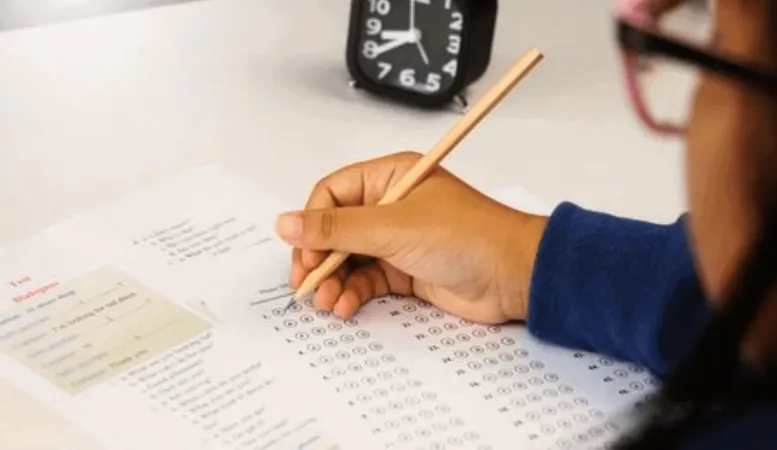
The CELSA is a 75-question multiple choice test. It takes 45 minutes to finish. You will see a passage with blanks. You need to pick the right word or phrase to fill in the missing parts. This part of the test is to check your reading, writing, and understanding of English.
There is no listening or speaking part in the CELSA.
Test Delivery Options
The test can be taken on paper or on a computer. On paper, you fill out a special form. Then, you send it to be scored. If you take it on a computer, your results go to the school right away. Both ways of taking the test show how well you know English.
Scoring and Interpretation
After the test, you get your scores right away. These scores are added to the school's student system. They last for two years. You can use them to decide which English class you should take or for college programs.
Schools use a course placement chart to understand your scores. This helps them know what English level is best for you.

Test Preparation Resources
Many resources can help you get ready for the CELSA. You can find sample questions to practice. Also, many schools offer study materials to improve your English before the test. They want to help you succeed and feel ready for the test.

CELSA: Pros and Cons
- +CELSA exam preparation strengthens your knowledge across all domains
- +Passing the exam proves competency to employers and clients
- +Study materials and practice tests are widely available
- +Exam-based credentials are portable across states and employers
- +Clear exam objectives help focus your study plan effectively
- −Exam anxiety can affect performance — practice tests help reduce it
- −Registration fees are non-refundable if you miss your test date
- −Limited retake opportunities may apply with waiting periods
- −Exam content updates periodically — use current study materials
- −Testing center availability may require advance scheduling
Pros and Cons at a Glance
| Pros | Cons |
|---|---|
| CELSA exam preparation strengthens your knowledge across all domains | Exam anxiety can affect performance — practice tests help reduce it |
| Passing the exam proves competency to employers and clients | Registration fees are non-refundable if you miss your test date |
| Study materials and practice tests are widely available | Limited retake opportunities may apply with waiting periods |
| Exam-based credentials are portable across states and employers | Exam content updates periodically — use current study materials |
| Clear exam objectives help focus your study plan effectively | Testing center availability may require advance scheduling |
Sample Combined English Language Skills Assessment Practice Questions
Try these questions from our free Combined English Language Skills Assessment practice tests. The correct answer and an explanation follow each question.
After receiving his test results, Daniel quietly folded the paper and slipped it into his backpack without letting anyone see his score. When his friends asked how he did, he said, 'Fine, fine,' and changed the subject. What can be inferred about Daniel's test performance?
- A. Daniel scored exceptionally well and was being modest
- B. Daniel found the test easy and was bored by the conversation
- C. Daniel likely did poorly and was embarrassed to share his score
- D. Daniel had not finished the test and was waiting for a make-up
Answer: C. Daniel likely did poorly and was embarrassed to share his score
Hiding the paper and deflecting questions are behaviors associated with concealing an unsatisfactory result rather than celebrating a good one.
The author used ________ language throughout the novel, requiring readers to look up several unfamiliar terms. 'Critics debated whether the style was artful or unnecessarily complicated.'
- A. esoteric
- B. colloquial
- C. plain
- D. accessible
Answer: A. esoteric
'Esoteric' means intended for a small audience with specialized knowledge, fitting complex language that required extra effort to understand.
A survey found that employees working from home at least three days per week reported higher job satisfaction, but managers rated those same employees' collaboration skills lower than in-office peers. What can logically be inferred?
- A. Remote work is universally superior to office work
- B. Remote work involves trade-offs between personal satisfaction and collaborative performance
- C. Managers prefer in-office workers for reasons unrelated to performance
- D. Job satisfaction and collaboration skills are equally easy to measure
Answer: B. Remote work involves trade-offs between personal satisfaction and collaborative performance
The data show a gain in one area (satisfaction) and a loss in another (collaboration), which logically implies a trade-off rather than a clear winner.
Which prepositional phrase correctly completes the sentence: 'She has been studying English _____ three years.'?
- A. since
- B. for
- C. during
- D. within
Answer: B. for
'For' is used with a duration of time, while 'since' is used with a specific starting point.
Take the full Combined English Language Skills Assessment practice test
CELSA Questions and Answers
Sources & last verified
- Association of Classroom Teacher Testers — number of questions, time limit, exam fee, delivery (official source). “It consists of 75 multiple choice questions and takes 45 minutes to complete.” Verified Oct 30, 2026 · source checked Oct 30, 2026.
- federalregister.gov — passing score, eligibility (official source). “CELSA Form 1 (97), CELSA Form 2 (97).” Verified Oct 30, 2026 · source checked Oct 30, 2026.
- img1.wsimg.com — passing score, retake policy (official source). “The raw score of 37 on form 1 and a raw score of 34 on form 2 equate to a scaled or “passing” score of…” Verified Oct 29, 2026.
How we verify: editorial & fact-checking policy. Report an error: contact us.
How this page was made: written with AI tools and published by Nathan Beja, founder of Practice Test Geeks, who is responsible for its content. Exam facts are checked against the official sources listed below. Not reviewed by a subject-matter expert. Editorial policy
Sources & references
Exam facts on this page (fees, format, dates, passing scores) are checked against these official sources; the date is our last check. Editorial policy
- federalregister.gov — Eligibility, passing score · verified Oct 2026
- acttabilitytobenefittest.com — Test delivery, fees, exam format, score release, time limit · verified Oct 2026
- img1.wsimg.com — Passing score, retake policy · verified Oct 2026