
Texas CDL: TX DPS Commercial Driver License Application Guide 2026 October
✅ Complete Texas CDL guide: TX DPS application, $61 CLP + $97 CDL fees, ELDT rules, age requirements, skills test sites, and top Texas trucking jobs.
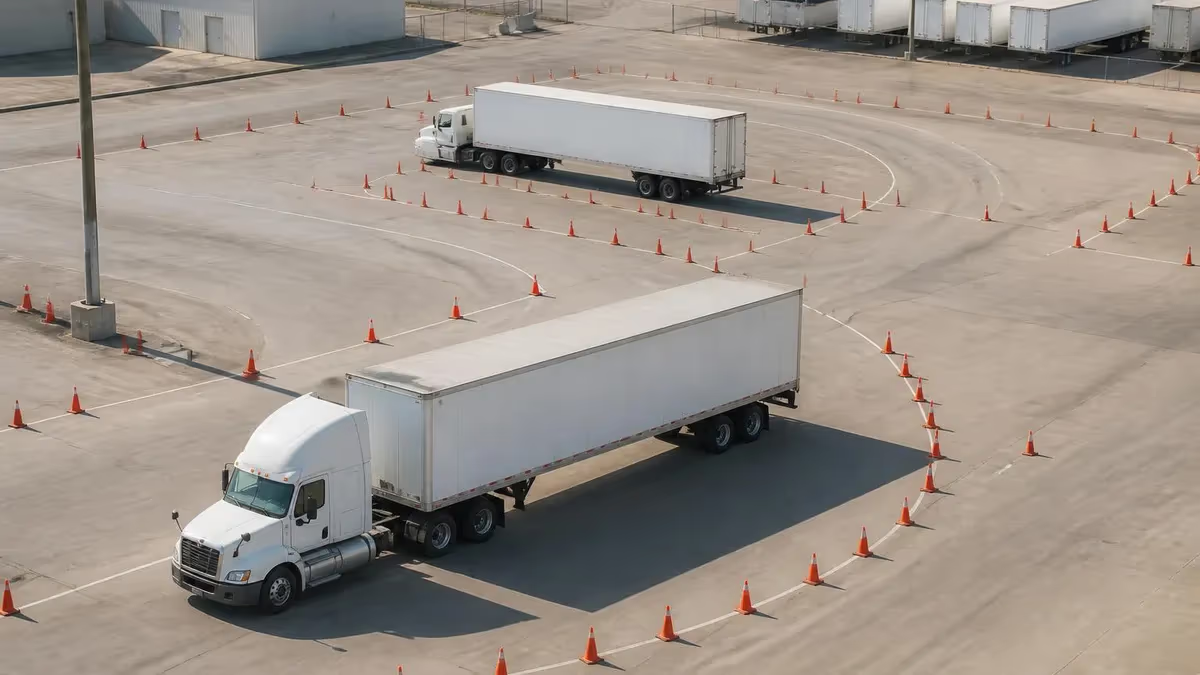
Getting your Texas CDL is the gateway to one of the biggest commercial driving markets in the country. The Lone Star State runs more freight miles than almost anywhere else, and Texas Department of Public Safety (TX DPS) sets the bar for who qualifies behind the wheel of a Class A or Class B rig. Whether you're aiming for an oilfield gig in the Permian Basin or a long-haul slot with Stevens Transport out of Dallas, the path starts at texas.gov/cdl and runs through a sequence of fees, knowledge tests, ELDT training, and a skills exam.
This guide walks the full Texas DPS commercial driver license process end to end. We'll cover the $61 Commercial Learner Permit fee, the $97 CDL upgrade cost, the federal Entry-Level Driver Training (ELDT) mandate that kicked in for new applicants, and the age rules that separate intrastate Texas-only drivers from interstate haulers crossing state lines.
You'll also see where to test, which third-party CDL skills sites cut waiting times, and the endorsements Texas employers ask for most. Texas isn't just big — it's structurally different from other CDL states.
The combination of a massive oil and gas industry, the busiest ports on the Gulf Coast (Houston, Corpus Christi, Beaumont), the I-10 and I-35 freight corridors funneling cargo from Mexico, and a population of 30 million people scattered across an area twice the size of Germany means CDL holders here have options most other states can't touch.
Texas CDL by the Numbers
Key Facts at a Glance
| Item | Value | Details |
|---|---|---|
| CLP application fee | $61 | |
| CDL upgrade fee | $97 | |
| Minimum age (intrastate) | 18 | |
| Minimum age (interstate) | 21 |
Texas CDL Eligibility and Age Rules
Before you book a knowledge test at the DPS office, Texas wants a few boxes ticked. You must hold a valid Texas Class C driver license, prove lawful presence in the U.S., be medically certified through a DOT physical from an FMCSA-listed Medical Examiner, and pass a vision screening at 20/40 in each eye (with or without correction).
Texas is one of the states that lets 18-year-olds run a CDL intrastate. That means you can haul anywhere inside Texas borders but can't cross into Oklahoma, Louisiana, New Mexico, or Arkansas until you turn 21.
That intrastate window matters. A lot of new Texas drivers start hauling aggregate, hot-shot loads, or oilfield equipment on Texas-only routes for two or three years before stepping up to OTR carriers like Mesilla Valley Transportation or USA Truck. The 18-to-21 group still needs the same ELDT certificate and DPS skills test — only the radius they can legally cover changes.
One eligibility item that catches applicants off guard: your driving record. Texas DPS pulls your full motor vehicle record before issuing a CDL. Multiple speeding tickets, a DUI in the last ten years, reckless driving convictions, or any commercial vehicle disqualifying offense will block your application or trigger an extended waiting period.
If your record has issues, request a copy from DPS before paying any fees — you don't want to lose your $61 to find out you're not eligible. Drivers with prior CDLs from other states need to surrender that license at the DPS office; you can't legally hold CDLs from two states at once.
Texas CDL Quick Facts
- Issuing agency: Texas Department of Public Safety (TX DPS)
- CLP validity: 180 days, renewable once for another 180
- CDL validity: 5 years for most drivers
- Medical card: DOT physical every 2 years (or shorter, depending on conditions)
- ELDT requirement: Mandatory for all new Class A, Class B, and upgrade applicants
The Four CDL License Classes in Texas
Texas issues three main CDL classes plus the CLP that comes first. Picking the right class matters because it dictates what you can drive, who will hire you, and how much skills testing you'll sit through.
A Class A out of a Dallas truck school opens doors to nearly every freight carrier in the country. A Class B is built more for buses, dump trucks, and straight delivery vehicles like beverage trucks running San Antonio or Houston metro.
Class C in CDL terms isn't the standard car license — it's a commercial class for vehicles carrying 16 or more passengers (including the driver) or transporting hazardous materials in quantities requiring placards. Charter buses, hotel shuttles, and small school activity vans often fall here.
CDL License Classes
Entry-level permit required before any CDL skills test. Valid 180 days. Lets you drive a CMV only with a CDL holder in the passenger seat. $61 fee at DPS.
Combination vehicles with GCWR 26,001+ lbs where towed unit exceeds 10,000 lbs. Covers tractor-trailers, flatbeds, tankers, livestock haulers. Highest demand in Texas.
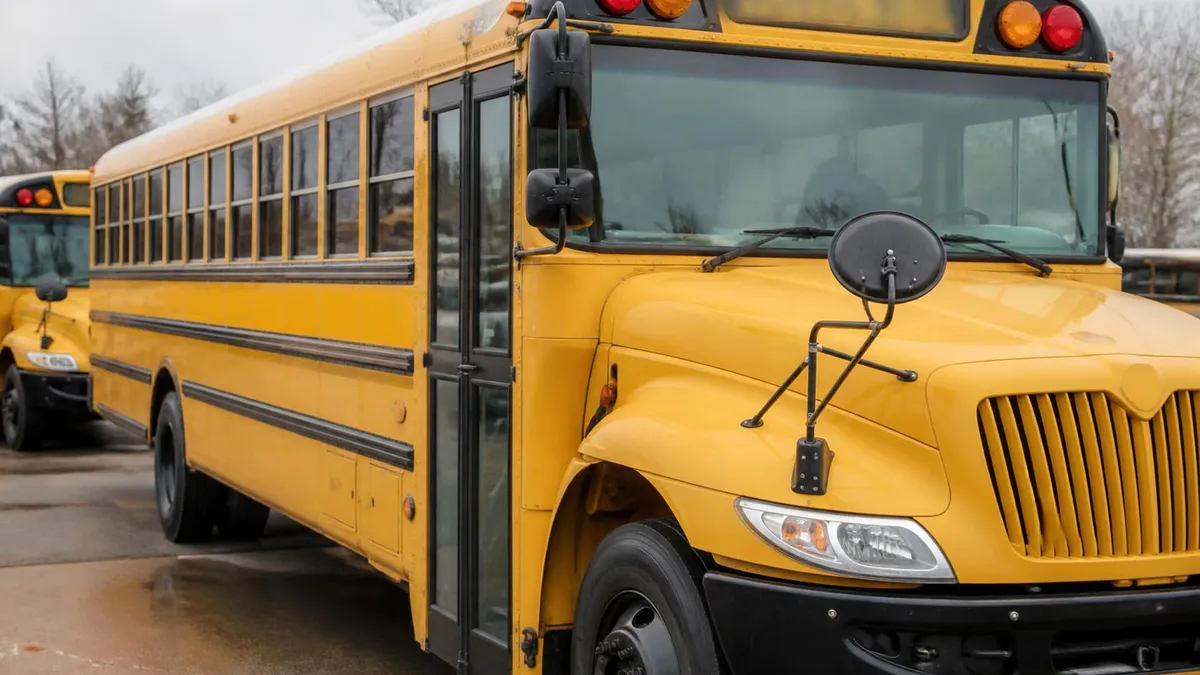
Single vehicles 26,001+ lbs, or towing under 10,000 lbs. Covers straight trucks, dump trucks, city buses, large delivery trucks. Common for municipal jobs.
Vehicles under 26,001 lbs that carry 16+ passengers or placarded hazmat. Charter buses, shuttle vans, small hazmat trucks. Niche but stable employment.
The Texas CDL Application Process Step by Step
Texas DPS spells out the application path on texas.gov/cdl, but it's worth walking through the real-world version. Most drivers underestimate how long the knowledge-test portion takes, especially if they're chasing Hazmat (H), Tanker (N), or Doubles/Triples (T) endorsements on top of General Knowledge, Air Brakes, and Combination tests.
Step one is the medical card. Don't skip it or save it for last — without the DOT physical on file, DPS can't even seat you for the General Knowledge test. Step two is the CLP knowledge tests at any DPS driver license office.
Step three is the 14-day waiting period before skills testing. Step four is ELDT, which has to be completed at a registered Training Provider Registry (TPR) school. Step five is the skills test: pre-trip inspection, basic vehicle control, and on-road driving.
The 14-day federal waiting period exists for a reason. FMCSA requires that you hold the CLP for at least two weeks before attempting any skills exam. You can use that time to log behind-the-wheel hours with your training school or with a CDL-holding mentor in the passenger seat.
Some applicants try to compress the timeline by booking the skills test at day 15, but if your ELDT BTW hours aren't logged in the Training Provider Registry by then, DPS will turn you away at the testing site. Always confirm with your school that all ELDT data has been uploaded before driving across town for a skills appointment.
Another timing gotcha: your CLP is only valid for 180 days. Miss that window and you can renew once for another 180 days without retaking knowledge tests. Miss the second window and you start over from scratch — fees, knowledge exams, and ELDT theory included.
The Five Stages of Your Texas CDL Journey
The CLP knowledge battery runs through several modules. Every Class A applicant takes General Knowledge, Air Brakes, and Combination Vehicles. Add Hazmat, Tanker, Doubles/Triples, Passenger, or School Bus depending on the endorsements you want. Each test is multiple choice at the DPS office computer. Passing score is 80%. The Texas CDL Handbook (PDF on the DPS site) is your study bible — questions track it almost word for word.
ELDT: The Federal Training Rule Every Texas Applicant Faces
Entry-Level Driver Training isn't a Texas-only thing — it's a federal FMCSA mandate, but it lives in your Texas CDL journey because DPS won't seat you for the skills test until your ELDT certificate is in the Training Provider Registry. Every new Class A applicant, Class B applicant, upgrade, and Hazmat/Passenger/School Bus endorsement seeker has to clear it.
The theory portion is 30 chapters covering basic operations, safe operating procedures, advanced operating procedures, vehicle systems, and non-driving activities. The behind-the-wheel portion has range hours (backing maneuvers, coupling) and public road hours (city, rural, highway).
Texas has hundreds of TPR-registered providers — community colleges like South Texas College and Houston Community College, private schools like Roadmaster in Dallas, and carrier schools like Stevens Driving Academy in Dallas.
Picking the right school is the biggest decision in your Texas CDL journey. Community college programs (HCC, San Jacinto, Lone Star) often cost less ($2,500-$4,500) and may qualify for financial aid, Workforce Solutions funding, or veteran GI Bill benefits.
Private schools cost more but tend to run faster schedules — three to four weeks instead of six. Carrier-paid programs from Stevens, CR England, Roehl, Knight, and Schneider feel free at signup but lock you into a contract. If you quit before the term ends, you'll owe the school cost back plus penalties. Read every page of the training contract twice.
Self-pay Texas CDL schools run $3,000 to $7,000. Carrier-sponsored programs from Stevens Transport, Roehl, Schneider, or CR England often cover the full cost in exchange for a 6-12 month contract. Read the contract carefully — early-exit penalties can hit $5,000+ if you leave before the term ends.
Where to Take Your Texas CDL Skills Test
Texas DPS runs CDL skills testing at major driver license offices statewide. Houston, Dallas, Fort Worth, San Antonio, Austin, El Paso, and Lubbock all host CDL testing, but the wait times can stretch 4-8 weeks during peak seasons. That's why most Texas applicants book through DPS-approved third-party skills testing sites instead.
Third-party CDL skills sites are private testing facilities certified by Texas DPS. They charge extra (typically $150-$300 for the full skills exam), but they have open slots most weeks and you can usually pick a day that fits your schedule.
Search the DPS website for the current list — it changes as schools get certified or drop out. Many CDL training schools also run their own testing site, so you can train and test at the same address.
One detail worth knowing: even if you test at a third-party site, the examiner is reporting back to Texas DPS, and the scoring rubric is identical. The skills test has a low pass rate the first time around — somewhere in the 50-65% range depending on the school.
The pre-trip inspection is where most applicants fail. Memorize the in-cab inspection items, the engine compartment checks, the side and rear walk-around, and the brake checks (service brake, parking brake, air loss rate, low air warning, governor cut-in and cut-out pressure). Test examiners want you to say each item out loud and physically point at it. Silent inspection equals zero points.
Application Checklist
- ✓Valid Texas Class C driver license in good standing
- ✓Proof of U.S. citizenship or lawful presence
- ✓Social Security number
- ✓Two proofs of Texas residency (utility bill, lease, etc.)
- ✓DOT medical examiner's certificate (Medical Card)
- ✓Completed CDL application form CDL-1
- ✓$61 Commercial Learner Permit fee
- ✓ELDT certificate uploaded to Training Provider Registry
- ✓Pass General Knowledge, Air Brakes, Combination tests (Class A)
- ✓Pass pre-trip inspection, basic controls, and road skills exam
- ✓$97 CDL upgrade fee at license issue
Texas CDL Jobs: Where the Money Is
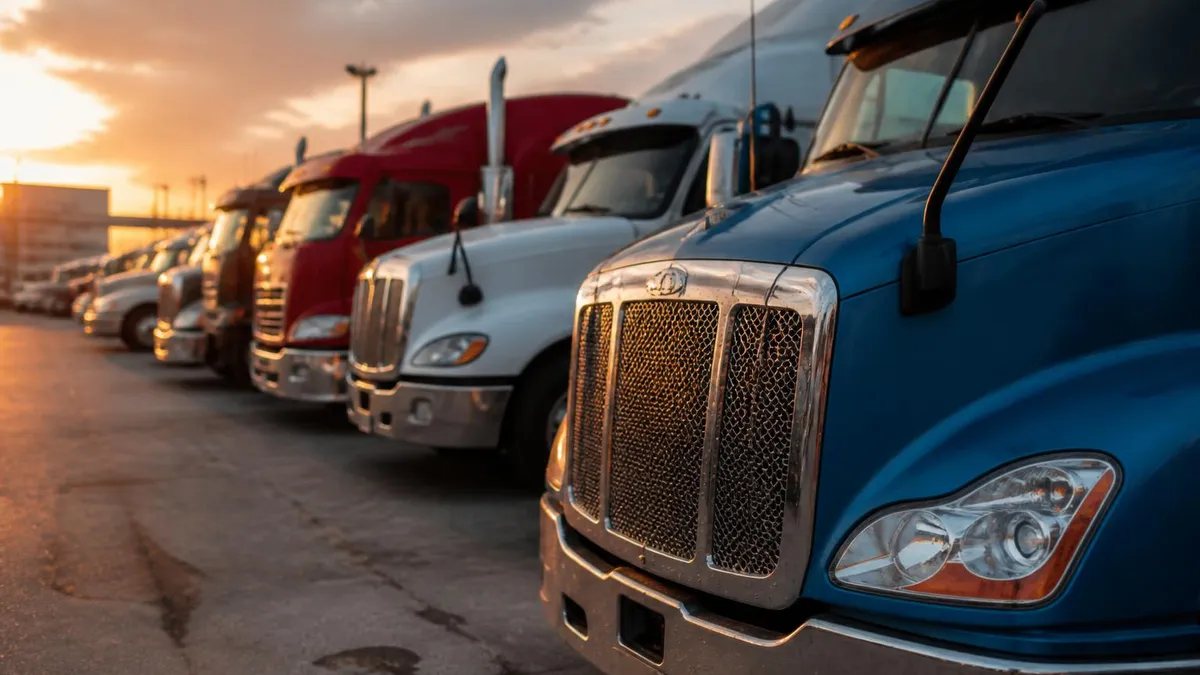
Texas runs more commercial freight than any other state, and the job mix reflects that. The Permian Basin in West Texas — Midland, Odessa, Big Spring — generates massive oilfield CDL demand for vacuum trucks, sand haulers, water trucks, and crude tankers. Pay in the Permian routinely hits six figures for Class A drivers with a Tanker endorsement.
Outside the oilfield, the big Texas CDL employers are Stevens Transport (refrigerated, Dallas HQ), Mesilla Valley Transportation, USA Truck, Werner Enterprises, Schneider, J.B. Hunt, and FedEx Ground. City and municipal jobs — Houston Metro bus, Dallas Area Rapid Transit, San Antonio waste collection — hire Class B CDL holders with steady pay, benefits, and pensions.
The Texas Triangle (Houston, Dallas-Fort Worth, San Antonio, Austin) is the densest freight zone in North America. Regional carriers running this triangle can pay solid money — typically $1,400 to $1,800 per week for experienced drivers — while letting you sleep in your own bed most nights.
That work-life balance is why so many seasoned Texas drivers move from coast-to-coast OTR to regional Triangle routes after a few years. If you'd rather stay closer to one city, last-mile delivery for Amazon Logistics, FedEx Ground contractors, and Walmart Transportation runs in nearly every Texas metro.
Specialty roles pay even better. Heavy haul drivers moving oversized equipment for companies like Daseke or Lone Star Transportation regularly bring in $90K-$110K. Hazmat tanker drivers pulling fuel for QuikTrip, Buc-ee's, or Love's Travel Stops earn $80K-$95K with steady home time.
Refrigerated meat haulers running out of the Texas Panhandle (Tyson Foods, Cargill) hit six figures for experienced drivers willing to deal with the demands of temperature-controlled freight.
Texas CDL Pros and Cons
- +Texas has more freight miles than any other U.S. state — endless job options
- +Permian Basin oilfield CDL roles often pay $90K-$130K+ for experienced drivers
- +DPS allows intrastate CDL at age 18 — three-year head start over OTR
- +Hundreds of TPR-registered ELDT schools statewide
- +Third-party skills testing sites cut DPS wait times dramatically
- +Major carriers (Stevens, Werner, Schneider) offer paid CDL training
- −ELDT requirement adds $3K-$7K up front for self-pay students
- −DPS skills test waits can be 4-8 weeks at busy offices
- −Intrastate-only restriction until age 21 limits early-career routes
- −Hazmat endorsement requires TSA background check ($86 fee, 30+ day wait)
- −Permian oilfield work is hard on the body and often 70+ hour weeks
- −Medical card every 2 years means ongoing DOT physical costs
Texas CDL Endorsements and Restrictions Worth Adding
Endorsements on a Texas CDL are letter codes that unlock specific vehicles or cargo types. The most valuable ones for Texas drivers are H (Hazmat), N (Tanker), X (combined Hazmat + Tanker — opens fuel hauling and crude oil work), T (Doubles/Triples), and P (Passenger).
Each endorsement requires its own knowledge test at DPS, and Hazmat additionally requires a TSA security threat assessment with fingerprints and an $86 federal fee.
The X endorsement is the workhorse of the Texas oilfield. Fuel tanker drivers and crude haulers in the Permian almost universally need H + N (which together get coded as X). Without it, you can't haul placarded hazardous liquids in a tank vehicle.
School Bus (S) and Passenger (P) endorsements open up Texas school district jobs — most districts pay $20-$28 per hour with benefits, summers off, and short routes.
Restrictions are the opposite — they limit what you can drive. The L restriction (no air brakes) gets stamped if you fail or skip the air brakes test. The Z restriction (no full air brakes) shows if you tested in a vehicle with air-over-hydraulic brakes. The E restriction (no manual transmission) applies if you tested in an automatic.
Most modern fleets run automatics, but flatbed and oilfield outfits still use manuals heavily — so the E restriction can lock you out of jobs.
Texas-Specific Safety Rules and Hours of Service
Federal FMCSA hours-of-service rules apply to interstate Texas drivers — 11 hours driving in a 14-hour window, 10-hour rest break, 60/70 hour weekly limits, and the 30-minute break rule after 8 hours of driving.
Intrastate Texas drivers operate under slightly modified rules from the Texas Department of Public Safety. Texas intrastate allows up to 12 hours driving in a 15-hour on-duty window, with a 70/7 or 80/8 hour cycle depending on operation type.
That intrastate flexibility is why so many oilfield and aggregate haulers keep Texas-only operating authority. The extra driving hour per day and the longer weekly cycle add up to real money on busy weeks. But the moment you cross into New Mexico to deliver into Hobbs, federal HOS kicks in retroactively — and DOT roadside inspectors check ELD logs hard at I-20 and I-10 crossings.
Texas also enforces its own commercial vehicle inspection program. Every CMV registered in Texas needs an annual commercial inspection at a state-certified inspection station. The TX DPS Commercial Vehicle Enforcement (CVE) unit runs weight stations, roadside inspections, and post-crash investigations across the state's interstate corridors.
Beyond HOS, Texas CDL holders should know about the state's Implied Consent law, which is stricter for CMV drivers than for regular motorists. Refusing a breath or blood test at a roadside stop in a commercial vehicle triggers an automatic CDL disqualification — one year for a first refusal, lifetime for a second.
The federal CDL blood alcohol limit is 0.04% (half the standard 0.08%), and a single violation while operating a CMV ends your CDL for at least 12 months. Texas DPS coordinates with the FMCSA Drug & Alcohol Clearinghouse, so a positive test or refusal anywhere in the country lands in your federal record and follows you to every state.
Final tip — register your CDL Self-Certification with Texas DPS as soon as your license is issued. You'll declare whether you operate Non-Excepted Interstate, Excepted Interstate, Non-Excepted Intrastate, or Excepted Intrastate. The wrong category leads to administrative downgrade letters from DPS, which can put you out of work while you fix it.
Sample CDL Practice Questions
Try these questions from our free CDL practice tests. The correct answer and an explanation follow each question.
What general skills will be tested when you apply for a commercial driver's license?
- A. On your ability to control your vehicle.
- B. To see whether you know when your vehicle is safe to drive.
- C. Your ability to drive safely in a variety of traffic situations.
- D. All of the listed answers.
Answer: D. All of the listed answers.
The CDL skills test is comprehensive, designed to ensure drivers can safely and competently operate commercial vehicles. It assesses a driver's ability to perform a pre-trip inspection, control the vehicle during basic maneuvers, and drive safely in various traffic conditions. Therefore, all the listed skills are tested.
What must a driver do if a passenger wants to get off between stops?
- A. Discharge only at a safe, designated stop
- B. Stop immediately wherever asked
- C. Refuse to let anyone off ever
- D. Stop in the travel lane
Answer: A. Discharge only at a safe, designated stop
Passengers should be let off only at safe, designated stopping places, not in traffic.
What must the driver do before transporting a hazmat load?
- A. Ignore the placards if in a hurry
- B. Inspect the vehicle and verify shipping papers and placards match the load
- C. Remove all labels to save space
- D. Combine incompatible materials to save trips
Answer: B. Inspect the vehicle and verify shipping papers and placards match the load
Drivers must inspect the vehicle and confirm the load, papers, and placards are correct and compatible.
When must a hazmat driver obtain a routing permit from state or local authorities?
- A. Whenever the vehicle weighs more than 26,001 lbs
- B. When transporting certain high-hazard materials such as radioactive or explosive cargo that require special routing
- C. Any time the driver crosses more than two state lines
- D. Only when hauling liquid hazardous materials in a tank vehicle
Answer: B. When transporting certain high-hazard materials such as radioactive or explosive cargo that require special routing
Some high-hazard materials — such as certain radioactive materials and high-level explosives — require special routing permits because states and localities have authority to designate specific approved routes to protect populated areas.
CDL Questions and Answers
About the Author

Licensed Driving Instructor & DMV Test Specialist
Penn State UniversityRobert J. Williams graduated from Penn State University with a degree in Transportation Management and has spent 20 years as a certified driving instructor and DMV examiner consultant. He has personally coached thousands of applicants through written knowledge tests, skills assessments, and commercial driver licensing programs across more than 30 states.
Join the Discussion
Connect with other students preparing for this exam. Share tips, ask questions, and get advice from people who have been there.
View discussion (7 replies)