
BLS Resuscitation: Complete Guide to Basic Life Support Training, Certification, and Renewal
Learn what is a BLS certification, what BLS stands for, how it differs from CPR, and how to pass the AHA or Red Cross exam. ✅ Full guide.

If you have ever wondered what is a BLS certification and whether it applies to your healthcare career, you are far from alone. BLS resuscitation training is one of the most widely required credentials in medicine, nursing, emergency services, and allied health — yet many candidates begin studying without fully understanding what the course covers, how the exam is structured, or what separates a passing candidate from one who has to retake. This guide answers every major question in one place, from basic definitions through test-day strategy.
BLS stands for Basic Life Support, a standardized set of life-saving skills designed to sustain a victim until advanced medical care arrives. The core techniques include high-quality cardiopulmonary resuscitation (CPR) for adults, children, and infants; automated external defibrillator (AED) use; relief of foreign-body airway obstruction; and effective ventilation with a bag-mask device. Healthcare providers who earn this credential demonstrate that they can recognize cardiac arrest, activate the emergency response system, and begin resuscitation within seconds — actions that can double or triple a patient's survival odds.
A common question is whether BLS and CPR are the same thing. They are closely related but not identical. CPR is a specific technique — chest compressions combined with rescue breaths — while BLS is a broader competency framework that includes CPR plus AED operation, team dynamics, and provider-level skills such as two-rescuer CPR and bag-mask ventilation. So if you ask is BLS the same as CPR, the short answer is no: CPR is one skill inside the larger BLS curriculum.
Two organizations dominate US BLS certification: the American Heart Association (AHA) and the American Red Cross. The AHA BLS for Healthcare Providers course is the most commonly required option at hospitals, nursing schools, and medical programs nationwide. The American Red Cross Basic Life Support course offers equivalent content and is accepted at most institutions, though you should verify your employer's preference before enrolling. Both organizations follow evidence-based guidelines updated every five years through the International Liaison Committee on Resuscitation (ILCOR).
Certification is valid for two years, after which providers must complete a basic life support renewal class to maintain their credential. Renewal courses are shorter than initial certification — typically 4 hours versus 6 — because they assume foundational knowledge and focus on skills verification and any updated guidelines. Many healthcare employers track expiration dates closely and will restrict clinical privileges if a provider's card lapses, so proactive renewal is essential.
Preparing strategically is the fastest path to passing on your first attempt. The written component of the basic life support exam American Heart Association tests your ability to recall compression rates, depth ratios, ventilation timing, and algorithm steps under mild time pressure. Candidates who spend time on practice questions consistently outperform those who only read the manual. You can bls resuscitation resources and certificate verification tools to supplement your study plan and confirm that your credential will be recognized by your employer or licensing body.
This article walks you through every dimension of BLS resuscitation training: what the certification covers, how the AHA and Red Cross courses differ, what to expect on exam day, how to build an efficient study schedule, common mistakes to avoid, and how to maintain your credential over time. Whether you are a first-time candidate or preparing for renewal after years in practice, the sections below give you a complete, actionable roadmap to certification success.
BLS Resuscitation by the Numbers

BLS Course Structure: What You Will Cover
Learn the correct hand placement, compression depth (at least 2 inches), rate (100–120 per minute), full chest recoil, and minimized interruptions that define high-quality CPR for adult victims in clinical and community settings.
BLS for healthcare providers includes distinct techniques for children and infants — two-finger compressions, smaller tidal volumes, and modified compression-to-ventilation ratios that reflect the anatomical differences in younger patients.
Candidates practice powering on an AED, attaching pads correctly, clearing the victim during analysis and shock delivery, and resuming CPR immediately after the shock — all within the recommended time windows.
Provider-level BLS adds bag-mask skills: achieving an airtight seal, delivering visible chest rise with each breath, coordinating ventilation with a second rescuer, and avoiding hyperventilation that can compromise cardiac output.
Effective resuscitation teams use closed-loop communication, clear role assignments, and mutual monitoring. The BLS course teaches these team skills so providers can lead or participate in coordinated in-hospital and pre-hospital resuscitation efforts.
One of the first decisions every candidate faces is choosing between the American Heart Association and the American Red Cross. Both organizations offer high-quality basic life support for healthcare providers, and both are recognized by the vast majority of US hospitals, nursing boards, and medical schools. However, there are meaningful differences in course format, pricing, and content emphasis that can influence which is the better fit for your situation.
The AHA BLS for Healthcare Providers course is the gold standard at most academic medical centers and large hospital systems. It follows the AHA's Chain of Survival framework and places heavy emphasis on the science behind each intervention — why a compression rate of 100–120 per minute optimizes coronary perfusion pressure, for example, or why hyperventilation is actively harmful during cardiac arrest. The AHA written exam consists of 25 multiple-choice questions, and candidates must score at least 84% (21 out of 25 correct) to pass. The skills station is evaluated by an AHA-certified instructor who uses standardized performance criteria.
The American Red Cross Basic Life Support course covers equivalent content through a blended learning model that combines an online cognitive component with an in-person skills session. The red cross basic life support course tends to be slightly more flexible in scheduling because the online portion can be completed at any time before the hands-on class. Red Cross instructors use a similar performance rubric, and the resulting card is accepted at nearly all institutions that accept the AHA card — with a small number of exceptions at facilities that mandate AHA specifically.
Format options have expanded significantly in recent years. The AHA now offers a HeartCode BLS option, which replaces the traditional classroom cognitive portion with an adaptive online learning system and a manikin-based skills check. This blended format is popular with busy clinicians who cannot commit to a full-day classroom session. Similarly, the Red Cross offers its online/in-person hybrid that allows candidates to front-load the knowledge component on their own schedule.
Pricing varies by provider and region. AHA courses typically run $50–$80 when purchased through a certified training center, while institutional courses offered through hospitals or universities may be free for employees and students. Red Cross courses fall in a similar range. Renewal courses for both organizations cost less than initial certification — usually $35–$55 — because they are shorter and focus on skills verification rather than comprehensive instruction.
When selecting a course, the most important factor is what your employer or licensing board accepts. Most US states and healthcare systems accept both AHA and Red Cross BLS equally, but a small number of facilities specify one provider. Check your offer letter, employee handbook, or clinical placement requirements before registering. If your institution has no preference, either organization will serve you well — the underlying guidelines are identical because both draw from the same ILCOR evidence base.
For candidates who want to maximize their preparation regardless of which course they choose, structured practice with realistic exam questions is the single highest-impact study strategy. The written exam for both providers tests the same knowledge domains — compression mechanics, AED protocols, pediatric modifications, and algorithm decision points — so practicing across those domains systematically closes knowledge gaps before test day and builds the confidence that comes from demonstrated competence.
AHA Basic Life Support Exam: Topics, Format & Scoring
The AHA basic life support exam consists of 25 multiple-choice questions drawn from the BLS Provider Manual. Candidates must answer at least 21 questions correctly — an 84% passing threshold — within a supervised session that typically takes 20–30 minutes. Questions are scenario-based, asking you to choose the correct action given a patient presentation, identify an error in a compression technique description, or select the proper AED pad placement for an infant. The exam is closed-book and administered on paper or digitally depending on the training center.
Scoring is straightforward: each question is worth one point, there is no penalty for wrong answers, and results are provided immediately. Candidates who score below 84% can retake the written exam once during the same course session; if a second failure occurs, they must complete the full course again before retaking. The skills evaluation is pass/fail and assessed separately — both components must be passed to receive a BLS card. Most candidates who prepare with practice questions pass the written exam on their first attempt with a comfortable margin.

Is BLS the Same as CPR? Pros and Cons of Each Credential
- +BLS covers CPR plus AED use, bag-mask ventilation, and team dynamics — a broader competency set
- +BLS certification is specifically required for clinical licensure, hospital employment, and most healthcare programs
- +Provider-level BLS includes pediatric and infant techniques not always taught in lay-rescuer CPR courses
- +Two-rescuer CPR protocols in BLS improve resuscitation quality during actual codes by dividing workload
- +BLS cards from AHA and Red Cross are recognized nationally and meet Joint Commission standards
- +Blended learning options let busy healthcare providers complete cognitive content online at their own pace
- −BLS requires hands-on skills evaluation with a certified instructor — fully online-only certification is not valid
- −Standard CPR courses (lay rescuer level) are shorter and cheaper for non-healthcare individuals
- −BLS certification expires in two years, requiring a renewal course to maintain the credential
- −Bag-mask and two-rescuer skills require practice partners and equipment not always available for home study
- −Some facilities mandate AHA-specific BLS, limiting flexibility to choose between providers
- −The written exam's 84% passing threshold means candidates must understand content deeply, not just skim the manual
BLS Certification Checklist: Everything You Need Before, During & After
- ✓Confirm which BLS provider (AHA or Red Cross) your employer or program specifically requires
- ✓Register for a course through an accredited training center — not a provider that offers fully online-only cards
- ✓Download and read the AHA BLS Provider Manual or Red Cross equivalent at least one week before your class
- ✓Complete at least 50 practice exam questions covering CPR mechanics, AED protocols, and pediatric modifications
- ✓Review the 2020 AHA Guidelines update — know what changed from the previous guidelines edition
- ✓Memorize the five links in the Chain of Survival for both in-hospital and out-of-hospital cardiac arrest
- ✓Practice physical compressions on a manikin before your skills station session if at all possible
- ✓Bring a valid photo ID and any required registration confirmation to your course day
- ✓Pass both the written exam (≥84%) and the skills station on course day to receive your BLS card
- ✓Store your BLS card in a safe location and add a calendar reminder 3 months before your expiration date
The 10-Second Rule Changes Everything
The AHA guidelines specify that CPR interruptions — including pulse checks — should never exceed 10 seconds. On the written exam, any scenario answer that involves pausing compressions for longer than 10 seconds is almost certainly wrong. On the skills station, instructors use a stopwatch. Internalizing this single principle eliminates a significant percentage of exam errors for first-time BLS candidates.
Passing the BLS exam is not simply a matter of reading the manual once the night before. The written component tests application of knowledge under realistic scenario conditions, which means you need to be able to recognize when an action violates a guideline — not just recall what the guideline says in isolation. The most effective study approach combines spaced repetition of key numbers, algorithm walkthroughs, and timed practice questions that simulate the actual exam format.
Start with the numbers that appear most frequently on exam questions. The compression rate is 100–120 per minute for adults, children, and infants. Adult compression depth is at least 2 inches but no more than 2.4 inches. Infant compression depth is approximately 1.5 inches (one-third of the chest diameter). The compression-to-ventilation ratio is 30:2 for single-rescuer adult and pediatric CPR, and 15:2 for two-rescuer pediatric CPR.
AED analysis should not be interrupted; CPR must resume immediately after a shock with less than a 10-second pause. Memorize these numbers early and test yourself on them repeatedly — they appear in some form on virtually every BLS written exam.
Algorithm fluency is the next priority. The BLS algorithms — adult cardiac arrest, pediatric cardiac arrest, and adult bradycardia/tachycardia at the provider level — define the decision trees that guide resuscitation. Practice walking through each algorithm verbally as if you are narrating your actions to a code team. When you can describe the correct sequence without hesitation, you are ready to answer scenario questions about them quickly and confidently. Many candidates find it helpful to sketch the algorithms from memory as a self-test.
Scenario-based practice questions are the closest analog to the actual exam experience. A well-designed practice question will not simply ask you to define a term — it will describe a patient who has collapsed, give you incomplete information about the response so far, and ask you to identify the error or the next correct action.
This format requires you to integrate multiple pieces of knowledge simultaneously: Is the compression rate correct? Is the rescuer allowing full recoil? Should the AED have been applied by now? Working through 100 or more questions in this format before your exam dramatically accelerates your readiness.
Time management during the written exam is rarely a problem for prepared candidates — most finish well within the allotted time. However, anxiety can slow down decision-making on scenario questions if you have not built automaticity through practice. The solution is to approach unfamiliar questions systematically: identify the patient type (adult, child, or infant), identify the setting (in-hospital or out-of-hospital), identify what is already happening, and then apply the relevant algorithm to determine the correct next step. This four-part framework works for virtually every scenario question regardless of how it is phrased.
On the skills station, the most common failure modes are insufficient compression depth, incomplete chest recoil, and excessive ventilation rate. Instructors see these errors repeatedly because they are the ones that feel correct to an undertrained rescuer. Compression depth of 2 inches is deeper than most people expect — it requires deliberate, full-body effort rather than wrist movement. Chest recoil means lifting your hands completely off the chest between compressions, not just reducing pressure. Ventilation rate for a patient without an advanced airway is one breath every 5–6 seconds during CPR — most candidates ventilate too fast.
Finally, approach your course day well-rested and having eaten a real meal. Physical fatigue directly degrades compression quality on the skills station, and it impairs the focus needed for scenario questions. Arrive early enough to find the room and settle in before the course begins. If your training center uses feedback manikins, pay close attention to the real-time display during practice rounds — it shows you exactly what your compressions look like and gives you the opportunity to self-correct before the evaluated session begins.

No accredited BLS certification — from the AHA, Red Cross, or any other recognized provider — can be earned entirely online. A hands-on skills evaluation with a certified instructor is required by every legitimate credentialing body. Cards issued by online-only vendors are not accepted at US hospitals, nursing boards, or clinical programs, and using one may constitute credential fraud. Always verify that your course includes an in-person skills component before registering.
Maintaining your BLS credential requires proactive attention to expiration dates and timely enrollment in a basic life support renewal class. The two-year validity period passes quickly in a busy clinical career, and many healthcare providers discover their card has lapsed only when HR flags it during an annual credential audit or prior to starting a new clinical rotation. Allowing your card to expire creates administrative headaches and can temporarily restrict your ability to practice in certain settings.
The renewal course is designed for providers who have maintained their skills and need to verify competency against current guidelines. It is shorter than initial certification — typically 4 hours compared to 6 — and assumes that you remember the foundational framework. The course updates you on any guideline changes since your last certification, reviews the algorithms, and verifies your hands-on skills through the same station evaluation used in initial courses. You do not retake the full written exam in most renewal formats; instead, a shorter assessment confirms comprehension of updated content.
The best time to schedule renewal is 60–90 days before your current card expires. This window gives you time to find a convenient course, complete it, and have your new card in hand before the expiration date — without the gap in coverage that occurs if you wait until the last minute and the only available course is fully booked. Many hospital credentialing departments send renewal reminders 90 days before expiration; if yours does not, set your own calendar alert.
If your card has already expired, you have two options depending on how recently it lapsed. Some AHA training centers allow a brief grace period — typically up to 30 days past expiration — during which you can still complete a renewal course rather than a full initial certification. Beyond that window, you will generally need to take the complete BLS Provider course again. Check with your specific training center for their policy, as it varies. Either way, the skills requirements are identical — the difference is primarily in course length and cost.
Keeping up with guideline updates between certification cycles is a habit that separates excellent BLS providers from merely credentialed ones. The AHA publishes updated guidelines every five years through its journal Circulation, and highlights documents summarizing the key changes are freely available on the AHA website. Reading the highlights — which are typically 8–12 pages — takes less than an hour and ensures you are not practicing outdated techniques. The 2020 guidelines, for example, added expanded guidance on resuscitation during pregnancy and updated the opioid-associated emergency response algorithm.
Beyond guidelines, some providers choose to augment their BLS certification with additional credentials. ACLS (Advanced Cardiovascular Life Support) builds on BLS by adding medication protocols, advanced airway management, and rhythm interpretation for adult patients. PALS (Pediatric Advanced Life Support) extends the same framework to pediatric emergencies. These are separate certifications with their own courses and exams, but strong BLS competency is the required foundation for both — the compression mechanics, AED use, and team communication skills learned in BLS carry directly into ACLS and PALS scenarios.
For a complete picture of your certification status and to verify that your card has been properly recorded, check your provider's registry. The AHA maintains a Training Network registry where instructors submit course completion data; your card information is typically accessible within a few days of course completion.
If your employer or a clinical placement requires proof of certification before your physical card arrives, your training center can usually provide a letter of completion as a temporary substitute. You can also use official bls resuscitation lookup tools to confirm that your credential is on file and current in your provider's system.
Practical preparation for BLS goes beyond memorizing numbers and algorithms. The providers who perform best on both the written exam and the skills station are those who have integrated BLS knowledge into a mental framework they can access automatically under pressure. Building that automaticity requires deliberate, varied practice — not passive re-reading of the same material. Here are the strategies that consistently produce first-attempt passes with comfortable margins.
Begin your study at least one week before your course date. Use the first two days to read the BLS Provider Manual or its Red Cross equivalent cover-to-cover, taking brief notes on the specific numbers and algorithm steps that will be tested. On days three and four, attempt your first block of 25 practice questions without reviewing your notes first — this identifies your actual knowledge gaps rather than your note-taking ability. Review every wrong answer thoroughly, then return to the manual section that covers it. This active retrieval approach encodes information far more durably than passive re-reading.
On days five and six, shift to timed practice blocks of 25 questions each, simulating the actual exam pacing. Note which question types give you the most trouble — is it pediatric ratios, AED timing, or team communication scenarios? Spend focused review time on those specific domains rather than reviewing material you already know. By the end of day six, you should be scoring above 88% consistently on practice exams. That buffer above the 84% passing threshold gives you room for test-day uncertainty without risking failure.
The day before your course, do a light review — no new material. Briefly walk through each algorithm, confirm your recall of the critical numbers, and get 7–8 hours of sleep. Physical compression quality during the skills station correlates directly with physical readiness; fatigue produces shallow, ineffective compressions even in providers who know the correct technique intellectually. Arriving rested is not optional — it is a performance variable.
During the written exam itself, read each question completely before looking at the answer choices. Scenario questions often contain distractors that would be correct in a different context — for example, an answer that gives the correct adult compression depth when the question is about infant CPR.
Anchoring to the specific patient type and setting described in the stem before evaluating answers eliminates most of these traps. If you are genuinely unsure between two answers, eliminate options that involve pausing CPR for longer than 10 seconds, ventilating more than one breath every 5–6 seconds, or deviating from the algorithm — those actions are almost always wrong in a BLS scenario.
After passing your course, maintain your skills between certification cycles by taking advantage of skills practice opportunities in your workplace. Many hospital units hold quarterly CPR mock codes or manikin practice sessions. Participating in these keeps your compression mechanics sharp and ensures that your response in an actual emergency is automatic rather than recalled under stress. Providers who practice regularly report significantly more confidence during real resuscitation events — confidence that translates into faster response times and better team leadership.
Finally, consider using the months between certification and renewal to explore the deeper science behind BLS guidelines. Understanding why the guidelines recommend what they do — the hemodynamics of chest compression, the cellular biology of ischemia–reperfusion injury, the physics of AED defibrillation — transforms BLS from a checklist into a coherent body of knowledge. That understanding makes guideline updates intuitive rather than arbitrary, and it makes you a more effective educator when you are the experienced provider mentoring someone newer to resuscitation. Certification is the beginning of BLS mastery, not the endpoint.
BLS Questions and Answers

BLS Certificate Lookup: What Is a BLS Certification and How to Get Yours
Free Basic Life Support MCQ Questions and Answers Guide
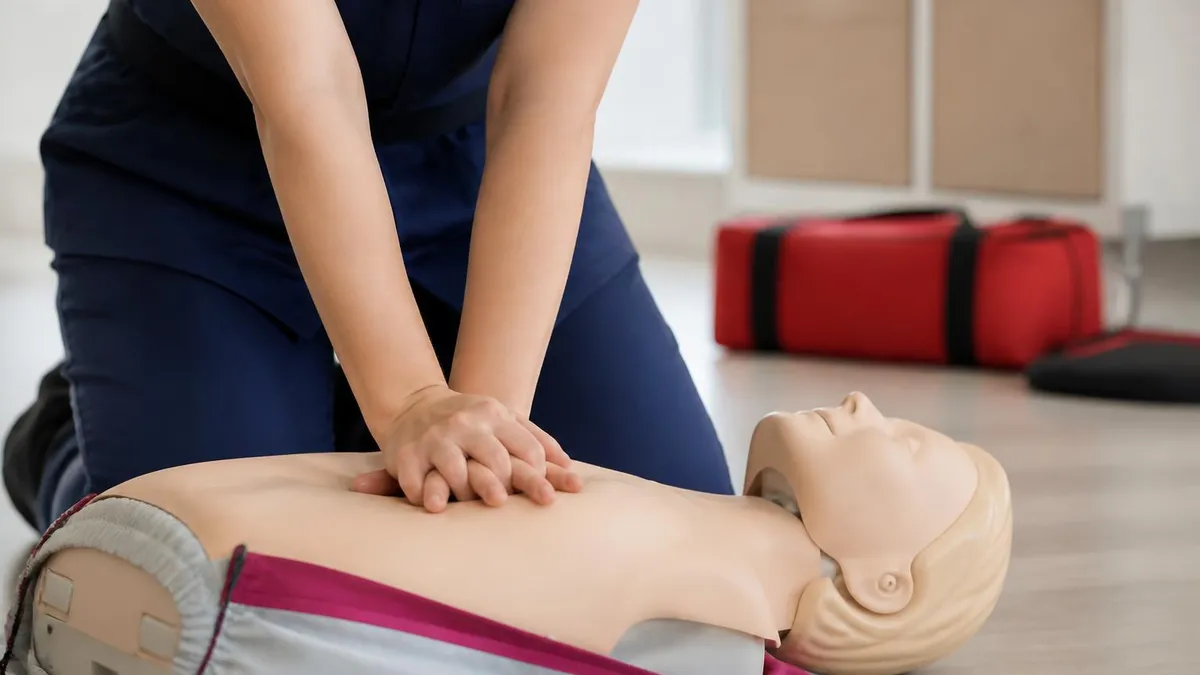
AHA BLS Certification: Course, Renewal, and Exam Guide
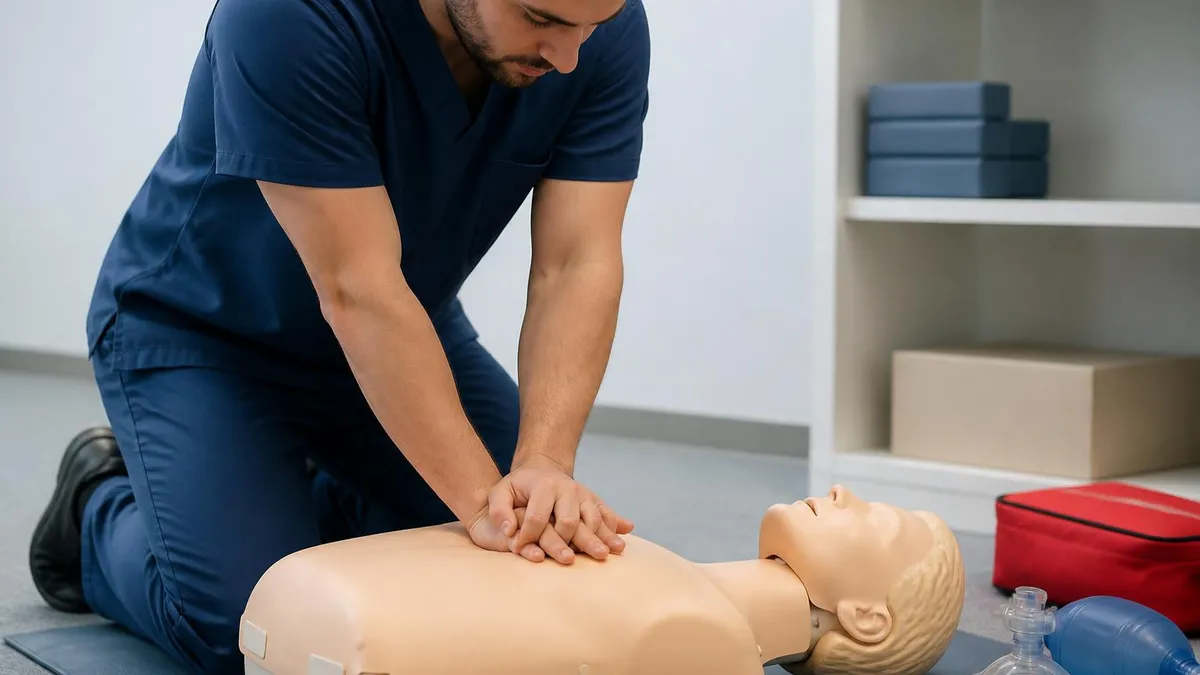
BLS Training: Course Content, Format & How to Get Certified

Online BLS: Complete Guide to Getting Your Basic Life Support Certification
About the Author

Registered Nurse & Healthcare Educator
Johns Hopkins University School of NursingDr. Sarah Mitchell is a board-certified registered nurse with over 15 years of clinical and academic experience. She completed her PhD in Nursing Science at Johns Hopkins University and has taught NCLEX preparation and clinical skills courses for nursing students across the United States. Her research focuses on evidence-based exam preparation strategies for healthcare certification candidates.
Join the Discussion
Connect with other students preparing for this exam. Share tips, ask questions, and get advice from people who have been there.
View discussion (8 replies)