
AHA BLS Test: Complete Practice Guide for Basic Life Support Certification
What is a BLS certification? Master the AHA BLS test with free practice questions, exam tips & study strategies. ✅ Pass on your first attempt.

If you're preparing for the AHA BLS test, understanding exactly what the American Heart Association expects from you is the most important first step. The BLS certification exam tests your knowledge of life-saving interventions including high-quality CPR, automated external defibrillator (AED) use, and relief of foreign-body airway obstruction. Whether you're a nursing student, EMT, respiratory therapist, or hospital technician, passing this exam on your first try requires more than just showing up to class — it demands deliberate, focused practice with realistic questions.
So, what is a BLS certification? At its core, BLS stands for Basic Life Support — a level of emergency medical care designed to sustain life during cardiac arrest, respiratory arrest, or airway obstruction until advanced medical help arrives. The American Heart Association's BLS course is the gold standard for healthcare providers across the United States, and its certification is required for employment at virtually every hospital, clinic, and emergency response agency in the country.
Many candidates wonder whether BLS and CPR are the same thing. While CPR — cardiopulmonary resuscitation — is the central skill in any BLS course, the two terms are not interchangeable. A CPR card typically covers layperson or basic rescuer skills, while BLS certification is specifically designed for healthcare professionals and covers a broader set of clinical competencies including two-rescuer CPR, bag-mask ventilation, and team dynamics during resuscitation. So if you've asked yourself "is BLS the same as CPR," the short answer is: BLS includes CPR, but it goes significantly further.
The basic life support exam from the American Heart Association follows a structured format that tests both cognitive knowledge and hands-on provider skills. The written portion is typically a 25-question multiple-choice exam with a passing threshold of 84% — meaning you must answer at least 21 of 25 questions correctly. The skills portion requires you to demonstrate competency on a manikin in front of a certified BLS instructor. Both components must be passed to receive your two-year BLS provider card.
Understanding the exam structure, common question types, and the clinical rationale behind each intervention will dramatically increase your chances of success. Practice tests are one of the most effective ways to identify knowledge gaps before you walk into the testing environment. By simulating the question style and time pressure of the actual exam, you train your brain to retrieve critical information under stress — exactly what you'll need to do during a real cardiac emergency.
This guide is designed to walk you through everything you need to know about the AHA BLS test: what it covers, how it's structured, and the most effective strategies for passing. You'll also find links to our free aha bls test practice questions, organized by topic so you can focus your study time where it matters most. Whether you're taking your initial certification or completing a basic life support renewal class, this resource will help you feel confident and fully prepared on exam day.
The best approach to any certification exam is active, not passive. Reading your textbook or watching videos is helpful, but answering practice questions forces you to apply your knowledge rather than just recall it. Every missed practice question is a learning opportunity — it shows you exactly where to focus next. Use this guide as your roadmap, and you'll be walking out of your BLS session with a provider card in hand.
AHA BLS Certification by the Numbers
AHA BLS Exam Format & Structure
| Section | Questions | Time | Weight | Notes |
|---|---|---|---|---|
| High-Quality CPR & Provider Skills | 10 | ~12 min | 40% | Compression rate, depth, recoil, interruptions |
| AED Use & Early Defibrillation | 6 | ~7 min | 24% | Pad placement, shock protocols, safety |
| Airway Management & Ventilation | 5 | ~6 min | 20% | Bag-mask technique, rescue breathing ratios |
| Special Situations & Team Dynamics | 4 | ~5 min | 16% | Opioid emergencies, drowning, pregnancy, team roles |
| Total | 25 | ~30 min (written) | 100% |
The AHA basic life support exam is organized around four core content areas, each of which reflects a distinct phase of the resuscitation sequence. Understanding what the exam covers at a conceptual level — not just memorizing answers — is the key to performing well on both the written test and the skills evaluation. Let's break down each domain in detail so you know exactly what to study and why each topic matters in a real clinical emergency.
High-Quality CPR is the cornerstone of the entire BLS curriculum and typically accounts for the largest portion of exam questions. The AHA defines high-quality CPR by five measurable parameters: a compression rate of 100–120 per minute, a compression depth of at least 2 inches (5 cm) in adults, full chest recoil between compressions, minimizing interruptions to less than 10 seconds, and avoiding excessive ventilation. Exam questions in this domain often present scenarios where one or more of these parameters are violated, and you must identify the error and correct it.
AED use and early defibrillation is the second major content area. The AHA's Chain of Survival places early defibrillation as the third critical link, immediately after early CPR. BLS exam questions about AEDs typically test pad placement, the sequence for using the device safely, what to do when the AED prompts a shock versus no shock, and how to minimize hands-off time around defibrillation. A common trick question involves whether to continue CPR while the AED is charging — the answer is yes, until the AED is ready to analyze.
Airway management and ventilation covers rescue breathing ratios, proper head-tilt–chin-lift and jaw-thrust techniques, and the correct use of bag-mask ventilation. For adult CPR with a single rescuer and no advanced airway, the ratio is 30 compressions to 2 breaths. Once an advanced airway is in place, asynchronous ventilation at 10 breaths per minute is used. The BLS exam frequently tests these ratios for adults, children, and infants, as the numbers differ and mix-ups are a common source of errors among candidates.
Special situations and team dynamics make up the final content domain. This section covers how to modify your approach in scenarios such as drowning, opioid-associated cardiac arrest (where naloxone plays a role), suspected spinal injury, pregnancy, and pediatric emergencies. Team dynamics questions test your understanding of clear communication, defined roles, closed-loop communication, and mutual respect — all of which are essential for coordinating effective resuscitation with multiple rescuers.
One of the most underappreciated aspects of BLS preparation is understanding the why behind every guideline. The AHA publishes its guidelines every five years based on the most current resuscitation science. When you understand the physiologic reason for each recommendation — for example, why full chest recoil matters (it allows venous return to the heart, optimizing cardiac output during CPR) — you can answer novel, scenario-based questions even if you haven't seen that exact question before.
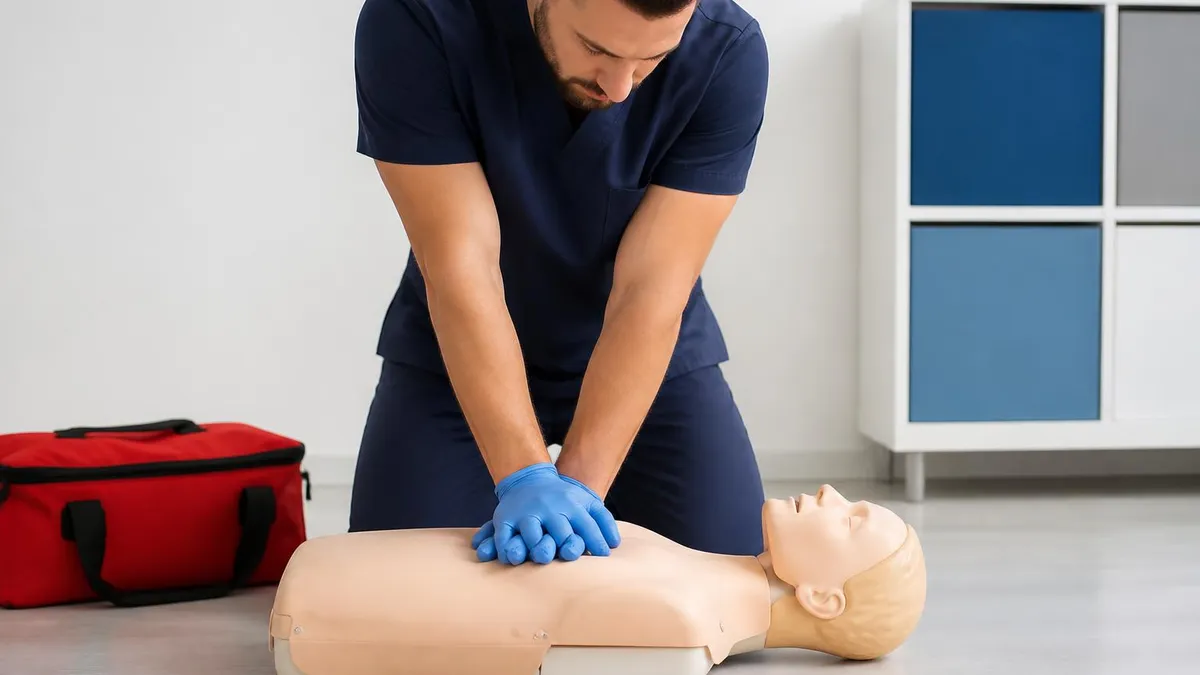
For healthcare providers pursuing the basic life support for healthcare providers course, the cognitive exam is only one half of the certification requirement. You will also need to pass a skills evaluation where an AHA-certified instructor observes your technique on a manikin. Common skills checkpoints include demonstrating 30:2 single-rescuer adult CPR, two-rescuer CPR with a bag-mask device, infant CPR with two-thumb encircling technique, and effective AED use. Practice on a manikin — not just in your head — before your course date.
The best way to confirm your readiness for both the written and skills portions is through repeated exposure to high-quality practice questions. Our free practice tests mirror the AHA's question style, covering all four content domains with detailed answer explanations that reinforce the clinical rationale behind each correct answer. Consistent practice, spread over several days rather than crammed into one session, produces significantly better retention and exam performance than last-minute studying.
AHA vs. Red Cross Basic Life Support: Key Differences
The American Heart Association's BLS Provider course is the most widely recognized certification among US hospitals, health systems, and academic medical centers. The AHA requires in-person or blended learning (HeartCode BLS online + in-person skills session) and does not offer a fully online-only certification. The cognitive exam consists of 25 multiple-choice questions with an 84% passing score, and the provider card is valid for two years. Most hospital credentialing offices specifically list AHA BLS as their required standard.
The AHA updates its resuscitation guidelines every five years based on its International Liaison Committee on Resuscitation (ILCOR) review process. The most recent major update was the 2020 Guidelines, which reinforced compression-first protocols, updated opioid emergency response recommendations, and refined pediatric resuscitation ratios. The AHA also offers a BLS Instructor course for those who want to teach and certify others, a pathway that carries additional requirements including a current provider card and completion of a two-day instructor essentials course.

AHA BLS Certification: Benefits and Challenges
- +Universally recognized by hospitals, clinics, and emergency services across the US
- +Two-year validity period provides a reasonable window before renewal is required
- +Covers both written and hands-on skills, ensuring real-world competency
- +Blended learning option (HeartCode BLS) allows flexible online study before in-person skills day
- +Directly aligned with the latest ILCOR and AHA resuscitation science guidelines
- +Required for most clinical licensure programs, nursing schools, and hospital onboarding
- −Must be completed in person or via blended learning — no fully online option for AHA
- −25-question written exam with 84% passing threshold can catch underprepared candidates
- −Skills evaluation requires physical manikin practice, which not everyone can access easily
- −Course and renewal fees can range from $50 to $90+ depending on training site
- −Two-year expiration means recurring time and cost investment for ongoing employment
- −Some employers may not accept Red Cross or other alternatives even if ILCOR-compliant
BLS Exam Prep Checklist: 10 Steps Before Test Day
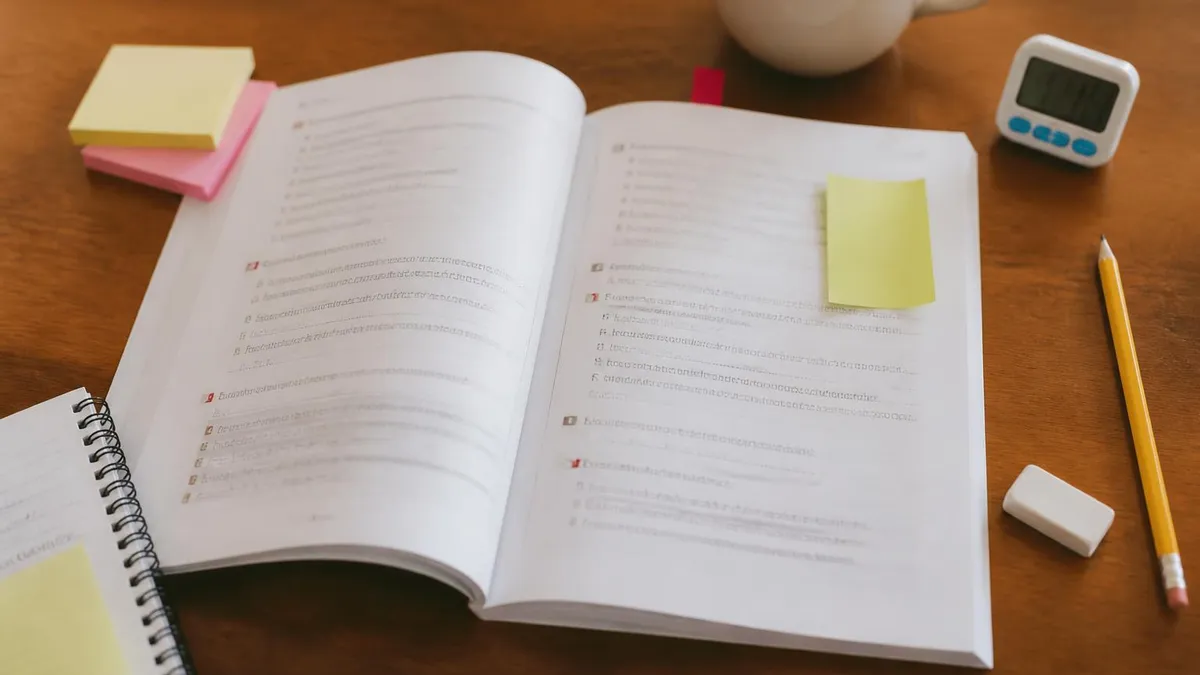
- ✓Review the current AHA BLS Provider Manual and highlight key compression rates, depths, and ratios for adults, children, and infants.
- ✓Complete at least three full-length practice exams under timed conditions before your course date.
- ✓Memorize the AHA Chain of Survival for both in-hospital and out-of-hospital cardiac arrest scenarios.
- ✓Practice identifying correct vs. incorrect CPR technique from scenario-based descriptions in practice questions.
- ✓Study AED pad placement for adults and pediatric patients and the sequence for safe defibrillation.
- ✓Review rescue breathing ratios: 30:2 for single-rescuer adult/child CPR, 15:2 for two-rescuer pediatric CPR.
- ✓Practice bag-mask ventilation technique with a partner or on a manikin to ensure proper seal and volume.
- ✓Study the special situations section: opioid emergencies, drowning, suspected spinal injury, and in-hospital arrest response.
- ✓Confirm your course location, required materials, and whether your training center accepts blended learning (HeartCode BLS).
- ✓Get a full night of sleep before your course and arrive early — skills stations often run ahead of schedule.

The 84% Rule: What It Means in Practice
On the AHA BLS written exam, you need to answer at least 21 out of 25 questions correctly to pass. That means you can only miss 4 questions — there is very little margin for error. High-quality CPR parameters (rate, depth, recoil, interruption limits) are tested repeatedly and are the single most reliable area to master. If you get every CPR question right, you've secured roughly 40% of the exam before you even touch the AED or airway sections.
One of the most important — and often overlooked — aspects of maintaining your professional credentials is understanding the basic life support renewal class process. BLS certification from the AHA is valid for exactly two years from the date of completion. After that, your card expires and you are no longer considered currently certified, which can affect your ability to practice clinically, maintain hospital privileges, or fulfill state licensure requirements. Most employers and licensing boards require proof of a current, unexpired BLS card at all times.
The AHA offers two renewal pathways. The first is the full BLS Provider course, which is exactly the same course a first-time candidate would take. This is the most comprehensive option and is always accepted. The second pathway is the BLS Renewal course, also called a refresher or renewal class, which is a shorter version of the full course designed specifically for providers who hold a current but soon-to-expire card. The renewal course still includes a written exam and a skills verification component — it is not simply an administrative update to your record.
Timing your renewal is important. Many healthcare professionals make the mistake of waiting until their card has already expired to schedule a renewal class. The AHA recommends completing your renewal course within 30 days before your current card expires. Some hospital credential systems will accept a renewal completed up to two months before expiration and simply extend the new card from the original expiration date rather than the renewal date. Always confirm your employer's specific policy on early renewal to avoid accidentally shortening your certification window.
The written portion of the BLS renewal exam is identical in format to the initial certification exam — 25 multiple-choice questions with an 84% passing threshold. Don't assume that because you've been practicing CPR for years, the exam will be easy. Many experienced clinicians are surprised to find that their knowledge of specific AHA guideline numbers (compression rate ranges, exact depth targets, ventilation timing) has drifted over time. A focused review of the current AHA guidelines — specifically any updates since your last certification — is essential preparation for your renewal exam.
For those who completed their initial BLS through an alternative provider like the Red Cross, transitioning to AHA BLS at renewal time is straightforward. Simply enroll in any AHA-authorized training center's BLS Provider course. You do not need special credit for your prior Red Cross training — the AHA course is self-contained. This is a common transition point for healthcare workers who initially certified through a community CPR program and are now entering a clinical setting that requires AHA-specific credentials.
The AHA's blended learning option, known as HeartCode BLS, is available for both initial certification and renewal. In the HeartCode model, you complete the cognitive portion of the course online at your own pace — typically two to three hours — and then schedule an in-person skills session with an AHA-authorized instructor to complete your hands-on competency verification. This format is particularly popular with busy healthcare professionals who cannot commit to a full four-hour in-person course on a single day. Skills sessions for HeartCode BLS typically take about one to two hours.
After passing both the written and skills components, you'll receive your BLS Provider card either immediately or within a few days, depending on your training center. The card includes your name, the course completion date, and the expiration date exactly two years later. Keep a digital photo of your card in addition to the physical copy — you'll be asked to provide proof of current BLS certification more often than you might expect, including at onboarding, during annual competency reviews, and whenever you rotate to a new clinical site.
An expired BLS certification can result in loss of hospital privileges, inability to take call shifts, and delays in professional licensure renewal. Most credentialing offices will flag an expired BLS card during routine review and require proof of current certification before you can return to clinical work. Schedule your basic life support renewal class at least 30 days before your card expires — don't wait until the last week.
Walking into your BLS course fully prepared means more than just reviewing the manual. It means understanding the structure of the day, what to expect from the instructor, how the skills stations are evaluated, and how to manage your nerves if you're anxious about the hands-on component. The written exam is typically administered first, giving you a chance to demonstrate your cognitive knowledge before moving to the manikin stations. Some training centers administer the written test at the end — confirm the format with your training site in advance.
For the written exam, read every question carefully and pay attention to qualifiers like "most appropriate," "first action," and "which of the following is correct." BLS exam questions are often scenario-based, meaning they describe a clinical situation and ask you to identify the correct next step.
The answer is almost always the one that most closely follows the AHA algorithm — if a question describes a patient who is unresponsive and not breathing normally, your first action should be to activate the emergency response system and retrieve the AED, not to begin CPR immediately (unless you and a second rescuer are already present and the AED is not immediately available).
During the skills evaluation, the instructor is looking for specific, observable behaviors — not a perfect performance. Common points where candidates lose credit include incomplete chest recoil (not allowing the chest to fully rise after each compression), ventilating too forcefully or too fast, allowing interruptions to compressions to exceed 10 seconds, and failing to call for help or activate the emergency response system before beginning CPR. Practice narrating your actions aloud during manikin sessions, as this helps instructors verify that you understand the rationale for each step, not just the physical motion.
Team dynamics skills are evaluated during the two-rescuer CPR station. The AHA expects providers to demonstrate clear communication, assigned roles, and closed-loop technique. Closed-loop communication means that when a team leader gives a directive ("Give one breath every 6 seconds"), the receiver repeats it back ("One breath every 6 seconds, confirmed") and then verbally confirms completion ("Breath given"). This might feel awkward in a simulation, but it is a real-world communication strategy that reduces errors during actual resuscitations and is worth practicing before your course day.
After your course, take a few minutes to review any questions you missed on the written exam. Your instructor should go over all exam questions with the group, and this debrief is a valuable learning opportunity — especially if your score was close to the 84% threshold. Understanding why a particular answer was incorrect reinforces the correct clinical reasoning and helps prevent the same error from surfacing in a real emergency situation, where the consequences are far more significant than a missed exam question.
If you didn't pass on your first attempt, don't be discouraged. The AHA allows re-testing, and many training centers will let you retake the written exam the same day if you miss it by a small margin. For the skills evaluation, you may need to schedule a separate remediation session. Use any failed attempt as diagnostic data: identify exactly which content areas cost you points and dedicate your remediation study to those specific topics. A second attempt with targeted preparation nearly always results in a passing score.
Finally, remember that BLS certification is not just a bureaucratic requirement — it is a direct reflection of your clinical competency to intervene in life-threatening emergencies. The patients who will benefit from your BLS skills are counting on you to perform correctly under pressure. Every hour you invest in preparation now translates directly into confidence and competence when it counts most. Use our free practice quizzes, study the AHA guidelines, practice on a manikin, and walk into your course knowing you've done everything possible to be ready. Your aha bls test preparation starts here.
Beyond memorizing numbers and algorithms, the most effective BLS candidates approach their preparation with a clinical mindset. Ask yourself: in a real emergency, what would I actually do first? The answer to that question — always rooted in the AHA's systematic approach — is the answer the exam is looking for. Simulation-based thinking during your study sessions trains your brain to retrieve the right information in the right sequence, which is exactly what high-stakes clinical environments demand.
One of the most effective study strategies is to use practice questions not just to test yourself but to learn from each explanation. After answering a question — whether you got it right or wrong — read the full rationale. Understanding why one answer is correct and why the others are wrong gives you a conceptual framework that generalizes to questions you've never seen before. This is far more valuable than memorizing a list of answers, because the AHA can rephrase any concept in dozens of different ways.
Group study with colleagues who are also preparing for BLS certification can be surprisingly effective. Take turns playing the role of team leader and team member during simulated two-rescuer CPR scenarios. Quiz each other on compression rates, ventilation ratios, and AED steps. Teaching a concept to someone else is one of the most powerful ways to consolidate your own understanding — if you can explain why full chest recoil matters for cardiac output, you'll never miss a question about it again.
Pay particular attention to the pediatric and infant sections of the BLS curriculum, as these are areas where candidates frequently lose points due to confusion about the different compression depths and ventilation ratios compared to adults. For children (ages 1 to puberty), compression depth should be at least one-third the anterior-posterior diameter of the chest, approximately 2 inches. For infants (under 1 year), the depth is approximately 1.5 inches, using two fingers or the two-thumb encircling technique. Two-rescuer pediatric CPR uses a 15:2 ratio rather than the adult 30:2 ratio.
The opioid emergency section of the BLS exam has become increasingly prominent in recent years as the AHA has updated its guidelines to address the opioid crisis. If you encounter a patient who is unresponsive and not breathing normally and opioid overdose is suspected, the current AHA protocol calls for naloxone administration if available (per your scope of practice), along with standard CPR and AED use if the patient is pulseless.
The BLS exam may present scenarios requiring you to distinguish between an opioid overdose with a pulse (respiratory arrest) versus a full cardiac arrest, as the management differs in important ways.
Time management during the written exam is rarely an issue for most candidates — 25 questions in 30 minutes provides generous time for careful reading and review. However, some candidates rush through questions and make careless errors. A better strategy is to read each question fully, eliminate clearly wrong answers, and select the best remaining option. If a question genuinely stumps you, mark it, move on, and return at the end. Don't spend more than 60 to 90 seconds on any single question during your first pass.
After passing your BLS course, consider how you'll maintain your skills over the next two years before renewal. Research consistently shows that CPR skill quality degrades within 3 to 6 months of training without refresher practice. Many hospitals offer quarterly or annual CPR skills labs for staff — take advantage of these opportunities. Reviewing the AHA's free online resources and completing additional practice quizzes periodically will also help you stay sharp and ready to intervene confidently if a real emergency occurs on your unit or in your facility.
BLS Questions and Answers
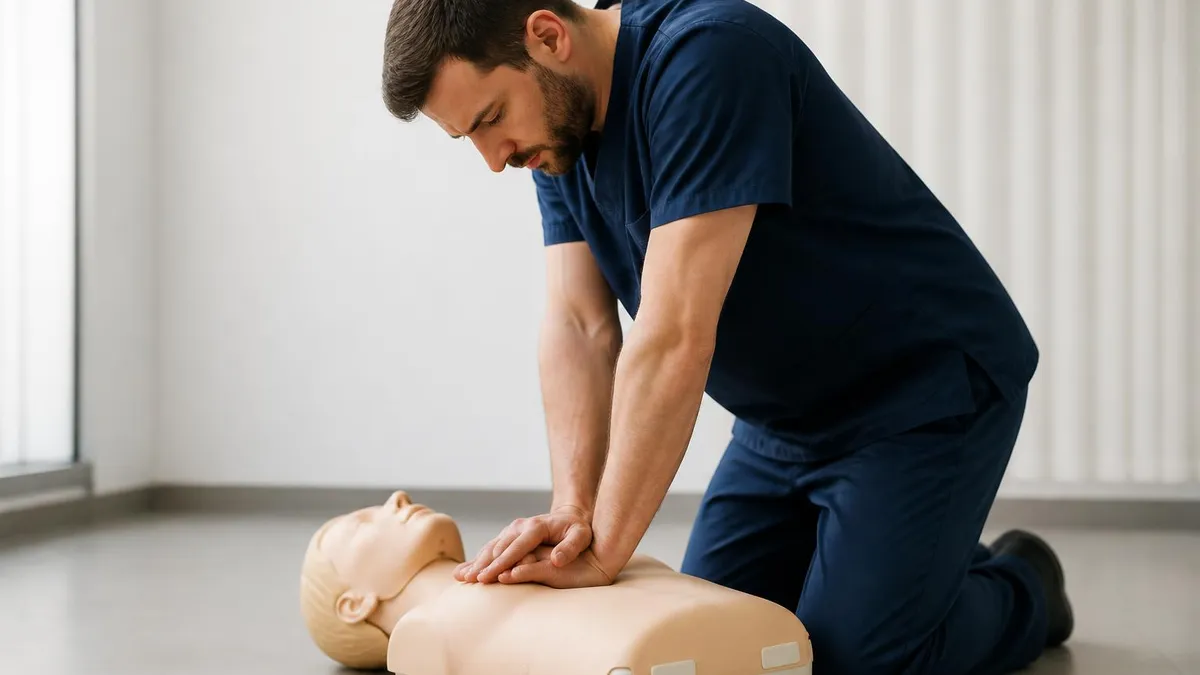
BLS Exam: Complete 2026 Guide to Passing Your Basic Life Support Certification Test
Free Basic Life Support MCQ Questions and Answers Guide
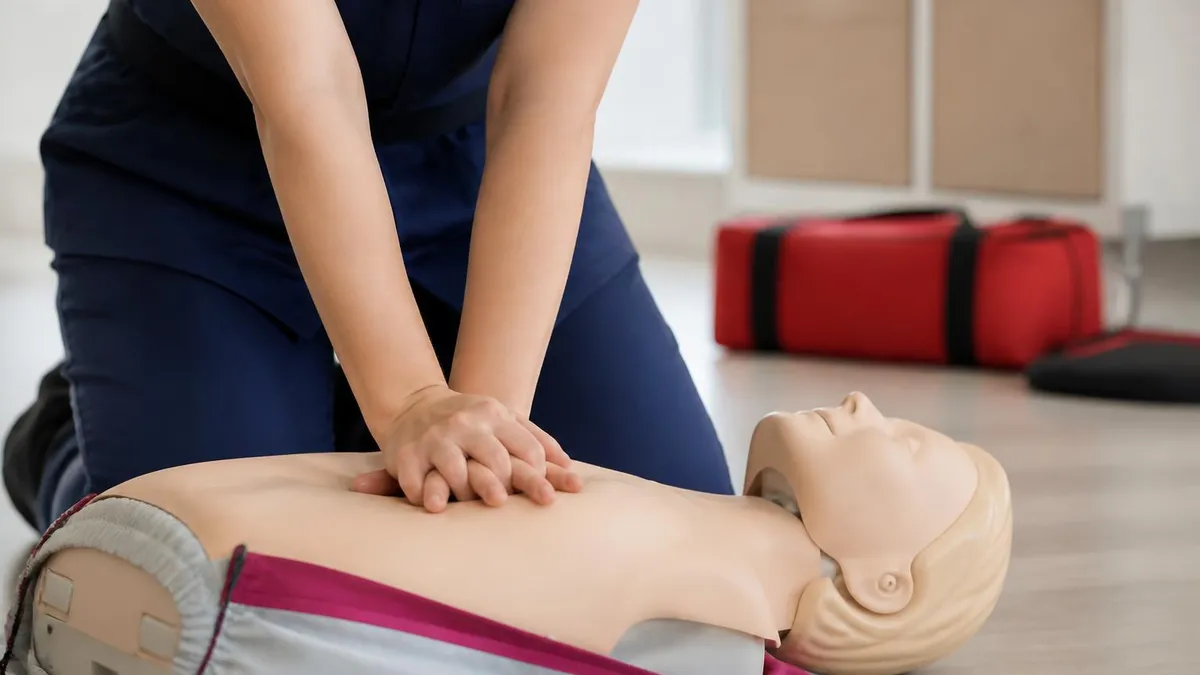
AHA BLS Certification: Course, Renewal, and Exam Guide
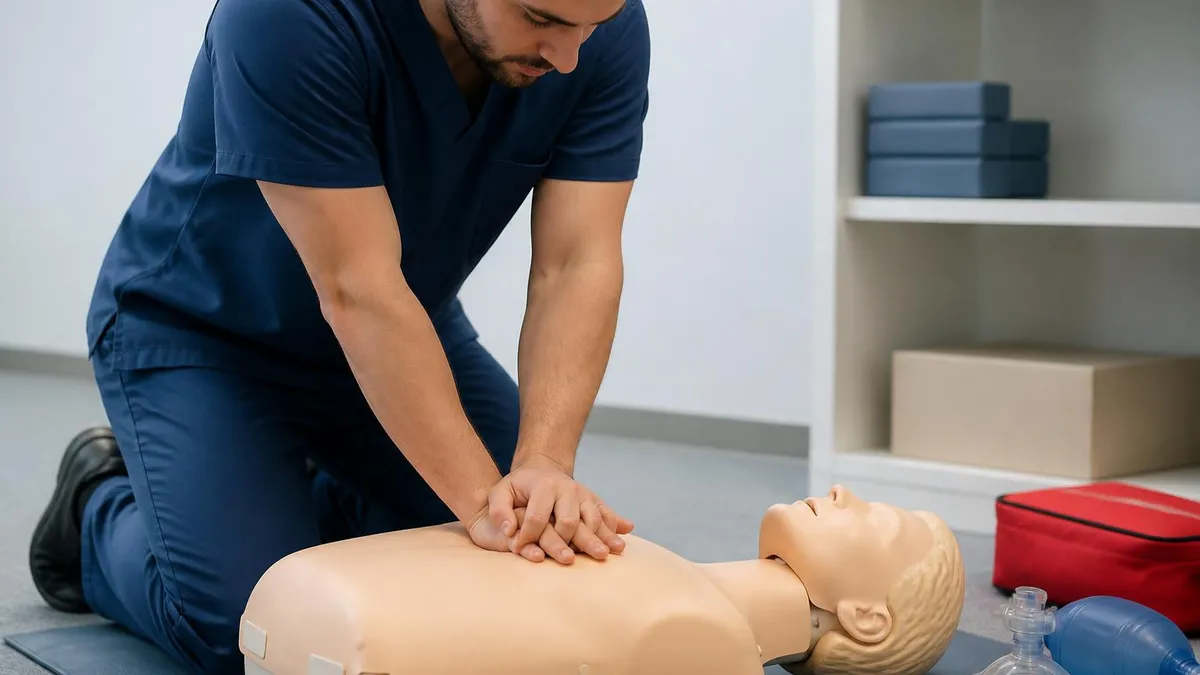
BLS Training: Course Content, Format & How to Get Certified
BLS Renewal Course: Complete 2026 Guide to Recertifying Your Basic Life Support Card
About the Author

Registered Nurse & Healthcare Educator
Johns Hopkins University School of NursingDr. Sarah Mitchell is a board-certified registered nurse with over 15 years of clinical and academic experience. She completed her PhD in Nursing Science at Johns Hopkins University and has taught NCLEX preparation and clinical skills courses for nursing students across the United States. Her research focuses on evidence-based exam preparation strategies for healthcare certification candidates.
Join the Discussion
Connect with other students preparing for this exam. Share tips, ask questions, and get advice from people who have been there.
View discussion (8 replies)