
Hardest Bar Exams in the US: Which States Are the Toughest to Pass?
Which bar exam is hardest? 🎯 Compare pass rates, cut scores & difficulty by state. California, Delaware & more ranked with real data.

The bar exam is one of the most demanding professional licensing tests in the United States, and not all state versions are created equal. Aspiring attorneys spend months in intensive preparation, yet pass rates can vary dramatically from state to state — sometimes by more than 30 percentage points.
Understanding which jurisdictions administer the hardest bar exams can help you plan your study strategy, choose a jurisdiction to sit in, and set realistic expectations for the road ahead. This article breaks down which states consistently rank as the most difficult, why pass rates differ, and what you can do to improve your odds.
California has long been considered the gold standard of bar exam difficulty. The California bar exam historically carries a cut score — the minimum scaled score required to pass — that is among the highest in the country.
Even after the state transitioned to the Uniform Bar Exam (UBE) format in July 2023, California retained a high cut score of 266 out of 400, compared to states like Missouri and Alabama which set their UBE cut scores closer to 260. The result is a first-time pass rate that regularly hovers around 40–50% for all takers, making it a genuine gauntlet for law graduates nationwide.
Beyond California, states like Delaware, Nevada, and Louisiana have historically posted challenging pass rates. Delaware administers its own state-specific exam rather than the UBE, and its bar exam questions are known for testing nuanced procedural rules unique to that jurisdiction's Court of Chancery — a court that handles major corporate litigation and is considered one of the most sophisticated legal venues in the world. Candidates who underestimate the depth of Delaware-specific law often find themselves caught off guard on exam day.
The bar exam as a concept dates back to the 19th century, when state courts began requiring formal examinations before admitting attorneys to practice. Today, roughly 44 jurisdictions have adopted the UBE, which includes the Multistate Bar Examination (MBE), the Multistate Essay Examination (MEE), and the Multistate Performance Test (MPT). However, adopting the UBE does not automatically make a state's bar exam easier — the cut score set by each jurisdiction still determines how difficult it is to actually pass in that state.
One factor that significantly influences perceived difficulty is the quality of the applicant pool. States with highly selective law schools and smaller graduating classes tend to report higher pass rates simply because their applicants enter with stronger academic preparation. Conversely, large states with dozens of law schools — including several schools with lower bar passage rates — may see aggregate pass rates pulled down by the sheer diversity of the applicant pool. This is worth considering when comparing raw pass rate statistics between jurisdictions.
The conversation around bar exam difficulty gained unusual mainstream attention when celebrity Kim Kardashian publicly discussed her journey studying for the California bar exam under California's law reader program, which allows individuals to study under a practicing attorney rather than attend law school. Kardashian passed her First-Year Law Students' Examination (the "Baby Bar") on her fourth attempt, and her candidacy sparked widespread discussion about access to the legal profession, the fairness of bar exams, and what bar exam results actually measure about a candidate's competence.
Whether you are researching difficulty because you plan to sit in multiple states, because you want to understand your odds before committing to a jurisdiction, or simply because you are curious about the landscape of legal licensing, this guide provides the factual grounding you need. We will cover exam formats, pass rates, cut scores, state-specific quirks, and the practical steps that have helped thousands of candidates pass even the most challenging jurisdictions on their first attempt.
Hardest Bar Exams by the Numbers
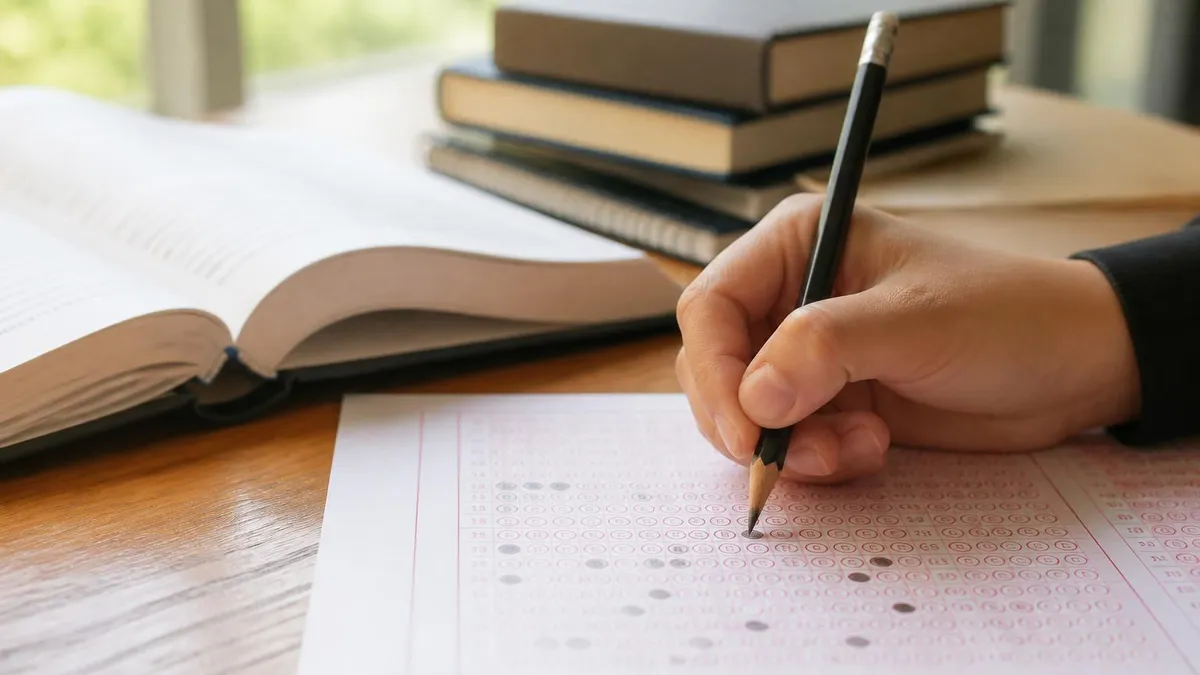
Bar Exam Format Overview
| Section | Questions | Time | Weight | Notes |
|---|---|---|---|---|
| Multistate Bar Exam (MBE) | 200 | 6 hrs (2 sessions) | 50% | Multiple choice; national content |
| Multistate Essay Exam (MEE) | 6 | 3 hrs | 30% | 6 essays; UBE jurisdictions only |
| Multistate Performance Test (MPT) | 2 | 3 hrs | 20% | Lawyering skills tasks; practical |
| Total | 200 | 12 hours (2 days) | 100% |
When legal educators and bar prep professionals discuss the hardest bar exams in the country, California invariably tops the list. The state's UBE cut score of 266 is the highest in the nation, meaning a California candidate must outperform applicants in virtually every other state just to meet the minimum threshold. The National Conference of Bar Examiners (NCBE) regularly publishes jurisdiction-by-jurisdiction pass rate data, and California's numbers are consistently lower than the national average — even when controlling for law school quality and repeat takers versus first-timers.
Delaware occupies a unique position in the difficulty rankings for an entirely different reason. Rather than relying solely on the UBE, Delaware historically administered a state-specific component that tested Delaware-specific procedural and corporate law. Because Delaware is the legal home of more than 60% of Fortune 500 companies, its Court of Chancery handles some of the most complex corporate governance disputes in American jurisprudence. Attorneys who wish to practice in Delaware must demonstrate a working knowledge of this specialized body of law, which is covered nowhere else in standard bar prep curricula.
Nevada has also earned a reputation as a difficult jurisdiction. Nevada's UBE cut score of 266 (matching California) combined with a challenging local component has resulted in first-time pass rates that frequently fall below 50%. The state's legal market, centered heavily on Las Vegas and its hospitality, gaming, and entertainment industries, requires practitioners to understand a highly specialized set of regulatory frameworks that general bar prep materials often treat only superficially.
Louisiana stands apart from every other state in the country because it is the only US jurisdiction with a legal system rooted in civil law rather than common law, a legacy of its French and Spanish colonial history. The Louisiana bar exam tests the Napoleonic Code-influenced Civil Code rather than common law property and contract principles. This means that standard UBE prep courses are essentially useless for the Louisiana-specific components, and candidates must dedicate significant extra time to learning an entirely different legal tradition from scratch.
Virginia and Maryland have historically also posted challenging pass rates, particularly for repeat takers. Both states have adopted the UBE but set cut scores at 266, and both have competitive legal markets tied to the federal government and major corporate practices in the DC metropolitan area. The high concentration of graduates from elite law schools in these markets means the applicant pool is strong, and the curve is correspondingly steeper for those who are less prepared.
It is worth noting that pass rates fluctuate year to year based on the cohort sitting for the exam, changes in law school enrollment patterns, and updates to the NCBE's test specifications. The NCBE updated its MBE content specifications in 2023, adding civil procedure as a tested subject and reshuffling the weight given to other topics. These changes caught some candidates off guard, contributing to temporary dips in pass rates across multiple jurisdictions. Staying current with NCBE announcements is therefore an important part of any bar prep strategy.
For candidates researching which state to sit in, the interplay between cut score, transfer policies, and portability of UBE scores adds another layer of strategic complexity. A candidate who passes the New York UBE with a score of 270, for example, can transfer that score to any other UBE jurisdiction that accepts transfer scores above 270 — but cannot transfer it to California without sitting for the California exam again, because California does not accept transferred UBE scores. Understanding these rules before you register can save you significant time, money, and stress.
California Bar Exam, Kim Kardashian, and Bar Exam Reddit: What Takers Say
The California bar exam is widely regarded as the most difficult in the United States. After switching to the UBE format in July 2023, California retained the highest cut score in the country at 266 out of 400. First-time pass rates hover between 40% and 55% depending on the administration, and repeat-taker rates are even lower. The exam spans two days and tests the full range of MBE, MEE, and MPT components, with California-specific essay prompts that can include topics not covered on the national MEE.
Candidates sitting for the California bar exam must also comply with strict eligibility requirements administered by the State Bar of California. Applicants must graduate from an ABA-accredited law school, or qualify through California's unique law reader or correspondence school pathways. The State Bar's moral character review process adds another layer of preparation, often requiring documentation of prior legal or financial issues. Many applicants report that the administrative burden of the California application process alone is a significant time sink during bar prep.

Pros and Cons of Sitting for a High-Difficulty Bar Exam Jurisdiction
- +A passing score in a difficult state like California carries significant professional prestige with employers
- +High cut-score states often have larger, more lucrative legal markets offering stronger career prospects
- +Rigorous preparation for a hard exam often results in stronger foundational legal knowledge for practice
- +UBE scores from high cut-score states can demonstrate competence when applying to other jurisdictions
- +Passing a notoriously hard exam can build professional confidence and resilience under pressure
- +Many top law firms headquartered in hard-exam states (California, New York, Delaware) prefer local bar membership
- −Lower first-time pass rates mean higher probability of needing to retake, adding cost and stress
- −Retaking the bar exam can delay employment by six months or more, impacting early career earnings
- −Some states like Louisiana require learning an entirely different legal tradition, dramatically increasing prep time
- −High-difficulty jurisdictions often have stricter moral character review processes adding administrative burden
- −Failed attempts can affect bar admission in other states under character and fitness review processes
- −The psychological toll of failing a high-stakes exam can undermine long-term career motivation and wellbeing
Bar Exam Prep Checklist: What to Do Before You Sit for a Hard Jurisdiction
- ✓Verify your jurisdiction's current cut score on the NCBE website and note any recent changes
- ✓Register for a commercial bar prep course (Themis, Barbri, or Kaplan) at least 10 weeks before the exam
- ✓Download and complete at least three full released MBE practice tests under timed conditions
- ✓Research your state's specific essay topics — many UBE states test additional state-law subjects not on the MEE
- ✓Create a written study schedule that allocates dedicated blocks to MBE subjects, essays, and MPT practice
- ✓Join a bar exam reddit community or study group for your specific jurisdiction to exchange insights
- ✓Complete at least six full MPT practice tasks and review model answers line by line
- ✓Track your MBE performance by subject using a spreadsheet to identify weak areas needing extra review
- ✓Review the supreme court bar exam results data for your jurisdiction to set realistic score targets
- ✓Confirm application deadlines, required documentation, and moral character submission timelines with your state bar

Cut Score Is More Important Than Raw Pass Rate
Many candidates focus on a state's overall pass rate without realizing that the cut score — not the difficulty of the questions themselves — is the primary driver of how hard it is to pass. California and Nevada both use 266, the highest in the country. Raising your scaled MBE score by just 5 points can be the difference between passing and failing, which is why targeted practice on your weakest MBE subjects is the highest-ROI activity in the final weeks of preparation.
Understanding what actually drives bar exam pass rates requires looking beyond the simple question of which states have the hardest bar exam questions. The relationship between applicant preparation, law school academic rigor, bar prep resources, and test-taking strategy is complex, and research from the NCBE and independent legal educators has shed considerable light on what separates passing candidates from those who fall short. One of the most consistent findings is that MBE scaled score, not essay performance, is the strongest predictor of overall bar exam success.
The MBE consists of 200 multiple-choice questions administered over two three-hour sessions. Of those 200, 175 are scored and 25 are unscored pretest items. The seven subjects tested are civil procedure, constitutional law, contracts, criminal law and procedure, evidence, real property, and torts. Each subject receives equal weight in the final scaled score. Candidates who enter the exam with an imbalanced preparation — strong in some subjects but weak in others — often find that their weaknesses on the MBE drag down their total score below the cut even when their essays are solid.
Essay performance matters enormously in states that weight written components heavily, particularly in non-UBE jurisdictions like California, which administers its own essays. California's essay questions are known for presenting complex, multi-issue fact patterns that require candidates to spot issues quickly, organize their answers clearly under IRAC (Issue, Rule, Analysis, Conclusion) format, and allocate their time efficiently across six or more subjects. Graders are experienced attorneys who reward clear, methodical analysis over creative legal argumentation — a lesson that trips up many candidates who are accustomed to the open-ended style of law school exams.
The Multistate Performance Test (MPT) is often underestimated by candidates who are overwhelmed by MBE and essay preparation. The MPT presents a simulated law office task — drafting a memo, writing a brief, preparing a client letter — using a closed library of fictional cases and statutes provided in the exam packet.
There are no outside materials, and the entire point is to evaluate whether a candidate can perform basic lawyering tasks under time pressure. Candidates who skip MPT practice often leave significant points on the table, particularly in states where the MPT accounts for a full 20% of the total score.
Bar exam reddit communities frequently surface useful data about which commercial prep courses best prepare candidates for specific jurisdictions. The consensus on r/barexam tends to favor Themis for UBE jurisdictions and Barbri for California, largely because of their adaptive practice question platforms and their state-specific essay banks. However, the "best" course is ultimately the one a candidate will actually follow through on — an expensive course left half-finished is worth less than a cheaper course completed diligently. Discipline and consistency matter more than course selection in most cases.
Mental health during bar prep is a topic that the legal profession has historically underdiscussed. The 10–14 week preparation period for most candidates involves isolation, sleep deprivation, financial stress, and enormous performance pressure. Research published in the Journal of Legal Education has documented elevated rates of anxiety and depression among bar candidates, and bar prep experts increasingly recommend building recovery time — exercise, social connection, adequate sleep — into study schedules rather than treating every waking hour as study time. Burned-out candidates consistently underperform relative to their abilities on exam day.
Finally, the strategic question of when to sit for the bar exam matters more than most candidates realize. July administrations tend to attract first-time takers fresh from law school graduation, which historically yields higher pass rates than February administrations. The February exam draws a higher proportion of repeat takers and candidates who graduated in December, and pass rates are typically lower as a result.
If you have the flexibility to choose your administration window, July is generally the stronger option — though the compressed timeline between May graduation and July exam dates requires disciplined preparation from the moment you receive your diploma.
Most state bars have application deadlines four to six months before the exam date, and late applications are typically subject to substantial additional fees or outright rejection. Missing the application deadline can mean waiting another six months for the next administration window — a delay that costs you not just time but often your deferred employment offer. Check your jurisdiction's bar application portal now, even if you are still in law school, and add all critical deadlines to your calendar immediately.
For candidates who are weighing which jurisdiction to sit in based on difficulty, the strategic calculus involves more than just picking the easiest state. If you plan to practice law in a specific city or region, you generally need to be barred in that state regardless of pass rate.
However, if you have genuine geographic flexibility — common among federal clerkship applicants, BigLaw associates who rotate between offices, or attorneys who work remotely — then understanding the difficulty spectrum can inform a real decision. Among the hardest bar exams, some states offer significantly more transferable UBE scores and broader reciprocity arrangements than others.
New York has historically been considered a difficult bar exam jurisdiction, but its 2016 adoption of the UBE and its cut score of 266 — while high — is paired with a robust UBE score transfer program that makes the New York score one of the most portable in the country. Passing in New York with a strong score essentially unlocks admission by score transfer in dozens of other UBE states. For candidates who want one exam to serve as the foundation for multi-state practice, New York remains a strategically valuable choice despite its difficulty.
Texas is another jurisdiction worth examining carefully. Texas does not use the UBE — it administers its own state-specific exam that tests Texas procedural law, Texas community property rules, and other jurisdiction-specific content. The Texas bar exam has historically posted first-time pass rates in the 60–70% range, which is higher than California but lower than many UBE states. The state-specific content means that standard UBE prep is insufficient, and candidates must supplement with Texas-specific materials. For those planning to practice in Texas's enormous legal market, the investment is worthwhile.
Florida similarly administers its own exam rather than the UBE, and Florida's exam has a reputation for heavily testing procedure — both civil and criminal — along with Florida constitutional law and the Florida Rules of Evidence.
The Florida Board of Bar Examiners publishes detailed statistics on pass rates, and the data consistently shows that Florida's pass rates for first-time takers from ABA-accredited schools are higher than California's but lower than many Midwestern UBE states. Florida's large and diverse legal market, combined with its growing tech and international business sectors, makes it an attractive destination for new attorneys willing to do the state-specific preparation.
One frequently overlooked factor in bar exam difficulty rankings is the quality and specificity of the feedback that failed candidates receive after a failed attempt. In California, candidates who fail receive a raw score breakdown by component — MBE score, essay scores, and MPT scores — that allows them to identify exactly where they lost points.
This feedback loop is invaluable for retakers. In some other jurisdictions, feedback is limited to a total scaled score with no component breakdown, making it much harder for retakers to know which area of their preparation to prioritize. When comparing states, check whether detailed score reports are available to failing candidates.
Supreme Court bar exam results represent a related but distinct topic that sometimes confuses candidates. The US Supreme Court maintains its own bar, separate from any state bar, which allows attorneys to argue cases before the Court. Admission to the Supreme Court bar is largely ceremonial — it requires three years of good standing in a state bar and sponsorship by two existing members — and does not involve a separate examination.
However, the term "supreme court bar exam results" sometimes appears in search queries from candidates who want to understand whether their state's supreme court publishes bar exam pass data, which most state supreme courts do through their bar licensing agencies.
For candidates who have already failed one attempt and are planning a retake, the data on retaker outcomes offers some encouragement alongside sobering facts. In California, approximately 26–30% of repeat takers pass on their second attempt, and rates decline with each subsequent attempt. In most UBE states, repeat-taker pass rates are higher — sometimes reaching 40–50% — suggesting that the additional preparation time and familiarity with the exam format genuinely help. The key differentiator between retakers who pass and those who do not is typically a change in preparation strategy rather than simply studying more of the same material.
Passing one of the hardest bar exams in the country is achievable, but it requires a fundamentally different approach than simply working through a commercial prep course on autopilot. The most successful candidates in high-difficulty jurisdictions share several habits: they begin preparation earlier than their peers, they prioritize active recall over passive review, they complete enormous volumes of practice questions under timed conditions, and they ruthlessly track their performance data to identify and address weak spots before exam day.
Active recall — the practice of testing yourself on material rather than re-reading notes or outlines — is supported by decades of cognitive science research as the most effective study technique for long-term retention. For bar exam preparation, this means spending the majority of your study time answering practice questions, not reading hornbooks or watching lecture videos. A general guideline recommended by most bar prep experts is the 70/30 rule: 70% of your preparation time spent on practice questions and timed writing exercises, 30% on review of substantive law through outlines and lectures.
Time management on exam day is a skill that must be practiced in advance, not improvised in the moment. The MBE allows approximately 1.8 minutes per question — fast enough that a candidate who gets stuck on a difficult question and refuses to move on will inevitably run out of time at the end of the section.
Experienced candidates develop a rhythm of reading the question stem, identifying the call of the question, eliminating obviously wrong answers, and committing to a best answer — all within 90 seconds — reserving the final 30 seconds to flag and revisit genuinely uncertain questions if time permits.
Essay writing for the bar exam is a performance skill that improves dramatically with structured practice and feedback. The single most common mistake among failed candidates is writing essays that are legally accurate but poorly organized — failing to use explicit headers, burying the issue identification, or spending too much time on strong issues while neglecting weaker ones that still carry points.
Graders often spend fewer than three minutes reading each answer, which means your organizational structure must communicate competence at a glance. Practice writing timed essays with an explicit outline step before you begin drafting, and review model answers not just for their legal content but for their structural choices.
The final week before the bar exam should be treated as a taper period, similar to the final week before a marathon. Reduce your volume of new material, focus on reviewing your most important outlines and your personal list of frequently missed question types, get adequate sleep, and avoid the temptation to cram unfamiliar topics.
Research on test performance consistently shows that sleep deprivation in the 48 hours before a high-stakes exam significantly impairs recall, processing speed, and decision-making — all of which are essential for bar exam performance. Arriving at the testing center rested and confident is itself a preparation strategy.
Logistical preparation for exam day is another area where candidates are frequently caught off guard. Know your testing center location, parking situation, and check-in process in advance. Review your jurisdiction's rules about permitted materials — some states allow digital scratch paper, others require handwritten notes on provided paper, and rules about calculators and earplugs vary. Arrive early enough to get settled before the proctor begins reading instructions. Small logistical surprises on exam day consume mental bandwidth that you need for the exam itself, so eliminating them in advance is time well spent.
Finally, approach the bar exam as a test of exam-taking skill as much as a test of legal knowledge. The bar exam is not a simulation of law practice — no practicing attorney is ever asked to answer 200 multiple-choice questions about torts in six hours without access to research tools.
It is a standardized assessment designed to establish a minimum competence threshold, and it rewards candidates who understand its conventions, its scoring methodology, and its predictable patterns. Treat it accordingly: study the test itself, not just the law, and you will dramatically improve your odds of joining the roughly half of all takers who pass on their first attempt in even the most challenging jurisdictions.
Bar Questions and Answers



About the Author
Attorney & Bar Exam Preparation Specialist
Yale Law SchoolJames R. Hargrove is a practicing attorney and legal educator with a Juris Doctor from Yale Law School and an LLM in Constitutional Law. With over a decade of experience coaching bar exam candidates across multiple jurisdictions, he specializes in MBE strategy, state-specific essay preparation, and multistate performance test techniques.