
How Hard Is the Bar Exam? Pass Rates, Difficulty & Format 2026 September
✏️ How hard is the bar exam? See pass rates by state, why CA is brutal, MBE/MEE/MPT difficulty, and how it compares to the CPA exam.

So you're sitting at your desk, staring at a stack of outlines that could double as a doorstop, and the question keeps creeping in — how hard is the bar exam, really? It's the question every law student whispers at 2am, and the answer isn't a clean number. It's a mix of brutal hours, weird question formats, and a passing standard that shifts by state.
Here's the short version: the bar exam is hard because it tests roughly two years' worth of doctrine across 12 to 14 subjects, all crammed into two days, under timed conditions, with a written portion that punishes weak organization and an MBE that punishes weak reading. National pass rates hover around 60 to 65 percent for first-time takers — and drop sharply for repeaters. California sits even lower. New York runs higher. Same exam family, wildly different outcomes.
This guide walks you through why people find it hard, where the real difficulty lives, and what separates passers from repeat-takers. You'll see state-by-state pass rate data, format breakdowns, and the parts of the test that trip people up the most. If you want a feel for the actual question style first, the bar exam practice test is the fastest way to see what you're up against.
How hard is the bar exam — the honest answer
People ask "is the bar exam hard" the way they ask if a marathon is hard. Yes. But the difficulty isn't just one thing. It's three layered problems stacked on top of each other.
First, the volume. You're tested on contracts, torts, criminal law, criminal procedure, civil procedure, constitutional law, evidence, real property, business associations, family law, trusts, wills, secured transactions, and conflicts of laws. Not every state tests every subject, but the Uniform Bar Exam (UBE) and most state-specific exams pull from this pool. That's roughly two thousand pages of black-letter rules — and you need them memorized cold.
Second, the format. The Multistate Bar Examination (MBE) gives you 200 multiple-choice questions over six hours. The Multistate Essay Examination (MEE) hands you six essays in three hours. The Multistate Performance Test (MPT) drops you into a fake client file and asks you to draft a memo or motion from scratch — twice, in 90-minute chunks. Speed matters as much as substance.
Third, the standard. A passing score on the UBE is set by each jurisdiction — typically between 260 and 280 out of 400. California requires 1390 out of 2000 on its bespoke exam. The cut score isn't arbitrary; it's calibrated to weed out roughly 35 to 40 percent of takers nationally.
What the numbers actually say
The latest NCBE data shows a national first-time pass rate around 78 percent on the July administration and 56 percent on February. Why the gap? July takers are usually fresh graduates who studied full-time. February draws repeaters, working professionals, and foreign-trained attorneys — a tougher demographic. So when somebody quotes "the pass rate is 60 percent," they're averaging two very different populations.
How difficult is the bar exam compared to law school finals?
If you breezed through 1L finals, don't assume the bar will feel familiar. Law school exams reward depth on a few issues over three hours. The bar rewards breadth — spotting 10 issues in a 30-minute essay, then moving on. You don't have time to wax philosophical about the policy behind the parol evidence rule. You spot it, you apply it, you move.
The MBE is its own beast. Each question gives you a fact pattern of 80 to 200 words, then four answer choices that all look plausible. Two are usually wrong on the law. The other two are both technically right, but one is "more correct" — better fits the call, captures the strongest argument, or accounts for a subtle exception. That last cut is where most points are lost.
Why is the bar exam so hard for smart people?
Plenty of people who graduated top of their class fail on the first try. It happens every cycle. The reason isn't intelligence — it's a mismatch between law school habits and bar prep habits. Law school rewards original analysis. The bar rewards rule recall plus IRAC plus speed. Some of the sharpest legal thinkers struggle with the discipline of writing a five-paragraph essay that hits every issue in 30 minutes flat.
Foreign-trained attorneys face an extra hurdle. The common-law focus, the case-based reasoning, the specific Federal Rules of Evidence — none of it maps cleanly onto civil-law training. Pass rates for foreign-educated takers run roughly 30 to 35 percent.
Why is California bar exam so hard?
California is its own category. The state opted out of the UBE for years and ran a uniquely difficult 18-hour exam — though it shortened to two days in 2017. Even after that change, California's first-time pass rate sits around 52 percent, well below the national average. Repeat takers fare worse — closer to 30 percent.
Three factors make California harder. The cut score (1390/2000, equivalent to roughly 1440 on the old scale) is one of the highest in the country. The essays cover California-specific distinctions — community property, California civil procedure quirks, professional responsibility nuances — that don't appear elsewhere. And the volume of test-takers means the curve is genuinely competitive.
If California is your target, the California bar exam guide breaks down the state-specific subjects and recent format changes in detail.
How hard is the New York bar exam?
New York adopted the UBE in 2016, so the core test is the same as 40+ other jurisdictions. What makes NY different is the New York Law Course (NYLC) and New York Law Exam (NYLE) — online modules you complete separately, focused on state-specific law. First-time pass rates run around 78 to 83 percent, which sounds friendlier than California, though it still means roughly one in five takers fails. The New York bar exam overview covers registration deadlines and the additional NY-specific components.
Is the CPA exam harder than the bar exam?
This comes up a lot, especially from people choosing between accounting and law. Honest answer: they're hard in different ways, and a direct comparison is messy.
The CPA exam is four separate sections taken over an 18-month window — Audit, Regulation, Financial, and Business. You can take them one at a time, retake any section, and you don't lose credit for passed sections during the window. Pass rates per section run 45 to 60 percent. Total study time? Most candidates budget 300 to 400 hours.
The bar exam is two days, all subjects at once, no breakup option. Total study time? Eight to ten weeks at 50 to 60 hours per week — call it 500 to 600 hours. So the bar is more compressed and higher-stakes in a single sitting. But individual CPA sections can be technically denser, especially the FAR module.
People who've taken both typically say the bar feels harder because of the all-in, all-at-once structure. But "harder" depends on whether you'd rather face one brutal weekend or four medium-bad ones spread over a year.
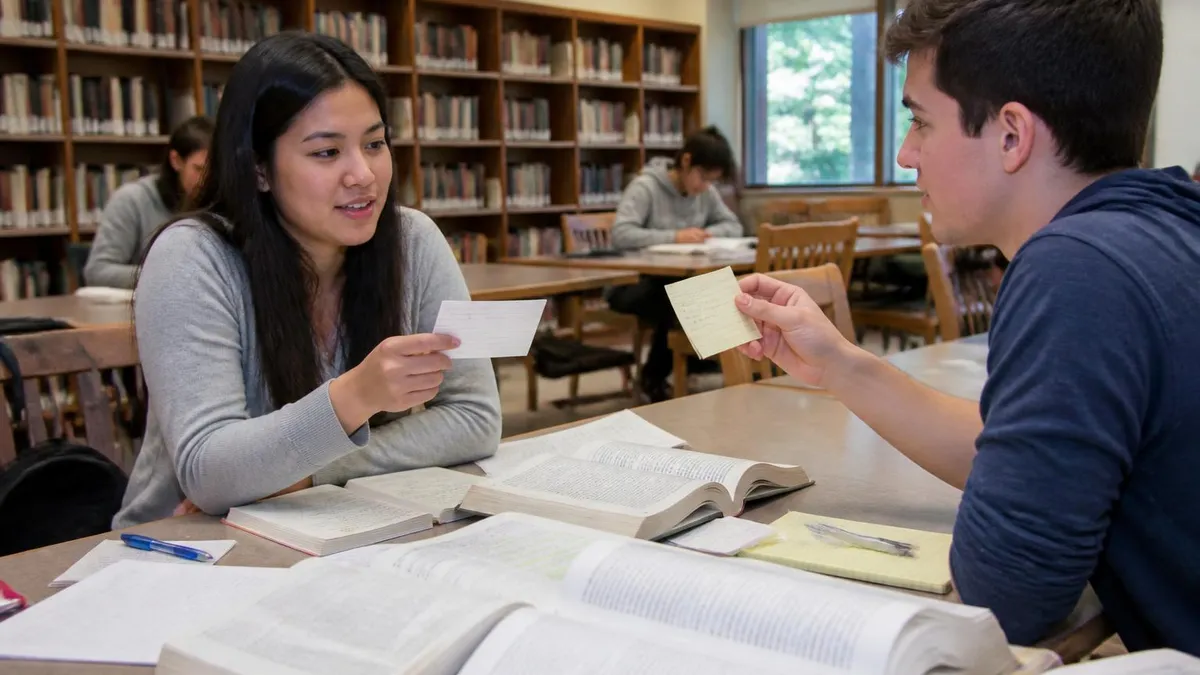
What makes the bar exam so hard, broken down by section
Different sections trip up different people. Knowing where your weak spot lives matters more than chasing a generic study plan.
The MBE — speed kills you, not the law
Most people fail the MBE not because they don't know the rules, but because they run out of time. 200 questions in 6 hours means 1.8 minutes per question — and you need 30 to 45 seconds of that for re-reading and double-checking. The questions themselves are tricky, but the pace is what eats people alive. Browse sample bar exam questions to get a sense of the difficulty curve before you start drilling.
The MEE — issue spotting under pressure
Each MEE essay gives you 30 minutes to identify every relevant issue, state the rule, apply it to the facts, and reach a conclusion. Miss an issue and you lose major points. Misstate a rule and you lose more. The trick is a rigid IRAC structure that lets you write fast without thinking about structure. Once that habit is wired in, the essays become more about pattern recognition than original analysis.
The MPT — the surprise difficulty
The MPT often catches people off guard. You're given a fake file — a memo from a partner, statutes, cases, witness statements — and asked to produce a polished legal document in 90 minutes. No outside knowledge required. Sounds easy. But organizing a never-before-seen file under time pressure, and writing in the voice of a junior attorney, is harder than it looks. People who skip MPT practice often regret it.
How to actually get past the difficulty
If you want a single takeaway, it's this — the bar exam doesn't reward genius, it rewards stamina, structure, and repetition. The candidates who pass aren't the smartest in the room. They're the ones who did 1,500 MBE practice questions, wrote 40 timed essays, and built a daily routine that didn't collapse in week six.
Start with a diagnostic so you know your baseline. Pick a commercial course or build a self-study calendar with clear weekly targets. Front-load the MBE — it's the section you can improve the most through pure volume. Layer in essays once your MBE accuracy hits 60 percent. Save MPT practice for the final three weeks. And don't skip the simulation — at least two full-length practice exams under real conditions, scored honestly. If you can hit 65 percent MBE accuracy and produce coherent IRAC essays in 30 minutes, you're in pass territory regardless of state.
One last thing — talk to people who've passed. The bar exam Reddit communities are a goldmine for honest feedback on prep courses, last-minute panic, and the unglamorous reality of bar study. The exam is hard. People still pass it every year. The difference is preparation, not magic.
About the Author
Attorney & Bar Exam Preparation Specialist
Yale Law SchoolJames R. Hargrove is a practicing attorney and legal educator with a Juris Doctor from Yale Law School and an LLM in Constitutional Law. With over a decade of experience coaching bar exam candidates across multiple jurisdictions, he specializes in MBE strategy, state-specific essay preparation, and multistate performance test techniques.