
Bar Exam Practice Test: Free + Paid Resources for MBE, MEE, and MPT
Bar exam practice test guide for 2026 September: 💡 free + paid MBE, MEE, and MPT questions, top question banks, scoring tips, and an 8-12 week prep schedule.

A bar exam practice test is the single most reliable way to gauge whether you're ready to sit for one of the toughest licensing exams in the country. The bar isn't just a memory test. It's a stamina test, a timing test, and a reading-comprehension test, all rolled into two or three days. You can read outlines until your eyes blur, but until you've sat down with a 200-question Multistate Bar Exam (MBE) simulation and a stopwatch, you don't really know how you'll perform on the real thing.
This guide walks through every part of bar exam practice you'll actually need in 2026. We'll break down the three components (MBE, MEE, MPT), compare the major paid question banks, point you to legit free options, and give you a realistic practice schedule for an 8 to 12 week study window. If you've been searching for bar exam questions or scrolling the bar exam Reddit threads at 1 a.m., this is the resource you wish you'd found first.
One thing to understand upfront: bar exam practice tests aren't a study supplement. They are the study. Every credible prep coach, every postmortem from passers on r/barexam, every BARBRI graduate will tell you the same thing — you don't pass the bar by reading. You pass by doing thousands of timed questions and learning from your misses. Outlines are scaffolding. Practice tests are the building.
So if you're starting prep this month, your first job isn't to download a 400-page outline. It's to find a quality question bank, take a cold diagnostic, and figure out where you stand. Everything that follows in this guide assumes that's your foundation. The MBE rewards pattern recognition more than memorization, and pattern recognition only comes from volume.
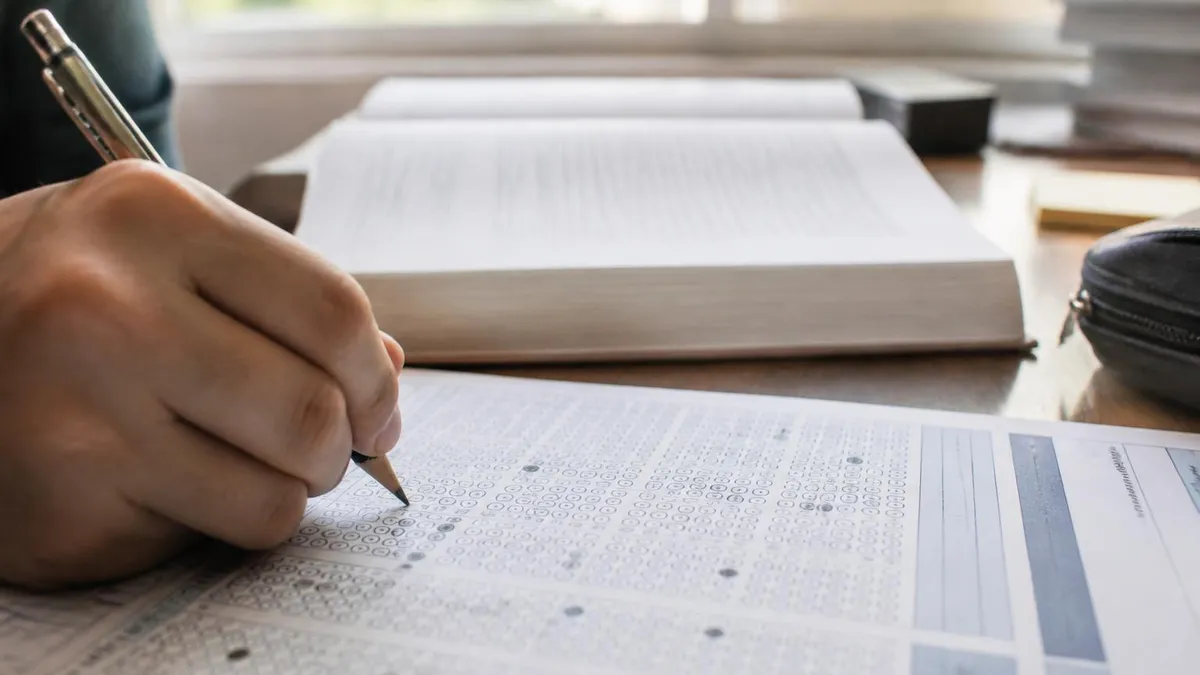
Most bar examinees who pass spend roughly half their prep time on practice questions — not reading, not flashcards, not watching lectures. The single best predictor of passing the MBE is your average score on timed practice questions in the final three weeks. Hit 65% or higher under real test conditions and your odds jump dramatically. Sit at 50% and you're in trouble, no matter how many outlines you've memorized.
The Three Components of the Bar Exam
The Multistate Bar Exam is 200 multiple-choice questions split across two three-hour sessions on Wednesday. It covers seven subjects: Constitutional Law, Contracts, Criminal Law and Procedure, Evidence, Real Property, Torts, and Civil Procedure. You get roughly 1.8 minutes per question. The MBE is required (or accepted) in over 40 states, and it usually accounts for 50% of your total bar score.
This is where most candidates spend the bulk of their practice-question time. Plan for at least 1,500 timed MBE questions before exam day.
Top Bar Exam Question Banks Compared
- Price: $3,000-$4,000
- MBE Questions: 2,500+
- Best For: Full structured course
- Includes: Lectures, outlines, essays
- Price: $2,500-$3,000
- MBE Questions: 2,000+
- Best For: Modular self-paced learners
- Includes: Adaptive scheduling tool
- Price: $2,500-$3,500
- MBE Questions: 1,500+
- Best For: Live class structure
- Includes: Tutor support add-ons
- Price: $400-$600
- MBE Questions: 2,000+ (real NCBE)
- Best For: MBE-only sharpening
- Includes: Adaptive algorithm
- Price: $200-$400
- MBE Questions: 1,000+
- Best For: Budget supplemental prep
- Includes: Flashcards + question bank
- Price: Free
- MBE Questions: Growing library
- Best For: Free supplemental drilling
- Includes: All seven MBE subjects
Most candidates pick one paid course as their backbone and supplement with free questions. BARBRI and Themis are the giants — they'll structure your whole study schedule for you, including a fixed daily task list and graded essays. If money is tight, a $400 AdaptiBar subscription combined with NCBE released questions and free drills here at PracticeTestGeeks can get you a long way without the four-figure investment. State-specific candidates should also check the CA Bar practice test PDF, the GA Bar practice test PDF, or the IL Bar practice test PDF we've compiled for jurisdiction-specific drilling.
One thing to remember: the $4,000 course doesn't pass the bar for you. People with $200 study budgets pass every cycle. What matters is volume of timed questions and quality of review — not the brand on the syllabus. The biggest predictor of failure isn't your prep company. It's whether you actually sat down and did the work between weeks one and twelve. Discipline scales better than dollars.
If you're a repeat taker, the calculus shifts. You've already paid for one course that didn't get you across the line. Don't just buy the same product again. Look at where you failed — was it MBE, essays, or pacing? — and target the gap. Repeat takers often benefit more from a tutor or essay-grading service than from another full course. A handful of one-on-one sessions with a real human reviewing your essays can identify the writing tics that the algorithms miss.
For first-time takers from non-ABA-approved law schools or foreign-trained lawyers, plan for a longer runway. Twelve to sixteen weeks is more realistic than the standard eight to ten. Build in extra time for the subjects you didn't cover in school. Constitutional Law and Civil Procedure are the most common gaps for foreign-trained candidates — start there, drill hard, and don't let pride keep you from using 1L outlines if you need to rebuild fundamentals.
Don't underestimate the value of community. Find a study group, even just two or three people. You'll catch each other's blind spots, share resources, and stay accountable on the days motivation dries up. Just make sure your group is serious. A study group that turns into a coffee-and-gossip session is a study group that pulls you down. Pick partners who match your work ethic, set a fixed weekly meeting time, and rotate who presents the rule reviews each session.
How to Use Practice Tests Effectively (8-Step Schedule)
Take a Diagnostic Test
Study Your Weak Subjects First
Drill 25-50 Questions Daily
Review Every Wrong Answer
Take a Full-Length Simulation Every Two Weeks
Adjust Based on Your Scores
Final Two Weeks: Pure Practice
The Day Before: Rest
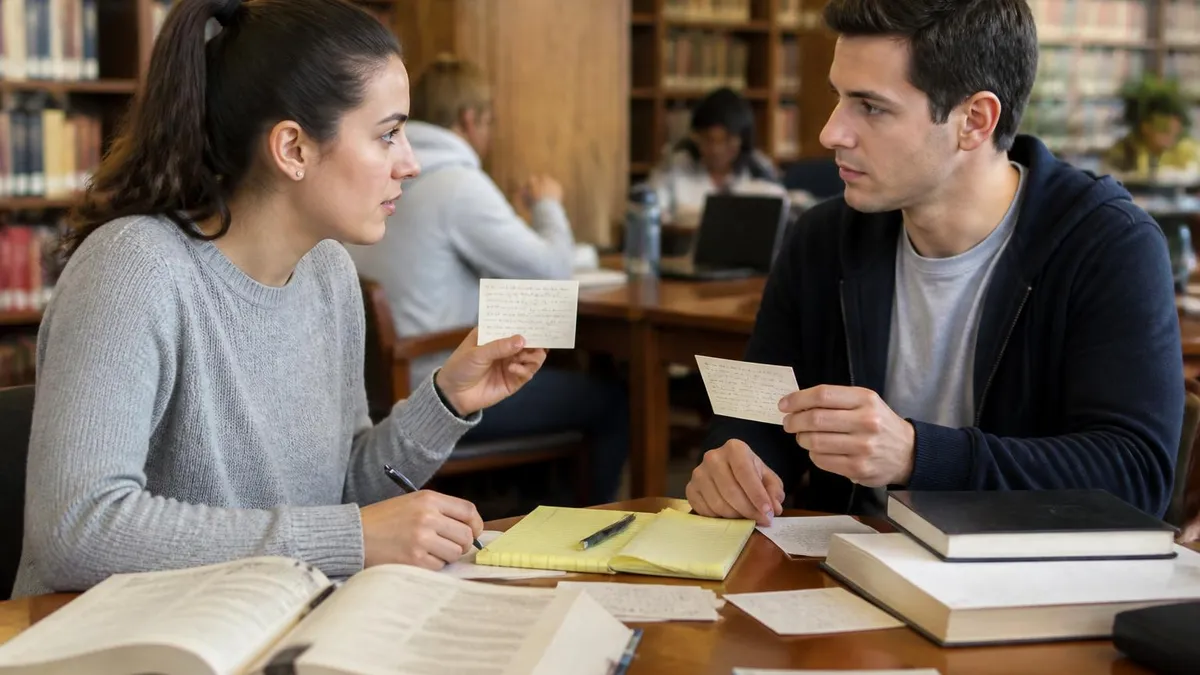
Volume matters, but so does timing. An 8-week prep with 1,500-2,000 timed questions is the absolute floor. Most successful candidates do 2,500-3,500 questions over 10-12 weeks. If you have a full-time job, lean toward the longer window — burnout is real, and cramming 60 questions a day after work doesn't end well. Your accuracy plummets when you're exhausted, which means you're training your brain to associate fact patterns with wrong answers. That's worse than not practicing at all.
One overlooked detail: practice in the time slots that match your exam. The MBE runs 9 a.m. to noon and 1:30 to 4:30 p.m. If you've only ever drilled at 10 p.m. on the couch, the morning session is going to feel brutal. Train your brain to be sharp at the right hours. Wake up at 7, eat breakfast, and start your hardest practice session at 9 — same as test day. Repetition builds the circadian readiness you'll need.
Another factor most candidates ignore: the testing environment. Don't always study in your bedroom with snacks and Spotify. Spend at least one or two practice sessions a week in a quiet library, sitting at an unfamiliar desk, with nothing on it but a pencil, scratch paper, and water. The bar testing center won't have your favorite chair or your dog at your feet. Practice under sterile conditions periodically so the real exam doesn't feel jarring when you walk in.
Free vs Paid Bar Exam Practice: Tradeoffs
- +Free resources (PracticeTestGeeks, NCBE samples, state bar materials) cover the basics at zero cost
- +Budget DIY prep can total under $500 — Quimbee plus a few NCBE packets
- +Free MBE questions are widely available and high quality if curated carefully
- +State bar association websites offer free state-specific essays and sample questions
- +Mixing free and paid stretches your dollar — AdaptiBar plus free drills equals a complete MBE prep
- −Free resources rarely come with structured study schedules — you have to build your own plan
- −Paid courses like BARBRI cost $3,000-$4,000 but include lectures, outlines, and grading
- −No free option includes essay grading — you'll need a paid tutor or course for MEE feedback
- −Free question banks can repeat or recycle old questions; paid banks update yearly
- −Going fully free without strong self-discipline is a recipe for spotty preparation
Pros and Cons at a Glance
| Pros | Cons |
|---|---|
| Free resources (PracticeTestGeeks, NCBE samples, state bar materials) cover the basics at zero cost | Free resources rarely come with structured study schedules — you have to build your own plan |
| Free MBE questions are widely available and high quality if curated carefully | No free option includes essay grading — you'll need a paid tutor or course for MEE feedback |
| State bar association websites offer free state-specific essays and sample questions | Free question banks can repeat or recycle old questions; paid banks update yearly |
| Mixing free and paid stretches your dollar — AdaptiBar plus free drills equals a complete MBE prep | Going fully free without strong self-discipline is a recipe for spotty preparation |
Bar Exam Pass Rates and Practice Score Correlation
The MBE breaks down evenly across seven subjects, with Civil Procedure getting slightly fewer questions. Knowing the distribution helps you allocate your practice volume. Don't spend half your time on Constitutional Law just because you find it interesting — every subject carries roughly 14% of the score, except Civ Pro at 12.5%. If you're weak in Evidence, that 28-question deficit will sink you no matter how strong you are elsewhere.
Treat your practice volume the same way. If you're aiming for 2,000 total MBE questions, that's around 285 per subject — except Civ Pro, where 250 is enough. Track your accuracy by subject in a spreadsheet. If your Torts score is 75% and your Real Property is at 55%, the next 100 questions should weight 4-to-1 toward Real Property. Most candidates drift toward their strong subjects because hitting right answers feels good. Resist that. Time spent in weak subjects has higher marginal return.
Within each subject, drill the high-frequency topics harder. In Evidence, hearsay and its exceptions probably get 8-10 of the 28 questions. In Real Property, recording acts and future interests are the heaviest hitters. In Constitutional Law, individual rights (Due Process, Equal Protection, First Amendment) dominate over structural issues. Don't memorize every footnote rule. Drill the rules that show up over and over on past exams, and let the obscure ones wait.
Keep an error log. Every wrong answer goes into a single document with three columns: the topic, the rule you missed, and the reason you missed it (misread facts, wrong rule, two answers looked equally good, ran out of time). After two weeks, patterns emerge. Maybe you're consistently missing future interests questions. Maybe your hearsay analysis collapses under time pressure. The error log turns vague weakness into specific deficits you can attack. Without it, you're just running blind.
Then there's the question of when to do mixed sets versus single-subject drills. Early in prep, single-subject drills are better — you reinforce rules while they're fresh from your outline. Later in prep, mixed sets become essential. The real MBE doesn't tell you which subject is coming next. You'll see a Property question, then a Crim Pro question, then a Contracts question. Train your brain to switch contexts quickly. By week six, at least half your daily drills should be mixed.

MBE Subject Breakdown (200 Questions Total)
- Questions: 25 (~12.5%)
- Focus: Federal court procedure
- Key Topics: Jurisdiction, joinder, motions
- Questions: 28 (~14%)
- Focus: Individual rights, separation of powers
- Key Topics: Due process, equal protection, 1A
- Questions: 28 (~14%)
- Focus: Formation, breach, remedies
- Key Topics: UCC Article 2, parol evidence
- Questions: 28 (~14%)
- Focus: Elements plus 4th-6th Amendment
- Key Topics: Mens rea, search and seizure
- Questions: 28 (~14%)
- Focus: Federal Rules of Evidence
- Key Topics: Hearsay, relevance, character
- Questions: 28 (~14%)
- Focus: Conveyances, future interests
- Key Topics: RAP, easements, recording acts
- Questions: 28 (~14%)
- Focus: Intentional, negligence, products
- Key Topics: Duty, causation, defenses
The biggest mistake in MEE practice? Grading your own essay generously. You read your work, see what you meant to say, and give yourself partial credit. Real bar graders don't read minds. They follow rubrics. Use NCBE released essays with sample answers and compare line by line. If you only stated half the rule, that's not half-credit — that's a miss. Better to flunk yourself in July than in October when results drop.
Common MBE Practice Test Mistakes to Avoid
- ✓Going too fast and not reading the full fact pattern — slow down to 1.8 minutes per question
- ✓Going too slow and leaving the last 30 questions blank — train pacing every session
- ✓Picking the first attractive answer choice — always read all four before committing
- ✓Skipping the wrong-answer rationales — that's where the actual learning happens
- ✓Practicing only in 25-question batches — your stamina won't hold for 200 in a day
- ✓Repeating the same questions over and over — you memorize, you don't learn the rules
- ✓Self-grading too generously on essays — graders won't be kind, so don't be
- ✓Skipping MPT practice because it feels easy — format unfamiliarity ends careers
- ✓Ignoring older released questions — bar topics rarely change year to year
- ✓Only practicing late at night — train at the same time your real exam runs
Time-per-question discipline is the make-or-break skill on the MBE. You get 1.8 minutes per question on average. Some will take 30 seconds (an easy Torts duty question), some will take three minutes (a multi-layered Evidence hearsay question). The trick is not to burn five minutes on any single one. If you're stuck, mark it, guess your best guess, and move on. You can come back if there's time. Leaving five blanks at the end of a section is far worse than guessing on five hard ones in the middle.
Process of elimination is your best friend. Even when you don't know the answer cold, you can usually eliminate two of the four choices. That gets you to 50-50, which is far better than random. Look for distractors: answer choices that misstate the rule, that ignore a key fact, or that apply the wrong jurisdiction's standard. Bar exam writers love planting two answers that are technically correct statements of law but don't fit the question's facts. Read every answer choice as if it might be a trap.
For essay sections, outline before you write. Five minutes of structure saves 20 minutes of meandering prose. Identify the rule, the issue, the application, and the conclusion. Then write tight paragraphs. Bar graders skim — they're looking for the magic words and the right framework. They aren't reading for literary style. Use headings for each issue, write the rule statement in plain language, then apply the rule to the facts. Don't bury your conclusion in qualifiers.
MPT pacing is a separate animal. Spend the first 45 minutes reading, organizing, and outlining. Spend the second 45 minutes writing. That ratio sounds wrong to people who haven't practiced — it feels like you should be writing for an hour and reading for 30 minutes. Trust the data. Candidates who underread the file end up writing confidently wrong answers. The library cases are the only authority you have. Mine them carefully before drafting a single word of your memo.
State-specific candidates have an extra wrinkle. California, Florida, and Texas have their own components beyond the UBE structure. California runs a separate California Bar Exam with state-specific essays and a Performance Test. Texas adopted the UBE in 2021 but adds Texas-specific procedure components. Florida has its own bar with a Florida-specific multiple-choice section testing state law. New York used to be the holdout — now it's a UBE state with a separate New York Law Exam (NYLE).
If you're sitting one of these state exams, get state-issued practice materials early. Most state bar associations publish past essays and sample answers for free. Mix them into your regular MEE drilling so the format becomes second nature. UBE candidates have it easier — your prep transfers seamlessly across the 40+ UBE jurisdictions, and your score is portable if you ever want to waive into another UBE state.
Score portability is one of the most underrated benefits of the UBE. If you pass with a 280 in Illinois, you can transfer that score to most other UBE jurisdictions within a five-year window, subject to each state's minimum cut score. That's a huge career flexibility win. Candidates who plan to relocate within their first few years of practice should weigh state choice carefully — sitting in a higher-scoring state can pay dividends later.
Also worth noting: the NextGen Bar Exam is rolling out in 2026 in some jurisdictions, with full national rollout planned by 2028. NextGen folds MBE, MEE, and MPT into integrated tasks and emphasizes lawyering skills over rote rule memorization. Check your state's status. If you're sitting in 2026 or later, confirm whether your jurisdiction uses the current UBE format or has switched to NextGen, because the practice materials differ. Prep companies are rapidly updating their question banks to match.
Bar Exam Practice Test Questions and Answers
Bottom line: bar exam practice tests aren't optional. They're the entire ballgame. Pick a paid backbone if you can afford one (BARBRI, Themis, or AdaptiBar for MBE-focused prep), supplement with free drills here at PracticeTestGeeks and from NCBE samples, and commit to 2,000+ timed questions before exam day. Review every wrong answer rationale, simulate full-length exams under real conditions, and trust the process. Pass rates correlate almost perfectly with practice MBE scores — get yours above 65% and you'll walk into that test center ready.
The mental piece matters too. Bar prep is grueling, and the eight to twelve weeks of intense study will test more than your legal knowledge. Build in rest days. Keep one weekend evening sacred for non-law activities — see friends, hit the gym, watch something dumb on TV. Candidates who try to study 14 hours a day for ten straight weeks crack before the exam. The ones who pass tend to study smarter, not just longer, and they protect their sleep like it's a billable hour.
Start with a diagnostic this week. Find your weak subjects. Build the schedule. The bar exam rewards discipline more than genius, and discipline starts with showing up tomorrow morning for the first 25 questions. Future-you, opening that pass letter in October, will thank present-you for not skipping a single day. Good luck out there — and remember, every licensed attorney you've ever met passed this same test. So can you. Trust your prep, lean on your group, take care of your body, and keep grinding the practice tests one day at a time until exam morning.
About the Author
Attorney & Bar Exam Preparation Specialist
Yale Law SchoolJames R. Hargrove is a practicing attorney and legal educator with a Juris Doctor from Yale Law School and an LLM in Constitutional Law. With over a decade of experience coaching bar exam candidates across multiple jurisdictions, he specializes in MBE strategy, state-specific essay preparation, and multistate performance test techniques.