
Laboratory Manual for Anatomy and Physiology PDF: The Complete Student Guide to Finding, Using, and Mastering Lab Resources
Find the best laboratory manual for anatomy and physiology PDF resources. Tips, comparisons, and study strategies for A&P students. 📚
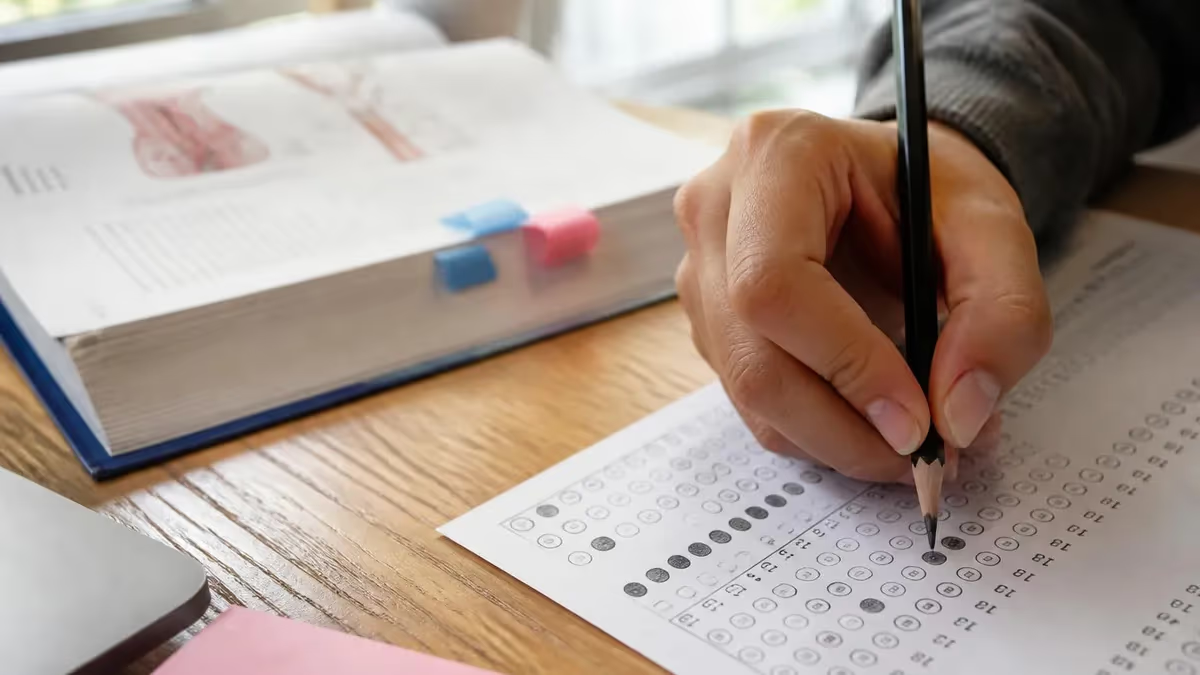
The laboratory manual for anatomy and physiology pdf has become one of the most searched resources among college students taking A&P courses across the United States. Whether you're enrolled in a two-semester sequence at a community college or a single accelerated course at a four-year university, the lab manual serves as your hands-on companion to the lecture textbook.
It bridges theory and practice by walking you through dissections, microscope observations, physiological measurements, and data recording exercises that cement the concepts you're learning in class. Finding a reliable PDF version can make a significant difference in how prepared you are for each lab session.
Anatomy and physiology is widely considered one of the most demanding prerequisite courses for nursing, physical therapy, respiratory therapy, and other allied health programs. The laboratory component amplifies that demand. You're not just reading about the skeletal system — you're identifying 206 bones on a model, tracing suture lines on a skull, and labeling diagrams with precise anatomical terminology. A good lab manual structures all of these activities in a logical sequence, giving you pre-lab questions to complete before you arrive, step-by-step procedural instructions to follow during class, and post-lab review questions to reinforce what you observed.
There are several widely adopted anatomy and physiology lab manuals used at American colleges and universities. The most commonly assigned titles include those by Marieb and Mitchell, Amerman, Zao and colleagues, and Lori Smith. Each of these has been revised multiple times, and instructors often specify a particular edition. Understanding which edition your course requires is the first step, because exercises, figure numbers, and page references can shift significantly between editions. Using the wrong edition — even if the content seems similar — can cause confusion during graded lab practicals where specific figure labels are tested.
PDF versions of these manuals serve several practical purposes for students. First, they allow you to pre-read lab exercises before the scheduled session without lugging a heavy spiral-bound manual in your bag. Second, digital copies let you zoom in on anatomical diagrams, which is especially helpful for microscopy exercises where you need to match what you see under the lens to a reference image.
Third, PDFs can be annotated digitally with highlighting, sticky notes, and typed text, which appeals to students who prefer keeping all their study materials on a tablet. Many students use a combination of the print manual in lab and the PDF for home review.
It's important to understand the legal and ethical landscape around these PDFs. Many students search for free downloads of copyrighted lab manuals, but distributing or downloading publisher-owned textbooks without authorization violates copyright law. Fortunately, there are legal pathways to access lab manual content digitally. Publishers like Pearson, McGraw-Hill, and Cengage offer official eBook versions through their platforms, often at a lower cost than the print edition. Your campus library may also have digital lending agreements that allow enrolled students to access the textbook for free or at reduced cost through platforms like VitalSource or RedShelf.
Open-educational-resource (OER) alternatives represent another growing category of legal PDF lab manuals. Projects like OpenStax and university-authored open courseware have produced anatomy and physiology lab manuals that are freely and legally downloadable in PDF format. These OER manuals won't match the page numbers or exercise numbering of commercial editions, but they cover the same core content — organ systems, histology, homeostasis, and physiological measurements — and are increasingly adopted by cost-conscious instructors at community colleges and technical schools.
This guide walks you through everything you need to know about laboratory manuals for anatomy and physiology: which editions are most widely used, how to access them legally in PDF form, how to use them effectively in conjunction with practice tests and quizzes, and what study strategies produce the best outcomes on lab practicals. Whether you're a first-time A&P student or returning after a break, you'll find actionable advice that helps you make the most of your lab experience and the resources available to you.
Anatomy & Physiology Lab Manual: Key Numbers

Most Widely Used Anatomy and Physiology Lab Manual Editions
The most widely adopted A&P lab manual in the US, available in cat, fetal pig, and main versions. Known for detailed pre-lab exercises, clear dissection guides, and review sheets at the end of each exercise. Published by Pearson.
A newer, visually rich option that integrates clinical applications and critical thinking questions throughout each exercise. Designed to align closely with the Amerman lecture textbook, making it popular at schools that adopt both together.
A concise, activity-based manual that emphasizes inquiry learning and student-driven discovery. Particularly popular at community colleges for its affordability and accessibility. Available in both print and digital formats.
A freely available, peer-reviewed open educational resource in PDF format. Covers all major organ systems with dissection alternatives for schools without cadaver access. Legally downloadable at no cost from the OpenStax website.
Accessing your anatomy and physiology lab manual as a PDF requires understanding the options available through your institution and the major educational publishers. The first and most straightforward route is through your campus bookstore or library portal. Many US colleges have negotiated inclusive access agreements with publishers like Pearson and McGraw-Hill, which means the cost of the digital textbook is bundled into your tuition or course fees. When you log into your course management system — Blackboard, Canvas, or Moodle — you may find a direct link to the eBook version of the lab manual you need.
Pearson's Mastering A&P platform, which accompanies the Marieb and Mitchell lab manual, gives students access to digital versions of the manual along with pre-lab videos, virtual dissection tools, and interactive physiology simulations. If your instructor has set up a Mastering A&P course, your access code (purchased with the print manual or as a standalone subscription) unlocks the full digital lab manual in addition to the online learning tools. This is the most content-rich option and the one most likely to match what your instructor actually assigns week to week.
McGraw-Hill's Connect platform similarly bundles the digital lab manual with interactive content for courses using Saladin or other McGraw-Hill A&P titles. Cengage Unlimited offers a subscription-based model where a single annual fee provides access to all Cengage textbooks and lab manuals, which can be excellent value if your institution uses Cengage materials across multiple courses. Many nursing and allied health students find the Cengage subscription especially practical because it covers not just A&P but also microbiology and medical terminology textbooks they need in subsequent semesters.
Your campus library is another underutilized resource for accessing lab manual PDFs legally. Academic libraries routinely license digital textbooks through aggregator platforms like ProQuest Ebook Central, EBSCO eBooks, and VitalSource Bookshelf. Log into your library's website with your student credentials and search for the title and edition of your lab manual. You may find it available for short-term loan — typically two to fourteen days — which is often enough to complete the exercises for an upcoming lab session. Renewing the loan as needed can effectively replace the need to purchase the manual outright.
For students who want a permanent PDF that they can annotate freely without DRM restrictions, the most practical legal approach is to purchase the print manual and then access the publisher's eBook as part of the bundle. Some publishers allow you to download chapters as PDFs for offline use within their platform.
Alternatively, instructors sometimes post lecture-aligned excerpts of exercises on their course page under fair use provisions. Always check your course syllabus and the files section of your learning management system before purchasing anything — instructors frequently curate the specific exercises you'll need so you're not required to buy a full manual.
OER lab manuals represent the most liberating option for cost-conscious students. OpenStax, which is supported by Rice University and major philanthropic foundations, offers a complete anatomy and physiology course package including a lab manual that is freely downloadable as a PDF. The content has been peer-reviewed by faculty from community colleges and universities across the country. It covers all the standard exercises — microscopy, organ system identification, blood typing, spirometry, electrocardiography, and more — in a clear, professionally formatted document. Because it's published under a Creative Commons license, you can legally download, print, and annotate it without restriction.
Once you've secured your PDF — whether through a publisher platform, your library, or an OER source — the way you organize and use it will determine how much benefit you actually get from it. Tablet users should consider PDF annotation apps like GoodNotes, Notability, or Adobe Acrobat, which allow you to draw directly on diagrams, type labels, and highlight step-by-step procedures.
Desktop users can use Adobe Acrobat Reader's free annotation tools or browser-based options like Kami, which integrates with Google Drive and Canvas. Setting up a dedicated folder with each week's lab exercise pre-loaded before your session starts will save you scrambling time and help you arrive mentally prepared.
How Different Students Use the A&P Lab Manual PDF
Effective pre-lab preparation starts at least 24 hours before your scheduled session. Open the PDF to the relevant exercise and read through the learning objectives, background information, and materials list. Complete the pre-lab questions — even if they aren't graded — because they prime your brain to notice critical details during the actual lab. Sketch the key diagrams you'll be identifying so that you have a mental image before you encounter the specimen or model in person.
Many students underestimate how much time pre-lab reading saves during the actual session. When you arrive knowing the procedure steps, you spend less time re-reading instructions and more time observing, measuring, and discussing findings with your lab partner. Instructors frequently note that students who complete pre-lab work consistently outperform those who read the manual for the first time at the bench. Pairing pre-lab reading with a quick quiz on the topic — like those available here at PracticeTestGeeks — further reinforces terminology before you need to apply it.
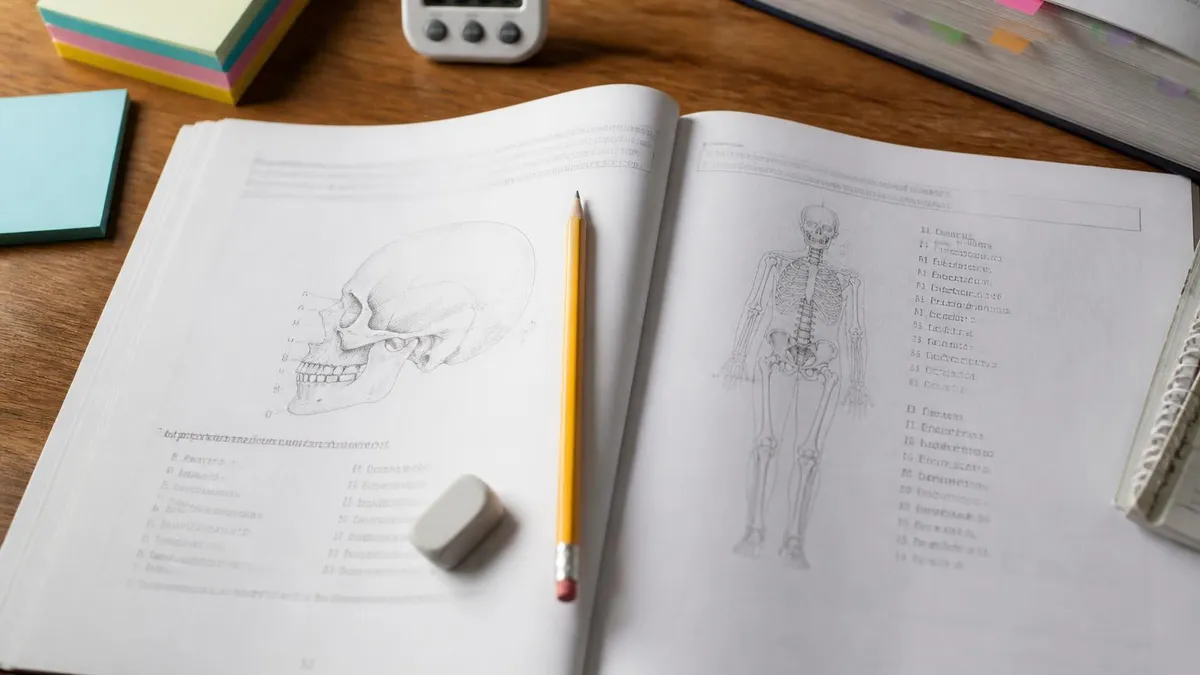
PDF Lab Manual vs. Print Lab Manual: Honest Comparison
- +Instantly accessible from any device — no need to carry a heavy spiral-bound book to campus
- +Digital annotation tools allow color-coded highlighting, typed notes, and drawn labels directly on diagrams
- +Zoom functionality makes detailed anatomical diagrams easier to read than small print versions
- +Searchable text lets you locate specific terms, figures, or procedures in seconds
- +Often significantly cheaper than the print edition, especially through OER or publisher eBook subscriptions
- +Environmentally friendly and eliminates the problem of a torn or water-damaged manual
- −Screen fatigue during long lab sessions can reduce focus and make it harder to follow multi-step procedures
- −Not all tablets or phones are permitted in every lab environment, especially those with chemical or biohazard protocols
- −DRM-protected publisher PDFs may expire at the end of the semester, leaving you without access for later review
- −Drawing anatomical diagrams by hand on paper is often more effective for learning than typing labels in a PDF
- −Internet connectivity issues or device battery problems can leave you without your manual mid-session
- −Some instructors and lab coordinators require a physical copy of completed review sheets for grading purposes
A&P Lab Manual Study Checklist: 10 Steps Before Your Practical
- ✓Download or open the PDF edition of your assigned lab manual and confirm it matches the edition your instructor specified.
- ✓Read the learning objectives at the start of each exercise and write them out in your own words before studying further.
- ✓Complete all pre-lab questions at the end of each exercise section before attending the actual lab session.
- ✓Label every anatomical diagram in the exercise using pencil first, then verify against the answer key or your lab instructor.
- ✓Record all data measurements and observations in the manual's data tables during the lab session, not afterward from memory.
- ✓Complete all post-lab review sheet questions within 24 hours of your lab session while details are still fresh.
- ✓Cross-reference your lab manual diagrams with your lecture textbook illustrations to connect structure with function.
- ✓Use PracticeTestGeeks A&P quizzes to test recall of structures and terminology covered in each lab exercise.
- ✓Create a flash card set for every bolded or italicized term in each lab exercise you're responsible for on the practical.
- ✓Schedule a dedicated review session the evening before your lab practical to identify and target your remaining knowledge gaps.
Lab Practicals Draw Directly from Manual Review Sheets
Research on anatomy and physiology exam performance consistently shows that students who complete lab manual review sheets and then test themselves with practice questions score significantly higher on lab practicals than those who only review lecture notes. The review sheets in your lab manual are not busy work — they are a direct blueprint for what instructors test. Treat every question on every review sheet as a potential practical item and study accordingly.
Maximizing the educational value of your anatomy and physiology lab manual requires moving beyond passive reading into active engagement with every exercise. The most successful A&P students treat each lab manual exercise as a three-part learning event: preparation before the session, active participation during it, and deliberate consolidation after it. This framework applies whether you're working with a printed spiral-bound copy or a PDF on your tablet. The format of the manual matters far less than the intentionality with which you approach each exercise.
One of the most powerful techniques for mastering lab content is to practice identifying structures without labels. After you've studied a diagram in the manual, close the PDF and try to reproduce the labeled figure from memory on a blank sheet of paper. This practice, known as retrieval drawing, has been shown in cognitive science research to outperform re-reading and highlighting as a study method. For anatomy specifically, the act of drawing and labeling forces your brain to reconstruct spatial relationships between structures — exactly the skill tested on lab practicals where you'll face an unlabeled model with flag pins.
Physiological exercises — measuring blood pressure, recording lung capacity with a spirometer, analyzing an electrocardiogram strip, or testing reflex responses — require a different but equally active approach. The numbers you measure and record in your data table are not just grade fodder; they are benchmarks that help you understand what normal human physiology looks like.
When your lab manual asks you to calculate the percentage of each blood cell type in a differential white blood cell count, it's training you to recognize what pathological deviations from normal would look like — a skill that is directly relevant to careers in nursing, medical assisting, and clinical laboratory science.
Histology exercises represent another area where the PDF format has specific advantages. The lab manual includes photomicrographs of tissue slides, but the resolution of the printed image is often limited by ink quality. A PDF displayed on a high-resolution tablet screen gives you access to sharper versions of the same images, and many instructors supplement the manual with links to online histology atlases where you can view slides at multiple magnification levels. The University of Michigan and the University of Wisconsin both offer publicly accessible online histology slide libraries that pair beautifully with lab manual histology exercises.
Dissection exercises — whether performed on actual specimens or through virtual tools — are the exercises students most often underuse their lab manual for. The manual's dissection guide is written in a specific sequence designed to protect delicate structures until they can be identified in context.
Students who skip ahead or ignore the procedural steps frequently damage the specimen in ways that make subsequent identification exercises harder. Reading through the dissection guide in the PDF before touching the specimen, and keeping it open for reference at each step, is the single most effective way to get the maximum learning value from a dissection exercise.
Group study sessions built around the lab manual are another high-yield strategy. Gather two or three lab partners and take turns quizzing each other using the review sheet questions at the end of each exercise. Whoever answers correctly gets to quiz next; whoever misses a question has to explain the answer in their own words before the group moves on. This Socratic approach surfaces misunderstandings more efficiently than solo study and mirrors the verbal identification pressure of practical exams, where instructors sometimes ask you to explain what a structure does, not just name it.
Connecting lab exercises to practice test questions is the final piece of the high-performance A&P study system. After completing a lab exercise on the cardiovascular system, for example, take a timed cardiovascular practice quiz on PracticeTestGeeks. Notice which question formats trip you up — directional terms, identifying structures by description versus by image, applying physiological principles to clinical scenarios.
Each incorrect answer is a diagnostic signal pointing you back to a specific section of your lab manual that needs more attention. This feedback loop between practice testing and targeted manual review is how top-performing A&P students prepare for both lab practicals and lecture exams.

Using the wrong edition of your assigned lab manual is a surprisingly common problem that creates real difficulty during graded lab practicals. Exercise numbers, figure labels, data table formats, and review sheet questions often change between editions. Before downloading or purchasing any PDF version of an A&P lab manual, verify the exact edition number with your syllabus or instructor. Using a PDF from two editions ago may cover the same concepts but with different figure numbering that causes confusion during class.
Open educational resources have transformed access to anatomy and physiology lab materials for students at every income level, and the OER lab manual landscape has matured significantly over the past decade. The flagship OER option remains the OpenStax Anatomy and Physiology textbook and its companion lab exercises, which together represent a complete, peer-reviewed, freely downloadable course package.
OpenStax materials are used at more than 7,000 educational institutions worldwide, and the platform reports saving students over $1.5 billion in textbook costs since its launch. For an A&P student, downloading the OpenStax lab content as a PDF costs absolutely nothing and requires only a free account registration.
Beyond OpenStax, several universities have made their own A&P lab manuals available as open courseware PDFs. Maricopa Community Colleges in Arizona, which serves one of the largest community college student populations in the United States, has published openly licensed A&P lab materials through their Open Educational Resources initiative. Similarly, MERLOT (Multimedia Educational Resource for Learning and Online Teaching), maintained by the California State University system, catalogs freely available A&P lab resources including complete manuals, individual exercises, and supplementary materials that can be downloaded and used by any student.
The Library Genesis controversy illustrates an important boundary in this space. Library Genesis and similar shadow library websites host unauthorized copies of copyrighted textbooks including popular A&P lab manuals. While these sites are widely known to exist, using them exposes you to potential copyright liability and — more practically — to the risk of downloading outdated, incorrectly scanned, or malware-infected files.
The safety and quality difference between a properly licensed publisher PDF and an unauthorized scan is significant. Given that legal alternatives like your campus library, OER sources, and publisher eBook subscriptions either are free or cost a fraction of print prices, the risk-reward calculation strongly favors legal access.
Your institution's inter-library loan (ILL) service is another overlooked legal option. If your campus library doesn't own a license for the specific edition you need, the ILL department can often borrow a digital copy from a partner institution or obtain a PDF of the specific chapters you need under document delivery programs.
This process typically takes two to five business days, so planning ahead is essential. Many students don't realize ILL exists, much less that it can be used for textbooks — a quick email to your reference librarian explaining your course needs can unlock access that bypasses the need to purchase anything.
For nursing students specifically, the A&P lab manual is just the beginning of a long relationship with anatomy content. The NCLEX-RN and NCLEX-PN both draw heavily on foundational A&P knowledge, particularly regarding the cardiovascular, respiratory, neurological, and renal systems. Students who use their A&P lab manual rigorously — completing every exercise, labeling every diagram, answering every review question — build the structural mental model that makes NCLEX clinical reasoning questions more intuitive. The lab manual is not just a course resource; it's a foundation for professional licensure preparation that pays dividends years after the course ends.
Physical therapy students, respiratory therapists, radiologic technologists, and emergency medical technicians face similar long-term returns on their A&P lab investment. Each of these professions requires the ability to mentally navigate three-dimensional anatomical space, understand how organ systems interact under stress, and apply physiological principles to clinical scenarios.
The lab manual is where that three-dimensional thinking first gets practiced in a structured way. Students who take it seriously — and access it in whatever PDF or print format works best for them — consistently report feeling more confident in clinical rotations than peers who treated lab as a lower priority than lecture.
Making a deliberate decision about how you'll access and use your anatomy and physiology lab manual is one of the highest-leverage choices you'll make at the start of your A&P course. Whether you go with the publisher's official eBook, your library's digital lending service, an OER PDF from OpenStax, or a print copy you annotate by hand, what matters most is the consistency and intentionality with which you engage with each exercise.
Combined with regular practice testing, pre-lab preparation, and post-lab review, a well-used lab manual is among the most powerful academic tools available to any allied health student in the American college system today.
Building a sustainable study routine around your lab manual PDF requires planning that integrates the weekly lab schedule with your broader course calendar. Start by downloading or bookmarking the PDF edition of the relevant exercise at least 48 hours before each scheduled lab session. Use the first 24 hours to read through the background material, learning objectives, and procedure steps. Use the second 24 hours to complete the pre-lab questions and sketch the key diagrams you'll be working with. Arriving on lab day with this preparation done transforms your experience from reactive to proactive.
During the semester, you'll typically cycle through 20 to 30 distinct lab exercises covering every major organ system. Keeping a running index of which exercises you've completed, which review sheets you've finished, and which structures you've identified successfully gives you a bird's-eye view of your preparation heading into each practical exam. A simple spreadsheet with exercise titles down one column and colored cells indicating completed, in-progress, or not-started status takes only minutes to maintain and removes the anxiety of wondering whether you've covered everything.
Time management is especially critical during the weeks when lecture exams and lab practicals overlap. Many A&P courses schedule lab practicals within a week or two of lecture exams, creating a peak-demand period where students must review both theoretical content and hands-on identification simultaneously. Prioritizing lab manual review sheets and practice identification during this window — even at the expense of re-reading lecture notes — is often the right call, because lab practicals tend to have more binary, identifiable correct answers than lecture essay questions, making them easier to prepare for efficiently with targeted study.
Students who use practice tests consistently throughout the semester — not just in the final days before exams — outperform those who cram significantly. PracticeTestGeeks offers A&P practice questions organized by organ system that align directly with the laboratory exercises you'll encounter in your manual.
Taking a 10-question quiz on the cardiovascular system after completing the heart dissection exercise, for example, reinforces the structural vocabulary from the lab while also exposing you to the clinical application questions that appear on lecture exams. This dual reinforcement makes each study session more efficient than either reviewing the manual alone or taking practice tests without lab preparation.
Peer teaching is another technique that lab manual exercises support particularly well. After you've completed a lab exercise and its review sheet, try explaining the content to a classmate who hasn't yet studied it. Walk them through the procedure, describe what you observed, and quiz them on the labeled diagrams.
Teaching requires you to retrieve and organize knowledge more deeply than any other study method, and it consistently reveals gaps in your own understanding that self-study doesn't surface. Many successful A&P students form small study groups specifically for lab content and rotate the teaching role so everyone gets the benefit of explaining as well as listening.
The connection between lab manual proficiency and professional competency is worth keeping in mind during the moments when completing review sheets feels tedious. Every time you correctly identify the sinoatrial node on a heart model, trace the path of urine through the renal collecting system, or calculate the respiratory minute volume from spirometry data, you're building a mental model that will be called upon in your professional life.
Nurses use anatomical knowledge when placing catheters and monitoring IV sites. Physical therapists use it when designing rehabilitation programs that protect healing structures. The lab manual exercises feel abstract in the moment but become concrete and essential the first time a patient's care depends on your structural knowledge.
Finally, don't underestimate the value of revisiting completed lab manual exercises throughout the semester rather than treating each one as finished once the session ends. A brief 15-minute review of a completed exercise's diagrams and review sheets — even six or eight weeks after the original session — dramatically slows the forgetting curve.
Spaced repetition, the practice of reviewing material at increasing intervals over time, is the most evidence-backed method for building long-term retention of the kind of detailed anatomical knowledge that A&P demands. Your lab manual PDF, organized and annotated, is the perfect spaced repetition resource because it contains exactly the content you'll be tested on, in the format your instructor uses to evaluate you.
Anatomy Physiology Questions and Answers

How Hard Is Anatomy and Physiology? The Complete Honest Guide for Students

Eye Anatomy and Physiology: The Complete Guide to Understanding How Your Eyes Work
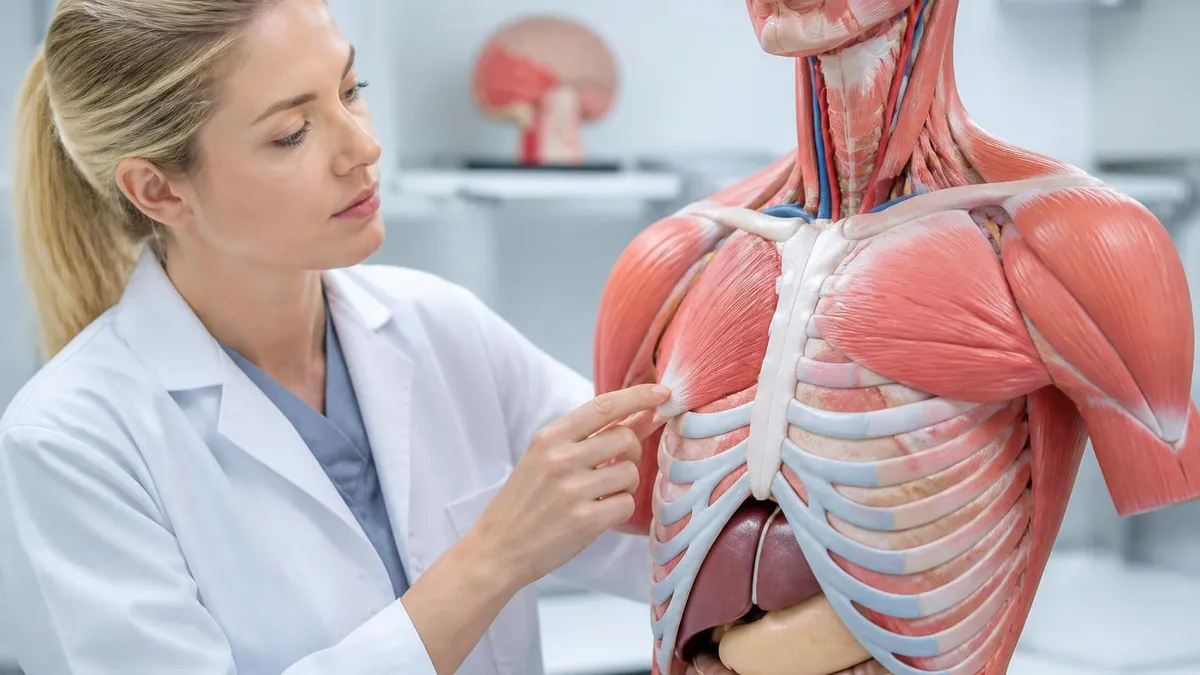
Anatomy and Physiology PDF: Complete Free Download Guide for 2026 Students
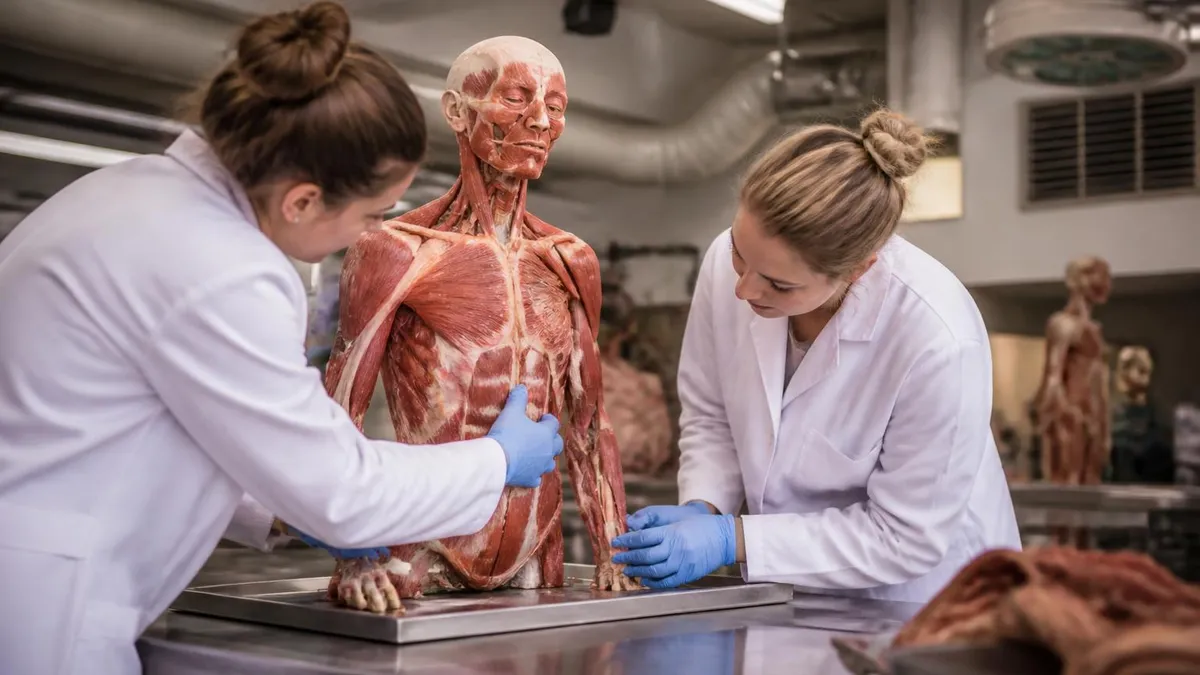
Human Anatomy and Physiology Book: The Complete Guide to Choosing, Using, and Mastering the Best Textbooks for 2026

Best Way to Learn Anatomy and Physiology: A Complete Student Guide
About the Author

Educational Psychologist & Academic Test Preparation Expert
Columbia University Teachers CollegeDr. Lisa Patel holds a Doctorate in Education from Columbia University Teachers College and has spent 17 years researching standardized test design and academic assessment. She has developed preparation programs for SAT, ACT, GRE, LSAT, UCAT, and numerous professional licensing exams, helping students of all backgrounds achieve their target scores.